
Why a round pail is a drum and a square tin is a jerrican, where the UN mark actually goes, and which food-contact instrument follows a lacquer.
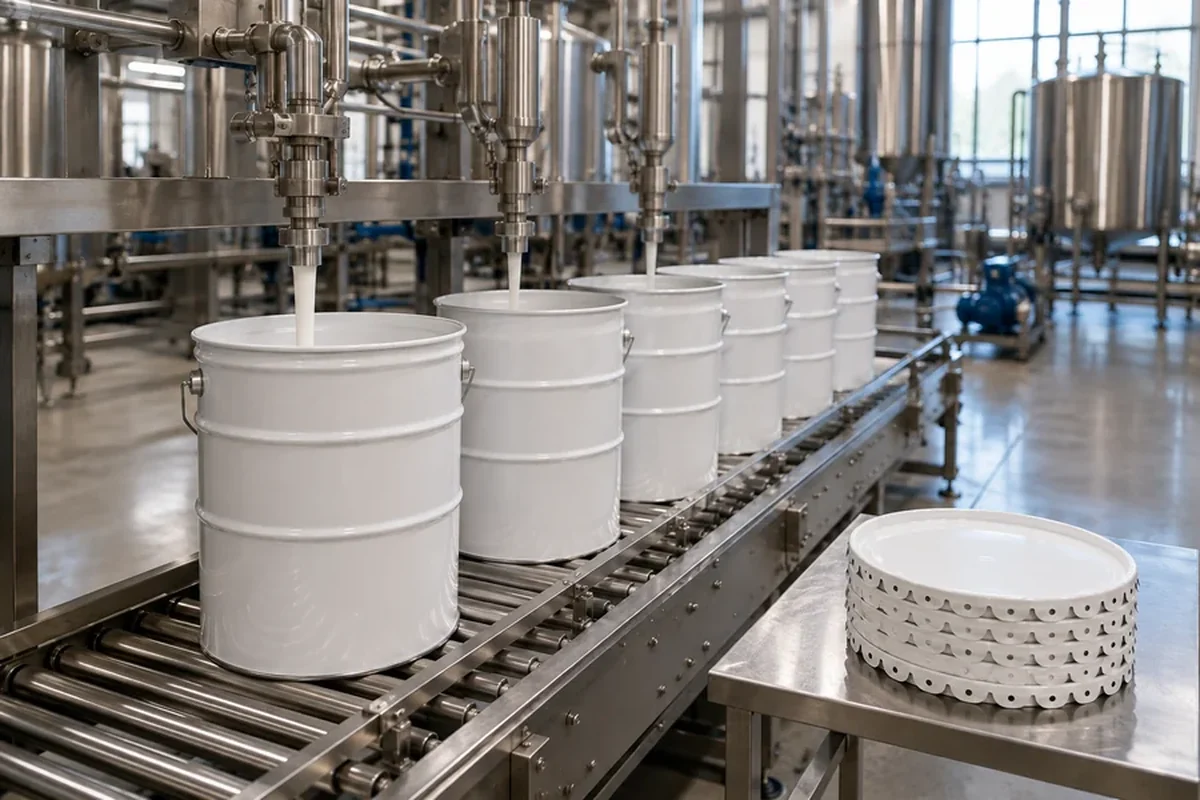
Two questions decide whether a pail or a tin can actually be sold into a regulated market, and neither is answered by the price list. Does the container hold a UN approval for the contents going into it, and can the supplier produce a food-contact declaration for the surface the product touches. This is how both are settled for the pails, buckets and tins on this site, and where the answers differ from the jerry cans.
The UN code you need is decided by the shape of the container, not by what it is called in a catalogue. The definitions are precise and they cut across the way the trade talks:
So a round tinplate pail is a drum and certifies in the 1-series, while a square metal tin is a jerrican and certifies in the 3-series, the same series as the fuel cans elsewhere on this site, despite looking nothing like one. The word “pail” does not appear in the code list at all.
The rest of the code reads as it does everywhere: the first digit is the kind of packaging (1 drum, 3 jerrican, 4 box), the letter is the material (A steel, B aluminium, H plastic, G fibreboard), and the final digit is 1 for a non-removable head or 2 for a removable one.
| Format on this site | Certifies as | Why |
|---|---|---|
| Round tinplate pail, lever ring or flower lid | 1A2 | Cylindrical steel, removable head |
| Round metal bucket, tight-head | 1A1 | Cylindrical steel, non-removable head |
| Round PP bucket | 1H2 | Cylindrical plastic, removable head |
| Rectangular PP bucket | 3H2 | Rectangular cross-section makes it a jerrican |
| Square metal tin, wide pouring head | 3A1 | Rectangular cross-section, non-removable head |
| Small tins inside a shipper | 4G outer | Combination packaging; the mark is on the box |
The code a design would take, not a claim that a given build holds it. Approval is per design type and per plant, and which packing instructions a substance permits is a separate question from the geometry. Ask us for the certificate that covers your specification.
Below about five litres the container normally travels as an inner packaging inside a fibreboard shipper, and the two are tested and certified together as a combination packaging. The UN mark goes on the 4G box. A buyer who inspects the tins for a stamped code and does not find one has not found a problem, and a buyer who assumes the tin is approved on its own has.
The consequence is that the approval belongs to the pair. Changing the shipper, the count per box or the internal fitments can put the consignment outside the tested configuration even though every tin in it is unchanged.
Our ADR reliefs guide rules limited quantities out. For a 20 litre can that is right. At tin scale the same relief is the one that applies, and it is the most useful number on this page.
The limited quantity value for UN 1263 PAINT in packing group II is 5 litres per inner packaging, in an outer not exceeding 30 kg gross, and a 5 litre paint tin sits exactly on that limit. Inside limited quantities there is no requirement for UN-approved packaging at all: the package carries the LQ diamond, no dangerous goods transport document is needed, and the consignment moves under simplified conditions.
Which is why the same physical tin can be a UN packaging question or not a UN question at all depending on the fill. Five litres of paint is inside the relief. The identical body filled to six is outside it, and now needs an approved design. Settle the fill volume before the tooling.
The mistake worth naming: on a lacquered tin, the food-contact article is the internal coating, not the steel. That single fact redirects the whole documentation trail, because the plastics instruments people reach for do not apply to it.
| Market | PP pail, the polymer is the surface | Lacquered tin, the coating is the surface |
|---|---|---|
| EU | Framework 1935/2004 plus plastics Regulation 10/2011 | Framework 1935/2004; 10/2011 does not reach a coating |
| UK | Assimilated Regulation 1935/2004 and the Materials and Articles in Contact with Food Regulations 2012 | |
| US | 21 CFR 177 for the polymer | 21 CFR 175.300, resinous and polymeric coatings |
| Australia and New Zealand | FSANZ Food Standards Code 1.1.1 and AS 2070 | FSANZ 1.1.1; the coating carries the case |
In every one of those the deliverable is the same document: a Declaration of Compliance naming the instrument, the contents it covers and the conditions of use. A DoC that names the wrong instrument is worse than none, because it looks like an answer.
Enough to tell a specified pail from an unspecified one, and short enough to put in an email:
Stated plainly, because the useful answer here is the specific one. We do not publish UN codes, coating systems, tempers or food-contact declarations against the standard range, and those fields are marked quoted-on-enquiry on every product page rather than left blank. They are build-specific: the same body gets a different lacquer, a different certificate and a different declaration depending on what goes in it, and publishing one figure would be wrong for most buyers.
What that means in practice is that the specification is settled at enquiry rather than discovered afterwards. Tell us the contents, the fill volume and the destination market, and we come back with the code the design certifies under, the coating specified against your product, and the declaration that covers it. If one of the three would have to be obtained, we say which.
| Your use case | Recommended can | Why this one |
|---|---|---|
| Solvent-based paint and adhesives | 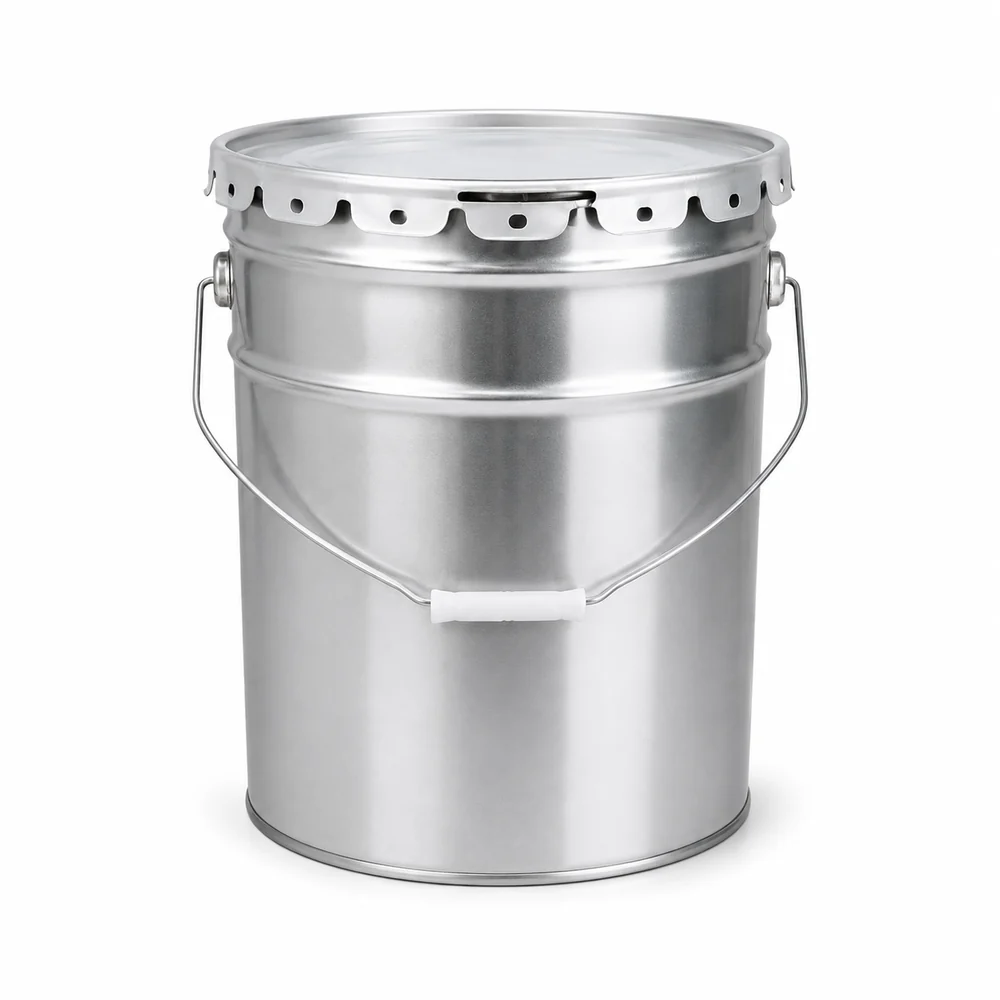 Metal Pail with Flower Lid or Lever Ring, 4L to 35L Metal Pail with Flower Lid or Lever Ring, 4L to 35L |
Cylindrical steel, removable head: the 1A2 case. |
| Thinners and automotive fluids | 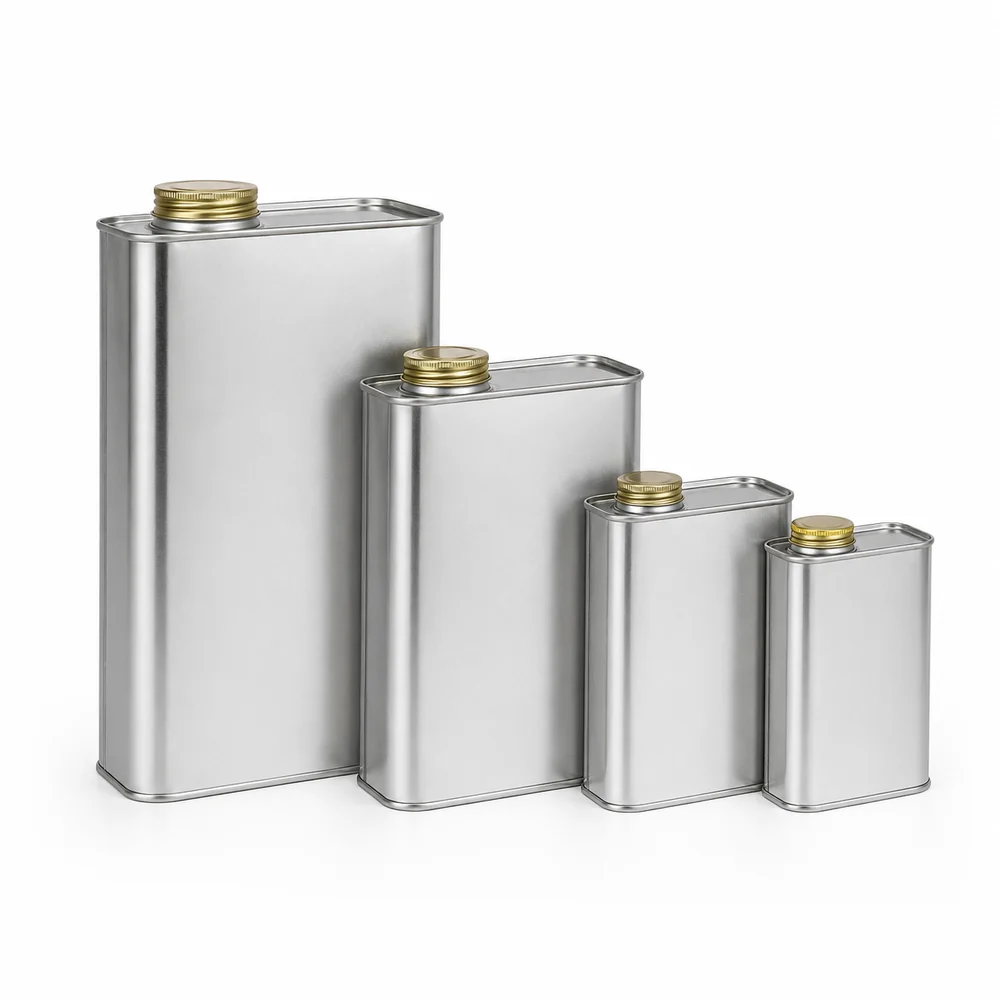 Square Metal Tin Can & Bucket, 250ml to 25L Square Metal Tin Can & Bucket, 250ml to 25L |
Rectangular, so it certifies as a jerrican. |
| Retail tins under 5 litres | 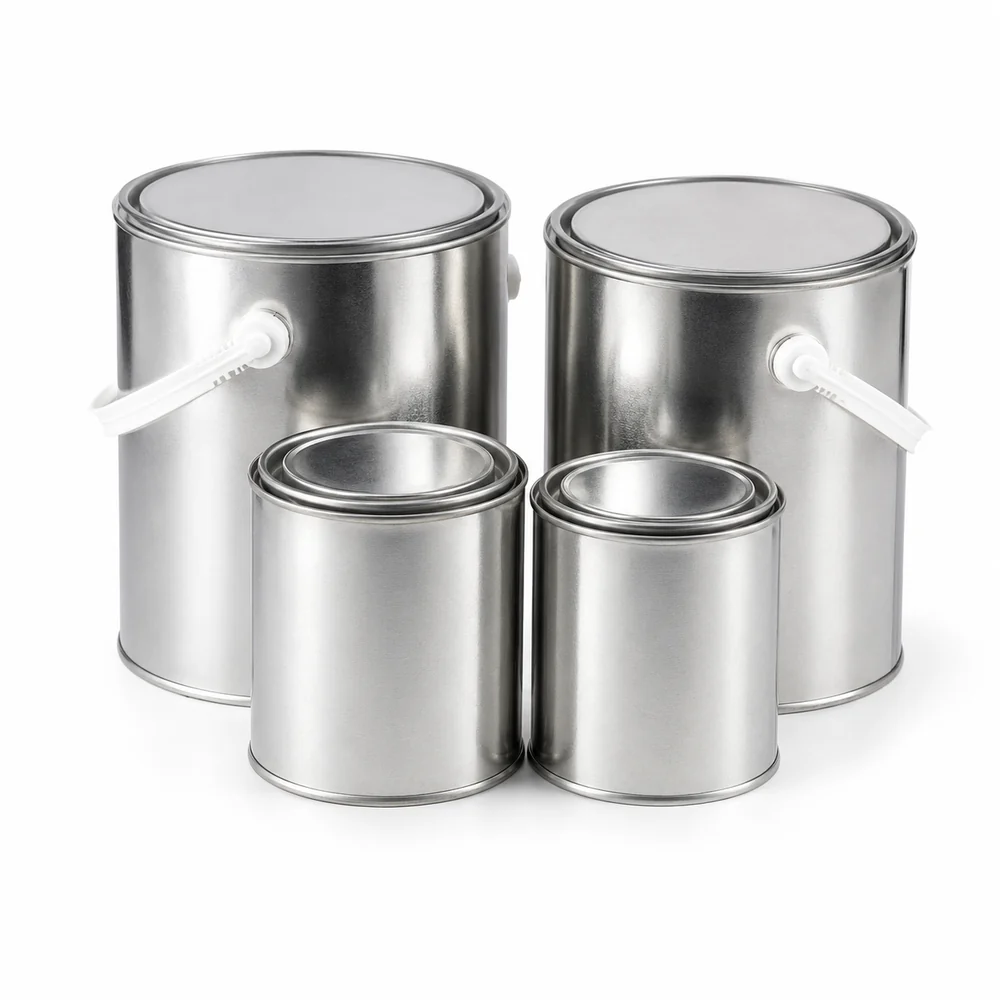 Round Metal Tin Can, 50ml to 6L Round Metal Tin Can, 50ml to 6L |
Where limited quantities does the work. |
| Food and non-hazardous liquids | 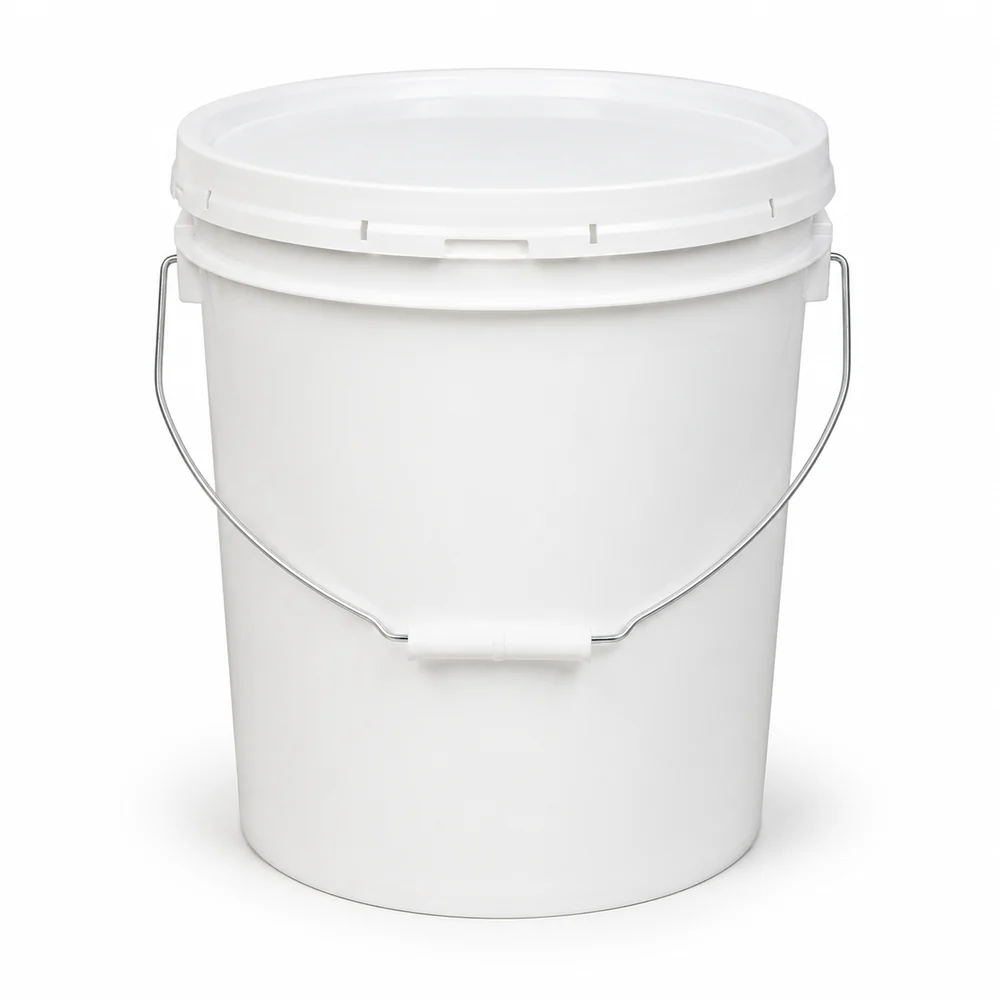 Round PP Bucket, 2.5L to 20L Round PP Bucket, 2.5L to 20L |
Polymer is the contact surface; 10/2011 applies. |
A round tinplate pail with a removable head certifies as UN 1A2. The first digit is the kind of packaging and a drum is defined by its shape: a flat-ended or convex-ended cylindrical packaging. A is steel and the final 2 is a removable head. A tight-head round metal bucket is 1A1 on the same logic.
Because the UN definitions go by cross-section. A jerrican is a metal or plastic packaging of rectangular or polygonal cross-section, and a drum is cylindrical. A square tin therefore falls in the 3-series alongside fuel jerricans, and a round pail of the same capacity falls in the 1-series. The catalogue name has no bearing on it.
Usually on the box, not the tin. Below about five litres a tin normally travels as an inner packaging inside a fibreboard shipper, and the two are tested together as a combination packaging with the mark applied to the 4G outer. Changing the shipper or the count per box can put the consignment outside the tested configuration even if the tins are unchanged.
Often not. For UN 1263 PAINT in packing group II the limited quantity value is 5 litres per inner packaging in an outer not exceeding 30 kg gross. Inside that relief there is no requirement for UN approved packaging: the package carries the LQ diamond and no dangerous goods transport document is needed. Fill the same tin to six litres and the relief is lost.
The framework regulation, 1935/2004 in the EU, applied to the internal coating rather than to the steel, because the coating is the article that contacts the food. Plastics Regulation 10/2011 does not reach a coating. In the US the corresponding instrument is 21 CFR 175.300 for resinous and polymeric coatings, where a polypropylene pail would be assessed under 21 CFR 177 instead.
The standards and regulations this page relies on, at their issuing body. Where a market rule is named here, check the current revision before you specify against it.
Last reviewed .
Tell us your market, your fuel and your volumes. We come back with a specification sheet and a quotation.