Fortitude21
ホーム  /  Verifying a NATO-pattern can

How to tell a genuine NATO-pattern jerry can from a copy

Nobody owns the pattern, so the shape proves nothing. Six things you can measure, and the certificate question that settles it.

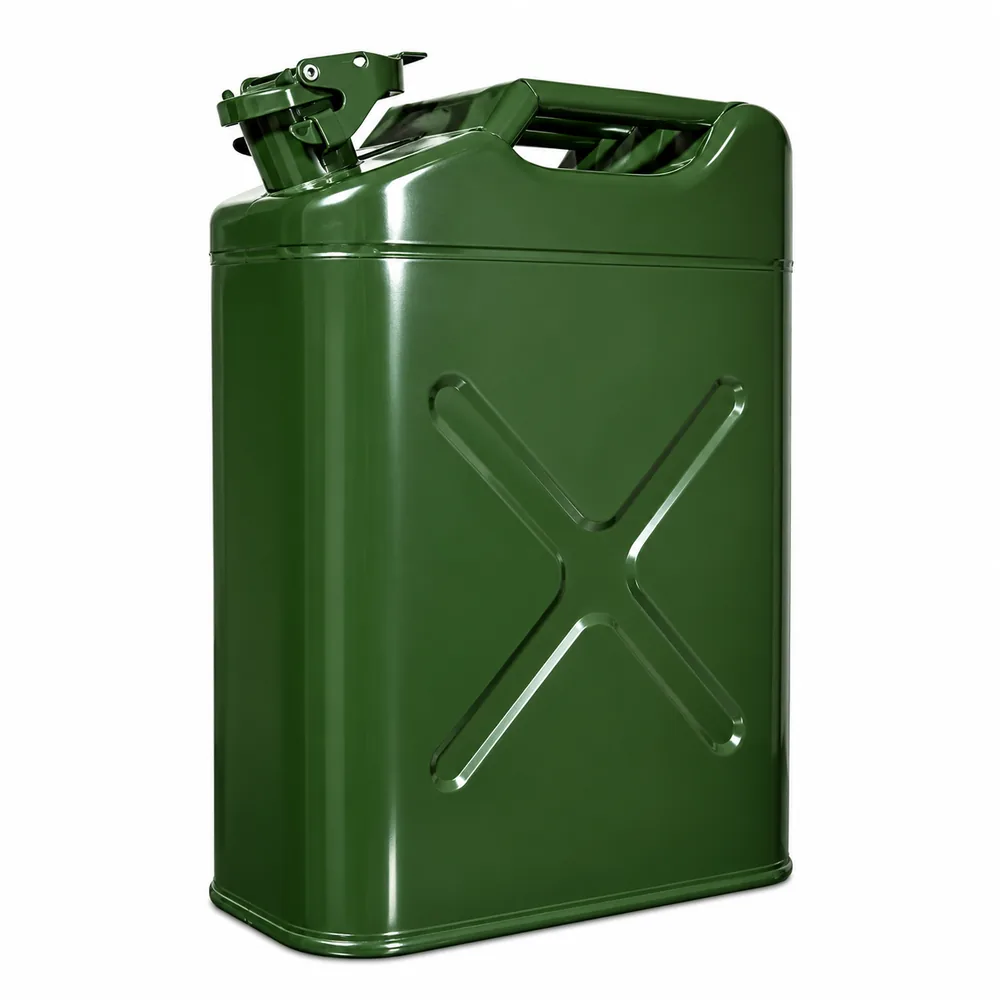
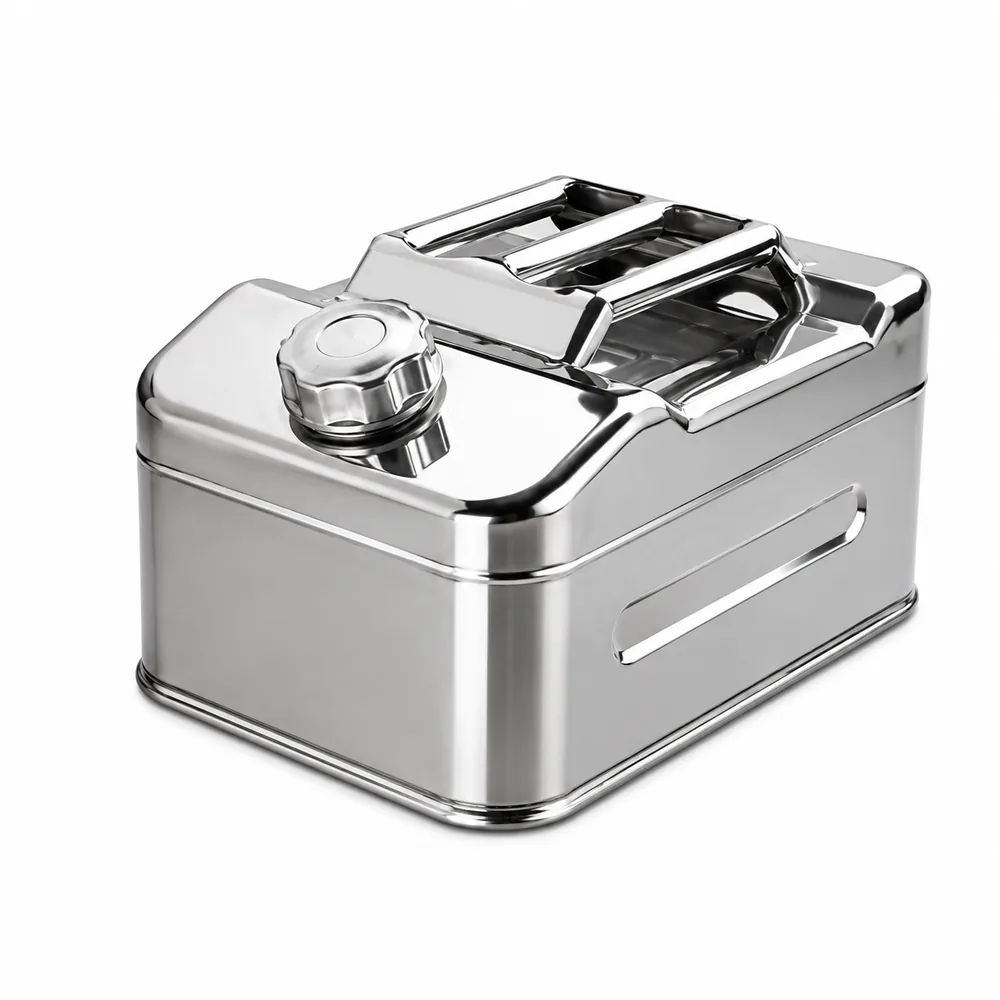
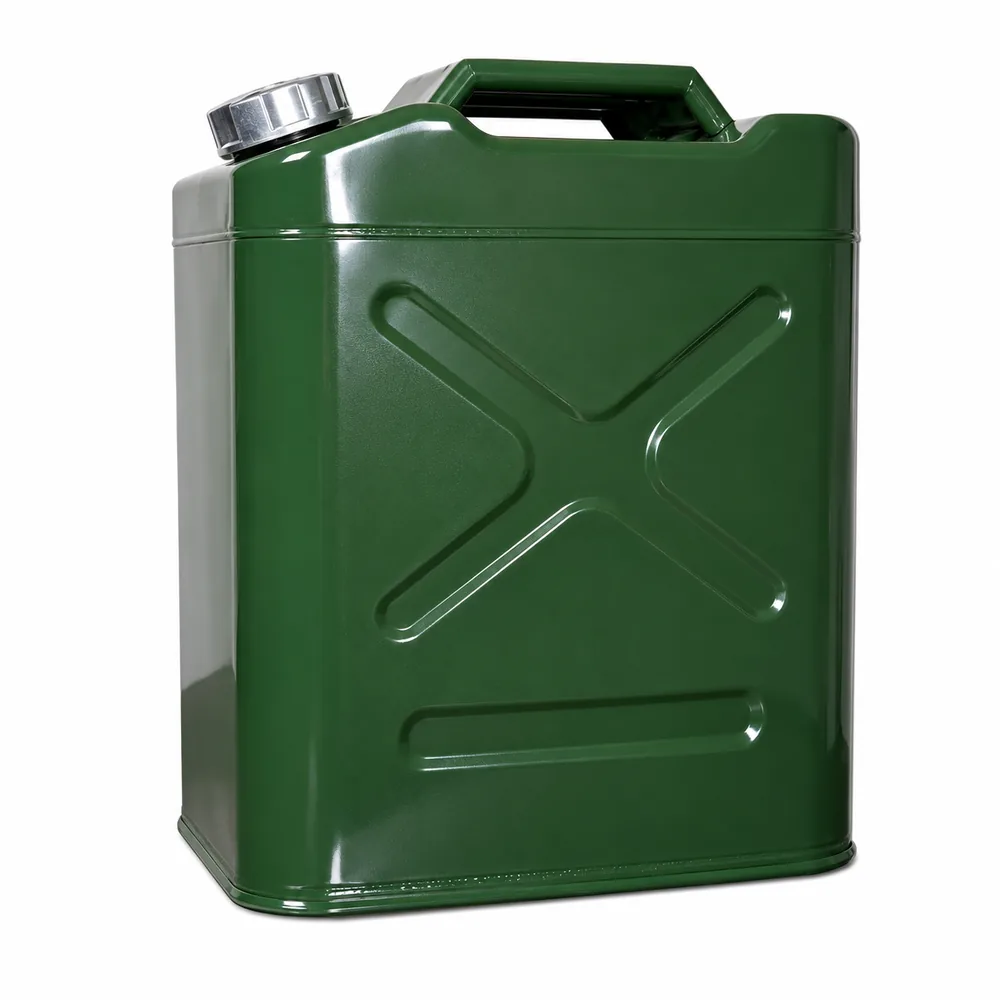
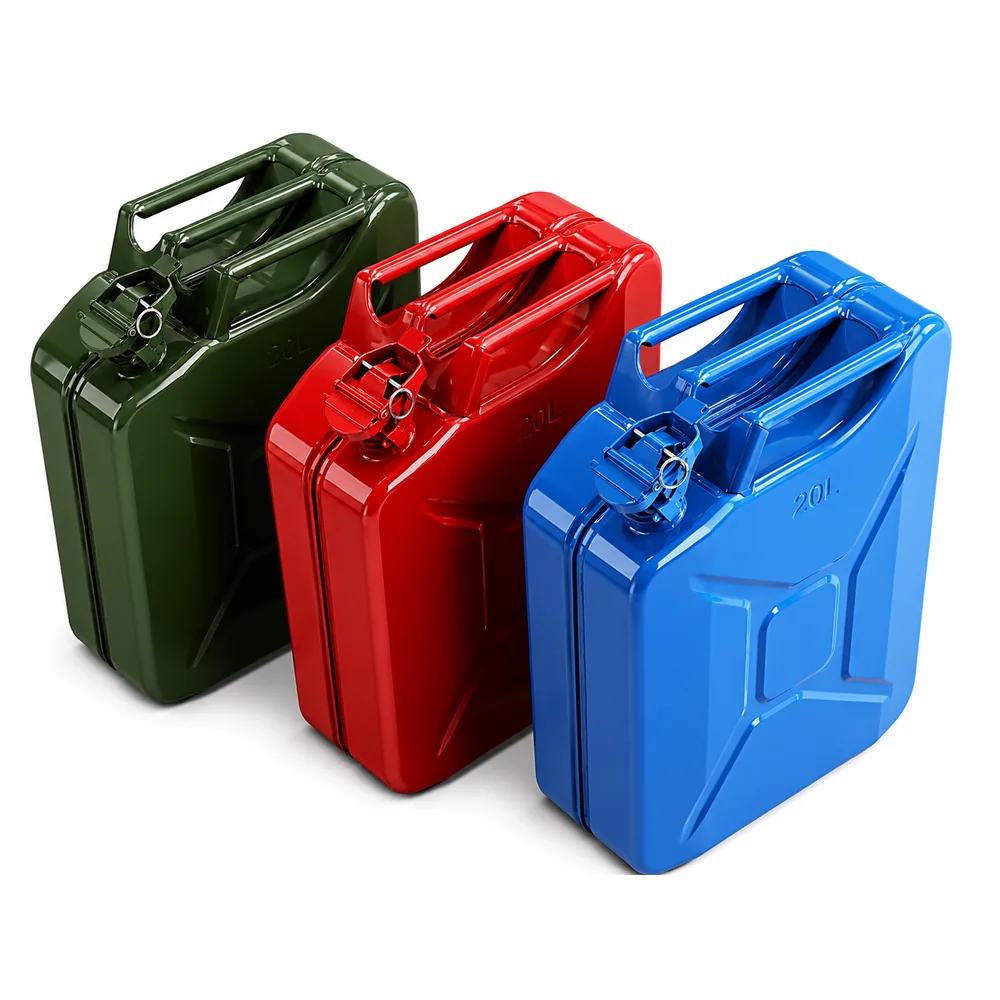
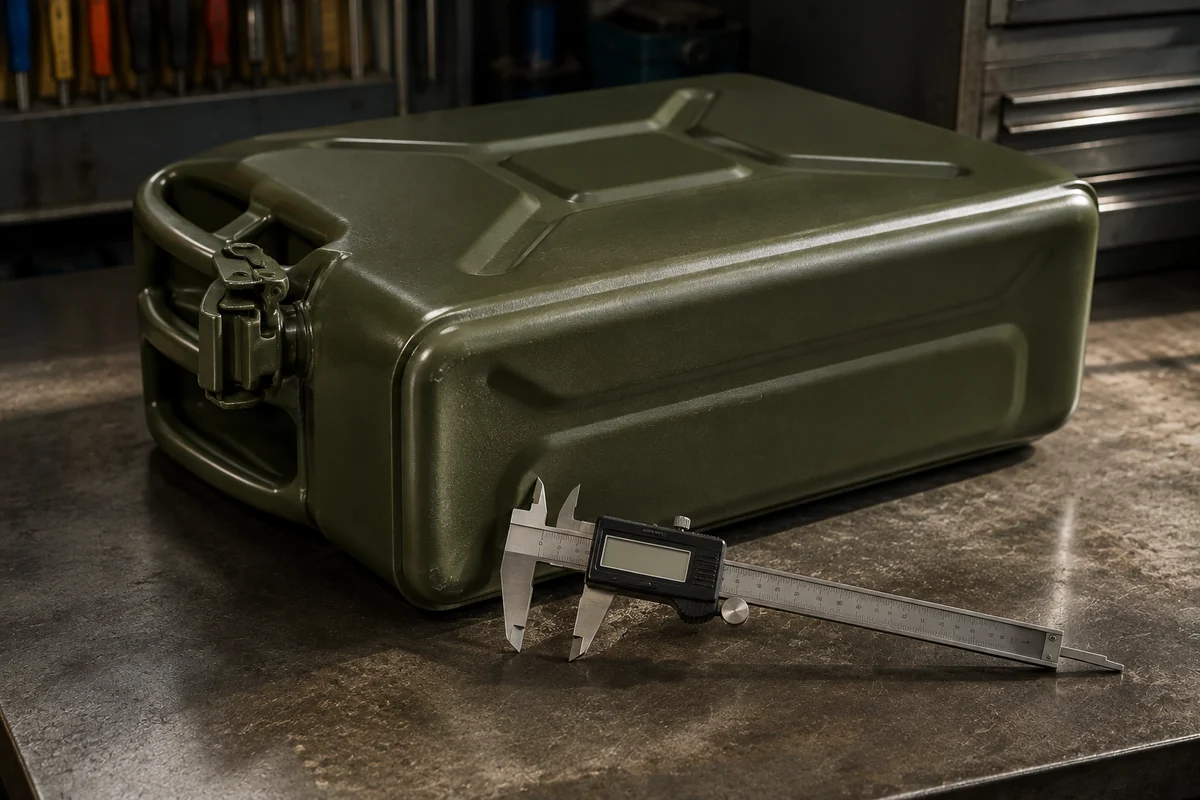
NATO-pattern pressed steel jerry cans showing the three-handle top and recessed sides
The pattern is a shape. The build is what you have to check.

Nobody owns the NATO pattern. The shape is unregistered, the tooling is everywhere, and a can that looks exactly right can be built to nothing at all. So the question is not who says their can is NATO. It is which of the things you can actually measure they are willing to put in writing.

"NATO pattern" is a shape, not a certification

This is the confusion the whole market rests on. The pattern describes a geometry: the three-handle top, the recessed sides, the cam or screw closure and the external dimensions that let the can seat in a standard carrier. It is a design convention that survived from the 1930s because it works. It is not a standard anyone certifies against, and no body issues a “NATO approval” to a jerry can.

What does exist is separate and specific. UN marking certifies a design for dangerous goods carriage. TÜV or equivalent testing certifies that a design passed a named test regime. AS/NZS 2906 is the Australian and New Zealand fuel container standard. NSPA supply agreements are procurement contracts with NATO’s own agency, held by a handful of manufacturers. A supplier holding one of these is telling you something. A supplier saying only “NATO standard” is telling you nothing.

The six things you can check

These are the attributes the critics use, and they are the right ones. Every one is measurable on a sample in front of you.

What to checkProperly builtWhat a cheap copy does
Steel gauge0.8–0.9 mm for military-equivalent duty0.6–0.7 mm, unstated
Interior coatingCoating specified for the contents, named on the spec sheetBare steel, or a coating nobody will name. Rusts from the inside
Handle attachmentContinuous strip weld along the handle barSpot welds. The failure point when the can is full
Perimeter seamRecessed, so the can lies flat on its backRaised, so it rocks and cannot be stored on its side
BreatherFull-size breather tube, pours without gluggingUndersized or absent. Slow, surging decant
Spout and closureReinforced, gasket seats evenly, cam holds under pressureThin, poorly welded, gasket that takes a set and leaks

Where our standard build actually sits

Straight answer, because the table above convicts us otherwise. Our standard NATO-pattern steel can is pressed at 0.6 mm for the 20 litre fuel can and 0.5 mm for the water cans. That is lighter than the 0.9 mm a Latvian military can is pressed at, and lighter than the 0.7 mm threshold the best-known buyer’s guide on this subject uses to identify a copy. We are not going to pretend otherwise, and you should discount any supplier who would.

What that build is for: civil, agricultural, retail and general commercial duty, where the can is carried, filled and stored rather than issued to a unit and dropped off a truck. It is internally coated for its contents, which is the part that actually decides whether fuel keeps or the can rusts through, and it is the reason we will name the coating when a cheap can will not.

For military-equivalent service we press the same pattern at 0.9 mm to order, which is the gauge the comparison above is written against. Our 25 and 30 litre NATO cans and the stainless NATO can already run at 0.8 mm as standard. If you are specifying for a defence, fire or heavy-field application, that is the build to ask for, and you should ask every supplier the same question before you compare prices.

The certification question most buyers get wrong

UN approval is granted per design type および per manufacturing plant. It does not travel. A supplier who moves production to a second factory needs that factory approved for that design, and a certificate naming a plant your goods did not come from is worth nothing. So the question to ask is not “are you UN certified”. It is: which certificate number covers this design, at which plant, and may I see it?

A supplier who can answer that in one email is a supplier with a real approval. A supplier who sends a photograph of a stamped can, or a certificate with the plant redacted, has told you what you need to know.

What to put in the email

  • Steel gauge in millimetres, for the exact SKU you are quoting
  • The interior coating, named, and what it is specified for
  • UN certificate number, the design type it covers, and the plant named on it
  • Whether the handle is strip welded or spot welded
  • A sample, before any volume order

Five questions. Any manufacturer who builds what they claim can answer all five from their desk, and the ones who cannot will change the subject to price. That is the filter, and it works on us too.

So, our answers, since it would be a poor guide that ducked them. We hold UN certification for our dangerous-goods designs and we will send you the certificate number covering your design and the plant named on it. We run to ISO 9001, ISO 14001, ISO 45001. Inspection and test reports come with the order where they apply to your design, and factory audit documentation is available in accordance with that UN certification. Steel gauge and coating are stated on every product page, including where the standard build is lighter than a military can. Ask us the five questions.

Match the can to the duty

Our NATO-pattern line, with the gauge stated against each job.

用途おすすめの缶選ぶ理由
Civil and commercial fuel duty 20L NATO Steel Fuel Can20L NATO規格 スチール燃料缶 0.6 mm standard, coated for hydrocarbons; 0.9 mm to order.
Long service, no coating to fail Stainless NATO Can — 10L / 20Lステンレス NATO規格缶 — 10L / 20L 0.8 mm stainless as standard, NATO carrier fit.
More volume, same pattern 25L & 30L NATO Can25L・30L NATO規格缶 0.8 mm galvanised or stainless as standard.
Potable water, NATO carriers 20L NATO Steel Water Can20L NATO規格 スチール給水缶 0.5 mm standard; specify 0.9 mm for field duty.

よくあるご質問

Is there such a thing as a NATO-certified jerry can?

No. NATO pattern describes a shape, not a certification, and no body issues a NATO approval to a jerry can. What exists is UN marking for dangerous goods, TUV or equivalent test certification, national standards such as AS/NZS 2906, and NSPA supply agreements held by a few manufacturers.

How do I tell a real NATO jerry can from a fake?

Check six things: steel gauge, whether the interior coating is named, strip welds rather than spot welds on the handles, a recessed rather than raised perimeter seam, a full-size breather, and a reinforced spout. All six are measurable on a sample, which is why you should always get one before a volume order.

What steel thickness should a NATO jerry can be?

For military-equivalent duty, 0.8 to 0.9 mm. Cans pressed at 0.6 to 0.7 mm are built for civil, agricultural and retail service, which is legitimate but is not the same product. The number matters less than whether the supplier will state it for the exact SKU they are quoting.

Does a UN mark transfer between factories?

No. UN approval is granted per design type and per manufacturing plant, so it does not travel. Ask which certificate number covers the design, at which plant, and to see it. A certificate naming a plant your goods did not come from covers nothing.

参考資料

The standards and regulations this page relies on, at their issuing body. Where a market rule is named here, check the current revision before you specify against it.

最終確認日 .

燃料プログラムについてご相談ください

対象市場・燃料・数量をお知らせください。仕様書と見積書をお返しします。

WhatsAppでチャット