
What a portable fuel container must meet to be sold in the United States and California.
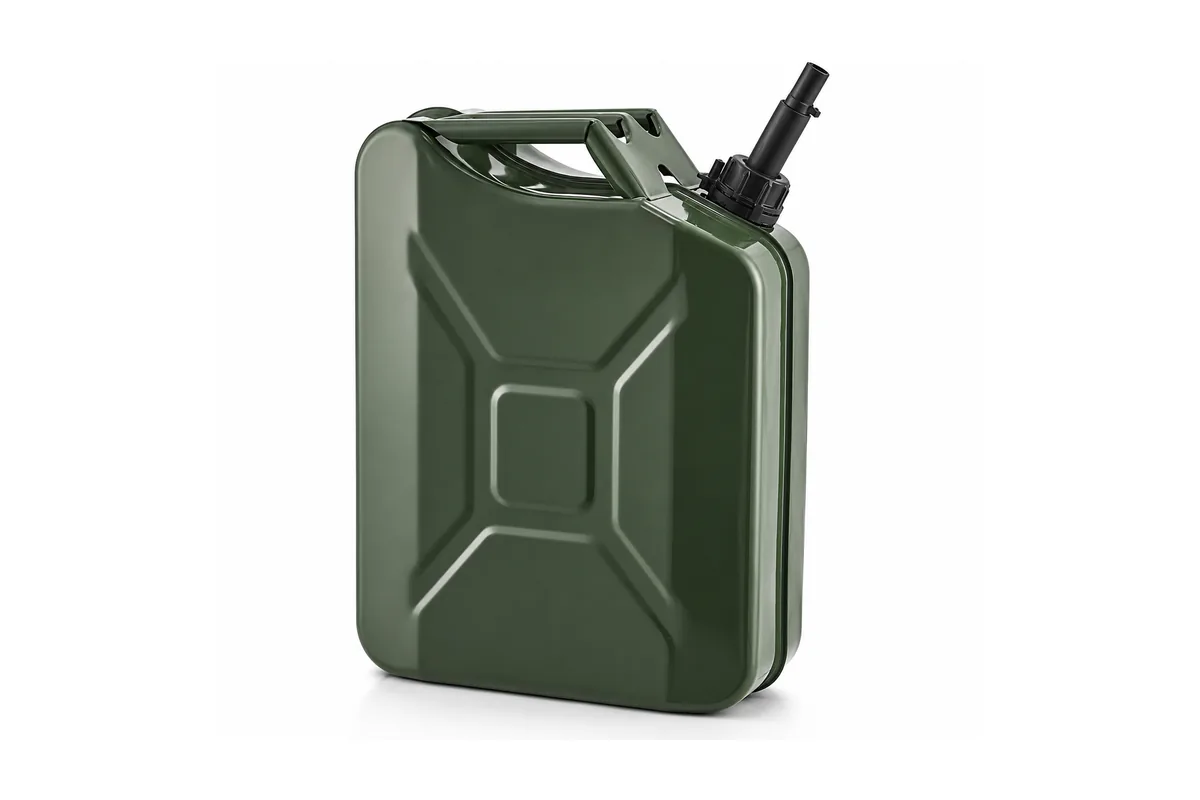
A fuel can that clears UN transport rules can still be barred from sale in the United States. Portable fuel containers face a separate set of federal and California requirements. This is background, not legal advice; confirm current rules and your product's certification before you import.
The US Environmental Protection Agency (EPA) sets the federal rule for portable fuel containers, under 40 CFR Part 59 Subpart F, and it binds manufacturers and importers alike. The California Air Resources Board (CARB) sets its own, generally stricter, rules for sale in California. The federal rule covers consumer portable fuel containers of roughly 0.25 to 10 US gallons, so a 20L can, about 5.3 gallons, sits squarely inside it. A can sold nationwide has to satisfy both where they apply.
The core of the EPA and CARB rules is emissions. A container must limit how much fuel vapour permeates its walls, and limit spillage and evaporation in use. In practice this drives an automatic-closing spout with no separate vent hole, and a low-permeation material or treatment. Steel does not permeate, which removes one hurdle; a plastic can meets the limit through the correct grade and a treatment such as fluorination.
The limits are specific and they are stated per gallon of container capacity, which is the detail that trips people coming from a materials background. Under EPA 40 CFR 59 Subpart F, hydrocarbon emissions from a portable fuel container may not exceed 0.3 grams per gallon per day, and that figure covers diurnal venting and permeation together rather than permeation alone. CARB's regulation at 13 CCR 2467.2 sets a permeation limit of 0.4 grams per gallon per day alongside its spout requirements.
A second number circulates in the same conversations and measures something else. Barrier constructions are qualified per square metre of wall surface, at 0.30 g/m²/day measured at 28 °C, with the container filled with a certification fuel such as CE10 and held at least 140 days so the wall reaches steady-state saturation before the measurement begins. That threshold tells a moulder whether a wall can get there; the per-gallon standards decide whether the finished can may be sold.
Both matter to a buyer and they answer different questions. Ask a supplier which one they are quoting. Untreated monolayer HDPE runs 10 to 30 g/m²/day and level 3 fluorination 1.5 to 2.5, so both are out; level 5 at 0.15 to 0.25 and a co-extruded EVOH wall at 0.05 to 0.12 are the constructions that get to a certification at all. The tiers are worked through in our guide to HDPE grades and fluorination. The 140-day soak is also a schedule fact: a permeation programme is a five-month commitment that cannot be shortened by paying more.
The rules do not treat the container and its spout as separate products, and that catches importers out more than any other detail. A compliant can with a generic replacement spout is not a compliant assembly, because the emissions performance that was certified belonged to the two working as one system.
The consequence for a distributor is that spare spouts are not an accessory line to be sourced on price. Selling a can with a third-party spout, or supplying replacements that were not part of the certified family, moves the product outside its approval even though nothing about the container changed.
It also explains the design most people find annoying. The single self-closing opening with no separate vent exists because a vent is an uncontrolled emissions path, and the awkward pouring that results is a deliberate trade the regulations made on purpose rather than a manufacturing shortcut.
Under the Children's Gasoline Burn Prevention Act, portable gasoline containers sold in the US must have a child-resistant closure meeting the Consumer Product Safety Commission standard (16 CFR 1460). It is a tested design feature of the cap, not an add-on. We supply child-resistant closures to that pattern.
Because the test is on a cap and neck working together, the closure is not portable. A compliant cap moved to a different neck profile, or a compliant neck fitted with a cap from another family, is an untested combination and the compliance does not carry across. That is the practical reason the closure family gets chosen early: it constrains the neck, and the neck is tooled into the body.
The consumer rules above govern portable fuel containers sold to the public. A metal safety can built to the workplace-safety definition is regulated on a different path: a spring-closing lid, a flame arrester in the opening, and the pressure-relief behaviour that goes with them.
That route answers to workplace safety rules rather than to the consumer emissions regime, which is why industrial and agency buyers often specify it. It avoids the spout and closure requirements entirely while arguably being the safer container in a working environment.
The decision therefore starts with the channel, not the product. A can destined for a hardware shelf and a can destined for a workshop are answering different regulators, and a supplier who quotes one specification for both has not asked where it is going.
The Portable Fuel Container Safety Act requires portable fuel containers to include a flame mitigation device, a flame arrestor that stops a flame flashing back into the can. Confirm the current effective scope and sizes, and that the device fitted is a listed one. We supply flame mitigation devices for this.
That requirement now has a date and a citation. The Portable Fuel Container Safety Act of 2020 directed the Consumer Product Safety Commission to act, and the rule at 16 CFR part 1461 took effect on 9 December 2023, incorporating ASTM F3326-21, section 18 of UL 30:2022 and the ASTM F3429 series by reference. A portable fuel container for a flammable liquid offered into that market without a compliant device is not a lower specification; it is one that cannot lawfully be sold.
The device is a mesh or perforated disc in the neck that quenches a flame front by conducting heat out of it faster than the reaction sustains itself, the same principle as a miner's safety lamp. It addresses the path rather than the fuel. It also has a handling cost worth planning for: a mesh slows the pour and can clog with debris or ice, which is a consequence to design around rather than a defect to complain about.
There is an alternative worth knowing, because it changes the whole compliance picture for some buyers. A container listed as a safety can under the OSHA rules (29 CFR 1926.152), typically to a UL 30 or FM listing, is excluded from the EPA’s consumer portable-fuel-container rule, and CARB likewise exempts OSHA and DOT safety cans. A safety can is a different object: a flash-arresting screen, a spring-closing lid and a spout cover, listed by a nationally recognised laboratory. It is not a free pass, and it carries its own cost, but it is one listing instead of a stack of consumer certifications, and it is what defence, airfield and industrial buyers usually ask for in the first place. If your market is professional rather than retail, it is often the cleaner path.
To sell a fuel can in the US, the closure and spout system carries most of the compliance load: automatic shutoff, child-resistant, flame-arrested, and low-permeation as a whole. Ask your supplier for the certification or registration for the exact can and closure, and confirm CARB separately if you sell in California.
Ask for it as a number rather than a statement. A CARB Executive Order has an identifier, a holder and a listed configuration, and the useful question is whether your intended can and spout appear in that configuration. A supplier answering with the certificate number is telling you something checkable; one answering that the product is compliant is telling you what they believe.
We specify the closure, spout and flame-mitigation components to the standard your market requires, and supply the documentation with the order rather than assume it. Tell us the destination and we build to its rules. Start with the fuel and gas cans range.
Most of the compliance lives in the closure. Here is the kit.
| Your use case | Recommended can | Why this one |
|---|---|---|
| A non-permeating steel can | 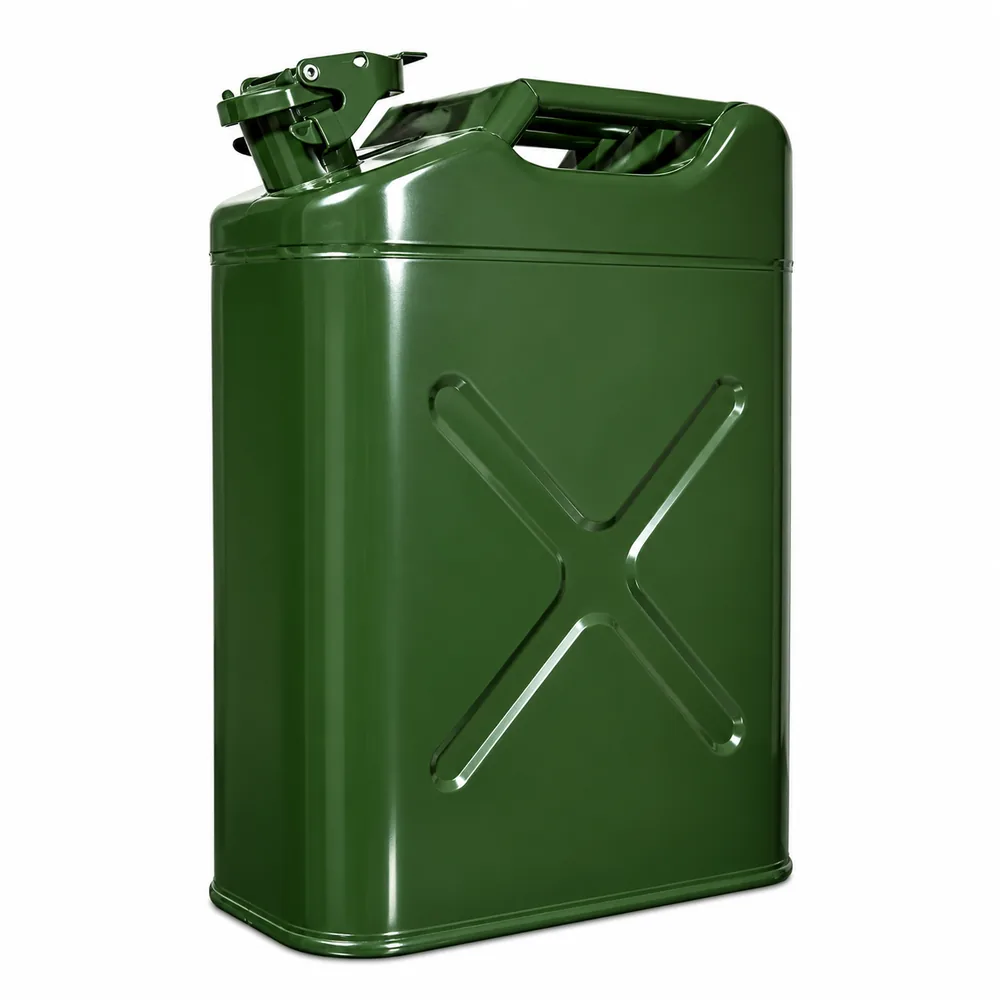 20L NATO Steel Fuel Can 20L NATO Steel Fuel Can |
Steel clears the permeation hurdle. |
| A low-permeation plastic can | 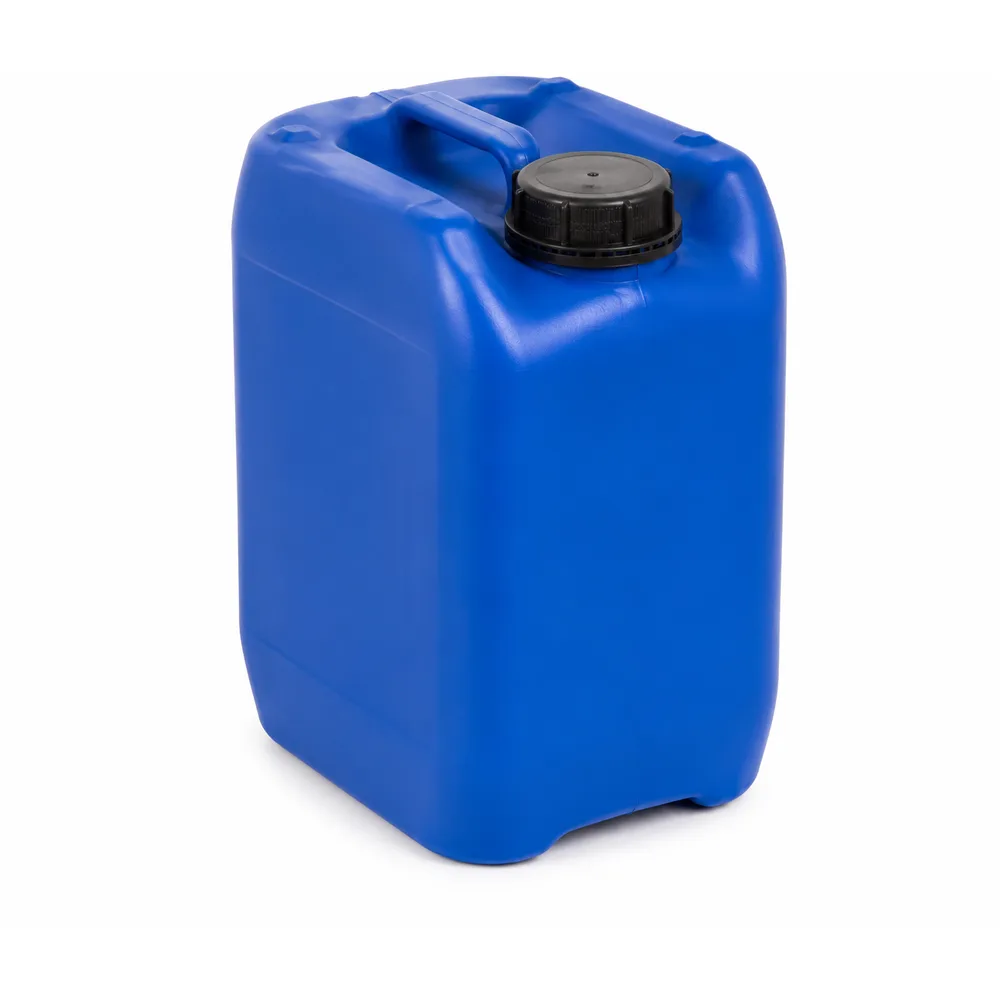 Fluorinated HDPE Jerrycan Fluorinated HDPE Jerrycan |
Fluorinated HDPE meets the limit. |
| US consumer sale |  Child-Resistant Closures Child-Resistant Closures |
Child-resistant cap, 16 CFR 1460. |
| Fire-safety compliance | 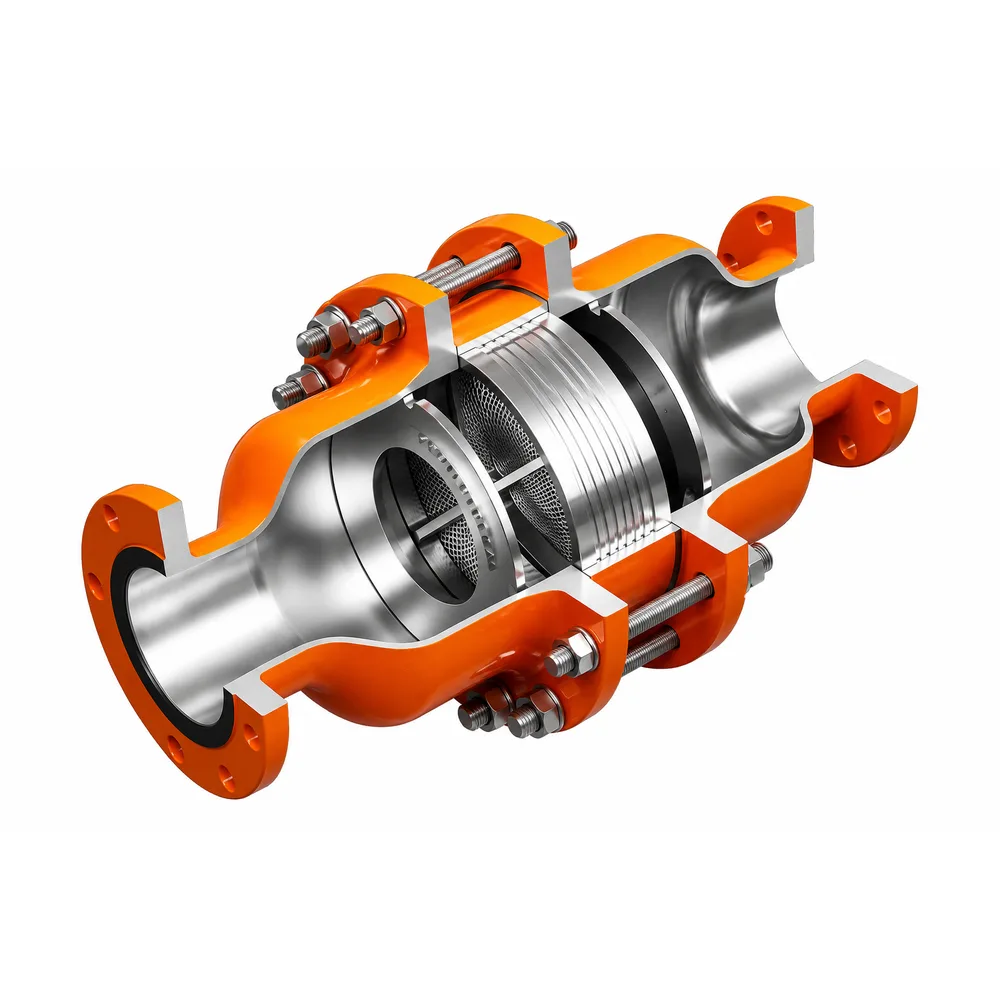 Flame Mitigation Devices Flame Mitigation Devices |
A listed flame arrestor. |
A portable fuel container sold in the US must have a single self-closing spout with no separate vent, a permeation-resistant wall, and durable child-resistant closure. Both the spout mechanism and the container permeation rate are certified together, so a compliant can and a generic spout are not a compliant combination.
Close, and not identical. California certifies separately through CARB, with its own executive order per family. Many manufacturers build to the stricter of the two and certify both. Confirm which approval a supplier actually holds, because "meets EPA" does not permit sale in California.
The portable fuel container rules target consumer gasoline containers. A metal safety can built to the OSHA definition, with a spring-closing lid and flame arrester, is regulated through workplace safety rules instead. That route avoids the consumer spout requirements and is why industrial buyers often specify it.
No. They apply to containers sold or offered for sale in the United States. Export markets set their own rules, so an EU or Australian market entry turns on ADR, the food-contact regime or AS/NZS 2906 instead. Certify for the market you are actually shipping to.
The standards and regulations this page relies on, at their issuing body. Where a market rule is named here, check the current revision before you specify against it.
Last reviewed .
Tell us your market, your fuel and your volumes. We come back with a specification sheet and a quotation.