
How to read a UN 3A1 or 3H1 marking, and what to ask a supplier before you import.
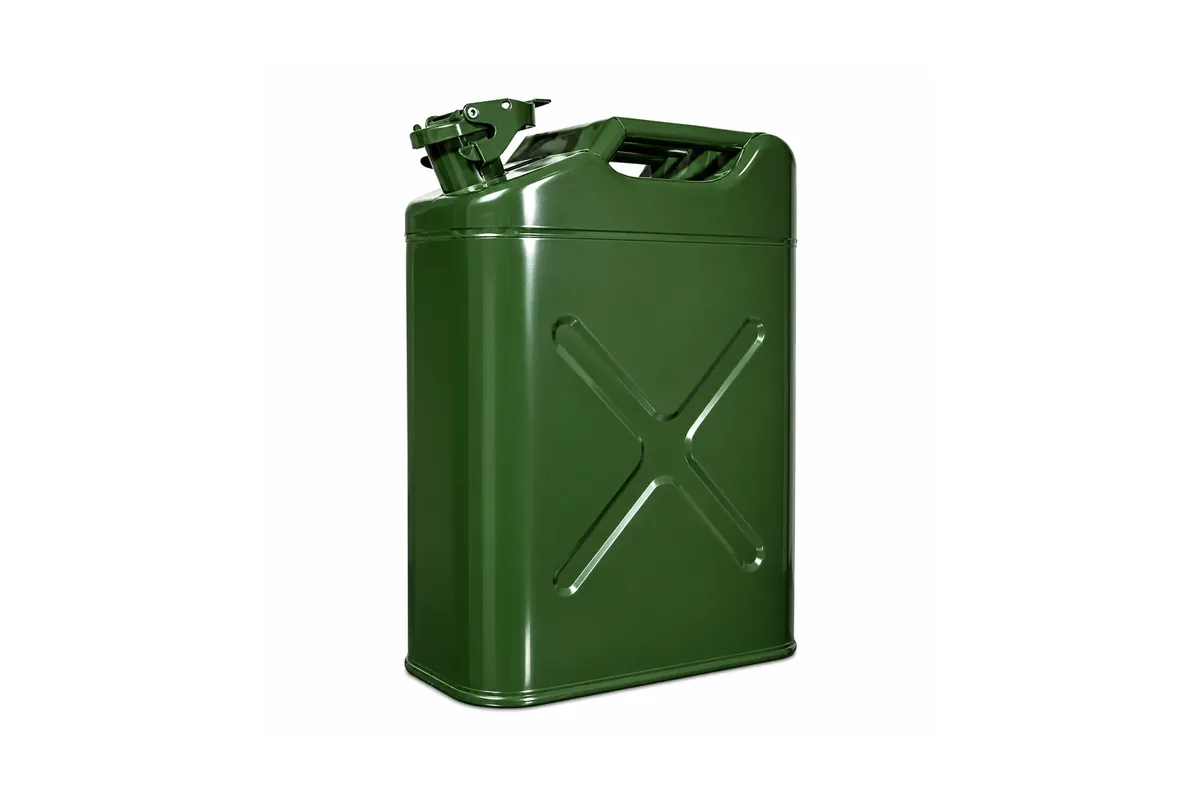
A fuel is a dangerous good. Its container must be tested and certified to a United Nations standard, and the stamped UN marking tells you what the can is and what it passed.
To move fuel legally by road, sea or air, its container is tested and certified to the UN model regulations, and it carries a stamped marking that encodes the packaging type, material and the tests it passed. Reading that marking tells you whether a can suits your fuel and your route.
The system exists because the alternative is unworkable. Without a common standard, every country would test packaging to its own rules and a container crossing three borders would need three approvals. The UN model regulations give one technical baseline that ADR by road, IMDG by sea and IATA by air all build on, so a design approved once is recognised across all three modes and most of the world’s jurisdictions.
What the mark is not is a quality badge or a statement about the contents. It certifies that a design, built a particular way at a particular place, survived a defined set of tests. A well-made can with no UN mark may be perfectly good for water; a UN-marked can may still be the wrong choice for your liquid. The mark answers one question, whether this design may carry dangerous goods, and it answers nothing else.
Take two common jerry can codes and decode them left to right.
After the base code, the full marking adds a packing-group letter, the maximum gross mass or the relative density, a test-pressure figure for liquids, the year and country of manufacture, and the maker's code. Each field is evidence of a specific test the design passed.
The packing-group letter states the hazard level the container is approved for. X covers Packing Groups I, II and III, the most demanding. Y covers II and III. Z covers III only. Most fuels sit in Packing Group II or III, so a Y-rated container is common.
The letters run in the direction people find counter-intuitive: a higher-rated container covers the groups below it, so an X-rated can may carry Packing Group III goods but a Z-rated can may not carry Packing Group I. Over-specifying is legal and merely expensive. Under-specifying is a compliance failure that a customs officer or an insurer finds before you do.
Where the letter comes from is the test regime behind it. The packing group sets the drop height the filled package must survive and the hydraulic pressure it must hold, so the letter is shorthand for “this design was dropped from that height and held that pressure”. Petrol as UN 1203 is Packing Group II; diesel as UN 1202 is Packing Group III. A can rated Y covers both, which is why Y is what most fuel programmes end up buying.
A UN approval is not a blanket brand certificate. It belongs to a specific design made at a specific plant, proven by drop, stack, leakproof and hydraulic-pressure tests. Move the design to another factory and it needs re-testing.
This is the most consequential fact in the whole system and the one most often glossed over. “We are UN certified” is not a meaningful sentence: the certificate names a design type and a production site, and goods from a different site are not covered by it. A supplier who shifts your order to a second factory to solve a capacity problem has, without necessarily realising it, shipped uncertified packaging.
It also constrains what may change. The approval covers the body, the wall thickness, the closure and the material as tested. Substituting a gasket compound, changing the resin grade or altering the neck invalidates it even though the can looks identical, because the thing that was tested no longer exists. Design changes and re-testing belong in the same conversation, and the lead time for the second is usually longer than for the first.
Approvals are periodically re-verified rather than granted for life, and production is expected to be checked against the approved design over time. Ask when the certificate was issued and when it was last reviewed, not merely whether one exists.
UN packagings can be reused within rules that depend on the material, the previous contents and inspection. If reuse matters to your operation, ask what the standard permits for that specific design.
The regulations distinguish between reuse, reconditioning and remanufacture, and the terms are not interchangeable. Reuse is refilling the same packaging with the same or a compatible substance after inspection. Reconditioning is restoring it, cleaning to bare material, repairing and re-coating, and it carries its own marking obligations. Remanufacture converts one packaging type into another and needs fresh approval as a new design.
Plastic behaves differently from steel because it ages. The date of manufacture moulded into an HDPE jerrican matters: polymer degrades under ultraviolet light and repeated chemical contact, so plastic packaging carries a service life that steel does not. A five-year-old plastic can may look perfect and be outside its permitted life, while a twenty-year-old steel can with sound coating is fine.
The practical rule for anyone running a returnable fleet is that the inspection is not optional and the record of it is what makes reuse defensible. An uninspected refill is the case that fails when something goes wrong.
If a supplier cannot produce these for the design you are quoting, treat the UN claim as unproven.
A UN mark clears dangerous-goods transport. It does not cover every national product rule, and the gap between those two things is where most compliance surprises live.
Transport approval asks whether a package survives being moved. Market rules ask whether a product may be sold and used. They are set by different bodies, tested against different criteria, and neither implies the other. A container can hold a valid UN 3H1 approval and still be unsaleable in a given market, and the reverse is equally possible.
Confirm the rules of your destination market before you order, and treat this guide as background rather than legal advice.
Our steel fuel cans are the 3A1 family; our HDPE jerry cans are the 3H1 family. For any design, ask us for the certificate and test report for the exact specification you need, and we build and document to that standard rather than assume it. See the fuel and gas cans range to start.
Every code maps to a can. Here is the family.
| Your use case | Recommended can | Why this one |
|---|---|---|
| UN 3A1, steel | 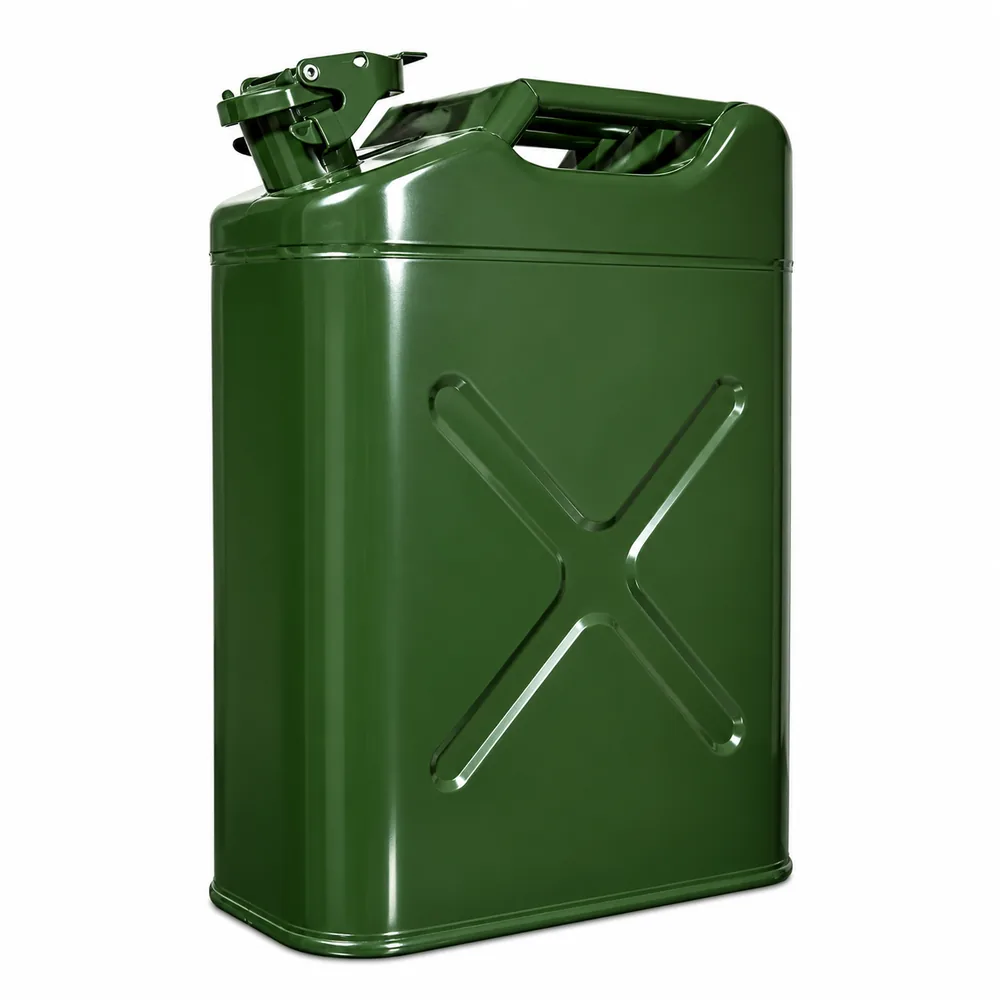 20L NATO Steel Fuel Can 20L NATO Steel Fuel Can |
The steel jerry can family. |
| UN 3H1, plastic narrow neck | 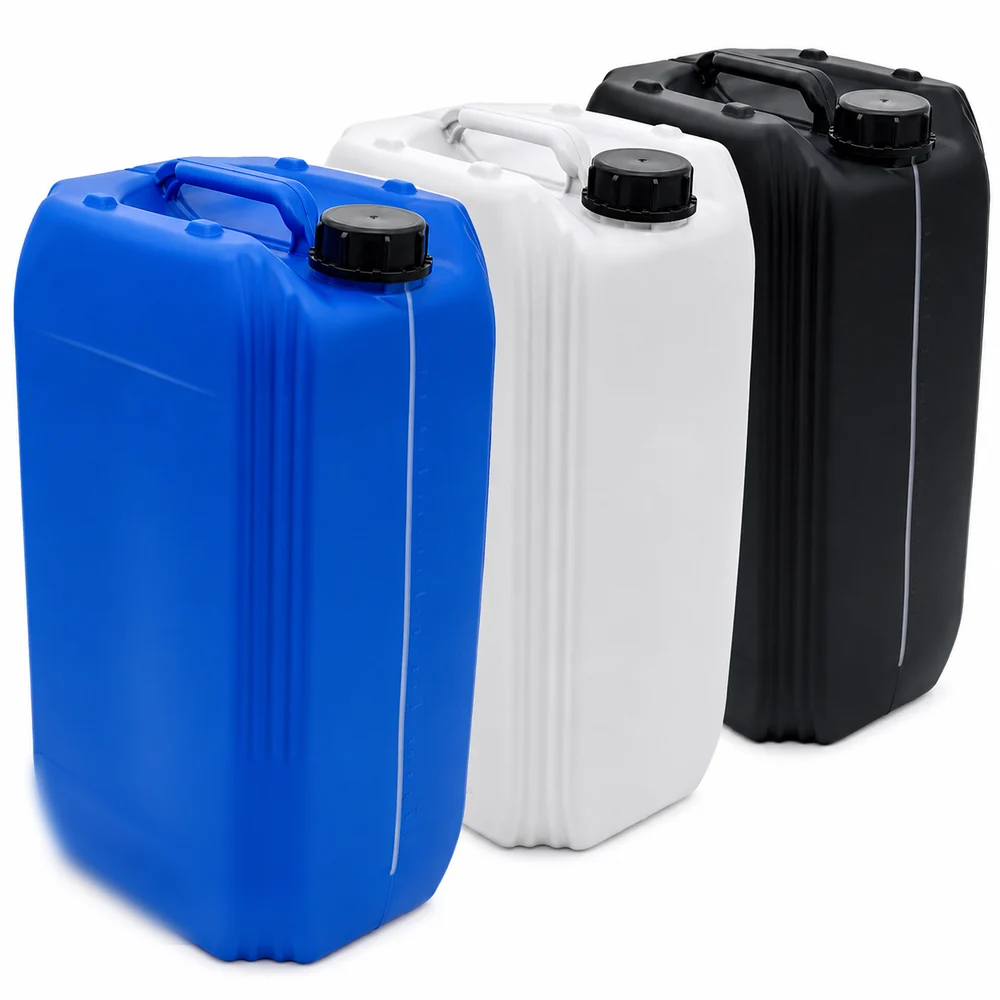 25L Stackable Plastic Jerrycan 25L Stackable Plastic Jerrycan |
HDPE, approval per design and plant. |
| UN 3B1, aluminium | 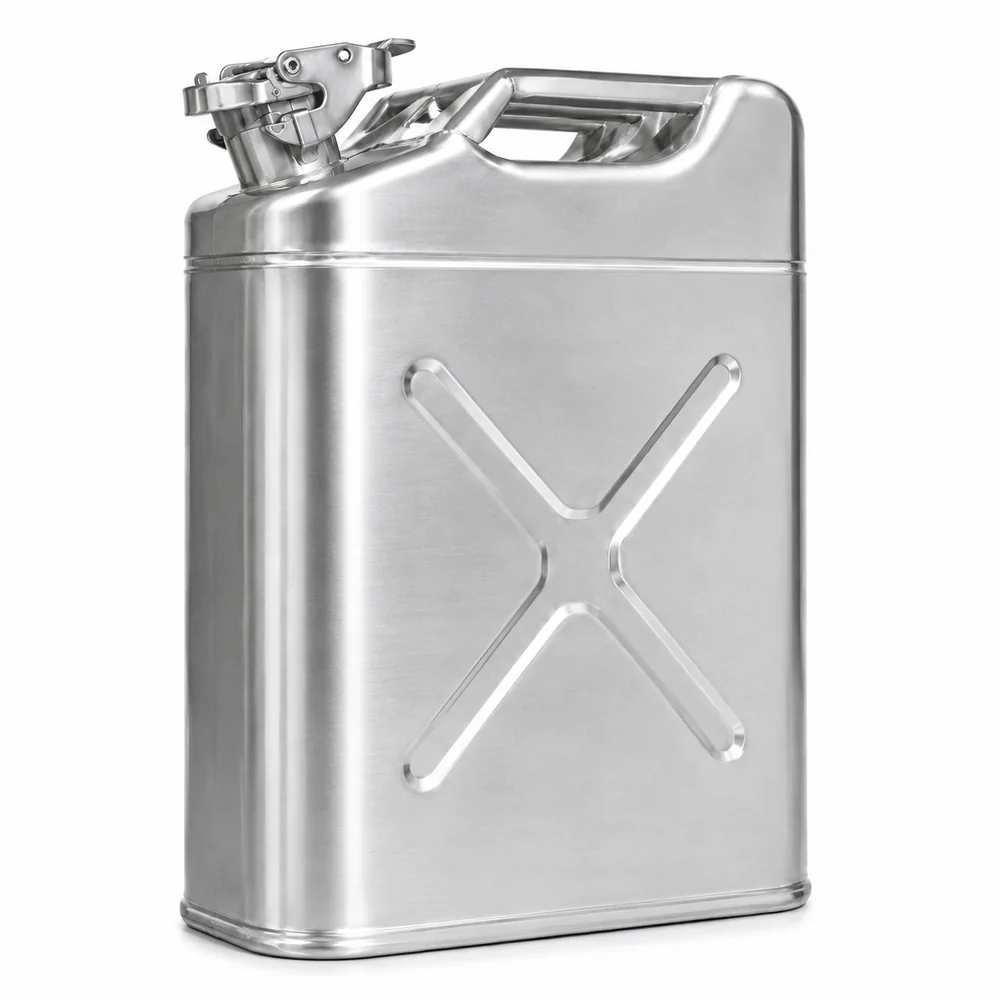 20L Aluminium NATO Can 20L Aluminium NATO Can |
The aluminium jerry can family. |
| UN 3H2, wide mouth | 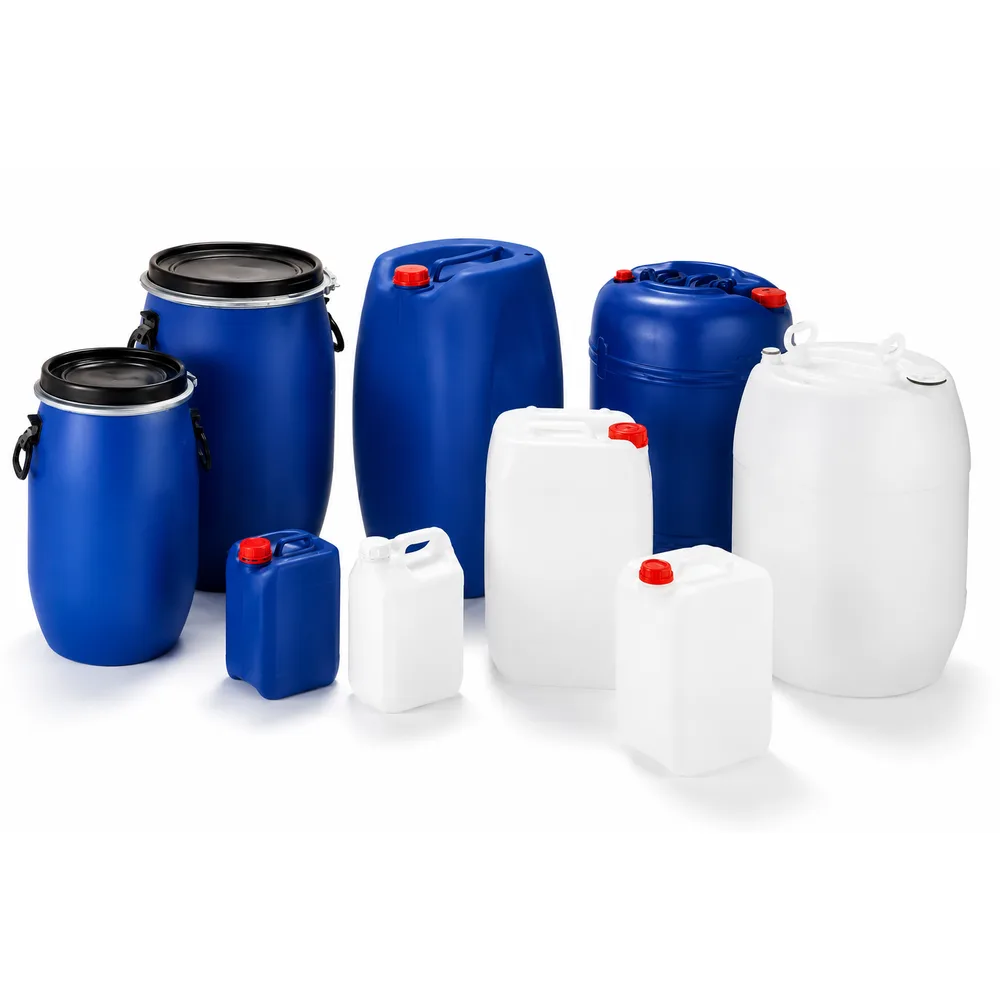 Wide-Mouth HDPE Jerrycan — UN 3H2 pattern Wide-Mouth HDPE Jerrycan — UN 3H2 pattern |
HDPE with a removable-head wide neck. |
The 3 means jerrican, A means steel, and 1 means closed head with a non-removable top. A UN 3A1 marking certifies that design was tested and approved for dangerous goods. UN 3H1 is the same closed-head jerrican in plastic, which in practice means HDPE.
Both are steel jerricans. 3A1 is closed head: the top is fixed and the liquid goes through a pouring opening. 3A2 is open head, with a removable lid giving full access to the interior. Closed head is standard for fuel; open head is used for viscous products.
Per design type and per manufacturing plant. An approval covers one design made at one named plant to the tested specification. The same drawing produced at a second factory needs its own approval, which is why a supplier moving production must re-certify rather than transfer the mark.
No. UN packaging approval covers dangerous goods. Potable water is not a dangerous good, so a water can needs food-contact and drinking-water documentation instead, such as NSF/ANSI 61 or the EU food-contact regulation, and no UN mark at all.
The standards and regulations this page relies on, at their issuing body. Where a market rule is named here, check the current revision before you specify against it.
Last reviewed .
Tell us your market, your fuel and your volumes. We come back with a specification sheet and a quotation.