
The choice is not price. It is what you store, where the can lives, and which market you sell into.
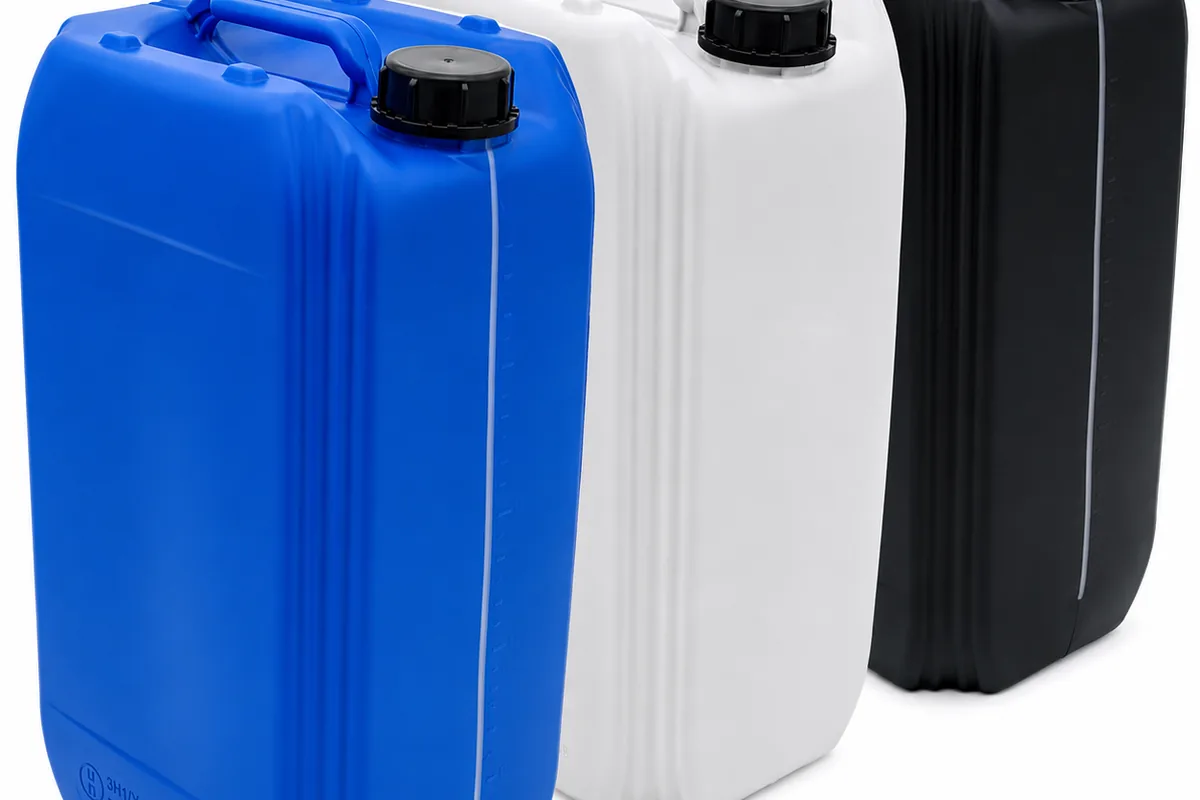
The choice is not price. It is what you store, where the can lives, and which market you sell into. Work through those three and the material chooses itself.
Both galvanized steel and HDPE carry fuel. The right one depends on the fuel and how long it sits, the duty the can does in the field, and the emissions and dangerous-goods rules of the market you sell into.
Hydrocarbon fuels migrate slowly through untreated plastic. This permeation loses product, releases vapour, and puts a container outside the emissions limits that the United States (EPA and CARB), the European Union and other markets enforce on portable fuel containers. Steel does not permeate at all, so for a steel can the question never arises.
The numbers make the gap concrete. The threshold used to qualify a wall construction for fuel service is 0.30 g/m²/day of surface area, measured at 28 °C. Untreated monolayer HDPE runs somewhere between 10 and 30 g/m²/day depending on wall thickness, so it misses that threshold by roughly two orders of magnitude. Level 3 fluorination gets to 1.5 to 2.5 and still fails. Level 5 fluorination reaches 0.15 to 0.25 and passes; a co-extruded EVOH wall reaches 0.05 to 0.12 and passes with room to spare.
So plastic can meet the limit, and only as a specific treated construction that you have to name in the purchase order. Our guide to HDPE grades and fluorination works through the tiers. If your market regulates fuel-container emissions, this single point often settles the material choice before any of the others are reached.
Put a plastic jerrican through ASTM B117 neutral salt spray, five per cent sodium chloride at 35 °C, and nothing happens: HDPE does not corrode or degrade under the test that defines outdoor life for steel. There is no coating to consume and no scratch that starts a reaction, so a coastal yard, a wash-down bay or a marine deck takes nothing out of a plastic can.
Steel gets to the same place by specification rather than by nature. A hot-dip galvanized coating carries decades in an ordinary atmosphere and years in constant salt spray, which is enough for almost every duty, and it gets there by consuming zinc that a plastic can never had to have. Our note on galvanizing and corrosion protection runs the arithmetic by site.
Which is to say the two materials fail at opposite ends. Steel is beaten by salt and plastic is beaten by solvent. Work out which of those your operation actually meets and the decision usually makes itself.
Steel tolerates years of tailgates, wash-down bays and rough sites. It dents rather than cracks, and a galvanized or coated body resists corrosion. HDPE is lighter, will not rust, and shrugs off impacts that dent steel, but it ages under long UV exposure and can distort near heat. For a can that lives outdoors and is expected to last seasons, steel is worth its cost. For a lighter, lower-cost can handled indoors or replaced often, HDPE fits.
The useful frame is expected service life against replacement cost rather than durability in the abstract. A steel can that lasts a decade on a site where cans get lost, stolen or driven over every eighteen months has spent its durability on nobody. An HDPE can replaced yearly in a wash-down bay may cost less over five years than the steel can that survives it. Count how many cans actually come back at the end of a season and the material argument usually settles itself.
HDPE is lighter empty, which matters when a worker carries and pours 20 litres repeatedly. It costs less per unit and per shipment. Steel is heavier and dearer, and it needs a corrosion coating that plastic never does. Many distributors stock both: HDPE as the volume line, steel as the durable, compliance-led option.
Stocking both also hedges a regulatory split that runs through this whole category. Several markets treat the two materials differently for the same liquid, most sharply in the UK where a 20-litre petrol container may be metal and may not be plastic. A distributor holding one material is exposed to a rule change or a market entry that the other would have covered, and the second line is cheaper to hold than the first was to establish.
Steel handles petrol, diesel, kerosene and JP-08 without a material change. HDPE needs the right grade and, for fuel, usually a fluorination step to control permeation and swelling. High-ethanol petrol above E10 is harder on seals and some plastics, so confirm the ethanol limit for either material before you commit.
Ask for the limit as a number rather than a reassurance, because the blends keep moving. E10 is now the standard grade across much of Europe, E15 and E85 exist in some markets, and a container specified against an older fuel is being asked a question it was never tested for. The parts that answer it are the interior and the seals rather than the shell, so the limit belongs on the specification beside the material.
Steel is one of the most recycled materials worldwide. HDPE is a widely accepted recyclate under resin code 2, though a fuel-contaminated can needs correct handling. Both have a route out of the waste stream when they are clean.
Contamination is what closes that route, and it closes it differently for each. Steel is melted, so a fuel residue burns off and the metal recovers; the barrier is that a can with fuel in it is a dangerous good and a scrap yard will not take it. Plastic is reprocessed at a temperature that does not destroy hydrocarbons, so a contaminated HDPE can degrades the stream it joins. Drain, dry and declare either one, and expect the plastic to be the harder conversation.
| Factor | Galvanized steel | HDPE |
|---|---|---|
| Fuel permeation | None | 10–30 g/m²/day untreated; 0.15–0.25 at level 5 fluorination |
| Barrier threshold, 0.30 g/m²/day | Not applicable | Level 5 or a co-extruded barrier |
| Salt spray, ASTM B117 | Depends on the coating | Unaffected |
| UN drop test, ASTM D5276 | Tested as filled | Tested filled at −18 °C or lower |
| Emissions compliance (US, EU) | Straightforward | Correct grade plus treatment |
| Outdoor durability | High | Good, UV-sensitive over years |
| Impact behaviour | Dents | Flexes, resists cracking |
| Empty weight | Heavier | Lighter |
| Unit cost | Higher | Lower |
| Corrosion | Needs galvanizing or coating | Immune |
| Best for | Field duty, compliance, long life | Volume, weight, cost |
UN approval is decided by free-fall drop testing to ASTM D5276, and plastics carry a condition metal does not: the filled container is chilled to −18 °C or lower before the drop. Polyethylene stiffens and loses impact toughness as it cools, so the test deliberately catches the wall at its most brittle. Steel has no equivalent transition at those temperatures.
The drop height comes from the packing group, 1.8 metres for Group I, 1.2 for Group II and 0.8 for Group III, and the pass criterion is absolute: no cracking, no rupture, no leakage from body or closure. For a buyer supplying Nordic, alpine or Canadian sites, this is the one place the plastic option needs more scrutiny than the price sheet suggests, because a thinned corner that passes in a warm workshop is a different can at minus eighteen.
Steel conducts. HDPE does not, and a non-conductive container generates and holds static charge as liquid flows through it. Decanting a flammable through a plastic can into a metal one, or filling a plastic can standing on a rubber truck bed liner, is a documented ignition path rather than a theoretical one. That is why fuel is dispensed into containers placed on the ground and why bonding matters at all.
The consequence for specification: where flammables are handled in a classified area, the plastic option is not ordinary HDPE but a carbon-loaded conductive grade with a stated surface resistivity, and it is bonded rather than merely placed. Steel sidesteps the question by being conductive to begin with. If the datasheet does not state a resistivity figure, the can is not an antistatic can whatever the description says.
A steel can is repairable in a way a plastic one is not. A dented body still holds; a scratched exterior takes paint; only interior coating failure retires it. HDPE cannot be repaired at all — a crazed or split wall is scrap — but it is straightforward to recycle as a single material, whereas a coated and painted steel can is a mixed stream.
Over a long programme this usually favours steel on cost per year rather than cost per unit, and it is the reason field and agency buyers who replace on a cycle tend to specify metal even where plastic would pass. Ask how long the can has to last before comparing the two on price.
We build both. Our steel fuel line includes the 20L Steel Fuel Tank with Spout and the 20L NATO Steel Fuel Can. Our HDPE range covers DEF, fluorinated, food-grade, economy and wide-mouth jerry cans in the industrial and chemical and fuel categories. Tell us the fuel, the market and the volume, and we point you at the material that clears your compliance file at the lowest landed cost.
Steel or plastic, matched to the job. Here is the line.
| Your use case | Recommended can | Why this one |
|---|---|---|
| Field duty and compliance | 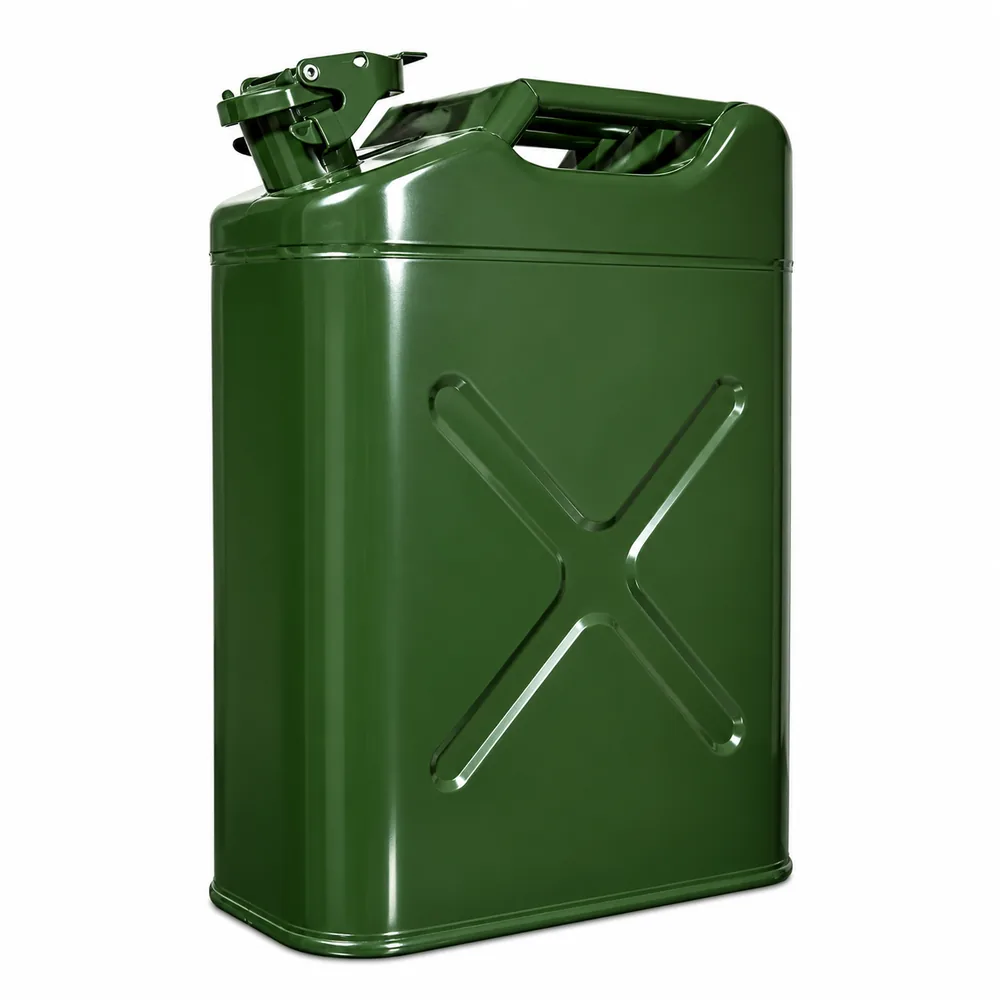 20L NATO Steel Fuel Can 20L NATO Steel Fuel Can |
Steel does not permeate; tough and UN-marked. |
| Fuel in plastic | 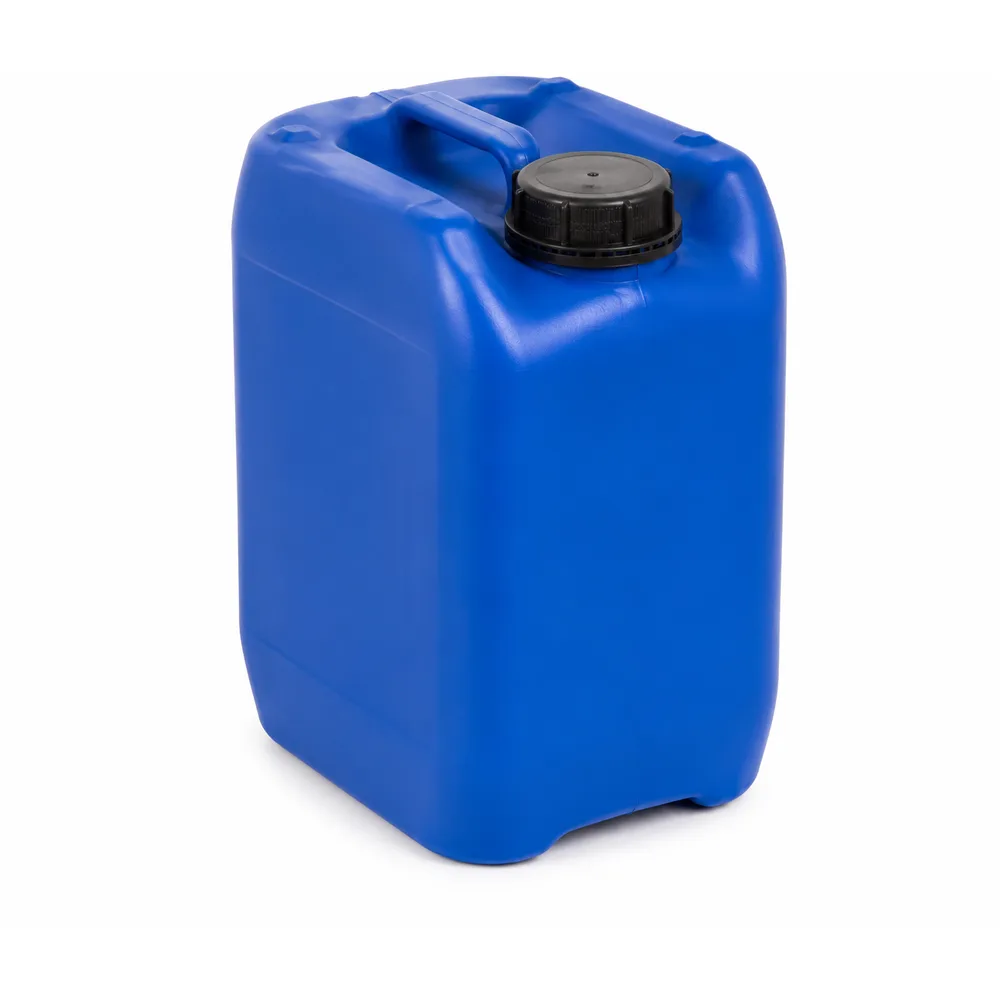 Fluorinated HDPE Jerrycan Fluorinated HDPE Jerrycan |
Fluorinated HDPE meets permeation limits. |
| Fuel, lying flat | 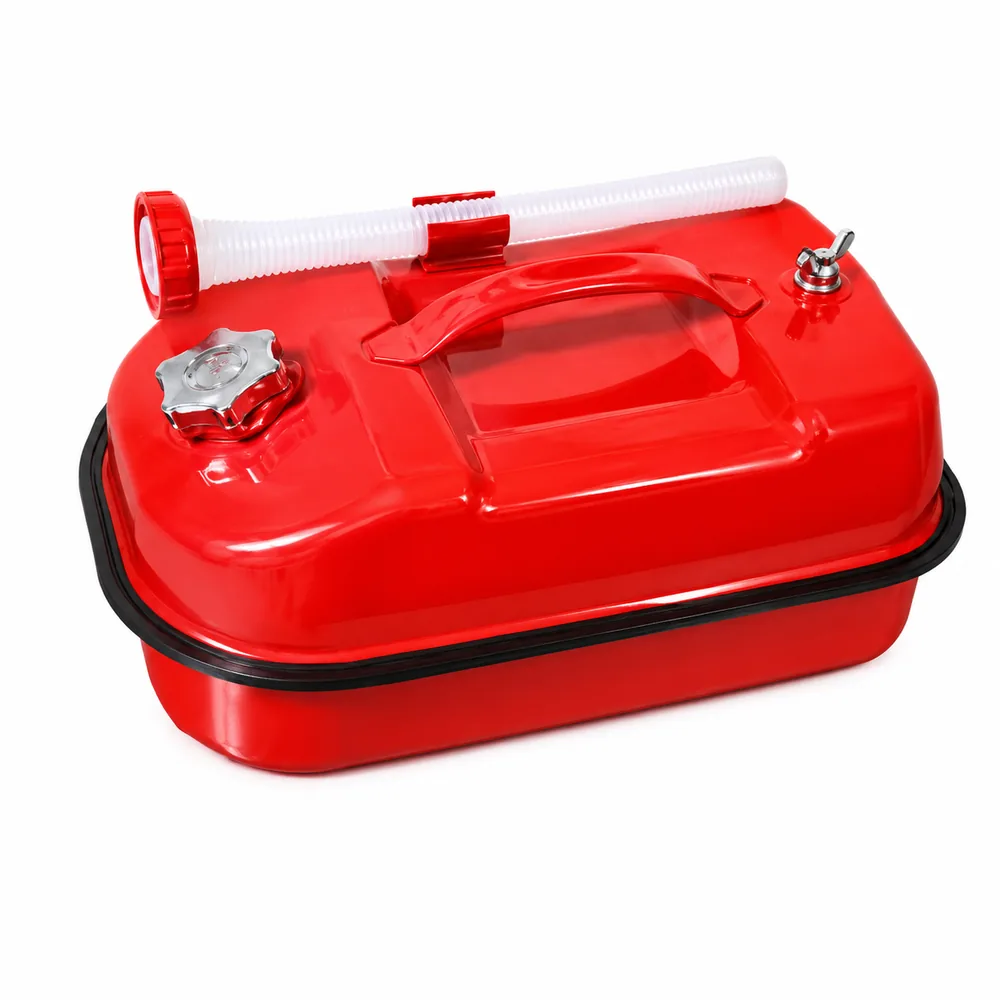 Horizontal Galvanised Can — 5L / 10L / 20L Horizontal Galvanised Can — 5L / 10L / 20L |
Galvanised steel, low-profile. |
| Volume, weight and cost | 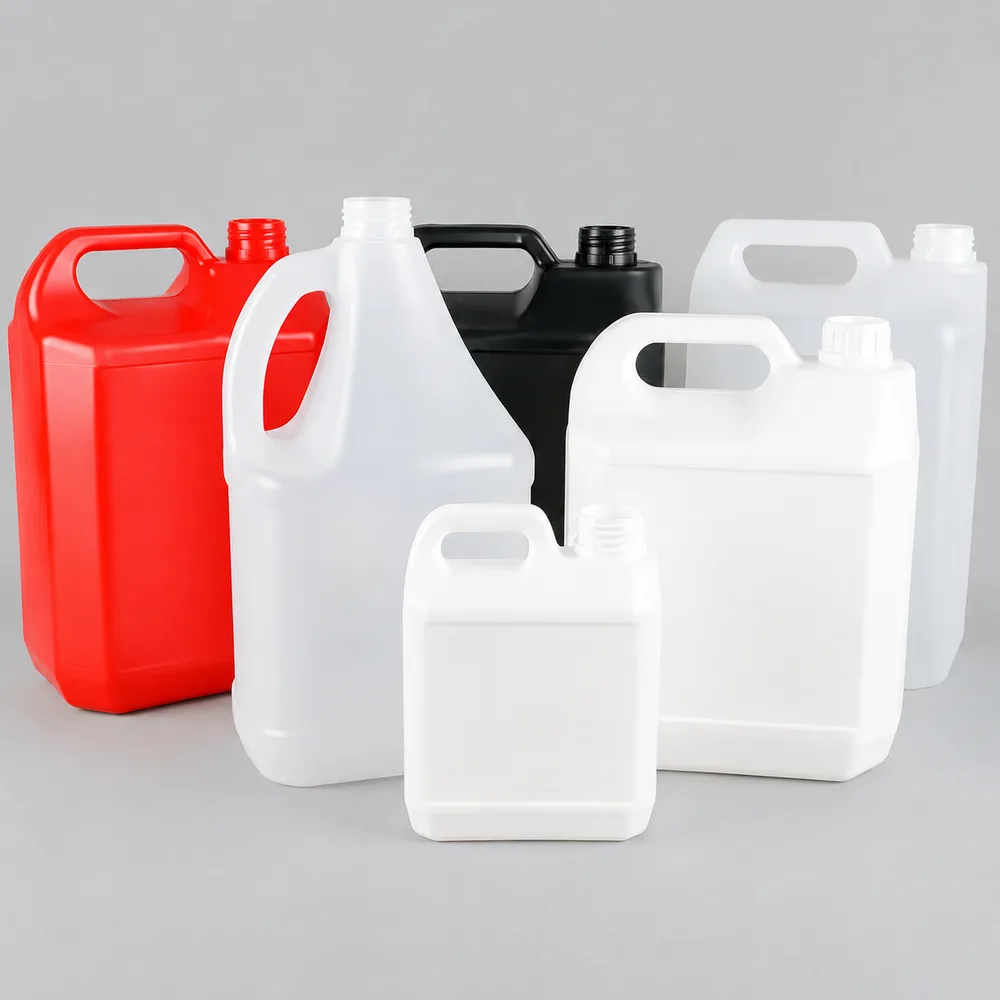 Economy HDPE Jerrycan — non-UN Economy HDPE Jerrycan — non-UN |
The lighter, cheaper non-fuel line. |
Steel does not permeate, survives heat and impact, and holds petrol for long storage without vapour loss. HDPE is lighter and cheaper but needs fluorination to meet permeation limits. For long-term fuel storage or hot climates, steel. For volume handling where weight and cost dominate, fluorinated HDPE.
Only in HDPE that has been fluorinated or co-extruded with a barrier layer. Untreated HDPE lets hydrocarbons permeate through the wall, losing fuel and failing US and EU emissions limits. Check the can carries a UN 3H1 marking and a stated permeation treatment level.
A galvanized or coated steel can in normal service lasts decades; the failure point is coating damage at seams and the base, not the steel itself. Inspect the internal coating at each refill cycle and retire any can showing rust bloom inside, which will contaminate fuel.
HDPE lands cheaper per unit, but the gap narrows in ocean freight because plastic cans nest poorly and pay for volume rather than weight. On a full-container basis for a 20 litre format, the delivered cost difference is far smaller than the ex-works difference suggests.
The standards and regulations this page relies on, at their issuing body. Where a market rule is named here, check the current revision before you specify against it.
Last reviewed .
Tell us your market, your fuel and your volumes. We come back with a specification sheet and a quotation.