
How a steel can is protected from rust, and what each finish trades off.
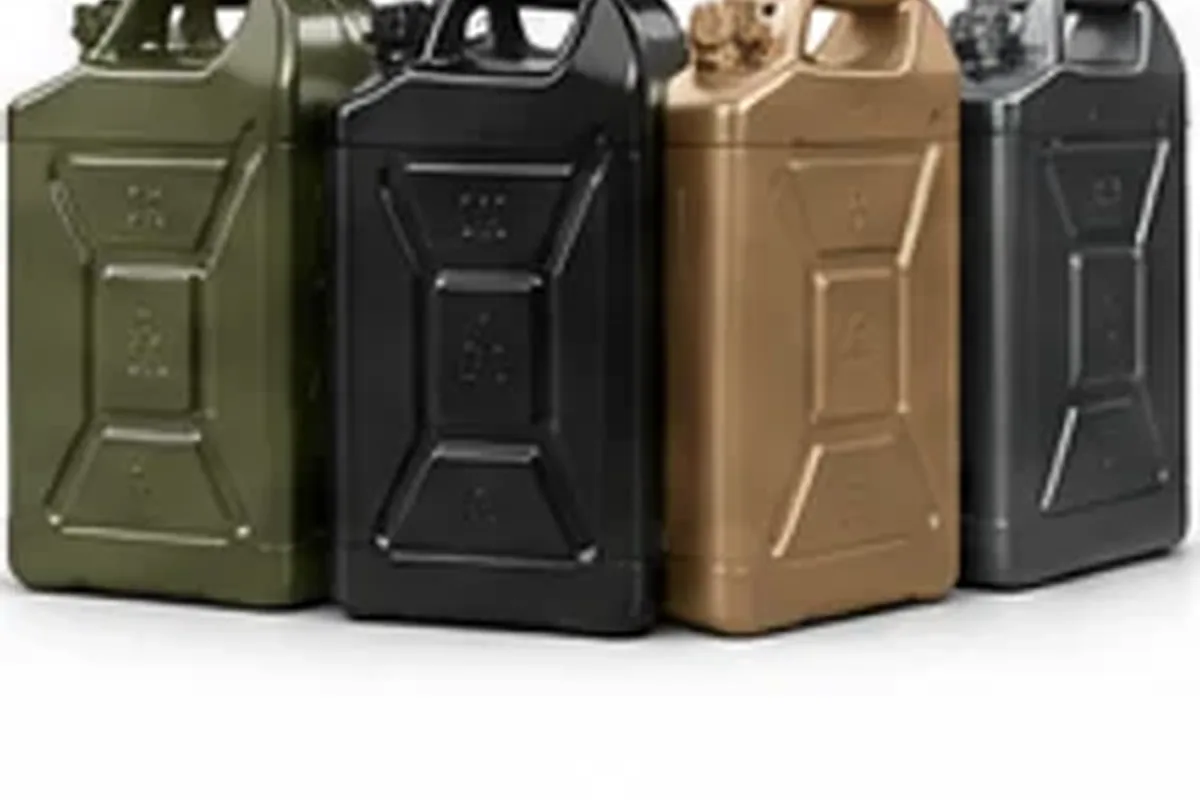
Bare steel rusts, and a rusted fuel can contaminates its contents and eventually leaks. What keeps a steel container in service for years is the coating, inside and out.
Steel corrodes when moisture and oxygen reach the metal. For a container that lives outdoors, on a tailgate or in a wash-down bay, unprotected steel has a short life. Protection is not optional; it is what makes steel viable. When you specify a steel can, you are really specifying its coating, so treat that as the decision.
The mechanism is worth stating precisely, because it explains every remedy that follows. Iron oxidises readily wherever water and oxygen reach it, and the oxide that forms is porous and flakes away instead of sealing the surface. That is the difference from aluminium and stainless steel, whose oxides are dense, tightly bonded and stop the reaction within a few atomic layers. Rust exposes fresh metal to the air and lets the process run to the end of the material.
So protecting steel means one of two things: keeping the water and oxygen away from it, or giving the corrosion something it prefers to eat. Paint, powder and interior linings take the first route and fail the moment the film is breached. Zinc takes the second and keeps working after it is scratched. Knowing which route a finish uses tells you exactly how it will behave once the can leaves the warehouse and starts getting knocked about.
Galvanizing coats the steel in zinc, which resists corrosion and, where the coating is scratched, sacrifices itself to protect the steel beneath. It is a durable, low-maintenance finish suited to fuel and outdoor use. The zinc is also why a galvanized can is for fuel and not for food or water, because zinc is not food-safe.
Two processes carry the same word and are not interchangeable. Hot-dip galvanizing to ISO 1461 immerses the steel in molten zinc and grows a metallurgically bonded coating typically 45 µm to 85 µm thick. Continuously galvanized sheet to EN 10346 is thinner: a Z275 designation means 275 g/m² across both faces, about 20 µm a side. Electro-galvanizing to ISO 2081 is thinner again, often 5 µm to 12 µm, and buys you a very even surface that takes paint well rather than a long outdoor life.
The practical consequence for a buyer is that the word galvanized, on its own, covers finishes that differ by a factor of ten in service life. Ask which process and what coating weight, and get the answer written into the specification alongside the steel grade. A quotation that says only galvanized has told you nothing you can hold anyone to, and the difference between Z275 sheet and a hot-dip finish is visible in the price for a reason.
Zinc corrodes in preference to steel. Scratch a galvanized surface and the zinc around the mark gives up its own metal to keep the exposed steel clear of rust. Engineers call this cathodic, or sacrificial, protection, and it is the reason a galvanized can shrugs off the scuffs of daily handling. Paint behaves the other way. Chip a painted panel and you expose bare steel that starts rusting at once, with the rust then creeping under the film. That gap in behaviour matters most on a can that gets dragged, stacked and knocked.
The electrochemistry behind it is simple enough to check. Zinc sits at about −0.76 V on the standard potential scale against iron's −0.44 V, so where both metals are wet and connected, the zinc is the one that dissolves. The protection reaches sideways across the bare patch, which is why a scratch a few millimetres wide stays clean while the zinc either side of it slowly gives itself up. Nothing needs to flow over the damage or seal it. The steel is simply the wrong metal for the reaction to attack.
The limit is that sacrificial protection is consumed as it works, so the coating has a calculable life. ISO 9223 puts zinc loss at roughly 0.7 to 2.1 µm a year in an ordinary urban atmosphere, 2.1 to 4.2 in a coastal or industrial one, and 4.2 to 8.4 where salt spray is constant. Run those against the coating weights above and a Z275 sheet finish gives a few years on a coastal site where a hot-dip coating gives decades. That single calculation should drive the finish you specify, and the chart below runs it out.
A painted or powder-coated body adds corrosion resistance and colour. Powder coating to a RAL colour is the durable option, and it is how a private-label steel can carries a house colour. The coating protects and brands in one step. Powder bonds as a thicker, harder film than wet paint, so it resists the chipping that starts corrosion, which is why it is the sensible choice when a can carries your name.
The numbers behind that are film thickness and adhesion. Powder cures to around 60 µm to 80 µm in a single pass where a wet coat lands nearer 25 µm to 40 µm, and the cured film is a crosslinked thermoset rather than a solvent-dried one, so it takes an impact by deforming instead of shattering. What decides whether it stays on, though, is the pretreatment underneath. Degrease, phosphate and rinse properly and the film holds for years; skip a stage to save cost and it lifts in sheets from the first stone chip.
Put powder over zinc and you get more than the sum of the two. The paint keeps water off the zinc so the zinc corrodes slower, and the zinc stops rust creeping under the paint where it is chipped. EN ISO 12944 treats the combination as a duplex system and credits it with roughly one and a half to two times the life of the two coatings added together. For a private-label can that carries a house colour into a coastal market, that is the specification to write.
The inside matters as much as the outside, and the two are separate jobs. Galvanizing or powder protects the outside; the inside needs its own lining, and a fuel can needs both. A hydrocarbon-service internal coating protects a fuel can's interior and is specified for the contents, not applied generically. One finish does not stand in for the other. The wrong interior is the most common failure in a cheap can, because the shell can look sound while the fuel attacks the wall you cannot see.
Which is why the interior is worth a question of its own at enquiry, in the form "what is the lining and how is it applied". A named system with a stated film thickness is an answer. "Coated" is not. The distinction matters because interior coatings are where cost is quietly removed from a cheap can: the outside carries the appearance and the inside carries the service life, and only one of those is visible on a sample.
Coatings are thinnest on edges, welds and the neck, because the film pulls back from a sharp corner and a weld bead, so those spots rust first; check them before the flat panels. Keep coated steel dry in storage, and inspect for chips and corrosion between uses. Rinse off salt and mud after a trip, and let the can dry before you put it away. A small coating repair extends a can's life; ignored, a chip becomes a rust spot and then a leak. Touch up a chip while it is still a chip.
Touch up galvanized steel with a zinc-rich paint rather than an ordinary one, because the repair has to restore the sacrificial protection and not just cover the mark. An ordinary topcoat over bare steel on a galvanized body seals moisture against the metal at the one place the zinc is already gone, which is why a cosmetically tidy repair can corrode faster than the untouched chip.
Two errors ruin a good can. The first is filling a galvanized or coated steel can with drinking water or food, when the zinc and the coating were never food-safe; a water can needs a food-contact specification, covered in food-contact and water certification. The second is ignoring the interior spec and ending up with rust in the fuel. Match the coating to the contents and neither happens.
The version that catches good buyers is a can moved between duties rather than specified wrongly at the start. A container bought for water and later filled with a solvent has a perfectly correct interior for the job it was bought for and the wrong one for the job it is doing. Mark cans by contents at the point they enter service, not at the point somebody remembers, because the reassignment is what breaks the specification rather than the purchase.
Where corrosion protection is a burden, stainless steel and HDPE avoid it entirely. Read steel vs HDPE and stainless 304 vs 316.
Each of those trades the coating problem for a different one rather than removing it outright. Stainless removes the liner and brings a chloride-pitting question and a higher price. HDPE removes corrosion altogether and brings permeation and a five-year dangerous-goods life. Coated steel keeps both problems and is the cheapest and toughest body of the three. There is no option here without a cost; there is only the option whose cost your duty cycle does not meet.
Fortitude21 galvanizes steel cans for fuel, powder-coats them to a RAL colour for private-label runs, and specifies the interior lining to what the can will hold. Tell us the contents and where the can will live, and we match the coating inside and out to that job.
Coating follows the contents and the exposure. Here is what we would build.
| Your use case | Recommended can | Why this one |
|---|---|---|
| Galvanised for outdoor fuel duty | 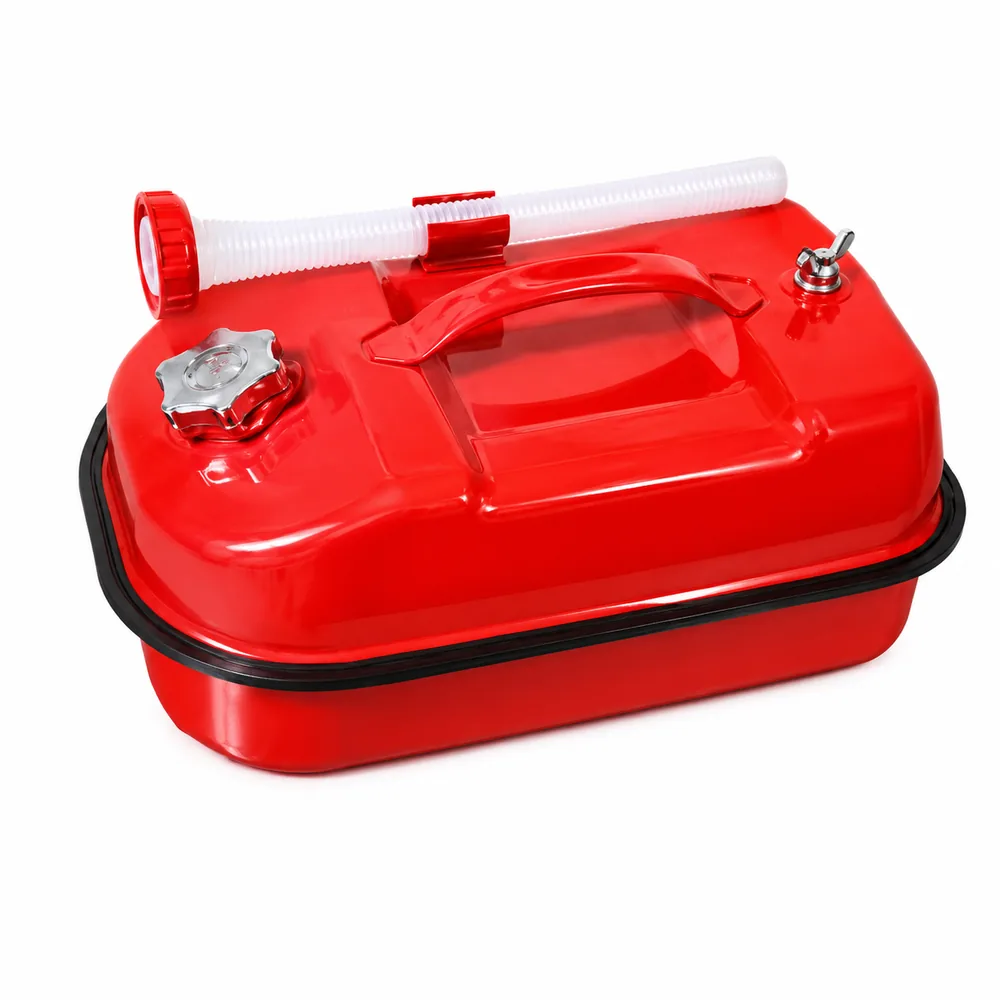 Horizontal Galvanised Can — 5L / 10L / 20L Horizontal Galvanised Can — 5L / 10L / 20L |
Sacrificial zinc resists rust and scuffs. |
| Coated steel fuel can | 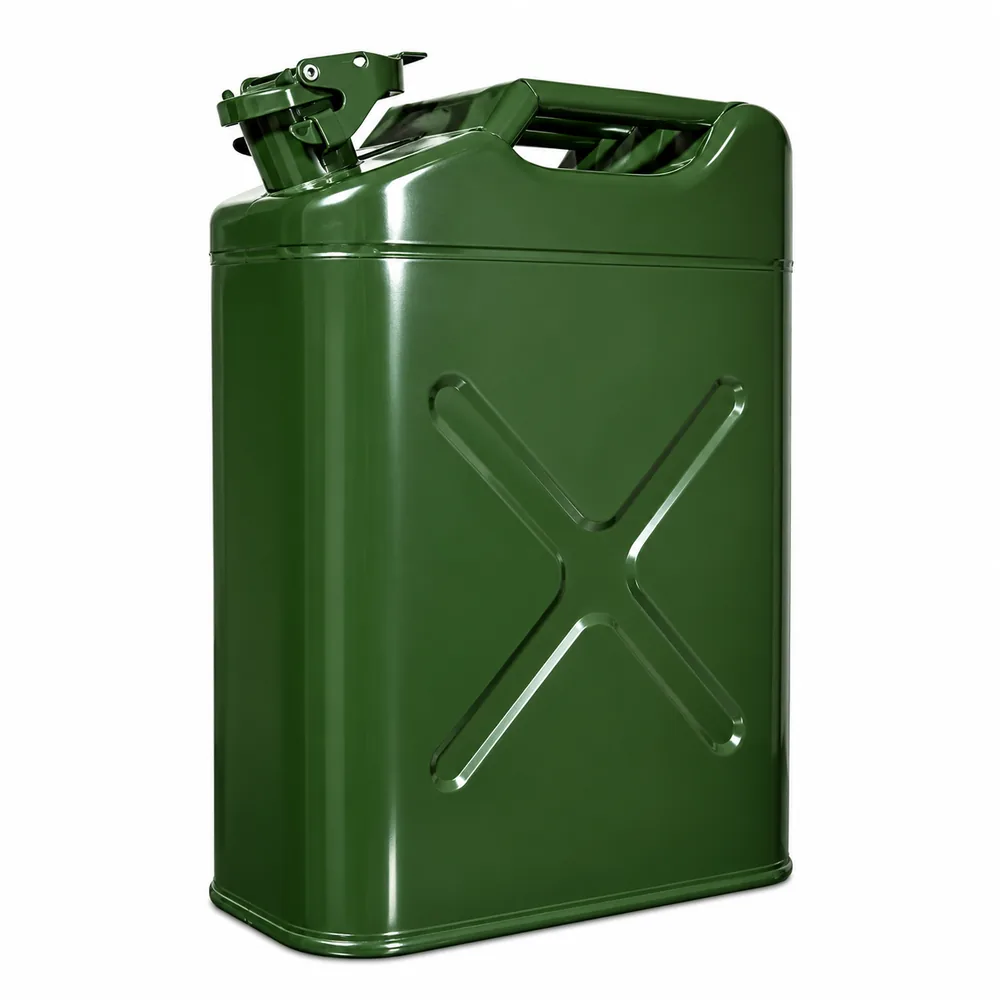 20L NATO Steel Fuel Can 20L NATO Steel Fuel Can |
Galvanised outside, hydrocarbon-lined inside. |
| No coating to maintain | 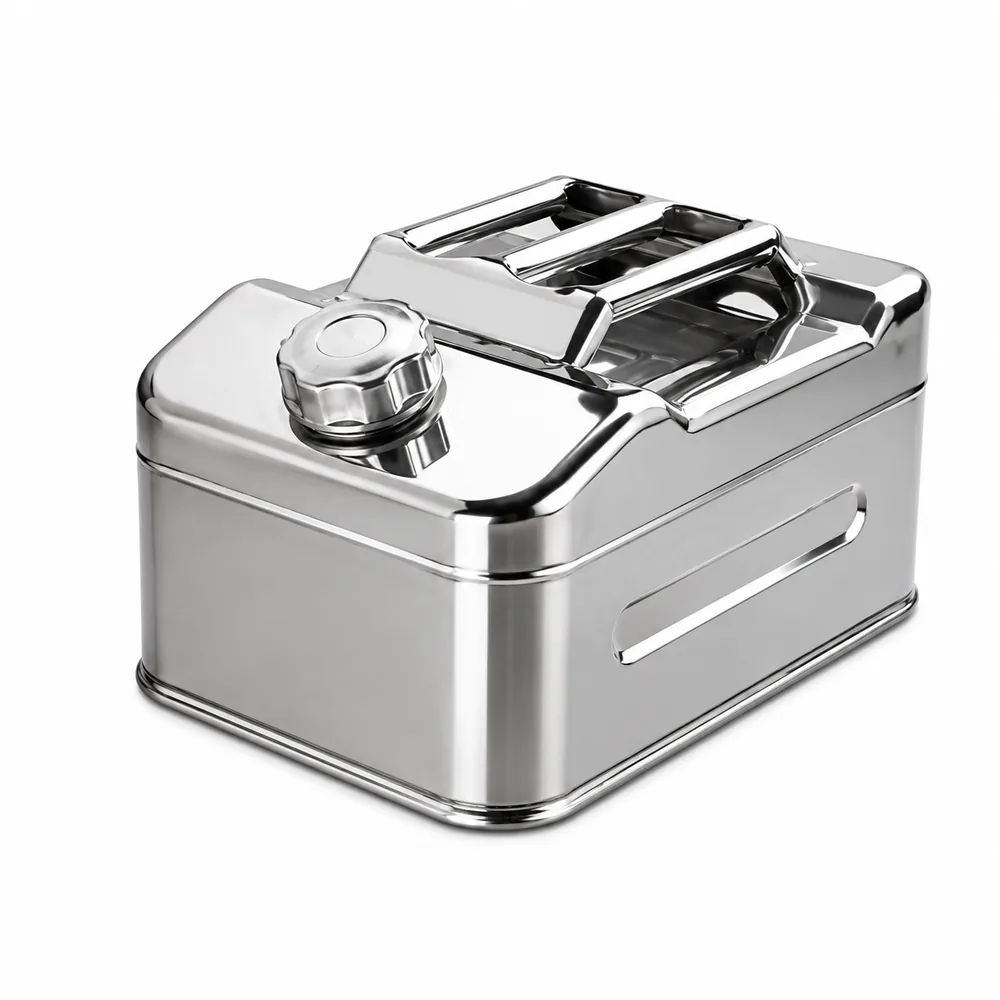 Stainless NATO Can — 10L / 20L Stainless NATO Can — 10L / 20L |
Stainless avoids the corrosion problem entirely. |
| Water, where zinc is unsafe | 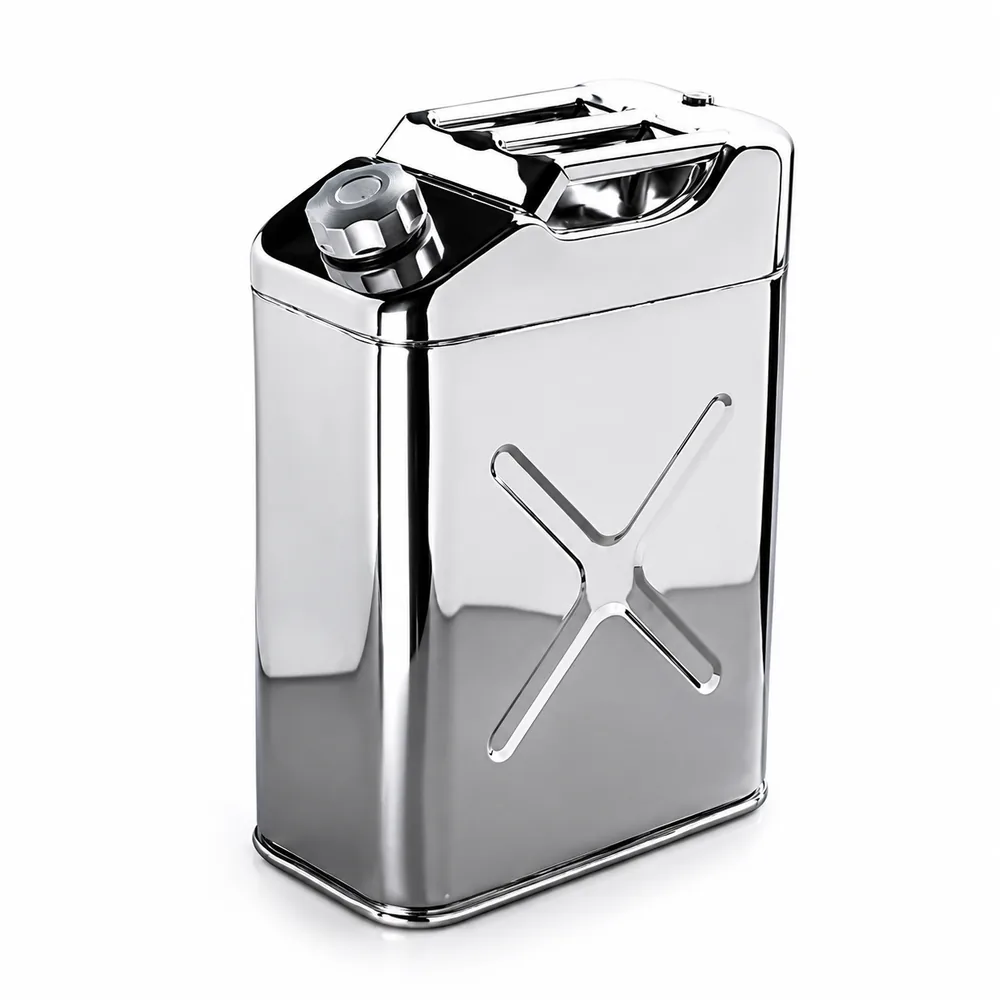 20L Stainless Steel Water Can 20L Stainless Steel Water Can |
AISI 304 stainless, food-grade across the wetted path. |
Hot-dip immerses the steel in molten zinc, giving a thick, metallurgically bonded coating that lasts far longer outdoors. Electro-galvanizing deposits a thin, even zinc layer electrically, giving a better surface for painting but much less corrosion life. Jerry cans in field service want hot-dip or an equivalent coating weight.
No. Stainless resists corrosion through its own passive chromium oxide layer, which repairs itself when scratched. That is the practical advantage over coated steel: a deep scratch on a coated can starts rust, while the same scratch on stainless does nothing.
Because water collects at the base and the internal coating is hardest to inspect. Condensation from temperature cycling, or water absorbed by an ethanol blend, settles under the fuel and attacks any coating defect. Storing cans full, and draining fully before long storage, both reduce it.
The standards and regulations this page relies on, at their issuing body. Where a market rule is named here, check the current revision before you specify against it.
Last reviewed .
Tell us your market, your fuel and your volumes. We come back with a specification sheet and a quotation.