Fortitude21
Home  /  Marine and dockside containers

Marine and dockside fuel and water containers

Why salt air changes the material choice, and what survives a pontoon.

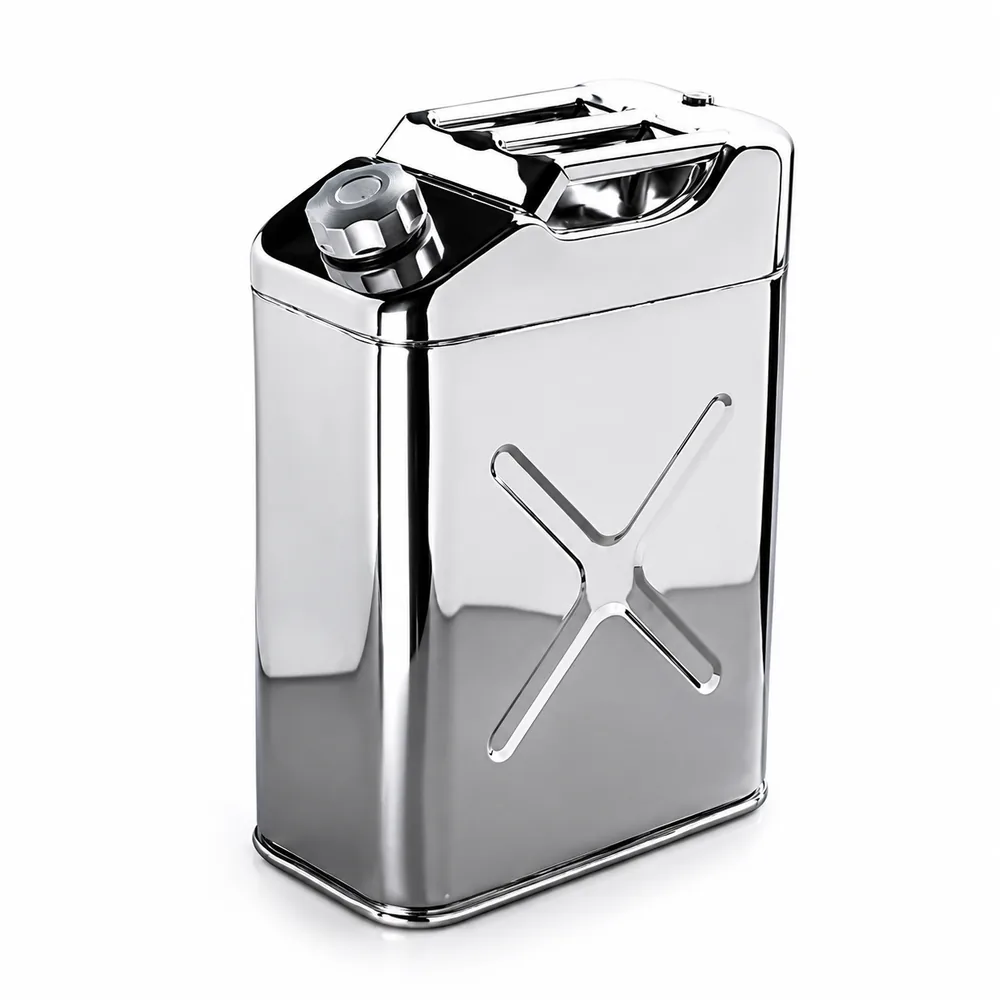
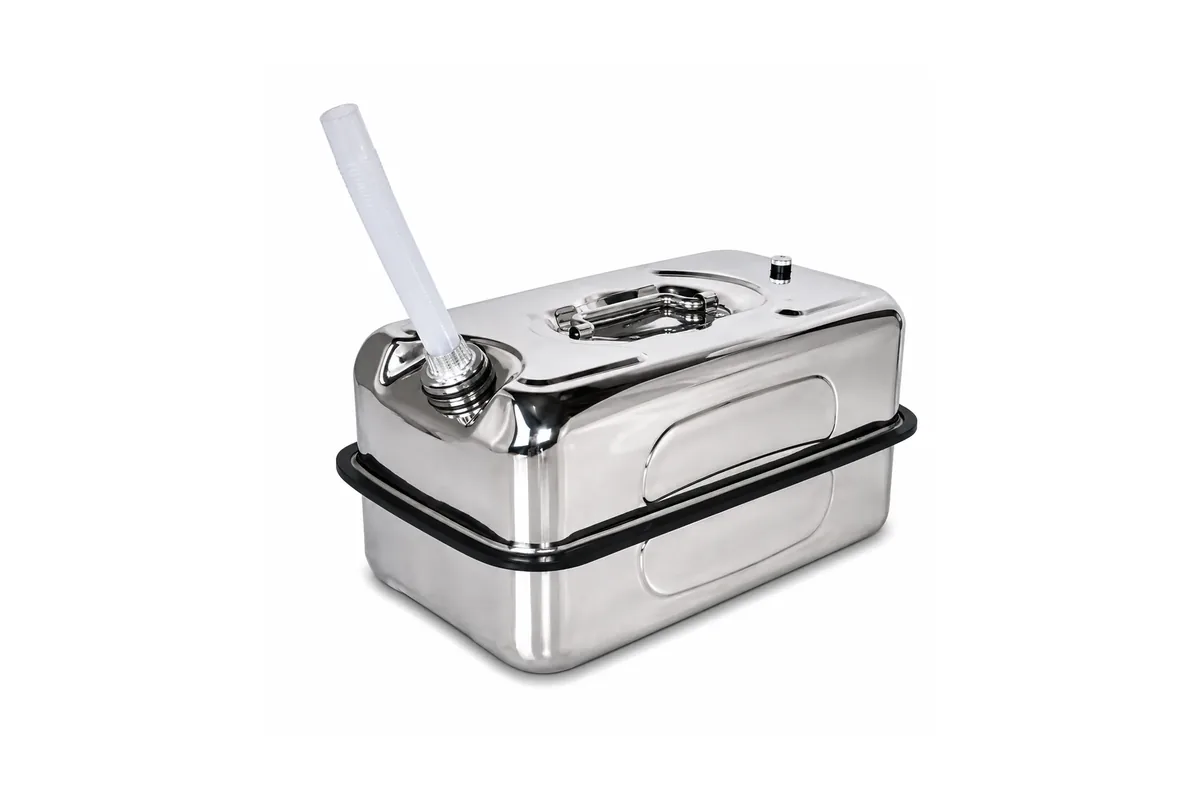
A brushed stainless steel jerry can, the marine-grade choice for salt air
Stainless for the salt: 304 standard, 316 on request.

The dockside is a corrosive place. Chloride in sea air and spray attacks metals that shrug it off inland, so the marine environment changes which container survives.

What salt does

Chloride pits and corrodes ordinary steel and, over time, even standard stainless. A galvanized steel fuel can lasts far longer in salt air than bare steel, but the harshest marine duty asks for more. Spray reaches into cockpit lockers and lazarettes, and the salt film it leaves keeps working long after the water dries.

The chemistry is specific rather than general nastiness. Stainless steel resists corrosion because chromium forms a passive oxide film a few atoms thick that repairs itself in the presence of oxygen. Chloride ions are small enough to penetrate that film locally, and once through they prevent it re-forming at that spot. The result is not general rusting but pitting: a pinhole that drives deep while the surface around it stays bright.

Galvanized steel is attacked differently and faster. Zinc protects sacrificially, so it is consumed as it works, and chloride accelerates the consumption. ISO 9223 puts zinc loss at 4.2 to 8.4 micrometres a year in a constant-salt-spray atmosphere against 0.7 to 2.1 inland, so a coating that would last decades on a farm lasts years on a dock. Our note on galvanizing runs the arithmetic by coating weight, and the answer for marine duty is always a heavier coating than a catalogue default.

The one-third rule Marine practice divides fuel into three: a third for the outward passage, a third for the return, and a third untouched as reserve. THE ONE-THIRD RULE Out 33% Back 33% Reserve, untouched 33%
A 50 per cent reserve on the planned passage. Marine fuel is sized on engine running hours rather than distance, because the engine burns fuel whether or not you are making way over ground.

Stainless grade matters here

For water and food-grade liquids in a marine setting, AISI 316 stainless resists chlorides better than 304, thanks to its molybdenum. That molybdenum raises the PREN, the pitting resistance equivalent number that predicts how a stainless holds up against chloride attack, and 316 carries a higher PREN than 304. Chloride works into crevices and seams first, so a clean weld and a smooth interior earn their keep alongside the grade. Where 304 suits inland potable water, 316 is the marine upgrade. Read stainless 304 vs 316.

PREN is worth knowing as a number rather than an assurance, because it is a simple formula you can check against a mill certificate: PREN = %Cr + 3.3 × %Mo + 16 × %N. Grade 304 carries around 18 per cent chromium and no molybdenum, which lands it near 18 to 20. Grade 316 carries about 16.5 per cent chromium and 2 to 2.5 per cent molybdenum, which lifts it to roughly 24 to 26. That single addition is what the marine premium buys.

Two cautions come with it. PREN ranks grades against pitting; it does not predict a service life, and no stainless is immune in chloride given a crevice and time. And the composition ranges inside a grade are wide enough that two batches of nominally identical 316 can differ by several PREN points, which is one more reason a mill certificate to EN 10204 3.1 is worth asking for on a marine order rather than accepting a generic declaration.

Why salt air is harder than immersion

People assume the sea itself is the threat. For a container kept aboard, salt-laden air is worse, because immersion at least rinses and the surface stays wet and oxygenated, whereas airborne salt dries into a deposit that concentrates chloride at one spot and holds moisture against the metal.

That is the mechanism behind pitting on deck gear that never went overboard. The deposit sits in a crevice, under a strap, behind a bracket, at a seam, draws moisture from humid air and creates a small, stagnant, chloride-rich cell exactly where the passive layer cannot get oxygen to repair itself.

The practical consequences are unglamorous and effective: rinse with fresh water after passages, avoid trapping cans against a surface where salt collects, and prefer smooth finishes and open mounting over anything that creates a permanent crevice.

Pitting resistance, PREN PREN equals per cent chromium plus 3.3 times per cent molybdenum plus 16 times per cent nitrogen. Grade 304 lands near 19, grade 316 near 25, and duplex 2205 near 35. PITTING RESISTANCE, PREN 304 stainless 19 316 stainless 25 2205 duplex 35
PREN = %Cr + 3.3 × %Mo + 16 × %N, so it can be checked against a mill certificate rather than taken on trust. It ranks grades against pitting and does not predict a service life: no stainless is immune in chloride given a crevice and time. Composition ranges within a grade are wide enough that two batches of 316 can differ by several points.

Fuel at the pontoon

For carrying and pouring fuel at a small fuelling point, a galvanized or coated steel can handles the hydrocarbons and the exposure, kept dry between uses to protect the coating. Fuel vapour builds inside a sealed can left in the sun, so vent it away from the water before you crack the cap. Confirm the fuel and any marina rule before you carry.

It is worth being clear about what standard does and does not cover a can you carry aboard. ISO 21487 governs permanently installed petrol and diesel fuel tanks on craft up to 24 metres, so a portable jerrican falls outside it entirely. A portable can is governed by its UN packaging approval for transport and by the marina's own rules for handling, which is a different and thinner set of obligations than a built-in tank carries. Nobody should read a boat-building standard as covering the can in the locker.

The practical hazard on a boat is the same vapour problem as ashore with the ventilation removed. Petrol vapour is three to four times denser than air, so in a hull it does not rise and disperse; it sinks into the bilge, which is the least ventilated space aboard and the one with the bilge pump switch in it. That is the whole reason fuel is handled on deck and to leeward, and why a can is never stowed below without ventilation. See storing fuel safely for the flammable range behind it.

What salt does to each bodyChloride pits stainless locally rather than rusting it generally, consumes zinc faster than inland air, and attacks aluminium galvanically wherever it touches steel. Salt air Crevice Steel contact 316 stainless 316 stainless: suitable for Salt air 316 stainless: conditional for Crevice~ 316 stainless: suitable for Steel contact 304 stainless 304 stainless: conditional for Salt air~ 304 stainless: not suitable for Crevice 304 stainless: suitable for Steel contact Hot-dip galvanised Hot-dip galvanised: conditional for Salt air~ Hot-dip galvanised: conditional for Crevice~ Hot-dip galvanised: suitable for Steel contact Aluminium Aluminium: suitable for Salt air Aluminium: conditional for Crevice~ Aluminium: not suitable for Steel contact
Crevices are conditional everywhere because a salt deposit under a strap or in a seam holds moisture against the metal and starves it of the oxygen the passive film needs. The bottom right cell is the one people miss: aluminium is anodic to steel, so it corrodes at the contact regardless of how right the alloy was.

The one-third fuel rule

Boaters plan range by thirds: a third of the fuel to reach the destination, a third to return, a third held back for weather or a longer way home. Carried cans back that reserve, so size and count what you bring to the rule, not to the tank alone.

Work it and the numbers argue for more cans than intuition suggests. A boat burning 10 litres an hour on a four-hour passage needs 40 to get there, 40 to come back and 40 in reserve: 120 litres for a trip that consumes 40. If the tank holds 80, the shortfall is two 20-litre cans, and that is before any allowance for a headwind, a foul bottom or a diversion, all of which raise consumption rather than lower it.

The rule also assumes the return leg costs the same as the outbound one, which is exactly the assumption weather breaks. Wind and sea that helped on the way out cost on the way back, and consumption against a head sea can rise sharply for the same distance. Treating the final third as untouchable rather than as a buffer to dip into is what makes the arithmetic hold.

Shape for lockers and small craft

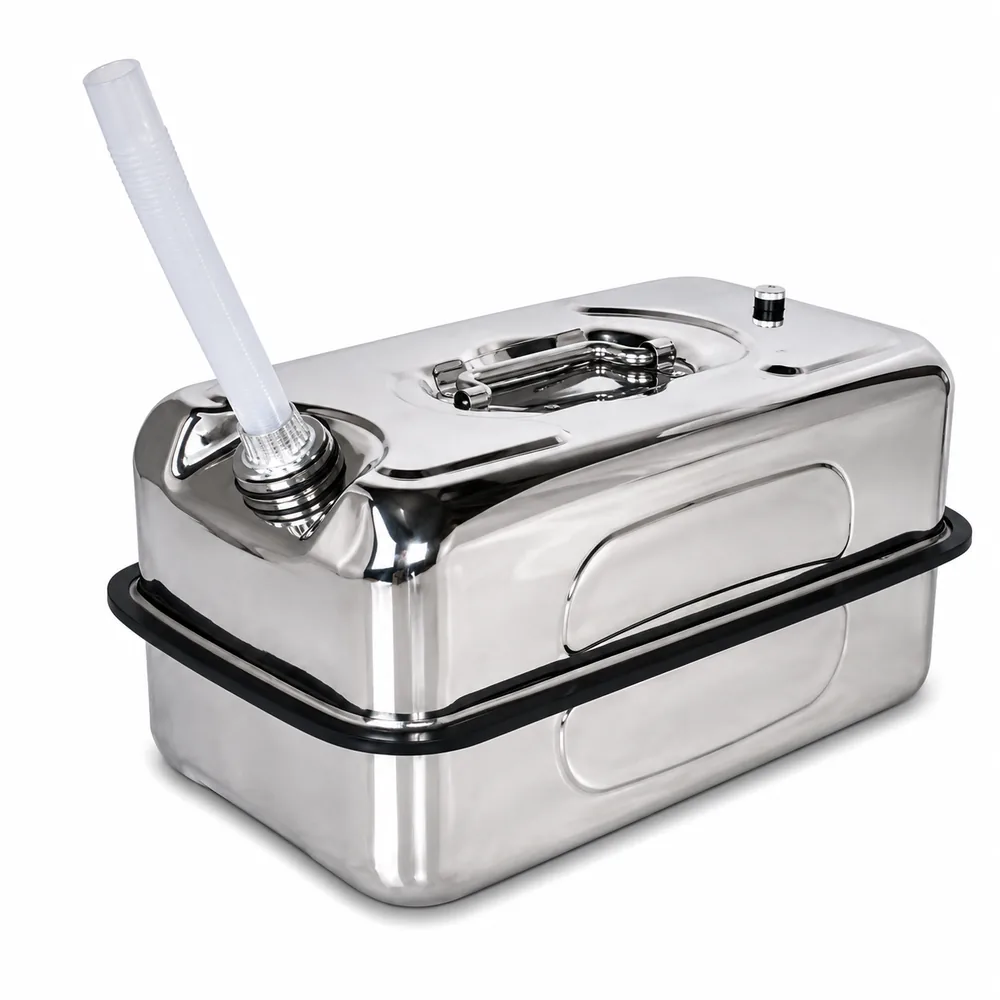
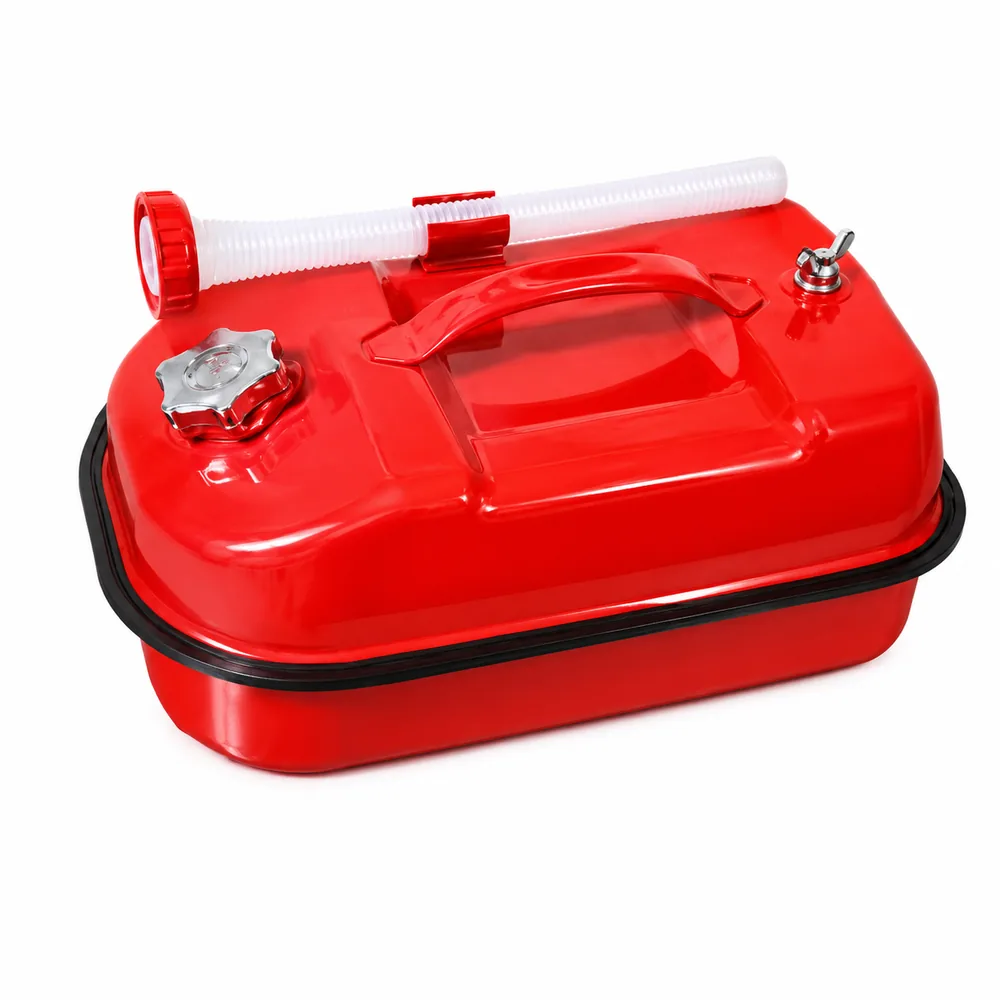
An upright can wastes the space a boat gives you. A low-profile horizontal can lies flat in a cockpit locker or under a thwart, stows below the rail out of the worst spray, and shifts less than a tall can on a heeling deck. See horizontal and under-seat cans.

Two forces make the case, and they compound. The first is the lever: mass carried high heels the boat further for the same wind and makes it slower to come back upright, so 20 kg on a cabin top costs stability that the same 20 kg under a thwart does not. The second is free surface. A part-full can holds liquid that runs to the low side as the boat heels, shifting the weight further outboard and adding to the heel that caused it.

Which gives two habits worth adopting. Stow low and inboard, and carry cans either full or empty rather than half. A full can cannot slosh because there is nowhere for the liquid to go, and an empty one has nothing to shift. A row of half-full cans in a cockpit locker is the arrangement that does the most harm, and it is also the most common.

Why salt air is harder than salt waterImmersion is a steady, oxygen-poor environment. Spray and drying air cycle the surface between wet and dry and concentrate the chloride as it evaporates. Spray lands
A thin film of salt water
It dries
Water leaves, chloride stays and concentrates
Rewetted
Now a stronger solution than the sea
Pitting starts
In the crevices, where it cannot dry
This is the counter-intuitive result that decides marine specification: the deck locker above the waterline is a harsher place for stainless than the water beneath it.

Handling and safety

Secure cans against a moving deck, keep them sealed against spray, and follow the marina's fuel-handling and spill rules. Straps or a dedicated holder grip a can better than a wedged corner, and a loose can turns into a projectile when the boat rolls. See mounting and handling. Keep fuel and water cans apart and colour-code them, so nobody tips petrol into a drinking-water can in a hurry. A pouring spout cuts spillage into a filler on an unsteady platform. See spill containment. Back on the mooring, rinse the salt off the metal with fresh water before a drying film starts to pit it.

Rinse the fittings before the body, because that is where the chloride concentrates. Salt collects in crevices rather than on flat surfaces, so the underside of a strap, the seat of a clamp, the thread of a cap and the join between a can and its holder hold it long after an open panel has dried. A hose over the top of a stowed can wets the surface and leaves the crevices. The job is to unclip, rinse and let it drain.

What salt does to each body materialThe marine environment separates the materials sharply, and two of them need help that costs more than the container. Coastal air Direct spray AISI 316 stainless AISI 316 stainless: suitable for Coastal air AISI 316 stainless: suitable for Direct spray AISI 304 stainless AISI 304 stainless: conditional for Coastal air~ AISI 304 stainless: not suitable for Direct spray Galvanized steel Galvanized steel: conditional for Coastal air~ Galvanized steel: not suitable for Direct spray Painted steel Painted steel: not suitable for Coastal air Painted steel: not suitable for Direct spray HDPE HDPE: suitable for Coastal air HDPE: suitable for Direct spray Aluminium Aluminium: suitable for Coastal air Aluminium: conditional for Direct spray~
Only two rows clear both columns, and they are the two extremes of price. That is the honest shape of marine container choice: 316 or plastic, with the middle options needing maintenance.

A common mistake

The error that costs a season is a painted or plain-steel can left in salt air: the coating chips, spray finds the bare steel, and rust follows fast. The other is fitting 304 where the duty called for 316, then watching chloride pit a metal that looked right on paper. Match the metal to the liquid and the exposure before you buy, not after.

The second error is more forgivable and just as costly: specifying correctly and then mounting badly. An aluminium can clamped in a steel rack with stainless fasteners on a coastal site will corrode at the contact regardless of how right the alloy was, because galvanic attack does not care what the specification said. The mount is part of the material decision rather than an accessory to it.

What Fortitude21 fits

Our stainless water range is AISI 304 as standard, with 316 on request for marine duty, and our steel fuel range suits dockside carrying. Tell us the water or fuel and the exposure and we specify the grade. See the water and fuel ranges.

What a locker actually demands of the shapeMarine stowage constrains the container more tightly than any land use, and the geometry matters more than the capacity. Required Flat parallel sides Flat parallel sides: suitable for Required Low enough for the hatch Low enough for the hatch: suitable for Required Handles reachable stowed Handles reachable stowed: suitable for Required Secured against motion Secured against motion: suitable for Required Vents without leaking heeled Vents without leaking heeled: suitable for Required
The last row is unique to boats. A can that vents correctly upright and weeps when the vessel heels is a can that empties into the bilge, and no land specification tests for it.

Match the can to the job

Salt and shape both point at a can. Here is what we would put on the pontoon.

Your use caseRecommended canWhy this one
Potable water in salt air 20L Stainless Steel Water Can20L Stainless Steel Water Can Food-grade stainless, 316 on request for the harshest exposure.
Water or food, stowed flat Horizontal Stainless Can — 5L / 10L / 20LHorizontal Stainless Can — 5L / 10L / 20L AISI 304 stainless, low-profile for a cockpit locker.
Fuel, out of the worst spray Horizontal Galvanised Can — 5L / 10L / 20LHorizontal Galvanised Can — 5L / 10L / 20L Galvanised steel, lies flat below the rail.
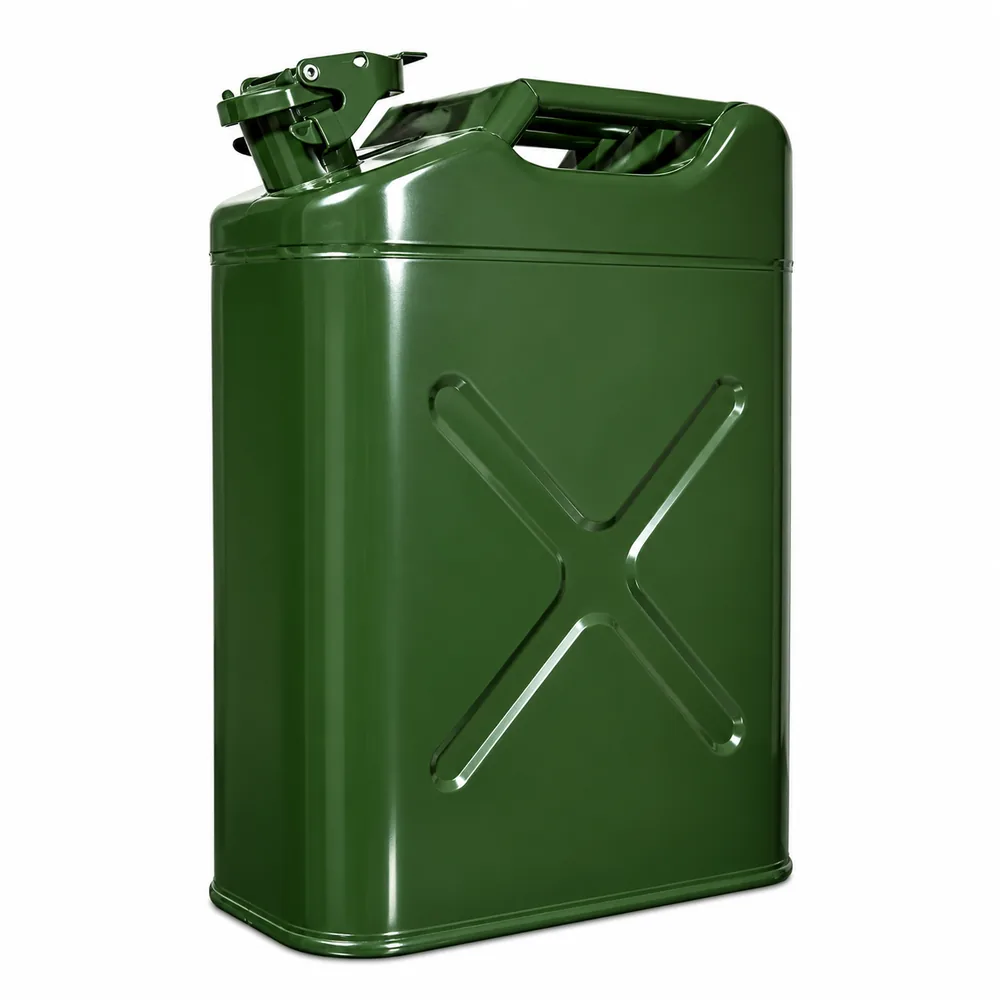
Fuel, carried to the pontoon 20L NATO Steel Fuel Can20L NATO Steel Fuel Can Coated steel for hydrocarbons, kept dry between uses.

Common questions

What material is best for jerry cans on a boat?

Stainless 316 for anything staying aboard long term, because salt air and spray pit 304 and destroy coated steel at seams and fittings. HDPE survives salt well and is the cheaper option, but it degrades in sustained UV unless the grade is stabilised for it.

How much fuel reserve should a boat carry?

The common working rule is thirds: a third out, a third back, a third untouched, which is a 50 percent reserve on the planned passage. Marine fuel is sized on engine running hours rather than distance, because the engine burns fuel whether or not you are making way over ground.

Do jerry cans need securing on deck?

Always, and to a fixed point rather than to a rail alone. A loose full can in a seaway is both a hazard to crew and a fuel spill waiting to happen. Deck-stowed fuel also needs to be clear of ignition sources and accessible for inspection.

References

The standards and regulations this page relies on, at their issuing body. Where a market rule is named here, check the current revision before you specify against it.

Last reviewed .

Talk to us about your fuel programme

Tell us your market, your fuel and your volumes. We come back with a specification sheet and a quotation.

Chat on WhatsApp