
What a stabiliser is made of, how to dose it, how long treated petrol keeps, when engine makers drain instead, and what the safety data sheets show.
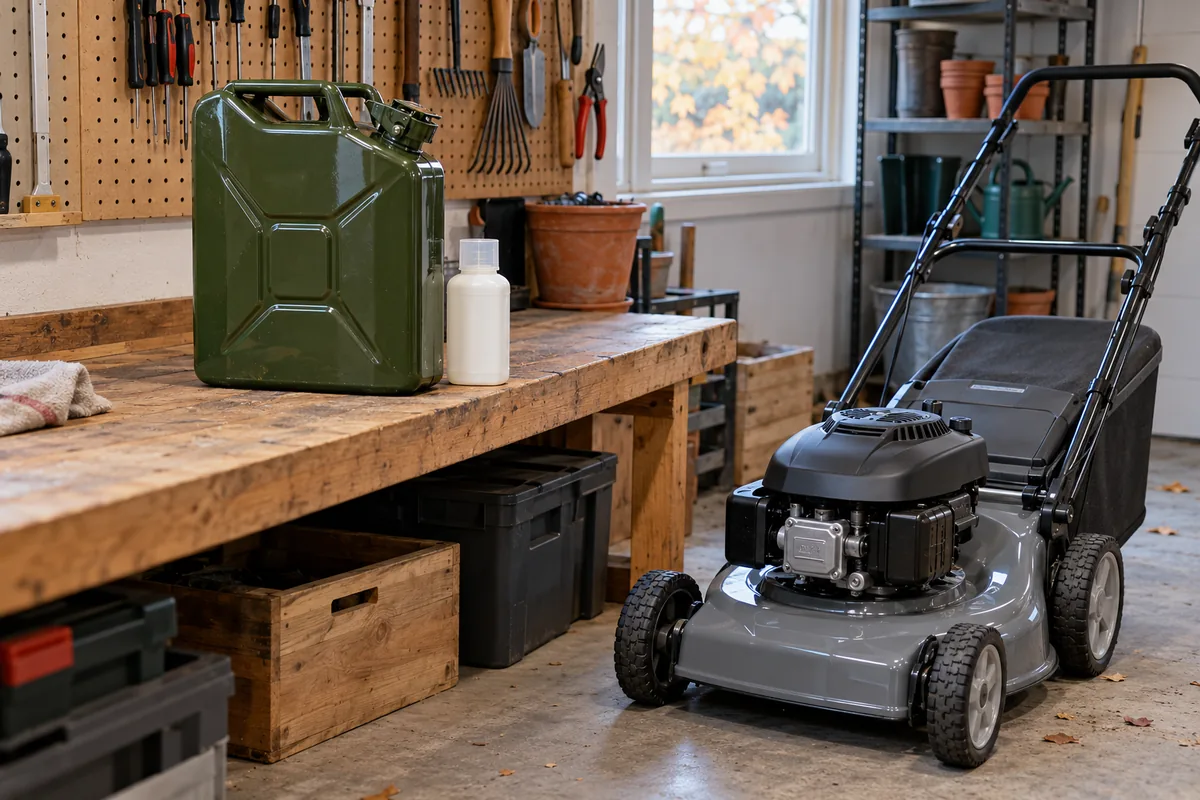
A fuel stabiliser is an antioxidant additive in a petroleum solvent that slows the oxidation which turns stored petrol into gum and varnish. Add it to fresh fuel at the dose on the label, fill the tank or can, then run the engine for 5 to 10 minutes so treated fuel reaches the carburettor. It cannot revive stale fuel, remove water or undo ethanol phase separation.
Quick answer: What does a fuel stabiliser do?
A fuel stabiliser is an antioxidant additive that slows the oxidation which leaves gum and varnish in stored petrol. Dose fresh fuel as the label says, fill the tank or can, and run the engine for 5 to 10 minutes to carry treated fuel to the carburettor. Stabiliser cannot rescue stale fuel, remove water or reverse ethanol phase separation.
Work it out
A fuel stabiliser is a concentrate of antioxidants and related additives in a hydrocarbon carrier. Chevron’s technical reviews describe the problem it targets: oxygen dissolved in fuel attacks reactive compounds and starts chain reactions that end in peroxides and gums, and an antioxidant interrupts them. Chevron names the usual antioxidants as aromatic amines and hindered phenols and says virtually all petrol needs them, so pump petrol already carries some. A storage stabiliser adds more.
| Component | What it does |
|---|---|
| Antioxidant (aromatic amines, hindered phenols) | Stops fuel reacting with oxygen to form peroxides and gums |
| Metal deactivator | Captures copper, zinc or iron ions that speed oxidation |
| Corrosion inhibitor | Films metal so free water does not rust it |
The carrier is a petroleum solvent. The three stabiliser safety data sheets we read list petroleum distillates, kerosene or solvent naphtha as their main ingredients, above 90% of one product, and two list a hindered phenol antioxidant at between 1 and 5%. The label or the sheet says what a given bottle contains.
It works as prevention, on fuel that is still fresh. NREL tested this on a US B20 diesel blend under accelerated ageing. An antioxidant added in storage kept the fuel within its acid specification for the equivalent of about three years, against just over a year untreated (Biodiesel Handling and Use Guide, 2023, page 26). NREL adds that such additives are preventative only and cannot correct degradation that has already happened.
American Honda says the same of petrol: fuel stabilisers will not reconstitute stale fuel. Petrol that has darkened or smells sour stays stale. Water in a can stays there, because an antioxidant neither absorbs nor removes it, and an ethanol blend that has phase-separated stays separated. Deposits already in a carburettor need a cleaner, which is a different product. STIHL also tells owners not to store or use fuel older than 60 days, and preferably 30, even with a stabiliser. Our storing fuel safely guide covers how fuel ages.
Use the dose on the bottle, because treat rates differ between products. Where an engine maker sells its own stabiliser it gives the rate: Mercury Marine states 1 fluid ounce for every 5 US gallons the tank holds, about 1.6 ml per litre.
Add it to fresh fuel as you fill. Toro says to add it on the day you buy the fuel, and American Honda says to add it every time you fill a portable container, because nobody knows how long that fuel will wait. Then run the engine so treated fuel reaches the carburettor or vapour separator, where a small volume sits beside engine heat and ages fastest.
| Engine maker | Run the engine after dosing for |
|---|---|
| American Honda: mowers, generators, outboards | About 10 minutes, outdoors or in water |
| Honda, European petrol leaflet | At least 5 minutes before storage |
| Husqvarna, zero-turn mowers | At least 10 minutes |
| Briggs & Stratton | A few minutes |
| Mercury Marine | 5 to 10 minutes at idle, with cooling water |
| Yamaha outboards | 10 minutes at fast idle |
Treat both the can and the machine. Treating the can at fill protects every litre from the day you buy it; treating the tank before storage protects the fuel left in the machine. A machine fed from treated cans already has treated fuel in its system, as Honda’s mower and outboard guidance notes. Fill the can to its marked capacity and date it, as in how to use a jerry can.
As long as the engine maker allows, which for small engines means weeks or months. Untreated petrol in a sealed, cool can keeps at least a year by Chevron’s figure (compared in storing fuel safely). Fuel in a carburettor bowl ages faster, and American Honda says even treated fuel left in an engine can deteriorate in long storage.
| Source | Limit it states |
|---|---|
| STIHL, fuel for its tools | 60 days, preferably 30, even stabilised |
| American Honda, petrol left in a mower | 90 days without use |
| American Honda, stabilised fuel in an outboard | 30 to 90 days; drain beyond 90 |
| Mercury Marine, its own stabiliser | Claims a full year in storage |
| Briggs & Stratton, stabiliser | Claims 24 months on one page, 3 years for its own product on another |
The last two rows are claims by companies that sell stabiliser, and the two Briggs & Stratton figures disagree. Apply the engine maker’s limit for the machine. Stabiliser expires too: American Honda says all stabilisers lose performance over time, and Honda’s European leaflet gives its own bottle 2 years at most once opened. Write the opening date on the bottle.
It is necessary when fuel will wait longer than the engine maker allows. Honda’s European leaflet sets the trigger at more than 4 weeks between uses, American Honda’s mower page at a container that will take more than 3 months to empty, and its outboard sheet at more than 30 days.
A standby generator is the case for treating every can, because nobody knows when the next outage comes. American Honda keeps a full tank of stabilised fuel for one to two months, drains the carburettor beyond that, and drains the tank as well beyond a year. Our generator fuel guide sizes the store, and the jerry can sizing calculator gives the can count.
For motorcycles, Honda’s storage advice fills the tank completely for long storage, so condensation has no empty space in which to form rust, and drains the carburettor. It does not mention stabiliser, so the bike’s manual decides. For a car in regular use, none of our sources calls for one, and American Honda relays US EPA advice that stabilised fuel kept 12 months in a container can go into a car whose tank is fairly full. Reserve cans for bikes are in fuel cans by job.
Standard petrol became E10, with up to 10% ethanol, in Great Britain in September 2021 and in Northern Ireland in November 2022 (GOV.UK, E10 petrol explained). The guidance lists boats and petrol garden machinery among equipment that may not suit E10, and says E5, the 97-octane super grade, stays on sale where stations sell two grades. Honda, STIHL and Toro cap their engines at 10% ethanol; check the outboard’s manual.
Chevron advises extra care with ethanol blends in boat engines because of their sensitivity to water. It notes that a vented tank breathing with temperature changes can phase-separate a blend in long storage, dropping water and much of the ethanol to the bottom. The US EPA found that humid air alone rarely does this, while liquid water from rain, spray or condensation does. The EPA’s precautions are a full tank, a stabiliser considered and no liquid water let in; it does not say what the stabiliser does for separation, and no source we read shows a stabiliser reversing it. Additive labels that claim ethanol protection are the seller’s claims.
Mercury Marine advises ethanol-free petrol where you can find it, and a modern boat’s tank filled to the top so condensation has no room to form, or about 95% full in an older boat with a vented tank. For spare fuel aboard, see marine fuel and water containers.
Engine makers split. Briggs & Stratton’s UK page says to top off the tank, add stabiliser and run the engine for a few minutes, because a full tank helps stop moisture condensing and rust starting. Its US page says to store a mower or snow blower filled with treated fuel. Mercury Marine fills and stabilises an outboard’s tank the same way.
Others run the system dry. STIHL stores any tool unused for more than 30 days dry, emptying the tank and running the engine until it has used the rest. American Honda says not to leave petrol in a mower beyond 90 days unused, and its outboard sheet drains the engine’s vapour separator and any portable tank beyond 90 days while filling and stabilising a fixed boat tank. Husqvarna’s UK trimmer guidance drains the fuel, and Toro’s UK snow blower page lists emptying the fuel system among its end-of-season steps.
Husqvarna’s zero-turn guidance accepts either route, with one rule: once stabiliser is in, do not empty the tank. Briggs & Stratton’s UK page also says to empty the tank and run the engine until it stops if you skip its stabiliser or the fuel contains alcohol. UK pump petrol is E10, so check your machine’s manual before you choose.
Diesel needs its own product. Chevron’s Diesel Fuels Technical Review notes that most diesel is burned within a few weeks of being made, and for storage of a year or more it recommends a stabiliser containing an antioxidant, a biocide and a corrosion inhibitor. One petrol stabiliser’s safety data sheet says not to use it in diesel.
A biocide does a separate job. Microbes need free water, so they grow at the fuel-water interface, where a stabiliser does nothing. Chevron says biocides can be used once microbes reach problem levels, warns that a biocide may not penetrate a heavy biofilm, in which case the tank must be drained and cleaned, and says water bottoms holding biocide are toxic. Its first rule is prevention: keep the water in a store as close to zero as you can.
| Diesel additive | Typical treat rate (Chevron, chapter 7) |
|---|---|
| Antioxidant (hindered phenols, phenylenediamine) | 10–80 ppm |
| Metal deactivator | 1–15 ppm |
| Corrosion inhibitor | 5–15 ppm |
| Biocide | 200–600 ppm |
Road diesel to EN 590 may contain up to 7% FAME, the biodiesel component (Directive 98/70/EC, Annex II). NREL says biodiesel may be more prone to microbial growth at higher blends, though it calls the field data not well documented. Red diesel stores the same way: see red diesel rules and agricultural fuel storage.
It burns, and one of the three we checked is a flammable liquid in law. Their safety data sheets give flash points of 46 °C, above 60.8 °C and 79.4 °C. GB CLP (Annex I, section 2.6) classes a liquid that flashes at 60 °C or below as flammable, so stabiliser A is a category 3 flammable liquid (H226). B and C are combustible liquids.
| Sheet | Flash point | Hazard statements |
|---|---|---|
| Stabiliser A (US format, 2023) | 46 °C | H226, H304, H315, H336, H351, H411 |
| Stabiliser B (Australian format, 2022) | Above 60.8 °C | H227, H304, H320, H336, H351, H360FD, H412 |
| Stabiliser C (EU format, 2016) | 79.4 °C | H304, H315, H319, H332, H336, H372, H411 |
All three carry the signal word Danger and H304, may be fatal if swallowed and enters airways. Two are suspected of causing cancer (H351), one may damage fertility or the unborn child (H360FD), and all three are harmful or toxic to aquatic life. Store it like fuel, closed, ventilated and locked up (P403+P233, P405). Once dosed into petrol, the can holds petrol and the UK petrol container rules apply. Ask the supplier for the sheet: section 2 gives the hazards and section 9 the flash point.
No engine maker we read warns against stabiliser at the label dose. Honda, Briggs & Stratton, Husqvarna, Mercury Marine, Yamaha and Toro all advise it for storage, and Toro’s manual for machines with Honda and Subaru engines says to use it at all times to keep varnish out of the fuel system.
Their warnings concern the wrong fuel or the wrong additive. Toro rules out fuel additives that contain methanol or ethanol, the makers named above cap fuel at E10, and a petrol stabiliser belongs in petrol. None of the makers’ pages we read claims a performance gain or warns of a loss. A motorcycle or car follows the same rules: the right product, the label dose and the handbook’s word on additives.
We make fuel cans and sell no additives. A stabiliser buys time only inside a container that keeps air, water and light out. Our steel cans are coated inside for hydrocarbons and let no fuel through the wall, and Honda’s European leaflet asks for a steel petrol can with no corrosion inside. Our fluorinated HDPE jerrycan carries the barrier that plain HDPE lacks (see steel vs HDPE fuel cans and fluorinated vs plain HDPE), and fuel-can venting and pressure explains what the closure does as the can warms and cools.
A 3-litre can holds a batch you can use within a small-engine maker’s limit, and a 20-litre steel can suits a generator store rotated on its fill date. We hold UN certification for our dangerous-goods jerrican designs, certified per design type and made under quality assurance the competent authority accepts, and our factories hold ISO 9001, 14001 and 45001. Tell us the fuel, the machines and the market, and we will specify the can.
| Your use case | Recommended can | Why this one |
|---|---|---|
| A treated petrol or diesel store, 20 litres | 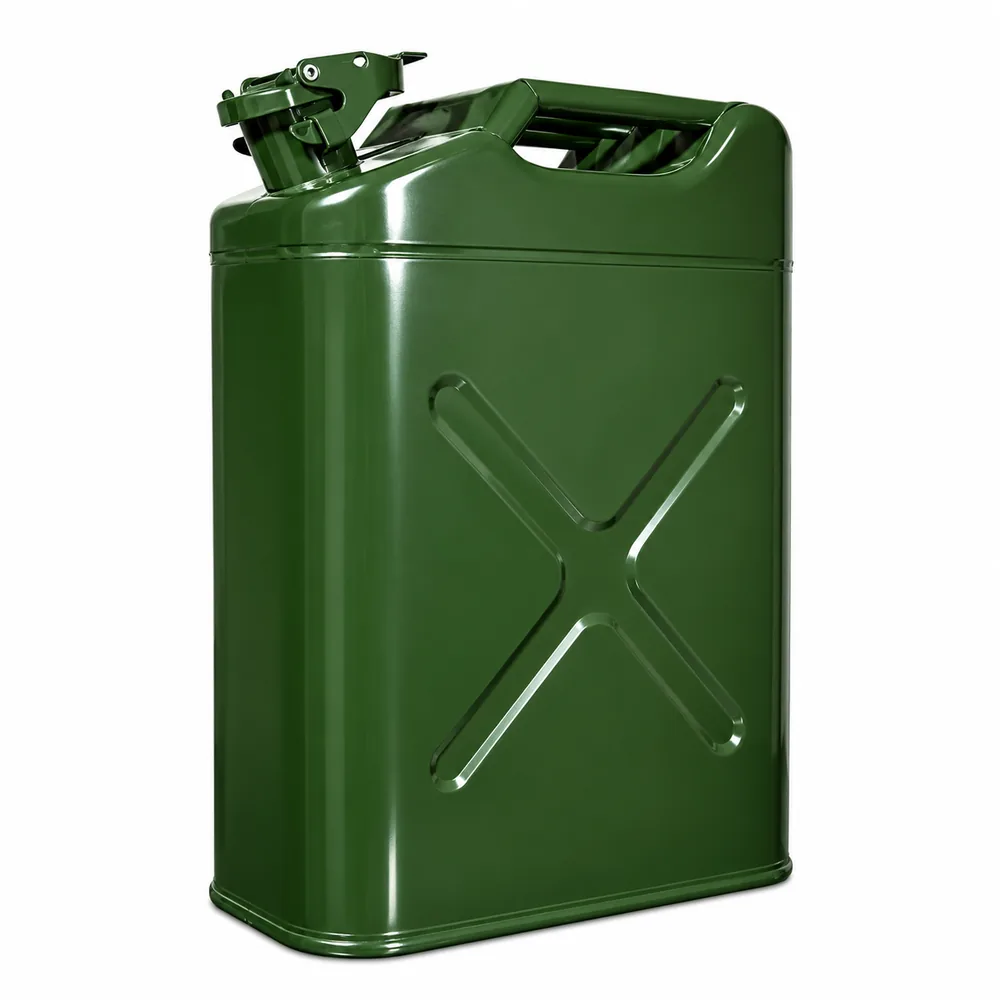 20L NATO Steel Fuel Can |
Pressed steel coated inside for hydrocarbons, so no fuel permeates the wall, with a vented cap. |
| Fleet and retail fuel programmes | 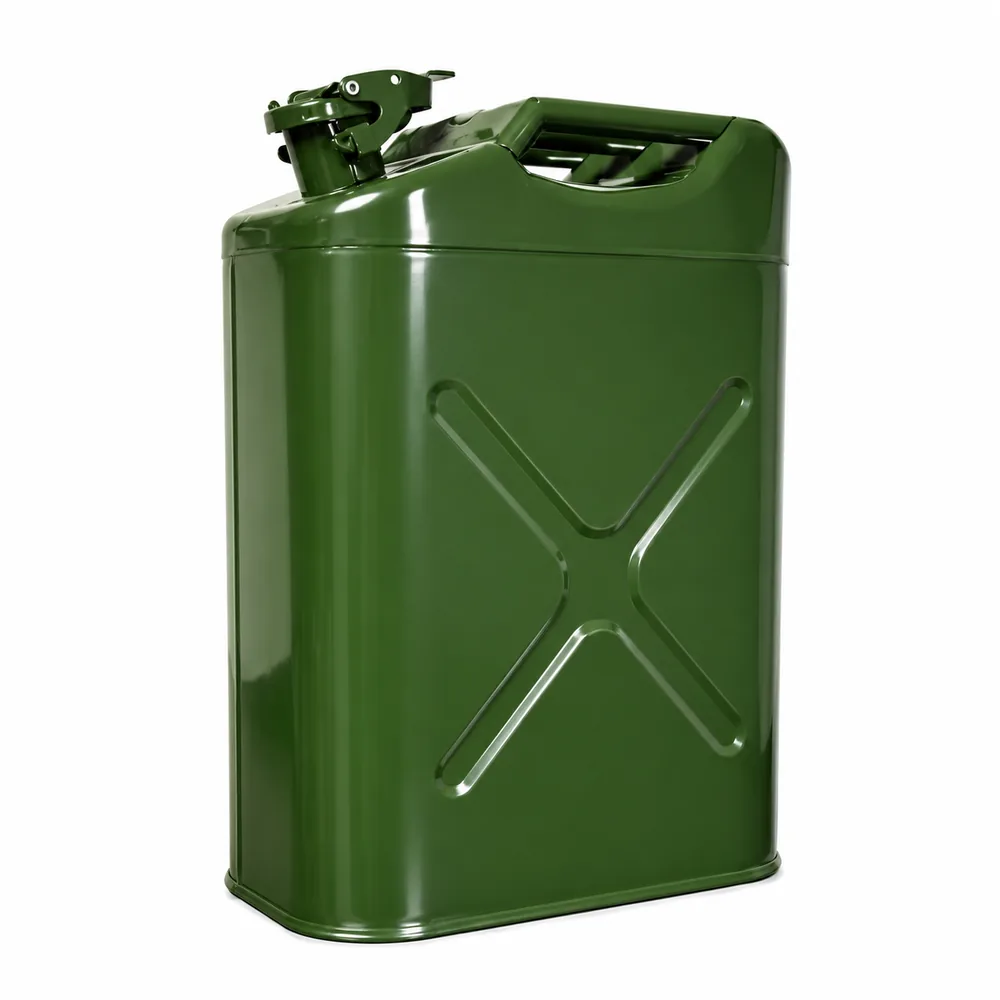 20L Upright Steel Fuel Tank |
Upright pressed steel outside the NATO pattern, in RAL colours for coding petrol and diesel. |
| Fuel carried on a machine | 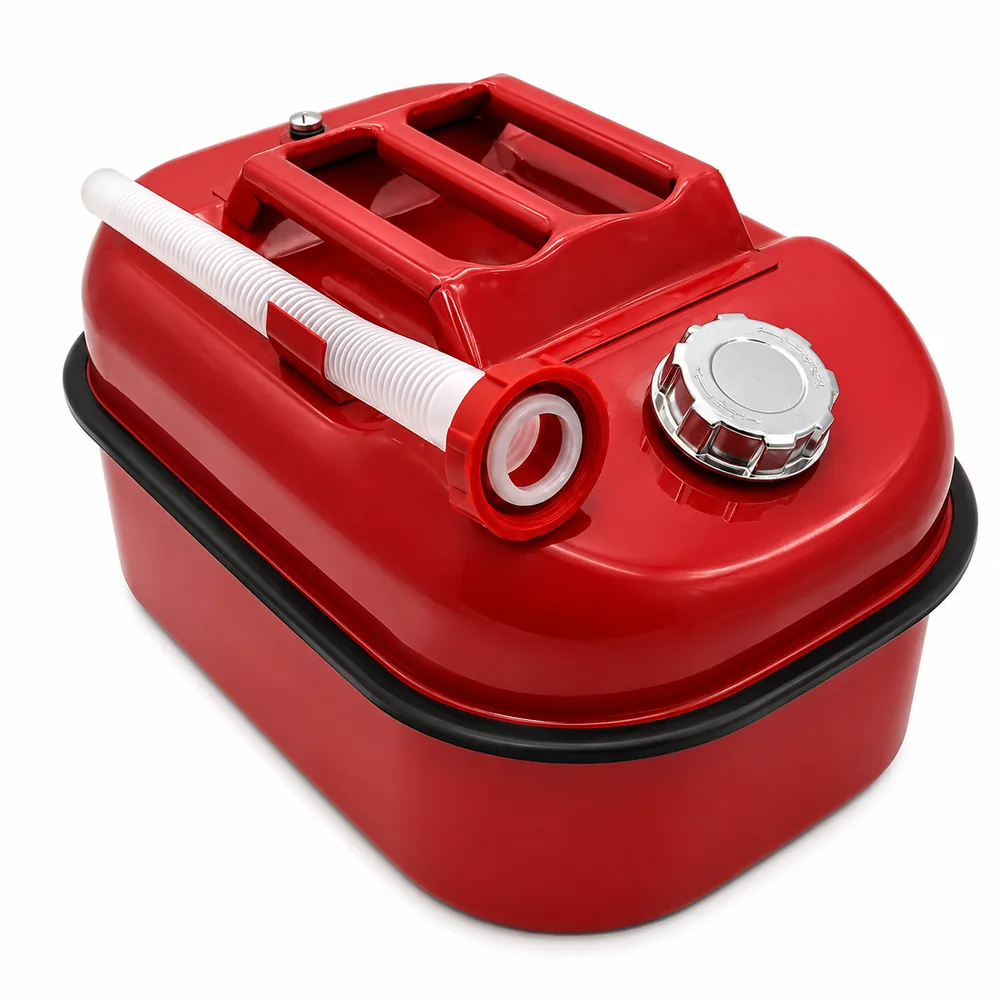 20L Horizontal Agricultural Fuel Can |
A horizontal steel can that mounts where an upright can will not sit, for petrol, diesel or kerosene. |
| A small batch for a mower or motorcycle | 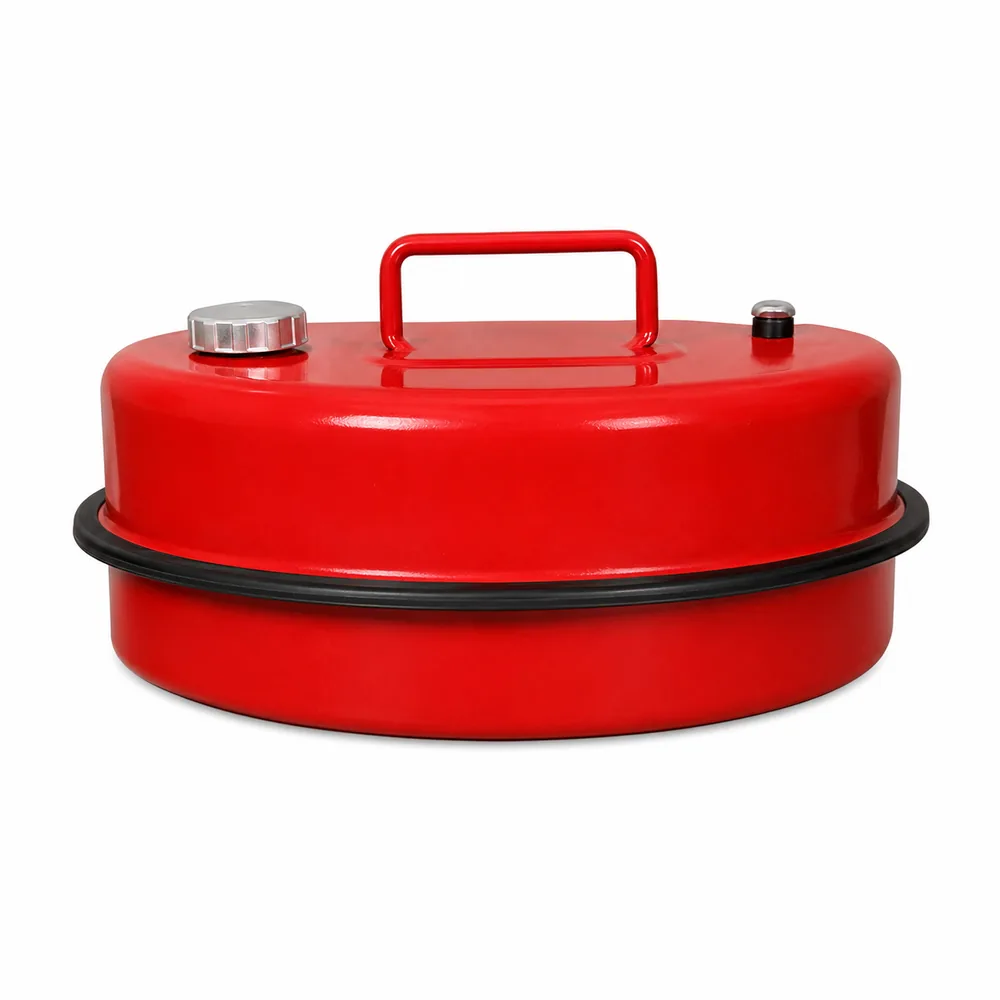 3L Compact Fuel Can |
Three litres of steel with an anti-corrosion finish, small enough to use up inside a small-engine maker’s limit. |
| Reserve fuel on a motorcycle or ATV | 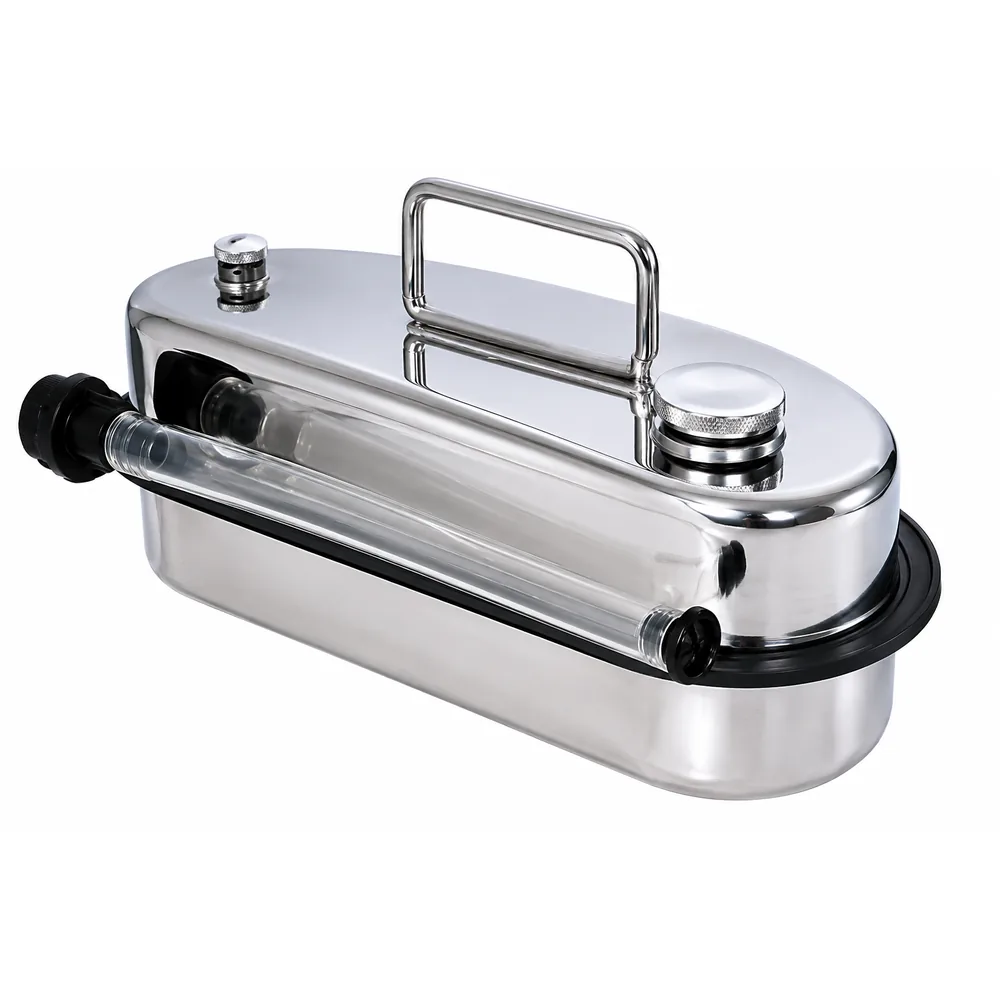 3L Mini Horizontal Can |
Galvanised or stainless, sized for a pannier, rack or topbox, with an optional tap and hose. |
| A plastic can for stored fuel | 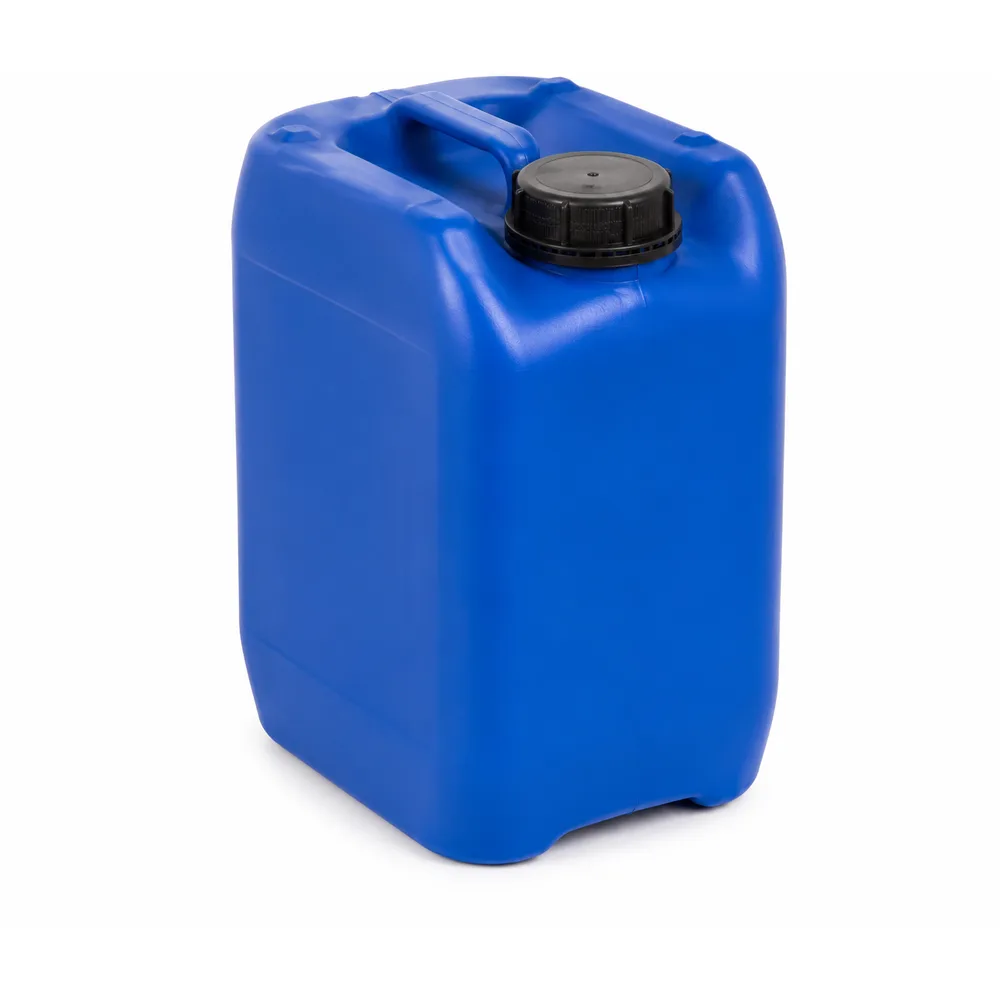 Fluorinated HDPE Jerrycan |
The fluorinated interior controls permeation, which plain HDPE does not, in 5 to 30 litres. |
No. They share one job, slowing oxidation, but differ in what they contain and which fuel they suit. The three safety data sheets we read list different carriers and hazards, with flash points from 46 to 79.4 °C. Petrol and diesel products differ too: one petrol stabiliser’s sheet rules out diesel, and Chevron wants a biocide and a corrosion inhibitor in a diesel storage package. Read the label for the fuel, the dose and any ethanol rating.
One made for your fuel and accepted by your engine maker. A petrol engine takes a petrol stabiliser; a diesel store needs a diesel product with an antioxidant, a biocide and a corrosion inhibitor, as Chevron sets out. Some engine makers sell their own stabiliser and name it in the manual, and Toro rules out fuel additives that contain methanol or ethanol. We do not rank brands: the manual and the safety data sheet decide.
A stabiliser is an antioxidant that protects fuel in storage; a cleaner is a detergent that removes deposits already in an engine. Chevron calls the cleaners deposit-control additives and says an aftermarket dose runs 10 to 20 times the level in pump petrol. “Fuel treatment” is a label term that can mean either product or a blend of both, so read what the bottle says it does before you buy it for storage.
Yes, if the label lists two-stroke engines. Chevron says petrol-oil blends for two-stroke engines keep as well as petrol stored the same way, so add the stabiliser when you mix fresh fuel, at the label dose. Engine makers still cap the age of the mix: STIHL tells owners not to store or use fuel older than 60 days, and preferably 30, even with a stabiliser in it.
Keep to the label dose, measured against the fuel the tank or can holds. Engine makers tell owners to follow the stabiliser maker’s instructions, and none we read says a stronger dose protects for longer. Mercury Marine says a little extra of its own stabiliser is acceptable. A large overdose adds solvent and additive to the fuel for no stated benefit, so measure it with the cap or a marked cup.
Add it, then fill the tank. American Honda says air in a part-filled tank promotes fuel deterioration, so it tells owners to fill with fresh petrol when they add stabiliser, and its outboard sheet says to fill the tank after each use. Mercury Marine adds the stabiliser before refuelling so the incoming fuel mixes it through. A can follows the same rule: fill it to its marked capacity, never to the neck.
It slows it, provided the treated fuel reaches the carburettor. Briggs & Stratton says a stabiliser helps prevent gum forming on carburettor parts, which is why engine makers run the engine 5 to 10 minutes after dosing. American Honda notes that fuel in the float bowl ages faster than fuel in the tank and that even treated fuel left in the system can deteriorate, so for storage beyond two months it drains its generators’ carburettors.
Put it in a car, if the fuel suits the car. American Honda relays US EPA advice that fuel left in a portable container at the end of the season can go into a car’s tank, provided the car’s tank is fairly full. Fuel that has gone stale or has a water layer in it is waste: ask your council or a licensed waste carrier, and never pour it on the ground or down a drain.
Follow the instructions on the Honda bottle. Honda’s storage pages tell owners to add stabiliser following the maker’s instructions, and we found no Honda document that states a millilitre rate, so we do not quote one. Honda’s European leaflet adds two rules: the stabiliser must go into fresh petrol, and an opened bottle of Honda’s own stabiliser lasts 2 years at most.
Yes, if the can is rated for the fuel. The stabiliser treats the fuel and does nothing for the container: plain HDPE lets petrol permeate the wall, and a fluorinated or barrier HDPE can controls it. In Great Britain a plastic petrol container kept at home may hold 10 litres at most (Petroleum (Consolidation) Regulations 2014). Fill to the marked capacity, close the cap and write the date on the can.
No source we read shows that it does. A stabiliser cannot remove water or undo phase separation, the storage problem our sources describe for ethanol blends. The US EPA found that liquid water from rain, spray or condensation separates a blend, while humid air alone rarely does. Its precautions are a full tank, a stabiliser considered and no liquid water let in. Labels that claim ethanol protection are the seller's claims. Honda, STIHL and Toro cap their engines at 10% ethanol.
The standards and regulations this page relies on, at their issuing body. Where a market rule is named here, check the current revision before you specify against it.
Last reviewed by David Guru, Co-Founder & Business Development Director.
Tell us your market, your fuel and your volumes. We come back with a specification sheet and a quotation.