Industrial
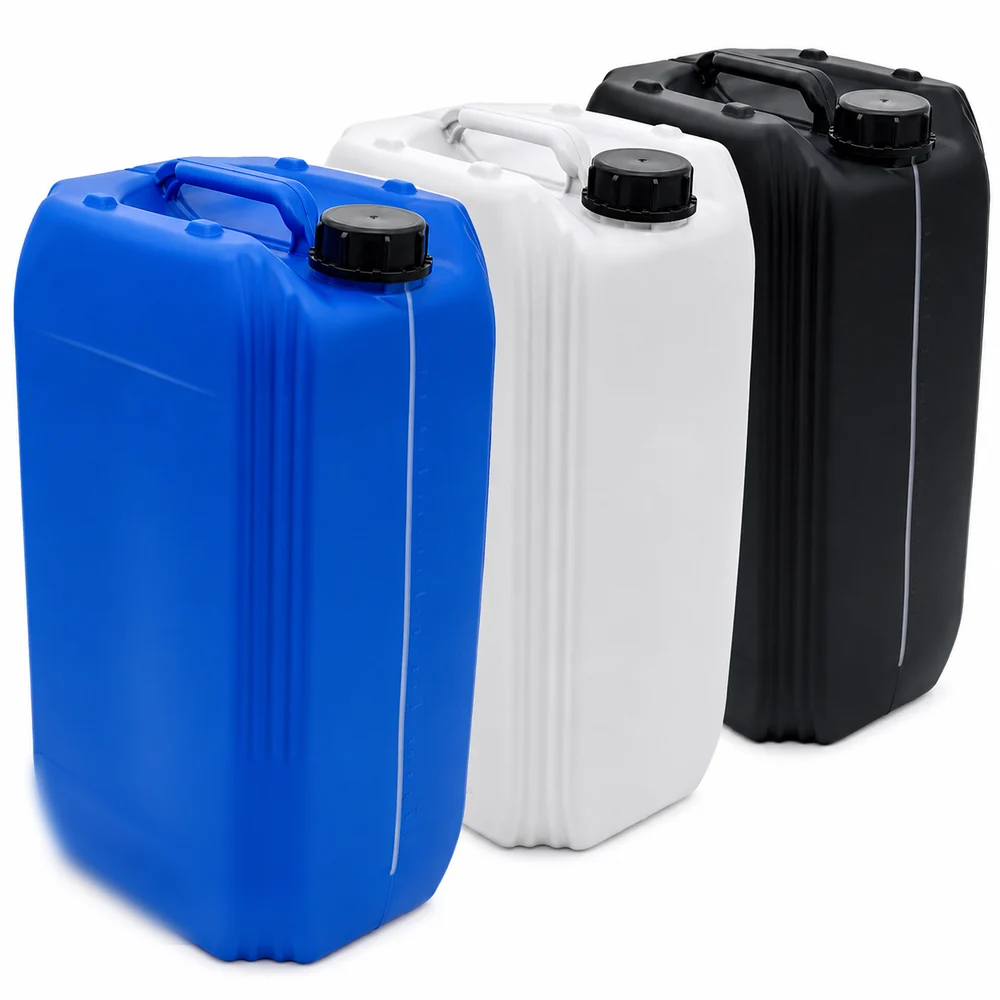
25L Stackable Plastic Jerrycan
F21-IP-25L-ring stackable HDPE jerrycan, 25 litres, natural. The industrial workhorse for decanting, storage and distribution.

Product code F21-IPF-05 / -10 / -20 / -25 / -30
The same stackable body with a fluorinated interior barrier. Specified where the contents would otherwise permeate the wall, lose strength and collapse the can.
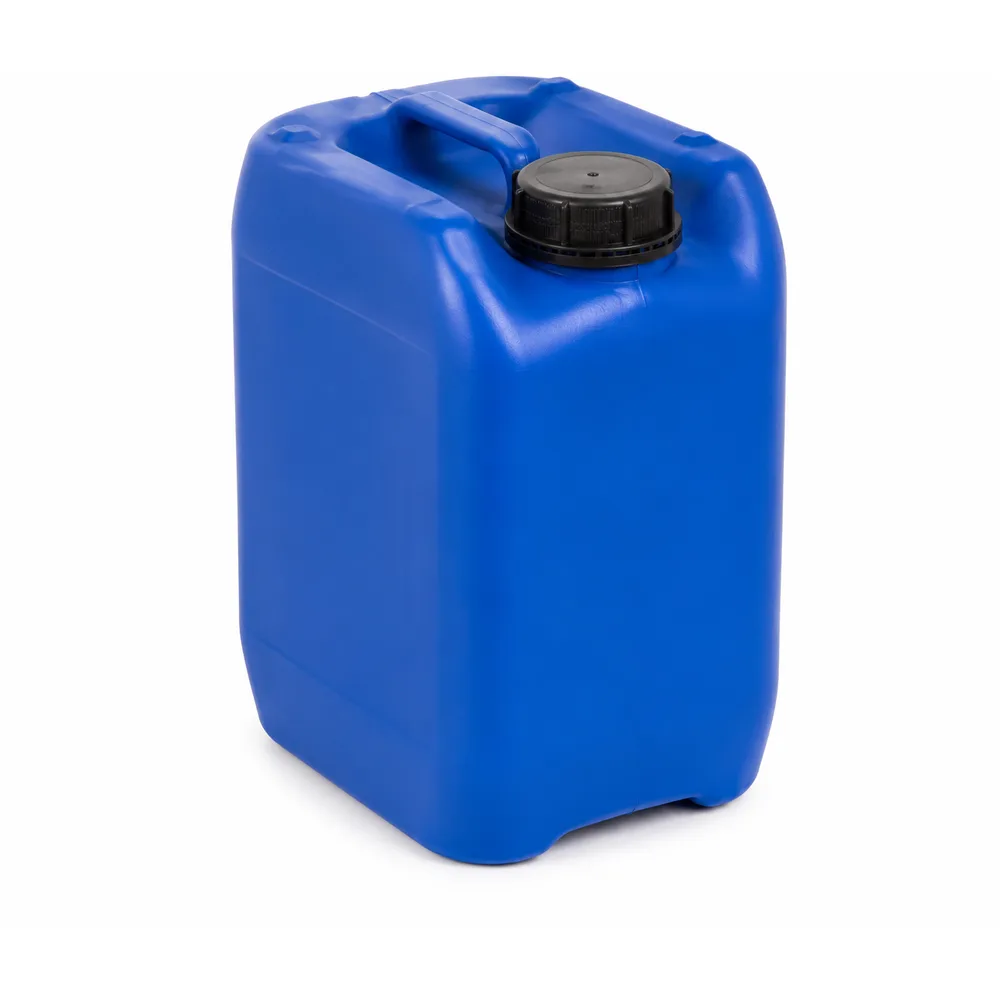
| Product code | F21-IPF-05 / -10 / -20 / -25 / -30 |
|---|---|
| Capacities | 5, 10, 20, 25 and 30 litres |
| Material | HDPE with fluorinated interior barrier |
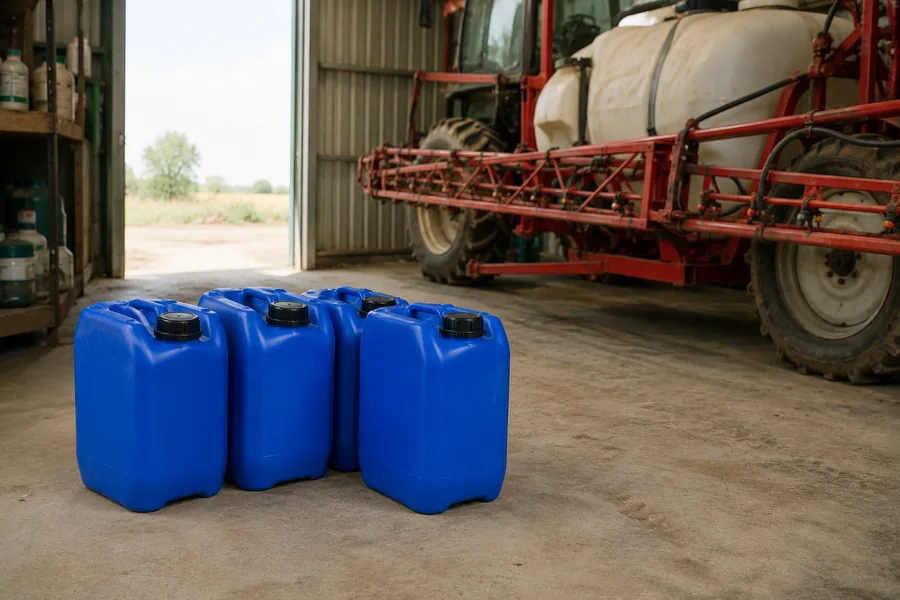
| Intended contents | Solvents, agrochemicals, aromatic hydrocarbons and other permeating liquids |
| Form factor | Stackable, L-ring |
| Dangerous goods | Available UN 3H1 certified |
| Neck | DIN 45, 51 or 61 |
| Colour | Natural, blue or black |
| Lead time | Approximately one month for a standard production run; samples in 7–15 days. Confirmed against your specification at quotation. |
These depend on your order, your market or the certificate that covers your run, so we quote them rather than publish one figure that would be wrong for most buyers. Ask and you get the number for your specification.
Before you order: UN certification is issued per design type and per production site. Tell us the size, the contents and the destination and we will confirm which approval covers it before you order.
Untreated HDPE lets solvent vapour through the wall. The can loses weight, goes soft and panels inward. Fluorination is a surface treatment during moulding that closes that path.
Permeation runs both ways. A barrier interior keeps the concentration in the can the same as the concentration that left your filling line.
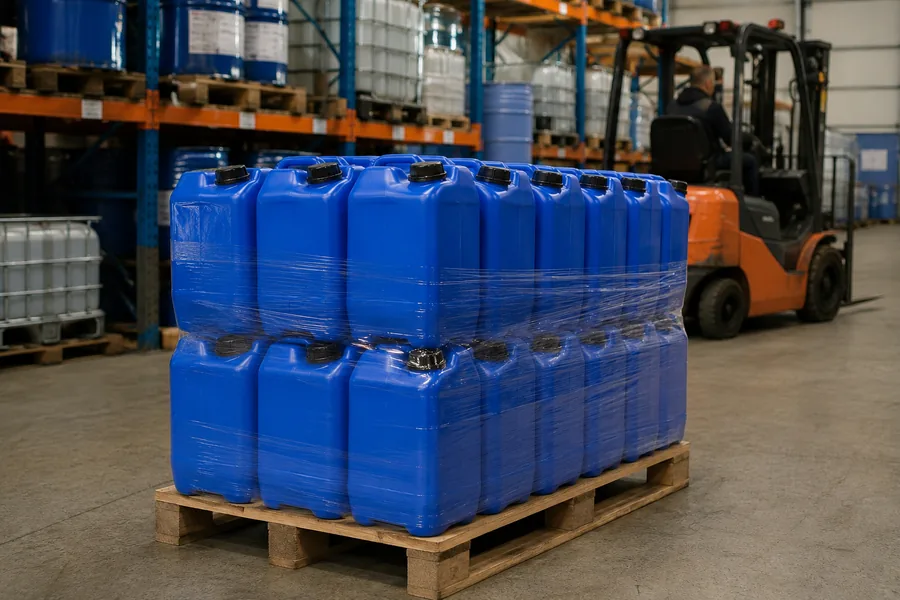
Identical external dimensions and stacking geometry, so it drops into the same pallet pattern and the same shelf.
Fluorination is sold in tiers. Level 3 lands around 1.5 to 2.5 g/m2/day and covers surfactants, agricultural oils and mild degreasers. Level 5 reaches 0.15 to 0.25 and clears the 0.30 g/m2/day threshold used to qualify a barrier wall for fuel service. Tell us the substance, the fill temperature and the market and we specify the level against it.
Fluorine substitutes for hydrogen on the polymer chain itself, so the barrier is a chemical change to the wall rather than a layer bonded onto it. Unlike a co-extruded EVOH wall there is no tie layer to separate at the handle or base pinch-off under a cold drop test.
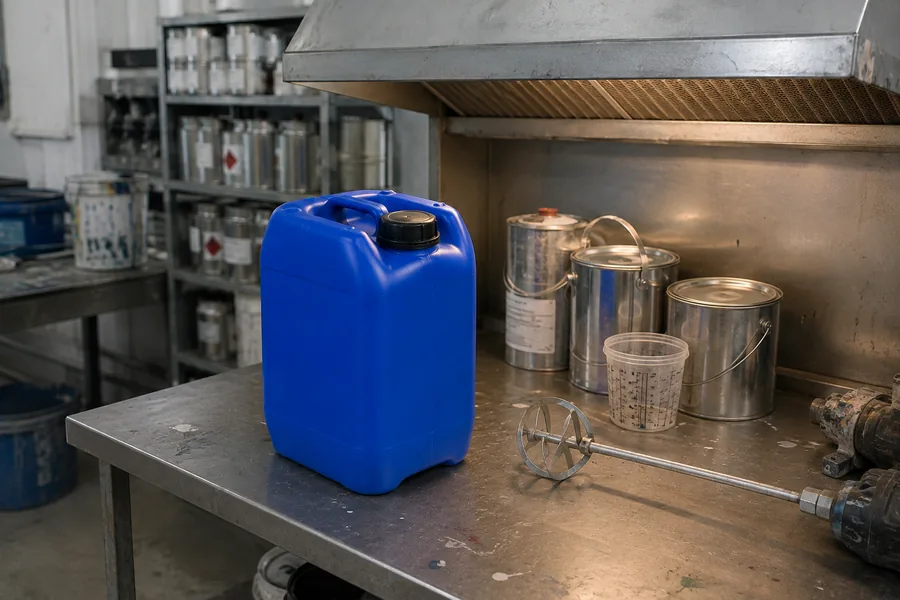
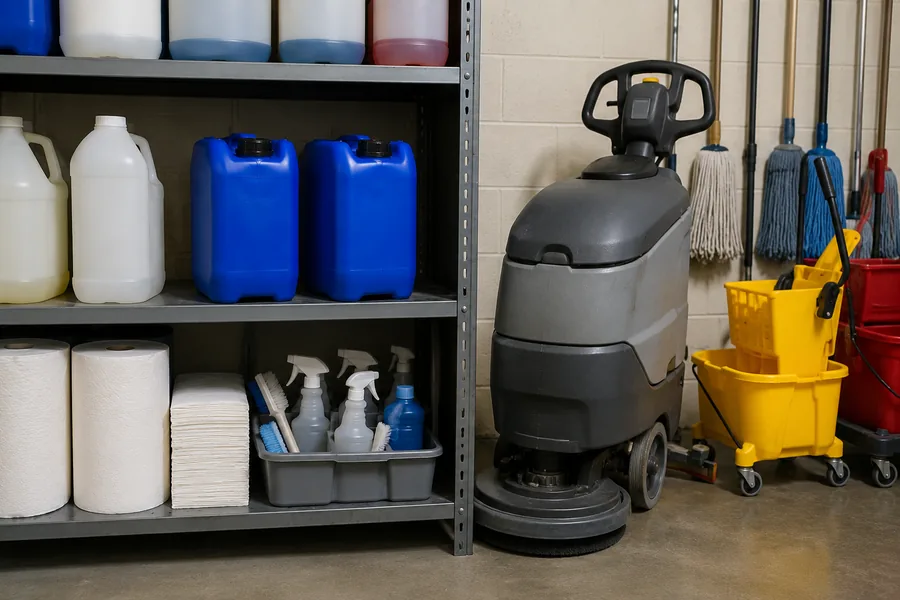
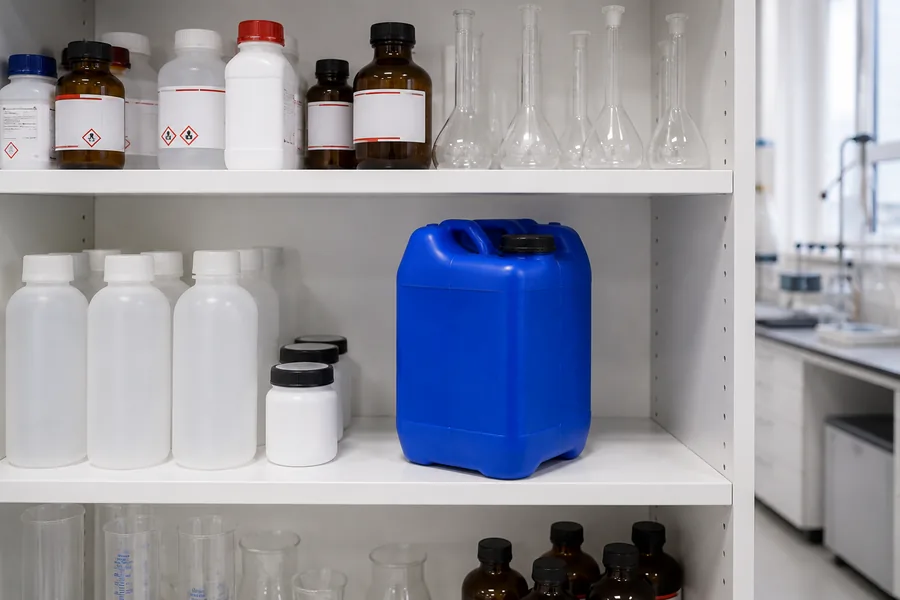
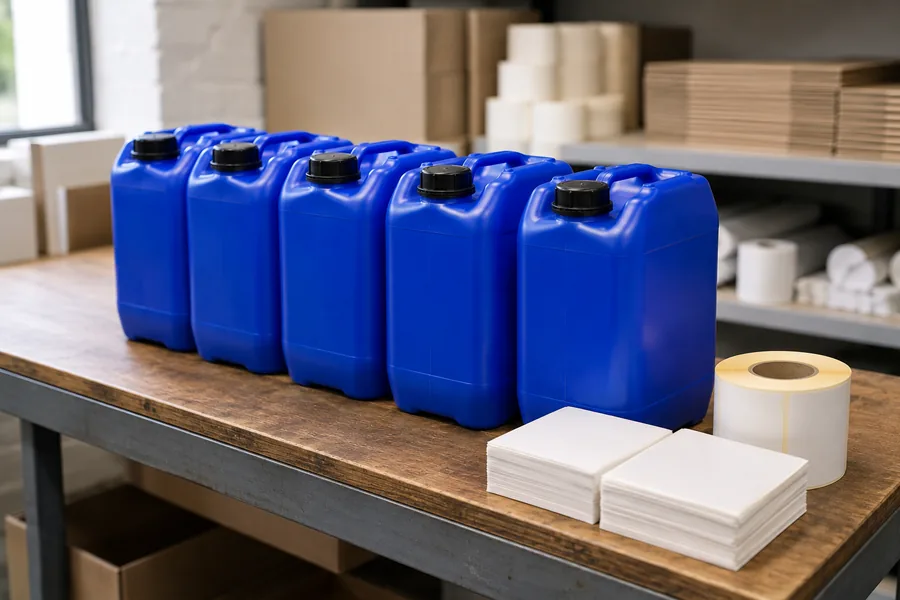
The same breakdown our distributors put in front of their own buyers.
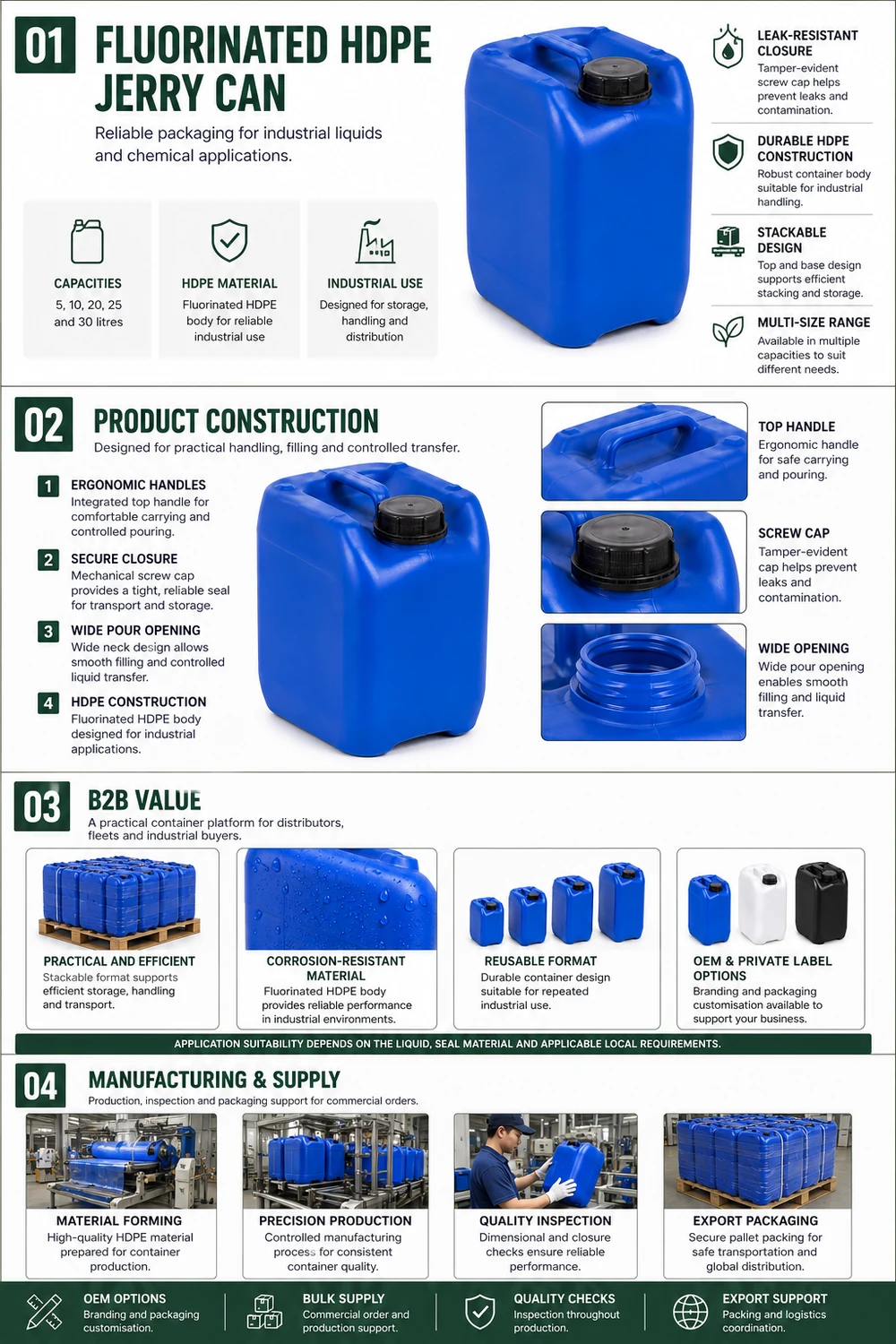
The can is blow-moulded from high-density polyethylene in a single seamless wall, with the neck and handle formed in the same shot, so there is no seam to split under load. The interior is fluorinated in a post-mould process to control hydrocarbon permeation through the wall. Moulding runs across our Vietnam and China plants under one specification managed from Singapore.
UN 3H1 certification is earned through a defined test regimen, and the can is built and verified to it:
Certificate, test report and stamped UN marking are available for the exact design you order.
Solvents, agrochemicals, aromatic hydrocarbons and other permeating liquids
Fuels unless the can is fluorinated, and any chemical you have not had confirmed.
Send us the exact liquid, its concentration and its temperature and we confirm it against a compatibility check before you order.
Related guides: Chemical compatibilityUN packaging codes explained
The regimes that apply to this type of container in each market we ship to, with the detail behind each one a click away. This is what the market asks for; what this particular design already holds is in the specification above.
Orientation for specification, not legal advice, and not a statement that this design holds a given approval. Requirements turn on the exact design, contents and destination, and they change. Tell us the market at enquiry and we confirm what applies to your specification, what we hold and what we would need to obtain.
The fluorinated interior is a surface treatment that stops solvents, aromatic hydrocarbons and agrochemicals permeating the wall and causing the panelling that follows. It is specified for the liquids that defeat plain HDPE.
It is made for solvents, agrochemicals and aromatic hydrocarbons, but the right answer still depends on your exact liquid, its concentration and temperature. Send us the substance and we confirm it against a chemical-compatibility check.
HDPE resists many acids and the fluorinated layer adds barrier performance, yet suitability still turns on the specific acid, its strength and temperature. Tell us exactly what you are storing and we check it before you order rather than promise a blanket yes.
No. The fluorinated treatment is for permeation resistance, not food contact. If you need a food-grade can, our Food-Grade HDPE line is the one specified for that.
Fluorination controls permeation, not static. If your solvent is flammable and handled in a classified area you need the conductive antistatic build, so confirm your area classification with us.
It is available UN 3H1 certified, but the certification is issued per design type, per production site and per contents. Confirm the packing group of your exact liquid and we tell you which approval, certificate and test report covers it.
Clean HDPE can be reused, and it carries a service life from its date of manufacture that governs regulated reuse. Ask us for the manufacturing date and the reuse guidance for your contents.
It comes in 5, 10, 20, 25 and 30 litre, with a DIN 45, 51 or 61 neck, in natural, blue or black. We can mould it in a colour and add in-line marking for private-label programmes.
Minimum order and lead time come on quotation. The cans are moulded in Vietnam and China and managed from our Singapore desk.
Yes, the barrier works both ways, holding the liquid in and keeping the product from losing volatile components through the wall. The can is HDPE, resin code 2, and recyclable once it has been cleaned.
L-ring stackable HDPE jerrycan, 25 litres, natural. The industrial workhorse for decanting, storage and distribution.
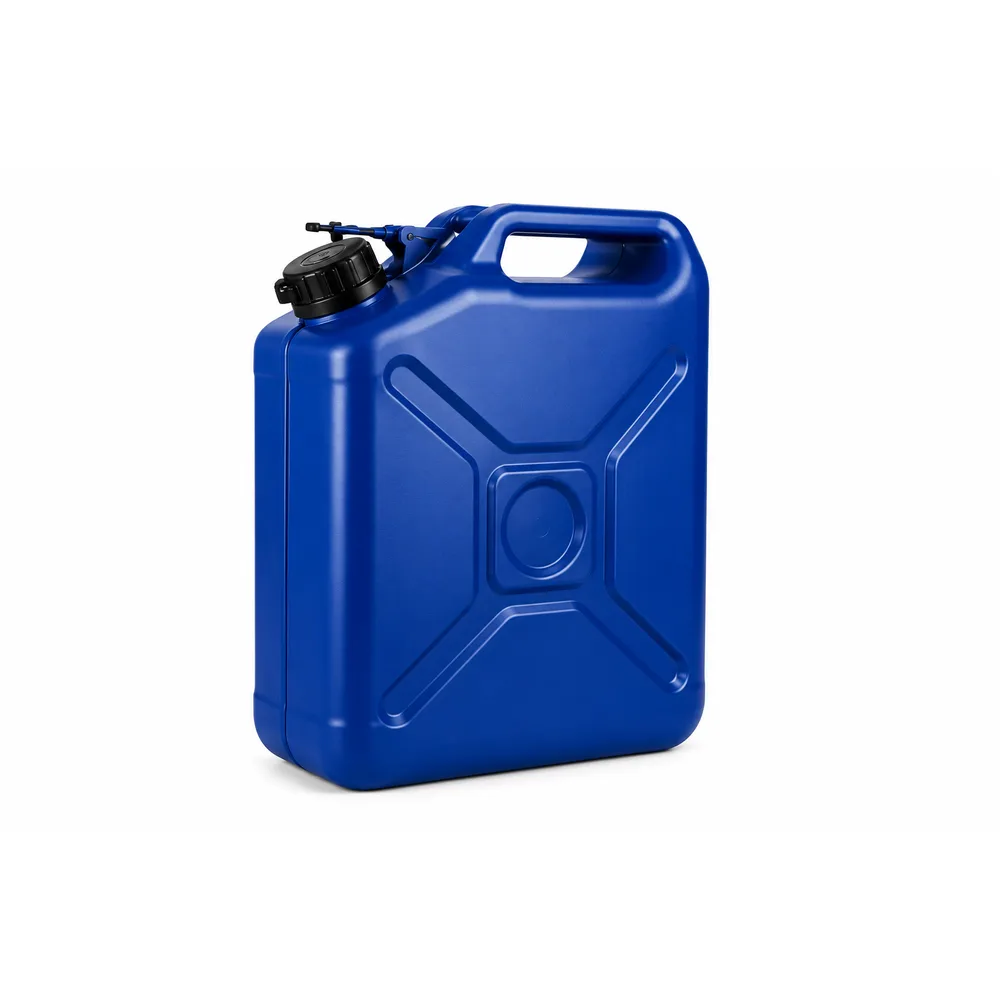
Empty HDPE cans for diesel exhaust fluid, 10 and 20 litre, blue cap, with a misfueling-resistant spout. Packed by the carton.
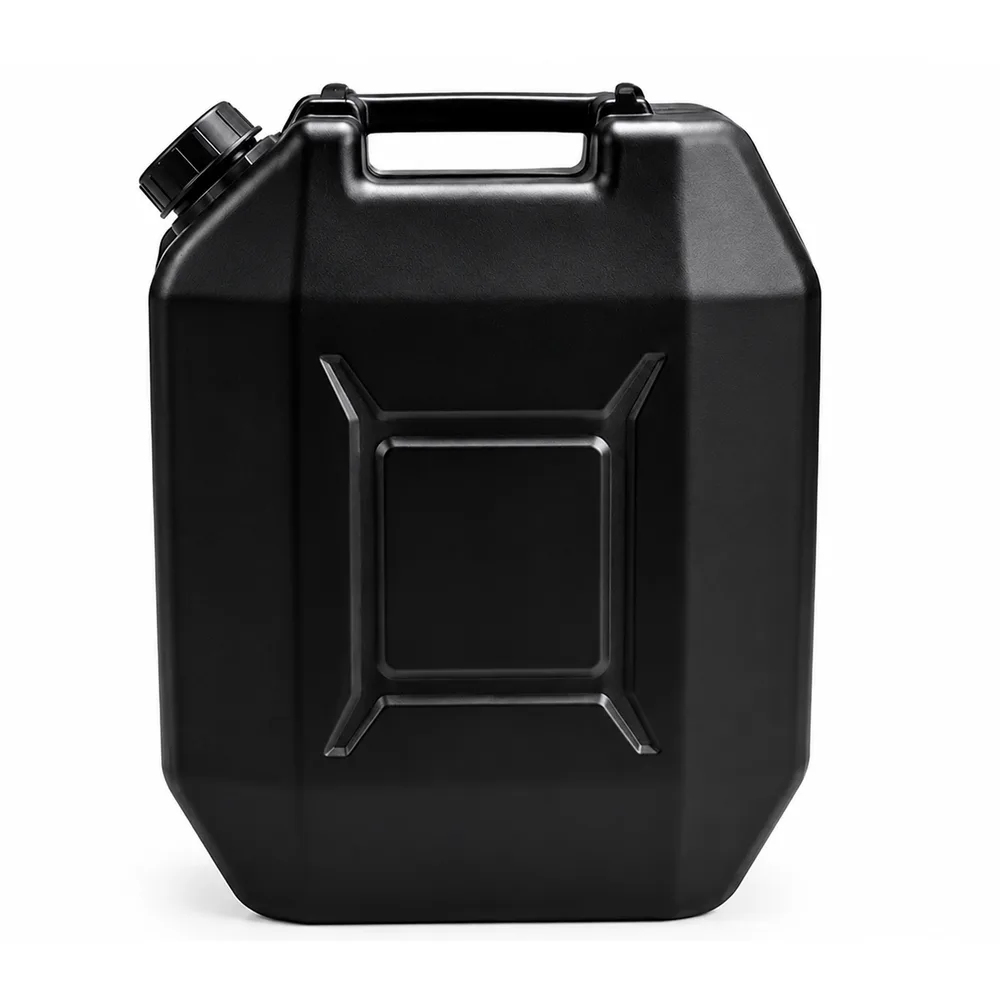
Carbon-loaded conductive HDPE for flammable liquids, where static build-up on an insulating wall is the hazard.
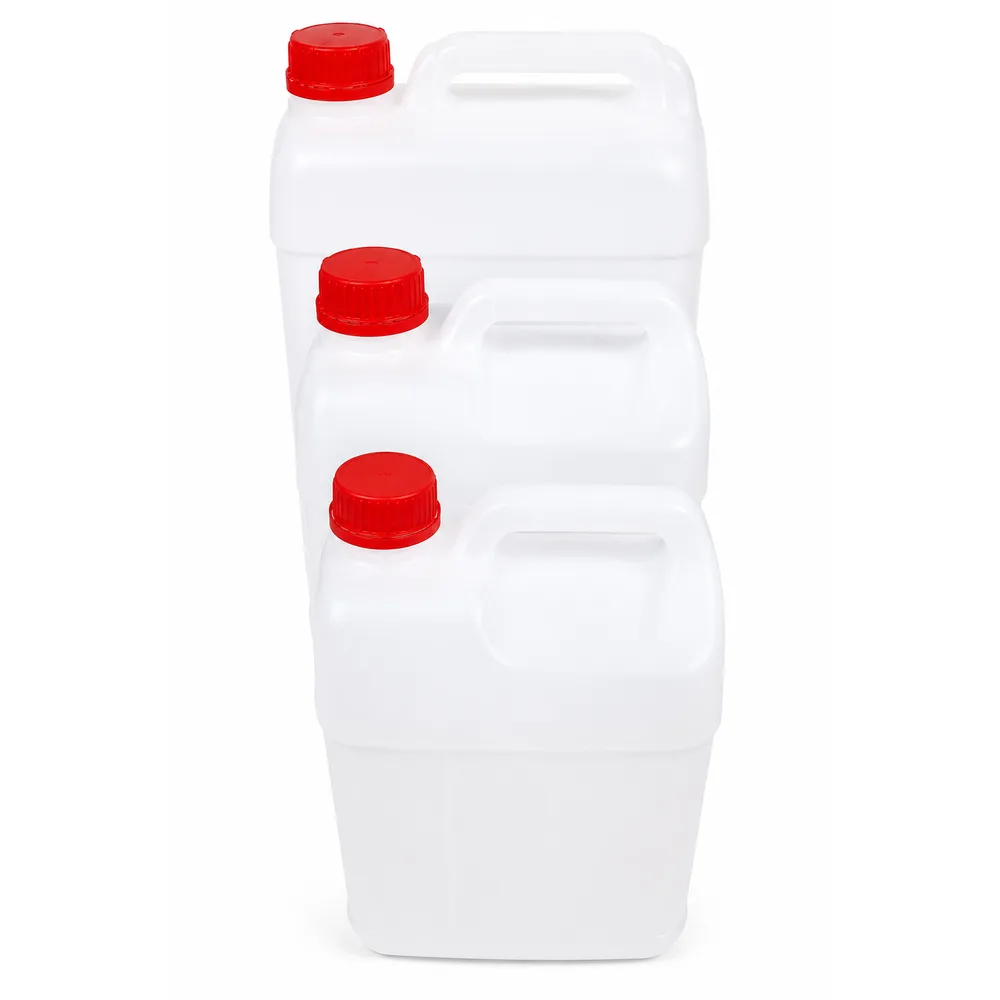
Natural HDPE for food, beverage and potable applications, with the wetted path specified for food contact rather than assumed.
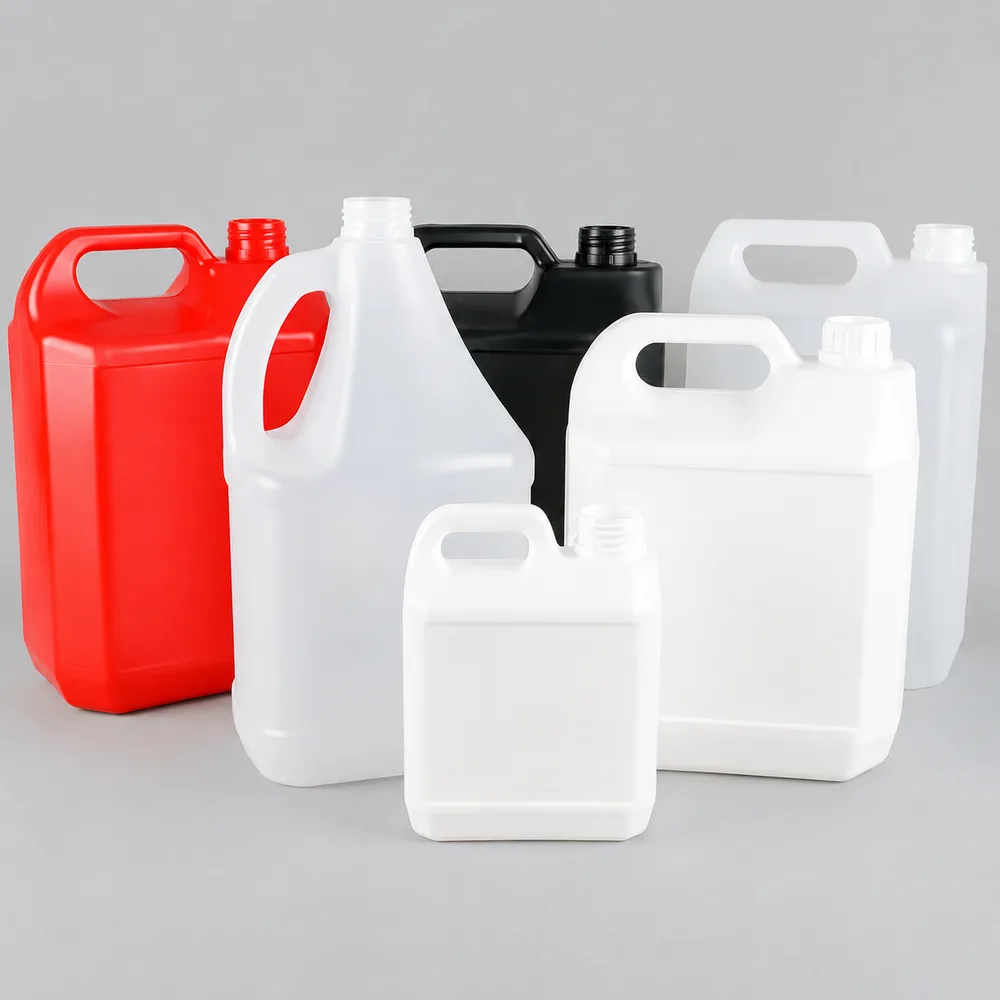
The same stackable body without a dangerous-goods approval, for non-hazardous liquids. Faster to supply and materially cheaper.
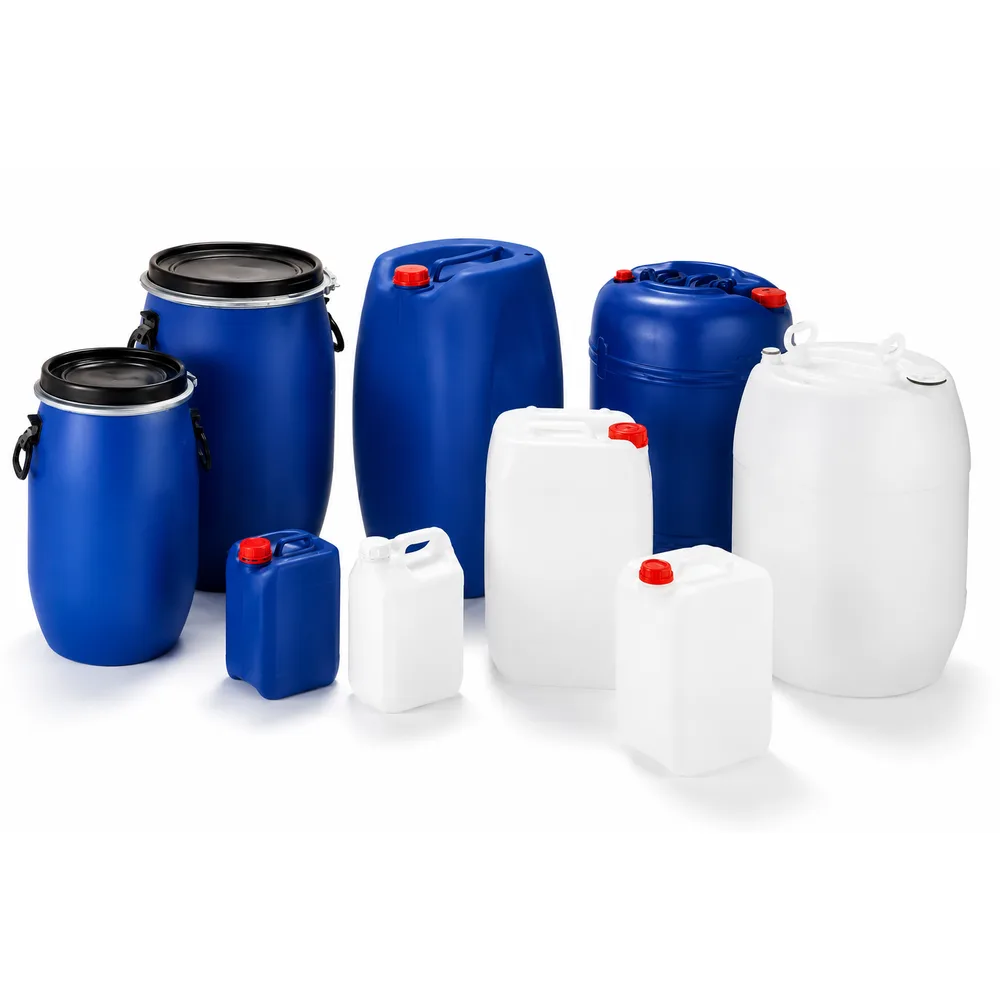
Removable-head HDPE for pastes, powders, gels and viscous product that will not pour through a narrow neck.
Tell us your destination market, target volumes and whether you need private labelling.