
Who approves a UN design, what the certificate and test report must state, and how to check the plant on the paperwork is the factory shipping your order.
Ask for the approval certificate in its current revision, every test report it lists, the closure instructions and proof the approval is still live. In Europe, the UK and Australia an authority or its appointed body approves the design; in the US the manufacturer self-certifies. Then check the plant named on the paperwork is the factory shipping your order.
ADR and RID 6.1.5.1.1 require each design type to be tested under procedures set by the competent authority and approved by it, and each state designates its own authority (1.2.1). Germany’s is BAM. In the UK the VCA Dangerous Goods Office issues certificates for the Secretary of State for Transport, from the reports of test stations that UKAS accredits to ISO 17025. France approves bodies such as LNE to test and approve design types. In Victoria a NATA-accredited laboratory tests the jerrican, WorkSafe registers a passing design and the Competent Authorities Panel grants national approval; the AS/NZS 2906 guide covers the product standard.
The US runs the other way. Under 49 CFR 178.2(b) the UN marking the manufacturer applies “is the certification”, and PHMSA calls this self-certification (88 FR 43016, 2023): no independent laboratory has to run the design or periodic tests. The M-number PHMSA issues identifies a manufacturer and approves nothing. A US supplier can hand over test reports, closure instructions and any third-party agency’s certification, but no government certificate exists for a non-bulk UN design.
Layouts differ by authority, but German, UK, French and Dutch certificates share most of these fields.
| Field | What it states | Check it against |
|---|---|---|
| Number and revision | Approval number, revision, issue date | You hold the current revision, every page |
| Holder | Who the approval was issued to; UK certificates are not transferable | Your supplier, or its documented link to the holder |
| Manufacturer and site | Each site with its own code (Germany); manufacturing and filling sites (France) | The factory shipping your order |
| Design | Type, material, capacity, dimensions, minimum wall thickness, closures, gaskets; resin grades for plastics | The specification you were quoted |
| Test reports | Report number, date, test house | The reports you were sent |
| Use limits | Packing groups, maximum density, pressure, vapour pressure at 50 and 55 °C | Your liquid’s properties |
| Mark | The full mark, with the site code | The mark on a sample |
| Validity | France 5 years; UK revalidation date; Germany no fixed term, revocable | Today’s date and the register |
BAM allows the mark only on packagings that match the approved design and are made under a QA programme it recognises and monitors, and VCA treats any modification it has not authorised as voiding the certificate. Read the mark on a sample field by field with the UN packaging code decoder.
A design type is fixed by design, size, material and thickness, construction and packing (ADR 6.1.5.1.2), and its test samples are counted per design type and manufacturer (6.1.5.3.1 to 6.1.5.6.1). Germany goes down to the plant. BAM gives each production site its own manufacturer’s code, issues a revised approval to add or remove a site, and treats a new resin, or a new producer of the same resin, as a new design type unless its BAM-GGR 003 rules are met. France requires every site named on the certificate to hold a copy, and the approved body’s controls cover each one. Four checks tie the paperwork to the goods:
A UK certificate may name only the holder, so ask which plant made your lot. US rules keep the test report at each location that makes the packaging (49 CFR 178.601(l)(1)). Our second sourcing guide covers what a change of factory sets off.
ADR and RID 6.1.5.8 and 49 CFR 178.601(l)(2) list the same ten items: test facility, applicant, a unique report number, date, packaging manufacturer, a design description (dimensions, materials, closures, thickness, manufacturing method), maximum capacity, the test contents, each test and its result, and the signatory’s name and status. Both require the report to be available to users. For a jerrican or drum carrying liquids, expect these values:
| Test | Samples | What the report should show | ADR |
|---|---|---|---|
| Drop | 6 | 1.8 m (PG I), 1.2 m (PG II), 0.8 m (PG III) with water up to relative density 1.2; plastics at −18 °C or lower | 6.1.5.3 |
| Leakproofness | 3 | 5 minutes under water at 30 kPa (PG I) or 20 kPa (PG II, III) minimum | 6.1.5.4 |
| Hydraulic pressure | 3 | Set from the vapour pressure, 250 kPa minimum for PG I; 5 minutes for metal, 30 for plastics | 6.1.5.5 |
| Stacking | 3 | A 3 m stack at the liquid’s density; 24 hours, or 28 days at 40 °C or above for plastics | 6.1.5.6 |
| Compatibility (plastics) | As for each test | 6 months with the goods, or 3 weeks at 40 °C with standard liquids (polyethylene) | 6.1.5.2.5 to 6.1.5.2.7 |
| Permeability (plastics) | 3 | 28 days at 23 °C, 0.008 g/(l·h) maximum, for flash points of 60 °C or below; polyethylene only for benzene, toluene and xylene | 6.1.5.7 |
Where the tested density is above 1.2 the mark shows it (Y1.4 covers packing groups II and III up to 1.4). ADR 6.1.3, Note 3 runs the logic the other way: a packing group I design tested at 1.2 may serve packing group II at 1.8 or III at 2.7, provided every other test still holds at that density, so check the stacking load as well.
ADR 6.1.5.1.3 repeats the tests on production samples at intervals the authority sets, 6.1.5.1.4 repeats them after any change of design, material or construction, and 6.1.5.1.8 lets the authority demand proof by test at any time. Each packaging for liquids passes a leakproofness test before first use under the QA programme of 6.1.1.4, which cites ISO 16106 as guidance; in the US, 178.601(f) applies the same test to each single packaging.
The mark shows a design passed its tests; suitability for a given substance is a separate question (ADR 6.1.3, Note 1), and whoever fills and ships carries it. BAM certificates leave compatibility with the user, and 49 CFR 173.24(e)(1) puts it on the offeror. A plastic drum or jerrican proves compatibility by 6 months filled with the goods (6.1.5.2.5), by 3 weeks at 40 °C with standard liquids for polyethylene (6.1.5.2.6), or by laboratory tests against a standard liquid already passed (6.1.5.2.7).
The standard-liquid route runs through ADR 4.1.1.21: find the product’s UN number in the assimilation table, take the standard liquid it assigns, and confirm the design type was approved for that liquid. The product’s density must not exceed the tested density, its vapour pressure must stay within the hydraulic test basis, and every component counts. The file therefore holds two documents: the report listing the standard liquids passed, and an assimilation record for your UN number or a substance-specific test report. French certificates put compatibility, where required, on a separate supplementary certificate. Plastic drums and jerricans may carry dangerous goods for 5 years from manufacture (4.1.1.15), and the resin grade has to match the certificate. Our chemical compatibility guide covers material choice.
Check which codes and sizes ADR allows for your UN number with the UN number packaging finder before you read a certificate.
Under 49 CFR 171.2(g) no one may mark or sell a packaging as meeting the US rules unless it was made, marked and retested to them.
No credible published figure covers the full cost or time of a new design approval. VCA publishes its fees: £535 to issue or amend a certificate, £1,071 for express issue within 2 working days, and an annual £174 standing charge plus £149 per certificate for holders of 1–6 (rates from 15 January 2025). VCA does not publish test station prices, and BAM’s approval pages give no amounts.
Test durations set the floor. A steel jerrican’s tests can finish within days, since it needs no pre-storage and a 24-hour stack test. A polyethylene jerrican needs 3 weeks with standard liquids and a 28-day stack test, both at 40 °C, which comes to at least 49 days where the stack samples are pre-stored too. Testing with the real substance takes at least 6 months, and approval, QA recognition and the pre-delivery audit come on top.
We supply UN-marked steel and plastic jerricans as designs certified per plant. Give us the UN number and packing group and we name the design certified to the right code and the plant on its certificate, or tell you that none of ours covers it. Ask for the certificate and its test report with the quote, and run the checks above on them. The UN 3A1 and UN 3H1 pages explain the steel and plastic jerrican codes.
| Your use case | Recommended can | Why this one |
|---|---|---|
| Fuel, steel UN 3A1 | 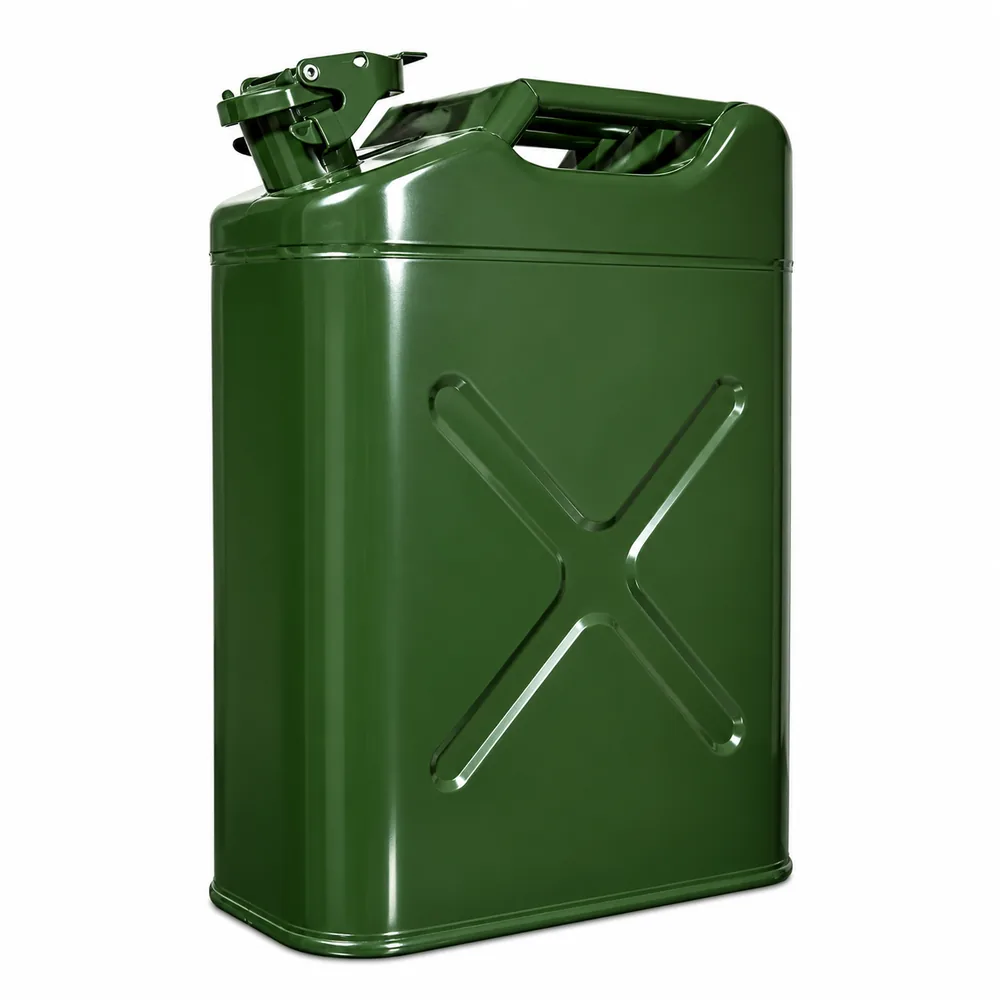 20L NATO Steel Fuel Can 20L NATO Steel Fuel Can |
Ask for its certificate and test report with the quote. |
| Liquid chemicals, UN 3H1 | 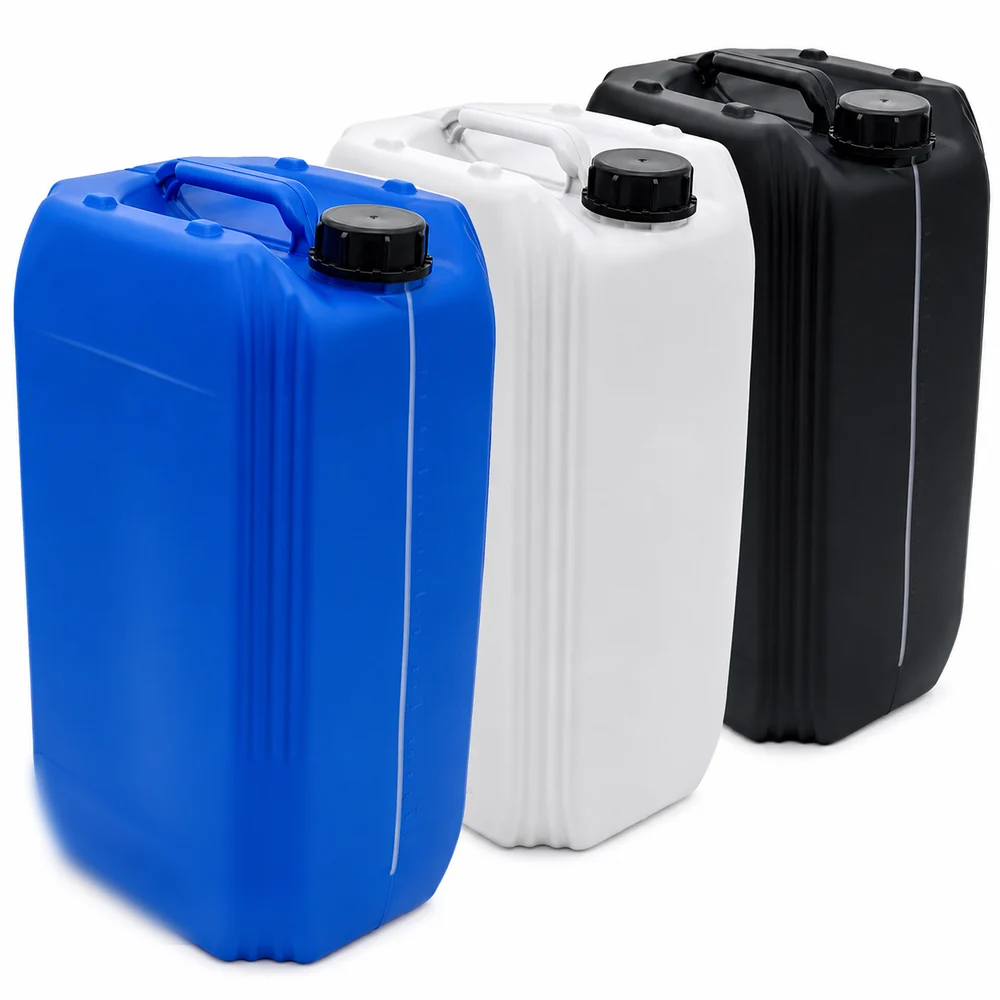 25L Stackable Plastic Jerrycan 25L Stackable Plastic Jerrycan |
Ask for the standard liquids and density on its test report. |
| Solvents and fuel in plastic | 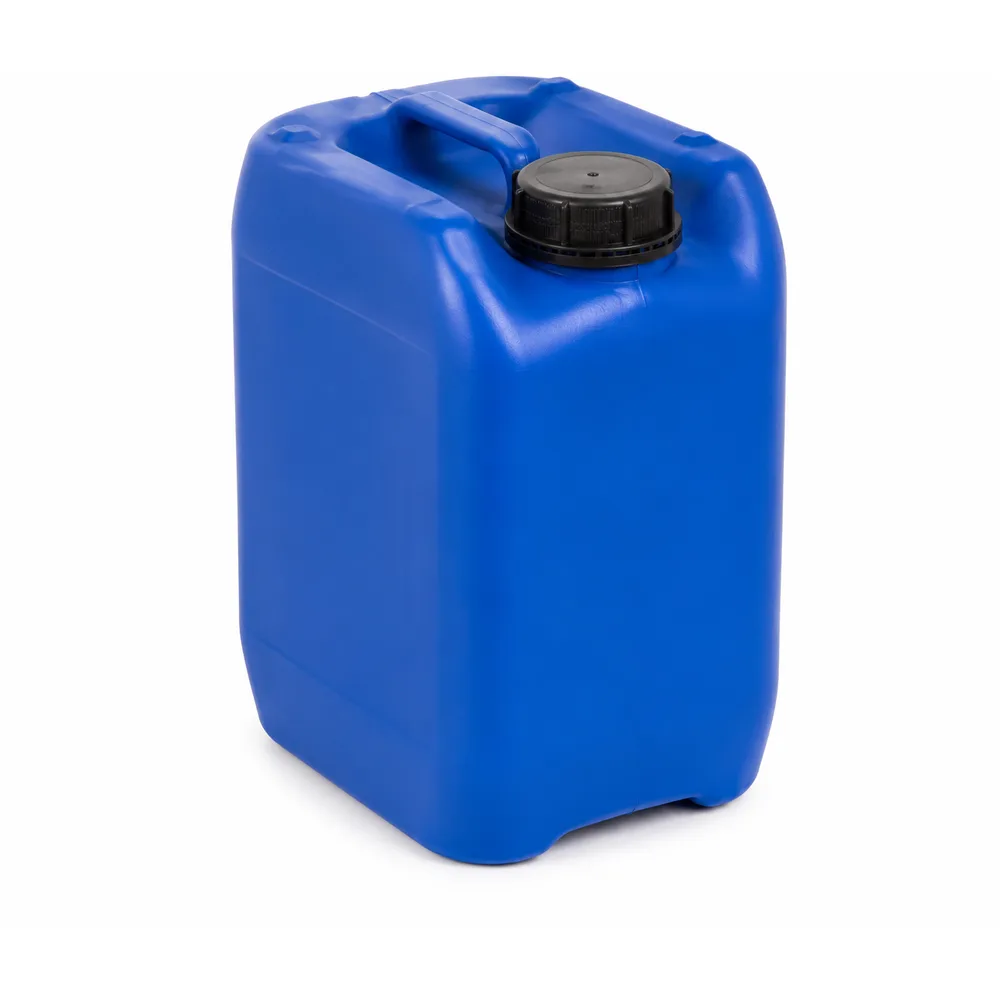 Fluorinated HDPE Jerrycan Fluorinated HDPE Jerrycan |
Ask which standard liquids its test report covers. |
| Pastes and solids, UN 3H2 | 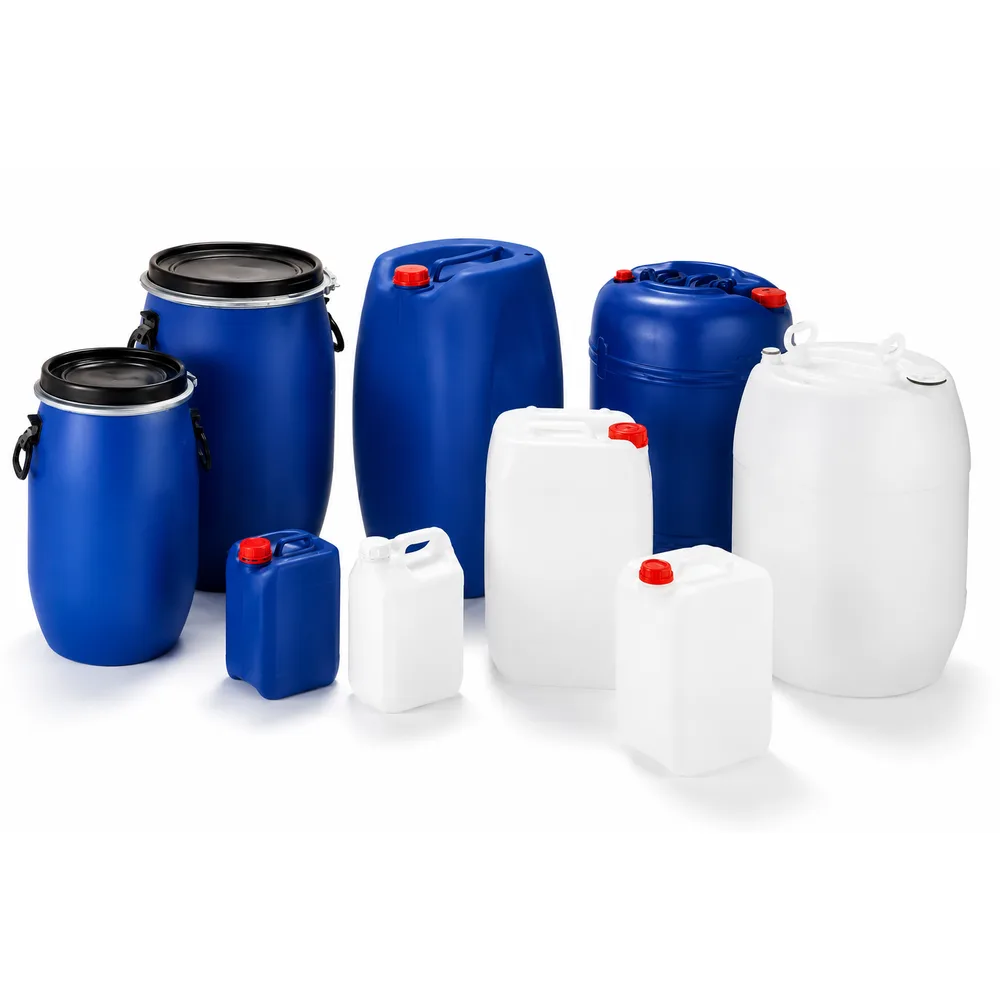 Wide-Mouth HDPE Jerrycan — UN 3H2 pattern Wide-Mouth HDPE Jerrycan — UN 3H2 pattern |
A removable-head design type, approved apart from 3H1. |
The competent authority of the state named in the mark, or a body it appoints. BAM issues German approvals, the VCA Dangerous Goods Office issues UK certificates for the Department for Transport, approved bodies such as LNE issue French ones, and in Australia state regulators approve designs with national approval from the Competent Authorities Panel. The United States issues none, because US manufacturers self-certify.
No such certificate exists. Under 49 CFR 178.2(b) the UN marking the manufacturer applies is itself the certification, and PHMSA does not approve non-bulk UN designs. The M-number PHMSA issues identifies a manufacturer and approves nothing. Ask a US supplier for the design qualification test report, a periodic retest report dated within 12 months, and the closure instructions.
The tests are run per design type and manufacturer, and Germany and France go further by naming each production site on the approval. BAM gives each site its own manufacturer code in the mark and issues a revised approval to add a site. Check the code on a production sample against the sites the certificate lists before you accept goods from a new plant.
The rules say the report must be available. ADR and RID 6.1.5.8 and the US rule at 49 CFR 178.601(l)(2) both require the design type test report to be available to users of the packaging. A UK certificate makes the report an integral part of it, and VCA tells buyers to obtain both. A supplier calling the report confidential is out of line with both rule sets.
It depends on the issuing country. French certificates run 5 years. UK approvals must be revalidated at least every 5 years, with an annual fee, or they are suspended. German approvals have no fixed term but depend on annual monitoring tests and a QA audit every 3 years. US manufacturers retest drums and jerricans at least every 12 months.
The mark shows the design passed its tests; compatibility stays with whoever fills and ships the package. Under ADR a polyethylene design proves compatibility by 3 weeks at 40 °C with standard liquids, 6 months with the actual substance, or laboratory tests. Ask for the standard liquids on the test report and an assimilation record for your UN number under ADR 4.1.1.21.
The standards and regulations this page relies on, at their issuing body. Where a market rule is named here, check the current revision before you specify against it.
Last reviewed by David Guru, Co-Founder & Business Development Director.
Contents, packing group, container and destination are enough for a first answer: the design certified to the right code, the plant named on its certificate and a price.