
What high-density polyethylene does under heat, cold, sunlight, fire, chemicals and food contact, and how it recycles, from resin data sheets and the rules that govern containers.
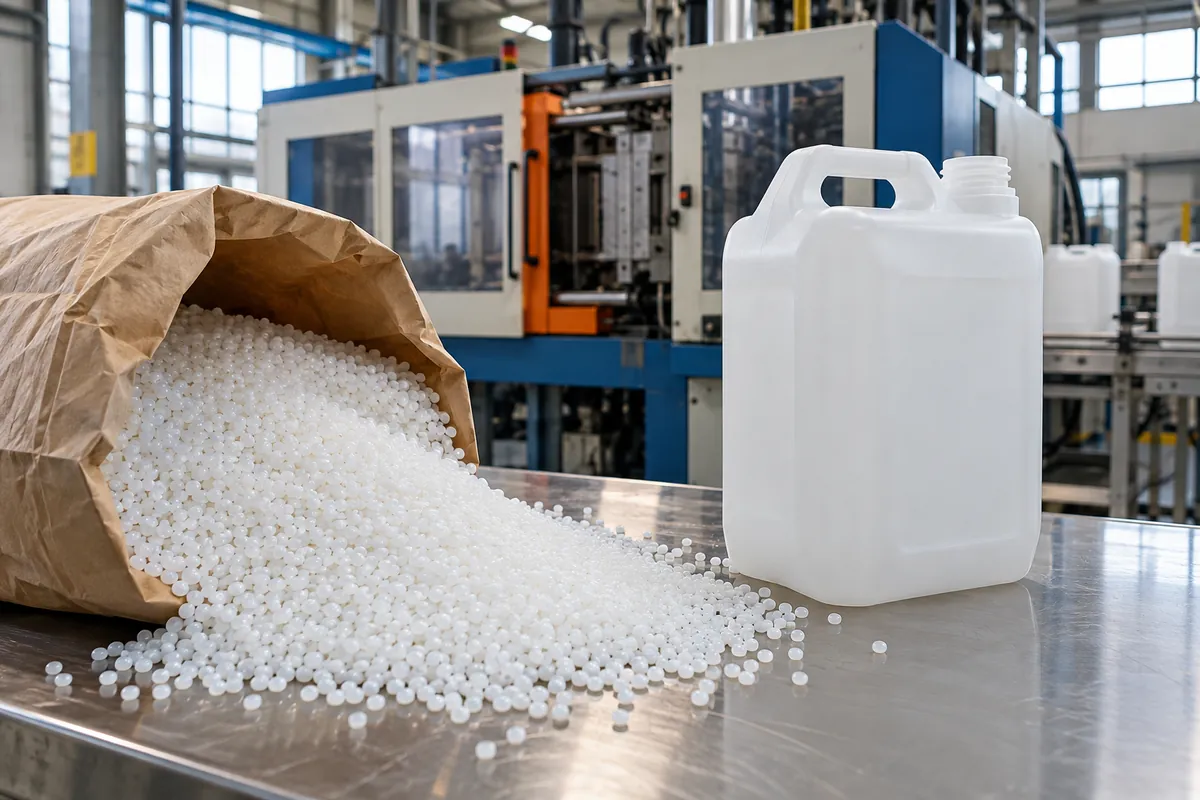
HDPE is high-density polyethylene, a thermoplastic with a density of 0.945 to 0.966 g/cm³, so it floats on water. Container grades soften near 125 °C, melt at 134 to 135 °C, burn when ignited and weaken in sunlight unless carbon black or a UV stabiliser protects them. They resist most water-based chemicals, hold food when the resin is declared for contact, and recycle as resin code 2.
Quick answer: What temperature can HDPE withstand?
HDPE melts at 134 to 135 °C, but under load it softens at lower temperatures: data sheets give a Vicat softening point of 125 to 129 °C and a heat deflection temperature of 76 to 88 °C at 0.45 MPa. Its brittleness temperature sits below minus 75 °C. No rule sets a service ceiling for an HDPE container.
Work it out
HDPE stands for high-density polyethylene. It is a thermoplastic made by the catalytic polymerisation of ethylene (21 CFR 177.1520(a)(2)(i)), so the polymer is built from carbon and hydrogen. The customs tariff splits polyethylene at a specific gravity of 0.94 (UK Trade Tariff, subheadings 3901.10 and 3901.20), and HDPE sits above that line. A thermoplastic softens with heat and sets on cooling, so HDPE can be blow moulded into a jerrycan and melted again for recycling.
The table lists typical values from the resin data sheets we read. Data sheet values are typical, so confirm the figure for the grade your supplier moulds.
| Property | Typical value | Method or standard |
|---|---|---|
| Density | 0.945–0.966 g/cm³ | ASTM D1505, D792; ISO 1183 |
| Melting peak | 134–135 °C | ASTM D3418; ISO 11357 |
| Vicat softening point | 125–129 °C | ASTM D1525; ISO 306 |
| Heat deflection, 0.45 MPa | 76–88 °C | ASTM D648; ISO 75 |
| Brittleness temperature | below −75 °C | ASTM D746 |
| Flexural modulus | 900–1,770 MPa | ASTM D790; ISO 178 |
| Flammability | UL 94 HB | UL 94 (one resin listing) |
| Resin identification code | 2 | ASTM D7611 |
The values come from blow-moulding, injection, film and sheet grade data sheets from Chevron Phillips, PTT Global Chemical, SABIC, Prime Polymer, Spartech and Reliance, plus LyondellBasell’s jerry can page. PTT quotes flexural modulus in kg/cm², which we converted.
Yes. HDPE floats because it is less dense than water. Jerry can resins run from 0.945 to 0.955 g/cm³ (LyondellBasell) and blow-moulding resins reach 0.966, while water is 0.998 g/cm³ at 21 °C (USGS).
A can full of water still floats, because the wall is lighter than the water it displaces, but it rides low. Fuel cans float too: EN 228 petrol tops out at 0.775 g/cm³ and diesel under Directive 98/70/EC, Annex II, at 0.845, both at 15 °C. Dense contents change the result: Merck lists 50% caustic soda at 1.52 and NIOSH lists 96 to 98% sulphuric acid at 1.84 g/cm³, so a full can of either sinks. Density also sets full weight, and drums, IBCs and jerry cans per container works it out for each liquid.
HDPE tolerates moderate heat and fails well before it melts. Data sheets give a melting peak of 134 to 135 °C and a Vicat softening point of 125 to 129 °C. Load lowers the limit: under 0.45 MPa the heat deflection temperature is 76 to 88 °C. Thermo Fisher rates its HDPE labware at 120 °C maximum use, with a heat deflection temperature of 65 °C.
We found no rule that sets a service ceiling for an HDPE container. The nearest is the UN stacking test. A plastic jerrican carries its stack load for 28 days at not less than 40 °C, and the test fails it for a leak or for deterioration or distortion that affects safe carriage (ADR 2025, 6.1.5.6). HSE asks storekeepers to prevent direct contact with hot surfaces such as hot water or steam pipes (HSG51, paragraph 73).
Heat also acts through the liquid. ADR 2025, 4.1.1.4, asks for enough ullage that a liquid does not completely fill a packaging at 55 °C. Fuel-can venting and pressure covers the pressure side.
HDPE keeps its toughness far below freezing. Chevron Phillips lists a brittleness temperature below −75 °C (ASTM D746) for its jerry can resin, and Spartech lists below −76 °C for HDPE sheet. Thermo Fisher gives −100 °C for labware.
A filled can is a harder test than a moulded bar. For UN approval, plastic jerricans and drums are chilled with their contents to −18 °C or lower and then dropped (ADR 2025, 6.1.5.3.2), because impact toughness falls as polyethylene cools. Each packaging holding liquid must be leakproof once the pressures equalise (6.1.5.3.6). Corner wall thickness drives the result, and HDPE grades and fluorination explains why unit weight is the number to watch on repeat orders.
HDPE burns, and it is not fire resistant. Chevron Phillips lists its jerry can resin as UL 94 HB, the only flammability listing on the sheets we read. UL defines HB as a horizontal burn at less than a set maximum rate (40 mm/min for specimens 3 to 13 mm thick, 75 mm/min below 3 mm). The V-0, V-1 and V-2 classes need self-extinguishing within set times after the flame is removed, and no sheet we read claims one. A resin safety data sheet says the material may be ignited by heat, sparks or flames, does not ignite readily, and gives off irritating or toxic gases in a fire.
A full plastic can adds the contents to that. HSE says plastic containers are vulnerable in a fire, with the potential for the entire inventory to fail within perhaps 10 minutes, and that its 110 per cent bund figure is for metal containers (HSG51, paragraph 55). Secondary containment requirements sets out the arithmetic.
Plastic also holds static charge. HSE asks you to assess ignition by electrostatic discharge where plastic containers hold low-conductivity flammable liquids (HSG51, paragraph 60). A carbon-loaded antistatic grade gives the charge a path, and the can is still bonded and earthed. DSEAR and ATEX covers classified areas.
Unaided, no. Sunlight breaks polyethylene chains. The Plastics Pipe Institute lists the results as loss of impact strength, colour change, cracking, loss of elongation and tensile strength, and chalking (TN-47). Ultraviolet light is 4.6 per cent of sunlight, from 290 to 400 nm, and polyethylene is most sensitive at 300 to 310 nm and at 340 nm. UV exposure affects the surface layer, and the compound beneath is protected by it.
Carbon black is the standard protection. The pipe industry treats polyethylene with 2 to 3 per cent well-dispersed carbon black as stable against unprotected UV exposure for at least 10 years. It treats coloured grades with a UV stabiliser as stable for at least 3 years (ASTM D2513, as set out in TN-47). Those are exposure criteria for pipe. They give no service life for a jerrycan. Place matters: about 2,000 xenon-arc hours equal one year of Florida sun for HDPE, 1,250 one year in Southern California and 1,000 one year in Southern Canada.
The dangerous-goods rules say the same. ADR 2025, 6.1.4.8.1, requires a plastic jerrican to resist ageing and degradation by ultraviolet radiation. Where protection is needed it comes from carbon black, other pigments or inhibitors that stay effective for the life of the packaging (6.1.4.8.2). HSE adds that plastic containers can degrade with prolonged exposure to sunlight (HSG51, paragraph 70). Ask any supplier whether the resin carries a UV stabiliser before a can stands outdoors.
HDPE resists most water-based chemistry and does not corrode. Thermo Fisher’s chart at 20 °C records no damage after 30 days in dilute acids, aliphatic alcohols and bases, and little or no damage in strong acids and aliphatic hydrocarbons. It marks aromatic hydrocarbons, halogenated hydrocarbons and aromatic ketones as not recommended for continuous use. Temperature, exposure time and stress move every rating.
The dangerous-goods rules test polyethylene against six standard liquids: a wetting solution, acetic acid, n-butyl acetate, a white-spirit hydrocarbon mixture, nitric acid at 55 per cent or stronger, and water. Samples sit in the liquid for three weeks at 40 °C before testing (ADR 2025, 6.1.5.2.6 and 6.1.6).
Petrol needs more than a rating. Hydrocarbon vapour passes through the wall of untreated HDPE, so a sealed can can lose fuel with the cap shut. A fuel can needs a treated or barrier wall, which HDPE grades and fluorination sets out. Check any other liquid in the chemical compatibility guide, and send the safety data sheet with your enquiry.
Food-grade HDPE is food safe when the resin, colourant and closure carry a declaration for your food and conditions. In the US, 21 CFR 177.1520(c) clears polyethylene of density 0.85 to 1.00. The rule caps the fraction polyethylene gives up to n-hexane at 50 °C at 5.5 per cent, or 2.6 per cent for articles that hold food during cooking.
In the EU, Regulation (EU) No 10/2011 restricts plastics to substances on its Union list (Article 5), sets an overall migration limit of 10 mg per dm² of contact surface (Article 12) and requires a declaration of compliance (Article 15). Carbon black is listed as FCM substance 411 at up to 2.5 per cent of the polymer by weight. Food-contact and potable-water certification lists the documents to request.
PFAS is a separate question. Plain HDPE is a polymer of ethylene with no fluorine in the chain. Fluorinated HDPE is different. US EPA tested rinsate from fluorinated HDPE containers and found eight PFAS, among them PFOA, PFNA and PFDA, at 20 to 50 parts per billion. EPA says those figures do not measure human exposure. A 2022 EPA study found PFAS could leach into liquid products held in the containers. A federal appeals court vacated EPA’s 2023 orders against the fluorinating company in March 2024. In July 2024 EPA granted a petition and said it would start a TSCA section 6 proceeding. We found no final rule.
In the EU, Regulation (EU) 2025/40 has barred food-contact packaging above set PFAS limits since 12 August 2026 (Article 5(5)). The limits are 25 ppb for any single PFAS, 250 ppb for the sum of targeted PFAS and 50 ppm for PFAS including polymeric PFAS. Use a fluorinated can for fuel, solvents and agrochemicals, and keep food out of it. If your market or customer regulates PFAS, ask for a test on the finished wall of the can before you specify one.
Yes. HDPE carries resin identification code 2 (California Public Resources Code, section 18015; ASTM D7611) and is a thermoplastic that can be remelted. ASTM D7611 adds that the code does not imply the article is recycled or that systems exist to process it. US EPA municipal waste data show the gap: in 2018, 29.3 per cent of natural HDPE bottles were recycled, against 70.9 per cent of steel cans and 8.7 per cent of all plastics.
The obstacle for a used container is the residue. GOV.UK classes clean plastic packaging as 15 01 02 and empty packaging contaminated with hazardous residues as hazardous waste 15 01 10*. A can that held dangerous goods stays regulated until it is cleaned (ADR 2025, 4.1.1.11), and uncleaned empties carried for recycling may travel as UN 3509 under special provision 663.
Recycled resin reaches a new UN can through a controlled route. ADR 2025, 6.1.4.8.1, allows no used material except production residue or regrind from the same process, apart from recycled plastics material made under a quality assurance programme that the competent authority recognises (1.2.1). Cans made with it carry the mark REC (6.1.3).
Recycled-content rules differ by market. The UK Plastic Packaging Tax charges packaging below 30 per cent recycled plastic: see UK Plastic Packaging Tax on containers. The EU packaging regulation sets recycled-content minimums for plastic packaging from 1 January 2030 at the earliest (Article 7(1)). The minimums are 10 per cent for contact-sensitive packaging made from plastics other than PET and 35 per cent for other plastic packaging apart from beverage bottles. It exempts packaging used to transport dangerous goods (Articles 6(11)(f) and 7(4)(f)); see EU packaging rules.
A dangerous-goods HDPE can has a legal life of five years from manufacture. ADR 2025, 4.1.1.15, limits plastic drums and jerricans to five years of use for dangerous goods unless the competent authority approves otherwise, or less where the substance calls for it. Steel has no such limit. The clock runs from the date of manufacture on the can’s UN mark, so read it on delivery with the UN packaging code decoder and see UN packaging codes explained for the mark.
Outside dangerous goods we found no rule that sets a life. UV exposure, the contents and handling decide it. Retire a can that has crazed, split, softened or kept an odour, and read cleaning and reusing jerry cans for the inspection routine.
We make HDPE jerrycans from 5 to 30 litres: a natural 25 litre stackable can, food-grade cans, fluorinated cans for fuels and solvents, carbon-loaded antistatic cans, wide-mouth 3H2 cans and an economy line without UN approval for non-hazardous liquids.
Fortitude21 holds UN certification for its dangerous-goods jerrican designs, certified per design type and made under quality assurance the competent authority accepts, and our factories hold ISO 9001, 14001 and 45001. We hold no WRAS, NSF/ANSI 61 or other drinking-water listing. For food contact we confirm which declaration covers your market before you order.
Tell us the liquid, the hottest and coldest temperatures the can will see, whether it stands outdoors and the destination market, and we match the grade.
| Your use case | Recommended can | Why this one |
|---|---|---|
| General storage and decanting | 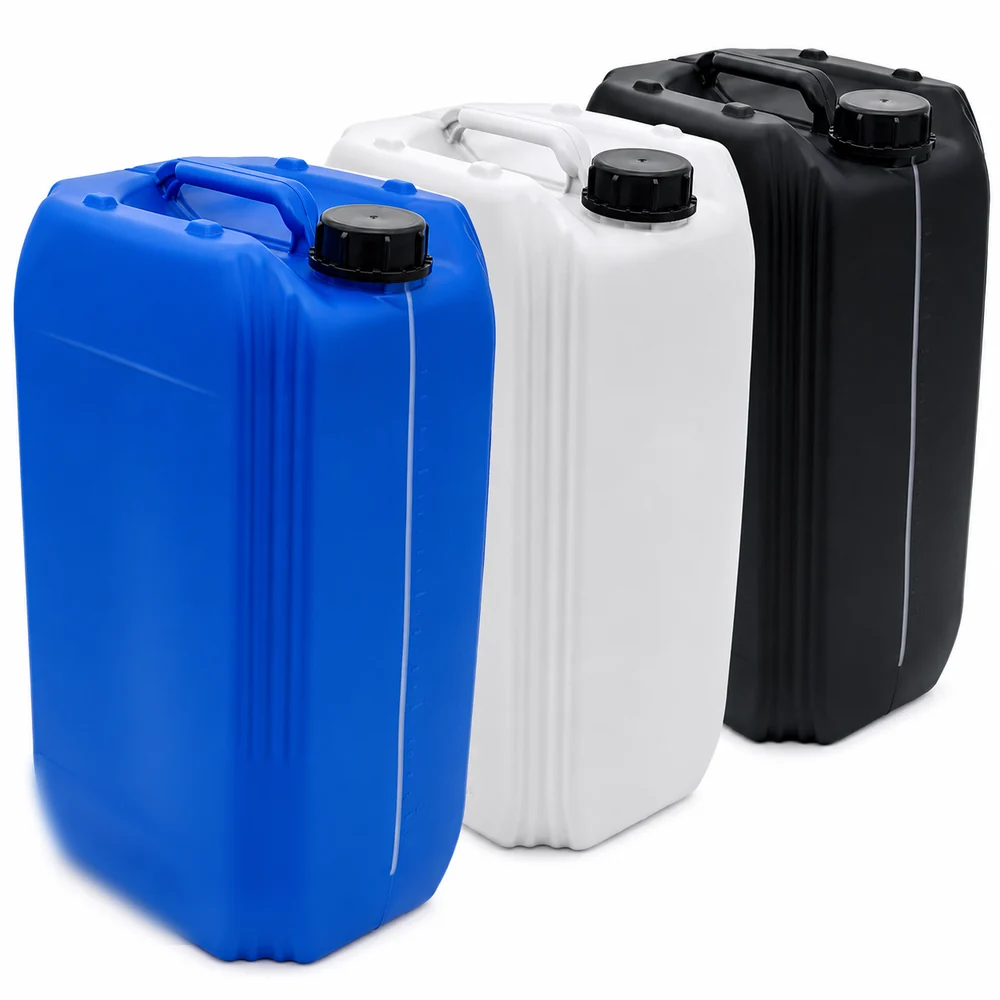 25L Stackable Plastic Jerrycan |
Natural HDPE, 25 litres, L-ring stackable, available UN 3H1 certified. |
| Food, drink and potable water | 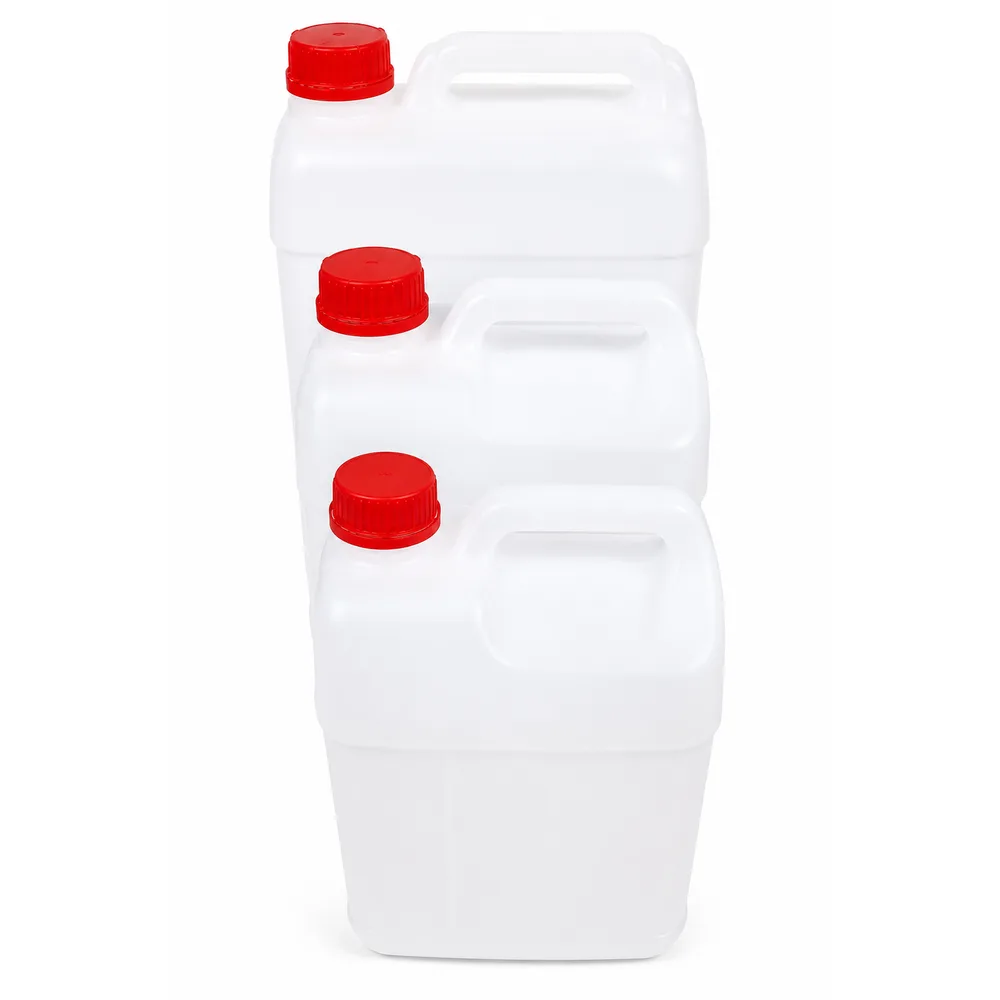 Food-Grade HDPE Jerrycan |
Natural food-contact HDPE with the declaration covering cap and liner. |
| Fuels, solvents and agrochemicals | 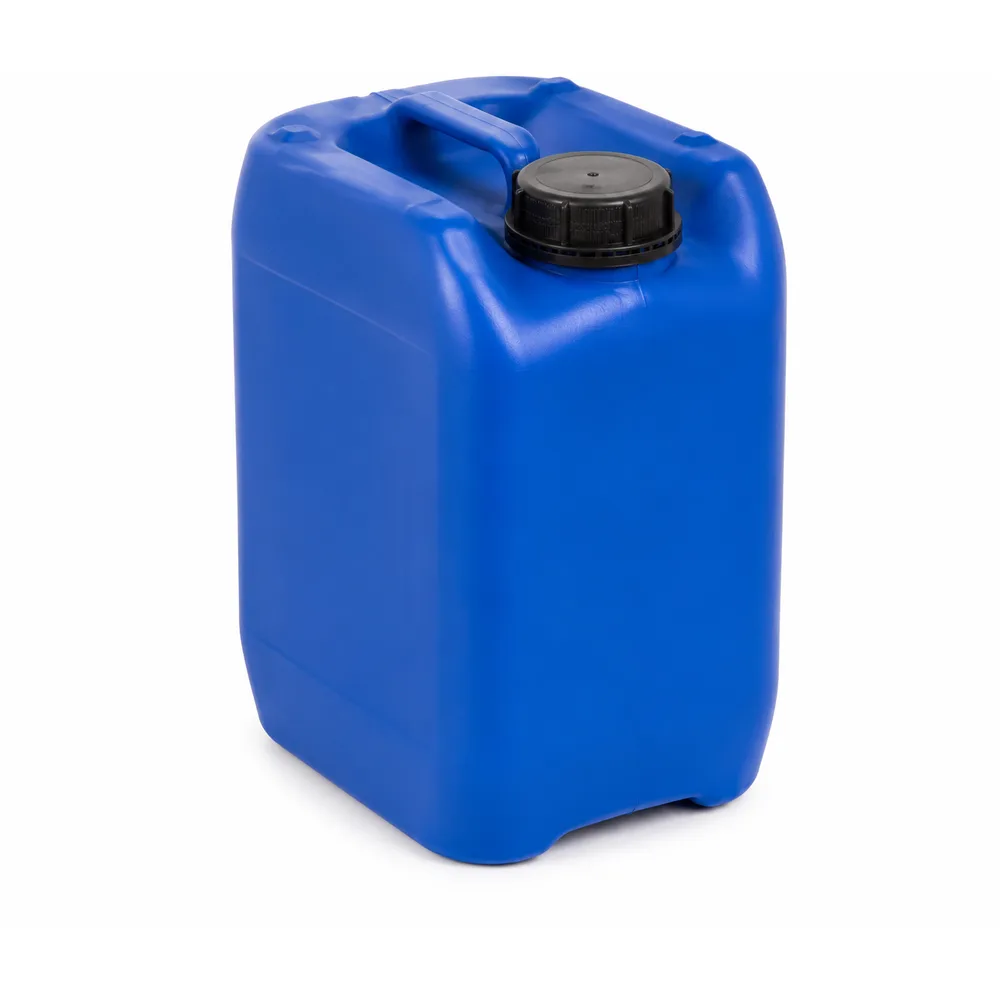 Fluorinated HDPE Jerrycan |
Fluorinated interior barrier against the permeation untreated HDPE allows. |
| Flammable liquids in classified areas | 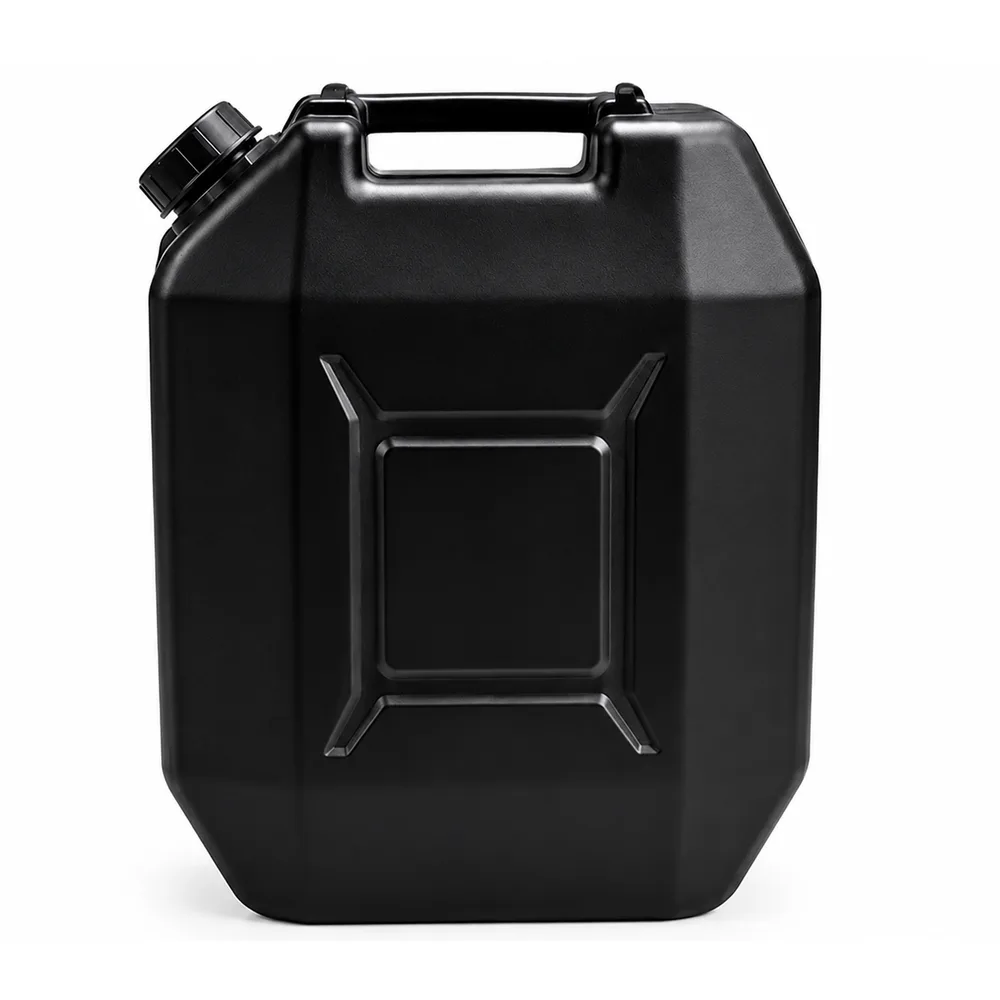 Antistatic HDPE Jerrycan |
Carbon-loaded conductive wall that gives static charge a path. |
| Pastes, powders and viscous liquids | 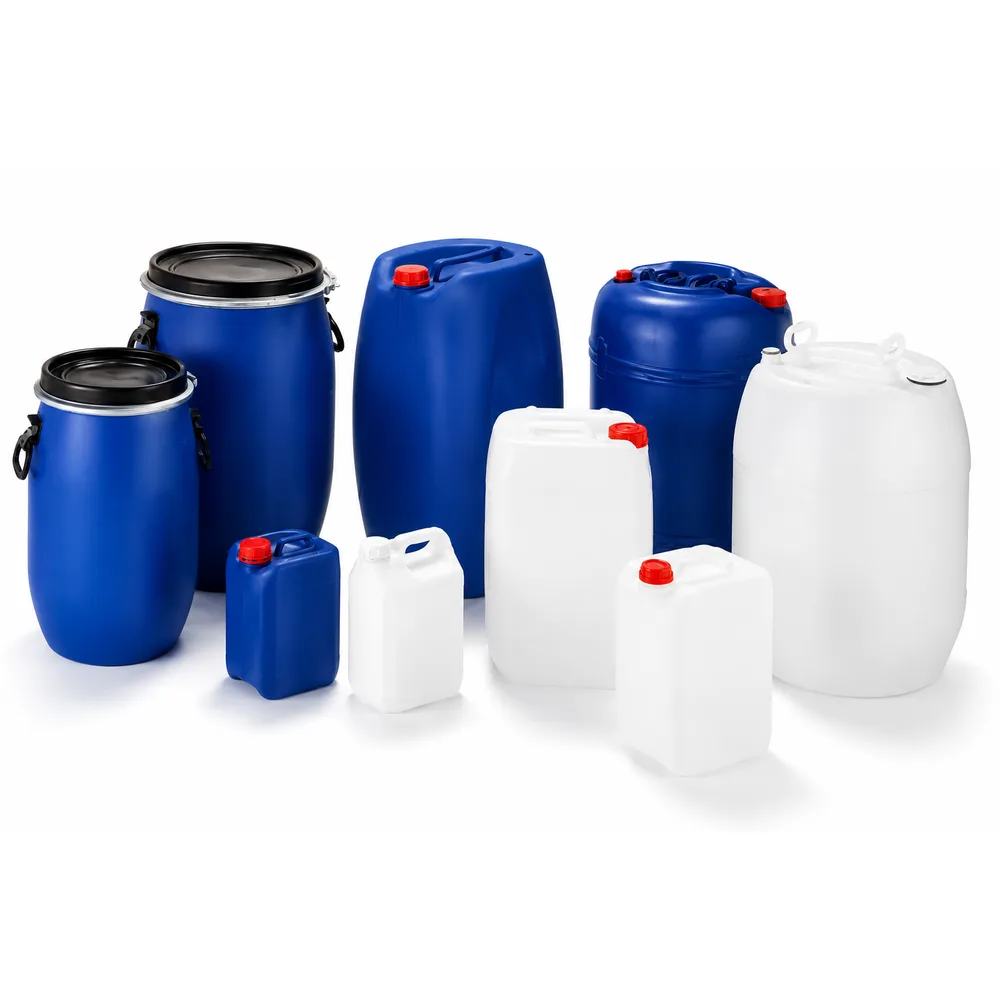 Wide-Mouth HDPE Jerrycan — UN 3H2 pattern |
Removable-head 3H2 pattern for contents that will not pour through a neck. |
| Non-hazardous liquids at volume | 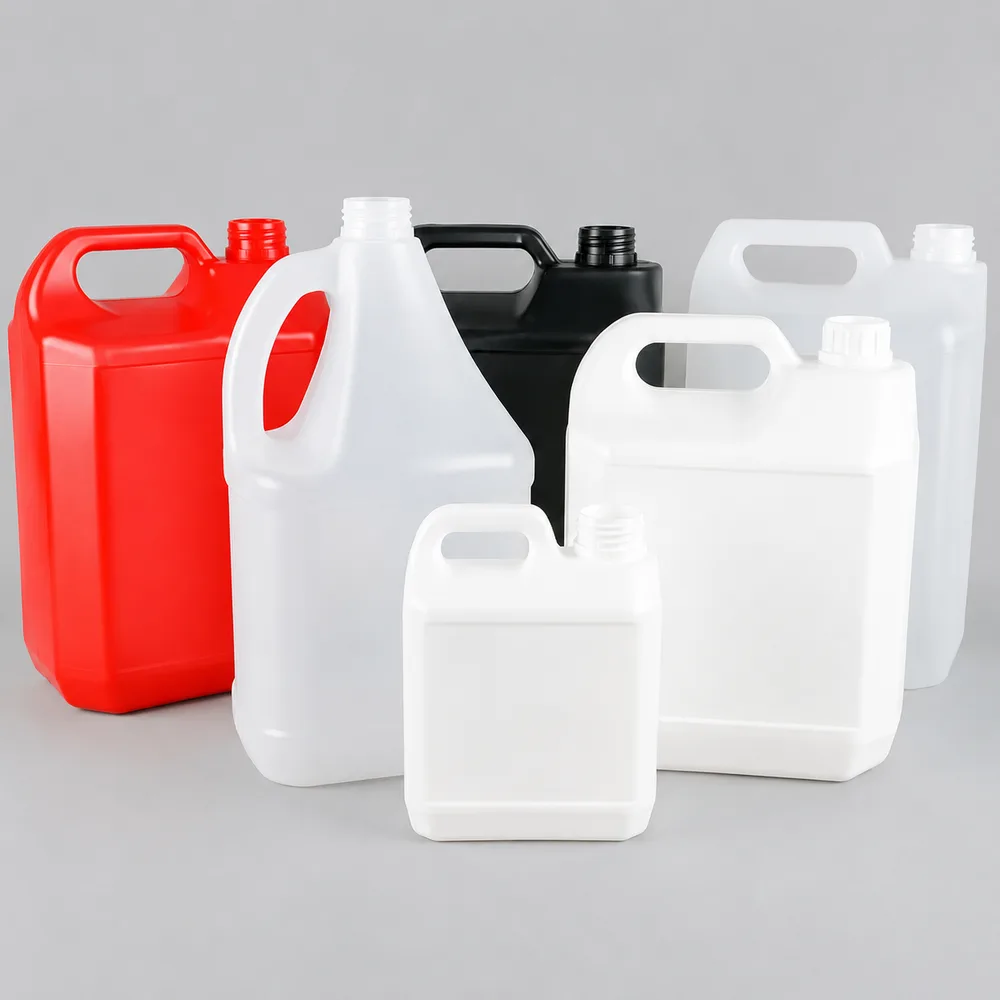 Economy HDPE Jerrycan — non-UN |
The same stackable body without a UN approval, for detergents and cleaners. |
No. HDPE is polyethylene, a polymer of ethylene made of carbon and hydrogen. PVC is polyvinyl chloride and contains chlorine. They carry different resin identification codes, 2 for HDPE and 3 for vinyl (California Public Resources Code, section 18015). A UN approval, a food-contact declaration and a chemical rating each belong to one polymer, so one cannot stand in for the other in a container.
The resin safety data sheet we read does not classify HDPE as hazardous: it lists no physical or health hazard under the OSHA Hazard Communication Standard. The risks sit elsewhere. Burning plastic gives off irritating and toxic gases, and a used can carries whatever it held. For food contact, ask for the declaration of compliance for your market and conditions instead of relying on the polymer name.
Any plastic gives up small amounts of additives, and the rules cap that. Regulation (EU) No 10/2011 limits overall migration to 10 mg per dm² of contact surface (Article 12), and contact beyond 30 days is tested for up to 10 days at 60 °C (Annex V, 2.1.4). We found no measured figure for microplastic release from HDPE containers, so we quote none. Our guide to stainless against plastic for water covers taste and odour.
It can be, when the resin and every part the water touches hold the approval your market requires. Food contact and drinking water are separate approvals with their own scopes: WRAS in the UK and NSF/ANSI/CAN 61 in North America. Fortitude21 holds neither. Our food-grade can is specified for food contact, and we confirm the declaration for your market before you order. See WRAS and NSF/ANSI 61.
HDPE is waterproof: liquid water does not pass through the wall. Vapour does pass. Hydrocarbons dissolve into untreated HDPE and evaporate from the outer face, so a sealed fuel can loses weight with the cap shut. The effect is permeation, and it matters for fuel and solvents more than for water. The rates and the treatments that stop it are in HDPE grades and fluorination.
HDPE is semi-rigid. Flexural modulus on the data sheets runs from 900 to 1,770 MPa, so a thin flat panel flexes under the hand. A moulded jerrycan gets its stiffness from wall thickness, corners and ribs, and that wall carries the stacking load that earns the UN rating. A lighter can is a different design. HDPE grades and fluorination explains why unit weight is worth checking.
No. Thermo Fisher’s Nalgene reference lists HDPE labware as not autoclavable: its maximum use temperature of 120 °C sits close to the 121 °C of an autoclave cycle, and its heat deflection temperature is 65 °C. Steam sterilising a jerrycan is not a job for HDPE, and steam cleaning a fuel can is a specialist job, as our guide to cleaning and reusing cans explains.
Not without preparation. TWI notes that for low-surface-energy polymers such as polyethylene, corona, flame or plasma treatment improves adhesion before bonding. Do not glue, weld or cut a UN-marked can: the mark states that the packaging matches a tested design type (ADR 2025, 6.1.3.1), and tests must be repeated after any change of design, material or construction (6.1.5.1). Replace caps, taps and spouts with parts made for the can.
Yes, and so does the liquid inside it. HSE asks storekeepers to allow for warming in direct sunlight or under transparent roof lights, and to provide shading where necessary (HSG51, paragraphs 70 and 72). The liquid expands and a volatile one raises the pressure in the can, so fill with ullage: ADR 4.1.1.4 asks that a liquid does not completely fill a packaging at 55 °C. See fuel-can venting.
Yes. Resin makers sell HDPE grades for injection moulding, blow moulding, extrusion and thermoforming. Prime Polymer lists HI-ZEX 2208J for injection moulding, and Chevron Phillips lists HXM 50100 for blow-moulded jerry cans and thermoformed pallets. Processing temperatures on the Reliance blow-moulding sheets run from 180 to 220 °C. Our jerrycans are blow moulded in one seamless wall.
Not in its natural state. Thermo Fisher describes HDPE as milky white and translucent, so a thin wall shows the liquid level and little else. Carbon loading turns it black: our antistatic can is black for that reason. Our natural food-grade can stays translucent so you can read the level.
HDPE stands for high-density polyethylene, a thermoplastic made from ethylene with a density of 0.945 to 0.966 g/cm³. The Plastics Pipe Institute lists HDPE pipe for water, wastewater, chemicals and compressed gas. Container makers blow mould the same polymer into jerrycans. Its resin identification code is 2.
Yes. HDPE is a thermoplastic polymer made by the catalytic polymerisation of ethylene (21 CFR 177.1520(a)(2)(i)), so it is polyethylene built from carbon and hydrogen. A thermoplastic softens with heat and sets on cooling, which lets a moulder blow mould HDPE into a jerrycan and a recycler melt it again. HDPE resin is the grade a moulder buys, and its maker publishes a data sheet with the density, melting point and softening point.
Yes. HDPE carries resin identification code 2 and, as a thermoplastic, melts again for reprocessing. The code does not guarantee a collection scheme: US EPA counted 29.3 per cent of natural HDPE bottles recycled in 2018. A used can that held hazardous goods stays regulated until it is cleaned, and GOV.UK classes packaging with hazardous residues as hazardous waste 15 01 10*.
No. HDPE is a polymer of ethylene, made of carbon and hydrogen, and BPA is not one of its building blocks. FDA says BPA is used to make polycarbonate and is found in the epoxy resins that line some metal food cans. In the EU, Regulation (EU) 2024/3190 prohibits BPA in plastic food-contact materials (Article 3). A food-contact container still needs a declaration of compliance for your market and conditions.
Yes. HDPE is a thermoplastic, so heat fuses it. TWI lists butt fusion, electrofusion, socket fusion and hot gas welding as methods for polyethylene pipe, and solvent cement is not one of them. Adhesives need corona, flame or plasma treatment of the surface first. A UN-marked can must not be welded or cut, because its approval covers the tested design (ADR 2025, 6.1.5.1).
Yes for mineral oils and aliphatic hydrocarbons; aromatic and halogenated hydrocarbons are not recommended. Thermo Fisher records little or no damage to HDPE after 30 days in aliphatic hydrocarbons at 20 °C. An INEOS guide rates mineral oils satisfactory at 21 °C and 60 °C. Petrol vapour still passes through untreated HDPE, so a fuel can needs a fluorinated or barrier wall.
No. Plain HDPE holds a static charge, and HSE asks you to assess ignition by electrostatic discharge where plastic containers hold low-conductivity flammable liquids (HSG51, paragraph 60). A carbon-loaded antistatic grade gives the charge a path, and the carbon also makes it black. The can still needs bonding and earthing during transfer, and your area classification decides whether it suits the job.
HDPE melts at 134 to 135 °C but softens well below that under load. Data sheets give a Vicat softening point of 125 to 129 °C and a heat deflection temperature of 76 to 88 °C at 0.45 MPa. Cold is gentler, with a brittleness temperature below minus 75 °C. No rule sets a service ceiling for an HDPE container, and the UN stacking test holds a plastic jerrican at 40 °C or more for 28 days.
Yes, unless it is protected. Ultraviolet light breaks polyethylene chains at the surface, and the Plastics Pipe Institute lists the results as lost impact strength, colour change, cracking and chalking. Carbon black is the standard defence: the pipe industry treats polyethylene with 2 to 3 per cent well-dispersed carbon black as stable in sunlight for at least 10 years, and coloured grades with a UV stabiliser for at least 3. Those are pipe criteria. For a container, ADR 6.1.4.8.1 requires a plastic jerrican to resist UV degradation.
Not while it stays solid. Chevron Phillips' safety data sheet for one of its polyethylene grades says that above 177 °C polyethylene can release vapours and gases that irritate the eyes, mouth, throat and lungs, which may include formaldehyde and acrolein. That is hotter than HDPE's melting point of 134 to 135 °C. Blow-moulding grades are processed at 180 to 220 °C, where the sheet asks for ventilation, or a respirator if ventilation does not control the fumes. Burning HDPE gives off irritating and toxic gases.
Yes. HDPE is a thermoplastic, so it softens with heat and sets again as it cools, and resin makers sell grades for thermoforming. Data sheets give a Vicat softening point of 125 to 129 °C and a melting peak of 134 to 135 °C. HDPE burns once ignited, so keep a naked flame off it. Do not heat or bend a UN-marked can: the mark covers a tested design type, and ADR 6.1.5.1 repeats the tests after any change of design, material or construction.
Almost none. SIMONA's data sheet for its HDPE sheet gives water absorption below 0.01 per cent under ASTM D570, averaged from tests on 4 mm extruded sheet, and notes that values vary with processing and specimen. Liquid water does not pass through the wall of a can either. Hydrocarbons behave differently: they dissolve into untreated HDPE and evaporate from its outer face, so fuel needs a fluorinated or barrier can.
The standards and regulations this page relies on, at their issuing body. Where a market rule is named here, check the current revision before you specify against it.
Last reviewed by David Guru, Co-Founder & Business Development Director.
Tell us your market, what the containers will hold and your volumes. We come back with a specification sheet and a quotation.