
Which certifications a water or food-grade container needs, and what to request from a supplier.
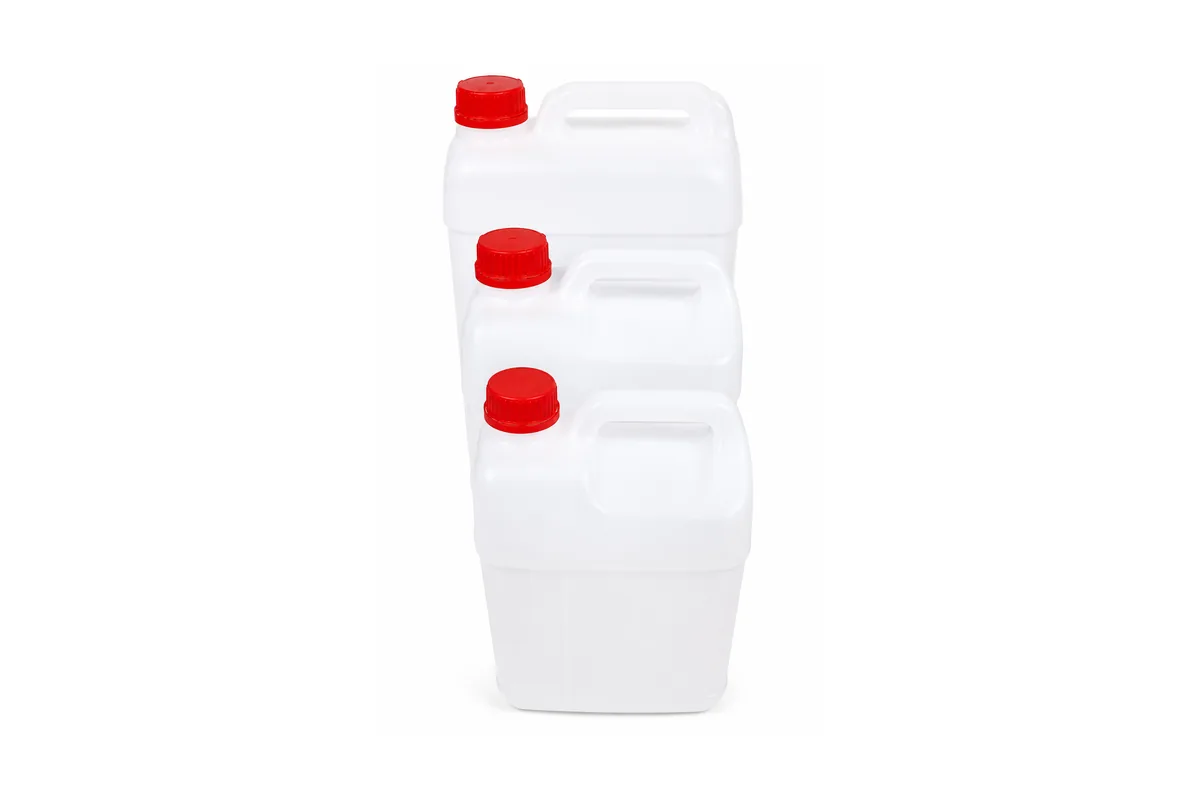
A water or food-grade container is only as trustworthy as its paperwork. The material has to be right, and the evidence has to exist for the exact design you buy. This sets out what applies, what the documents actually prove, and what to ask for, so a food-grade claim rests on more than a clean finish.
Food contact starts, and often ends, with the material. AISI 304 stainless steel and food-grade HDPE are the safe bodies. Galvanized steel is not: the zinc coating that protects it from rust is not food-safe, and no document changes that. A painted or lined steel can is a fuel can, not a water can. Confirm the build is stainless or food-grade resin before you look at a single certificate, because the paperwork only certifies a material that was already correct.
Stainless earns that position for a structural reason rather than a regulatory one. There is no liner in the wetted path, so there is nothing to chip, blister or wear through, and the thing being assessed is the alloy itself. A coated steel can is only food-safe while its coating is intact, which makes the claim conditional on a layer that a dropped filler nozzle can breach without anyone noticing. Removing the coating from the equation removes the failure mode.
Food-grade HDPE works differently and needs a different question asked of it. The resin is approved with its additive package, so the grade and the masterbatch together are what carry the claim, not the polymer name. A can moulded in food-grade HDPE with a non-food-grade colourant is not a food-grade can, and that is a distinction that only shows up if you ask for the declaration to cover the pigment as well as the resin.
The two regimes look similar and test for different things, which is why a certificate for one does not answer the other. Food-contact assessment is built around foods: relatively short contact, often refrigerated, and a matrix that is chemically busy to begin with.
Drinking-water assessment assumes the opposite conditions. Water sits in the container for long periods, it is nutritionally empty so anything that leaches has somewhere to go, and it is judged on taste, odour and whether the material supports microbial growth. A plastic that is entirely acceptable against a food simulant can fail on taste against water.
That difference is why the endpoints diverge. Food contact asks what migrates and in what quantity. Drinking water asks the same, then adds organoleptic and microbiological questions that have no food-contact equivalent. Ask a supplier which of the two they hold, and for which market.
Here is the part cheap suppliers skip. A stainless body can be flawless and the can still fail a food-grade claim, because the gasket, the cap liner, the spout and the tap are plastic and elastomer, and they touch the liquid too. Food-contact compliance covers every part the water meets, not just the metal. When you ask for evidence, ask for it on the closures and seals as well as the body. It is where a food-grade claim most often quietly falls apart.
Work through the parts and the list is longer than a shell. The cap liner sits against the liquid whenever the can is inverted or full. A gasket does the same permanently. A tap has a body, a seat and a seal, often in three different materials from three different suppliers. A spout adds a fourth. Each of those is a food-contact article in its own right and each needs its own declaration, which is why the honest answer to "is the can food-grade" is a set of documents rather than a word.
The commercial consequence is that closures should be bought as part of the specification rather than as a consumable. A replacement gasket sourced on price from a general supplier can break a food-grade claim on a can that has not changed, and the break is invisible until somebody asks for the file. Keep the closure and seal declarations with the product record rather than with the accessory order.
Food-contact rules are national, not universal. The EU framework, the US FDA regime, the UK’s water approvals and Japan’s positive-list system, which now permits only listed substances, each ask for different evidence. A single “food-safe” claim means little across all of them at once. Tell your supplier the destination and the paperwork can be aimed at the rules that actually apply there, rather than at a general impression of safety.
The divergence is structural rather than a matter of strictness. The EU works from a framework regulation with material-specific measures beneath it and, for plastics, a Union list of authorised substances. The United States works through FDA regulations plus food-contact notifications, so a substance can be cleared for a named use by a named notifier. Japan moved to a positive-list system where only listed substances may be used. Three different architectures, and a file built for one is not a file for another even where the underlying material is identical.
Which is why "food-safe" as a marketing phrase is close to meaningless and "compliant with Regulation (EU) 10/2011 for aqueous foods at ambient temperature" is not. The second names the regulation, the food type and the condition, and those three together are what an importer's own compliance file needs. Ask for the claim in that shape and a supplier who cannot produce it will tell you so quickly.
If a supplier cannot produce these for the design in front of you, treat the food-grade claim as unproven.
Our stainless water and food-grade lines are AISI 304 across the wetted path, chosen so the metal itself is the barrier with no liner to fail. We supply the material and food-contact documentation against your order and destination market, and we will tell you plainly what we hold and what we do not before you commit. See the water and food-grade range.
Food-grade means the material, evidenced. Here is the line.
| Your use case | Recommended can | Why this one |
|---|---|---|
| Potable water, kept and refilled | 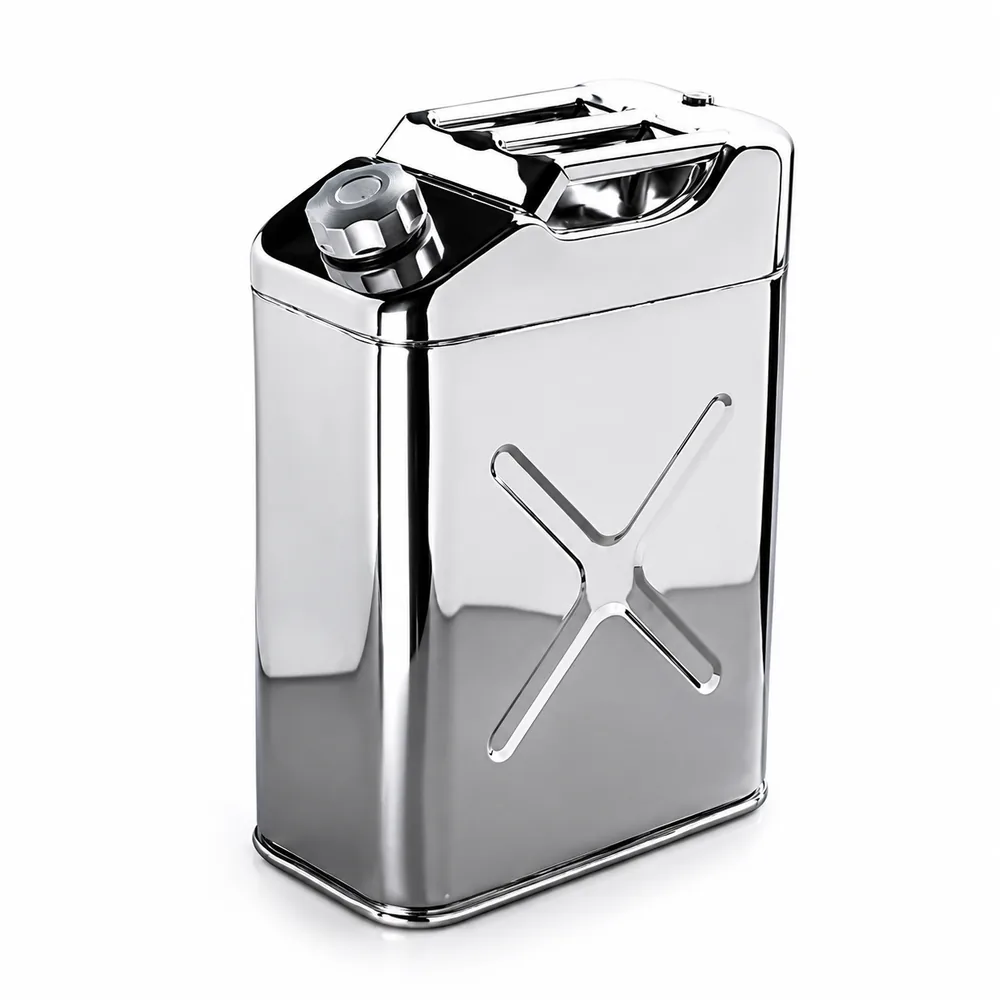 20L Stainless Steel Water Can 20L Stainless Steel Water Can |
AISI 304 across the wetted path. |
| Food and beverage at volume | 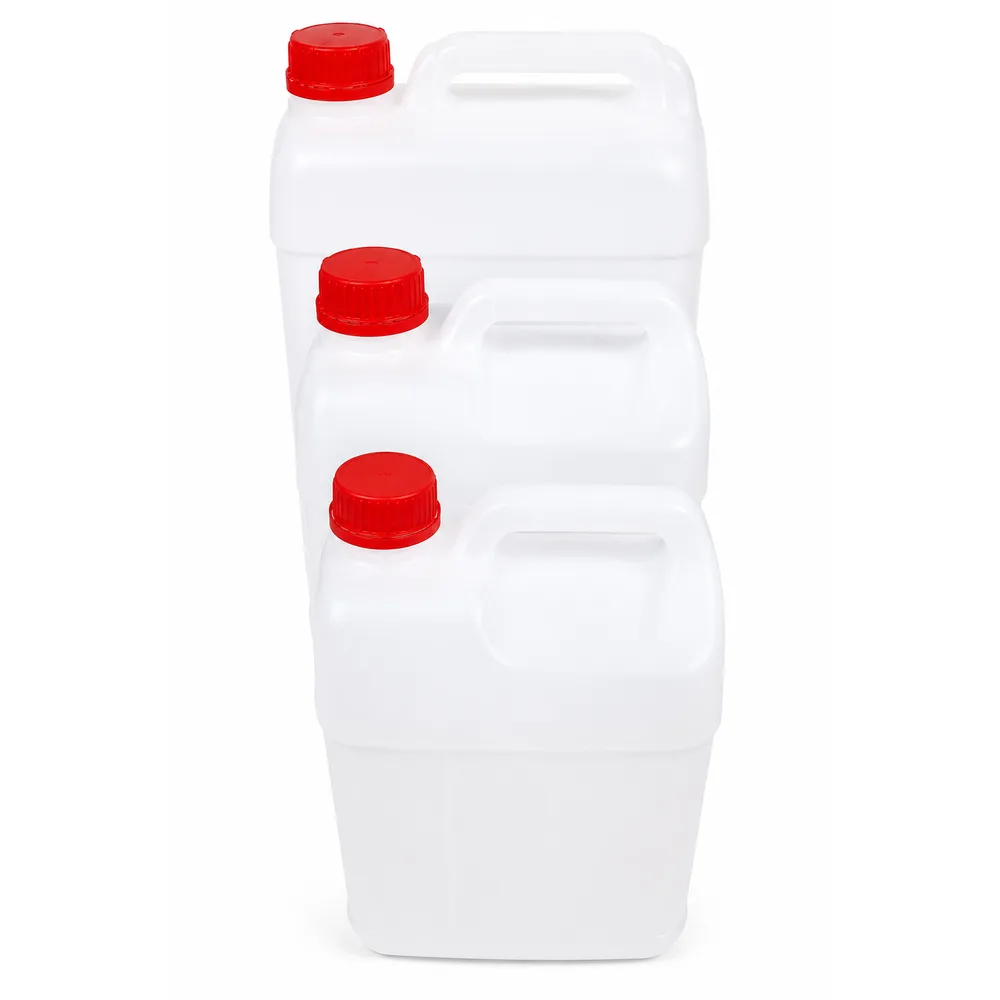 Food-Grade HDPE Jerrycan Food-Grade HDPE Jerrycan |
Food-contact resin with documentation. |
| Food-grade, lying flat | 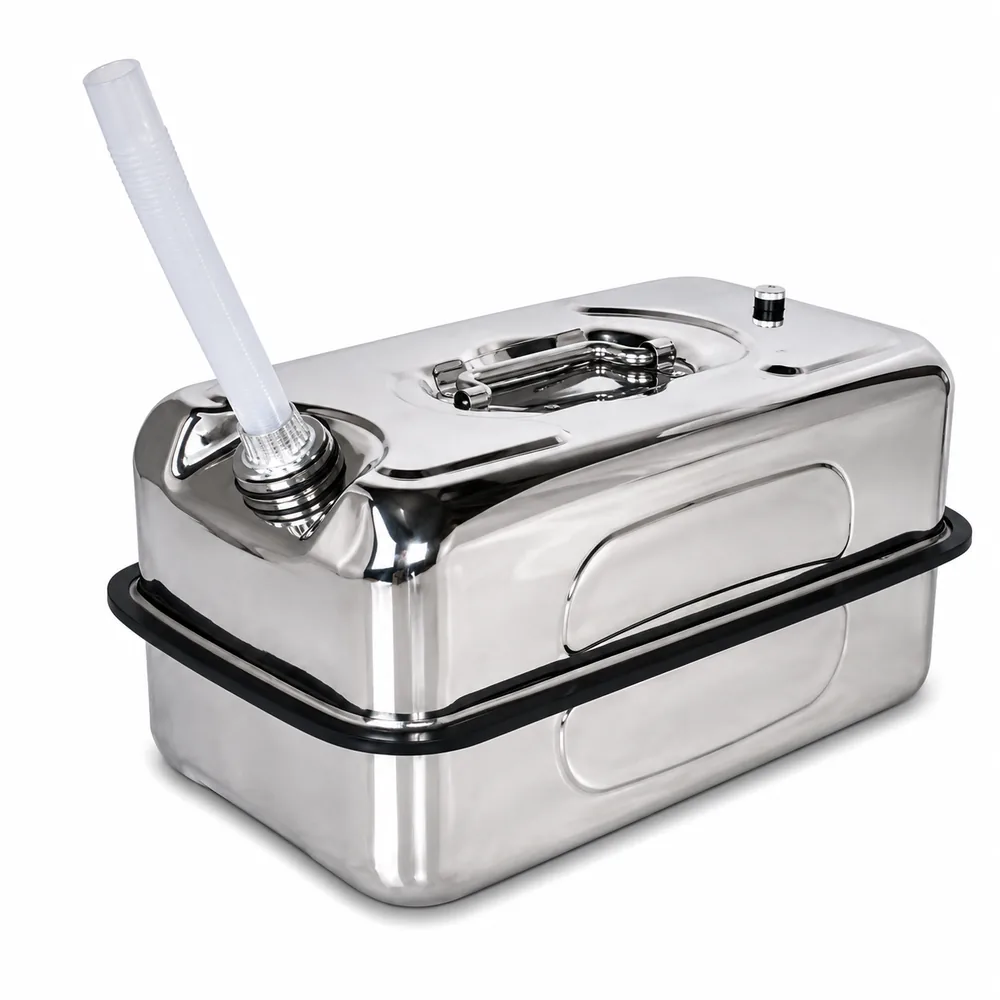 Horizontal Stainless Can — 5L / 10L / 20L Horizontal Stainless Can — 5L / 10L / 20L |
AISI 304, low-profile for a locker. |
| A static water supply point | 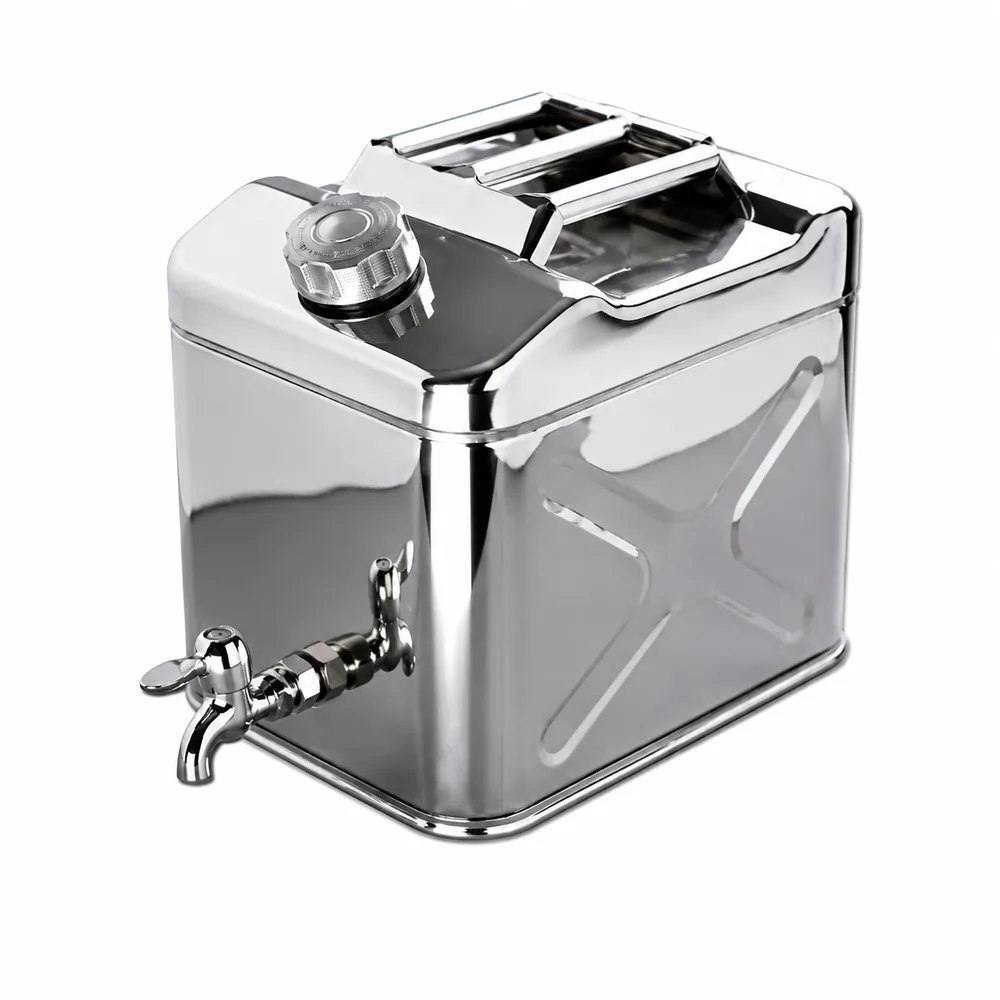 20L Stainless Dispensing Can with Tap 20L Stainless Dispensing Can with Tap |
Integrated tap, food-grade stainless. |
It depends on the market. The US uses NSF/ANSI/CAN 61 for drinking water system components and FDA food-contact compliance for the material. The EU works through its food-contact materials regulation. The UK adds WRAS approval. None of these is a UN dangerous-goods mark, which water does not need.
Austenitic stainless in 304 or 316 is food safe and does not need a liner or coating. It resists the chloride and biofilm problems that affect coated steel, and unlike HDPE it does not take up taint from previous contents. That is why it is the default for long-term potable storage.
No. A can that has held fuel retains hydrocarbon residue in its coating and seals that cannot be reliably removed, and a fuel can interior coating is not certified for food contact. Water and fuel cans should be separately purchased, separately marked and never swapped.
The Sphere Handbook sets 15 litres per person per day for drinking, cooking and hygiene, with 7.5 litres as a short acute-phase minimum and up to 50 litres in urban or protracted situations. Survival intake alone is 2.5 to 3 litres per day.
The standards and regulations this page relies on, at their issuing body. Where a market rule is named here, check the current revision before you specify against it.
Last reviewed .
Tell us your market, your fuel and your volumes. We come back with a specification sheet and a quotation.