
The one alloy difference that decides corrosion resistance, and when it is worth paying for.
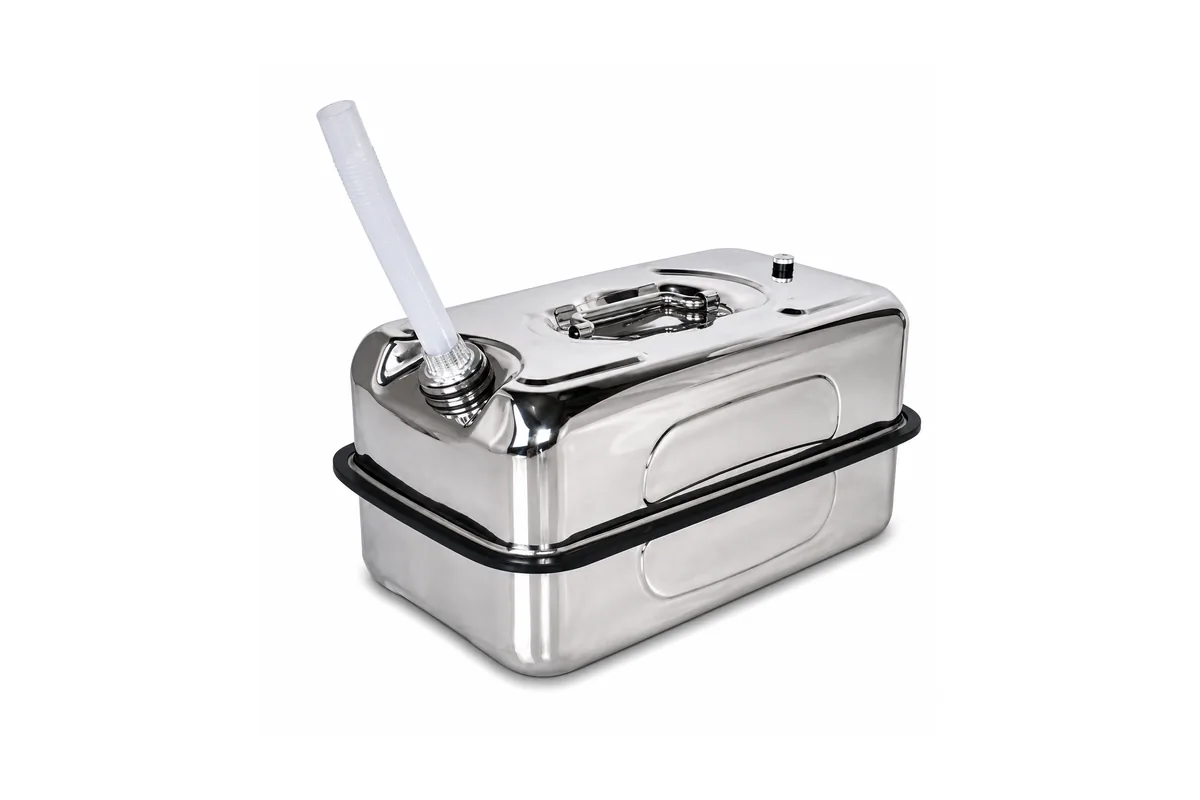
304 and 316 look identical, take the same polish and both resist rust. One alloying element separates them, and it decides how the can behaves the day it meets salt or acid. Get that one call right and the container lasts for years. Get it wrong and it pits.
Both are austenitic stainless steels: roughly 18% chromium and 8% nickel, the alloy most people mean when they say “stainless”. 316 adds two to three percent molybdenum. Molybdenum is what lifts the metal’s resistance to chloride pitting, the localised corrosion that starts as a pinhole and eats straight through a wall. Metallurgists put a number on it, the Pitting Resistance Equivalent Number, PREN = %Cr + 3.3×%Mo + 16×%N. Plain 304 sits around 18 to 20. 316 sits around 24 to 26. That gap is the whole reason 316 exists, and the whole reason it costs more.
Neither grade resists corrosion by being inert. Both rely on chromium, at roughly 18 per cent, reacting with oxygen to form a chromium-oxide film a few atoms thick across the whole surface. That film is what stops the iron underneath rusting, and its defining property is that it repairs itself: scratch it and, given oxygen, it re-forms within moments.
This is why a scratched stainless can behaves so differently from a scratched painted one. On coated steel a scratch is a wound that starts corroding at the exposed metal and creeps under the coating. On stainless it is a momentary interruption to a film that immediately rebuilds. It is also why stainless dislikes stagnant, oxygen-starved conditions such as a crevice under a gasket or standing water in a seam: without oxygen the film cannot maintain itself.
Chlorides attack that film directly, which is the entire reason molybdenum matters. They break it down locally, at a single point, faster than it can rebuild, and once a pit starts it becomes its own oxygen-starved crevice and accelerates. That is why chloride damage appears as pinholes rather than general rust.
For potable water, food-grade liquids and general indoor or sheltered use, 304 is the correct grade. It is food-safe, it cleans easily, it takes years of refilling, and it resists corrosion in any normal water. Reaching for 316 here is money spent on protection the job never calls on. Most water and food cans should be 304, and ours are.
Temperature moves that line more than most buyers realise. Chloride pitting is strongly temperature dependent, so the same chloride concentration that a grade shrugs off cold will attack it hot, and metallurgists measure the effect as a critical pitting temperature under a standard test. The practical read is that a 304 can holding cool potable water is comfortably specified, while the same grade in a hot wash-down cycle with chlorinated cleaner is being asked a different question. Say what temperature the liquid will be, not just what it is.
Chloride is the trigger. Coastal and marine air carries salt, salt itself is chloride, and a long list of industrial chemicals bring chloride with them. In those conditions 304 can pit where 316 holds. So the classic 316 cases are a can that lives on or near the sea, a wash-down regime that uses chlorinated cleaners, or a chemical that 304 cannot take. If the environment is salty or the liquid is aggressive, the molybdenum earns its premium.
What the specification should also name is the carbon. Heat stainless into roughly the 450 to 850 °C range and chromium combines with carbon to form carbides at the grain boundaries, which strips chromium from the metal immediately around them. That narrow depleted band no longer has enough chromium to hold a passive film, so it corrodes preferentially. Metallurgists call it sensitisation, and on a welded container it appears as a line of attack running parallel to the weld rather than in it.
Welding is exactly the process that takes metal through that range, which is why the low-carbon grades exist. The L in 304L and 316L caps carbon at around 0.03 per cent, low enough that there is not much available to form carbides during a normal weld cycle. For a container that is welded and then lives in a corrosive environment, the L grade is the meaningful specification and the plain grade is the compromise, whatever the 304-against-316 conversation concluded.
The two decisions are independent, which is worth stating plainly because they get merged. The number, 304 or 316, answers how much chloride the metal will meet. The letter, L or not, answers whether the corrosion has a weld to start at. A coastal welded can wants both.
Two cans in identical 304 can perform differently depending on how the surface was left. A rougher finish has more surface area, more places for deposits to lodge and more crevices at the microscopic scale, all of which give chloride pitting somewhere to start. A smoother finish is genuinely more corrosion resistant, not merely tidier.
It matters more for potable water than for fuel, because a smoother wetted surface is also easier to clean and gives biofilm less to hold onto. If a specification names a finish alongside the grade, that is why, and it is worth matching rather than treating as cosmetic.
Passivation is the related step. After forming and welding, a chemical treatment removes free iron picked up from tooling and encourages the chromium-oxide film to form evenly. Skip it and a technically correct 304 can show rust spots that are not the stainless failing but embedded contamination from the workshop rusting on its surface.
That distinction matters commercially because the rust spots look like a grade substitution and almost never are. Free iron transfers onto stainless from carbon-steel tooling, from a grinding wheel previously used on mild steel, or from swarf resting on a finished surface, and it rusts on contact with damp air. The stainless underneath is untouched. A passivation step to a recognised specification removes it; skipping the step to save an operation produces a can that fails its first customer inspection on appearance.
One related myth is worth killing, because buyers use it as a field test. Austenitic stainless is nominally non-magnetic, but cold working, which is exactly what pressing a can does, transforms some of the structure and leaves the formed areas weakly magnetic. A magnet sticking lightly to a pressed corner tells you the metal was worked, not that it is the wrong grade. The only test that identifies a grade is a mill certificate or a composition analysis.
Two errors, equal and opposite. One is buying 316 “to be safe” for indoor potable water, where 304 would have done the identical job for less. The other is buying 304 for a coastal or chloride-heavy job to shave a little cost, then watching it pit inside a season. Neither is a stainless problem. Both are a specification problem. Name the environment and the liquid, and the grade stops being a guess.
The two errors also cost at different moments, which is why one gets noticed and the other does not. Over-specifying costs at purchase, visibly, in a number somebody has to approve. Under-specifying costs in service, invisibly, as pitting on cans already in the field and already out of warranty. The second is the more expensive mistake and the one nobody is ever blamed for making.
Where a can is welded, the heat can leave a standard grade vulnerable to corrosion right at the weld, an effect called sensitisation. The low-carbon variants, 304L and 316L, avoid it, which is why fabricated food and marine vessels are often specified in the L grade. For a jerry can it rarely swings the buying decision, but it is worth recognising the term when a spec sheet uses it.
| Property | 304 | 316 |
|---|---|---|
| Composition | ~18% Cr, 8% Ni | Plus 2–3% Mo |
| PREN (pitting resistance) | ~18–20 | ~24–26 |
| Chloride and salt | Good | Better |
| Acid resistance | Moderate | Higher |
| Food and potable water | Yes | Yes |
| Cost | Lower | Higher |
| Best for | Water, food, general use | Marine, chloride, harsher chemicals |
Our stainless water and food-grade cans are AISI 304 across the wetted path, the right grade for potable water and food, with no liner to fail. When your application is marine, coastal or chloride-heavy, tell us and we quote 316 for the same designs. Either way you get the mill certificate for the grade, not a verbal assurance. See the water and food-grade range, and if you are still choosing a material at all, our guide to choosing a jerry can starts one level up.
Both grades, matched to the exposure. Here is our stainless line.
| Your use case | Recommended can | Why this one |
|---|---|---|
| Potable water and food, indoors | 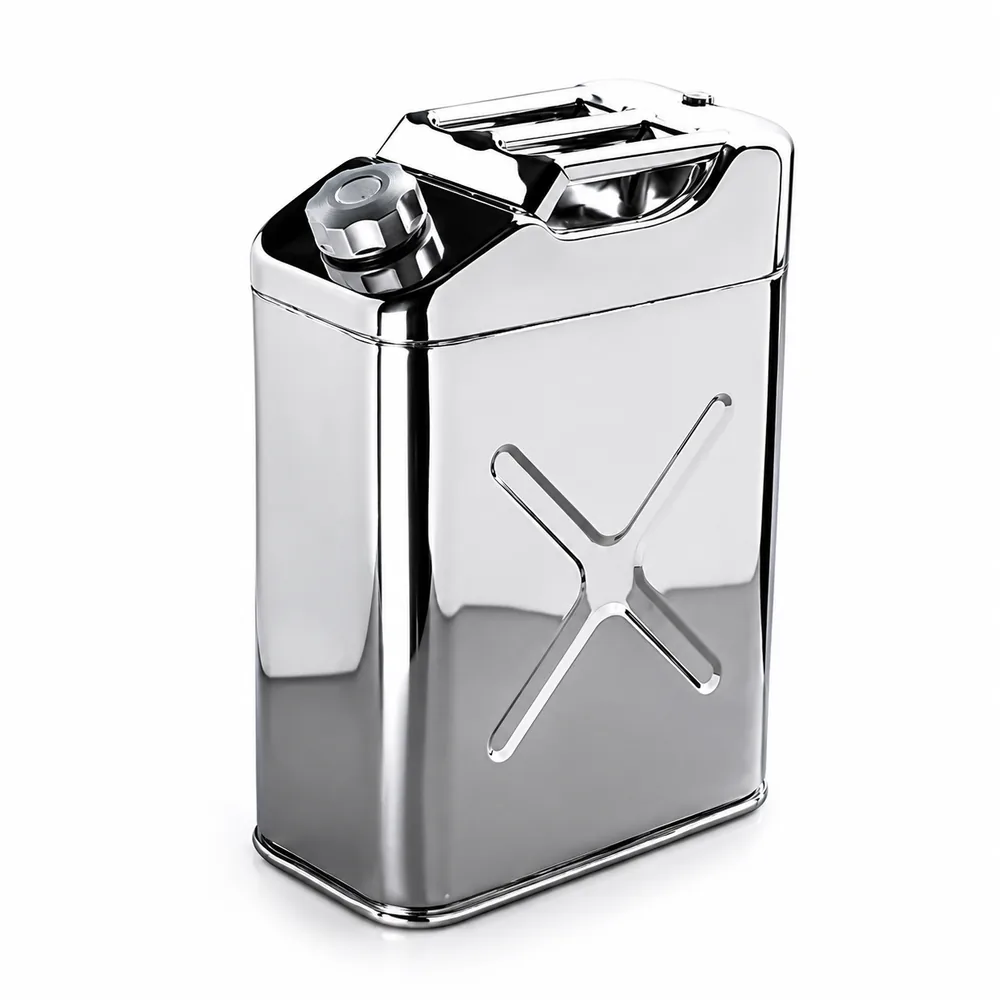 20L Stainless Steel Water Can 20L Stainless Steel Water Can |
AISI 304, the right grade; 316 on request. |
| Water or food, lying flat | 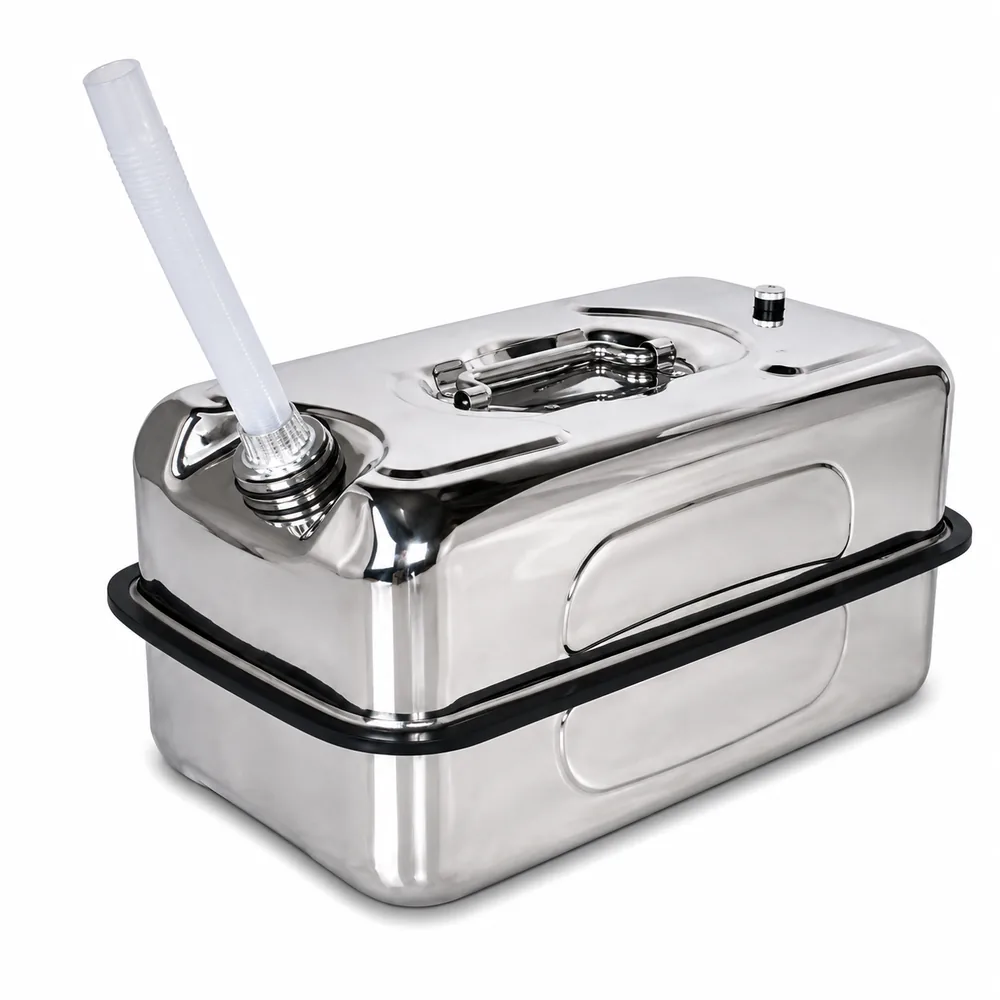 Horizontal Stainless Can — 5L / 10L / 20L Horizontal Stainless Can — 5L / 10L / 20L |
AISI 304 stainless, low-profile. |
| NATO-pattern stainless | 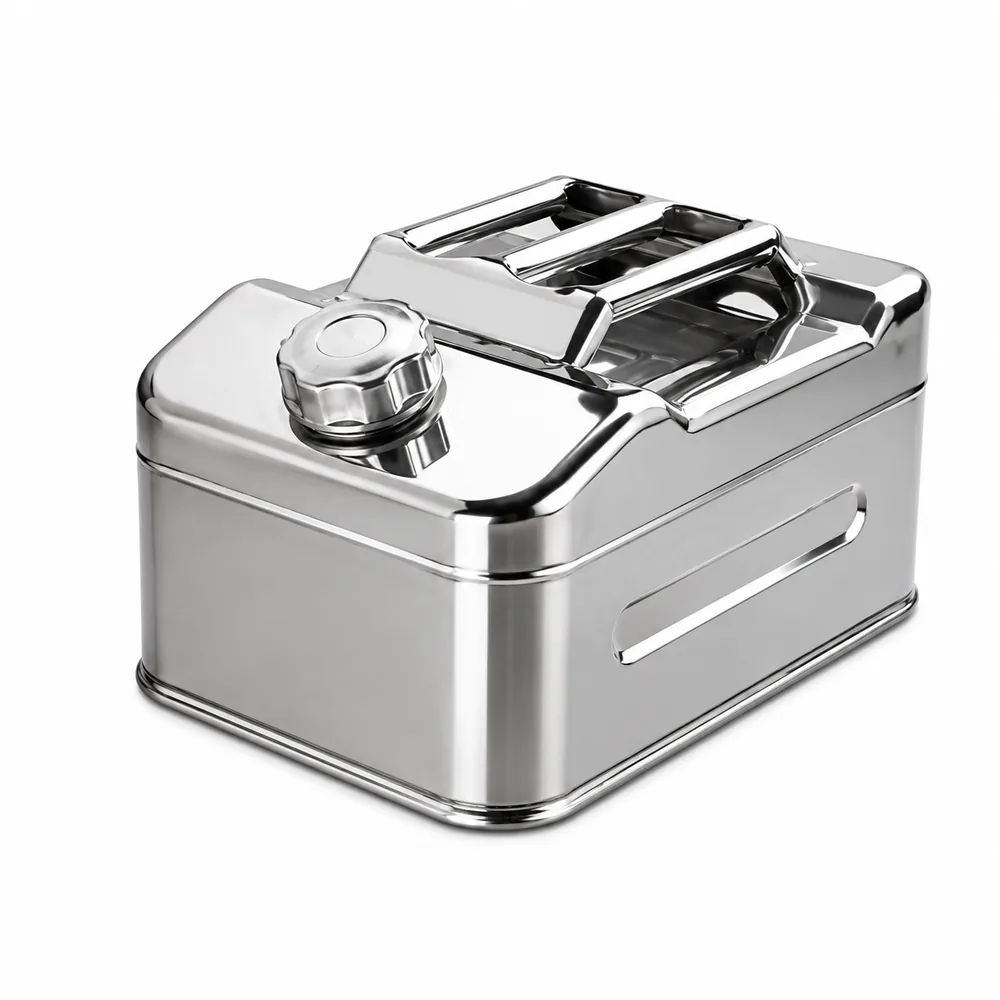 Stainless NATO Can — 10L / 20L Stainless NATO Can — 10L / 20L |
Seats in standard carriers, 304 wetted path. |
| A grab bag or vehicle kit | 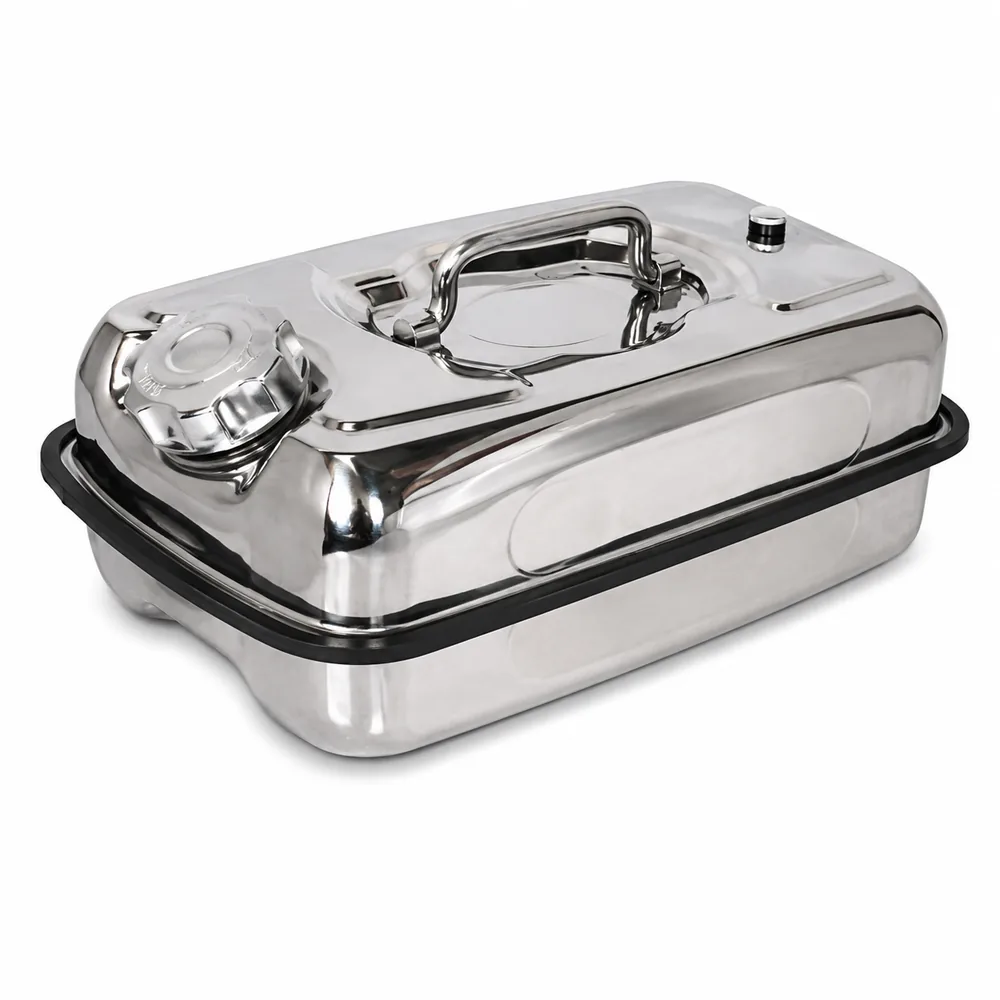 5L Stainless Steel Water Can 5L Stainless Steel Water Can |
A smaller 304 reserve, one-hand carry. |
Grade 316 contains roughly 2 to 3 percent molybdenum, which 304 does not. Molybdenum sharply improves resistance to pitting and crevice corrosion from chlorides. Both are austenitic, both are food safe, and in ordinary indoor and freshwater service they perform the same.
For potable water in normal service, 304 is sufficient and is the standard choice. Move to 316 where the water is chlorinated at high levels, where the container lives in salt air, or where it is stored full for long periods in a coastal or marine setting.
Only where chlorides are present. In marine, coastal, swimming pool or de-icing environments, 316 avoids pitting that will perforate 304 over time, and the premium is easily justified. Inland, in dry or freshwater service, it buys nothing you can measure.
The standards and regulations this page relies on, at their issuing body. Where a market rule is named here, check the current revision before you specify against it.
Last reviewed .
Tell us your market, your fuel and your volumes. We come back with a specification sheet and a quotation.