
A six-step path from the liquid you carry to the exact specification you order.
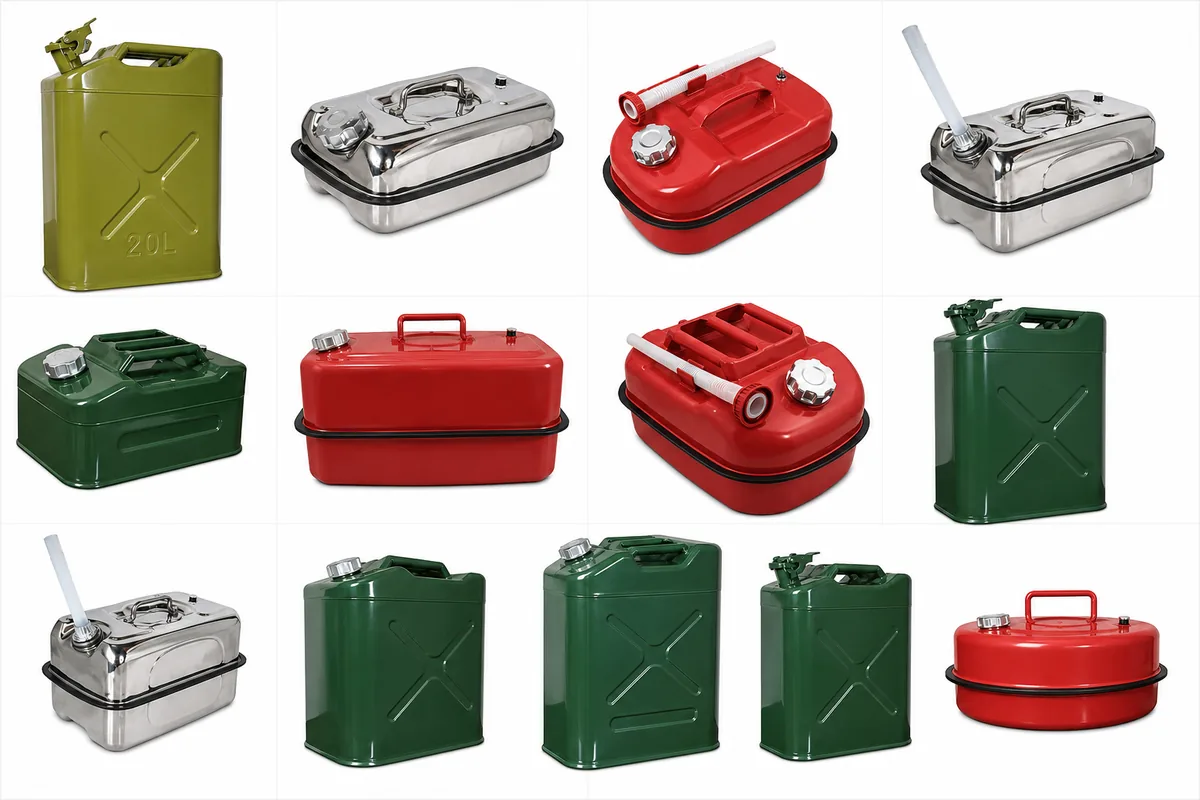
The wrong interior is the most common failure in a cheap jerry can. Work these six questions in order and you arrive at a specification that holds your liquid, survives your handling and clears your market, instead of a part number you hope fits.
The liquid picks the material, and nothing else gets decided until it is settled. Hydrocarbon fuels want galvanized or coated steel, or aluminium where weight is rationed. Potable water and food-grade liquids want stainless steel, because a food claim rests on the metal, not a coating. Industrial chemicals want HDPE, confirmed against a compatibility check for that exact liquid. DEF wants its own dedicated container, because it contaminates in the wrong one. The single most expensive error in this whole list is putting the right shape around the wrong interior, so read the compatibility guide before you think about anything else.
The order of these six is not editorial. Each answer narrows the next, and taking them out of sequence is what produces the rework. The liquid picks the material; the material and the carry decide the size; the size and the stowage decide the form; the form and the market decide the closure; and only then does branding attach to something that exists. Start at the branding end, which is where a lot of programmes begin, and every earlier constraint arrives as a surprise that invalidates a decision already made.
Say the liquid precisely, too. “Solvent” is not an answer and neither is “cleaning chemical”: the useful form is a substance name, a concentration, a fill temperature and whether the can transfers it or stores it. Those four turn a guess into a specification, and three of them are free to supply.
Twenty litres of water weighs twenty kilograms before you count the can, and twenty litres of fuel is not far off. The practical limit for one person carrying over any distance is closer to ten. Size the can to who lifts it and how far they carry it, not to the volume that looks efficient on a pallet. A 20L can that never gets lifted full is fine; a 20L can a worker hauls across a site all day is a strain and a spill risk. Our sizing calculator turns a headcount or a refuelling interval into a quantity and a can size.
There are published figures behind that judgement, and a UK or EU buyer's own risk assessment will be written against them. HSE guidance gives indicative filter weights of 25 kg for men and 16 kg for women, and those apply only with the load held close to the body at around knuckle height. Lift above shoulder height and the guideline falls to roughly 10 kg and 7 kg. They are filters rather than legal limits: below the figure the task is likely fine, above it a fuller assessment is expected.
Run a 20-litre can through that and the answer is uncomfortable. Twenty litres of water plus a steel can is about 24 kg, which sits under the 25 kg filter only for a man lifting at knuckle height close to the body, and clears none of the other cases. Lifting the same can onto a truck bed or a roof rack is an above-shoulder lift against a 10 kg guideline. That is not an argument against 20-litre cans; it is an argument for knowing which of your customer's lifts is the one that gets assessed.
Which is why the 10-litre size sells for reasons that have nothing to do with capacity. It widens who can do the work, it survives an above-shoulder lift, and it turns one strained carry into two easy ones. Where a can is drawn from rather than carried, the size question inverts again and a 25 or 30-litre with a tap is the right answer precisely because nobody lifts it.
Shape follows stowage. The NATO upright pattern stacks, and its external geometry seats in the carriers, racks and holders the world already owns, so it is the safe default when the can rides in standard mounts. A horizontal, low-profile can is the answer when an upright has nowhere to go: under a boat seat, into a vehicle locker, onto a machine frame. Decide where the can is stored before you decide its shape, because a can that does not fit the space does not get used.
Measure the space rather than describing it. The NATO upright is roughly 470 mm tall, 345 long and 165 wide, and those three numbers decide whether it seats in an existing rack, clears a locker lid and leaves room for a hand on the handle. A horizontal can trades height for length and wins wherever the constraint is vertical. Neither is better; one of them fits the gap you actually have.
Stowage also decides how the can is retained, which is a separate purchase people forget. A can that sits in a space is not secured in it, and a full can that moves becomes a projectile in a hard stop or a rollover. Settle the holder, the strap or the bracket alongside the format rather than afterwards, because a holder designed for an upright will not take a horizontal and the retrofit costs more than specifying it once.
The closure is how the liquid leaves the can, and it earns more thought than it usually gets. A vented screw cap carries, pours, and manages the pressure change that comes with temperature. A pouring or misfuelling-resistant spout directs the stream into a filler neck and cuts spillage. A tap lets you draw from a can that stays put, which is what a workshop or a dispensing point wants. For fuel sold into the US the closure also carries most of the compliance load, so it is not a detail to leave to the factory’s default.
Three questions settle a closure and they are worth asking in order. What has to come out and how fast, which decides between a spout, a tap and a bare neck. Whether the can travels sealed and warm, which decides how it vents. And who may open it, which is where child-resistance and tamper-evidence sit. Answering those three gives a specification; asking for "a good cap" gives whatever the line was already running.
The gasket is chosen against the liquid rather than against the cap, and it is the part that most often fails a correct can. Nitrile suits hydrocarbons, EPDM suits water and dilute acids and swells badly in fuel, and a fluoroelastomer covers most of what is left at a price. Our note on closures and caps works through the compounds, and the pairing to avoid is the one that looks harmless: a water gasket on a can converted to fuel duty.
Compliance is far cheaper to design in than to bolt on. A fuel or chemical container needs a UN packaging code for transport. A fuel can sold in the US also needs EPA and CARB compliance, most of it living in the spout and cap. A water or food can needs food-contact documentation. Settle all of this before tooling, because a certification requirement discovered after the mould is cut is an expensive redesign. See UN packaging codes, EPA and CARB compliance and dangerous goods transport.
Name the destination market at enquiry rather than at order, because the requirements are not additive and some of them conflict. A 20-litre plastic petrol container is ordinary in much of the world and cannot be sold as a UK petrol container at all. A US fuel can needs a flame mitigation device and a certified closure system that most other markets do not ask for. A European consumer sale needs an accountable operator established in the EU. Each of those changes the product rather than the paperwork attached to it.
The sequencing point is blunt: certification requirements discovered after tooling is cut are paid for twice. A design frozen against one market and then adapted for a second usually ends up worse than a design that knew about both from the start, and the cost difference is the whole tooling investment rather than a testing fee.
If the can carries your mark, decide at the start, not as an afterthought. Marking is laser-etched or embossed into a metal body, or moulded and coloured into a plastic one, and either way it sets a minimum order quantity. Folding private label into the first order is far cheaper than adding it to a second run. Settle the colourway and the mark placement now.
Branding also decides something larger than appearance, and it is the part most programmes miss. In EU and UK product law, placing goods on the market under your own name or trademark makes you the manufacturer for legal purposes, with the risk assessment, the technical file and the labelling duty that follows. So question six is not the cosmetic one; it is the question that determines who answers to a regulator. Our private-label guide sets out what to ask the factory for so those duties are dischargeable.
With those six settled we return a specification sheet, a carton and container breakdown and a quotation, instead of a long back-and-forth. If you are earlier than that, browse the range by the job the can does, or work through the Knowledge Centre from the material up.
Six answers, one specification. Here is where the line lands.
| Your use case | Recommended can | Why this one |
|---|---|---|
| Hydrocarbon fuels | 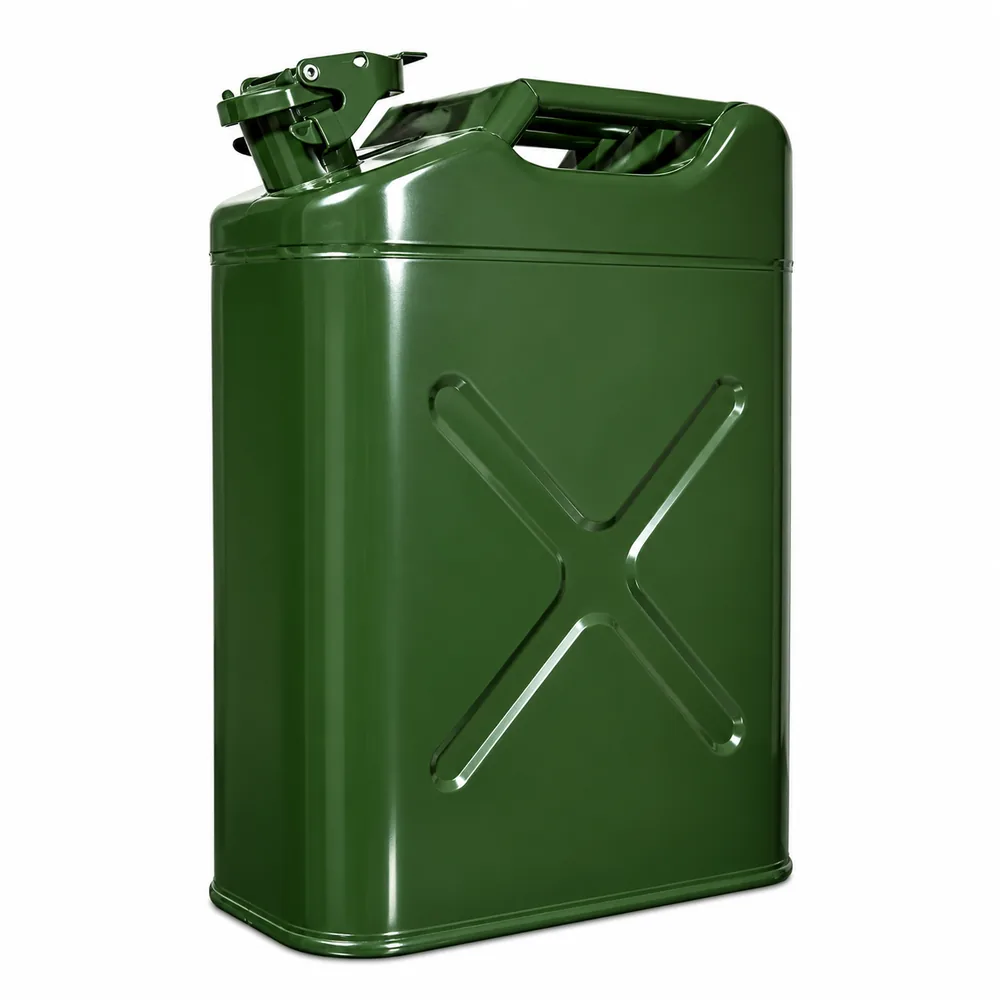 20L NATO Steel Fuel Can 20L NATO Steel Fuel Can |
Coated steel, UN-marked NATO can. |
| Potable water and food | 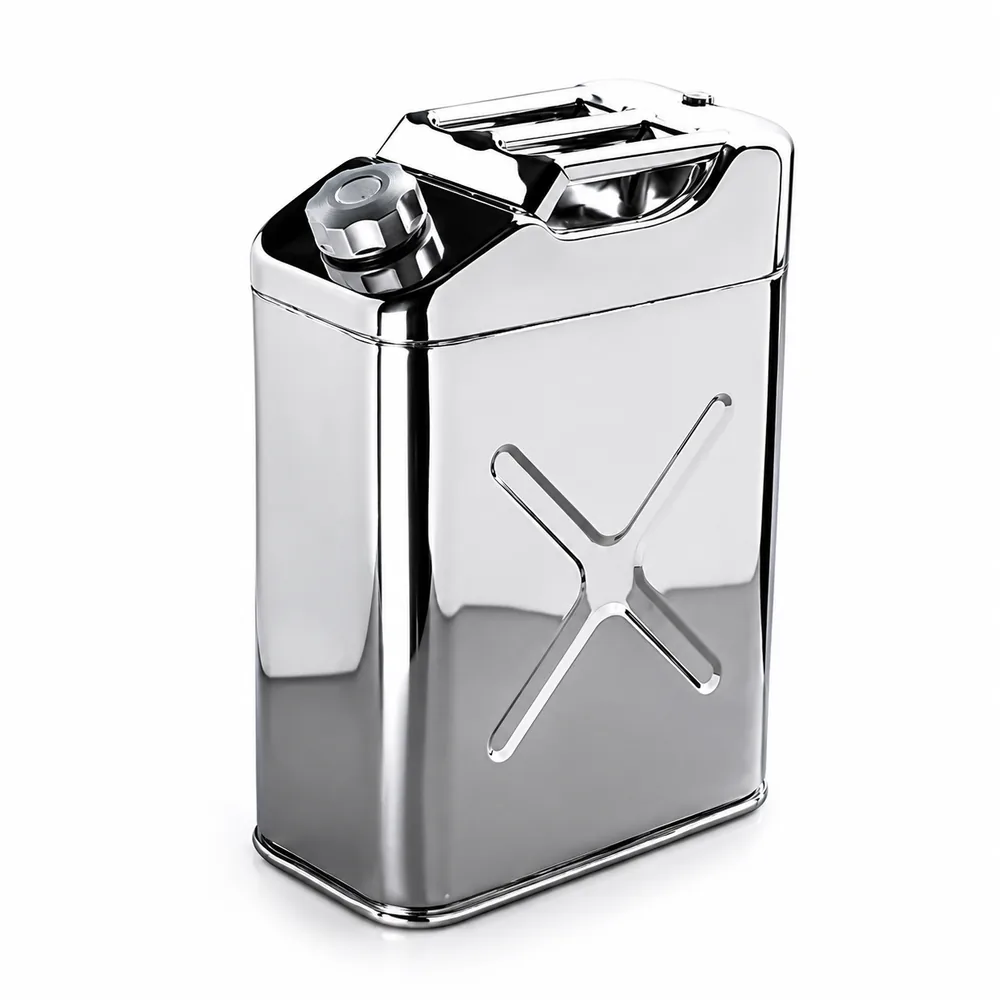 20L Stainless Steel Water Can 20L Stainless Steel Water Can |
AISI 304 across the wetted path. |
| Industrial chemicals | 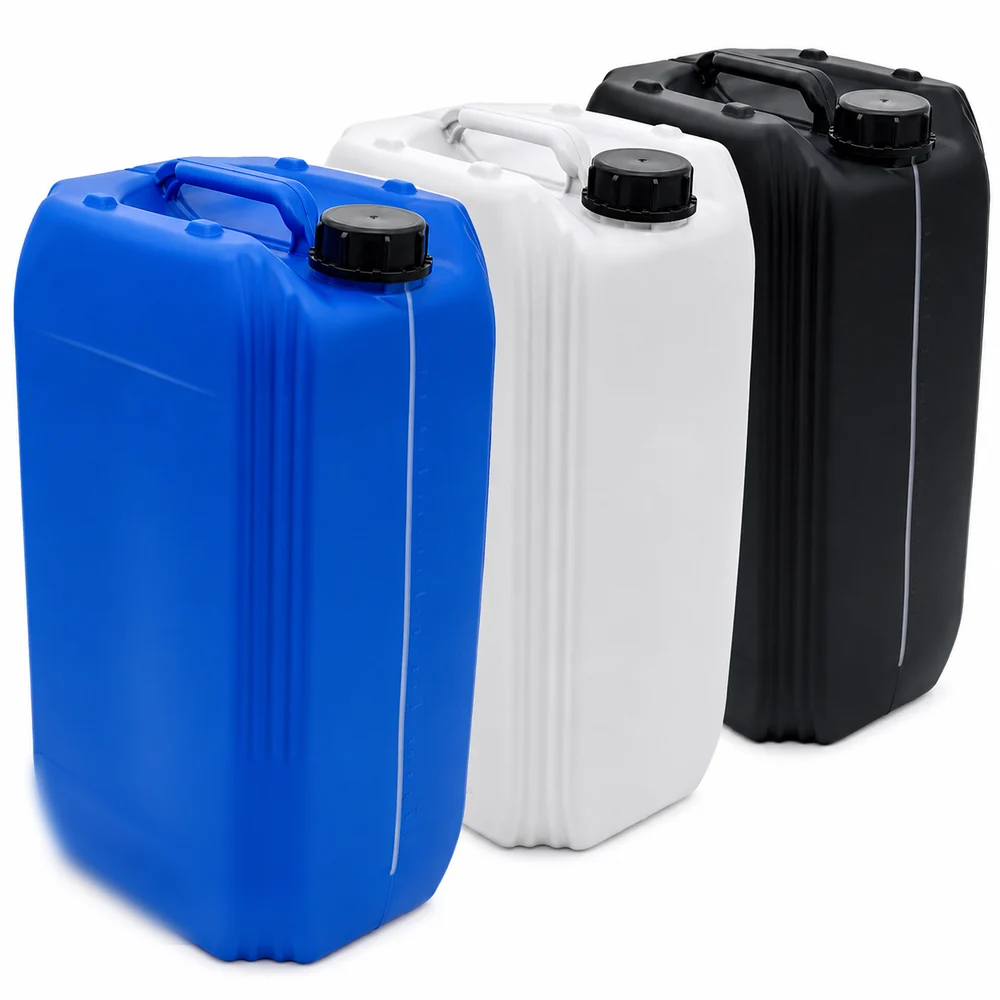 25L Stackable Plastic Jerrycan 25L Stackable Plastic Jerrycan |
UN-rated HDPE, confirm compatibility. |
| Fuel, weight-critical | 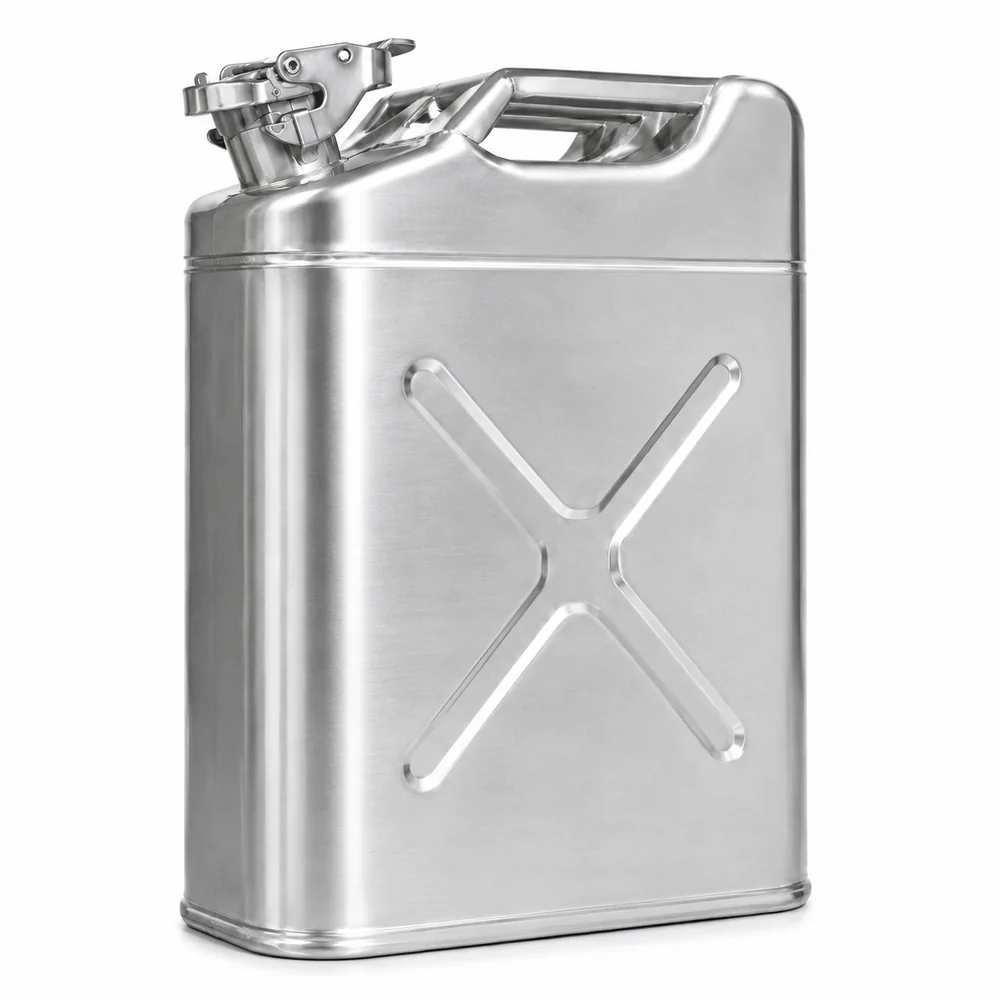 20L Aluminium NATO Can 20L Aluminium NATO Can |
The pattern at lower filled weight. |
| DEF / AdBlue | 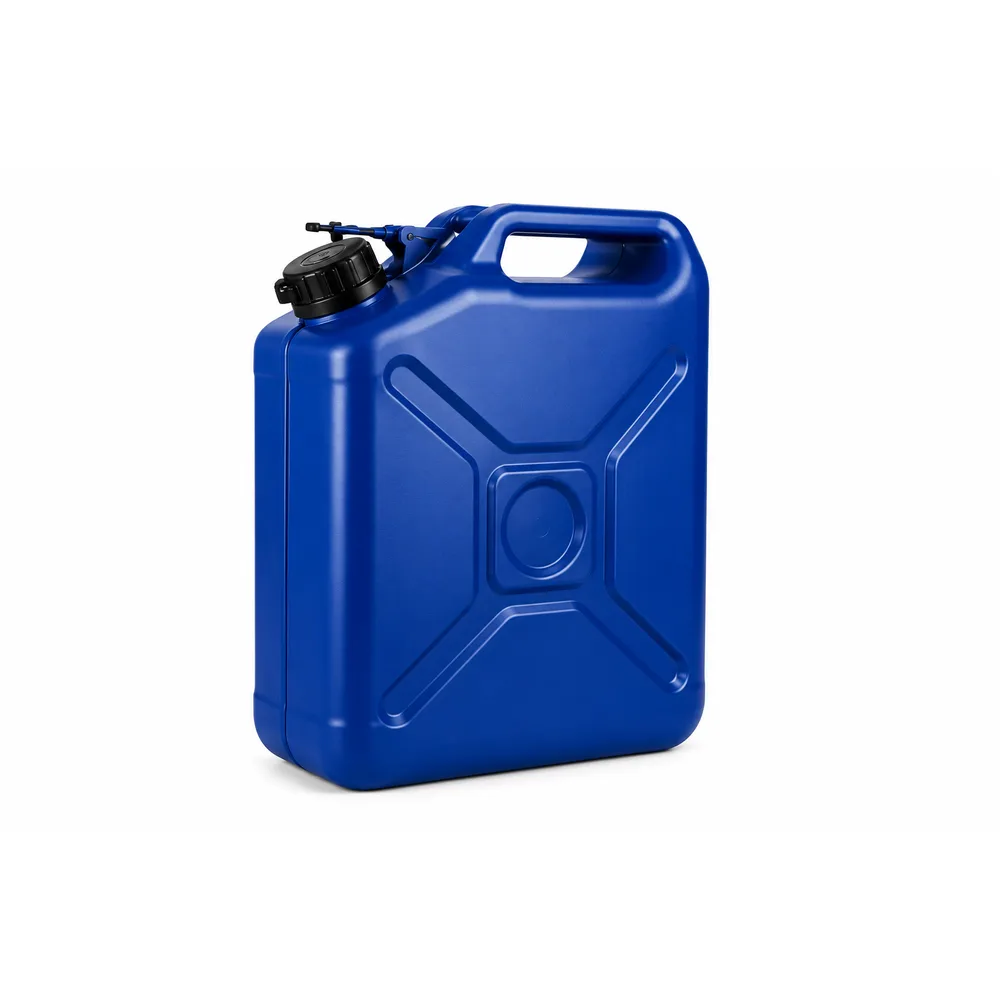 DEF Can — Diesel Exhaust Fluid DEF Can — Diesel Exhaust Fluid |
A dedicated, compatible container. |
Start with the liquid, which fixes the material. Then the market, which fixes the certification. Then the duty and mounting, which fix the format and the closure. Choosing on capacity or price first is what produces a can that cannot legally be sold or safely used.
Twenty litres is the standard because it is the largest a person can carry filled without mechanical help: about 20 kilograms of water or 15 of petrol, plus the can. Choose 10 litres where the can is lifted repeatedly or carried far, and 5 litres or less for topping up.
No. Fuel residue cannot be reliably removed from a coating or seal, and a fuel can interior is not certified for food contact. Buy separate cans, in different colours, and mark them permanently. Colour coding is the only thing that reliably prevents the mistake in the field.
The standards and regulations this page relies on, at their issuing body. Where a market rule is named here, check the current revision before you specify against it.
Last reviewed .
Tell us your market, your fuel and your volumes. We come back with a specification sheet and a quotation.