
How a fuel or chemical container moves legally by road, sea and air.
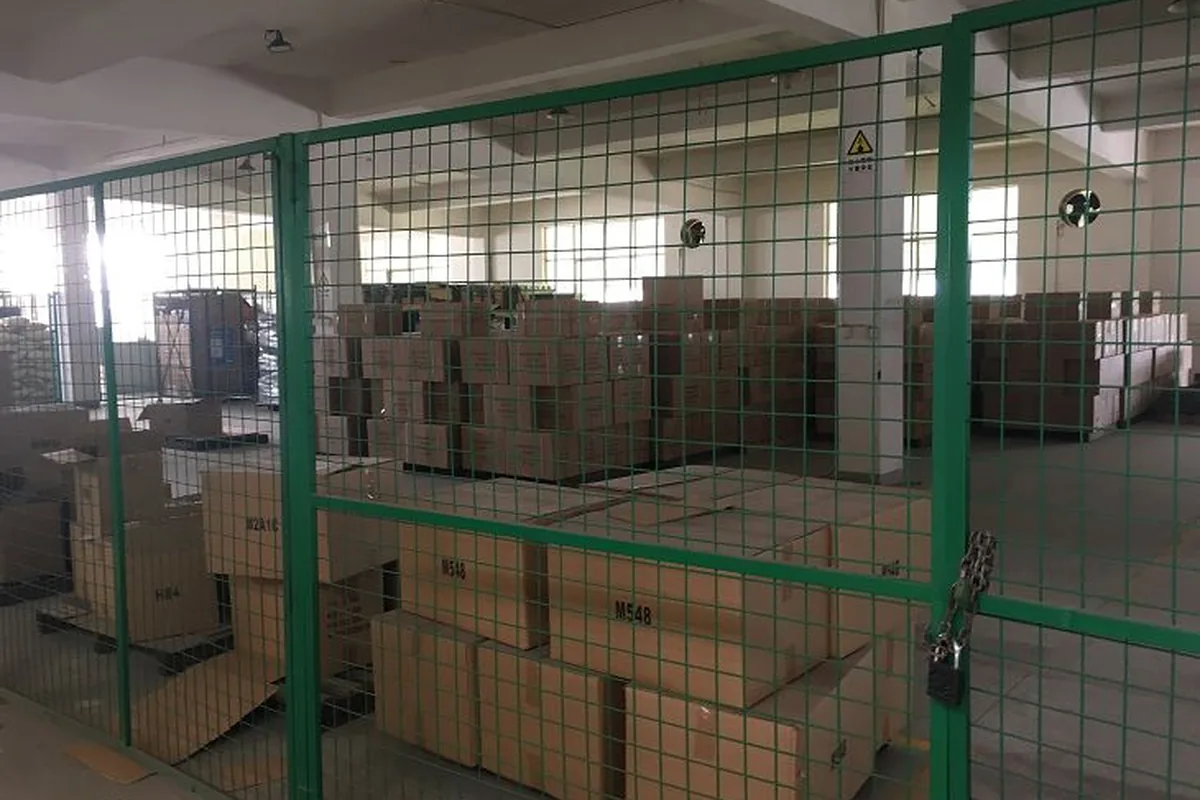
A container that passes its own tests is only half the job. Moving a hazardous liquid legally means classifying the goods and meeting the transport rules for the mode you ship by. This is background to plan around, not a compliance ruling, so confirm the rules for your exact liquid and route before you book.
Everything downstream flows from the classification. Each hazardous liquid has a UN number, a four-digit identifier such as UN 1203 for petrol, and a hazard class. Fuels are Class 3, flammable liquids. Acids and alkalis are usually Class 8, corrosive, and some liquids carry a subsidiary hazard as well. Get the UN number and class right and the rest of the requirements fall out of them. Get them wrong and every document after is wrong too.
Within a class, a packing group grades the danger: Packing Group I is high, II is medium, III is low. Most fuels sit in II or III. The packing group is not paperwork for its own sake. It sets the performance the packaging must prove, and it ties directly to the UN packaging code stamped on the container, whose X, Y or Z rating states which groups it covers. Match the two: a Y-rated can covers Groups II and III, a Z-rated can covers III only.
Over-specifying is legal and merely expensive; under-specifying is a compliance failure. That asymmetry is why an X or Y rating is worth buying where the packing group is uncertain or where one stock line has to serve several liquids. A single rating that covers everything you carry is cheaper to administer than three ratings matched exactly, and it removes the picking error that puts the wrong can under the wrong liquid.
Each sets its own packaging, marking, labelling and documentation rules for the class and packing group. A shipment that is legal by road is not automatically legal by air.
Small volumes can qualify for relief. Limited Quantity (LQ) and Excepted Quantity (EQ) provisions ease some marking and documentation when the fuel travels in small inner packagings within set limits. Whether your load qualifies depends on the liquid, the pack size and the mode, so it is worth asking, because it can simplify a shipment that looks fully regulated at first glance.
For a jerrican buyer the honest answer is usually no, and it is better to know that early. Limited quantities work by capping the size of the inner packaging, and the caps are small: the typical allowance for a flammable liquid is measured in litres rather than tens of litres, so a 20 or 25-litre can is outside the relief by design. Limited quantities are the regime for a case of 1-litre bottles, not for a pallet of jerricans.
The relief that does reach a jerrican load is different. ADR 1.1.3.6 exempts a transport unit below a points threshold from the driver certificate, the placarding and some equipment requirements, and it is calculated from the quantity carried and a multiplier set by the transport category. That is the arithmetic worth running before assuming a full ADR load, and it is worked through in our 1000-point rule guide.
What no relief switches off is the packaging. The can still has to carry a valid UN packaging code at the right packing group, and it still has to be marked. The reliefs address the vehicle, the driver and some of the paperwork; none of them makes an unapproved container acceptable.
The container’s job in all of this is to carry a valid UN packaging code, proving it passed the drop, stack, leakproof and pressure tests for its packing group. That stamped code is what a carrier and a customs officer check. It does not classify your goods or write your paperwork; it evidences that the packaging is fit for the danger. Our guide to UN packaging codes shows how to read the marking.
It also has to be the right code for the liquid actually inside, not for the liquid the can was bought for. A Y-rated steel can approved for Packing Group II and III covers petrol and diesel and does not cover a Packing Group I substance, and the marking will not stop anybody filling it. The check that catches this is at the filling point rather than at purchase, which is why the packing group belongs on the filling instruction and not only on the specification.
It is a common and expensive assumption that dangerous goods obligations sit with the carrier. Most of them sit with the consignor, the party offering the goods for carriage, and they do not transfer by handing a pallet to a forwarder.
The consignor classifies the substance, selects and fills UN-approved packaging within its stated limits, marks and labels the package, prepares the transport document, and provides the information the carrier needs to load and segregate correctly. Getting any of those wrong is the consignor’s liability even where the carrier is the one stopped at the roadside.
There is a staffing obligation attached that catches small consignors regularly. ADR 1.8.3 requires any undertaking whose activities include consigning dangerous goods by road, or the related packing, loading, filling or unloading, to appoint a Dangerous Goods Safety Adviser. The exemption that once covered consignor-only businesses ended: from 1 January 2023 a company that only offers goods for carriage and never drives them must still appoint one.
There is no volume threshold in the requirement. It attaches to the activity, so a firm consigning a pallet of jerricans a month is caught on the same terms as one consigning a tanker a day. The adviser can be an employee or an external appointment and has to hold the qualification, and the role includes an annual report on the undertaking's dangerous goods activities. A business discovering this at an enforcement visit discovers it late.
Training is the layer below. ADR 1.3 requires everyone involved in the carriage of dangerous goods to be trained to the level their function needs, recorded and refreshed, and that duty survives the reliefs that remove other requirements. Our note on limited quantities and the 1000-point rule covers what those reliefs do and do not switch off.
Segregation is the other half. Incompatible classes cannot travel together in one load however well each is packaged, and the segregation tables are mode-specific: what is acceptable by road under ADR is not automatically acceptable by sea under IMDG.
To move a hazardous liquid you need three things lined up: correctly UN-coded packaging at the right packing group, the marks and labels the mode requires, and a dangerous-goods declaration for the consignment. Trained staff have to prepare it, and a carrier can refuse a load that is short on any one. Confirm your liquid’s classification and your route’s rules before you book the freight, not at the dock.
Booking is also where the choice of carrier stops being neutral. Not every operator accepts dangerous goods, and those that do accept specific classes on specific services, so a rate obtained without declaring the class is a rate for a shipment nobody has agreed to carry. Declare the UN number and the packing group at quotation and the surprises arrive while they are still cheap to fix.
The UN code is what a carrier checks. Here is the coded line.
| Your use case | Recommended can | Why this one |
|---|---|---|
| Fuel, UN 3A1 | 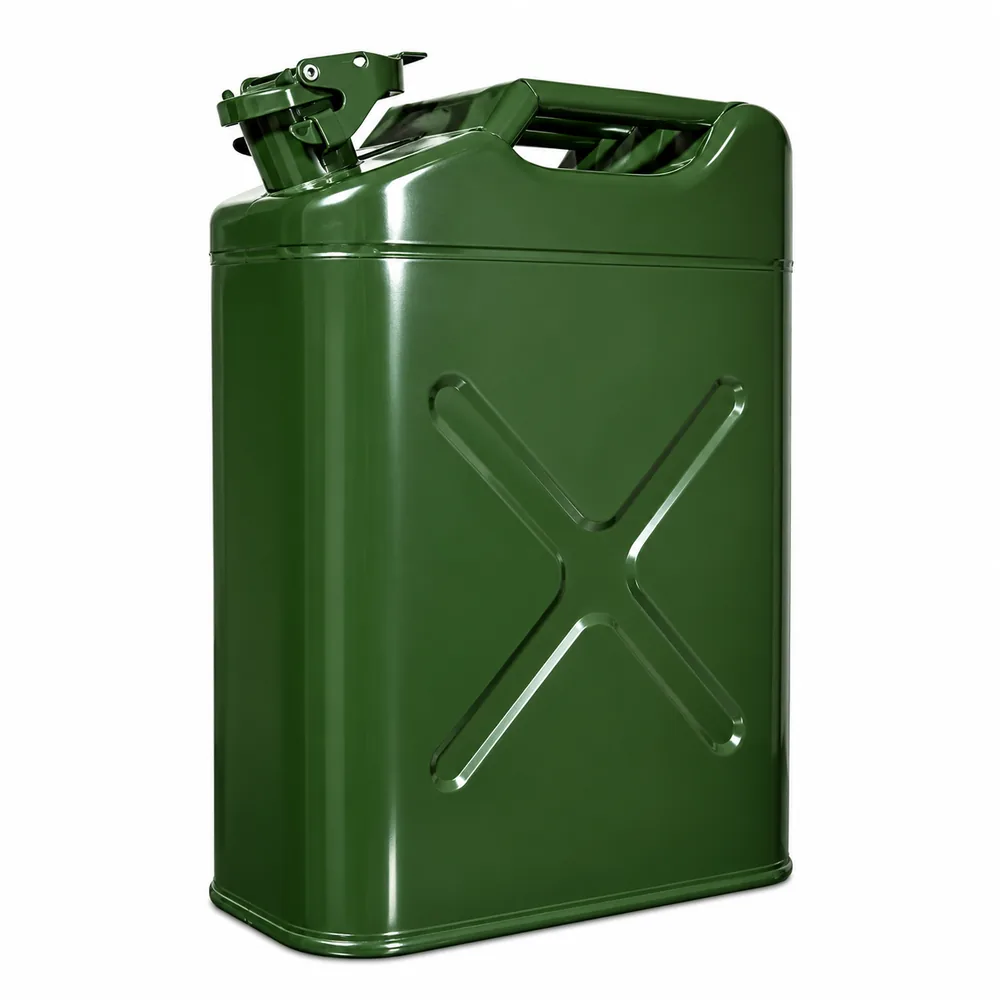 20L NATO Steel Fuel Can 20L NATO Steel Fuel Can |
Steel jerry can, UN-marked for transport. |
| Chemicals, UN 3H1 | 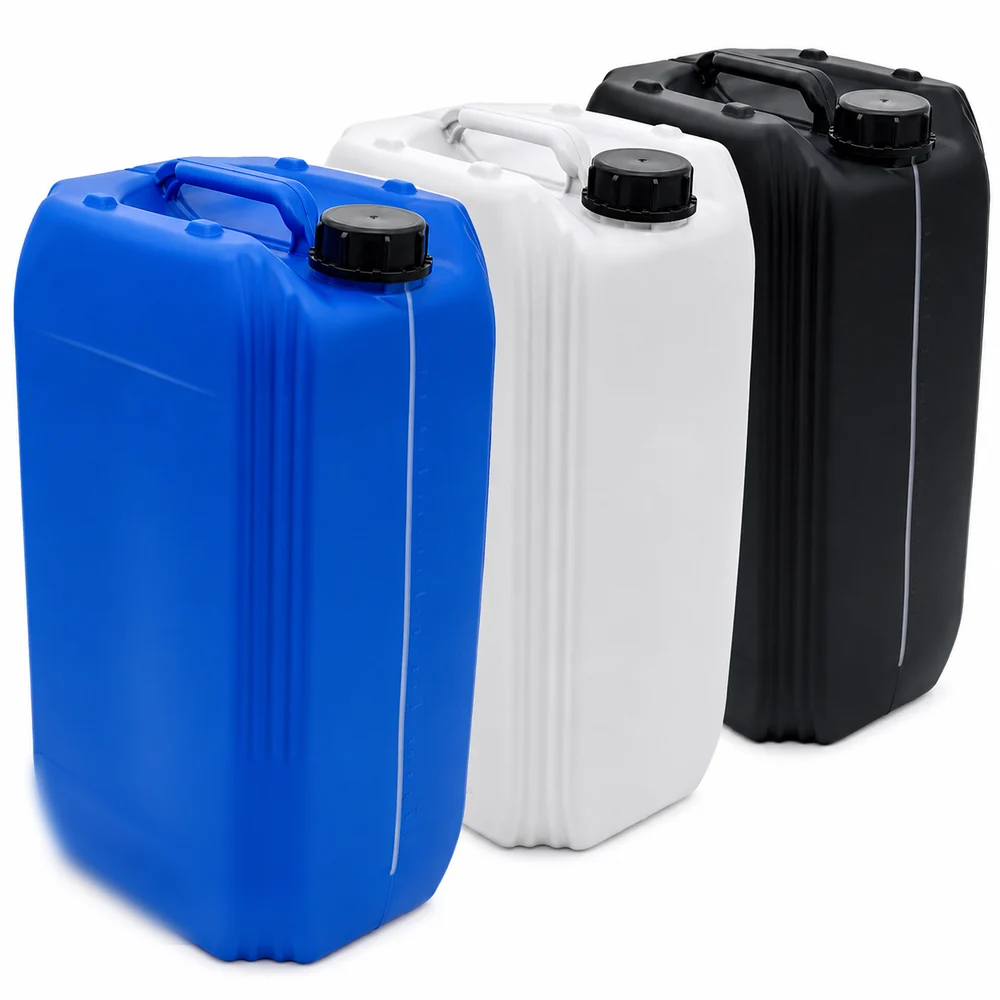 25L Stackable Plastic Jerrycan 25L Stackable Plastic Jerrycan |
HDPE jerrycan, approval per design. |
| Fuel in plastic | 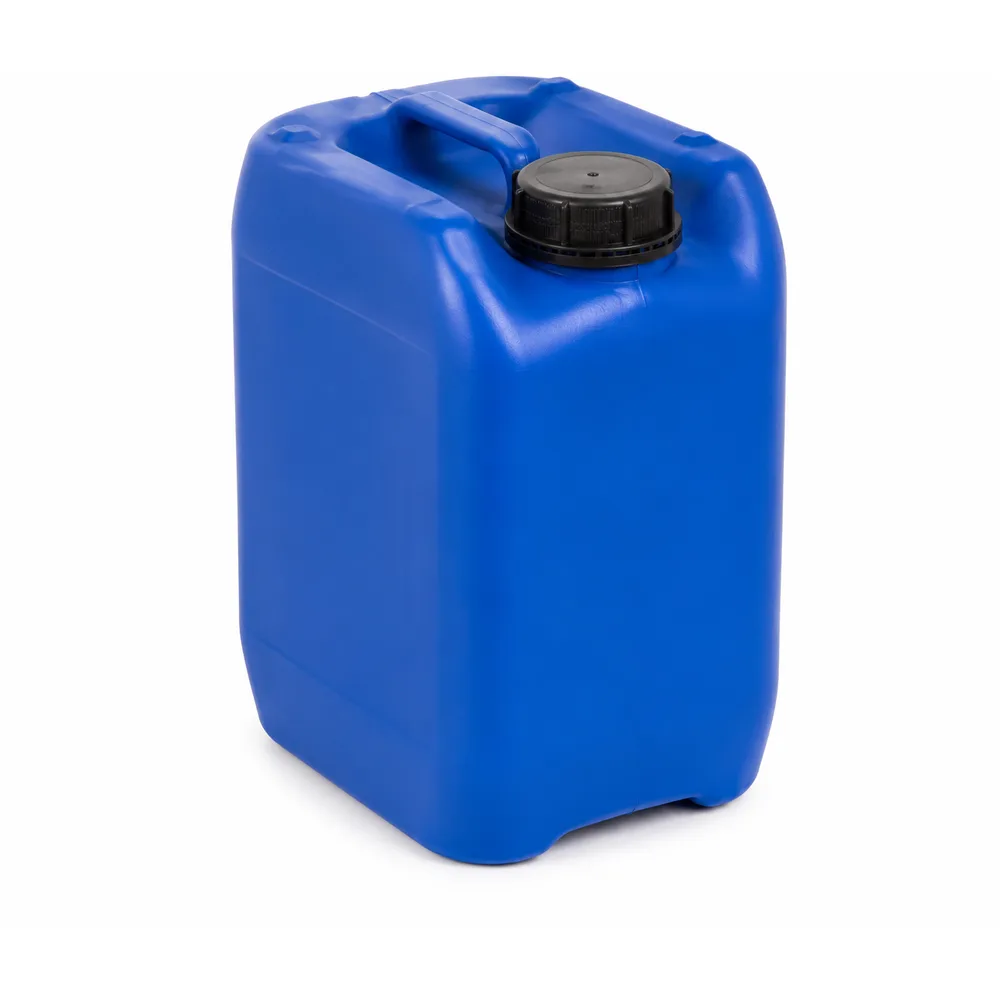 Fluorinated HDPE Jerrycan Fluorinated HDPE Jerrycan |
Fluorinated HDPE, low permeation. |
| Fuel, UN 3B1 | 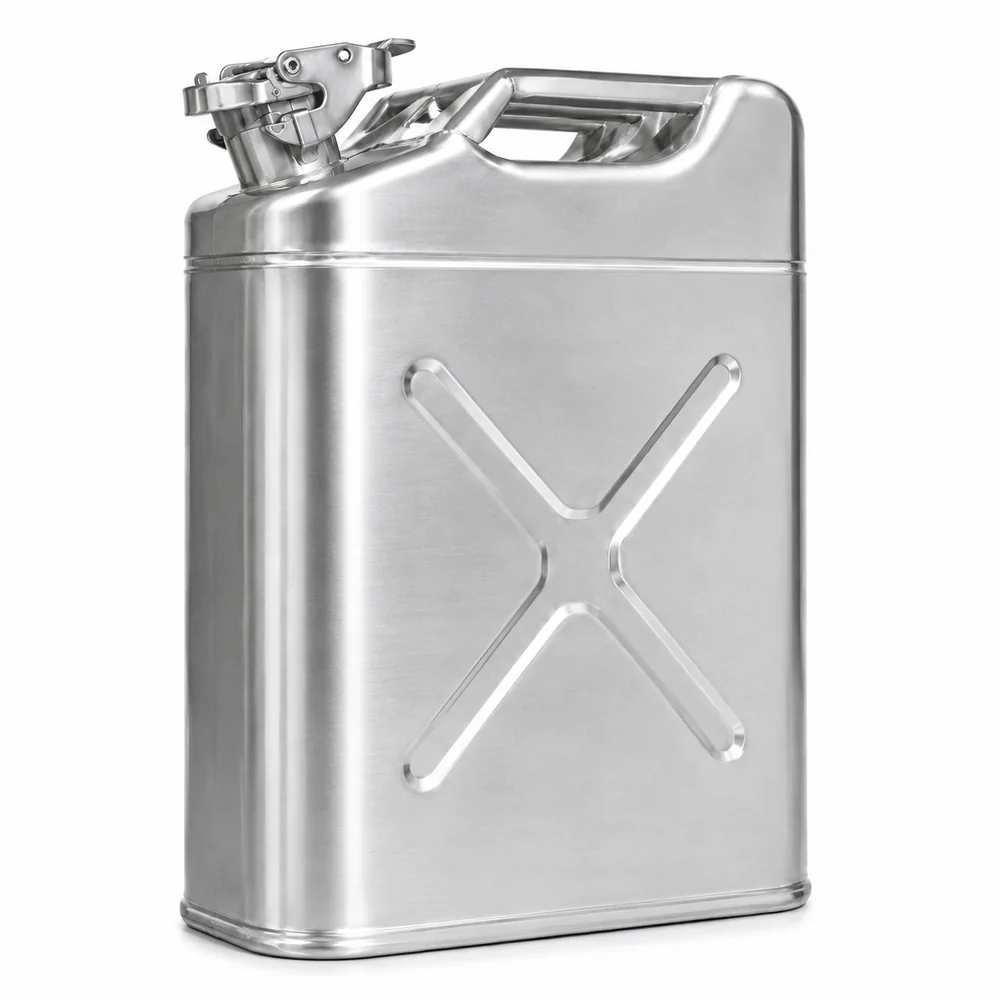 20L Aluminium NATO Can 20L Aluminium NATO Can |
Aluminium jerry can, weight-critical. |
Petrol is UN 1203, Class 3 flammable liquid, packing group II. Diesel is UN 1202, Class 3, packing group III. The packing group sets the drop-test height and hydraulic pressure the packaging must survive, so it decides which UN-marked container you may use.
Not as general cargo under normal circumstances. IATA rules for Class 3 liquids are strict on quantity and packaging, and most carriers refuse fuel in portable containers outright. Empty cans ship freely; residual vapour in a used can makes it dangerous goods again.
Same UN framework, three transport modes. ADR governs road carriage in Europe, IMDG governs sea, IATA governs air. A container certified to the UN Model Regulations is recognised across all three, but each mode adds its own documentation, segregation and quantity rules on top.
An uncleaned container that held a dangerous good is still regulated, because vapour and residue remain. It must stay closed and correctly marked until it has been cleaned and purged. Only a cleaned, certified-free container ships as general cargo.
The standards and regulations this page relies on, at their issuing body. Where a market rule is named here, check the current revision before you specify against it.
Last reviewed .
Tell us your market, your fuel and your volumes. We come back with a specification sheet and a quotation.