
How galvanized steel, stainless, HDPE and aluminium behave against fuels, water, chemicals and DEF.
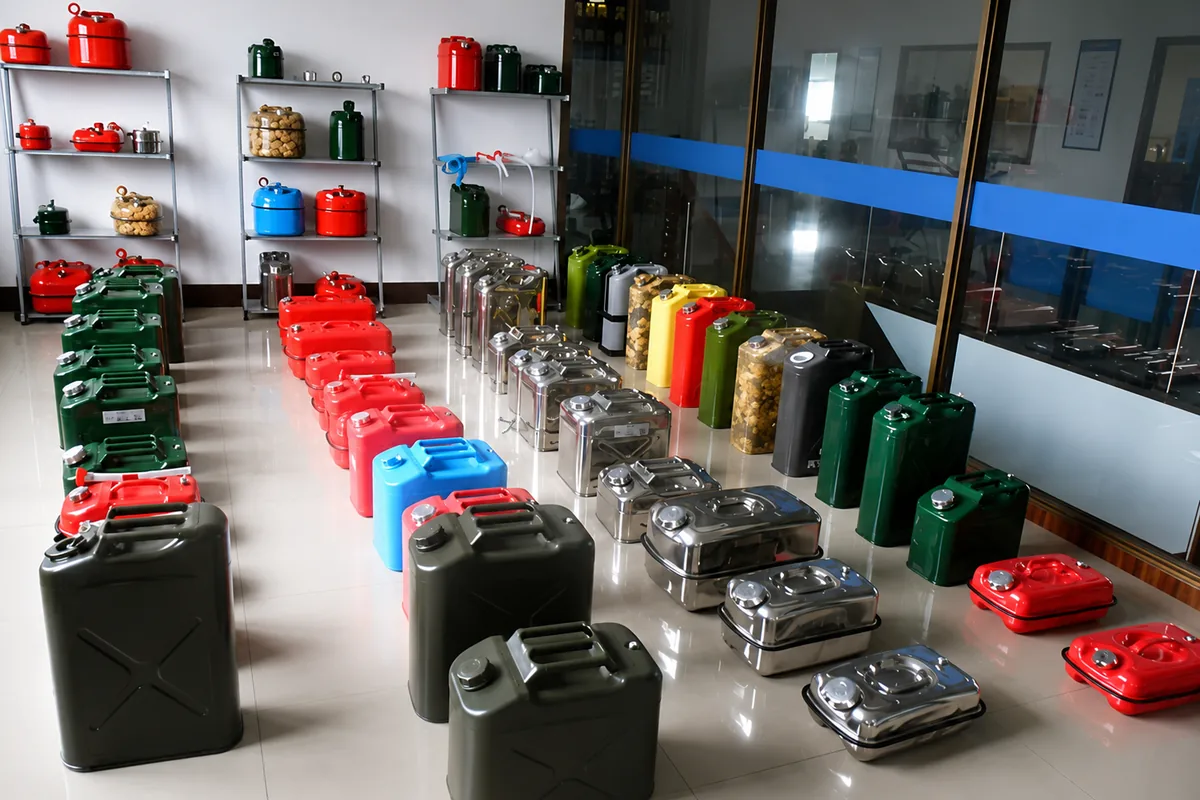
The container fails when the material meets a liquid it cannot handle. This guide matches the four materials we build in against the liquids buyers ask about. Treat it as a starting point, and confirm your exact liquid, its concentration and its temperature before you order.
Yes means generally suitable. Check means it depends on the specific liquid, concentration and temperature, so ask us for a compatibility check. No means the wrong material.
| Liquid class | Galv. steel | Stainless 304 | HDPE | Aluminium |
|---|---|---|---|---|
| Petrol, diesel, kerosene, JP-08 | Yes | Yes | Fluorinated | Yes |
| Potable water, food liquids | No | Yes | Food-grade only | No |
| Engine and lubricating oils | Check | Yes | Yes | Check |
| Acids and alkalis | No | Check | Check | No |
| Solvents and coatings | Check | Check | Check | No |
| DEF / AdBlue (urea) | No | Check | Dedicated DEF | No |
“Incompatible” covers several distinct failure modes, and knowing which one applies changes what you watch for and how quickly it matters.
The last is why a compatibility chart is a starting point rather than an answer. Environmental stress cracking depends on stress as much as chemistry, so the same material with the same liquid can pass in one geometry and fail in another.
Three variables invalidate a chart, and none of them appears in one. The first is concentration, and it is not monotonic: the intuition that more concentrated is always more aggressive is simply wrong. Concentrated sulfuric acid above about 93 per cent passivates carbon steel by forming a protective sulfate film, while dilute sulfuric acid attacks the same steel briskly. A chart that says only “sulfuric acid” has told you nothing you can act on.
The second is temperature. Reaction rates climb roughly exponentially with it, and a useful rule of thumb has them about doubling for every 10 °C, so a material comfortably rated at 20 °C may have a fraction of that service life at 60. Hot filling, an exothermic mixture and a black container in the sun all reach temperatures a bench test never saw.
The third is contact time. A container that carries a chemical across a yard for twenty minutes and a container that stores the same chemical for eighteen months are different engineering problems with the same chart entry. Transfer duty tolerates a marginal pairing that storage duty does not, and it is the single most common reason a compatibility answer that worked for one customer fails for the next.
A compatibility chart describes a material immersed in a liquid, and about half of any container is not immersed. Above the fill line sits a vapour phase, and for a volatile or oxidising substance that vapour can be more aggressive than the liquid beneath it, because it is concentrated, warm and in contact with a surface that is not being continuously rinsed.
Two consequences follow for anyone specifying a container rather than a material. Attack often appears first as a band at the liquid line, where wetting, evaporation and air all meet, rather than at the bottom where the liquid sits. And the closure, the gasket and the underside of the cap live permanently in the vapour phase, so they meet the harshest version of the chemistry while being the parts most often chosen from a generic catalogue.
It is also why a part-full container ages differently from a full one, and why a drum stored on its side is a different proposition from the same drum upright. If a sample is being tested for a compatibility decision, test the vapour phase as well as immersion, or the result describes half the container.
Two failure modes drive most of this table. Reaction: acids and alkalis attack the zinc on galvanized steel and can pit some metals, so the aggressive-chemical column belongs to plastic and, for milder cases, stainless. Permeation runs the other way, and between them the two modes explain almost every row in the table. Permeation: hydrocarbons migrate slowly through untreated plastic, which loses product and breaches fuel-emissions rules, so a plastic fuel can is fluorinated and a steel can is not.
Knowing which mode applies also tells you what a trial proves. A short compatibility trial catches reaction, because reaction is fast and visible. It catches nothing about permeation, which needs weeks at temperature and a scale to measure. A supplier reporting that a sample sat in the liquid for a fortnight with no effect has tested one of the two modes and is silent on the other, which for a hydrocarbon in plastic is the one that matters.
Compatibility charts describe the container wall, and a container is not only its wall. The gasket, the cap liner, any tap or spout and the thread sealant all touch the liquid, and they are usually made of something quite different from the body.
The common failure is a correct body with a wrong seal: nitrile is the right answer for hydrocarbons and swells nothing, while EPDM handles water and dilute acids well and swells badly in fuel. A can that seals on the bench and weeps a week later has almost always failed at the elastomer rather than the shell.
Where a design is UN approved, the closure was part of what was tested, so a gasket substitution is not merely a compatibility question but an approval question. Check both before changing one.
A “yes” and a “no” in that table are really the ends of a range. A material that holds a dilute acid at room temperature can fail against the same acid concentrated, or hot. Heat speeds up almost every attack and every permeation rate, and a can that sits in the sun runs warmer than the liquid went in. So a compatibility answer is only useful with the numbers behind it, and both belong in the enquiry as ranges rather than as points: a chemical normally held at 20 °C that spends two summer weeks at 45 has been specified at 45, and a dilution usually made up at 10 per cent and occasionally at 30 has been specified at 30. The exceptions are what overturn a compatibility answer, and they are the part a buyer knows and a supplier cannot guess. So a compatibility answer is only as good as the numbers behind it: the concentration and the service temperature, not just the chemical’s name.
The body is rarely the first thing to go. The gasket, the cap liner and any O-ring in a tap are elastomers, and elastomers have their own, narrower compatibility. A liquid the HDPE wall shrugs off can swell or harden the seal, and a swollen seal leaks or seizes. When you specify a can for anything aggressive, the closure material matters as much as the body, and the seal is the part a cheap can gets wrong.
It fails first for a mechanical reason as well as a chemical one. A gasket is under permanent compression, so a compound that swells has nowhere to expand into and distorts instead, and one that hardens loses the elasticity the seal depends on. Both happen quietly and both show up as a weep rather than a failure, usually after the container has been opened and closed a few times. Specify the compound with the liquid, and treat gaskets as a consumable with a replacement interval rather than as part of the can.
Send us the exact liquid by name, its concentration, its temperature in service, and how long it will sit in the container. With those four facts we confirm the material, the closure and any interior treatment, or we tell you plainly that we do not have a safe option.
Send the safety data sheet rather than the product name. Section 7 covers handling and storage, section 10 covers stability and incompatible materials, and between them they answer most of the question without anybody guessing. Where the liquid is a proprietary mixture the sheet is also the only document describing what is actually in it, and a compatibility answer given without one is an opinion about a name.
Fuels sit in the fuel and gas cans range, water and food in the water and food-grade range, and chemicals in the industrial and chemical range. This guide is general information, not a warranty of fitness for a specific use.
Four materials, matched to the liquid. Here is the line.
| Your use case | Recommended can | Why this one |
|---|---|---|
| Petrol, diesel, kerosene, JP-08 | 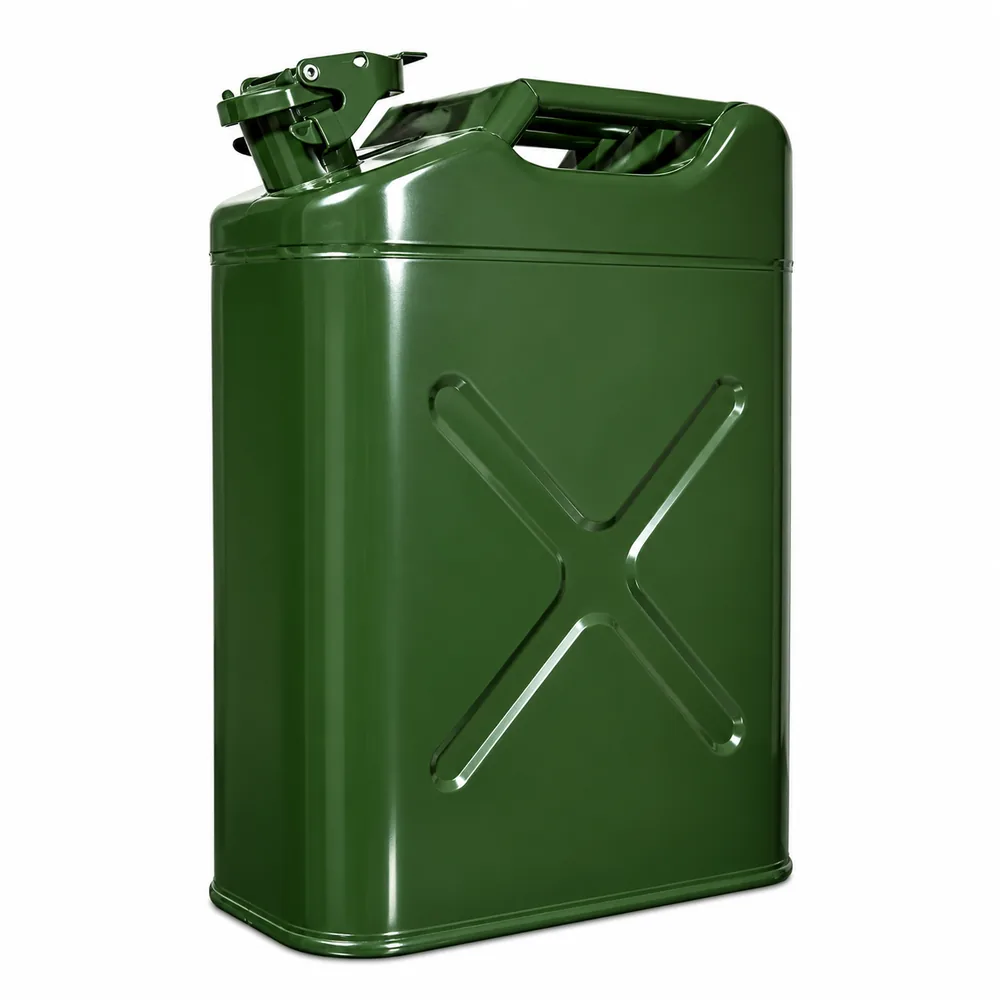 20L NATO Steel Fuel Can 20L NATO Steel Fuel Can |
Coated steel for hydrocarbons. |
| Potable water, food, oils | 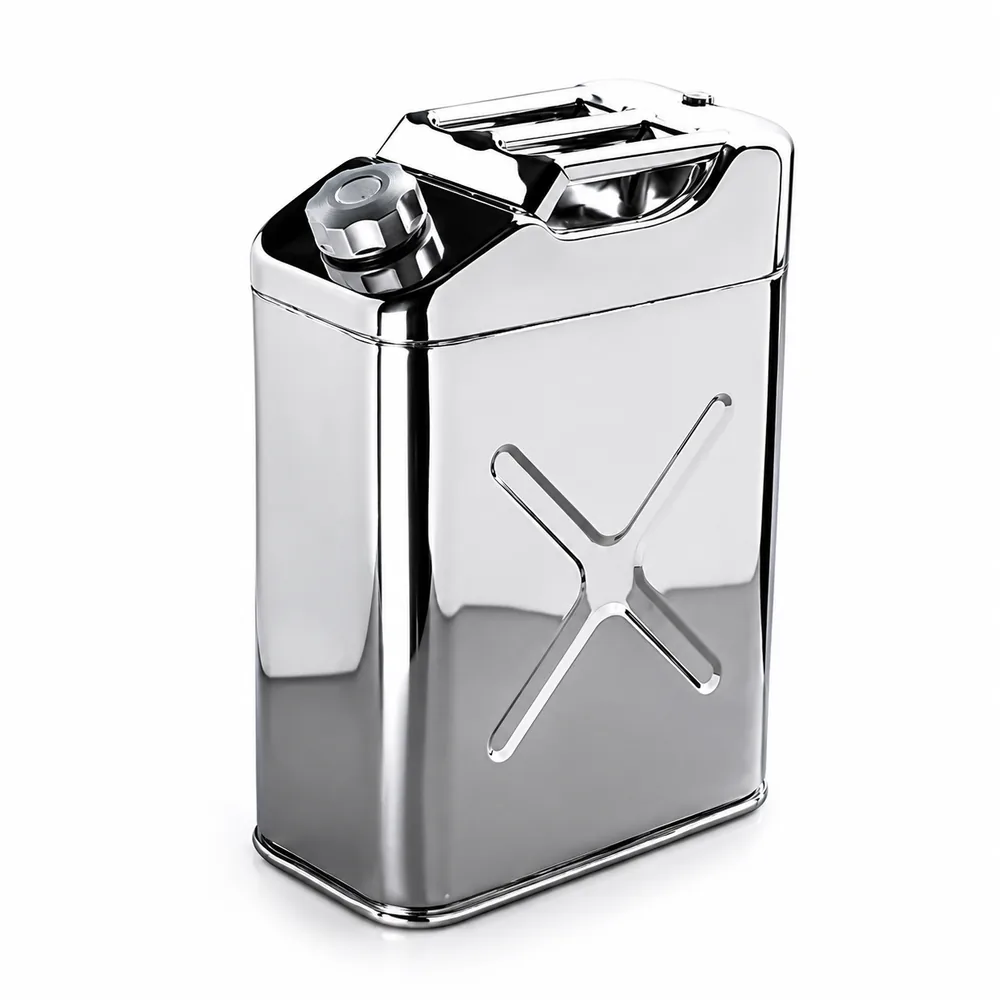 20L Stainless Steel Water Can 20L Stainless Steel Water Can |
AISI 304 food-grade stainless. |
| Chemicals, acids, alkalis | 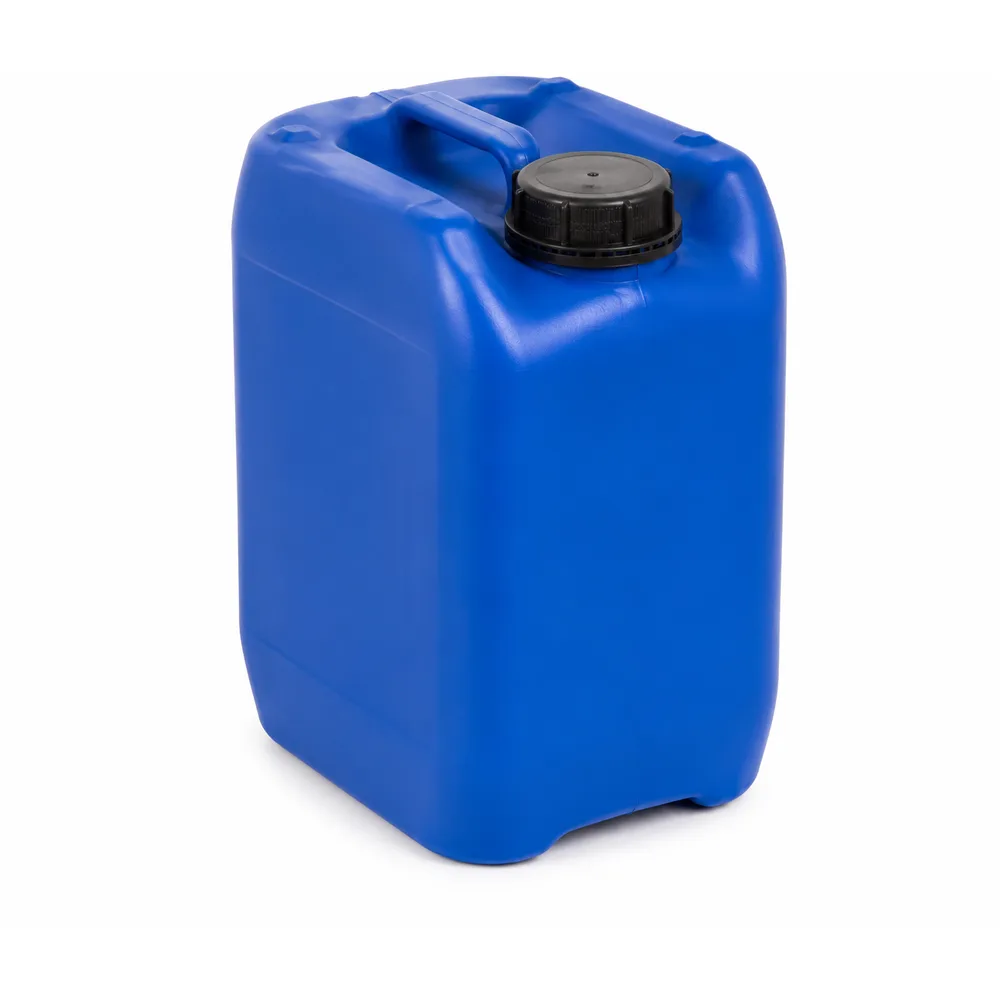 Fluorinated HDPE Jerrycan Fluorinated HDPE Jerrycan |
HDPE, confirmed on a compatibility check. |
| Light fuels, weight-critical | 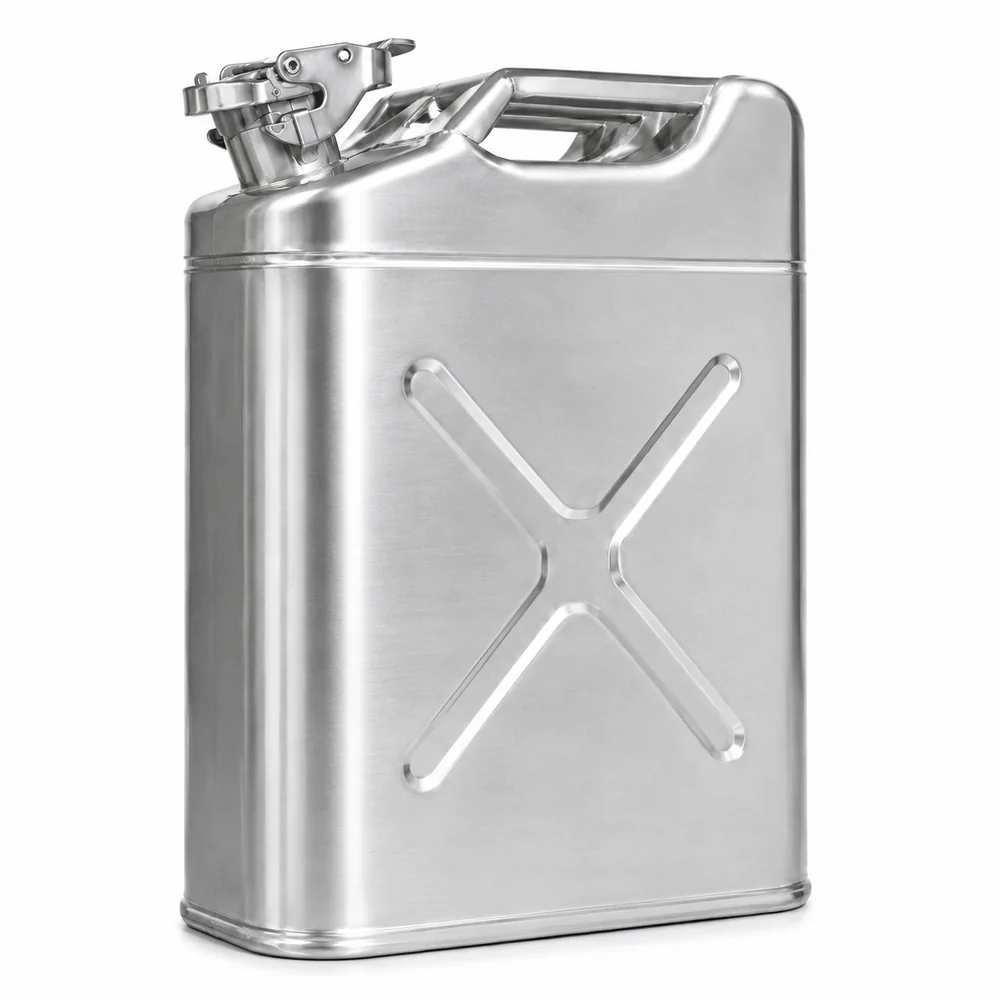 20L Aluminium NATO Can 20L Aluminium NATO Can |
Aluminium, not for acids or chemicals. |
HDPE handles the broadest range of acids, alkalis and salts, and is the default for industrial chemical packaging. Stainless 316 handles a wider range of solvents and high temperatures. Neither covers everything: strong oxidisers and chlorinated solvents need case-by-case checking against the specific concentration.
No. Mineral acids attack carbon steel and strip zinc coatings quickly, and will attack most stainless grades at working concentrations. Acids belong in HDPE, and the can should carry the UN 3H1 marking and packing group approval matching that acid.
Substantially. A material rated compatible at low concentration can fail at high concentration or at elevated temperature, and compatibility charts assume ambient conditions unless they say otherwise. Always check against your actual concentration, temperature and contact time rather than the chemical name alone.
The standards and regulations this page relies on, at their issuing body. Where a market rule is named here, check the current revision before you specify against it.
Last reviewed .
Tell us your market, your fuel and your volumes. We come back with a specification sheet and a quotation.