
What a WRAS listing proves, what the law asks for instead of the mark, how to check the directory, and where a portable water can sits.
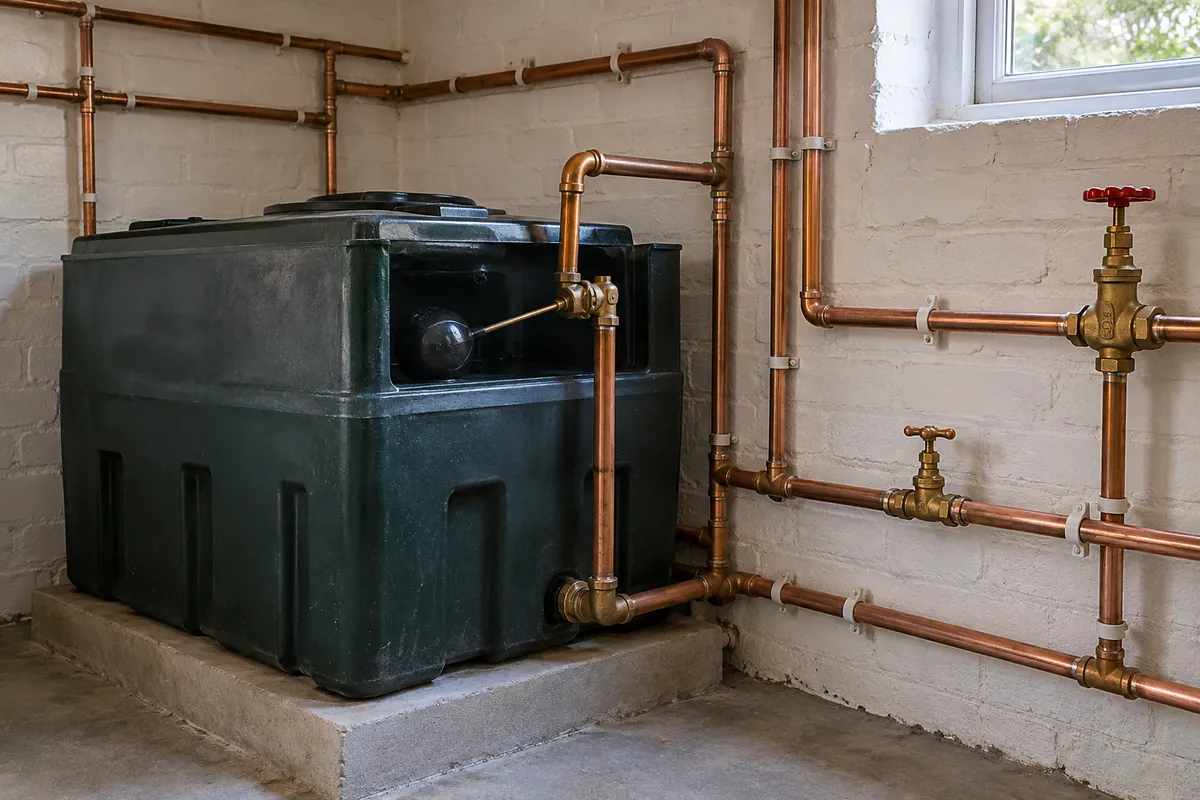
WRAS approval means the Water Regulations Approval Scheme has certified a plumbing fitting or material, after tests at a recognised laboratory, as meeting the UK water fittings regulations. The approval is voluntary. Compliance is the legal duty: every fitting connected to the public supply must be of an appropriate quality and standard, and a WRAS listing is the most common proof.
Quick answer: What is WRAS approval?
It is certification by the Water Regulations Approval Scheme that a plumbing fitting or material, tested at a recognised laboratory, meets the UK water fittings regulations. Approval is voluntary, and a product approval lasts five years. Compliance is the legal duty: regulation 4 requires every fitting on the public supply to be of an appropriate quality and standard.
Work it out
WRAS stands for the Water Regulations Approval Scheme, a UK certification body for plumbing products and materials. Until 1 April 2021 the letters stood for the Water Regulations Advisory Scheme. That year it split in two: Water Regs UK, funded by water companies, which promotes compliance and runs the WaterSafe register of installers, and Water Regulations Approval Scheme Ltd, funded by applicants, which certifies products.
The scheme took the Advisory Scheme name in 1999, when the Water Supply (Water Fittings) Regulations 1999 replaced the water byelaws in England and Wales. WRAS is UKAS-accredited to ISO/IEC 17065 and does no testing itself: recognised laboratories test, and WRAS decides.
A WRAS approved product has been tested and certified as of a suitable quality and standard under the water fittings regulations, provided it is installed as its approval says. There are two kinds.
| Product approval | Material approval | |
|---|---|---|
| Covers | Whole fittings: taps, valves, hoses, showers, cisterns, appliances | Non-metallic materials and components: rubber, O-rings, sealants, coatings |
| Tests | Mechanical tests to the regulator’s specification, plus BS 6920 for each non-metallic wetted part | BS 6920 water quality tests only |
| Listing shows | Models and sizes covered, maximum operating limits, installation requirement notes | The material or component, conditions of use, maximum water temperature |
| Valid for | Five years from the approval date | Up to five years from the test report date |
BS 6920, first published in 1988, is the British Standard for non-metallic products in contact with drinking water. WRAS uses five of its tests to show that a material does not give the water an odour or flavour, change its colour or turbidity, encourage microbial growth, leach substances harmful to health, or leach metals. Part 3 of the standard adds the tests for hot water use.
The WRAS material guidance (WRAS.Appr-310, paragraph 7) says a pass shows a material is less likely to harm water quality and does not signify fitness for purpose. Some approvals restrict a product to cold water, and every listed fitting carries installation requirement notes the installer must follow.
No. Compliance with the water fittings regulations is mandatory, and WRAS approval is one way to prove it. Regulation 4 of the Water Supply (Water Fittings) Regulations 1999 requires every water fitting to be of an appropriate quality and standard and suitable for the circumstances of use. A fitting meets that test if it conforms to an appropriate British Standard or equivalent national specification, or to a specification approved by the regulator. WRAS sums it up in the same terms: approval is optional, and the testing behind it is required.
WRAS is one certification route among several. For products used inside a property boundary, the Drinking Water Inspectorate lists WRAS beside two other Regulation 4 schemes, run by NSF and by Kiwa. WRAS describes its own mark as the most recognised water fittings approval brand in the UK.
Breaking the rules is an offence. Under regulation 7, installing or using a fitting in breach of regulation 3, or starting notifiable work without notice to the water company, carries a fine on summary conviction of up to level 3 on the standard scale. WRAS warns that an owner can also be asked to replace a non-compliant fitting at their own cost.
They apply to any water fitting installed or used in premises supplied by a water undertaker (regulation 2(1)), and WRAS describes their reach as running from the property boundary to the point of discharge. Regulation 2(3) excludes fittings that are not connected to the public supply, except for the cross-connection rule in Schedule 2, paragraph 14.
Section 93 of the Water Industry Act 1991 defines water fittings to include pipes, taps, valves, meters, cisterns, baths, water closets and similar apparatus used with the supply and use of water. Schedule 2, paragraph 2 of the 1999 regulations bars any material that causes or is likely to cause contamination of water supplied for domestic or food production purposes, and that paragraph is the legal basis for BS 6920 testing.
| Nation | Fittings rule | In force |
|---|---|---|
| England and Wales | The Water Supply (Water Fittings) Regulations 1999 | 1 July 1999 |
| Northern Ireland | The Water Supply (Water Fittings) Regulations (Northern Ireland) 2009 | 3 August 2009 |
| Scotland | The Water Supply (Water Fittings) (Scotland) Byelaws 2014 | 12 July 2014 |
Regulation 31 covers what a water company puts into or uses for the public supply; WRAS covers the plumbing inside the property. Regulation 31 of the Water Supply (Water Quality) Regulations 2016 bars a water undertaker from introducing any substance or product into water for supply unless it is approved or otherwise permitted. The Drinking Water Inspectorate (DWI) applies it to treatment chemicals and construction products from the source to the point of delivery at the consumer’s building. It states that products used within a property boundary do not need Regulation 31 approval. Wales, Scotland and Northern Ireland apply matching rules in their own water quality regulations: regulation 31 in Wales, and regulation 33 in Scotland and in Northern Ireland.
| Regime | Who must comply | What it covers | Where |
|---|---|---|---|
| Fittings regulations (WRAS or another Reg 4 certificate) | Owners, occupiers and installers | Taps, valves, pipes, cisterns and appliances on the supply | Property boundary to the tap |
| Regulation 31 (DWI) | Water companies | Treatment chemicals, mains pipes, linings and coatings | Source to the building |
| Food-contact law | Makers and sellers of contact materials | Containers, bottles and their seals | After the tap |
The exception is a water company that stores or distributes water during an incident through its own tanks, bowsers, flexible hoses or specialised bulk water containers. DWI Advice Sheet 9 treats that equipment as a Regulation 31 product and asks for a BS 6920 report or WRAS material listing for each non-metallic material. A water company equipping an incident fleet should confirm the route with the DWI Regulation 31 team. A business or household building its own reserve, sized with the emergency water storage guide, is outside both regimes.
Search the WRAS approvals directory, free on the WRAS website, by the approval number, the company name or a keyword. A logo on a box is a claim; the directory entry is the evidence.
The same steps identify WRAS approved flexible hoses, 15 mm flexi connectors included. A rebranded hose may carry the WRAS mark only where a reader can trace it to an approval, which is what a secondary approval provides.
A WRAS approved flexible hose carries a permanent mark on its ferrule or crimped connector: the WRAS name or logo, the year of manufacture, and the maker’s, factor’s or trade name. WRAS sets this in its hose clarification of Test Code Sheet 6001.1 (June 2016). On a braided tap connector the mark sits at the end away from the tap; on a hose with a built-in ball or check valve, at the valve end. An unbraided hose may carry the mark along the hose instead, repeated every 200 mm on hoses longer than 500 mm.
Use the mark to find the listing, which sets the limits. Hose assemblies have three directory sections: 1860 for plastic, 1863 for elastomeric and 1870 for flexible metal hoses. Each entry gives the approval number (seven digits on older listings, nine on recent product approvals), the bore, end connections and models, the marking, the maximum pressure and temperature, the installation requirement notes (IRNs) and the expiry date. WRAS limits hoses approved to BS EN 13618:2016 to 10 bar, 70 °C and 2,000 mm in length, with every non-metallic part to BS 6920. Hoses tested to the Regulators’ Specification carry their own limits: 60 to 85 °C in the listings we checked.
Two IRNs recur on hose listings. R008 requires installation where light is excluded. R515 requires a hose that moves with its tap or valve to be fitted with the least stress, so it does not wear or fail early. The WRAS brand guidelines (WRAS-Cust-403, paragraphs 44 and 45) bar selling a hose as approved because it resembles an approved one, and bar the mark once an approval expires. A hose with no ferrule mark, or with a lapsed listing, is not WRAS approved.
The WRAS Approved Product mark is a registered certification mark, and showing it is optional: many approved products do not. Manufacturers and factors named in a valid approval may use it, and retailers need written permission from WRAS. Under the WRAS brand guidelines (WRAS-Cust-403, paragraphs 23 and 27), the mark must carry the words “certification mark” and must match a product a reader can find in the directory. It may not appear on a rebranded product the directory does not list under its new name.
Two signs mark a weak claim. The plain WRAS logo is reserved for WRAS, and approval holders may not use it (paragraph 1). And approval holders must not refer to “WRAS regulations”, because the regulations are law and WRAS certifies against them (paragraph 42). A sticker citing WRAS regulations, or a mark with no approval to trace, calls for a directory search before you buy.
WRAS approves a named material from a named maker. So “is EPDM WRAS approved” has no single answer: one maker’s EPDM compound may hold a material approval while another’s does not, and the approval covers only the formulation, process and site that were tested. Changing any of them without telling WRAS invalidates the approval (WRAS.Appr-310, paragraphs 8 and 9). The same holds for PTFE tape, silicone grease, sealants and pipe lubricants: search the directory for the named product.
Metals sit outside material approval. WRAS does not consider applications for material approval of metallic materials, for lack of a satisfactory test method (paragraph 80), so there is no WRAS material approval for brass, copper or stainless steel. The regulations add one metal rule of their own: any concealed fitting or mechanical backflow device, other than a terminal fitting, must be gunmetal or another material resistant to dezincification (Schedule 2, paragraph 7(3)). A concealed brass fitting therefore has to be a dezincification-resistant grade.
WRAS files every approval under a numbered directory section, and the approval type tells you how to check it. Fittings hold product approvals and carry a mark naming the maker, factor or brand that stays readable after installation (WRAS clarification of Test Code Sheet 6001.1, 2015). Greases, sealants, O-rings and gaskets hold material approvals and need no mark, so you match the product name to its listing. Mechanical tests follow a standard on the WRAS list of appropriate standards or the Regulators’ Specification, nearly 200 test code sheets.
| Product | Directory section | Check in the listing | Standard behind it |
|---|---|---|---|
| Flexible hoses and flexi connectors | 1860 plastic, 1863 elastomeric, 1870 metal | Ferrule mark, bore, ends, bar and °C | BS EN 13618:2016 or test code sheets; BS 6920 for the lining |
| Taps | 1750 bib, 1780 hose union, 1800 pillar; combination taps from 0400 | Air gap type and IRNs; R005 limits an AUK2 tap to homes or fluid category 3 | BS EN 200:2008, with backflow evidence to HUK1, AUK2 or AUK3 |
| Shower heads and shower hoses | 1650 heads and handsets, 1660 hoses | Models covered and the marking | BS EN 1112:2008; BS EN 1113:2015 |
| Stop taps, drain-off and ball valves | 2290 to 2336 stop valves; 1770 draining valves, above ground only; ball valves as spherical valves, 2260 metal and 2270 plastic | Size, body material and IRNs | Test code sheets; no standard on the WRAS list |
| Pressure reducing and relief valves | 2200 reducing, 2210 relief, 2030 combined thermal and pressure relief | Pressure range and IRNs | BS EN 1567:1999; BS EN 1489:2000, plus an opacity test on a plastic body |
| Double check and solenoid valves | 0032 verifiable (type EC) and 0034 non-verifiable (type ED), both fluid category 3; solenoid 2230 metal, 2240 plastic | Verifiable or not; 2235 solenoids are for non-wholesome water | Test code sheets; no standard on the WRAS list |
| Silicone grease and pipe lubricant | 5160 Lubricants | Product name, how to apply, maximum water temperature | BS 6920 material approval |
| Thread and joint sealants | 5510 and 5520 screwed joints, 5440 flat-faced joints | Product name; 5520 anaerobic sealants cured as the maker instructs | BS 6920 |
| Seals, O-rings and extrusions | EPDM 5360 and 5365, fluoroelastomer 5370 and 5375, polyethylene 5240 and 5245 | “Components” covers the finished part, “material only” the compound | BS 6920 |
Because metals get no material approval, stainless steel reaches the directory through product approvals: section 0870 lists welded pipe in grades 304 and 316. Pumps (1610), expansion vessels (1000) and pressure switches and transducers (1720, 1721) have sections too; IRN R530 asks for an expansion vessel to stand upright on the shortest connecting pipe. Float-operated cistern valves are listed apart from spherical valves, in sections from 2075.
A maker applies to WRAS with drawings and a schedule of every material in contact with wholesome water, then has the product tested at a WRAS-recognised laboratory. Each non-metallic material needs its own WRAS material approval number or a valid BS 6920 test report.
Taps, showers and their components use an online route, where WRAS sets the test requirements and inspects samples while the laboratory tests. For other products the laboratory submits the file, and WRAS and its Product Approvals Advisory Group review it. On either route the approval number is based on the approval date and expires five years later, and keeping the listing means re-approval. The laboratory prices the testing, and WRAS recommends quotes from more than one. WRAS aims to issue a material approval within a few days of a satisfactory report, form and purchase order, and within 10 working days at most.
Each scheme proves a product fit for drinking water in its own market, and none stands in for another. WRAS covers the UK; KIWA, ACS and the UBA criteria cover the Netherlands, France and Germany; most US state drinking water rules require NSF/ANSI/CAN 61. The EU schemes are giving way to European rules under Article 11 of Directive (EU) 2020/2184; see our EU and UK drinking water contact guide.
| Scheme | Market | Rule behind it | Who issues it |
|---|---|---|---|
| WRAS approval | UK | Water fittings regulations 1999 and 2009, Scottish byelaws 2014 | WRAS, on recognised laboratory results |
| Kiwa Water Mark, formerly KIWA ATA | Netherlands | Regeling materialen en chemicaliën drink- en warm tapwatervoorziening (2011, amended 2017) | Kiwa Nederland, currently the only certification body the Dutch ministry recognises |
| ACS (attestation de conformité sanitaire) | France | Public Health Code (Code de la santé publique) | Laboratories authorised by the health ministry |
| UBA evaluation criteria | Germany | Drinking Water Ordinance (TrinkwV), sections 14 and 15 | An accredited certifier, as one route to proof |
| NSF/ANSI/CAN 61 | US and Canada | Most US state drinking water regulations | A third-party certifier such as NSF |
The name KIWA covers two schemes. In the Netherlands, Kiwa issues the Kiwa Water Mark, which replaced the KIWA ATA (Attest Toxicologische Aspecten) when Dutch rules added microbiology, taste and odour to toxicology and brought metals into scope. It has no fixed end date and stays valid while Kiwa’s audits pass. In the UK, Kiwa runs KUKreg4, which the Drinking Water Inspectorate lists beside WRAS and NSF REG4 as a regulation 4 route, so a Dutch Kiwa certificate does not serve as a UK approval.
France issues an ACS, valid five years, for organic materials and for accessories with an organic part. Greases, adhesives and organic seals under 63 mm take a certificate of conformity to the positive lists (CLP), also five years, and metals a material certificate. From 31 December 2026 a new product in France needs a European certificate; national certificates valid that day run to 31 December 2032 if the product is unchanged. The German UBA criteria hold organic materials to positive lists, with tests for odour, colour, turbidity, total organic carbon and microbial growth (EN 16421), and include a positive list of metals. NSF/ANSI/CAN 61 sets health-effects limits only; its section 1.1 excludes taste, odour and microbial growth (NSF/ANSI 61 explained).
For a portable can filled at the tap, the UK question is food-contact law. Food-contact certification lists the documents to ask for, stainless steel vs plastic water containers compares the two materials, and emergency water storage sizes a reserve.
No. A portable water can filled at a tap and carried away is not connected to the supply, so regulation 2(3) takes it outside the fittings regulations. It is not a cistern either: Schedule 2, paragraph 1 defines a cistern as a fixed container for holding water at atmospheric pressure. Water in the can has already passed the point of discharge, where WRAS says the regulations typically end.
After the tap, food law takes over. Regulation (EC) No 178/2002, Article 2 counts water as food after the point of compliance, which for mains water is the tap, and Regulation (EC) No 1935/2004 covers the can as a food-contact article; both still apply in Great Britain. Article 1(3)(c) of 1935/2004 excludes fixed water supply equipment, the territory of the fittings regulations. Article 3 requires that a contact material does not transfer its constituents in quantities that could endanger health, bring an unacceptable change in its composition, or spoil its taste and smell. Our EU and UK drinking water contact guide covers the separate EU approval regime for materials in water installations.
Ask for documents that answer the food-contact question for the market where the can will be used.
| Ask for | What it proves | Applies to |
|---|---|---|
| Material grade, such as AISI 304 | The alloy in the wetted path | Stainless cans |
| EN 10204 3.1 mill certificate | The grade and composition of the steel, traceable to the melt | Stainless cans |
| Written declaration of compliance (Regulation (EU) No 10/2011, Article 15) | The plastic meets the food-contact rules at each trade stage before retail | HDPE cans and plastic closures |
| Gasket and liner material | The seal touches the water too and needs its own line | Every can |
| The market named on the documents | Great Britain, the EU or elsewhere | Every can |
Check that the declaration names the closure, because the cap liner is part of the wetted path; jerry can closures and caps explains the parts. For the material choice itself, compare stainless steel and plastic water containers and the 304 and 316 grades; for pails and tins, see food contact and UN codes for pails and tins. Connect a container to the supply through a fixed pipe or float valve and it joins the water system, where the fittings regulations and their backflow rules apply.
Fortitude21 holds no WRAS approval, and no Fortitude21 product appears in the WRAS directory. We make portable containers, which sit outside the fittings regulations, and we do not make taps, valves, hoses or cisterns for connection to the mains. Our factories hold ISO 9001, 14001 and 45001, and our dangerous-goods jerrican designs carry UN certification; neither is a drinking-water approval.
For drinking water we answer the food-contact question. Our water and food-grade cans include stainless cans in AISI 304 across the wetted path with no liner or coating, supplied with the mill certificate for the grade. The range also has a food-grade HDPE jerrycan whose declaration covers the cap and liner as well as the body. Name the market at enquiry and we tell you which documents apply there. To size an order, the jerry can sizing calculator turns litres per person into a can count.
| Your use case | Recommended can | Why this one |
|---|---|---|
| Stored drinking water, cleaned and refilled for years | 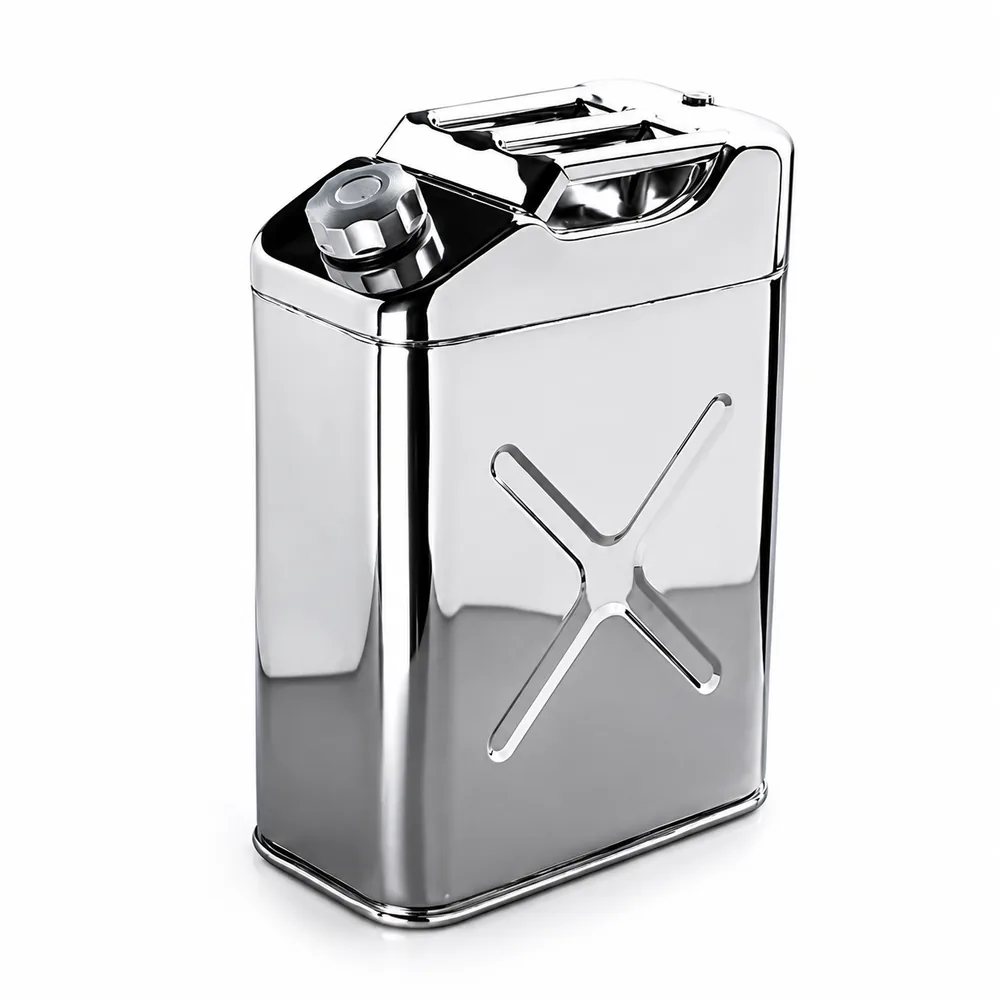 20L Stainless Steel Water Can |
AISI 304 across the wetted path with no liner, supplied with the mill certificate for the grade. |
| A smaller potable reserve, carried full by one person | 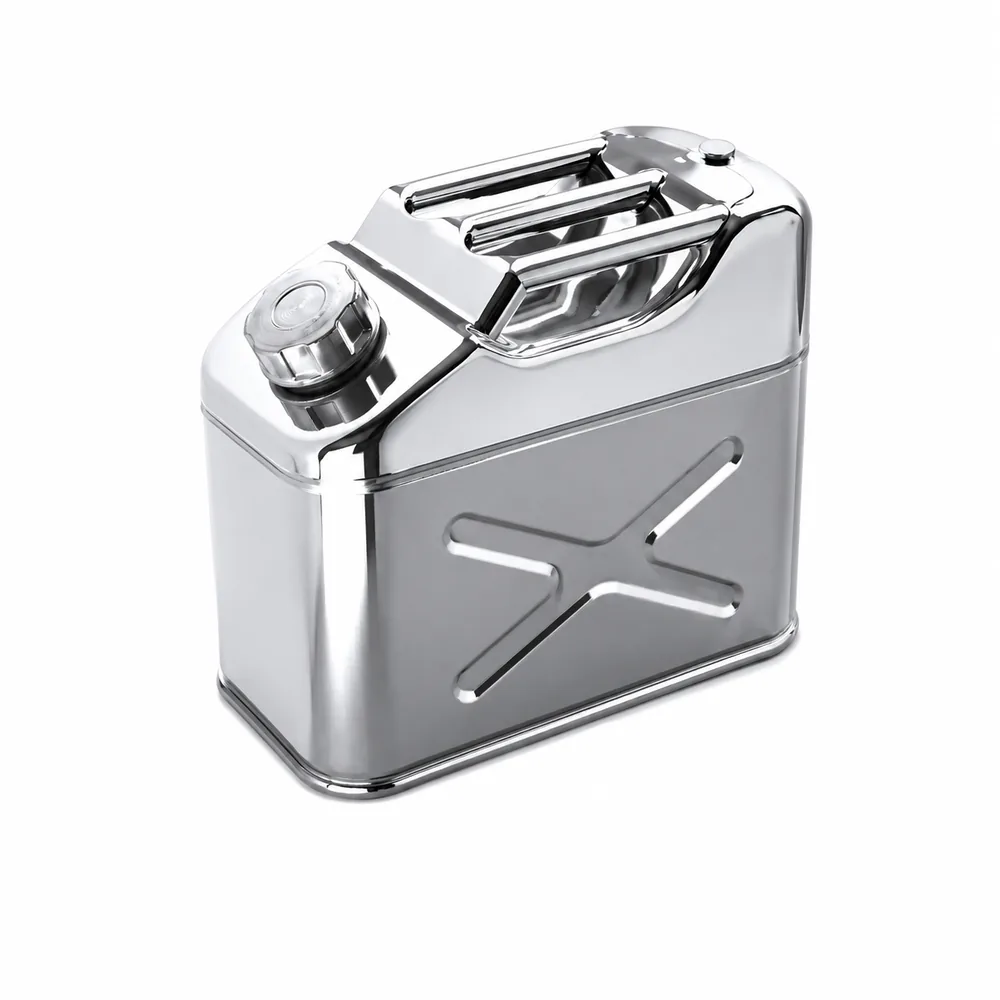 10L Stainless Steel Water Can |
The same 304 grade and documents in a ten litre can. |
| Water issued or shipped in bulk | 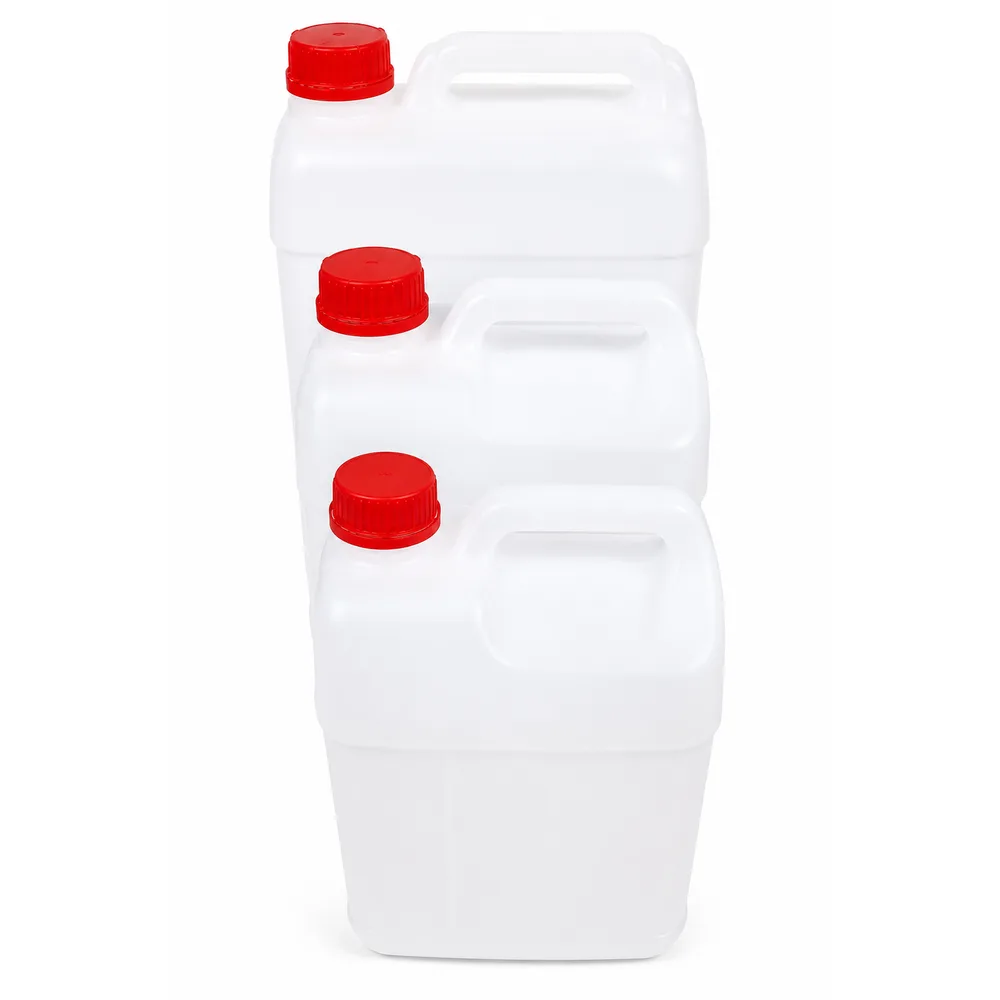 Food-Grade HDPE Jerrycan |
Natural HDPE with a food-contact declaration that covers the cap and liner as well as the body. |
| A bench or counter drinking-water point that is not plumbed in | 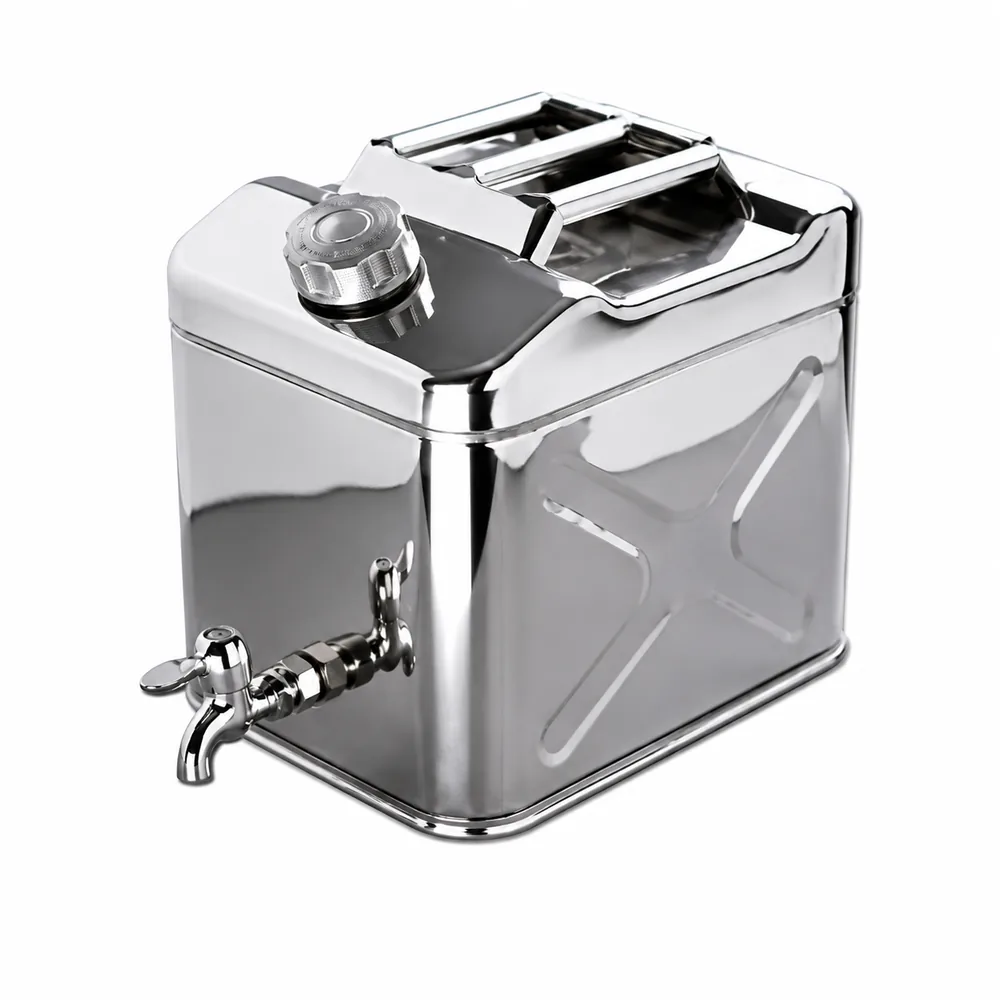 20L Stainless Dispensing Can with Tap |
Integrated tap on a stainless body; confirm water as the contents and the tap seal at quotation. |
WRAS approves products and materials. Plumbers are approved through approved contractors' schemes such as WIAPS, APHC, CIPHE and SNIPEF, and the WaterSafe register lists them in one place. An approved contractor can do some work without telling the water company first and issues a certificate of compliance. Under regulation 7(2) of the 1999 fittings regulations, that certificate gives the owner a defence if the work is challenged.
Plumbers must install fittings of an appropriate quality and standard under regulation 4 of the Water Supply (Water Fittings) Regulations 1999, and a WRAS listing is the fastest way to show a fitting passes that test. Other Regulation 4 certificates, from NSF or Kiwa, also count. An approved contractor signs a certificate that the work complies, so they want every fitting traceable to a current listing.
No. WRAS certifies fittings and materials against the UK water fittings regulations, with materials tested to BS 6920 for odour, flavour, appearance, microbial growth, cytotoxicity and metals. NSF/ANSI/CAN 61 is the North American standard setting health-effects criteria for products in contact with drinking water. Each market asks for its own certificate, and a buyer should not accept one in place of the other.
Five years. A product approval number is based on the date the approval is granted and expires five years later. A material approval runs for up to five years from the date of its BS 6920 test report. To keep a listing the holder applies for re-approval, which usually means retesting, and must tell WRAS before changing a formulation, a process or the site of manufacture.
A WRAS approved tap is a tap model listed in the WRAS directory under a product approval, tested mechanically and with BS 6920 checks on its non-metallic parts. The listing names the models and sizes covered and the installation requirement notes to follow, which can limit a tap to cold water. A tap on a portable dispensing can is not connected to the supply and sits outside the scheme.
A tank plumbed into the mains must comply with the fittings regulations, and a WRAS listing is the usual proof. It is a cistern under Schedule 2, and paragraph 16 requires storage cisterns to be installed so they minimise contamination and avoid stagnant water. A container filled by hand and not connected to the supply falls outside the fittings regulations. The WRAS directory lists cold-water storage cisterns in plastic and metal.
Yes. WRAS lists approved fittings as complying with the Water Supply (Water Fittings) Regulations 1999 in England and Wales, the Water Supply (Water Fittings) (Scotland) Byelaws 2014 and the Water Supply (Water Fittings) Regulations (Northern Ireland) 2009, when correctly installed. In Scotland the byelaws are made and enforced by Scottish Water.
No. WRAS certifies against UK law. EU member states run national drinking-water approvals and are moving to European Positive Lists under Directive (EU) 2020/2184, so a WRAS listing does not carry into the EU and an EU approval does not carry into the UK. Plan two files for two markets.
Water companies enforce them as water undertakers, and Scottish Water enforces the byelaws in Scotland. Water Regs UK supports 30 water undertakers across the UK that carry this duty. Some work must be notified before it starts; under regulation 5 of the 1999 regulations the water company has 10 working days to refuse consent or attach conditions, after which consent is deemed granted.
Partly. WRAS material guidance (WRAS.Appr-310, paragraph 4) says no standard from another European Economic Area state runs the same suite of tests as BS 6920, though individual results may count as evidence of equivalent performance. A North American or EU certificate is not a WRAS approval on its own. Ask WRAS which results it will accept before you commission new testing.
No. Fortitude21 holds no WRAS approval and none of its products is listed in the WRAS directory. We make portable containers, which fall outside the water fittings regulations. For our water cans we supply the stainless grade with its mill certificate, or a food-contact declaration covering the HDPE body, cap and liner, for the market you name.
Named compounds can be. Viton is a brand of fluoroelastomer (FKM), and WRAS approves named compounds from named makers, so the answer depends on the compound. The directory lists fluoroelastomer components in section 5370 and fluorocarbon compounds, material only, in section 5375. WRAS may call in components made from a material-only compound for audit tests. Ask the seal maker for the approval number, then check the compound and its maximum water temperature against your use.
No. WRAS gives no material approval to metals (WRAS.Appr-310, paragraph 80), and its directory has no section for copper tube. It does list fittings for copper tube, and it accepts BS EN 1254 capillary, compression and threaded fittings as appropriate standards. Hose listings name copper tube made to EN 1057 as the pipe their compression ends suit. Under regulation 4 of the 1999 fittings regulations the tube must still be of an appropriate quality and standard.
A bidet on the mains must comply with the fittings regulations, and a WRAS listing is the usual proof. WRAS lists bidets in section 0278, bidet taps in sections 0400 to 0420 and WCs with a washing function in 2043 and 2063. IRN R070 treats a bidet with an ascending spray, rim feed or hand-held spray as a fluid category 5 risk that must not connect to a supply pipe. Section 2043 lists WCs with a type AB air gap built in.
Yes, where a hose will be used from an existing outside hose union tap with no backflow protection. WRAS IRN R060 gives three fixes. Fit a type EC or ED double check valve inside the building. Replace the tap with a hose union tap that has a double check valve built in (type HUK1). Keep a type HA hose union backflow preventer or a double check valve fitted to the tap outlet. The directory lists double check valves in sections 0032 and 0034.
Yes, model by model. WRAS section 0683 lists multiple-function taps that, besides normal use, chill, filter or carbonate water or deliver instantaneous hot water, and section 2420 lists drinking water coolers. Check the exact model and its IRNs, which can add backflow protection: R150 calls for a single check valve (fluid category 2) at the supply connection and R160 a double check valve (fluid category 3). Some listings carry R170, which says the water company cannot be responsible for the quality of water from the fitting.
Yes, as named products. WRAS lists paints, coatings and linings as material approvals in its Coatings, Paints and Linings sections, such as 5030 for factory-applied pipe and fitting coatings. Each listing names the product, any condition that limits its use, such as curing, and the maximum water temperature. Some water supply areas ask for more: IRN R310 covers areas that require aluminium covers to carry an approved paint or lacquer, and IRN R330 areas that require galvanising to be coated with one.
The standards and regulations this page relies on, at their issuing body. Where a market rule is named here, check the current revision before you specify against it.
Last reviewed by David Guru, Co-Founder & Business Development Director.
Tell us your market, where the water will be stored and your volumes. We come back with a specification sheet, the food-contact documents for that market and a quotation.