
European Positive Lists replace national regimes from 2027. What that changes for a water container, and why the UK answers separately.
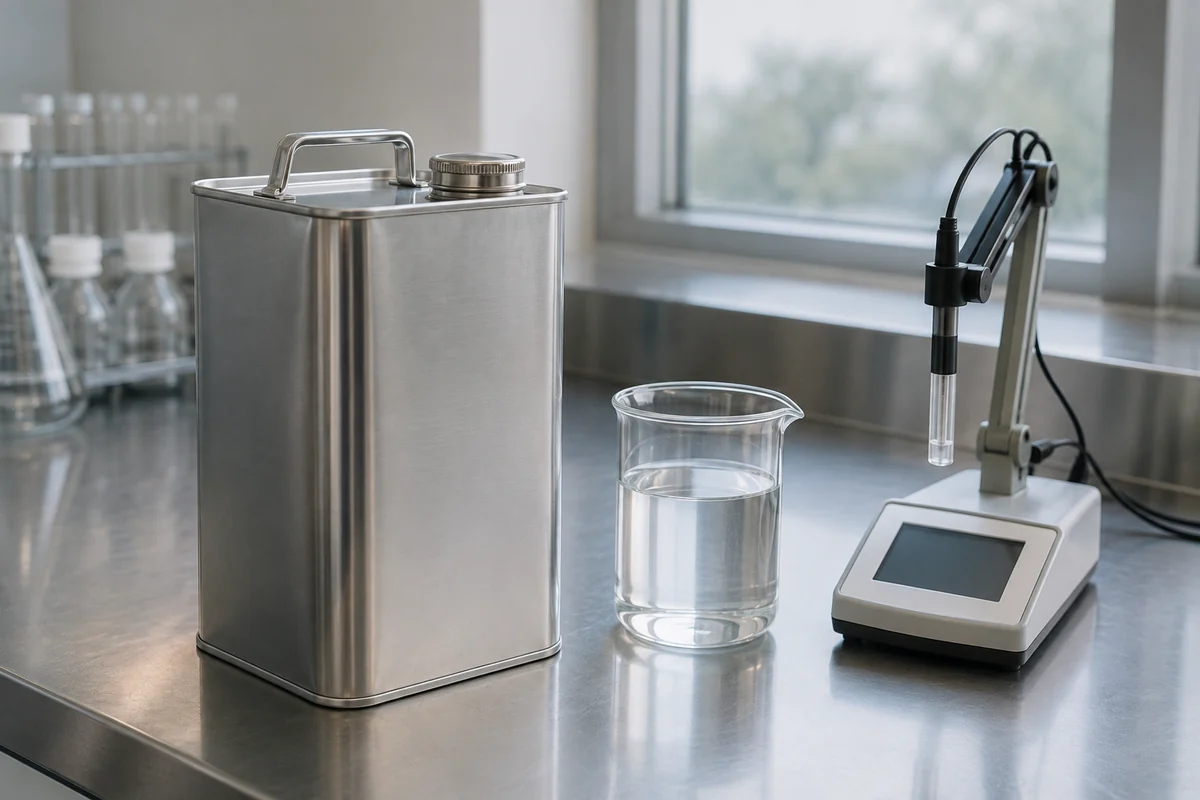
The rules for what may touch drinking water in Europe are being replaced. Twenty-seven national approval regimes are giving way to European Positive Lists under Article 11 of the recast Drinking Water Directive, with the changeover running from 1 January 2027. If you are specifying a potable water container for the EU now, you are buying across that boundary.
Directive (EU) 2020/2184 sets minimum hygiene requirements for materials that come into contact with water intended for human consumption, and requires the Commission to establish European Positive Lists: reference lists of the substances, compositions and constituents considered safe for drinking water contact.
Getting onto a list is not a paperwork exercise. It runs through risk assessment covering migration into the water under the most unfavourable conditions of use, conformity testing including effects on taste, odour and the microbiological balance of the water, and an opinion from ECHA’s Risk Assessment Committee.
What that testing looks for is worth knowing, because it explains why a food-contact file does not transfer. Migration is measured after conditioning that simulates the worst realistic case rather than an average one. Taste and odour are assessed by a sensory method against a control water. And the material is tested for whether it encourages microbial growth, which is the endpoint that has no analogue in food-contact work at all: a surface that leaches a trace of organic carbon feeds a biofilm in a pipe over months, and that is a drinking-water failure with no food equivalent.
The system also separates the material from the product, which is where a lot of confusion starts. A positive list is a list of substances, compositions and constituents, so what gets assessed is what the wetted surface is made of. Whether a finished container is acceptable then depends on that material assessment plus how the product is built and used. Asking a supplier whether "the can is approved" often gets a truthful answer about the material and an unhelpful one about the product.
| When | What happens |
|---|---|
| By 31 December 2026 | The European Positive Lists are finalised into law |
| From 1 January 2027 | Transition begins from national provisions to the European system |
Until the transition completes, national approvals still do the work: the German UBA schemes, the French ACS, the Dutch KIWA route and the others. That is the practical position today, and it is why a supplier can hold approval in one member state and not be accepted in another.
Those national schemes did not develop entirely independently, which softens the problem slightly. Germany, France, the Netherlands and, before it left, the United Kingdom ran a joint acceptance initiative that aligned test methods and produced common material lists, and the European Positive Lists build on that groundwork rather than starting from nothing. A supplier already assessed under one of those schemes is closer to the new system than one holding nothing, which is a real reason to pursue a national approval now rather than wait for 2027.
For metals specifically, the German route is the one worth understanding because it is the most developed. The German Environment Agency maintains a positive list of metallic materials hygienically suitable for drinking-water contact, and an alloy is either on it or it is not. Austenitic stainless steels are accepted for drinking-water use in Germany, which is precisely why the material choice on a stainless water can is the thing that keeps the approval route open. The list attaches to the alloy, so the mill certificate is the document that matters.
Great Britain did not follow the recast directive. In England and Wales, products in contact with public drinking water supplies go through Regulation 31 approval administered by the Drinking Water Inspectorate, with WRAS approval widely used as the route for fittings. So an EU positive-list position does not carry into the UK and a UK approval does not carry into the EU. Two markets, two files.
Plan the sequence rather than running both at once. The UK route is stable today and the EU one is mid-transition, so a supplier serving both usually starts where the requirement is fixed and adds the second as the European lists finalise. Starting both against a design that is still moving pays for two assessments of something that then changes, which is the same trap that catches UN and AS/NZS testing run in parallel too early.
The most common specification error in this category. A container can hold a valid food-contact declaration under the EU framework regulation and the plastics regulation and still not be approved for potable water, because drinking water contact is assessed against different endpoints: long contact times, low-nutrient water, and effects on taste, odour and microbiology. Ask which of the two you are being sold, and for what market.
The tell is the document rather than the sentence. A declaration of compliance names a food-contact regulation; a drinking-water approval names a national scheme or a positive-list position. If the paperwork offered names a food regulation and the question was about potable water, the question has not been answered, however confidently the covering email reads.
Straight, because a page about approvals should be. Our stainless water line is AISI 304 across the wetted path with no liner or coating, which is the right material choice for potable use, and we supply the mill certificate for the grade. National drinking-water approvals are not held on the standard range today. They are obtainable per product and per market, and we scope them as part of a programme.
The material is the reason that route is open. An approval assessment attaches to what touches the water, and an uncoated austenitic stainless wetted path is a single, declarable material with no liner or coating system to assess alongside it. That is a considerably shorter file than a coated steel or multi-additive plastic container presents.
How we handle it in practice:
| Your use case | Recommended can | Why this one |
|---|---|---|
| Potable water storage | 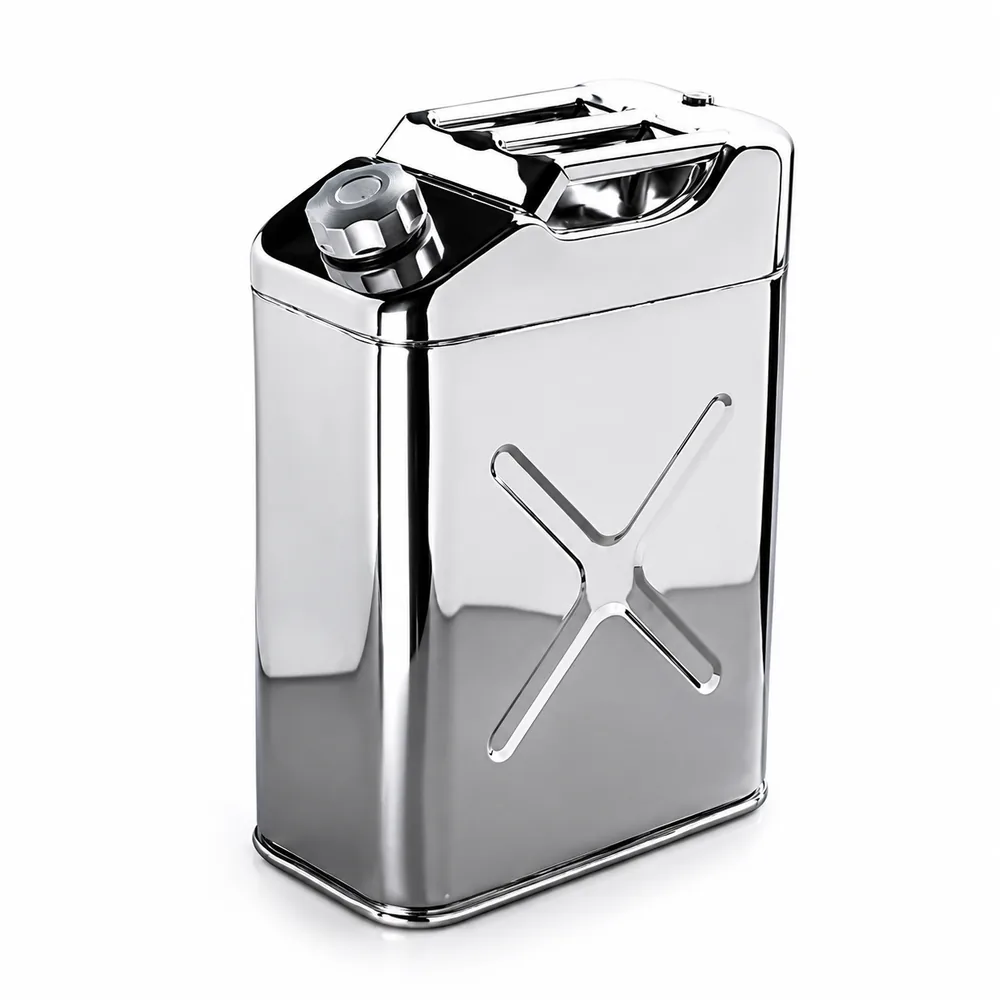 20L Stainless Steel Water Can 20L Stainless Steel Water Can |
AISI 304 wetted path, no liner to fail. |
| Smaller potable reserve | 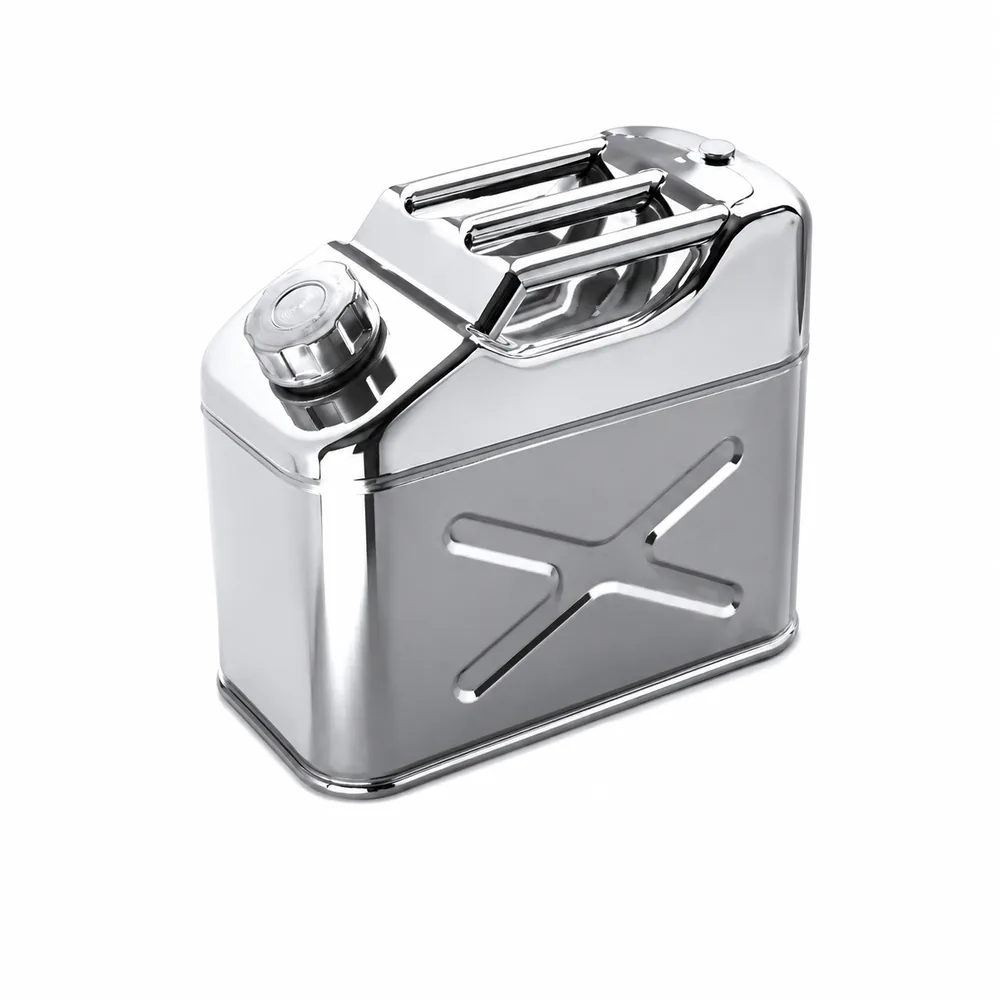 10L Stainless Steel Water Can 10L Stainless Steel Water Can |
Same grade, easier one-hand carry. |
| Food and beverage in plastic | 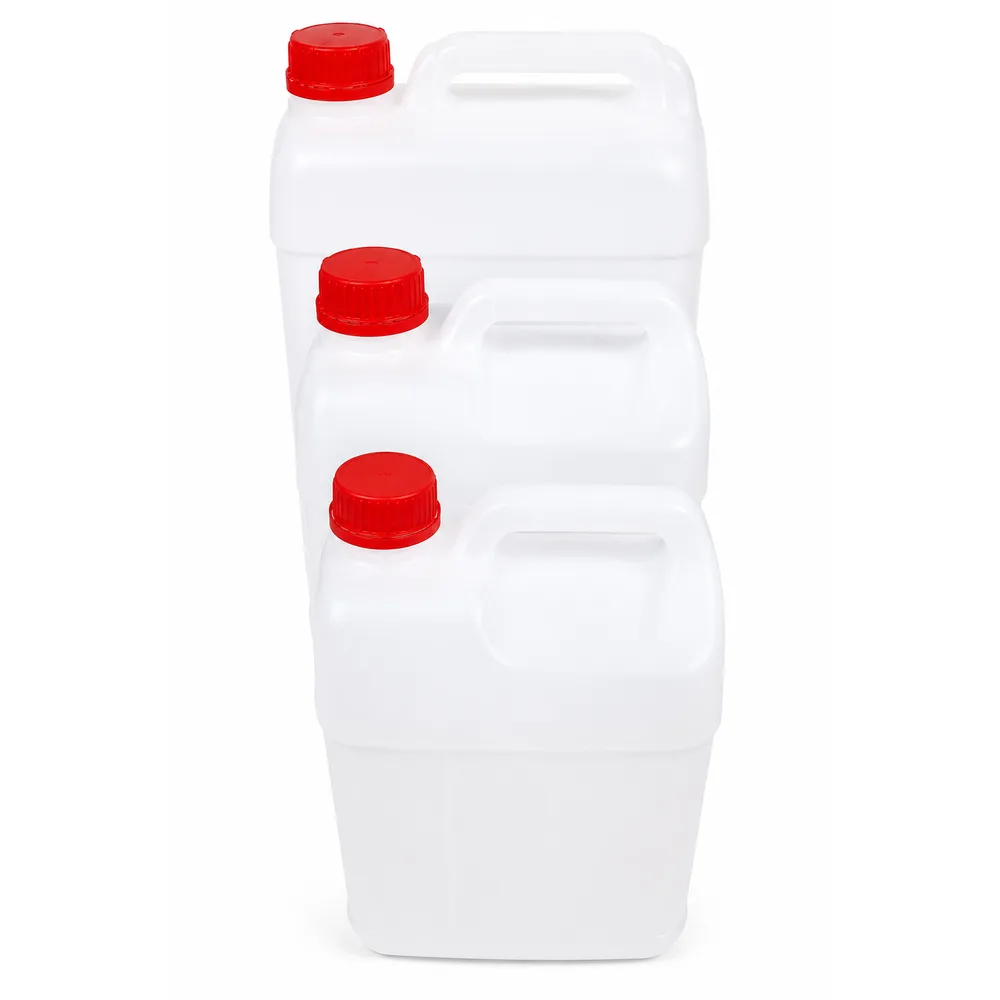 Food-Grade HDPE Jerrycan Food-Grade HDPE Jerrycan |
Food-contact route; confirm the water question separately. |
| The part people forget | 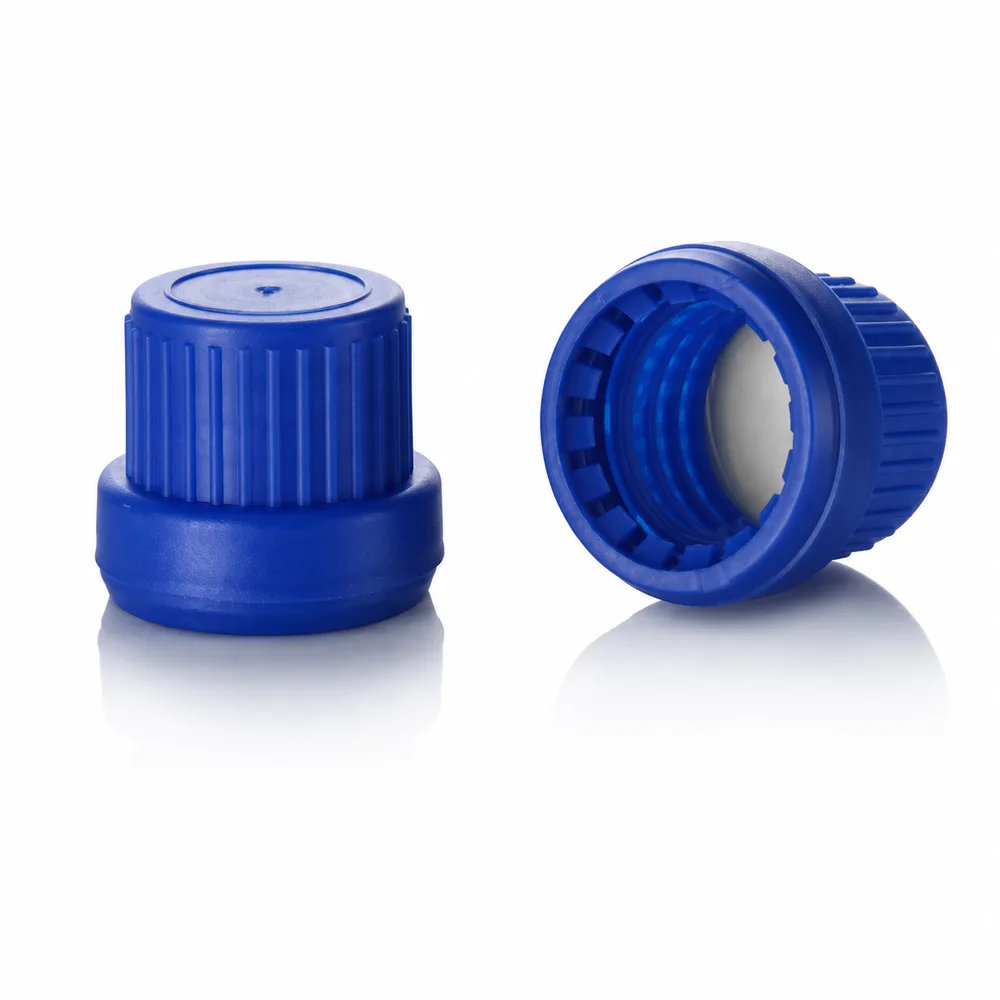 Caps, Closures & Gaskets Caps, Closures & Gaskets |
The gasket is a contact material too. |
Article 11 of Directive (EU) 2020/2184 sets minimum hygiene requirements for materials in contact with water intended for human consumption, backed by European Positive Lists of permitted substances. Until the transition completes, national approvals such as the German UBA schemes, French ACS and Dutch KIWA still carry the market.
The lists are being finalised into law by 31 December 2026, with a transition period running from 1 January 2027 for the changeover from national provisions to the European system. A container specified for the EU now is being bought across that boundary.
No, and it is the most common specification error in this category. Drinking water contact is assessed against different endpoints: long contact times, low-nutrient water, and effects on taste, odour and microbiological balance. A valid food-contact declaration does not answer the water question.
No. Great Britain did not follow the recast directive. In England and Wales, products contacting public drinking water supplies go through Regulation 31 approval administered by the Drinking Water Inspectorate, with WRAS widely used for fittings. Two markets, two files.
No, and that is its advantage. Austenitic stainless resists corrosion through its own passive layer, so there is no liner or coating in the wetted path to fail or to require separate assessment. The evaluation attaches to the alloy composition, so ask for the grade and the mill certificate.
The standards and regulations this page relies on, at their issuing body. Where a market rule is named here, check the current revision before you specify against it.
Last reviewed .
Tell us your market, your fuel and your volumes. We come back with a specification sheet and a quotation.