
Planning household or agency water reserves, and the container that keeps them safe.
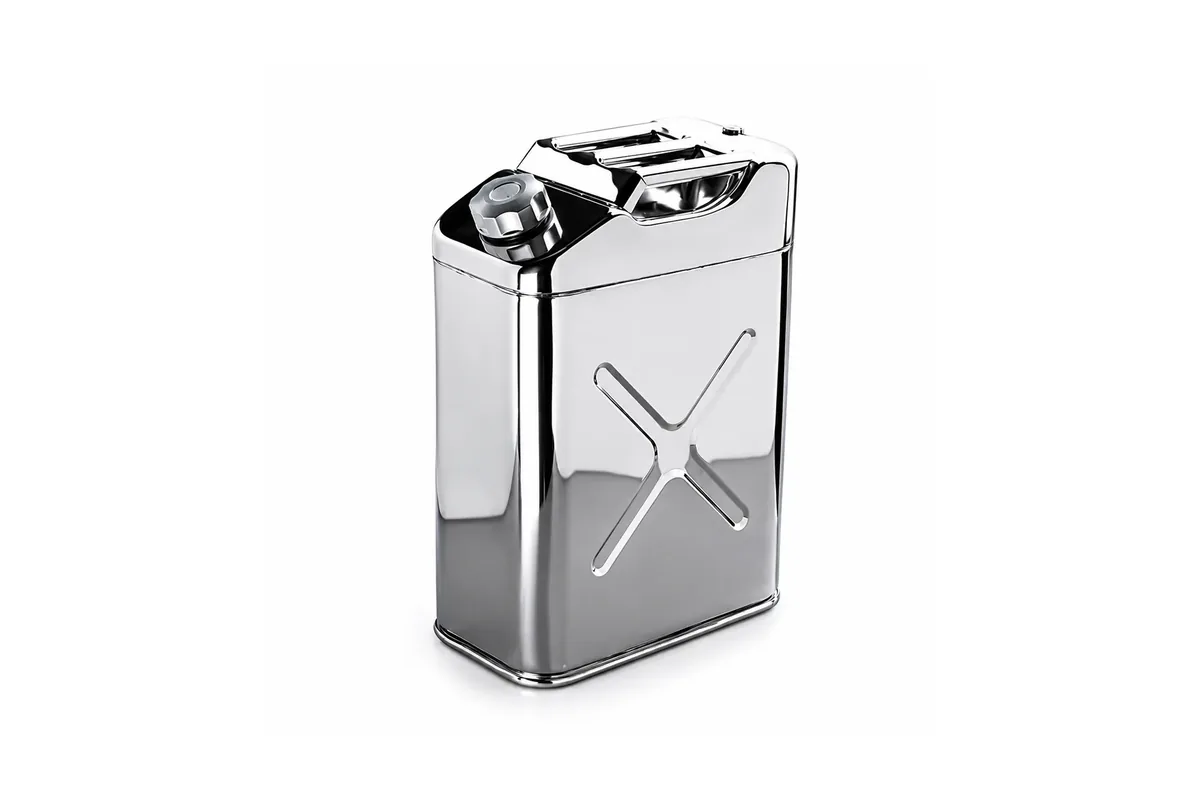
Water planning is simple arithmetic and one material decision. This sets out the common planning figures and why the container matters as much as the volume.
A common planning figure is around four litres per person per day, split between drinking and basic hygiene, with more in hot climates or for medical needs. For a two-week household reserve, that is roughly 56 litres per person. Agencies planning for a population scale the same per-person figure. Use our sizing calculator to turn a headcount into a container count.
The four-litre figure is a survival floor: enough to keep a person drinking and washing through a short emergency. Longer displacement needs more. The Sphere Handbook, the reference standard for humanitarian response, plans around 15 litres per person per day to cover drinking, cooking and personal hygiene together. Decide which you are storing for. A three-day home reserve and a camp supplying thousands for months sit at opposite ends of that range.
Sphere goes further than a volume, and the rest of the standard is what turns a figure into a plan. The maximum distance from any household to the nearest water point is 500 metres, and queuing time at a source is capped at 15 minutes. Those two indicators exist because supply that is nominally adequate is not consumed if collecting it takes long enough: where collection runs past half an hour, actual household consumption tends to fall back to 10 to 15 litres a person whatever the system was designed to deliver.
Which reframes what a container is for. Distance and queuing time are not logistics details sitting beneath the volume target; they are the mechanism by which the volume target is met or missed. A household that can carry more per trip makes fewer trips, and carrying capacity is the one variable in that equation a procurement decision controls directly.
Water itself does not expire, but its container and handling do. Store water in a food-grade material that does not leach or taint: AISI 304 stainless steel, or a food-grade HDPE can. A galvanized steel fuel can is the wrong choice, because the zinc is not food-safe. Stainless has the advantage that it can be cleaned, sterilised and reused indefinitely without holding odour.
Opacity does as much work as material and costs nothing to specify. Light is what algae need, so a translucent container in a lit room grows what an opaque one in the same room does not, and the difference shows within weeks in warm conditions. Where a translucent wall is unavoidable, the answer is the storage location rather than the container: a dark cupboard makes a translucent can behave like an opaque one, and a sunny yard makes an opaque one behave like a translucent one.
Both are safe for water; they suit different jobs. Stainless 304 takes repeated cleaning and sterilising, holds no smell or taste, and lasts for decades, which earns its cost where the store stays in place and gets reused. HDPE is lighter and cheaper, so it wins where you ship water out and store it in volume. If you are weighing grades, see stainless 304 versus 316, and confirm any can against food-contact certification before you fill it.
For humanitarian procurement specifically, Sphere describes the container rather than leaving it to preference, and the description is close to a specification. Each household should hold at least two clean collecting containers of 10 to 20 litres, plus enough storage capacity that there is always water in the household. The containers should have narrow necks, covers, or another safe means of drawing and handling, and a safe storage container is opaque or at most translucent, has a lid and a tap or narrow outlet, and is easy to clean.
Read that list against a jerrican and every clause has a reason. A narrow neck stops a hand or a cup entering the stored water, which is the commonest recontamination route in a camp. An opaque wall blocks the light algae need. A tap draws without opening the container at all. And easy to clean rules out internal ribbing and rough seams that biofilm can hold. That is the argument for a 20-litre pattern over an improvised vessel, and it is the argument a tender is usually written against.
The two-container split matters as much as the total. One vessel travels and one stays, because a container that does both is opened, carried, set down and refilled constantly, which is where contamination enters. A store built to that pattern needs collecting cans and storage cans as separate line items rather than one number divided by twenty.
Sunlight and warmth are what turn clean water green. Light drives algae, and heat speeds any bacteria already present, so a can left in a sunny yard grows a bloom that a cool, dark cupboard would have stopped. Keep containers sealed, out of direct sun, and as cool as your space allows. For long storage or uncertain source water, treat it per your local public-health guidance.
Temperature does the other half of the work and is easier to control than people assume. Reaction and growth rates roughly double for every ten degrees, so water at 30 °C is ageing several times faster than the same water at 10. A garage wall shared with a house, a north-facing store, or simply a lower shelf rather than a higher one each buy a real difference without any equipment. Cool and dark is not a counsel of perfection; it is two decisions taken once.
Water does not expire. What changes is everything around it: the container leaches, light drives growth, and the residual disinfectant that made tap water safe dissipates over weeks.
Municipally treated water arrives with a small chlorine residual that suppresses anything that gets in. That residual is gone within weeks in a sealed container, and from then on the water is only as clean as the container and the moment it was filled. Nothing has spoiled; the protection has simply run out.
This is why the container choice does more work than any treatment. An opaque or metal container blocks the light that algae need, a smooth wetted surface gives biofilm nothing to hold, and a seal that actually seals keeps out what would otherwise arrive. Get those three right and rotation is a precaution rather than a rescue.
Rotate stored water commonly every six to twelve months, and run it first-in-first-out: draw from the oldest can and refill it to the back of the rotation. Label each container with its fill date so you can see at a glance what to use next. When you empty one, wash it before you refill; our guide to cleaning and reusing jerry cans covers the method for stainless.
The rotation interval is a container decision more than a water one, which is why the same figure is quoted for six months and for five years by different sources. Municipally treated water sealed into a clean, opaque, food-grade container in a cool dark place stays fit for a very long time, because nothing gets in and nothing grows. The same water in a translucent container in a warm garage needs replacing within months. Six to twelve months is a sensible default because it assumes ordinary storage conditions rather than ideal ones.
Two things make rotation easier to actually do. Sizing the store in units one person can move means rotation is a ten-minute job rather than a project, which is the practical case for 20-litre cans over a single large tank. And a store that also serves a routine purpose gets rotated by being used, where a store that only exists for an emergency gets forgotten. A reserve that is drawn on and refilled through the year is fresher than one nobody touches.
Store drinking water away from petrol, solvents and cleaning products. Vapour migrates, and plastics in particular can pick up a fuel taint through a sealed wall over time, which ruins the water without any spill. A common mistake makes this worse: reusing old juice or milk bottles, or a former fuel can, for stored water. Sugar residue feeds bacteria, and a fuel can never fully sheds its smell. Start with a container built for water.
The mechanism behind the fuel case is absorption rather than residue, which is why rinsing does not fix it. Hydrocarbons enter the polymer wall and the gasket and come back out slowly for a long time, so a can that rinses clear and dries completely can still taint water weeks later. The smell test is useful and it runs one way only: any smell proves contamination, and no smell proves nothing at all.
A stainless NATO-pattern water can stacks, seats in standard holders, and carries by the same handles as the fuel cans alongside it, which suits a mixed emergency store. See the water and food-grade range.
The stacking is what makes a household or agency store practical rather than aspirational. Rectangular cans use a cupboard, a pallet or a shelf completely, so a two-week reserve for a family occupies a footprint somebody will actually give up, where the same volume in round containers does not fit anywhere convenient and quietly gets reduced. A store that fits the space available is the one that still exists in a year.
Food-grade, sealed and rotated. Here is what to store water in.
| Your use case | Recommended can | Why this one |
|---|---|---|
| A reserve that stays in place | 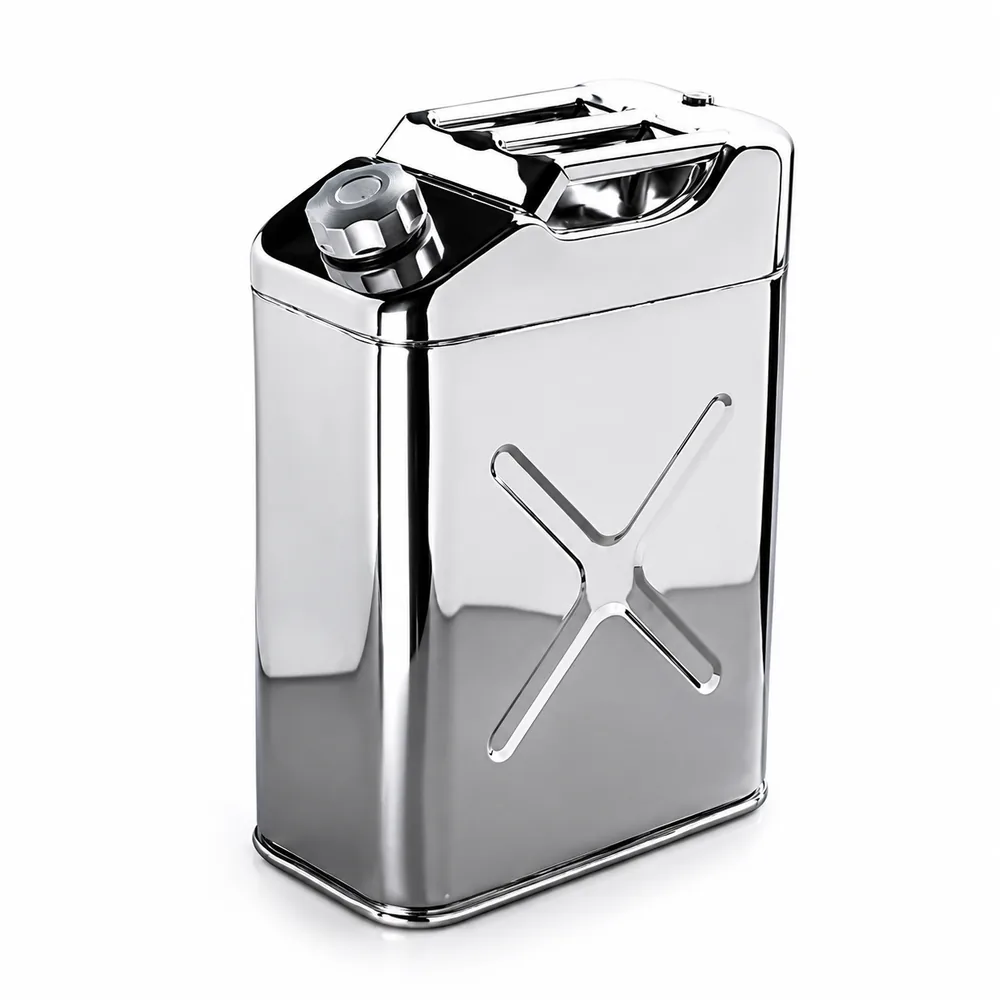 20L Stainless Steel Water Can 20L Stainless Steel Water Can |
AISI 304 stainless, cleans and reuses indefinitely. |
| A mixed emergency store | 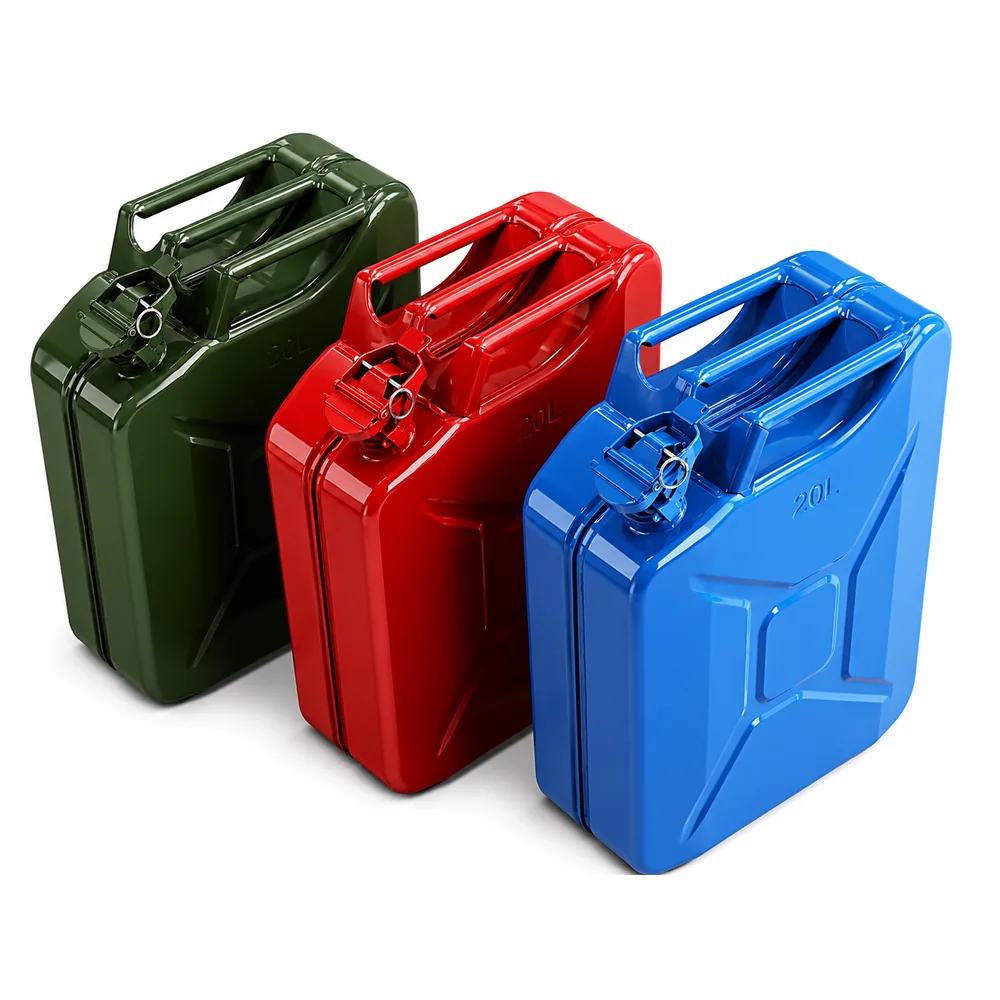 20L NATO Steel Water Can 20L NATO Steel Water Can |
NATO pattern, stacks and mounts beside fuel cans. |
| Ship-and-store at volume | 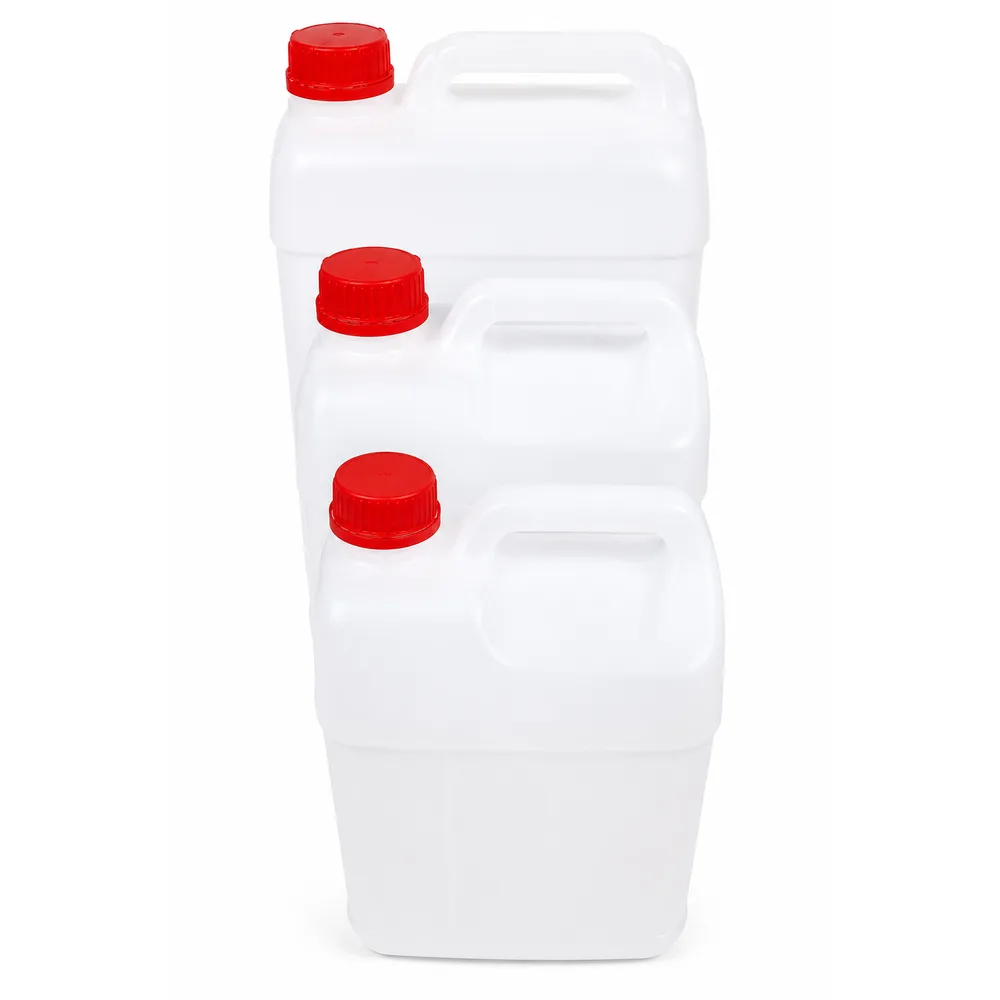 Food-Grade HDPE Jerrycan Food-Grade HDPE Jerrycan |
Food-grade HDPE, lighter and cheaper to distribute. |
| Drawing water without lifting | 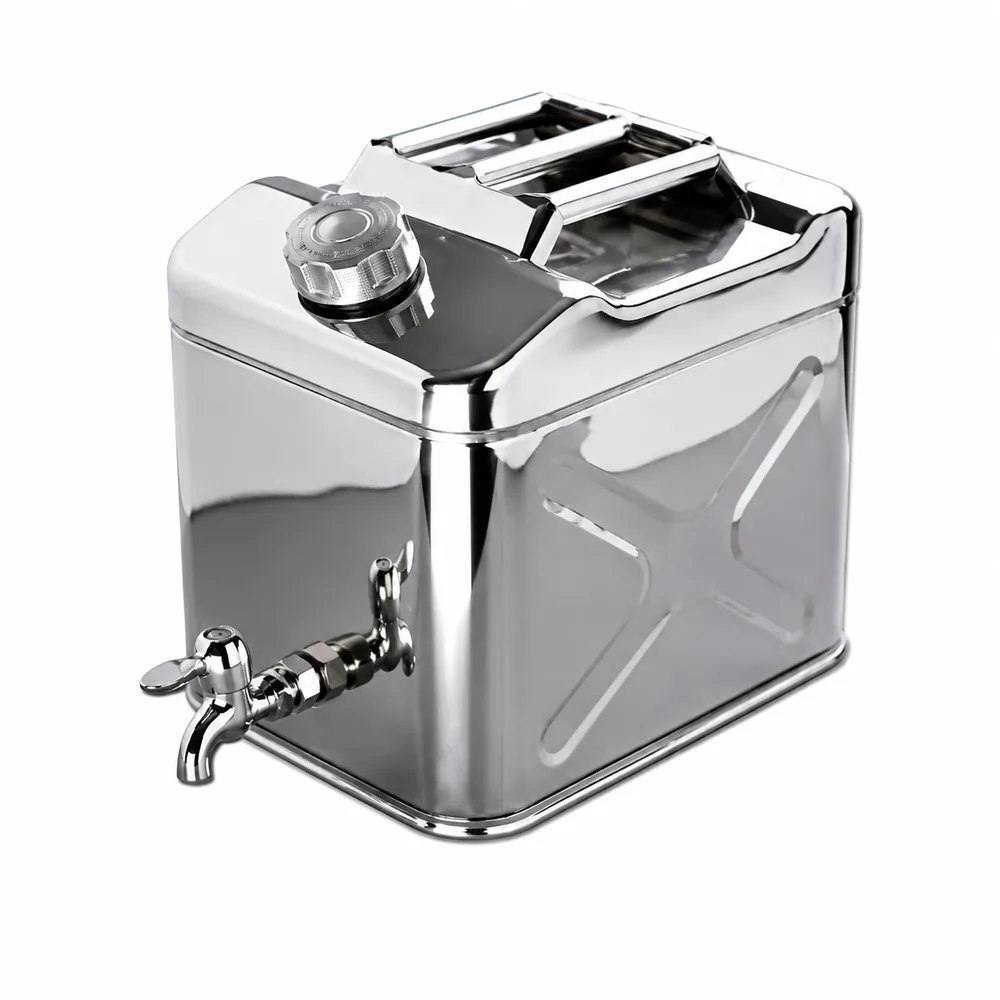 20L Stainless Dispensing Can with Tap 20L Stainless Dispensing Can with Tap |
Integrated tap for a static supply point. |
| A grab bag or vehicle kit | 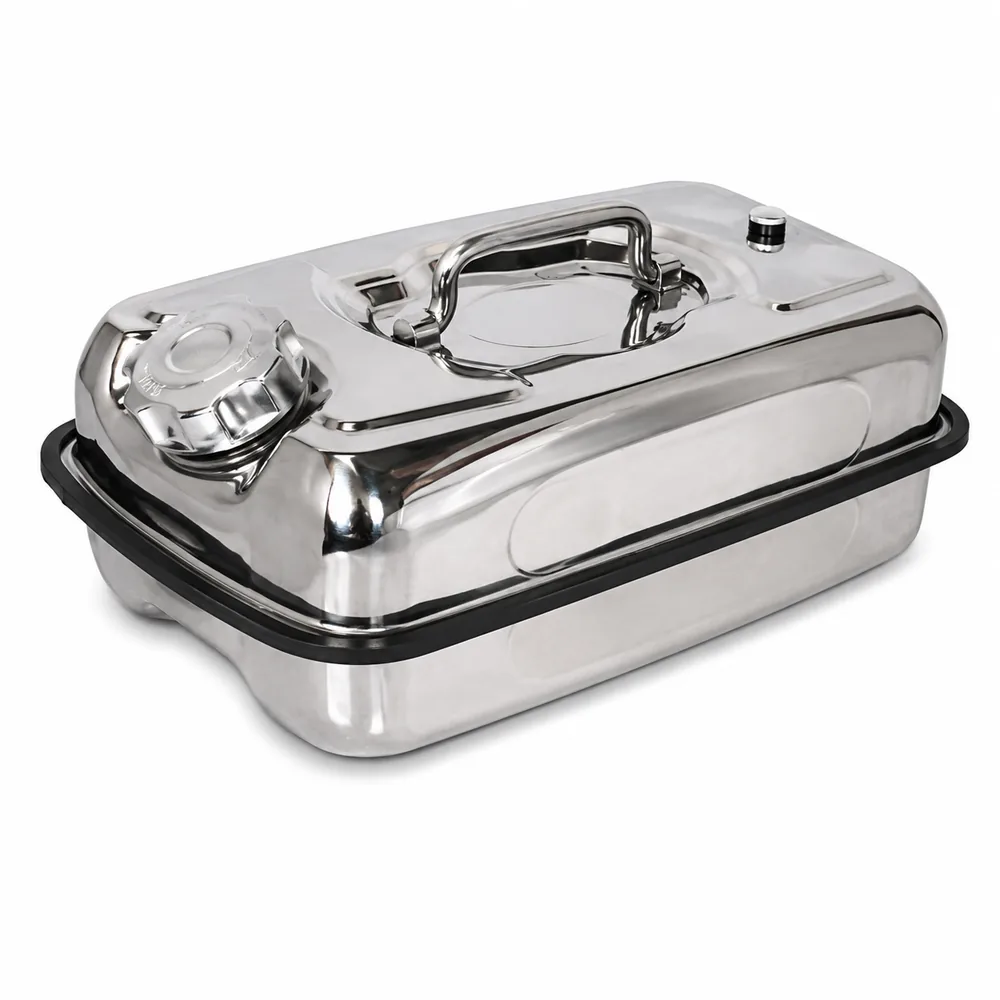 5L Stainless Steel Water Can 5L Stainless Steel Water Can |
A smaller reserve, one-hand carry. |
Plan on 15 litres per person per day for drinking, cooking and hygiene, the Sphere Handbook figure. A two-week household reserve for four people is therefore about 840 litres. Drinking alone is 2.5 to 3 litres per day, but a store sized on drinking alone leaves no margin for cooking or washing.
In a sealed, opaque, food-grade container kept cool and dark, municipally treated water keeps for six to twelve months before it needs rotating. Light is what drives algal growth, so an opaque or metal container outlasts a translucent one substantially.
Food-grade stainless steel for long-term storage, because it blocks light, takes no taint and cleans reliably. Food-grade HDPE is the cheaper option and works well if kept out of sunlight. Avoid any container that has held fuel, chemicals or non-food products.
Municipally treated tap water usually needs nothing more if the container is clean and sealed. Water from an untreated source should be disinfected before storage and again before drinking. Rotate and re-fill on a schedule rather than relying on treatment to hold indefinitely.
The standards and regulations this page relies on, at their issuing body. Where a market rule is named here, check the current revision before you specify against it.
Last reviewed .
Tell us your market, your fuel and your volumes. We come back with a specification sheet and a quotation.