
What each size is for, and why filled weight matters more than volume.
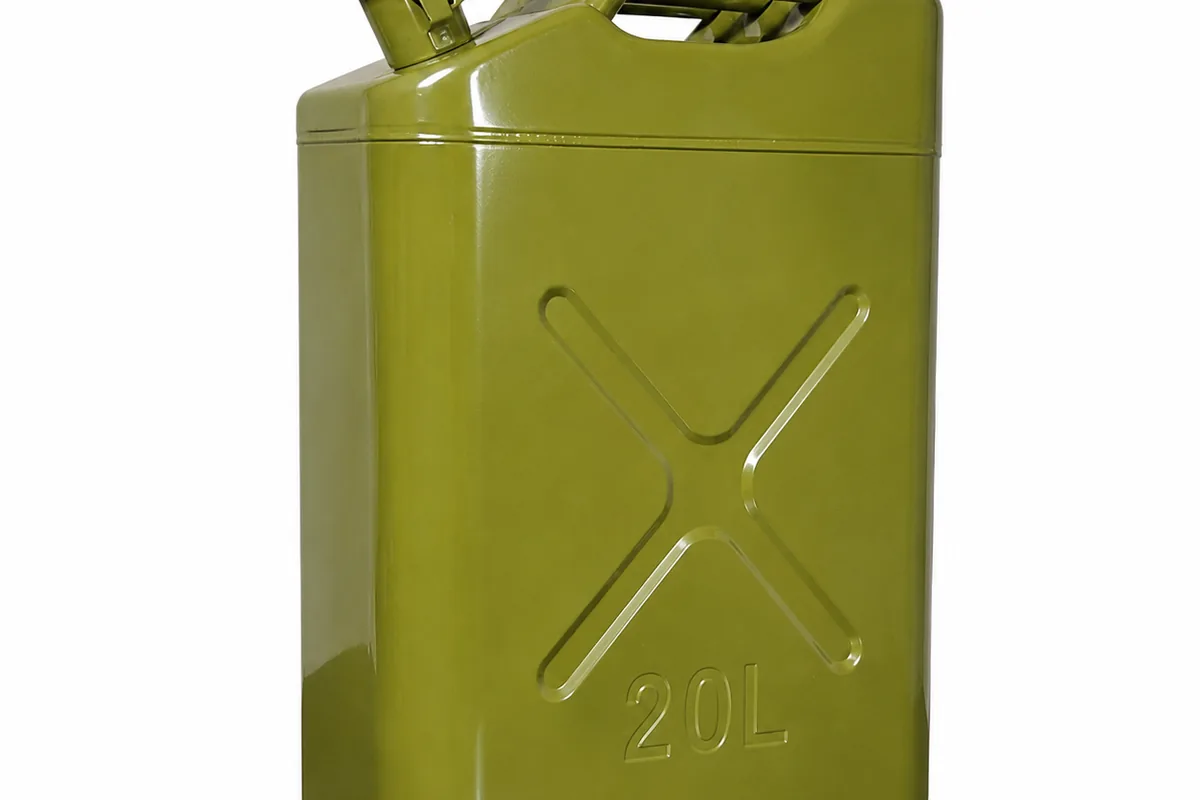
Jerry cans run from a 3-litre reserve to a 30-litre bulk can. The right size is the one a person can carry to the point of use, so weigh the filled can, not the empty one.
Twenty litres of water weighs twenty kilograms before the can; twenty litres of fuel weighs a little less. The practical carrying limit for most people over any distance is closer to ten kilograms, which is why the 20-litre can is a two-hand or short-carry item and the 10-litre is the comfortable single-hand size. Volume tells you how much the can holds. Filled weight tells you who can lift it and how far, and that is the number that decides whether a can gets used or set down and left.
A fit adult can pick up a filled 20-litre can once and think nothing of it. The job is rarely one lift. Move fuel to a machine fifty times across a shift and the weight compounds into a strain, and a tired lift is where a can gets dropped and the contents spill. Size the can for the hundredth carry, not the first. The 10-litre also widens who can do the work: it suits more people than the 20-litre, so a crew is not built around the strongest few.
The published guidance says the same thing with numbers attached. HSE gives indicative filter weights of 25 kg for men and 16 kg for women, and only where the load is held close to the body at about knuckle height. Take the lift above shoulder height and the figures drop to roughly 10 kg and 7 kg. They are filters rather than limits, meaning below them a task is likely acceptable and above them a proper assessment is expected rather than optional.
Place a filled can against that scale and the pattern is clear. A 10-litre can of water at about 12 kg filled sits inside every zone for most people. A 20-litre at about 24 kg sits inside exactly one: a man, at knuckle height, close to the body. Lifting that same can onto a tailgate, a truck bed or a roof rack is an above-shoulder lift measured against a 10 kg guideline, and it is the lift a real refuelling job asks for most often.
None of that rules out the 20-litre format, which exists for good reasons and remains the workhorse. It reframes the question a buyer should ask, which is not “can someone lift this?” but “which lift, how high, how many times a shift, and by whom?” A specification that answers those four picks its own size.
Larger cans mean fewer handling movements per litre. One 20-litre trip replaces two 10-litre trips, so the container count drops and so does the caps-off, caps-on time. The cost is a heavier lift each time. That is a real trade for a distributor to weigh against the crew and the distance: pick the big can where the carry is short and the people are strong, pick the small can where the carry is long or the hands are many.
There is a middle answer worth knowing, which is to break the carry rather than the container. A 20-litre can moved once from a store to a trolley and then wheeled is a single lift and a push, where the same can carried the whole distance is a sustained load. Where the layout allows it, a trolley converts a size problem into an equipment problem, and equipment is cheaper than backs.
A 25 or 30-litre can is drawn from, not carried. Nobody lifts a brimmed 30-litre can to pour it accurately, so specify a tap or a spout on anything at that size that will sit at a refuelling point and be decanted. A person carrying to a machine wants 10 or 20 litres. A reserve in a vehicle wants 3 to 5. A refuelling point that is drawn from wants 20 to 30 with a tap or spout. Use our sizing calculator to turn a headcount or a refuelling point into a quantity.
A tap changes the job rather than easing it. A carried can is lifted, tipped and aimed, and all three are where fuel ends up on the ground. A can on a stand with a tap is opened and drawn from, so the lifting stops entirely and the pour rate is controlled by a valve instead of by an arm. That is the reason a fixed refuelling point tolerates a size nobody would carry, and the reason the tap is a specification item rather than an accessory at 25 litres and above.
Two things follow that buyers regularly miss. The tap has to match the liquid like any other wetted part, so a brass fitting that suits fuel is wrong on DEF and a plastic one rated for water may not hold a solvent. And a can that sits on a tap needs somewhere for air to enter as liquid leaves, or it draws a vacuum and the flow stutters to a stop, which is a vent question rather than a tap fault. See venting and pressure.
The size you pick also sets how the cans travel. A can that nests or stacks cleanly loads more units into the same pallet and container, so the choice reaches past the point of use and into the freight bill. Read warehouse storage and export packing before you fix a size for a large order. The common mistake runs both ways: specifying 20-litre cans for a job where staff carry them far all day, and expecting anyone to hand-carry a brimmed 30-litre can. Match the size to the carry, then check it against the freight.
The order matters because the two pull in opposite directions. Freight rewards the largest format that cubes efficiently; handling rewards the smallest format the job tolerates. Settling the carry first and then testing it against the loading table gives a defensible answer, where starting from the container figure gives a cheap delivery of cans nobody wants to lift.
Fortitude21 builds across the size range in steel, stainless, aluminium and HDPE. Read how to choose a jerry can for the full path from liquid to specification.
Pick the size for the carry. Here is the range by job.
| Your use case | Recommended can | Why this one |
|---|---|---|
| A reserve or a sample | 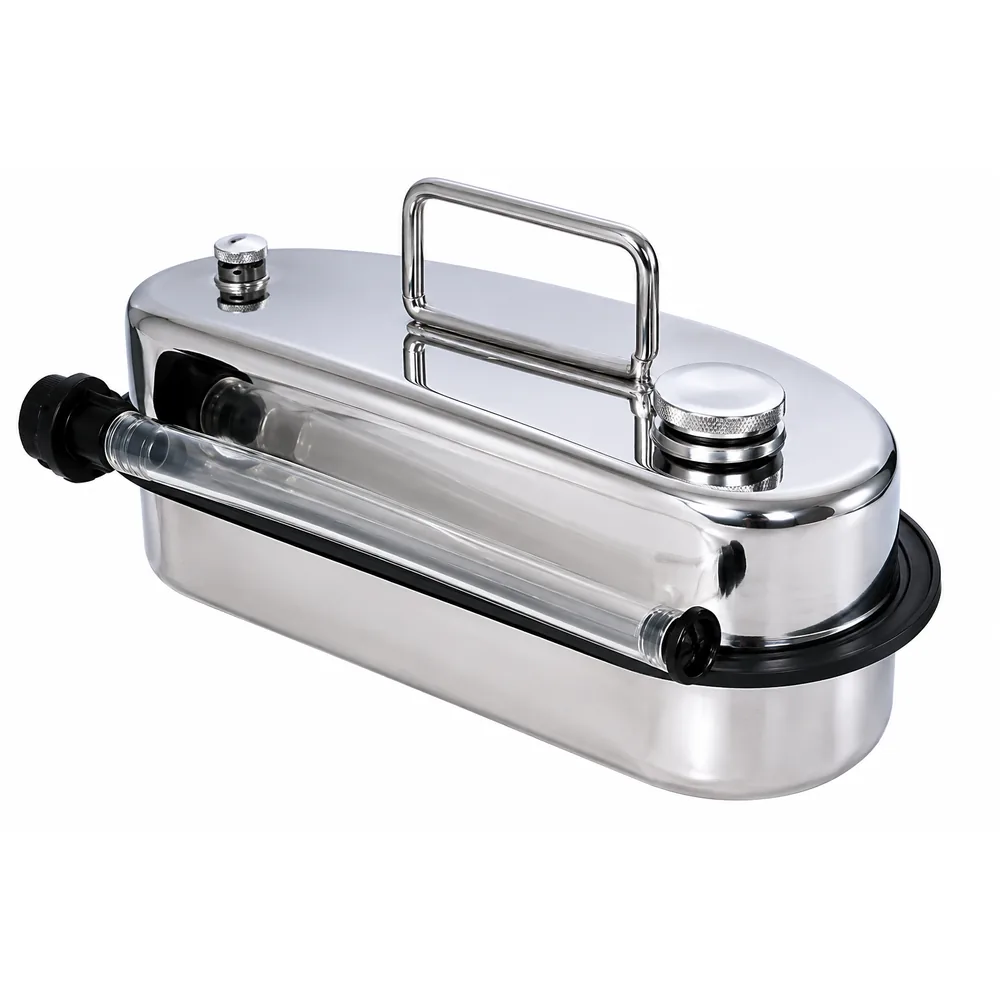 3L Mini Horizontal Can 3L Mini Horizontal Can |
A one-hand top-up or trial volume. |
| A comfortable one-hand carry | 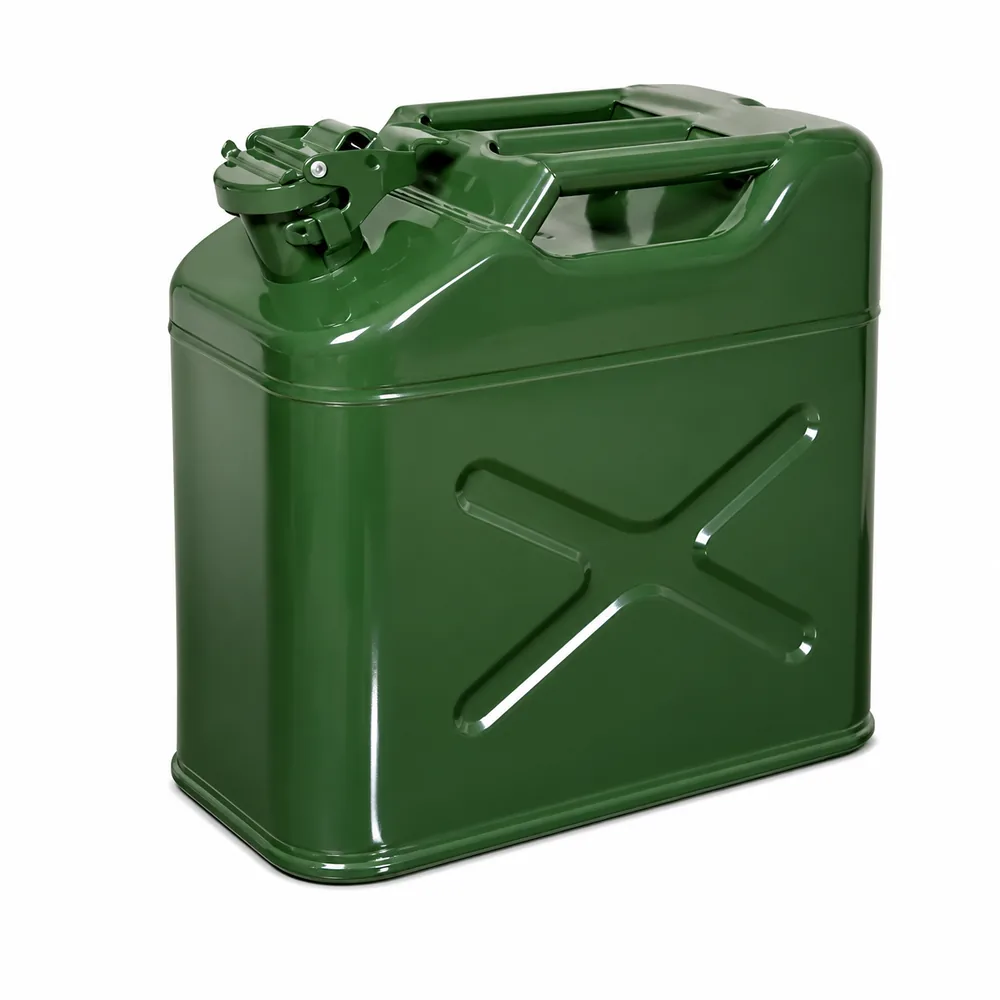 10L NATO Steel Can 10L NATO Steel Can |
Ten kilograms filled, wider user base. |
| The standard workhorse | 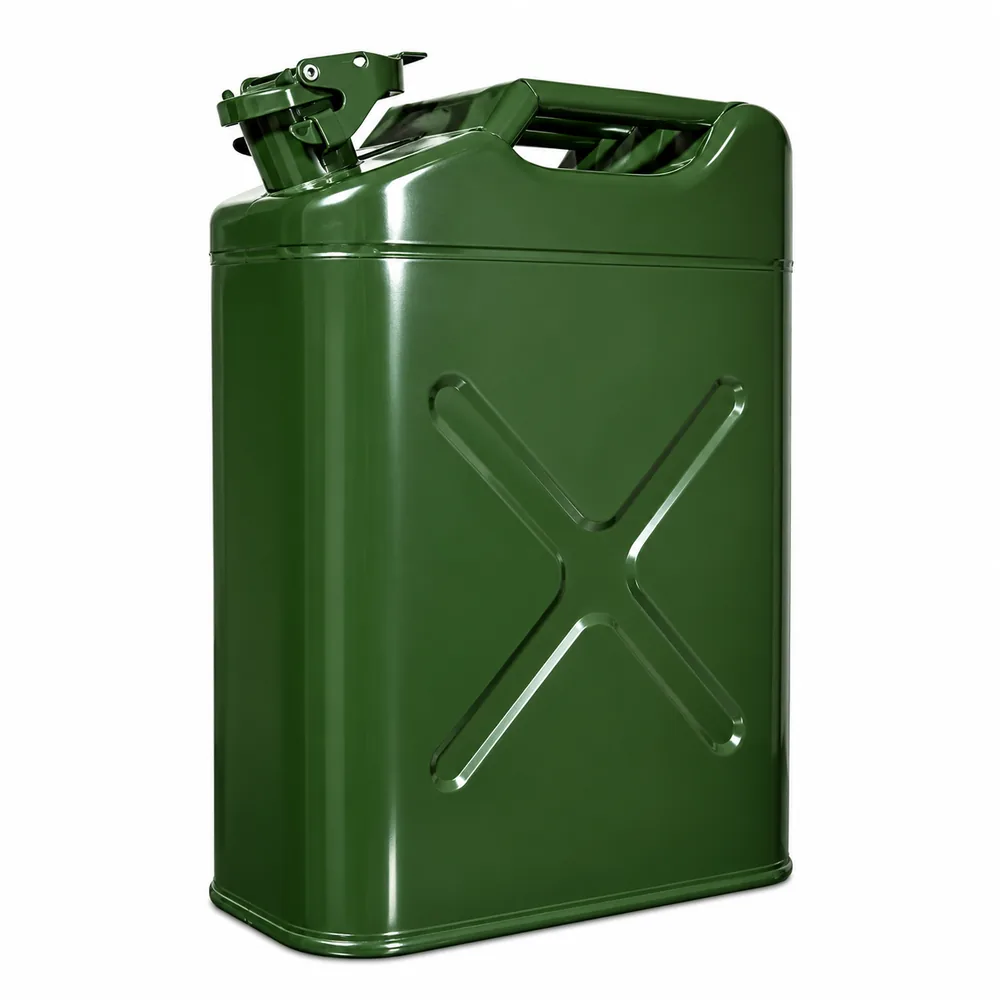 20L NATO Steel Fuel Can 20L NATO Steel Fuel Can |
NATO size for fuel and water. |
| Bulk at a refuelling point | 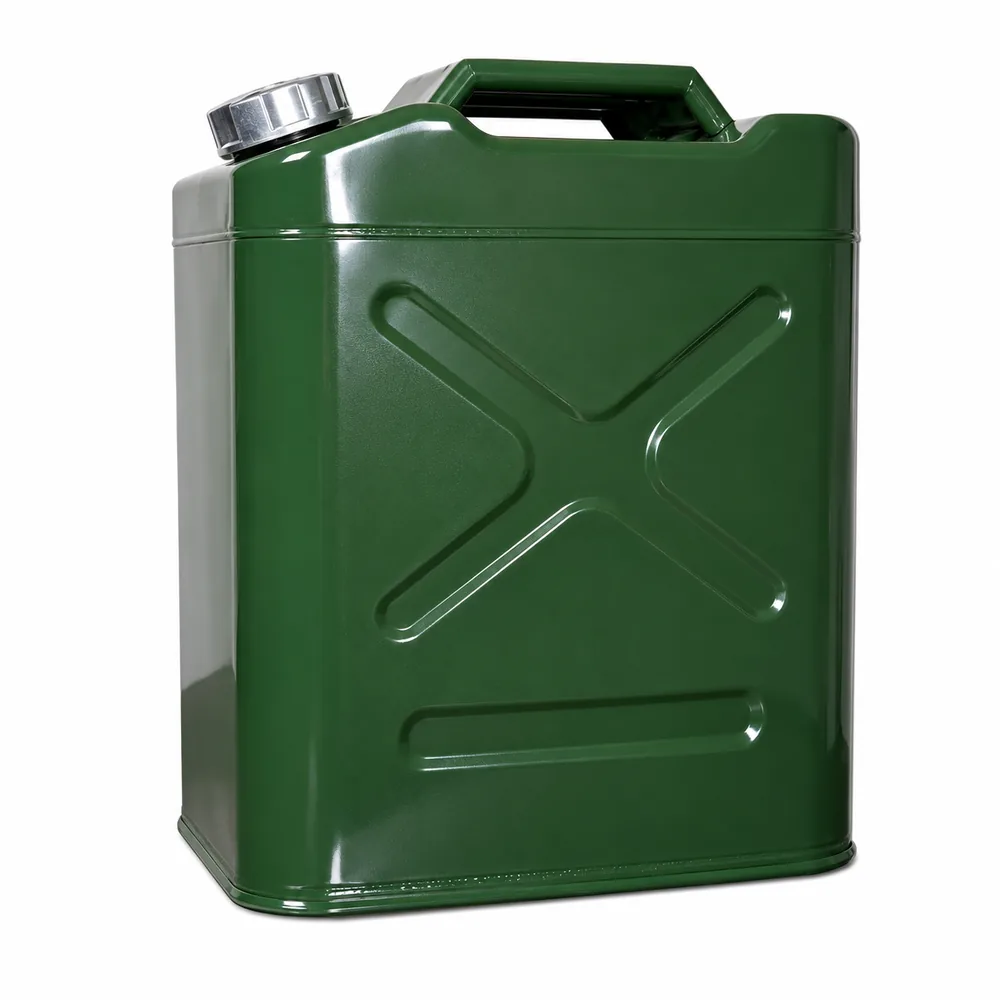 25L & 30L NATO Can 25L & 30L NATO Can |
Fewer handling moves per litre; add a tap. |
About 20 kilograms of water, or roughly 15 kilograms of petrol, since petrol is around 0.74 kilograms per litre. Diesel sits between the two at about 0.85. Add 2 to 4 kilograms for the can itself depending on material, so a filled steel water can is close to 24 kilograms.
It is the practical ceiling for one person to lift and carry any distance. Above it the filled weight forces two-person handling or equipment, which defeats the purpose of a portable container. The original wartime design settled on it for that reason and nothing has changed the arithmetic.
Size it on running hours rather than capacity. A can that holds slightly more than one refuelling interval avoids both a part-full can degrading in store and a mid-run top-up. For most portable generators that lands on 10 or 20 litres.
The standards and regulations this page relies on, at their issuing body. Where a market rule is named here, check the current revision before you specify against it.
Last reviewed .
Tell us your market, your fuel and your volumes. We come back with a specification sheet and a quotation.