
Why a design from the 1930s still sets the shape of a fuel can, and why holders are interchangeable.
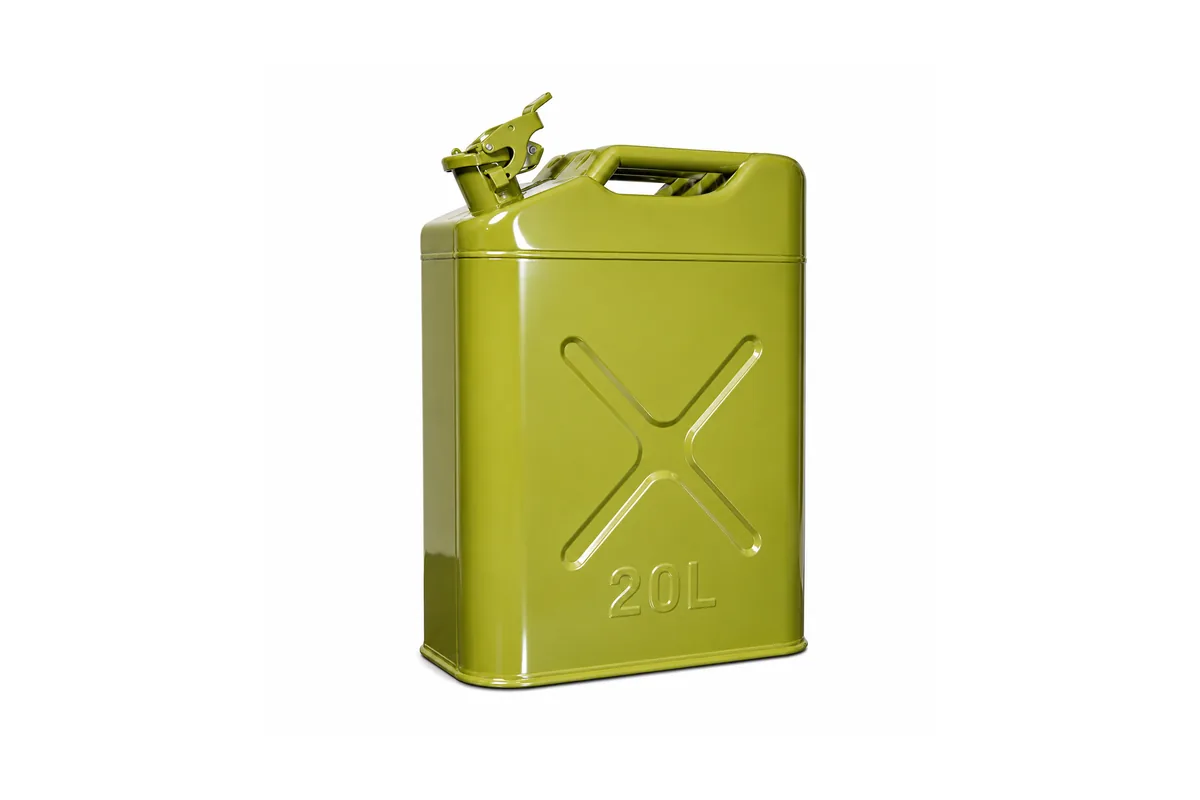
The jerry can is one of the few Second World War designs still made almost unchanged, because the shape solved the problem so completely that improving it means breaking compatibility.
German engineers designed the Wehrmacht-Einheitskanister in the 1930s: a 20-litre pressed-steel can with three handles, a cam-lever cap and a stamped cross on each face. Allied forces copied it during the war and named it the jerry can after its origin. The core geometry has barely moved since, because it works. Later national and NATO patterns tightened the dimensions and the cap, but the can a soldier fills today is the can that engineer drew.
The copying is the part worth dwelling on. Britain and the United States both had fuel containers already, and both were worse. The British four-gallon tin was pressed so thin that troops in the Western Desert called it the flimsy: it split under stacking, leaked in transit and needed a separate spout and a tool to open. Captured German cans were prized enough that examples were shipped back for measurement, and the containers the Allies fielded afterwards were close copies rather than improvements. The American version even kept the name of the enemy who designed it, since Jerry was the soldier's word for a German.
So the pattern outlived the army that lost the war and is still pressed, ninety years on, in much the same dimensions. Very little field equipment has that record. The reason is not sentiment: the shape solves carrying, sealing, filling and stacking at the same time, and every attempt to improve one of those has tended to cost one of the others. When a buyer asks why the can looks old-fashioned, the honest answer is that each feature is load-bearing, and the sections below take them one at a time.
A flat sheet-metal panel that size wants to flex. Fill it, heat it in the sun, cool it overnight, and the pressure inside rises and falls. A plain wall would bulge out and suck back in, working the metal until it splits at a fold. The stamped cross stiffens each face and gives it a controlled way to move. The panel flexes with the pressure instead of fighting it, so the wall lasts. Sealed fuel builds pressure as it warms, which is why the cap and the vent matter as much as the panel; our note on venting and pressure covers that side.
The principle is the same one that puts ribs in a car door skin and corrugations in a roofing sheet: geometry doing work that thickness would otherwise have to do. Pressing the cross into the face raises the panel's stiffness far more than adding the equivalent weight of flat metal would, because stiffness in bending rises with the cube of the section depth. That is what lets a twenty-litre can be pressed from steel around 0.8 mm to 1.0 mm and still survive decades of filling, heating, cooling and being dropped off a tailgate.
It also gives you a free inspection tool. A cross that has taken a knock and sprung back is cosmetic. A cross that has flattened or set into a permanent bulge has been cycled past what the geometry absorbs, usually by repeated warming while sealed, and the metal at the fold has already started work-hardening. That can is at the end of its life whatever the paint looks like, and it belongs in the reject pile rather than back on the vehicle.
Look at the top and the reason for three handles is loading. Grab the outer two and one person carries a full can in each hand, balanced. Grab the centre handle and two people share a single can, or one person swaps hands without setting it down. Pass cans down a line and each pair of hands takes the grip the last pair just left, so a chain of people moves fuel from a truck to a store without anyone breaking stride.
The loads behind that are not trivial, which is why the grips are shaped the way they are. Twenty litres of petrol weighs about 15 kg, diesel about 17 kg and water a flat 20 kg. Add roughly 4 kg for a steel can and a full water can arrives at about 24 kg in one hand. Carrying two at once, on the outer handles, puts nearly 50 kg on one person and keeps it balanced either side of the spine, which is the only reason the two-can carry is survivable at all.
The handle bar itself is part of the top pressing and is caught in the seam that joins the top to the body, so it is structural rather than an attachment. There is no bolt to work loose and no riveted lug to tear out, which is the usual failure point on cans that bolt a handle on afterwards. It also means a handle cannot be replaced. If a grip cracks or the seam beside it opens, the can is scrap, and that is worth remembering when you are inspecting returned stock.
The handles sit in a recess pressed into the top of the can, and that recess leaves an air pocket under the cap when the can is full. Two things follow. A filled can floats instead of sinking, which matters at a river crossing or a flooded store. And the trapped air gives the contents somewhere to go when they warm and expand, so the can is never filled solid to the cap. Fill line, breathing room and venting are one system, not three separate details.
The headroom is sized by arithmetic rather than by eye. Petrol expands by roughly 0.1 per cent for every degree Celsius, so a can filled to twenty litres in a cool store and left in the sun through a 30 °C rise gains around half a litre of volume with nowhere to go. The recess under the handles gives it somewhere. Fill past that line and the extra pressure goes into the seams and the cap gasket instead, which is how a sealed can ends up weeping around the closure without anyone having damaged it.
The buoyancy works out just as narrowly, and the answer differs by contents. A full can of petrol weighs about 19 kg all in and displaces roughly 22 litres of water, so it floats with margin. Diesel sits close to neutral. A full water can weighs about 24 kg and sinks. So the floating-jerry-can story that gets repeated in overlanding forums is true for fuel and wrong for water, and if you are planning a river crossing that distinction is the one that matters.
The rectangular profile earns its keep in storage and transport. Flat faces sit against each other with no wasted gap, so a pallet or a vehicle bed holds the most cans in the least space. The straight sides stack square and stay put, and the shape ships and stores the same way whatever the can holds.
Put numbers on it and the advantage is stark. A standard can is around 470 mm tall, 345 mm long and 165 mm wide, so on a 1200 × 800 mm Euro pallet you get fourteen cans to a layer laid seven by two, using about 83 per cent of the deck. A cylinder of the same capacity cannot beat 79 per cent even in theory, because circles packed in a square grid leave a fixed fraction of the floor empty, and in practice drums are worse again once you allow for the rolling hoops.
That gap compounds through the chain. It decides how many cans reach a 20-foot container, how many pallets fill a curtainsider, and how much air you pay to ship. Our container loading figures work the same arithmetic through to a full load, and it is the single clearest place where the shape of the can shows up in landed cost rather than in a specification sheet.
NATO standardised the external dimensions and the mounting interface, so a can from one maker seats in a carrier, rack or holder from another. That is the practical value of the pattern to a distributor: the accessory ecosystem is shared. It also means the accessory market is competitive rather than captive, so holders, spouts and taps are priced against each other instead of against a single maker's catalogue. A NATO-pattern can and a NATO-pattern holder fit, whoever made each, and the same goes for the wider range of mounting and handling hardware built to the pattern.
What NATO standardised is the interface rather than the article, which is why no document certifies a can as NATO anything. The dimensions and the mounting geometry had to agree so that allied units could pass fuel between vehicles; the steel grade, the coating and the closure were left to whoever was building. That split is the whole reason a can can match the pattern perfectly and still be built to nothing, and it is why every meaningful question about quality is answered by a test report rather than by the shape.
Fortitude21 builds the pattern in pressed steel for fuel, in AISI 304 stainless for water and food, and in aluminium where weight is the constraint. The external form stays constant so carriers stay compatible; the interior is chosen for what the can holds. A customer can standardise on one set of racks and run steel, stainless and aluminium cans through them.
That is the pattern's real commercial value and it is worth naming. The geometry is an interface rather than a product, so a buyer can change material, supplier or capacity without touching the vehicles, the racks or the training. Very little in equipment procurement decouples like that, and it is why the shape has outlasted every attempt to improve on it.
Watch for a "jerry-style" can that copies the look but not the dimensions. It carries fuel or water as well as any other can, but it will not seat in a NATO holder, so the racks and carriers your customer already owns are stranded. Check that a can is built to the pattern, not just shaped like it, before it ships against existing mounting hardware.
Check it with the holder rather than with a tape measure, because the tolerances that matter are the interaction rather than any single dimension. Send a sample to the customer's own rack, or ask for the holder and try it. A can that is a few millimetres out on two faces will measure close and seat badly, and the only reliable test is the one the end user will run on the first day.
If your customers already own jerry can holders and racks, a NATO-pattern can drops into them, so an upgrade needs no new mounting hardware. Browse the fuel and water ranges.
That also makes the pattern the low-risk way to change supplier. Because the interface is the shape rather than a proprietary fitting, a customer can move between makers without stranding racks, holders or training, and can run two suppliers side by side while they compare. For a distributor that is a straightforward argument to make: nothing downstream has to change for a customer to try the line.
One shape, three interiors. Here is the pattern across our line.
| Your use case | Recommended can | Why this one |
|---|---|---|
| The pattern in steel, for fuel | 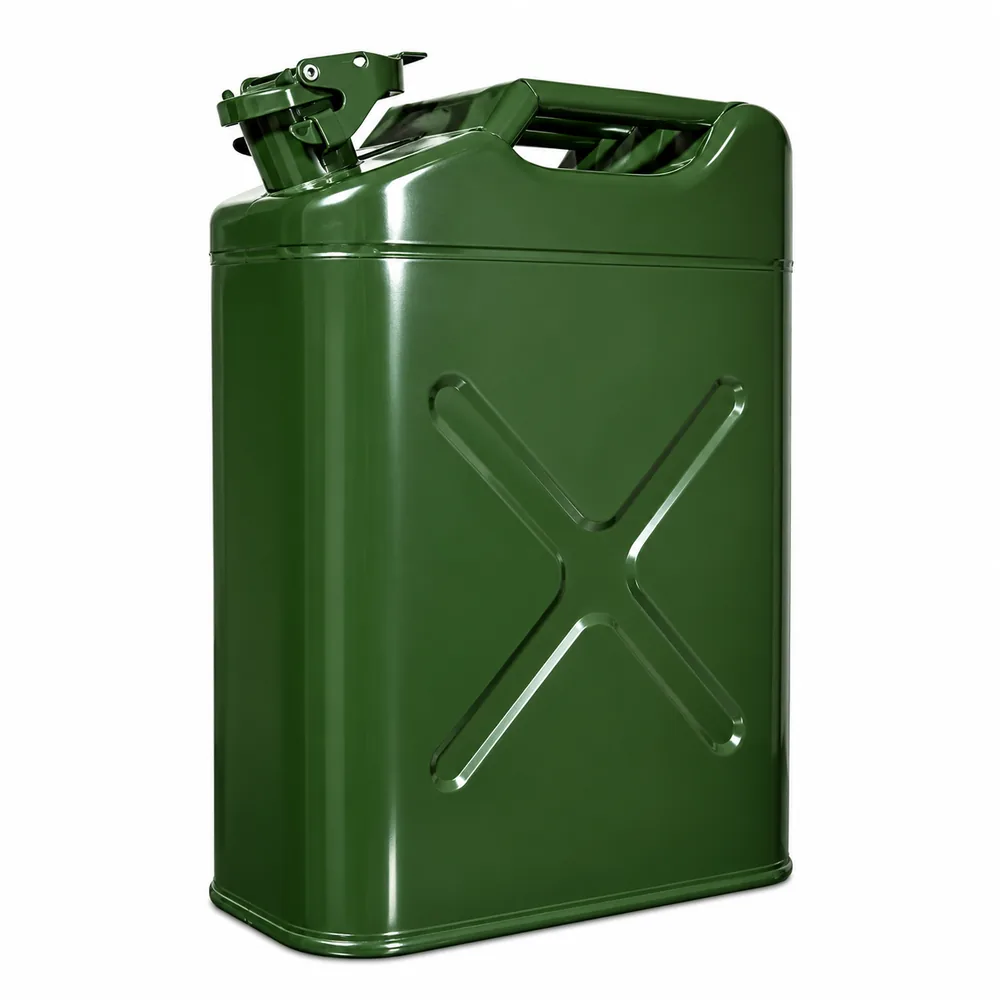 20L NATO Steel Fuel Can 20L NATO Steel Fuel Can |
Coated pressed steel, UN-marked. |
| The pattern in stainless, for water | 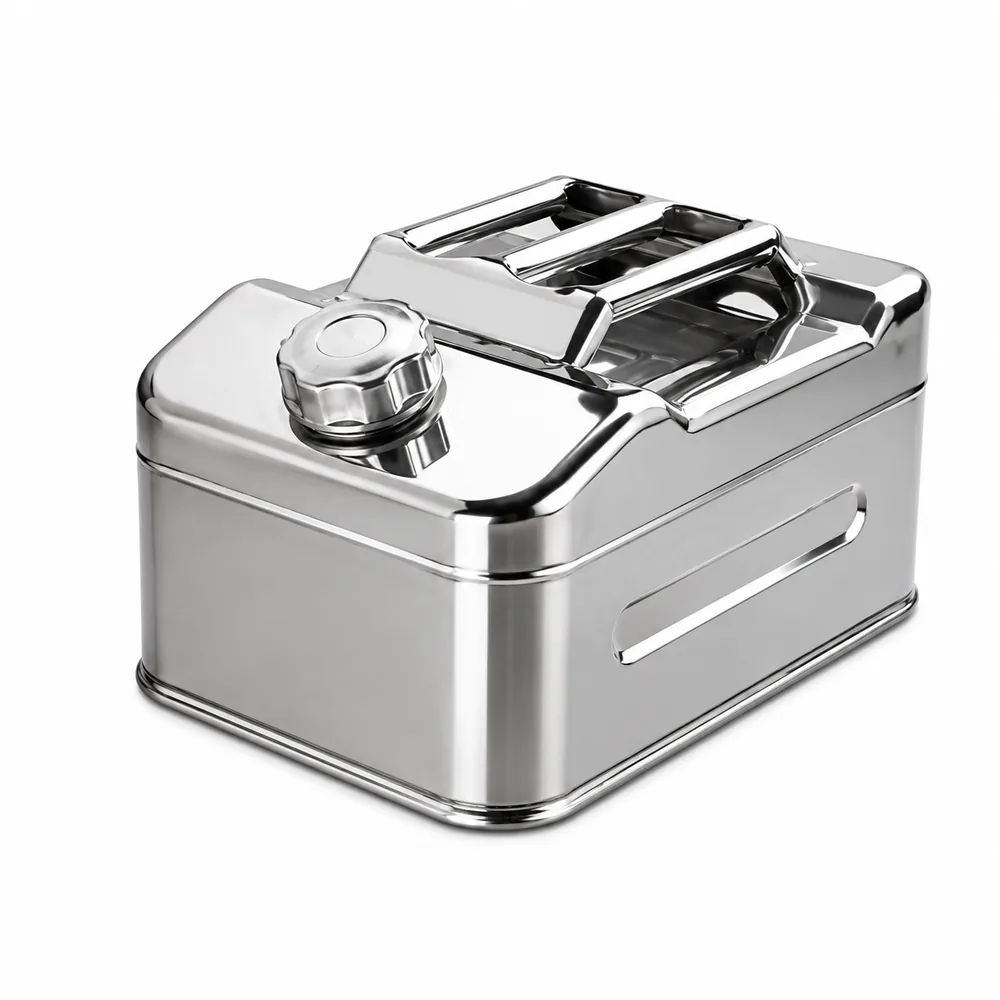 Stainless NATO Can — 10L / 20L Stainless NATO Can — 10L / 20L |
AISI 304 across the wetted path. |
| The pattern in aluminium | 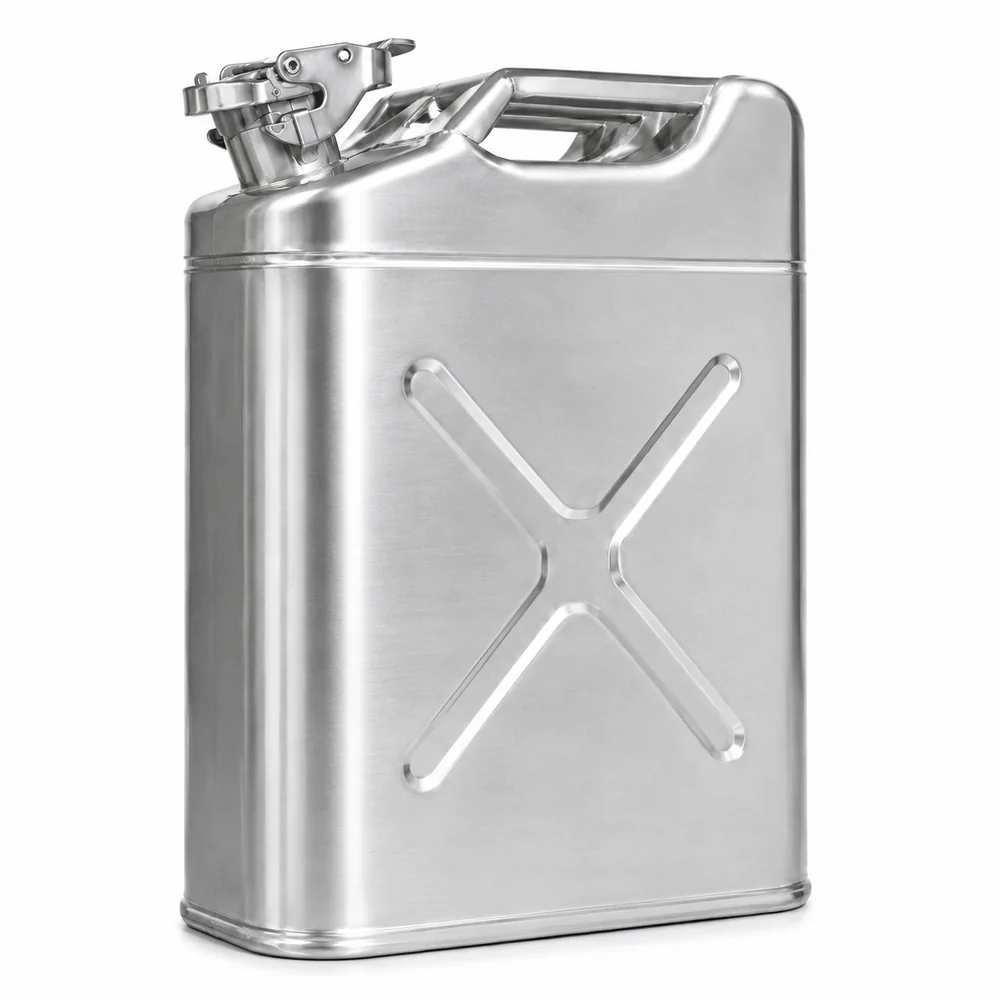 20L Aluminium NATO Can 20L Aluminium NATO Can |
Same geometry, lower filled weight. |
| Mounting to the pattern | 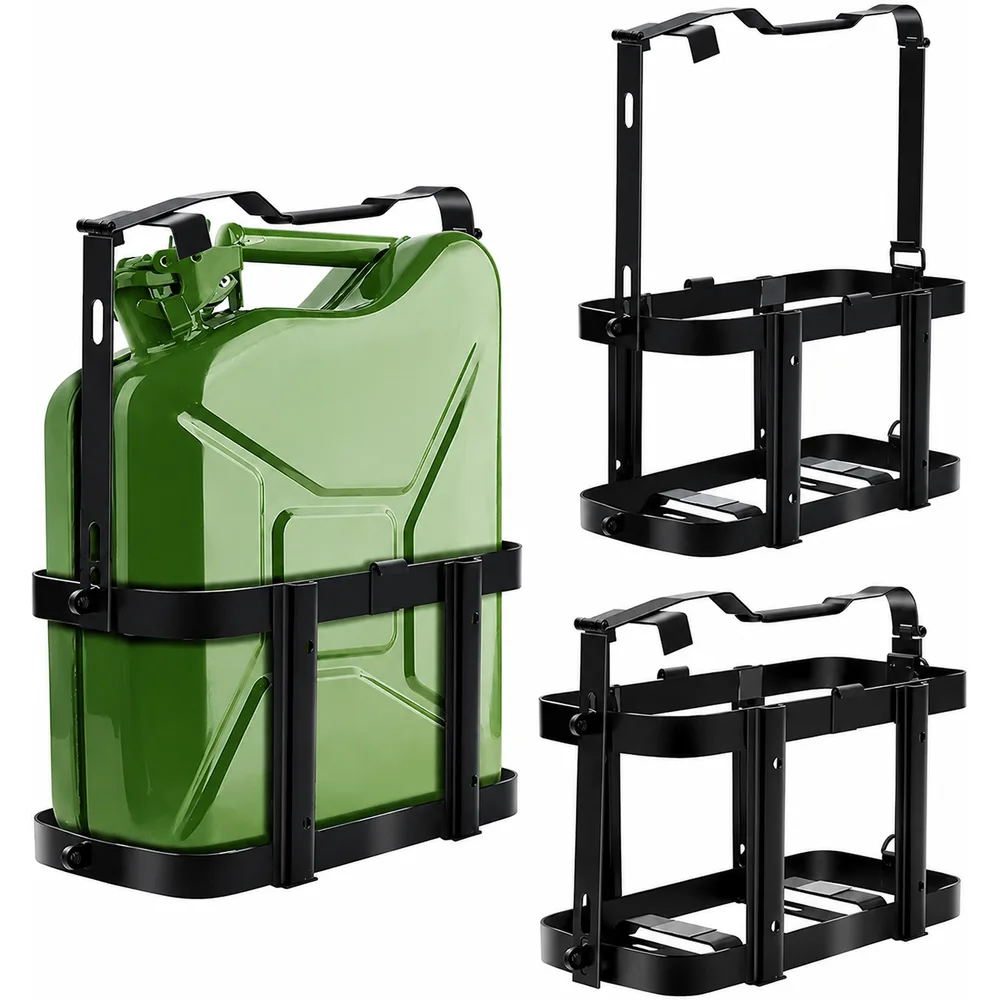 Jerry Can Holders & Mounts Jerry Can Holders & Mounts |
Holders that fit any NATO-pattern can. |
The centre handle lets one person carry a full can. The outer pair lets two people carry two cans between them, and lets a full can be passed hand to hand down a line without either person changing grip. It is a wartime handling design that nothing has improved on.
Where both the can and the holder follow the original pattern dimensions, yes. That is the practical value of the pattern: a can from one manufacturer drops into a mount from another. Verify the external dimensions rather than the brand, because non-pattern cans of the same capacity will not seat.
The pressed recess stiffens a thin steel wall without adding weight, and gives room for the contents to expand as they warm without deforming the can. The flat back and recessed front also let cans sit against each other and against a vehicle panel without rocking.
The standards and regulations this page relies on, at their issuing body. Where a market rule is named here, check the current revision before you specify against it.
Last reviewed .
Tell us your market, your fuel and your volumes. We come back with a specification sheet and a quotation.