
Where a jerry can mounts on a 4x4, pickup, roof rack, UTV, ATV, motorcycle, caravan or trailer, what each mount must carry, and the road rules for fuel outside the vehicle.
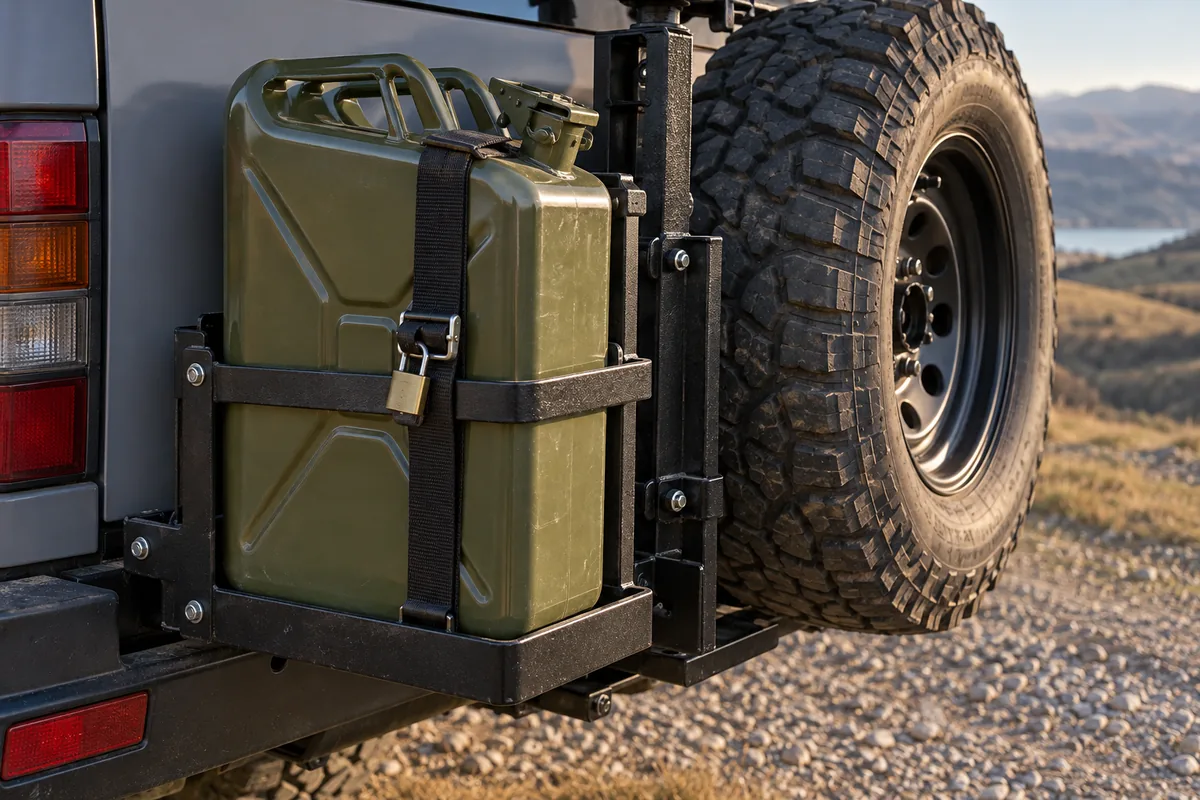
Mount a full jerry can low, inside the vehicle’s width, on a point rated for its weight. On a 4x4 that is the rear carrier, on a pickup the tub, on a UTV the cargo bed, on an ATV a rated rack, and on an adventure motorcycle a 3 litre can on a pannier rail. A full 20 litre steel can weighs 18 to 23 kg.
Quick answer: Where should you mount a jerry can on a vehicle?
Low, inside the vehicle’s width, on a point rated for a full 20 litre steel can of 18 to 23 kg. Fit it to the rear carrier on a 4x4, the tub on a pickup, the cargo bed on a UTV and a rated rack on an ATV; a motorcycle takes a 3 litre can on a pannier rail.
Work it out
Choose the position by vehicle, then check that spot for rated load, access to the cap, theft, heat and exhaust clearance, and legal width. What any holder must do, and how to bolt one through structure, is in spouts, pumps and holders.
| Vehicle | Usual mount | What to check | Can that suits |
|---|---|---|---|
| 4x4 or SUV, such as a Jeep Wrangler, Ford Bronco or Land Cruiser | Rear door, spare-wheel carrier or rear bar | Carrier and hinge rating; cap access; plate and lamps in view | 20 L NATO; 10 L on a door |
| Pickup or ute, such as a Ranger Wildtrak X | Tub, tray or canopy | Bolted through the floor or frame; lifted out to fill | 20 L upright |
| Car with roof bars, such as a Subaru Outback | Roof bars or tow-bar carrier | Roof load, rack included; tow-bar vertical load | 10 L |
| UTV, such as a Can-Am Defender | Cargo bed, quick-release mount | Bed rating; engine and exhaust heat | 10 or 20 L, or horizontal |
| ATV or quad | Front or rear rack | Rack rating; front-to-rear balance | 5 or 10 L horizontal, or 3 L |
| Adventure motorcycle, such as a Himalayan 450 | Pannier rail or rear rack | Luggage limit; silencer side; width | 3 L reserve |
| Caravan or trailer | Drawbar, ahead of the axle | Tow-ball load; clearance on full lock | 10 or 20 L |
Keep the heaviest cans low and between the axles; the overland storage guide works through payload. Keep fuel and water in separate, marked holders, and size the load with the jerry can sizing calculator.
Size the holder to the can and rate it for the full weight. A holder clamps on the can’s faces, so measure your own can before you order.
| Can (our range) | External size | Empty | Full |
|---|---|---|---|
| 3 L compact fuel can | 16.2 × 29.7 × 12.8 cm | about 1 kg | about 3 kg of petrol |
| 10 L NATO-pattern steel can | 34 × 16 × 26.5 cm | about 1.8 kg | about 9 kg of petrol |
| 20 L NATO steel fuel can | 34 × 16 × 46 cm | about 3.1 kg | about 18 kg of petrol; up to 20 kg of diesel |
| 20 L NATO steel water can | 34 × 16 × 46 cm | about 2.6 kg | about 23 kg of water |
Petrol weighs 0.72 to 0.76 kg a litre (NIOSH) and diesel up to 0.845 kg (Directive 98/70/EC, Annex II), which sets the full weights above. Jerry can sizes lists cans from 3 to 30 litres.
A 4x4 carries its can at the back on one of three structures. A rear door mount hangs the can off the door hinges, and a spare-wheel carrier adds it to the wheel’s weight on the same door or carrier. A swing-away rear bar bolts to the chassis and carries can and wheel on its own hinge and latch.
Find the rated load of that structure first: the handbook for a factory door or wheel carrier, the maker’s figure for an aftermarket bar. A full can adds 18 to 23 kg, and the hinges carry it each time the door swings. Weight behind the rear axle lifts the front and swings on rough ground, so keep one or two cans at the rear and the rest between the axles.
Check that the cap opens where the can hangs, or the can comes off full each time you pour. In Great Britain an obscured number plate is an offence (Vehicle Excise and Registration Act 1994, section 43), so keep the plate and lamps in view. A side mount on the body or a rock slider adds the can’s 16 cm depth to the vehicle’s width, which meets the projection rules below.
The roof suits the lightest can you carry. The handbook gives a maximum roof load, and the rack, holder and full cans all count against it. DVSA says never to exceed the maker’s maximum for a roof rack and to secure loads with ratchet straps or clamping, because rope and bungee cords will not hold them. Many rack makers set a lower off-road figure, so read the rack’s instructions too.
Roof weight raises the centre of gravity, so the vehicle leans further in corners and on side slopes. Lifting sets a second limit: on a tall 4x4 your hands go above the shoulder, where HSE’s lifting filter falls to 10 kg for men and 7 kg for women with the load held close (INDG143, Figure 1). A full 20 litre can weighs about twice that, and cans are filled on the ground, so put a 10 litre can or an empty spare on the roof.
A roof can sits in full sun. Maryland’s Department of the Environment says never to leave a petrol container in direct sunlight in transport, and a sealed can builds pressure as it warms (venting and pressure). If fuel must go up, carry diesel, whose vapour pressure stays low in the sun, and open a warm can slowly. Storing fuel safely covers heat and fuel life.
On a side-by-side the cargo bed is the mount. HSE says a load on the cargo bed should not exceed the recommended weight and should be secured against movement (AIS33, 2014). Count the can, the mount and the rest of the load against the rating in the operator’s manual.
Bolt the mount through the bed floor or to its tie-down points, never to a plastic panel. A quick-release mount lets the can come off and be filled on the ground, as NIOSH and Maryland advise for every portable can (how to use a jerry can). Keep it clear of engine and exhaust heat. A sport model with a small rear deck takes a 10 litre can or a horizontal can lying flat.
An ATV carries its can on the front or rear rack, and the rack rating is the limit. HSE says the maximum weights should be in the operator’s manual and may be marked on the machine, and that rack loads must be well secured, for example with ratchet straps, and balanced front and rear (AIS33). Weight above the centre of gravity reduces stability, so a can lying flat beats one standing tall.
That points to a 5 or 10 litre horizontal can or a 3 litre reserve, strapped low. HSE warns against home-made accessories the maker has not approved, so use a mount the maker supplies or approves, or ask the maker about one from elsewhere. Tow only from the hitch: HSE says loads towed from the rear rack have caused sudden rear overturns.
On an adventure motorcycle such as a Himalayan 450, a 390 Adventure or a Scrambler 400X, carry a 3 litre reserve on a pannier rail or the rear rack. The handbook gives the luggage limits and the total payload, rider included, and the can counts against both.
Mount it on the side away from the silencer, or behind a heat shield, and inside the line of the panniers. A crash bar is the first part to hit the ground in a fall, so a can strapped there takes the impact. Use a buckle or ratchet strap and recheck it at the first fuel stop, because vibration works webbing loose. Fuel cans by job compares sizes for bikes and quads.
Attach a caravan’s jerry can holder to the drawbar, ahead of the axle, and keep the rear bar for a light can. The Highway Code asks for heavy items over the axle and a downward load on the tow ball, within the maker’s limit (rule 98). NSW guidance puts about 60% of the load ahead of the axle centre and 5–10% of the loaded trailer’s mass on the coupling. A full can on the rear bar sits behind the axle and takes weight off the tow ball.
Bolt the holder through the drawbar or bar with backing plates and locking nuts. Check that the can clears the tow vehicle on full lock, then recheck the nose weight, because the can counts towards the tow-ball load. A trailer takes its holder on the drawbar or at the front of the tub for the same reason.
Yes, in the places covered here, if the can is secured, stays inside the width and projection limits and keeps to the fuel quantity rules. In Great Britain a load must be secured so it cannot fall or move and cause danger (Road Vehicles (Construction and Use) Regulations 1986, regulation 100(2)). Germany asks it to stay put through full braking and a sudden swerve (StVO §22(1)).
| Where | Rule | Source |
|---|---|---|
| Great Britain | Side projection up to 305 mm; rear over 1 m made clearly visible; plate not obscured | C&U regulation 82; VERA 1994, section 43 |
| Germany | 2.55 m total width; rear over 1 m past the reflectors marked; side over 40 cm past the lamps marked when lights are needed | StVO §22(2), (4), (5) |
| Australia | 150 mm past either side, 2.5 m total width; rear over 1.2 m flagged, outside Western Australia | NTC light vehicle guide |
| California | Nothing past the left fenders; 6 in (152 mm) past the right | Vehicle Code 35111 |
| ADR, private use | 60 L per refillable container, 240 L per vehicle, leaks prevented | ADR 1.1.3.1(a); DfT Guidance Note 23 |
| ADR, own fuel | 60 L in portable containers for the vehicle’s engine or equipment | ADR 1.1.3.3; DfT Guidance Note 23 |
| US, business vehicle | 8 gal (30 L) per can, closed and secured against shifting | 49 CFR 173.6 |
The ADR private-use exemption covers fuel for personal, domestic, leisure or sporting use (1.1.3.1(a)); ADR explained covers larger loads. In the US the federal hazardous materials rules do not apply to an individual carrying fuel for non-commercial purposes in a private vehicle (49 CFR 171.1(d)(6)), so no federal rule bans an exterior can. Massachusetts says to keep it secure and upright, away from passenger areas; US gas can rules covers the rest.
A lock on the holder stops someone lifting the can out. It leaves the cap free to open, a webbing strap free to cut and the holder’s bolts free to undo. A padlock through a steel over-centre latch resists cutting longer than a lock on webbing, so fit one, add security bolts where the holder meets the vehicle, and use a lockable cap if fuel theft is the worry.
A lock adds nothing in a crash, where the latch, strap tension and bracket bolts do the work. A top-entry holder, which takes the can from above and closes a lid over it, covers the cap too, at the cost of lifting the can clear to remove it.
Read the stamp on the can. British wartime cans in the Imperial War Museums carry WD and the year, with the maker’s initials after them: ‘WD / 1945 / BMB’ on one made by Briggs Motor Bodies of Dagenham (FEQ 504). A second 1945 can reads ‘WD / 1945 / MMNW’ (FEQ 501). WD is the War Department’s mark (Museum of the Manchester Regiment). The museum’s German cans carry a fuel and flammable warning, a short letter code and the word Wehrmacht, with the production date listed as unknown, so a German stamp may give no year.
The museum records cover cans, so date a bracket by any stamp on it, the can it came with and the vehicle it came off. A modern UN-marked can shows the last two digits of its year of manufacture, and a plastic one the month too (ADR 2025, 6.1.3.1(e)); a plastic dangerous-goods jerrican has a five-year life from then (4.1.1.15). See genuine vs fake NATO cans and names and history.
We make steel jerry can holders and the cans they carry, in Vietnam and China to one specification managed from Singapore, for outfitters, distributors and fleets. The holders are powder-coated steel for vehicle, trailer or wall mounting, with strap-and-buckle retention, and their confirmed fit is the 20 litre NATO-pattern cans in our range; send another maker’s can and we check it first. We quote the load rating, empty weight and dimensions for your configuration on enquiry.
Our tie-down kits come as strap and buckle, ratchet or over-centre latch, and the latch takes a padlock. Colour, branding and finish can be set for a retail or fleet programme. Fortitude21 holds UN certification for its dangerous-goods jerrican designs, certified per design type and made under quality assurance the competent authority accepts; its factories hold ISO 9001, 14001 and 45001.
| Your use case | Recommended can | Why this one |
|---|---|---|
| Mounting a 20 L can on a 4x4, trailer, caravan or wall | 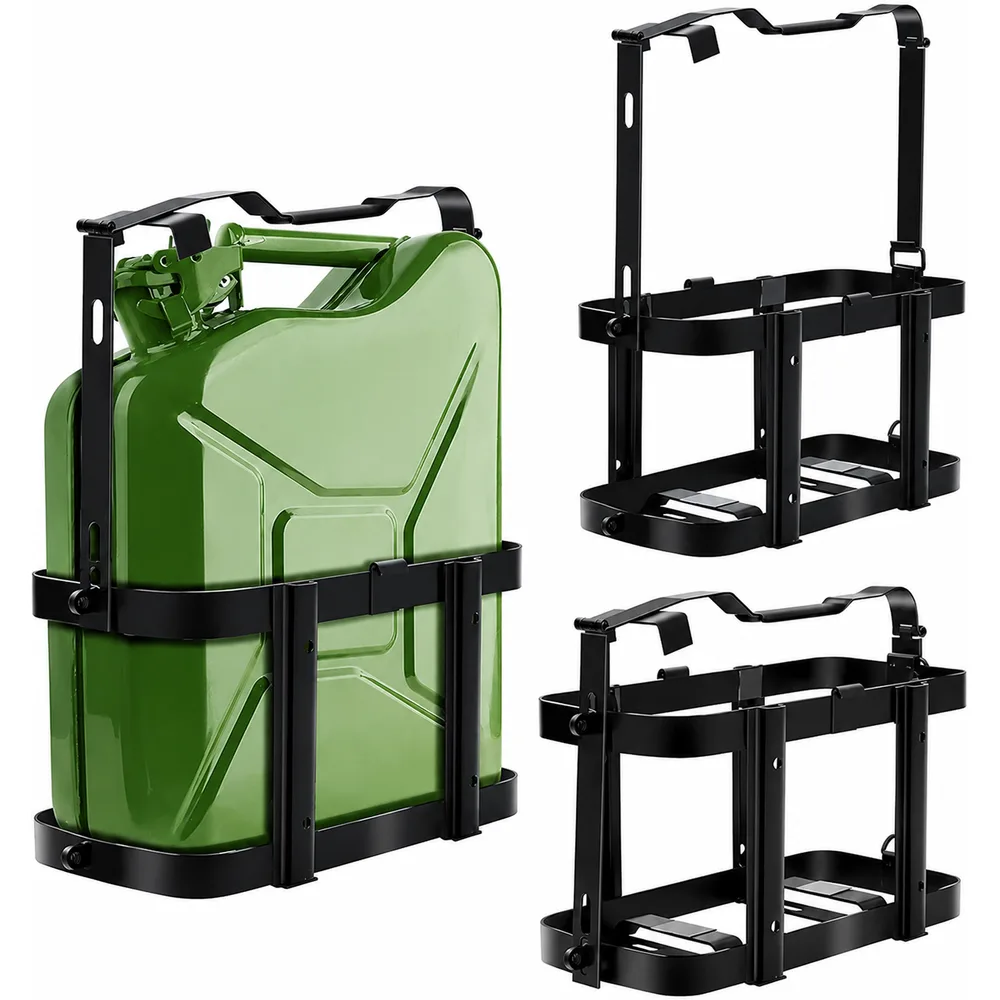 Jerry Can Holders & Mounts |
Powder-coated steel holders with strap-and-buckle retention, fit confirmed for our 20 L NATO-pattern cans. |
| Holding and locking the can in its holder | 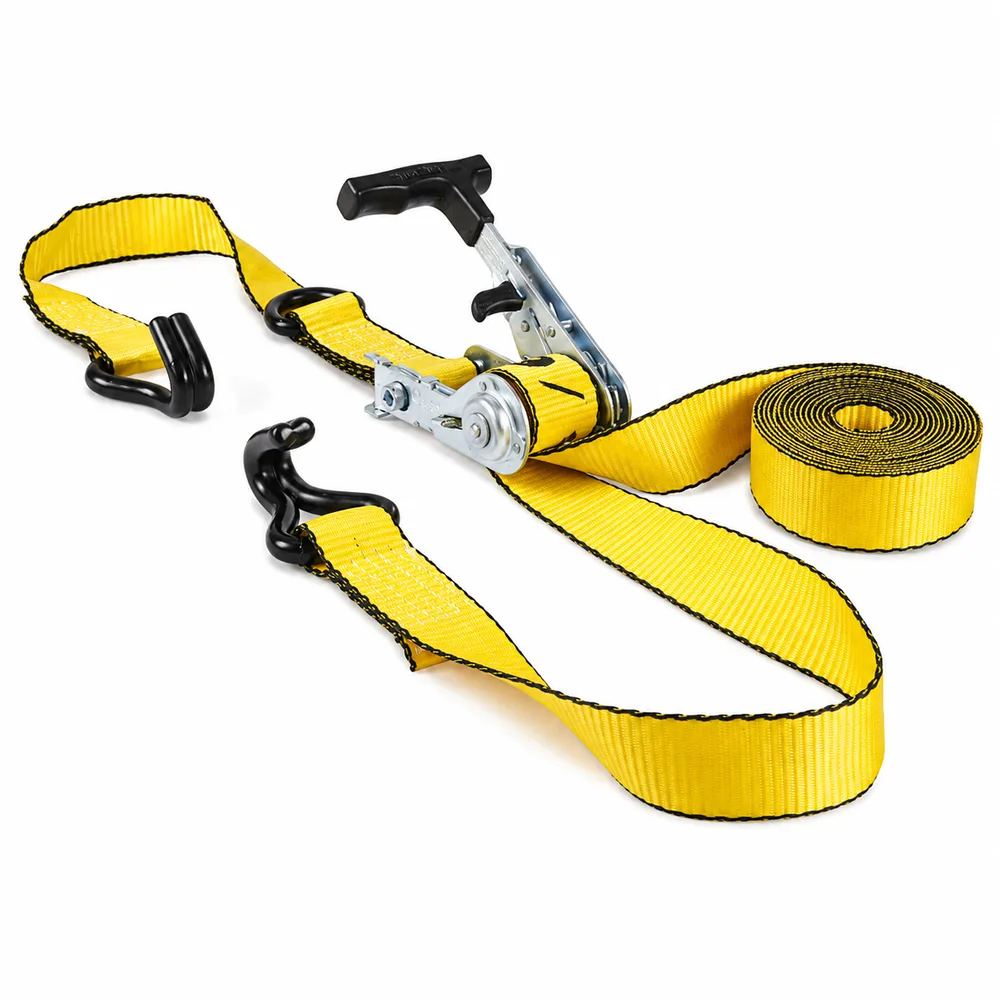 Tie-Downs & Retention Straps |
Strap and buckle, ratchet or over-centre latch kits; the latch takes a padlock. |
| The can for a 4x4 rear carrier, pickup tub or trailer | 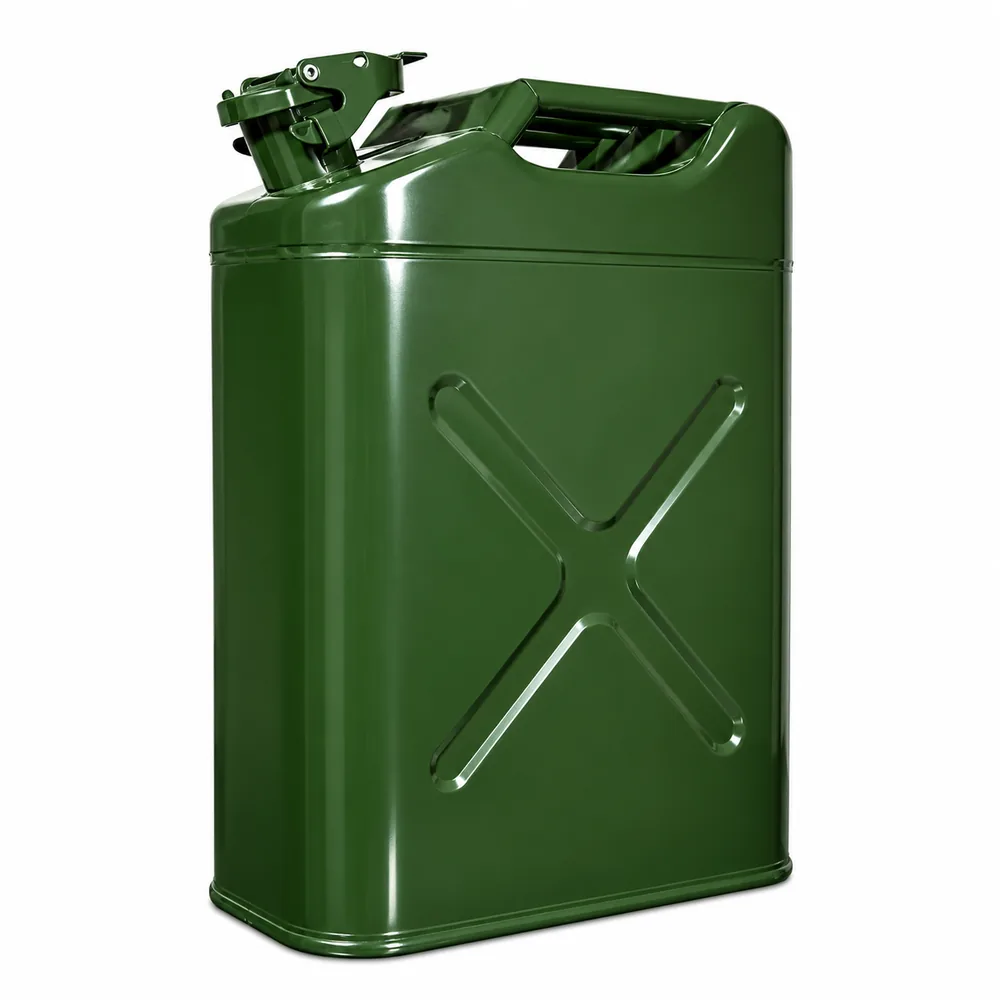 20L NATO Steel Fuel Can |
Pressed steel, 34 x 16 x 46 cm, about 3.1 kg empty, vented screw cap, UN-marked. |
| A rear door, a roof or a lighter lift | 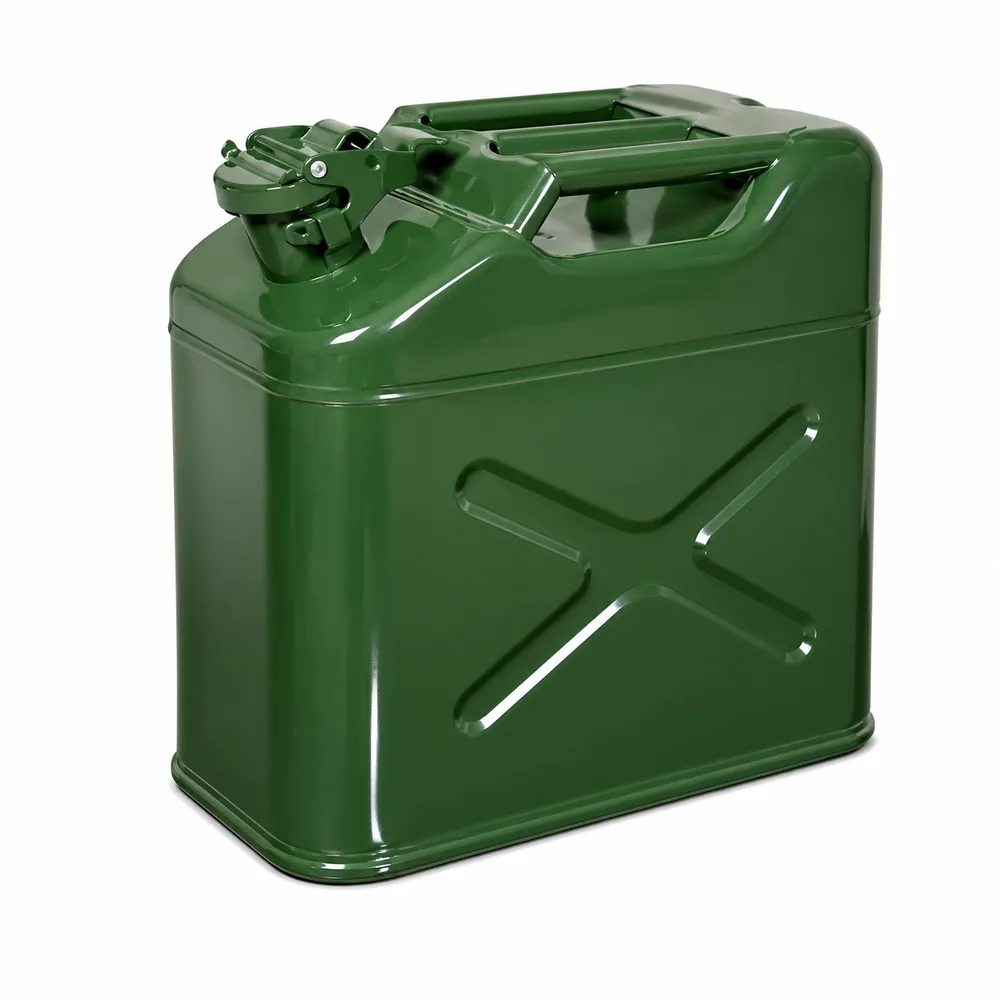 10L NATO Steel Can |
The NATO footprint at 26.5 cm tall and about 9 kg full of petrol. |
| UTV beds and ATV racks | 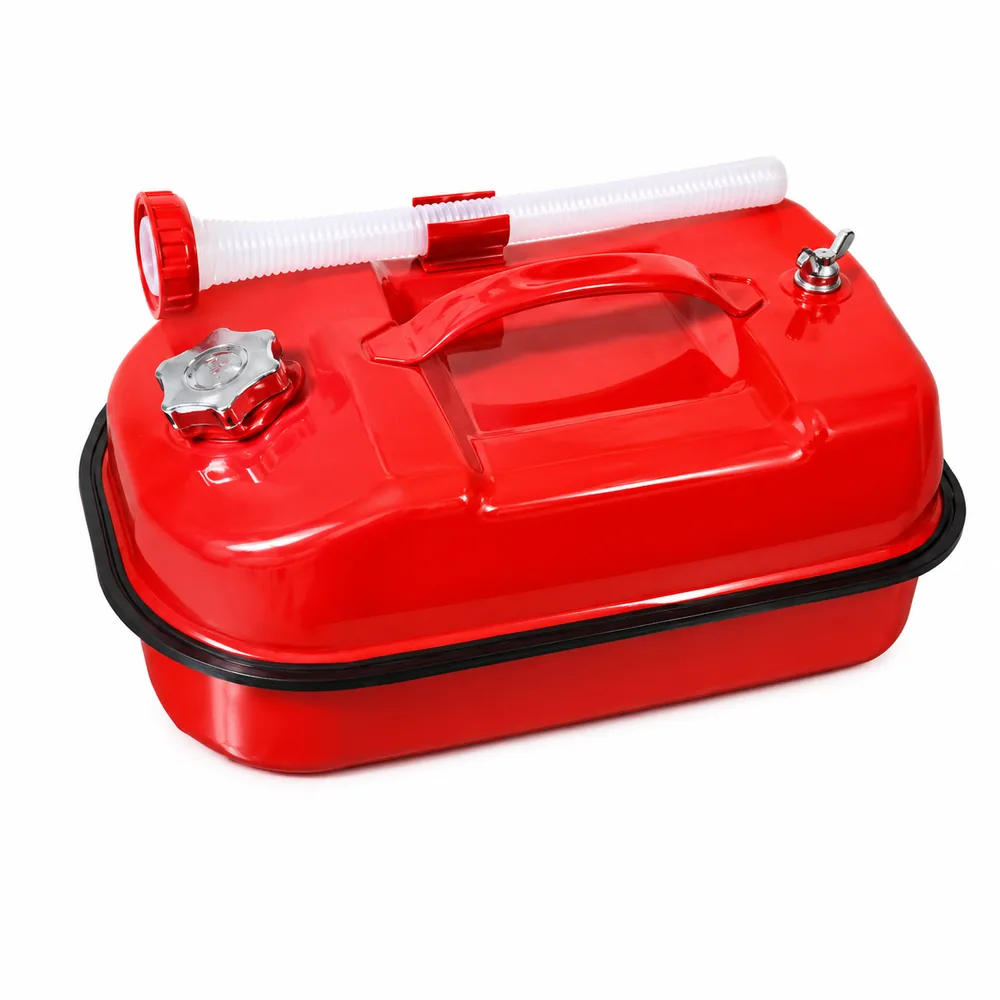 Horizontal Galvanised Can — 5L / 10L / 20L |
Lies flat and low in 5, 10 and 20 L, with a stowed flexible spout; UN approved. |
| Adventure motorcycles | 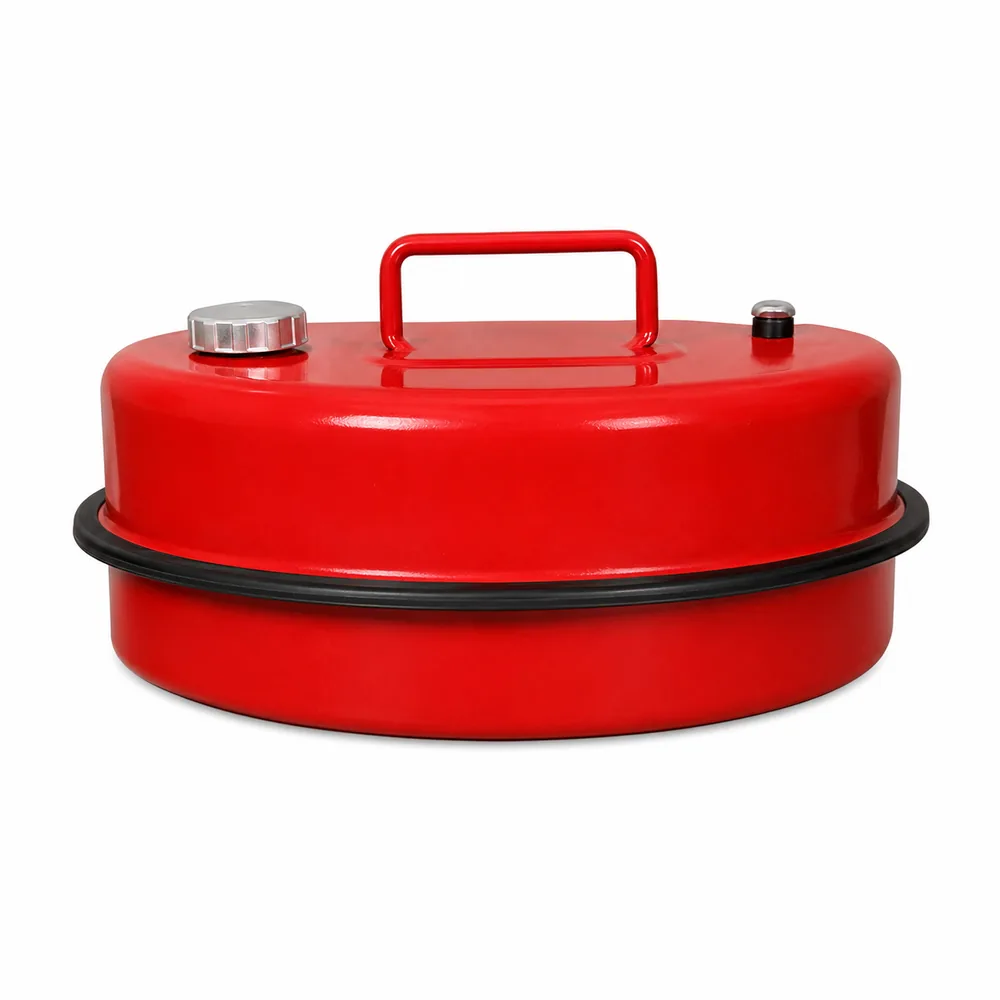 3L Compact Fuel Can |
Three litres of steel, about 1 kg empty, with an anti-UV finish for a pannier rail. |
The one rated for a full can at your mounting point, bolted through structure, sized to your can and closed by a latch or ratchet strap that takes a padlock. A full 20 litre steel can weighs 18 to 23 kg, so check the rating of the holder and of the rack, bar or bed it bolts to. Try the fit with your own can: a holder that grips its faces does not rattle loose.
Steel suits most vehicles, aluminium suits a build where weight counts, and plastic suits small cans. Powder-coated steel takes knocks and needs chips touched up before rust starts. Aluminium saves weight, and on a coastal vehicle it needs insulating from a steel can and stainless fasteners, because galvanic attack starts where the metals touch (marine containers). A plastic holder for a 3 or 5 litre can needs a UV-stable grade outdoors.
A can built to the NATO pattern fits a holder made to the same dimensions. A lookalike can of the same capacity can be a few millimetres out on two faces and will not clamp, so test it in the holder before you buy a batch. Our holders are confirmed for the 20 litre NATO-pattern cans in our range; send another maker’s can and we check it first. The NATO pattern explains the shape.
Yes, if both cans share the pattern. Our 20 litre NATO steel water can has the same 34 × 16 × 46 cm body as the fuel can, but it weighs about 23 kg full against about 18 kg for petrol, so rate the mount on the water can. Give the water its own marked holder, apart from the fuel, and never move a can from fuel to drinking water.
Use a carrier on the tow bar, or fit roof bars rated for the load. Never load the bare roof: DVSA says it has too little friction and too few fixing points. A carrier presses down on the coupling like a trailer nose. Keep the carrier and full can within the lower of the tow bar’s static vertical load, the S value under UN Regulation No 55, marked on the bar or set by its class, and the handbook’s nose-weight limit.
It can be. Two full 20 litre cans weigh 36 to 46 kg before the holder, so check the exact mounting point in the handbook or with the carrier maker. On a roof, the rack counts against the roof load as well. On a 4x4 a double holder sits best on a chassis-mounted rear bar or in a pickup tub, and the roof suits one light can.
Yes, upright in a holder bolted to the tub or canopy frame. Massachusetts’ fire services advise carrying fuel in the boot or a pickup bed, away from passenger areas, with the fill and vent openings closed. In a closed canopy, keep petrol away from heaters and anything that sparks. Lift the can out to fill it, because NIOSH traced fires to cans filled on plastic bed liners (Publication 98-111).
Yes, in a suitable container: metal up to 20 litres or plastic up to 10, marked for petrol (Petroleum (Consolidation) Regulations 2014, Schedule 3). Carriage for your own use stays outside ADR up to 60 litres per container (1.1.3.1(a)). A 3 litre steel can on a pannier rail or rear rack is the usual choice, strapped, clear of the silencer and counted against the luggage limit. See UK petrol container rules.
In Great Britain, no more than 30 litres in no more than two suitable containers in any motor vehicle (Petroleum (Consolidation) Regulations 2014, Schedule 2, paragraph 1). Two full 20 litre petrol cans exceed that. The excess must go under paragraph 2, which needs written notice to the petroleum enforcement authority and a store such as a detached building. Diesel sits outside these rules. See the 2014 Regulations explained.
The standards and regulations this page relies on, at their issuing body. Where a market rule is named here, check the current revision before you specify against it.
Last reviewed by David Guru, Co-Founder & Business Development Director.
Tell us your market, your fuel and your volumes. We come back with a specification sheet and a quotation.