
What ADR stands for, who it binds in the EU, the UK and Ireland, how the text is laid out, which exemptions apply, and the amendments that take effect on 1 January 2027.

ADR is the Agreement concerning the International Carriage of Dangerous Goods by Road, the UN treaty whose Annexes A and B set how dangerous goods are classified, packed and carried by road in 55 countries, including the EU and UK. ADR 2025 has applied since 1 January 2025. The 2027 amendments enter into force on 1 January 2027, and ADR 2025 rules may be used until 30 June 2027.
Quick answer: What is ADR for dangerous goods?
ADR is short for the Agreement concerning the International Carriage of Dangerous Goods by Road, a UN treaty that 55 countries apply, among them the EU states and the UK. Annexes A and B set the rules for classifying, packing, marking and carrying goods. ADR 2025 has applied since 1 January 2025; the 2027 amendments start on 1 January 2027.
ADR takes its letters from the French title, Accord relatif au transport international des marchandises Dangereuses par Route. In English it is the Agreement concerning the International Carriage of Dangerous Goods by Road. It was done at Geneva on 30 September 1957 and entered into force on 29 January 1968, according to the UN Treaty Collection. The word “European” left the title on 1 January 2021, after the parties accepted a protocol amending it, so older texts and some national laws still carry the longer name.
The working rules sit in the treaty’s two annexes: Annex A covers the goods in Parts 1 to 7, and Annex B covers vehicles and crews in Parts 8 and 9 (ADR 1.1.1). ADR has 55 parties. Most are European, but Morocco, Tunisia, Nigeria, Uganda and four Central Asian states have joined, the latest being Kyrgyzstan on 18 July 2025. Its classes, UN numbers and packaging tests follow the UN Model Regulations, the same base the IMDG Code uses at sea, so a substance keeps its UN number and class whichever mode carries it.
Every business that consigns, packs, fills, loads, carries or unloads dangerous goods by road in a country that applies ADR must follow it, on domestic journeys as well as international ones. ADR has no enforcement provisions of its own, as HSE points out, so each country gives it force through national law.
In the EU, Directive 2008/68/EC applies Annexes A and B to road transport “within or between Member States” (Article 1). The Commission updates its Annex I for each edition: Delegated Directive (EU) 2025/149 moved it to ADR as applicable from 1 January 2025, with transposition due by 30 June 2025. Article 6 lets a member state keep national derogations for small quantities or local transport, valid for up to six years.
| Where | Law that applies ADR | What to know |
|---|---|---|
| EU member states | Directive 2008/68/EC, Annex I, as amended by Delegated Directive (EU) 2025/149 | National derogations listed in Annex I, section I.3 |
| Great Britain | Carriage of Dangerous Goods and Use of Transportable Pressure Equipment Regulations 2009 (CDG 2009), regulation 5 | Each new edition applies without new legislation |
| Northern Ireland | CDG Regulations (Northern Ireland) 2010 | Shares the UK approved derogations document with GB |
| Ireland | S.I. No. 349 of 2011, amended by S.I. No. 261 of 2025 | ADR 2025 mandatory from 1 July 2025; the HSA is the main competent authority |
The UK has been a party since 1968. Regulation 5 of CDG 2009 forbids carriage that breaks any ADR requirement, and regulation 2 defines ADR “as revised or reissued from time to time”, so the 2027 amendments apply in Great Britain on the same date as everywhere else. The DfT approved derogations document is legally binding and covers carriage wholly within the UK. In Ireland the Health and Safety Authority (HSA) handles most competent-authority work, with the Road Safety Authority approving vehicles and NSAI testing receptacles and tanks.
ADR 2025 entered into force for every party on 1 January 2025, after no party objected to the amendments by 1 October 2024 (UN depositary notification C.N.432.2024). Under ADR 1.6.1.1, goods could still travel under the ADR 2023 rules until 30 June 2025. Ireland’s HSA describes the same window: applicable from 1 January 2025, mandatory through national regulations from 1 July 2025.
These are the changes most likely to reach a buyer or user of fuel and chemical containers, taken from the consolidated amendment list ECE/TRANS/WP.15/265 and the HSA summary.
| ADR 2025 reference | Change |
|---|---|
| 6.1.3.1 and 1.6.1.57 | UN packaging marks must sit on a non-removable component. Packagings made before 1 January 2027 that do not comply may still be used. |
| 1.2.1 | Recycled plastics material: the maker’s quality assurance programme must include design-type tests on packagings made from each batch. |
| 1.8.3.2 | A business that consigns dangerous goods only occasionally can be exempted from appointing a dangerous goods safety adviser. |
| 1.1.3.1 (a)(ii) | Private individuals carrying goods bought for personal, domestic or leisure use, now as waste, stay outside ADR within the private-use limits. |
| Table A | New entries for sodium ion batteries (UN 3551 and 3552) and for vehicles powered by lithium ion, lithium metal or sodium ion batteries (UN 3556 to 3558). |
| 4.1.1.5.3 | Mixed laboratory waste: inner packagings of different substances in one outer packaging tested to packing group I. |
| 9.2.2.8 | The battery master switch becomes a feature to de-energise the electrical circuits, controlled from the cab. |
The 2027 amendments are final. The UN Secretary-General circulated them on 1 July 2026 (C.N.252.2026), no party objected by 1 October 2026, and notification C.N.395.2026 of 9 October 2026 confirms they enter into force on 1 January 2027. The text is ECE/TRANS/WP.15/274, adopted by the UNECE Working Party on the Transport of Dangerous Goods (WP.15) over its 115th to 119th sessions, with a corrigendum and an addendum. Under the amended 1.6.1.1, goods may still travel under the ADR 2025 rules until 30 June 2027.
| ADR 2027 reference | Change | Who notices |
|---|---|---|
| 8.2.2.4.3, 8.2.2.5.4 | Initial driver training may run in person, remotely or both; refreshers may include e-learning, but not for the whole theory part. Practical exercises stay in person. | Drivers, training centres |
| 1.3.1, 1.3.3 | The training duty covers every person taking part in the activities, not only employees, and the record-keeping duty follows them. | Consignors, packers, loaders |
| Table A, UN 1202; special provision 681 | The diesel entry cites EN 590:2025 and also covers diesel to EN 16709:2024 or EN 16734:2023 and paraffinic diesel and heating oil to EN 15940:2023. | Fuel distributors |
| 4.1.1.11.2 | Empty uncleaned drums and IBCs over 150 litres may go for disposal or recycling past their 4.1.1.15 period or inspection date, under set conditions. | Drum and IBC users |
| 2.1.5.7 | Used articles and machinery with residues, carried for repair or disposal, leave most of ADR under nine conditions. | Workshops, recyclers |
| UN 3561 to 3564; 5.3.2.1.4 | New entries, including lithium metal and sodium ion batteries installed in cargo transport units, which carry orange plates on both sides. | Battery storage operators |
| 5.4.3.4; 1.6.1.58 | The instructions in writing are reworded; the old version may be used until 31 December 2027. | Carriers |
The 2027 list leaves the transport category 2 and 3 limits in 1.1.3.6.3 untouched, so the 333 litre petrol and 1,000 litre diesel thresholds in our ADR 1,000-point calculator stand. A 2025 change also takes hold on the same day: a UN packaging made from 1 January 2027 needs its marks on a non-removable component (6.1.3.1 with 1.6.1.57). The UN packaging code decoder reads the mark itself.
ADR is numbered by part, chapter, section and paragraph, so 4.1.1.15 is Part 4, Chapter 1, Section 1, paragraph 15. HSE describes the nine parts as going through the process of a consignment in order.
| Part | What it covers |
|---|---|
| 1 | General provisions, definitions, exemptions (1.1.3), training (1.3), transitional measures (1.6), the safety adviser (1.8.3) |
| 2 | Classification into Classes 1 to 9 |
| 3 | The dangerous goods list (Table A in 3.2), special provisions, limited and excepted quantities |
| 4 | Packing and tank provisions, including the five-year limit for plastic jerricans and drums (4.1.1.15) |
| 5 | Consignment procedures: marks, labels, documents and orange plates |
| 6 | Construction and testing of packagings, IBCs, large packagings and tanks |
| 7 | Carriage, loading, unloading and handling |
| 8 | Vehicle crews, equipment, operation and documentation, including driver training (8.2) |
| 9 | Construction and approval of vehicles |
Table A in Chapter 3.2 is where most questions start. Each row is a UN number, and its columns give the class (3a), packing group (4), labels (5), special provisions (6), the limited quantity per inner packaging (7a), the excepted quantity code (7b), the packing instructions (8), the transport category with its tunnel code (15) and the hazard identification number (20). Petrol, UN 1203, reads Class 3, packing group II, 1 L limited quantity, E2. The UN number packaging finder turns a row into the packaging codes allowed, and packing groups explained covers column (4).
ADR gathers its general exemptions in 1.1.3, and none of them needs an application: a load meets the conditions or it does not. Fuel users rely most on 1.1.3.6. It is a partial exemption that lifts the driver certificate, orange plates and some vehicle equipment for loads within the limits per transport unit, while packaging, marking, the transport document and ADR 1.3 training still apply.
| Exemption | ADR reference | What it covers |
|---|---|---|
| Private use, carriage ancillary to a business, emergencies | 1.1.3.1 | All of ADR, within set limits, such as 60 litres per refillable container for private use |
| Quantity per transport unit | 1.1.3.6 | Part of ADR: 333 litres of petrol, 1,000 litres of diesel, or 1,000 points for a mixed load |
| Limited quantities | 1.1.3.4.2 and Chapter 3.4 | Small inner packagings: 1 L for petrol, 5 L for diesel |
| Excepted quantities | 1.1.3.4.3 and Chapter 3.5 | Millilitre packs: code E1 allows 30 ml per inner packaging and 1 L per package |
| Special provisions | 1.1.3.4.1 and Chapter 3.3 | Entry by entry, such as special provision 188 for small lithium batteries |
| Empty uncleaned packagings | 1.1.3.5 | All of ADR, once the hazards of Classes 2, 3, 4.1, 5.1, 6.1, 8 and 9 are nullified |
Formal exemptions come from authorities. Competent authorities can agree temporary derogations among themselves under ADR 1.5.1, valid for up to five years, and states keep national derogations under the EU directive or the UK approved derogations document. Our guide to limited quantities and the 1,000-point rule works through what each relief switches off, and cleaning and reusing jerry cans covers when an empty can stops being dangerous goods.
You need an ADR driver training certificate, the card most people call an ADR licence, to drive a vehicle carrying dangerous goods above the 1.1.3.6 limits. For fuel in cans that means more than 333 litres of petrol or 1,000 litres of diesel on the vehicle: sixteen 20 L petrol cans stay inside, a seventeenth does not. Below the limits no certificate is needed, but ADR 1.3.1 still requires everyone involved to be trained for their role before taking it on, or to work under the direct supervision of a trained person.
In the UK a driver qualifies by passing an exam for each module of an approved course: the core module, a packages or tanks module, and a module for each class carried. GOV.UK sets minimum training times: 9 hours for the core, 1.5 hours each for packages and Class 3, 7.5 hours for tanks, and 6 hours each for Class 1 and Class 7. A driver of packaged fuel therefore trains for at least 12 hours. From 1 January 2027, ADR 8.2.2.4.3 lets initial training run in person, remotely or both. The driver certificate is a personal qualification; the business may also need a DGSA under 1.8.3.
ADR governs the road and the IMDG Code the sea. Both draw on the UN Model Regulations, so a substance keeps its UN number, class and packing group, and a UN-approved jerrican meets one test standard, whichever mode carries it. The IMDG Code is mandatory under SOLAS chapter VII and is amended on a two-year cycle like ADR; its 2024 edition (Amendment 42-24) has been mandatory since 1 January 2026, according to the IMO.
The differences sit around the package. The IMDG Code adds segregation of incompatible goods on board and pollution rules under MARPOL Annex III. ADR adds the vehicle side: the driver certificate, orange plates, tunnel codes and the 1.1.3.6 relief, none of which carries over to the sea crossing. When a journey includes a sea leg, ADR 1.1.4.2.1 accepts packages packed, marked and labelled to the IMDG Code on the road legs. ADR 5.4.2 requires whoever packs a container bound for sea to give the shipping line a container packing certificate conforming to the IMDG Code. Dangerous goods transport for liquids compares road, sea and air, and hazmat packaging and shipping basics covers the US rules under 49 CFR.
We make the containers that ADR Parts 4 and 6 govern: steel and HDPE jerricans for dangerous goods. They hold UN certification per design type and are made under quality assurance the competent authority accepts, in factories certified to ISO 9001, ISO 14001 and ISO 45001. We do not act as anyone’s safety adviser and we do not train drivers.
Send us the UN number, the packing group and the destination, and we reply with the design whose full mark covers it and the authority named on its certificate. Ask us where the mark sits on any design you order for delivery after 1 January 2027. For plastic designs, the date of manufacture starts the five-year period in ADR 4.1.1.15; steel has no such limit.
| Your use case | Recommended can | Why this one |
|---|---|---|
| Petrol and diesel by road | 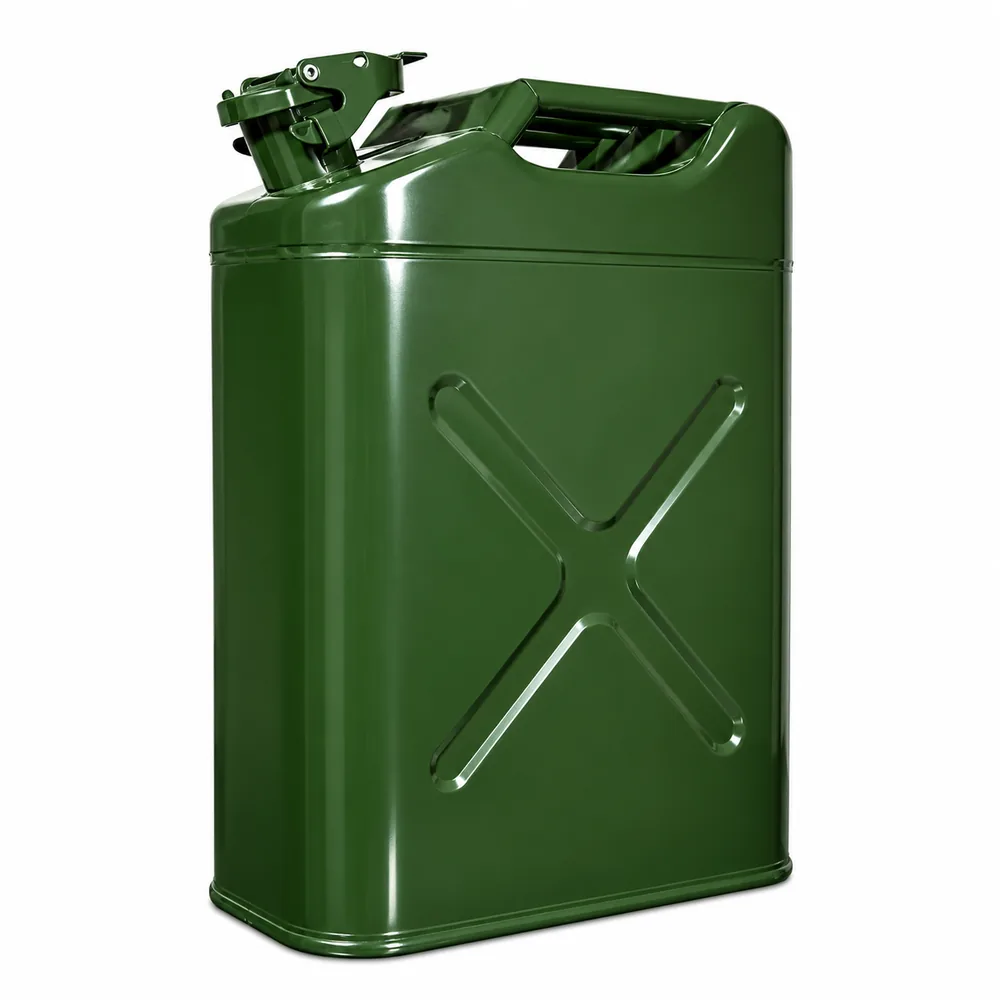 20L NATO Steel Fuel Can |
A UN-marked steel jerrican; steel has no five-year limit under ADR 4.1.1.15. |
| Liquid chemicals in plastic | 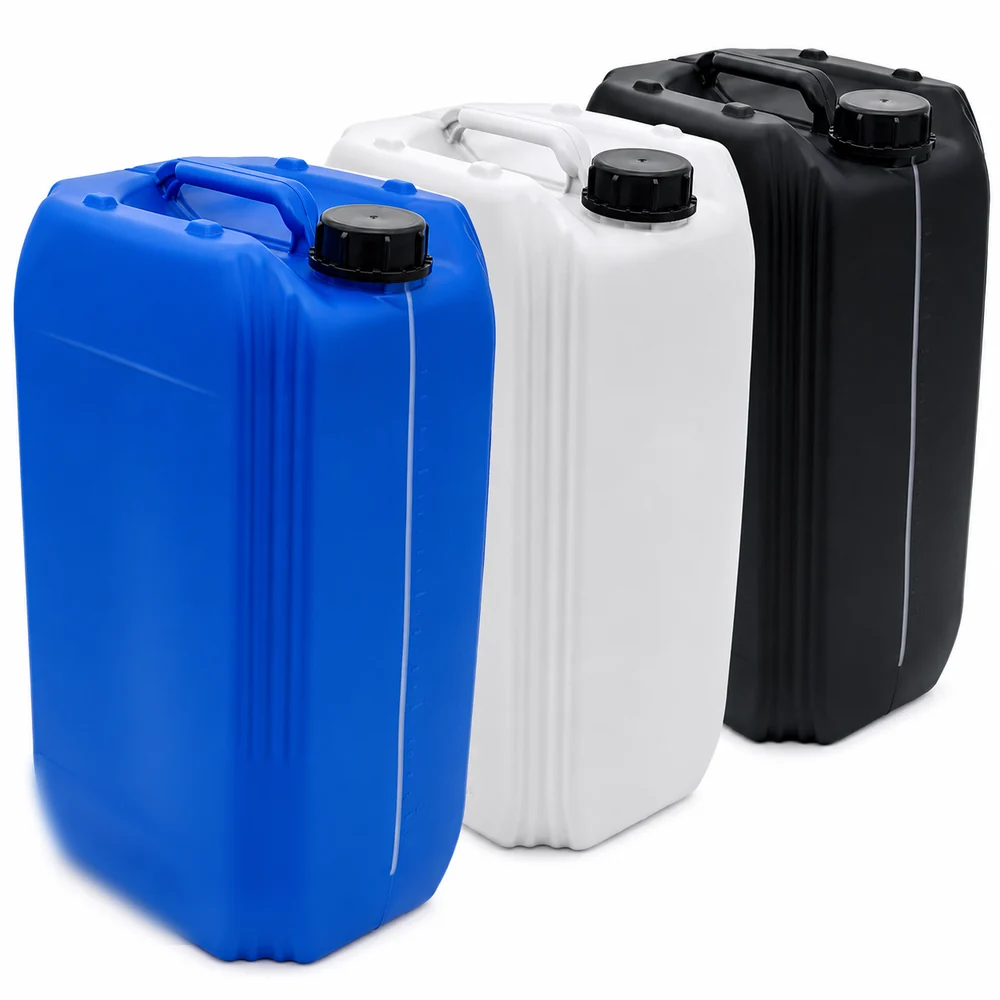 25L Stackable Plastic Jerrycan |
A stackable HDPE jerrican; its date of manufacture starts the five-year period in ADR 4.1.1.15. |
| A leaking package on the road | 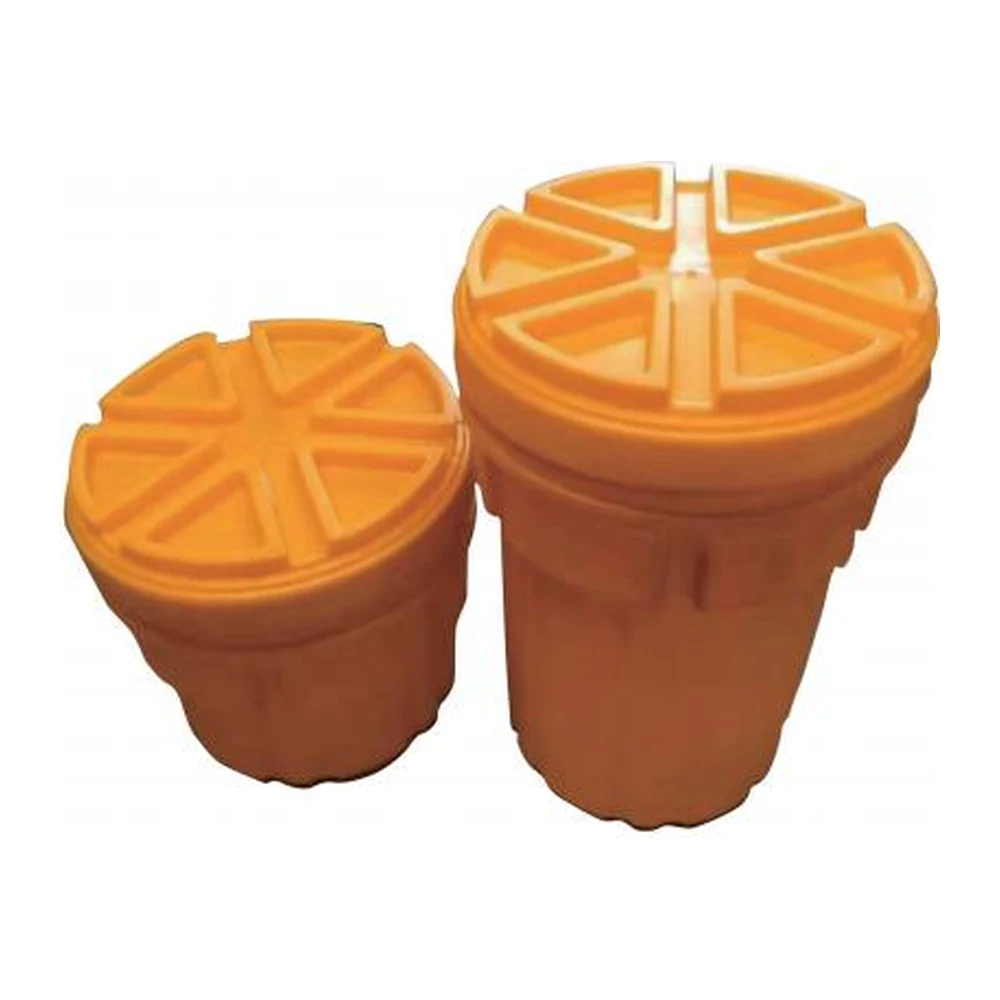 Salvage Drums & Spill Response Storage |
Overpack drums for a failed container; confirm the UN approval of the size before you move dangerous goods in it. |
No. ADR changes in odd years, so ADR 2025 has applied throughout 2026 and stays in force until the 2027 amendments take effect on 1 January 2027. A search for ADR 2026 is a search for the edition in force during 2026, which is ADR 2025. Under the amended 1.6.1.1, goods may still be carried under the ADR 2025 rules until 30 June 2027 while operators switch over.
UNECE publishes the ADR text and its amendment documents on its website, and the HSE carriage of dangerous goods manual links to the ADR 2025 files there. The 2027 changes are in UN documents ECE/TRANS/WP.15/274, its corrigendum and its addendum. There is no separate UK edition: CDG 2009 applies the UNECE text as revised from time to time, and the DfT approved derogations document sets out the UK variations.
No. ADR 2015 was replaced by ADR 2017, and four editions have followed it: 2019, 2021, 2023 and 2025. Each new edition takes over for every party on 1 January of an odd year. Training notes, procedures or transport document templates that quote ADR 2015 paragraphs need checking against the current text, because paragraphs, entries and limits move between editions.
Lithium batteries are Class 9: UN 3480 for lithium ion batteries, UN 3481 when contained in or packed with equipment, and UN 3090 and 3091 for lithium metal. Special provision 188 lifts most of ADR for small cells and batteries. The limits are lithium ion up to 20 Wh per cell and 100 Wh per battery, lithium metal up to 1 g of lithium per cell and 2 g per battery, with the battery mark and packages of no more than 30 kg.
No. The general exemptions in ADR 1.1.3, including the 1.1.3.6 small-load exemption, limited and excepted quantities and the private-use exemption, apply when a load meets their conditions, and nobody issues a certificate. Exemptions that need paperwork are made by authorities: multilateral agreements between competent authorities under ADR 1.5.1, national derogations under Directive 2008/68/EC or the UK approved derogations, and national authorisations such as those the Irish HSA may issue.
Yes, in every country that has joined it. The UN Treaty Collection lists 55 parties, including Morocco, Tunisia, Nigeria, Uganda, Kazakhstan, Tajikistan and Uzbekistan alongside the EU states, the UK, Norway, Switzerland and Türkiye. The latest to join was Kyrgyzstan, on 18 July 2025. Countries outside the list set their own road rules; the United States, for example, uses 49 CFR.
No. ADR covers road only. Rail runs under RID, Appendix C to the COTIF convention, and inland waterways under ADN. The three share most of their wording on classification, packaging and the safety adviser, and Directive 2008/68/EC applies all three inside the EU through its Annexes I, II and III. A lorry taking drums to a rail terminal runs under ADR; the train journey runs under RID.
Five years. In the UK the expiry date is printed on the ADR card, and refresher training can start one year before it. Pass the refresher exam in that final year and the card runs five years from the old expiry date; take it earlier and the new card runs five years from the exam. GOV.UK says the refresher exam must be taken at least two weeks before expiry, and an expired card means the full course again.
Enforcement runs under CDG 2009, because ADR has no enforcement provisions of its own. GOV.UK says to report a lorry, driver or haulier to the Driver and Vehicle Standards Agency, and a business getting things wrong, such as incorrect labelling or a lack of driver training, to HSE. The Vehicle Certification Agency is the UK certification authority for dangerous goods packaging. Northern Ireland has its own CDG regulations from 2010.
They mark a vehicle carrying dangerous goods above the small-load limits. ADR 5.3.2.1.1 requires an orange plate at the front and rear of the transport unit. Tankers and bulk loads also show plates with two numbers: the hazard identification number from column (20) of Table A and the UN number from column (1). Diesel, UN 1202, has hazard identification number 30. A van within the 1.1.3.6 limits carries no plates.
Transport category 2. Column (15) of ADR 2025 Table A puts propane (UN 1978), butane (UN 1011), LPG (UN 1965), compressed hydrogen (UN 1049), dissolved acetylene (UN 1001) and flammable aerosols (UN 1950) in category 2. Under 1.1.3.6 that allows 333 kg of liquefied gas, or 333 litres of cylinder water capacity for a compressed gas, on one transport unit, at 3 points per kg or litre in a mixed load. Aerosols that are also toxic or corrosive fall in category 1.
The standards and regulations this page relies on, at their issuing body. Where a market rule is named here, check the current revision before you specify against it.
Last reviewed by David Guru, Co-Founder & Business Development Director.
Tell us the UN number, the packing group, your market and your volumes. We come back with the design certified to the right code, the plant named on its certificate and a quotation.