
The shipper’s checklist under 49 CFR: what to classify, pack, mark, label, write down and train for, and which exceptions lift those duties.
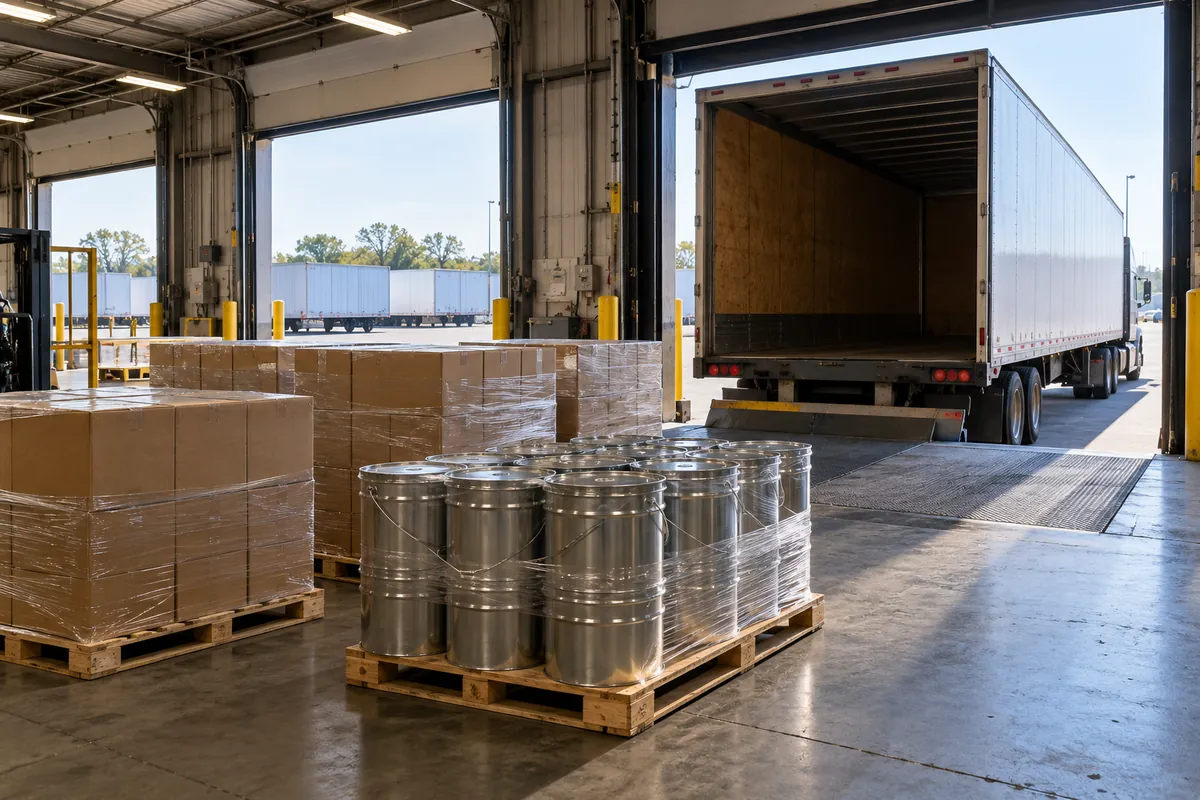
To ship hazmat in the US under 49 CFR, the shipper classifies the material and finds its entry in the Hazardous Materials Table (172.101). The shipper packs it in the packaging that entry authorises, marks and labels each package, and writes a shipping paper with a 24-hour emergency number. Loads above set weights need placards, and every employee who does any of this needs training at least every three years (172.704).
Quick answer: How do you ship hazmat in the US?
Under 49 CFR the shipper classifies the material from the Hazardous Materials Table (172.101), uses only the packaging that entry authorises, marks and labels every package, and signs a shipping paper carrying a 24-hour emergency number. From 454 kg of most classes the vehicle needs placards, and every hazmat employee needs training at least every three years (172.704).
Work it out
What does a UN mark mean?UN packaging code decoderWhich containers may carry your UN number?UN number packaging finder49 CFR is Title 49 of the US Code of Federal Regulations, Transportation. Its parts 171 to 180 are the Hazardous Materials Regulations, or HMR (171.8), issued by PHMSA, the Pipeline and Hazardous Materials Safety Administration. They bind anyone who offers hazmat for transport, carries it, or makes packaging sold as fit to carry it (171.1). A hazardous material is anything in the Hazardous Materials Table or meeting a class definition in part 173, plus hazardous substances, wastes and marine pollutants (171.8).
| Part | What it covers |
|---|---|
| 107 | PHMSA registration, penalties, special permits |
| 171 | Definitions, scope, use of the ICAO and IMDG texts |
| 172 | The table, marks, labels, placards, shipping papers, emergency information, training |
| 173 | Classification, packaging and the exceptions |
| 174 to 177 | Extra rules for rail, air, vessel and highway |
| 178 and 180 | Packaging specifications and tests, and upkeep in service |
Other parts of Title 49 govern other things: part 26 covers disadvantaged business enterprises, part 40 DOT drug and alcohol testing, part 192 gas pipelines, parts 382 and 391 commercial drivers, and part 830 aircraft accident reports to the NTSB.
49 CFR runs from title to subtitle, chapter, subchapter, part and section, and the hazmat rules sit in subchapter C of chapter I, parts 171 to 180, written by PHMSA. In 49 CFR 173.24(e)(3), 173 is the part, 173.24 the section and (e)(3) the paragraph. Chapter I also holds part 107, PHMSA’s procedures, and the pipeline rules. Chapter III, parts 300 to 399, holds the FMCSA’s driver and vehicle rules, and chapter XII the TSA’s security rules.
| Part | What it holds | Sections a drum or jerrican shipper opens |
|---|---|---|
| 171 | General information, regulations and definitions | 171.8 definitions; 171.16 incident reports; 171.22 to 171.25 ICAO and IMDG |
| 172 | The table, special provisions, hazard communication, emergency information, training, security plans | 172.101 table; 172.200 to 172.205 shipping papers; 172.704 training |
| 173 | Shippers: general requirements for shipments and packagings | 173.2a two hazards; 173.24 and 173.24a; 173.28 reuse; 173.202 and 173.203 liquids |
| 174 | Carriage by rail | Placarded rail cars |
| 175 | Carriage by aircraft | 175.30 operator’s check of each package |
| 176 | Carriage by vessel | Stowage and segregation |
| 177 | Carriage by public highway | 177.817 papers in the cab; 177.848 segregation |
| 178 | Specifications for packagings | 178.503 the UN mark; 178.601 to 178.609 tests |
| 179 | Specifications for tank cars | Rail tank cars only |
| 180 | Continuing qualification and maintenance of packagings | 180.352 IBC retests |
The free text that changes each day is the eCFR at ecfr.gov, run by the Office of the Federal Register and the Government Publishing Office. It calls itself an editorial compilation and asks legal researchers to check it against the official edition, the Federal Register and the List of CFR Sections Affected. Its point-in-time view shows any part as it stood on a date back to January 2017. PHMSA’s regulations pages link to the eCFR and list PHMSA’s letters of interpretation by section.
The official edition is the annual CFR on GovInfo, free as PDF or XML, which courts take judicial notice of (44 U.S.C. 1507). The edition revised as of 1 October 2025 prints parts 100 to 177 in volume 2 and parts 178 to 199 in volume 3, and each part downloads as its own PDF. Each volume prints the text as it stood on its revision date, so the 2025 volumes predate the 2026 changes to packaging-staff training (91 FR 1433) and the limited quantity mark (91 FR 49332). Before signing a shipping paper against a rule, read it in the eCFR and note the date the text is current to.
Shipping hazmat by ground takes four steps in order: classify, package, mark and document, then placard the vehicle where the load requires it. 49 CFR 171.1(b) lists 14 pre-transportation functions, and 173.22 makes the shipper class and describe the material and confirm the packaging is authorised and marked to its specification.
Start with section 14 of the safety data sheet, which gives the UN number, proper shipping name, hazard class and packing group (OSHA 29 CFR 1910.1200 Appendix D). Check it against the table; 173.2a ranks a material with two hazards.
| Column of 172.101 | What it gives | Petrol (gasoline) |
|---|---|---|
| 2, 3, 4, 5 | Proper shipping name, hazard class, ID number, packing group | Gasoline, 3, UN1203, II |
| 6 | Labels | 3, FLAMMABLE LIQUID |
| 7 | Special provisions (172.102) | 144, 177, B1, B33, IB2, T4 |
| 8A, 8B, 8C | Exceptions, non-bulk and bulk packaging sections | 173.150, 173.202, 173.242 |
| 9A, 9B | Most per package on passenger and cargo aircraft | 5 L, 60 L |
| 10A | Vessel stowage category | E |
Diesel has two rows, UN1202 and the domestic NA1993, both Class 3, Packing Group III, packed under 173.203; NA numbers are not recognised outside the US (172.101(e)). UN 1203, UN 1202 and UN 1993 list the containers each allows.
The table decides it. Column 8B names the section for non-bulk packagings, 450 litres or less for a liquid (171.8), and a packaging is authorised only if that section permits it (49 CFR 173.24(c)). For petrol that is 173.202, which takes UN drums, jerricans and combination packagings tested to the Packing Group I or II level; Packing Group III liquids go under 173.203.
A single packaging, such as a 3A1 steel jerrican, holds the liquid itself. A combination packaging puts bottles or tins inside an outer such as a 4G fibreboard box. A bulk packaging such as an IBC holds more than 450 litres. The maker’s UN mark is the certification (178.2(b)); PHMSA’s 2023 advance notice on this (88 FR 43016) asked whether retest intervals should lengthen and changed no rule. UN specification packaging explains the mark, and the UN number packaging finder lists the containers allowed for each UN number.
Two duties stay with the shipper. The first is to close the package as the maker’s instructions say, keeping a copy for at least 90 days after it goes to the first carrier (173.22(a)(4)). The second is to confirm the contents will not attack or permeate it (173.24(e)); the chemical compatibility guide covers that check.
Every hazmat package must come through normal transport with no release you could detect without instruments, and keep its strength and compatibility through the heat, cold, humidity, pressure, shocks and vibration of the trip. It must hold no gas mixture that could build dangerous heat or pressure and carry no residue on the outside (49 CFR 173.24(b)). Section 173.24 covers bulk and non-bulk packagings, new or reused, UN-marked or not (173.24(a)), so a limited quantity box must meet it too. Section 173.24a adds rules for non-bulk packages such as drums, jerricans and boxes.
| Rule | What it requires |
|---|---|
| Compatibility, 173.24(e) | No significant chemical or galvanic reaction; the shipper answers for corrosion, permeation, softening, ageing and embrittlement |
| Mixed contents, 173.24(e)(4) and 173.24a(c) | Nothing in one outer packaging that could react dangerously; tests passed for the most dangerous packing group inside |
| Closures, 173.24(f) | Leakproof, secured against loosening and closed as the maker’s notification under 178.2 says |
| Venting, 173.24(g) | Off aircraft only (dry ice and cryogenic liquids aside), and only for gas that is not poisonous, flammable in air or asphyxiant |
| Ullage, 173.24(h) and 173.24a(d) | A liquid must not fill its receptacle at 55 °C or below |
| Design, 173.24a(a) | Inner closures upright, inners cushioned, and the package withstands the 178.608 vibration test without leaking |
| Filling, 173.24a(b) | Specific gravity and gross mass no higher than marked, or 1.2 where no gravity is marked |
Compatibility stays with the shipper, whatever the UN mark says (173.24(e)(1)). For plastic, 173.24(e)(3) sets a number: a plastic packaging for a liquid must be able to pass the permeation test in appendix B to part 173. Passing means losing no more than 2.0% of its contents by weight, or 0.5% for a Division 6.1 poison. One used for Packing Group I must be tested. Fluorinated vs plain HDPE covers the barrier for liquids that pass through a plain wall.
A different cap or gasket on a jerrican or drum departs from the tested design. Variation 5 in 178.601(g)(5) clears it without full retesting once the new closure passes the drop test in its worst orientation and, for liquids, the leakproofness, hydrostatic pressure and stacking tests. A packaging tested to a higher packing group may carry a denser liquid one or two groups down (173.24a(b)(1)), as UN specification packaging works through. A liquid in a packaging marked with a test pressure must also keep its vapour pressure at 55 °C below two-thirds of the sum of that pressure and 100 kPa. The alternative is to meet one of the two other limits in 173.24a(b)(4).
Every non-bulk package of hazmat needs marks and, unless an exception applies, labels. The marks are the proper shipping name and the ID number, such as UN1203, in characters at least 12 mm high, or 6 mm on packages of 30 litres or 30 kg or less (49 CFR 172.301(a)). The consignor’s or consignee’s name and address goes on too, unless the package moves by highway on one carrier or a whole truckload goes from one consignor to one consignee (172.301(d)). Combination packages of liquids carry orientation arrows on two opposite sides (172.312).
Labels show the hazard class: the package carries those listed in column 6 of the table (172.400), each a square-on-point at least 100 mm a side (172.407), such as FLAMMABLE LIQUID for Class 3 and CORROSIVE for Class 8. Exceptions sit in 172.400a and part 173; limited quantities of Class 3 go unlabelled except by air (173.150(b)).
A hazmat shipping paper gives the basic description in a fixed order with nothing in between: ID number, proper shipping name, hazard class and packing group, as in UN1203, Gasoline, 3, PG II (49 CFR 172.202(b)). It adds the total quantity with its unit, except by air, and the number and type of packages. Hazmat entries go first, stand out in a contrasting colour, or carry an X in a column headed HM (172.201(a)).
The paper carries a 24-hour emergency response telephone number, monitored whenever the material is in transport and answered by someone who knows it; a number that calls back does not qualify (172.604). The shipper signs the certification set out in 172.204. Emergency response information, the seven items in 172.602 such as first aid and spill handling, goes with the load, and since 3 September 2026 it may be held in electronic form (91 FR 49325).
The shipper keeps a copy, or an electronic image, for two years after the first carrier accepts the material, three for hazardous waste (172.201(e)). A road carrier keeps its copy for one year, and the driver keeps the paper within reach or in the door pouch (177.817).
A vehicle needs placards on each side and each end once it carries 454 kg (1,001 lb) or more, aggregate gross weight, of the classes in table 2 of 49 CFR 172.504. These include Class 3 flammable and Class 8 corrosive. Table 1 materials, such as Division 2.3 poison gas and Division 4.3 dangerous when wet, need placards at any quantity. A mixed load may show one DANGEROUS placard until 1,000 kg of one category is loaded at one facility (172.504(b)). Limited quantities, combustible liquids in non-bulk packaging and small quantities need none (172.500(b)).
A placarded load brings more duties. Whoever offers or carries it registers with PHMSA for each year running from 1 July (107.601 and 107.608); farmers serving their own farms register from 2,268 kg of one class. The driver needs a commercial driver’s licence with the hazardous materials endorsement, whatever the vehicle size (383.5 and 383.93). At 4,000 kg of one material in non-bulk packages the vehicle shows its ID number (172.301(a)(3)).
Yes, if you perform any pre-transportation function. A hazmat employee is anyone who loads, unloads or handles hazmat, prepares it for transport, drives it, or makes or tests packaging sold for it (49 CFR 171.8); a hazmat employer is a business with at least one. The employer trains and tests each one (172.702) in general awareness, function-specific duties, safety, security awareness and, where the business needs a security plan, in-depth security (172.704(a)).
A new employee may work under the direct supervision of a trained colleague for up to 90 days before training is complete (172.704(c)(1)), and training repeats at least every three years. The record names the employee, the completion date, the materials and the trainer, and certifies that the employee was trained and tested; it covers the last three years and is kept until 90 days after the employee leaves (172.704(d)). Since 13 February 2026, staff who only make or test packagings are excused the safety and security awareness parts (91 FR 1433).
A knowing violation carries a civil penalty of up to US$102,348, or US$238,809 where it causes death or serious injury, with a minimum of US$617 for a training violation (107.329).
Keep the shipper’s copy of a hazmat shipping paper for two years after the first carrier accepts the material, or three years for hazardous waste (49 CFR 172.201(e)). The copy may be paper or an electronic image, kept at or through your principal place of business, and it must carry the date the first carrier accepted the shipment. Produce it when a federal, state or local official asks. A motor carrier that reuses one paper unchanged for repeat loads of the same material may keep a single copy and a log of each trip: name, ID number, quantity and date.
| Record | Who keeps it | How long | Rule |
|---|---|---|---|
| Registration statement and certificate | Each PHMSA registrant | 3 years from the issue of each certificate | 107.620(a) |
| Certificate or “U.S. DOT Hazmat Reg. No.” | Road carrier, in each truck and tractor; vessel operator, on board | While current; paper or electronic since 3 September 2026 (91 FR 49298) | 107.620(b) and (c) |
| Incident report, DOT Form F 5800.1 | Whoever held the material when it happened | 2 years; the report is due within 30 days of discovery | 171.16 |
| Security plan | Those who offer or carry the materials listed in 172.800 | While in effect; reviewed at least once a year | 172.802(c) |
| UN packaging test reports | Packaging maker | As long as the packaging is made, plus 2 years | 178.601(l) |
| Design type test report | Whoever ran the test | 6 years for single or composite packagings, 7 for combination | 178.601(l) |
| Periodic retest report | Whoever ran the retest | 1 year for single or composite packagings, 2 for combination | 178.601(l) |
| IBC test and inspection records | IBC owner or lessee | Until the next test, and at least 2.5 years | 180.352(g) |
Each of these must be shown to an inspector who asks, as must a training record (172.704(d)). A buyer of UN approved packaging may ask for the test report too: 178.601(l)(2) makes it available to a user of the packaging, and UN certificates and test reports lists the ten items it must contain.
Yes. A limited quantity is a hazardous material shipped under an exception that lifts some rules (49 CFR 171.8). For Class 3, 173.150(b) allows inner packagings of up to 0.5 L in Packing Group I, 1.0 L in II and 5.0 L in III, in a strong outer packaging of up to 30 kg (66 lb) gross. It needs no UN specification packaging, no placards, no labels except by air, and no shipping paper unless it goes by air or vessel or is a hazardous substance, waste or marine pollutant. The general packaging rules of part 173, subpart B, and the training duty still apply.
The package carries the limited quantity mark: a square-on-point at least 100 mm a side with a 2 mm border, or 50 mm on a small package (172.315(a)). Since 3 September 2026 a 25 mm mark may go on the shipping label instead, except by air, international vessel or for radioactive material (91 FR 49332). By air the mark adds a black Y (172.315(b)). Every Class 3 limit sits below a 20 litre jerrican, so a can of fuel ships fully regulated or, on a work vehicle, as a material of trade; for Europe see ADR limited quantities and the 1,000-point rule.
Three more US exceptions cover smaller amounts, each with a short list of what still applies.
| Exception | Rule | Limits | What still applies |
|---|---|---|---|
| Material of trade | 173.6 | 0.5 L in PG I; 30 L (8 gal) or 30 kg (66 lb) in PG II and III, per packaging; 200 kg (440 lb) per vehicle; road only | Common or shipping name on the package; driver told of the load |
| Excepted quantity | 173.4a | 30 mL per inner packaging; 300 mL, 500 mL or 1 L per outer by PG | Classification, the square EQ mark, a paper by vessel |
| Small quantity | 173.4 | 30 mL per inner receptacle; 29 kg gross; domestic highway or rail | Drop-tested package and a conformity statement on it |
| Combustible liquid | 173.150(f) | Includes flammable liquids reclassed at a flash point of 38 °C or above; non-bulk | Nothing, unless a hazardous substance, waste or marine pollutant |
Materials of trade suit a contractor’s van: up to 200 kg of them may share a vehicle with fully regulated hazmat (173.6(d) and (e)). Petrol must be in a metal or plastic can meeting the HMR or the OSHA safety-can rules (173.6(b)(4)); EPA and CARB fuel can compliance covers the consumer can rules.
By air, part 175 applies on top of parts 171 to 173, and 49 CFR 171.22 and 171.24 let a shipper follow the ICAO Technical Instructions instead, with their US variations. Airlines work to the IATA Dangerous Goods Regulations, built on the ICAO text, so an air shipper meets IATA and 49 CFR together. Meeting the HMR does not guarantee acceptance abroad (173.1(c)).
Column 9A caps a package for a passenger aircraft and 9B for a cargo aircraft: petrol 5 L and 60 L, diesel 60 L and 220 L. Packagings for liquids must withstand an internal gauge pressure of at least 95 kPa, or 75 kPa for Packing Group III liquids of Class 3 and Division 6.1 (173.27(c)). The shipping paper gives the net quantity per package, goes in duplicate and declares that the air requirements have been met (172.202(a)(6) and 172.204(c)), and the aircraft operator inspects each package before loading (175.30). IATA’s shipper course certificates under DGR section 1.5 run for 24 months.
By sea, part 176 applies, and 49 CFR 171.25 lets a shipper use the IMDG Code instead when all or part of the journey is by vessel. The road legs to and from the port still follow part 177, the truck carries US placards, and IMDG stowage and segregation may replace the rules in part 176.
Some reliefs narrow at sea. A limited quantity needs a shipping paper by vessel (172.200(b)(3)), and a container holding only limited quantities shows the mark at least 250 mm a side on each side and each end (172.315(a)(2)). A flammable liquid may not be reclassed as combustible for a sea leg unless no other means is practicable (173.150(f)(1)), and for export the US packaging rules in 173.24 and 173.24a still apply (171.22(g)(5)). Dangerous goods transport for liquids compares the road, sea and air regimes.
Packaging is the step a shipper buys in. We make steel and plastic jerricans, pails, tins and spill containment in Vietnam and China. Our dangerous-goods jerrican designs hold UN certification, steel in the 3A1 family and HDPE in 3H1 and 3H2. Each is certified per design type and made under quality assurance the competent authority accepts, in factories certified to ISO 9001, 14001 and 45001. A UN packaging made abroad may be used in the US when it meets the UN Recommendations in full and its country treats US-made UN packaging the same way (173.24(d)(2)).
Send us the UN number, packing group, specific gravity and destination. We reply with the design whose mark covers it, or say that none of ours does. Classification, papers, training and placards stay with you.
| Your use case | Recommended can | Why this one |
|---|---|---|
| Petrol and diesel shipped fully regulated, UN 3A1 | 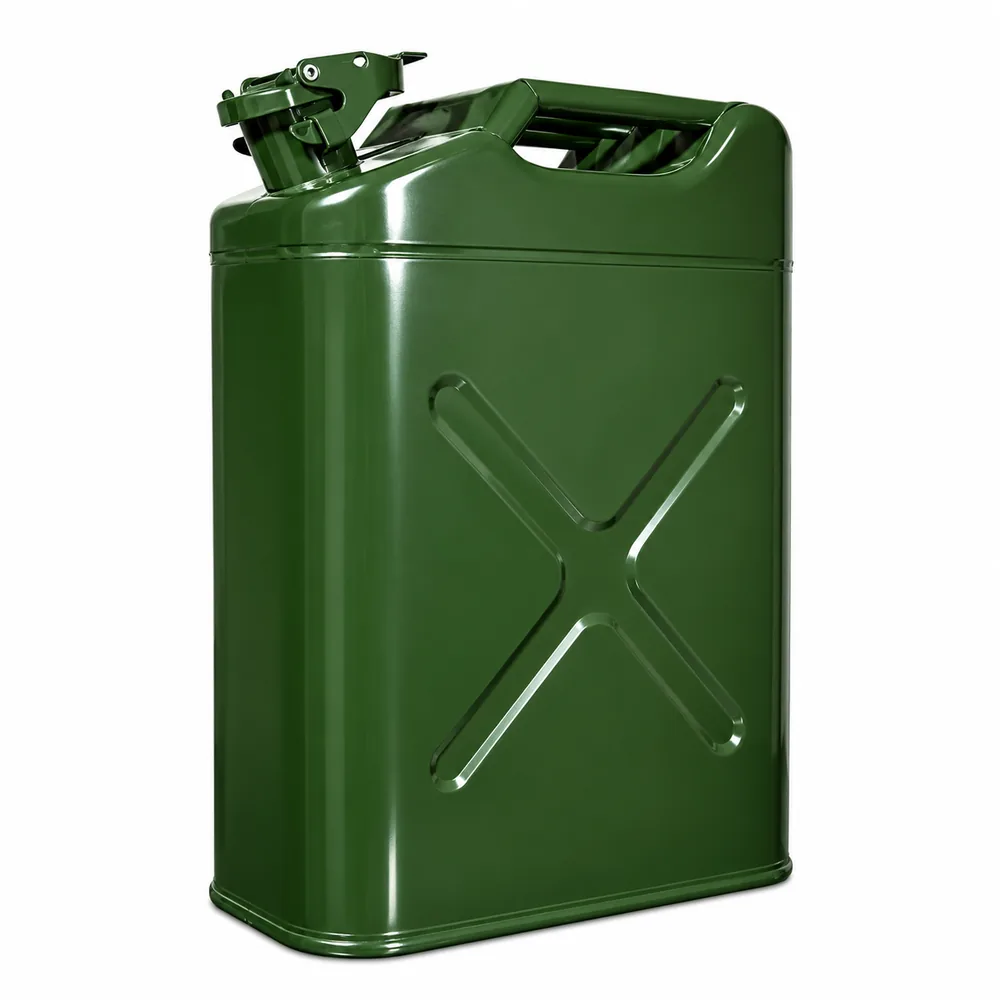 20L NATO Steel Fuel Can |
A closed-head steel jerrican for 173.202 and 173.203 loads; ask for the full mark of the design quoted. |
| Liquid chemicals, UN 3H1 | 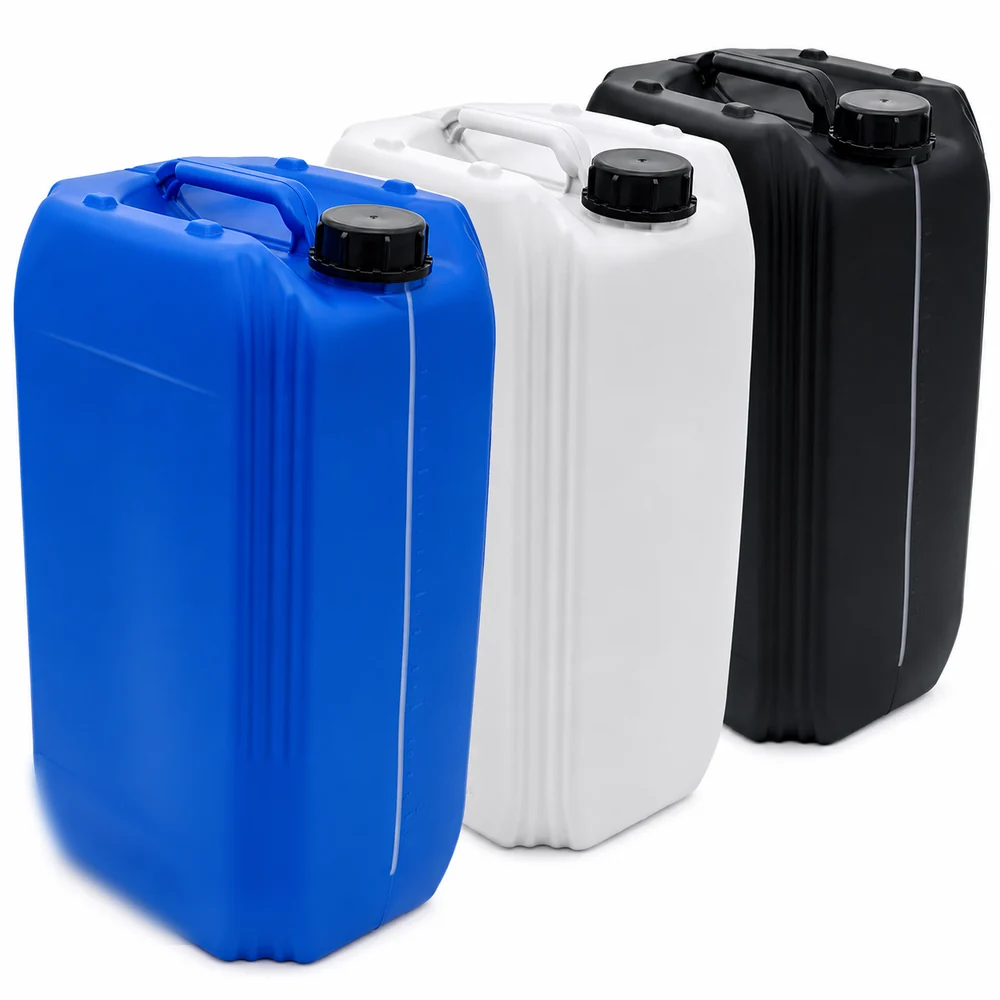 25L Stackable Plastic Jerrycan |
A stackable 25 litre HDPE jerrican; check its marked specific gravity and the plastic against your liquid. |
| Solvents and fuels in plastic | 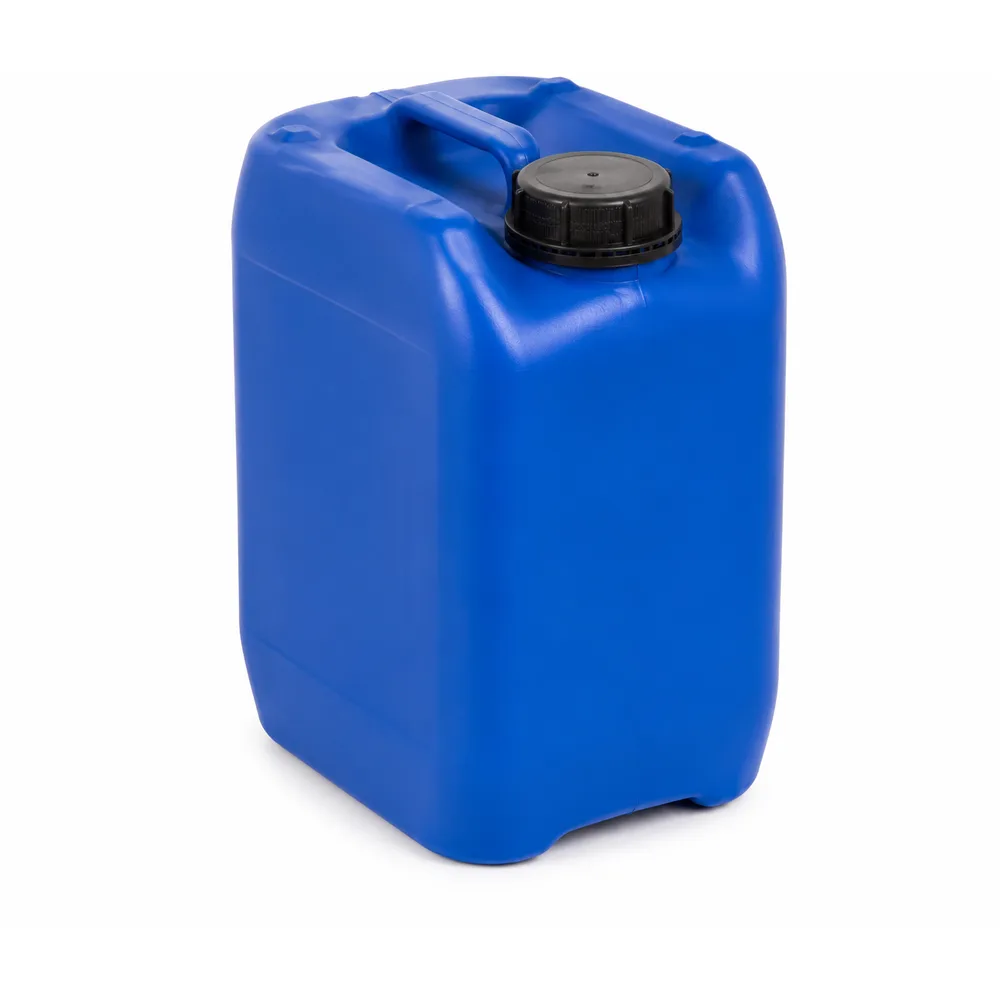 Fluorinated HDPE Jerrycan |
A fluorinated barrier for liquids that permeate plain HDPE, the compatibility check 173.24(e) puts on the shipper. |
| Viscous liquids, pastes and solids | 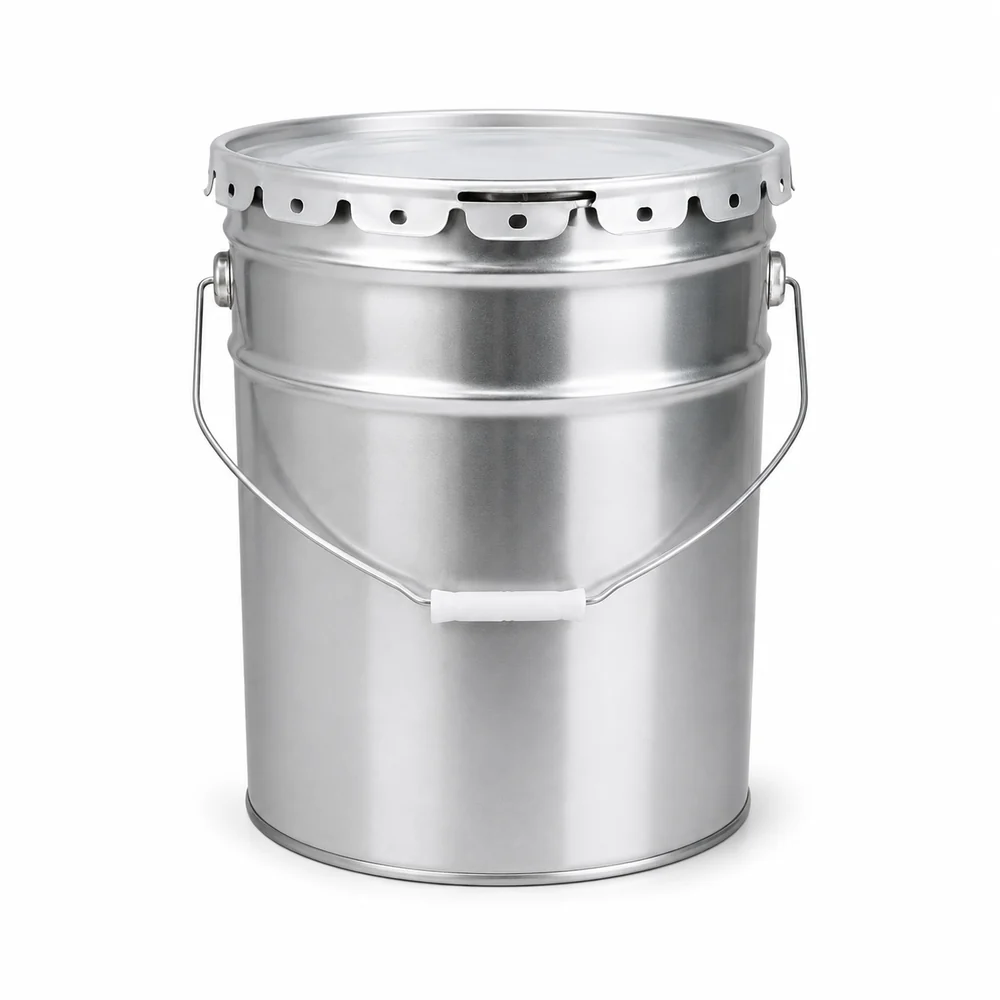 Metal Pail with Flower Lid or Lever Ring, 4L to 35L |
A removable-head steel pail in the 1A2 family; ask which UN mark a build carries before you fill it with hazmat. |
| Leaking or damaged packages | 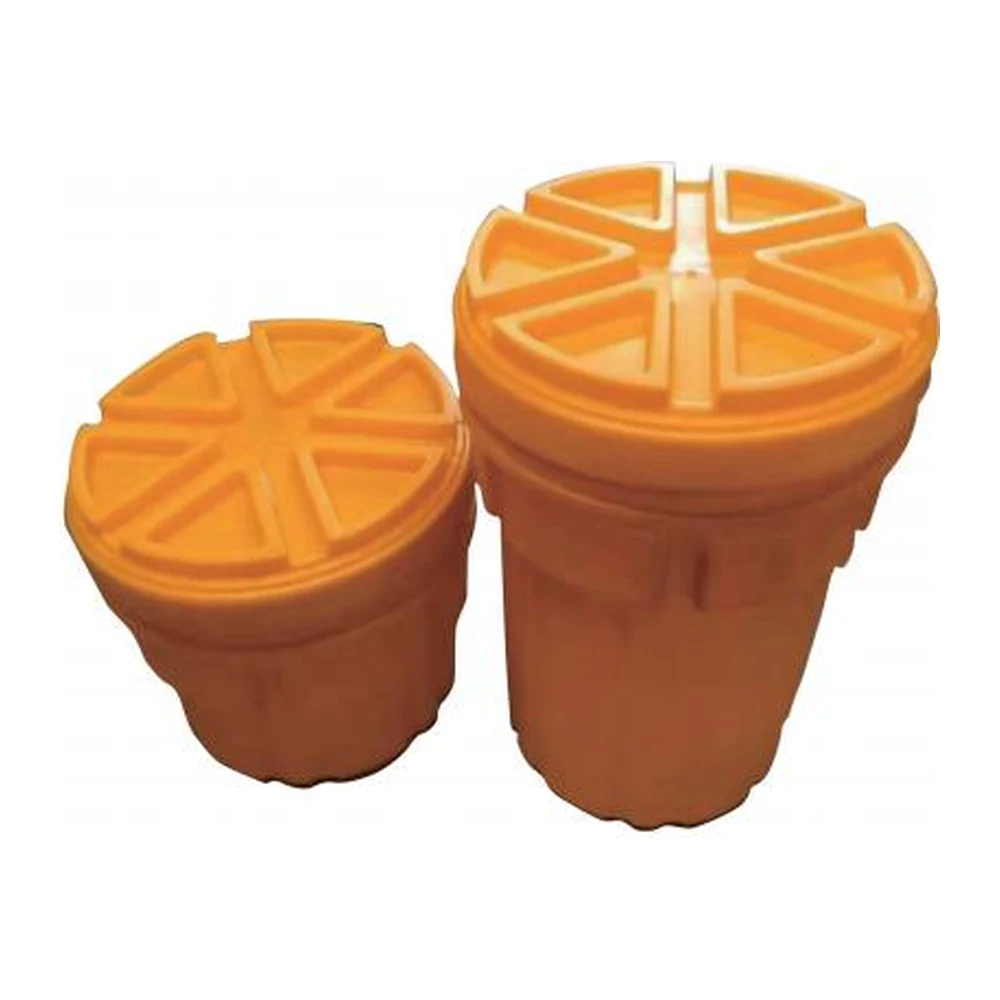 Salvage Drums & Spill Response Storage |
Removable-head polyethylene drums of 76 to 360 litres, inside the 450 L cap in 173.3(c); ask which approval a run carries. |
Hazmat shipping is moving, or preparing to move, a hazardous material in commerce. Under 49 CFR 171.8 that means anything listed in the Hazardous Materials Table, anything meeting a hazard class definition in part 173, and hazardous substances, hazardous wastes and marine pollutants. Petrol, paint, solvents, acids and lithium batteries all qualify. Classifying, packing, marking, labelling, loading and signing the papers are each regulated functions (171.1(b)).
Through your employer. 49 CFR sets up no government hazmat licence: the employer trains and tests each hazmat employee and signs a record certifying it (172.704(d)). Training may come from the employer or from a public or private provider (172.702(c)), and repeats at least every three years. Drivers of placarded loads also need the hazardous materials endorsement on a commercial driver’s licence (383.93), and IATA’s own shipper course certificates for air run for 24 months.
Yes, as a rule. A fully regulated shipment needs things an ordinary parcel does not: UN specification packaging, labels, a shipping paper with a monitored 24-hour emergency number, trained staff and, from 454 kg of most classes, placards and annual PHMSA registration. Not every carrier accepts hazmat, and those that do set their own terms, so give the UN number and packing group when you ask for a rate. A limited quantity avoids most of these costs.
Not as a rule: 49 CFR 173.150(b) caps a Class 3 limited quantity package at 30 kg (66 lb) gross. Section 173.156(b) lifts the cap in two cases. Packages unitised in cages, carts or boxes may exceed it by rail, private or contract carrier, or an exclusive-use vehicle, moving to or from a manufacturer, distribution centre or retail outlet. Banded, palletised fibreboard units of up to 250 kg net may travel by highway or rail between those three.
In the exception section that column 8A of the Hazardous Materials Table names for the material. Sections 173.150 to 173.155 cover Class 3, Class 4, Divisions 5.1, 5.2 and 6.1, Class 8 and Class 9 in turn, and 173.306 covers compressed gases. Section 173.156 adds the pallet and display-pack reliefs, and 173.27 adds the conditions for air. For Class 3 and Class 8 the package limit is 30 kg gross.
In part. A shipper may keep its retained copy as an electronic image (49 CFR 172.201(e)), and since 3 September 2026 the emergency response information may be held in electronic form (172.602(b)). The electronic route for the shipping paper itself in 172.201(a)(5) is written for rail only, and on the road 177.817(e) still has the driver keep the shipping paper within reach or in the door pouch.
They tell the carrier, and anyone answering an incident, what is in the load and how to deal with it. The 24-hour emergency number and emergency response information travel with the paper (49 CFR 172.600 to 172.604). The driver keeps it where an inspector or responder will find it (177.817(e)), and the shipper’s signed certification on it makes the shipper answerable for the description (172.204).
Only some, under USPS rules rather than 49 CFR: mail is outside the Hazardous Materials Regulations (171.1(d)(7)) and follows USPS Publication 52. Flammable liquids are barred from air and international mail, and from all mail at a flash point of −7 °C (20 °F) or below (Publication 52, 343.21). Petrol flashes at about −43 °C (−45 °F, NIOSH), so it cannot be mailed; other flammable liquids may go by surface mail as limited quantities.
49 CFR is Title 49, Transportation, and its parts 171 to 180 govern hazmat in transport. 29 CFR is Title 29, Labor, where OSHA’s rules sit in chapter XVII, including the hazard communication standard at 1910.1200 that sets workplace labels and safety data sheets. A drum of solvent meets 29 CFR in the store and 49 CFR once it is prepared for shipment. OSHA hazard communication training counts towards hazmat training where it covers the same ground (49 CFR 172.704(b)).
Every day online, and once a year in print. The eCFR text is updated each day, and the annual edition of Title 49 is revised as of 1 October each year (GovInfo). PHMSA changes the hazmat rules through final rules in the Federal Register: in 2026 it changed training for packaging makers (91 FR 1433) and the limited quantity mark (91 FR 49332). Both the eCFR and the GovInfo annual edition are free to read and download.
Only if you employ the drivers. Part 382 requires drug and alcohol testing of drivers who need a commercial driver’s licence, part 40 sets how DOT tests are carried out, and part 391 sets the qualifications of commercial vehicle drivers, including the medical certificate in 391.41. A vehicle of any size carrying a placarded hazmat load needs a CDL driver with the hazardous materials endorsement (383.5 and 383.93). A shipper handing loads to a for-hire carrier leaves these duties with the carrier.
They grade danger within a hazard class: Packing Group I is great danger, II medium and III minor (49 CFR 171.8). For a flammable liquid the group comes from its flash point and boiling point (173.121): petrol is II, diesel III. The group decides which UN packaging may carry the material, through the X, Y or Z in the mark, and the size of its limited quantity: 0.5, 1.0 or 5.0 litres for Class 3.
When an inspection finds it free of incompatible residue, rupture or other damage that weakens it, and it conforms to the HMR in every respect (49 CFR 173.28(a)). A drum or jerrican for liquids is leak-tested again at 48 kPa for Packing Group I or 20 kPa for II and III, then marked L with the tester and year. The original filler may skip that retest for a compatible refill under exclusive use, in stainless steel 1.5 times minimum thickness, plastic under five years old or an approved design.
It is the table in 49 CFR 173.2a(b) that sets the class of a material meeting more than one of Class 3, Class 8 and Divisions 4.1, 4.2, 4.3, 5.1 and 6.1. It applies when the Hazardous Materials Table does not list the material by name. Read the row for one hazard against the column for the other. A Class 3 liquid in Packing Group III that is also a Class 8 liquid in Packing Group II ships as Class 8, and the stricter packing group of the two applies.
A liquid or solid that causes irreversible damage to human skin where it touches it, within a set time (49 CFR 173.136(a)). A liquid, or a solid that may melt in transport, also counts if it corrodes steel or aluminium faster than 6.25 mm (0.25 in) a year at 55 °C. Section 173.137 sets the packing group: I for damage after up to 3 minutes’ exposure, II after up to 60 minutes, III after up to 4 hours or by the corrosion rate alone.
Security, under the Transportation Security Administration in chapter XII of Title 49. Part 1520 governs Sensitive Security Information, part 1540 sets the general rules of civil aviation security, part 1542 covers airport security, and part 1544 covers the security programmes of air carriers and commercial operators. Hazmat sent by air follows parts 171 to 173 and part 175, or the ICAO Technical Instructions under 171.24; IATA and IMDG basics covers that route.
Part 192 sets the federal safety standards for pipelines carrying natural and other gas. Part 195 covers pipelines carrying hazardous liquids, meaning petroleum, petroleum products, anhydrous ammonia and ethanol or other non-petroleum fuels, and carbon dioxide. Both are PHMSA rules in subchapter D of chapter I, next to the hazmat rules in subchapter C. Part 195 excludes liquids moved by tank truck, tank car, vessel or aircraft (195.1(b)(9)), so a drum or jerrican of fuel travels under parts 171 to 180.
Under 49 CFR 390.5, a vehicle used on a highway in interstate commerce counts if it has a weight rating or weight of 4,536 kg (10,001 lb) or more. So does one built or used to carry more than 8 people, driver included, for pay or more than 15 without pay. So does one that carries hazmat in a quantity that needs placards. The licensing definition in 383.5 starts at 11,794 kg (26,001 lb) but takes in a vehicle of any size carrying placarded hazmat, so its driver needs a CDL.
The 14 tasks listed in 49 CFR 171.1(b): deciding the hazard class; selecting, filling and closing the packaging; marking and labelling; preparing and reviewing the shipping paper; providing emergency response information. The list continues with telling a shipper the US rules for an import; certifying the material fit for transport; loading, blocking and bracing; segregating; and placarding. Each person who performs one, or is responsible for it, must meet the HMR for that task, and an employee who does it needs training under 172.704.
No. Under 49 CFR 173.150(b), Class 3 limited quantities ship without UN specification packaging. Inner packagings hold up to 0.5 litre in packing group I, 1 litre in II or 5 litres in III, packed in a strong outer packaging of 30 kg gross or less, and the package carries the limited quantity mark. The general packaging rules of part 173, subpart B still apply. A 20 litre jerrican exceeds every Class 3 limit.
At least 12 mm (0.47 in) high, under 49 CFR 172.301(a)(1). Packages of 30 litres or 30 kg or less, and cylinders of up to 60 litres water capacity, need characters at least 6 mm high. Packages of 5 litres or 5 kg or less need a size that suits the package. The number carries its prefix, as in UN1203. The UN packaging mark the maker applies follows the same 12 mm and 6 mm rule (178.3(a)(4)).
The identification number. 49 CFR 172.202(b) sets the basic description in a fixed order with nothing in between: the ID number, the proper shipping name, the hazard class and the packing group, as in UN1203, Gasoline, 3, PG II. On a paper that also lists goods outside the rules, the hazmat entries must come first, stand out in a contrasting colour, or carry an X in a column headed HM (172.201(a)(1)).
The standards and regulations this page relies on, at their issuing body. Where a market rule is named here, check the current revision before you specify against it.
Last reviewed by David Guru, Co-Founder & Business Development Director.
Tell us the UN number, the packing group, your market and your volumes. We come back with the design certified to the right code, the plant named on its certificate and a quotation.