
What DGSA stands for, which businesses ADR 1.8.3 obliges to appoint one, what the adviser does each year, and how the UK exams and five-year certificate work.

DGSA stands for dangerous goods safety adviser. ADR 1.8.3 requires every business whose work includes consigning, carrying, packing, loading, filling or unloading dangerous goods by road to appoint one, unless an exemption applies, such as loads kept within the 1.1.3.6 small-load limits. The adviser monitors compliance, writes an annual report and holds a certificate valid for five years.
Quick answer: Who needs a DGSA?
Under ADR 1.8.3, any business that consigns, carries, packs, loads, fills or unloads dangerous goods by road must appoint a dangerous goods safety adviser unless an exemption applies. A firm whose loads all stay within the 1.1.3.6 small-load limits, such as 333 litres of petrol or 1,000 of diesel per vehicle, needs none. The adviser’s certificate lasts five years.
DGSA stands for dangerous goods safety adviser: the person a business appoints, under ADR 1.8.3 for road and RID 1.8.3 for rail, to help prevent the risks its dangerous goods work poses to people, property and the environment. In transport, logistics and shipping the meaning is the same. The certificate model in ADR 1.8.3.18 covers three modes, road, rail and inland waterway, and each certificate states which of them it covers.
The appointment is a legal duty of the business. ADR 1.8.3.4 lets the adviser be the head of the business, an employee with other duties or an outside consultant, provided that person can do the work. ADR and RID share the wording of section 1.8.3, so road and rail advisers carry the same duties and sit different mode papers. Our jerry can glossary defines the other transport terms used here.
Every undertaking whose activities include the consigning or carriage of dangerous goods by road, or the related packing, loading, filling or unloading, must appoint one or more safety advisers (ADR 1.8.3.1). Consignors joined that list in the 2019 edition with a transitional period, and HSENI confirms that consignor-only businesses had until 31 December 2022 to appoint. Since 1 January 2023 a firm that only offers goods for carriage, and never drives them, falls inside the rule.
| Role | DGSA needed? | Source |
|---|---|---|
| Consignor, offering goods for carriage | Yes, unless an exemption applies | ADR 1.8.3.1 |
| Carrier or haulier | Yes; the occasional exemption is closed to it | ADR 1.8.3.1; HSE manual |
| Packer, filler or loader | Yes, unless an exemption applies | ADR 1.8.3.1 |
| Freight forwarder, consolidator or in-transit store | Yes, as an intermediate unloader | DfT guidance, quoted by HSE |
| Final consignee receiving the goods | No | DfT guidance, quoted by HSE; GOV.UK |
Under ADR 1.8.3.2 you do not need a DGSA when every load stays within the small-load limits of ADR 1.1.3.6 or travels as limited or excepted quantities. You also do not need one when dangerous goods are neither your main nor your secondary activity and you handle only occasional national movements of goods posing little danger or risk of pollution. Each country chooses whether to grant these exemptions. Great Britain grants both through regulation 3(j) of the Carriage of Dangerous Goods and Use of Transportable Pressure Equipment Regulations 2009 (CDG 2009), and HSE states that the GB exemptions do not apply to international carriage.
The small-load test is the one a fuel user can run alone. Petrol, UN 1203, is transport category 2, with a limit of 333 litres per transport unit; diesel, UN 1202, is category 3, with 1,000 litres (ADR 1.1.3.6.3). Sixteen 20 L cans of petrol (320 litres) stay inside, and a seventeenth takes the vehicle over. Mixed loads are scored in points, which the ADR 1,000-point calculator adds up; ADR limited quantities and the 1,000-point rule covers what the threshold switches off.
The occasional exemption needs judgement. HSE gives indicators: goods in transport category 4; category 3 goods in packages, up to 1,500 litres or kilograms per load; explosives up to 10% above the placarding threshold; and “occasionally” read as one to two journeys a month. Categories 0, 1 and 2 do not qualify on this reading. HSE puts carriers, delivery firms and freight forwarders outside it, because carriage is often their main or secondary activity.
The 2025 edition extended the occasional exemption to consignors, an amendment OTIF lists for RID and ADR 2025 at 1.8.3.2. Before that the UK had covered the gap with multilateral agreement M351, countersigned on 10 January 2023 and valid to 31 December 2024. GOV.UK’s guide adds goods moved a very short distance by road, such as between buildings on an industrial estate, and private vehicles.
Yes. ADR has no enforcement provisions of its own, so CDG 2009 sets the legal framework in Great Britain and applies ADR to road carriage (regulation 5), and Northern Ireland has an equivalent set of regulations from 2010. According to the UK register of regulated professions, the Department for Transport regulates the DGSA role in Great Britain and HSENI does so in Northern Ireland.
A business must tell the competent authority who its adviser is when asked (ADR 1.8.3.5). GOV.UK sends reports about a lorry, driver or haulier to the Driver and Vehicle Standards Agency (DVSA), and reports of a business getting things wrong, such as incorrect labelling or missing driver training, to HSE. A firm with no adviser should be able to name the exemption it relies on.
A DGSA’s main task, under the responsibility of the head of the business, is to help it carry out its dangerous goods work within the rules and in the safest possible way (ADR 1.8.3.3). Three duties come first: monitoring compliance, advising the business and preparing an annual report. ADR then lists the practices and procedures the adviser monitors.
| Area | What the adviser monitors, ADR 1.8.3.3 |
|---|---|
| Identification | Procedures for identifying the dangerous goods carried |
| Vehicles and equipment | Special requirements when buying vehicles; checks on equipment used to carry, pack, fill, load or unload |
| People | Training, including on rule changes, with records; written operating procedures and instructions |
| Emergencies | Emergency procedures; investigating serious accidents, incidents and infringements; stopping them recurring |
| Contractors | The legal requirements applied when choosing and using sub-contractors |
| On board | The documents and safety equipment each vehicle must carry |
| Operations | Checks that packing, filling, loading and unloading meet the rules |
| Security | That the security plan required by 1.10.3.2 exists |
In a business that fills and ships jerricans, much of that list lands on the container. The adviser checks that each design’s UN mark covers the substance and its packing group, that plastic jerricans stay within the five years from manufacture allowed by ADR 4.1.1.15, and that ADR 1.3 training is recorded. The UN number packaging finder lists the packaging codes ADR allows for each UN number.
A DGSA annual report is the adviser’s yearly report to the management of the business, or to a local public authority where that applies, on the business’s activities in the carriage of dangerous goods. ADR 1.8.3.3 requires it to be kept for five years and made available to the national authorities on request.
ADR prescribes no form or contents. A report that follows the 1.8.3.3 list answers each duty an inspector can ask about. It sets out the goods handled by UN number and class, the modes used, training delivered and the records behind it, and equipment and packaging checks. It covers accidents, incidents and infringements with the action taken, rule changes that affect the business, and the state of any security plan.
Day to day, a DGSA checks the business’s dangerous goods work against the list in ADR 1.8.3.3 and keeps evidence that each check happened. ADR leaves the method open. German law spells it out: the adviser keeps written records of every check, with its date, the people monitored and the operations checked (GbV §8), and the business keeps those records and the annual report for five years (GbV §9).
| Record | Kept by | For how long | Rule |
|---|---|---|---|
| Annual report | The business | 5 years, shown to the authorities on request | ADR 1.8.3.3 |
| Copy of the dangerous goods transport document | Consignor and carrier | At least 3 months | ADR 5.4.4.1 |
| Training records | Employer | A period the competent authority sets; checked when someone starts a new job | ADR 1.3.3 |
| Records of each check (Germany) | The business | 5 years | GbV §8 and §9 |
German law also fixes the annual report’s deadline and minimum content. The report is due within six months of the end of the financial year. It states the goods by class and the total quantity in one of four bands (up to 5 t, over 5 to 50 t, over 50 to 1,000 t, or over 1,000 t, counting goods received). It gives the number and type of accidents that needed a 1.8.3.6 report, and whether the business took part in carrying high consequence dangerous goods under 1.10.3 (GbV §8). ADR sets no headings, so a UK adviser can use these as a template. The transport documents behind those figures are described in dangerous goods transport for liquids.
The rules change every two years, and the adviser’s monitoring of training covers changes to them (1.8.3.3). ADR 2025 has applied since 1 January 2025, and 1.6.1.1 let goods travel under the ADR 2023 rules until 30 June 2025. The 2027 amendments enter into force on 1 January 2027 (UN depositary notification C.N.395.2026), and the amended 1.6.1.1 keeps ADR 2025 rules usable until 30 June 2027. One 2027 change reaches the records: ADR 1.3.3 extends the training-record duty to the people who do the work, unless the participant keeps the records for them (ECE/TRANS/WP.15/274). France’s exam body updates its questions every two years to follow the cycle (order of 6 February 2019, art. 4). ADR 2025 explained lists the 2027 changes.
When an accident affects people, property or the environment during carriage, packing, filling, loading or unloading by the business, the DGSA collects the facts and writes an accident report to management or a local public authority (ADR 1.8.3.6). That report does not replace any report the management owes under other law.
A serious occurrence also needs a report to the competent authority, on the model in 1.8.5.4, within one month (1.8.5.1). The triggers in 1.8.5.3 are death or an injury needing intensive treatment, a hospital stay of at least one day or three consecutive days off work. They also include a release, or imminent release, of a set quantity or more by transport category, damage over 50,000 euros, and the authorities evacuating people or closing a road for at least three hours.
To become a DGSA in the UK you pass three exams: the core module, all dangerous goods classes, and one mode, road, rail or inland waterways. All three must be passed within 12 months of the first. DVSA takes the applications and payment, and Qualifications Scotland, the successor to the SQA, administers the exams.
| Paper | Time | Format | Pass mark |
|---|---|---|---|
| Core | 1 h 15 min | Questions on classification, packaging, documents, exemptions, training and the law | 65% |
| All classes | 1 h 45 min | Questions across the nine classes | 65% |
| Road, rail or inland waterways | 1 h 45 min | One case study and a range of questions | 65% |
Exams run four times a year, in person, at venues in England, Scotland and Northern Ireland. The last 2026 sitting is on 26 November 2026, with applications closing on 12 November; the 2027 dates are 4 March, 10 June, 9 September and 25 November. Results, with the certificate once all three papers are passed, can take up to eight weeks. The GOV.UK booking page asks for no proof of a course, while ADR 1.8.3.8 describes the route as training followed by an approved exam.
ADR fixes the shape of every DGSA exam. It is a written test, which may add an oral (1.8.3.12.1). It has two parts: at least 20 open questions on the subjects in 1.8.3.11, where two multiple-choice questions count as one open question, and a case study on the adviser’s duties (1.8.3.12.4). Candidates may use no documents in the written test other than international or national regulations (1.8.3.12.2), and the examining body must not be a training provider (1.8.3.10).
The UK papers are open book within that rule. Candidates may take in printed copies of ADR, RID or ADN, CDG 2009 as amended, the dangerous goods emergency action code list, and the approved derogations and transitional provisions. In the core and classes papers you answer from the agreement of your choice. Each answer cites the paragraph, such as 5.4.1.2.3.2 or 4.1.4.1 P001, and the published core sample paper warns that marks may be lost if that detail is missing.
A DGSA course is the training ADR 1.8.3.8 puts in front of the exam: to obtain a certificate, a candidate undergoes training and then passes an exam the competent authority approves. ADR 1.8.3.11 sets the minimum ground in two parts. Part (a) is the consequences and main causes of accidents involving dangerous goods. Part (b) is the law, including classification, packing and tanks, marks, labels and placards, the transport document, mixed loading and segregation, quantity limits and exemptions, handling and stowage, crew training, instructions in writing and transport equipment.
The UK splits that ground across its three papers. The GOV.UK syllabus, updated on 2 June 2026, tests classification in the core and all-classes papers. It keeps transport equipment, loading and segregation and tunnel codes for the road paper, which also asks candidates to read the GB Emergency Action Code system. Limited quantities run through all three, as described in limited quantities and the 1,000-point rule, and the road paper adds the small-load thresholds set by ADR transport categories.
Whether a course is compulsory depends on who runs the exam. ADR 1.8.3.10 lets each competent authority hold the exam itself or designate a body in writing, judged on its competence, its impartiality and its independence from anyone who employs safety advisers. Directive 2008/68/EC applies ADR’s annexes inside every EU member state (Annex I.1), so each country names its own body and sets its own entry route.
| Country | Who runs the exam | Course needed first? | Source |
|---|---|---|---|
| United Kingdom | DVSA takes the booking; Qualifications Scotland administers | No proof asked at booking | GOV.UK |
| Germany | Chambers of industry and commerce (IHK) | Yes: a recognised course of at least 22 h 30 min for one mode, plus 7 h 30 min for each further mode | GbV §5 and §7 |
| France | CIFMD, designated by the order of 6 February 2019 | Yes: a training certificate is checked before entry | Order of 6 February 2019, art. 3 |
| Netherlands | CBR | Yes: the CBR says a course must be taken | CBR |
Prepare with the official material. GOV.UK publishes a sample paper for the core, all-classes and road exams, plus a page of worked questions that shows how answers are marked. No UK rule sets a study time. Germany sets the only statutory floor we found: at least 22 h 30 min of teaching for one mode, with no more than 7 h 30 min in a day. That means a one-mode course there runs at least three teaching days (GbV §5).
Each sample paper carries 50 marks and states that 32 of them pass it, against the 65% the syllabus gives. The core sample sets 10 questions in 1 h 15 min and the all-classes sample 8 questions in 1 h 45 min. The road paper splits its marks in two: Section A is a case study worth 35 marks, Section B is short questions worth 15, and the candidate attempts one case study and all of Section B.
GOV.UK marks the working as well as the answer. It asks for the reference to each rule used, down to part, chapter, section, sub-section and packing instruction number, and for the steps taken. Its first worked question gives a liquid with a dermal LD50 of 270 mg/kg, a flash point of 15 °C and an initial boiling point of 85 °C. That reads as Class 6.1, packing group III, and as Class 3, packing group II. The precedence table in 2.1.3.10 makes it Class 3, packing group II, and the collective entry is UN 1992, flammable liquid, toxic, n.o.s. Our guides to packing groups and UN numbers and proper shipping names cover each step of that route.
The sample papers print three slots: 09:30 to 10:45 for the core, 11:15 to 13:00 for all classes and 14:00 to 15:45 for road, so a candidate can sit all three in one day. Rail and inland waterways run at the same time, so only one of them fits an exam day. The road paper’s own instructions say to read the chosen case study from start to finish, answer its parts as one scenario, and take the easier Section B questions first.
A DGSA certificate lasts five years (ADR 1.8.3.16.1). It is extended by five years at a time, counted from its expiry date, when the holder passes an approved exam during the year before it expires. The renewal exam covers the duties in 1.8.3.3 and the rule changes since the last certificate, and drops the case study (1.8.3.16.2).
A certificate is recognised in every ADR country (1.8.3.15), and adding a mode mid-term keeps the original expiry date (1.8.3.19). ADR also lets a country issue a certificate limited to one group of goods, such as Class 1, Class 2, Class 7, or the fuels UN 1202, 1203, 1223 and 3475 with aviation fuel under UN 1268 or 1863 (1.8.3.13). The UK route lists a single all-classes paper. DVSA publishes a voluntary list of qualified advisers, showing the classes, modes and expiry date of each certificate.
No. US hazardous materials law contains no duty to appoint a safety adviser. The duty sits with the hazmat employer, who must train and test every hazmat employee (49 CFR 172.702).
Training under 49 CFR 172.704 covers general awareness, function-specific duties, safety, security awareness and, where a security plan applies, in-depth security. A new or reassigned employee may work under the direct supervision of a trained employee until training is complete, within 90 days. Recurrent training falls due at least once every three years. The employer keeps a record of the preceding three years for as long as the employee does the job, plus 90 days. Hazmat packaging and shipping basics covers the US rules for the package itself.
We make the containers a DGSA checks. We do not give DGSA advice or act as anyone’s safety adviser. Our steel and HDPE jerricans for dangerous goods hold UN certification, certified per design type and made under quality assurance the competent authority accepts, in factories certified to ISO 9001, ISO 14001 and ISO 45001.
Send us the UN number, the packing group and the destination. We reply with the design whose full mark covers it and the authority named on its certificate, or tell you that none of ours does: the evidence an adviser looks for under the packaging and equipment checks in 1.8.3.3. For the emergency side, our salvage drums overpack a leaking container. ADR 4.1.1.19 lets a damaged or leaking package travel in an approved salvage packaging, so ask what UN approval a size carries before you plan to move dangerous goods in it.
| Your use case | Recommended can | Why this one |
|---|---|---|
| Petrol and diesel by road, steel | 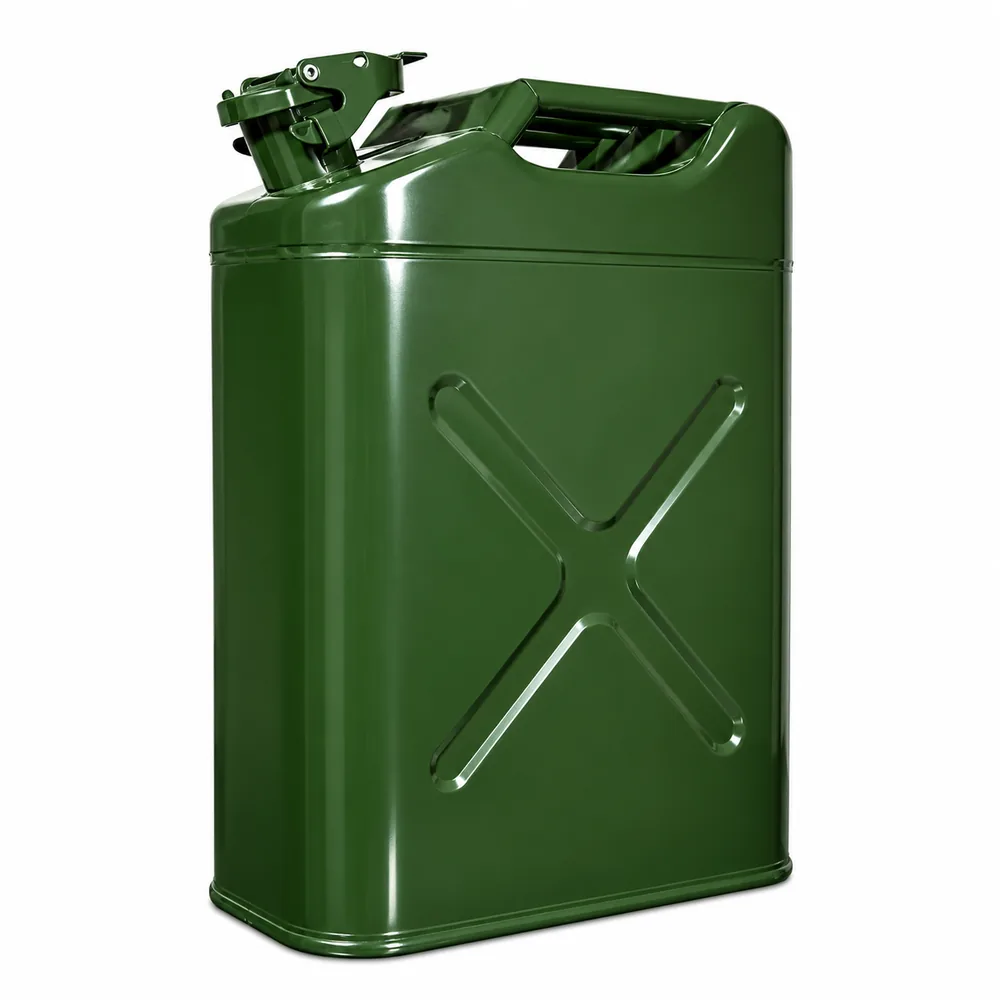 20L NATO Steel Fuel Can |
A UN-marked steel jerrican; ask for the full mark and certificate your adviser will check. |
| Liquid chemicals, UN 3H1 | 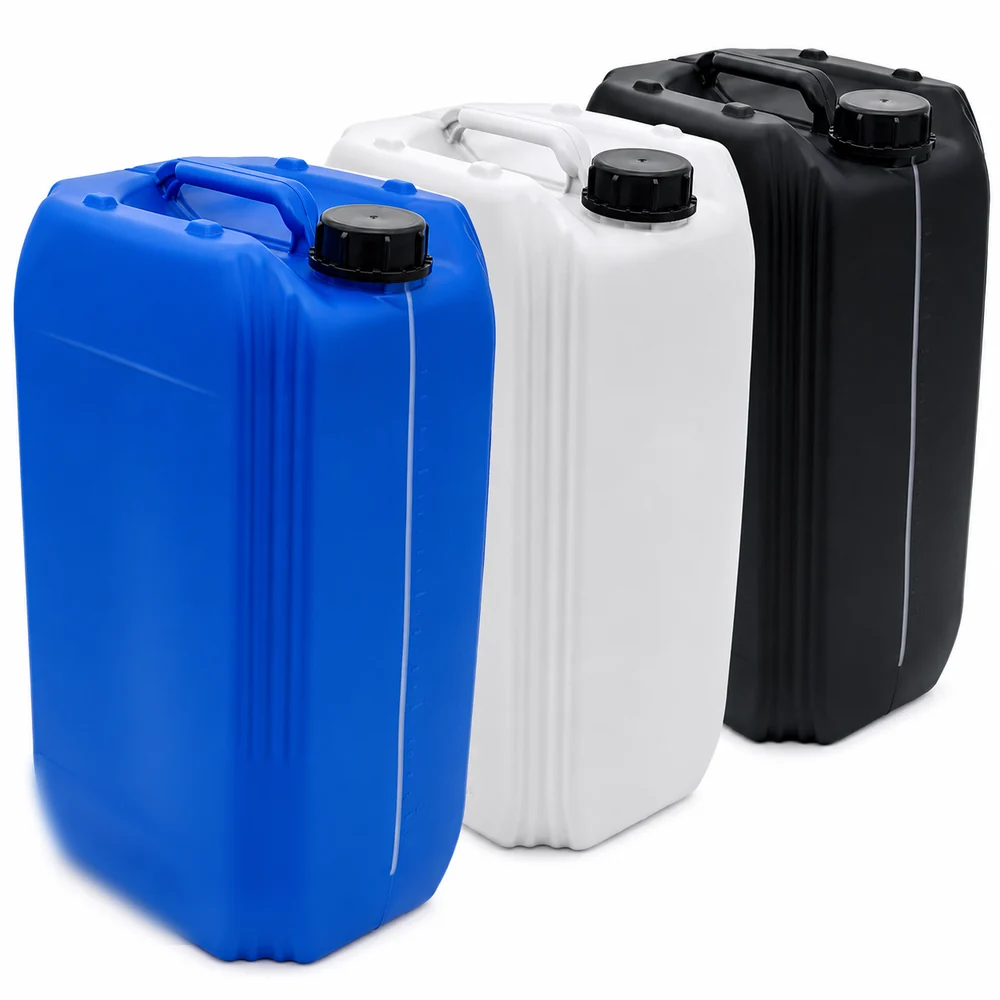 25L Stackable Plastic Jerrycan |
A stackable HDPE jerrican; its date of manufacture starts the five-year clock in ADR 4.1.1.15. |
| Emergency procedures, leaking packages | 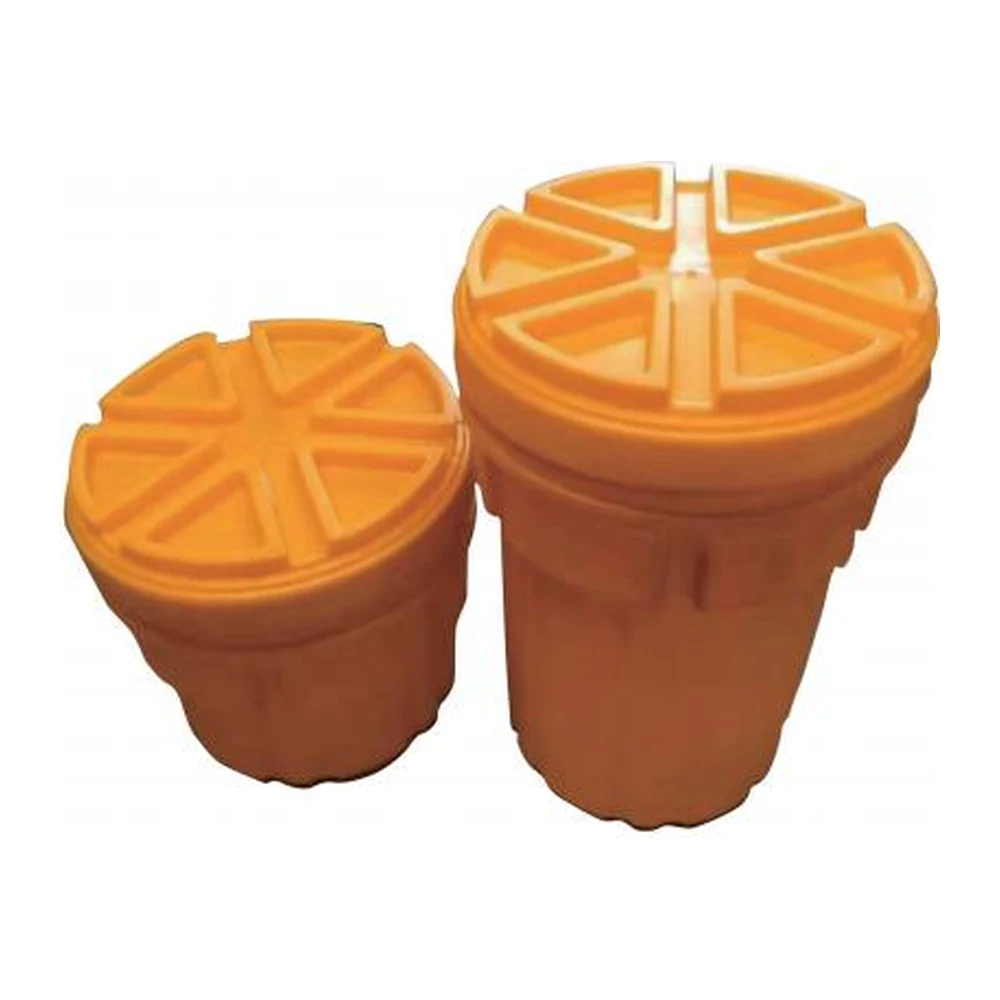 Salvage Drums & Spill Response Storage |
Overpack drums for a failed container; confirm the UN approval of the size before moving goods in it. |
In healthcare and infection control DGSA means the same thing: dangerous goods safety adviser. A hospital, clinic or laboratory that consigns clinical waste (UN 3291, Class 6.2) for road transport falls under ADR 1.8.3.1 like any other consignor. UN 3291 sits in transport category 2, so the small-load exemption ends at 333 kg per transport unit, and ADR 1.8.5.3 makes a release of Class 6.2 goods during carriage reportable whatever the quantity.
A DGSA certificate is the vocational training certificate ADR 1.8.3.7 requires every safety adviser to hold, issued by the competent authority or a body it designates after the exam. The model in 1.8.3.18 shows the certificate number, the issuing state, the holder's name, date and place of birth, nationality and signature, the expiry date, and the modes it covers: road, rail or inland waterway.
DGSA training prepares a candidate for the safety adviser exam. ADR 1.8.3.9 says it must give enough knowledge of the risks of carrying, packing, filling, loading and unloading dangerous goods, of the laws and regulations that apply, and of the adviser's duties in 1.8.3.3. It is separate from the ADR 1.3 training every employee handling dangerous goods must receive, which the adviser monitors along with the employer's training records.
Yes. ADR 1.8.3.4 allows the adviser to be the head of the business, an employee with other duties, or a person not employed by the business at all, provided that person can carry out the duties. The adviser works under the responsibility of the head of the undertaking (1.8.3.3), so the duty to comply stays with the business. DVSA publishes a list of qualified advisers who have asked to be included.
A DGSA audit is the adviser's check of a site against the duties in ADR 1.8.3.3. Those are how goods are identified, equipment and packaging checks, training records, the documents and safety equipment on vehicles, packing, filling, loading and unloading, emergency procedures and the choice of sub-contractors. ADR does not use the word audit or set how often one happens. The findings feed the annual report, which the business keeps for five years.
No. The ADR driver training certificate, under chapter 8.2, qualifies a person to drive a vehicle carrying dangerous goods. The DGSA certificate, under 1.8.3.7, qualifies a person to advise the business that consigns, carries, packs, fills, loads or unloads them. A driver needs no DGSA certificate. The UK road paper expects an adviser to understand driver training and vocational training certificates, because monitoring them is part of the job.
Not in the UK. GOV.UK says the DGSA exams must be taken in person, at venues in England, Scotland and Northern Ireland. ADR 1.8.3.12.5 does allow electronic exams, but only on hardware and software the competent authority or examining body has accepted, with no search function and no link to other devices. Every exam must be invigilated with the candidate's identity checked (1.8.3.12.2).
You sit that paper again at a later date. GOV.UK says the three papers, the core module, all classes and one mode, must all be passed within 12 months of your first exam to qualify. Exams run four times a year, so a failed paper can be retaken inside that window. Each paper has a pass mark of 65%, and results can take up to eight weeks to arrive.
Not under ADR. The certificate model in ADR 1.8.3.18 lists three modes only: road, rail and inland waterway. Sea freight runs under the IMDG Code and air freight under the ICAO and IATA rules. Germany goes further: its GbV applies the 1.8.3 rules to carriage by sea-going ship as well. The UK core syllabus asks an adviser to understand how the sea and air rules relate to road and rail, because a container packed for a sea crossing reaches the port by road under ADR.
Not if every load stays within the ADR 1.1.3.6 limits: 333 litres of petrol or 1,000 litres of diesel per vehicle. Above that, HSE reads the occasional exemption as covering a business whose main activity is not carriage, moving transport category 3 goods such as diesel in packages up to 1,500 litres a load, one or two journeys a month. Petrol, category 2, gets no such reading, and regular deliveries to a site are not occasional.
Apply online through the GOV.UK booking page between the first and last application dates for the sitting, choosing the papers you need: all classes, the core module, and road, rail or inland waterways. DVSA emails payment details within three working days, and you must pay by 5pm on the last application date. Qualifications Scotland then emails a booking confirmation with the venue address, the time and what to take. To move to the next sitting, email it at least 14 days before the exam.
German law calls the adviser a Gefahrgutbeauftragter, short for Sicherheitsberater für die Beförderung gefährlicher Güter (GbV, section 3). French texts use conseiller à la sécurité, and the Dutch exam body CBR uses veiligheidsadviseur. All three name the safety adviser of ADR 1.8.3. The exam bodies differ: the IHK chambers in Germany, the CIFMD in France and the CBR in the Netherlands. Germany also applies the role to carriage by sea-going ship.
Yes, for the adviser role itself. ADR 1.8.3.7 requires every safety adviser to hold the vocational training certificate. Germany's GbV lets a business appoint only someone holding a valid certificate for the mode concerned, which the employer must check before the appointment (sections 3 and 9). Staff who support an adviser fall under the function-specific training of ADR chapter 1.3, and the employer keeps records of it.
It can no longer be renewed. ADR 1.8.3.16.1 extends a certificate only when its holder passes an exam during the year before it expires. The Dutch exam body CBR states the result: a holder whose certificate has lapsed sits the initial exam again, case study included, and working on an expired certificate is an offence. In Germany the renewal exam can be retaken any number of times, but only until the expiry date (GbV, section 6). Meanwhile the business needs another certified adviser.
None of the rules we read sets a prior qualification. The GOV.UK booking page sets no entry requirement, and ADR 1.8.3 sets no education level. The Dutch CBR advises taking the course at MBO level or above, the Dutch secondary vocational standard, without requiring it. Germany and France make the course itself the entry requirement: the German exam follows a recognised course, and France's CIFMD checks a training certificate before accepting a candidate.
Yes, on application. GbV section 6 makes German the exam language but lets the IHK allow English when the candidate supplies the regulations in English, pays for the English papers and their running, and has first attended an approved English-language course. Section 5 sets the same rule for the course. A pass needs at least 50% of the maximum points, and after a course the exam may be retaken once without further training.
DGSA stands for dangerous goods safety adviser. In transport, logistics and shipping it names the same role: the person a business appoints under ADR 1.8.3 for road, or RID 1.8.3 for rail, to monitor its dangerous goods work, advise management and write an annual report. The certificate names the modes the adviser passed (road, rail or inland waterway), lasts five years and follows a written exam (ADR 1.8.3.12.1, 1.8.3.16 and 1.8.3.18).
The standards and regulations this page relies on, at their issuing body. Where a market rule is named here, check the current revision before you specify against it.
Last reviewed by Clarence Cheang, Co-Founder.
Tell us the UN number, the packing group, your market and your volumes. We come back with the design certified to the right code, the plant named on its certificate and a quotation.