
Where to find a substance’s category in Table A, the limit each category sets under 1.1.3.6, what the small-load exemption lifts and keeps, and how tunnel codes sit beside it.
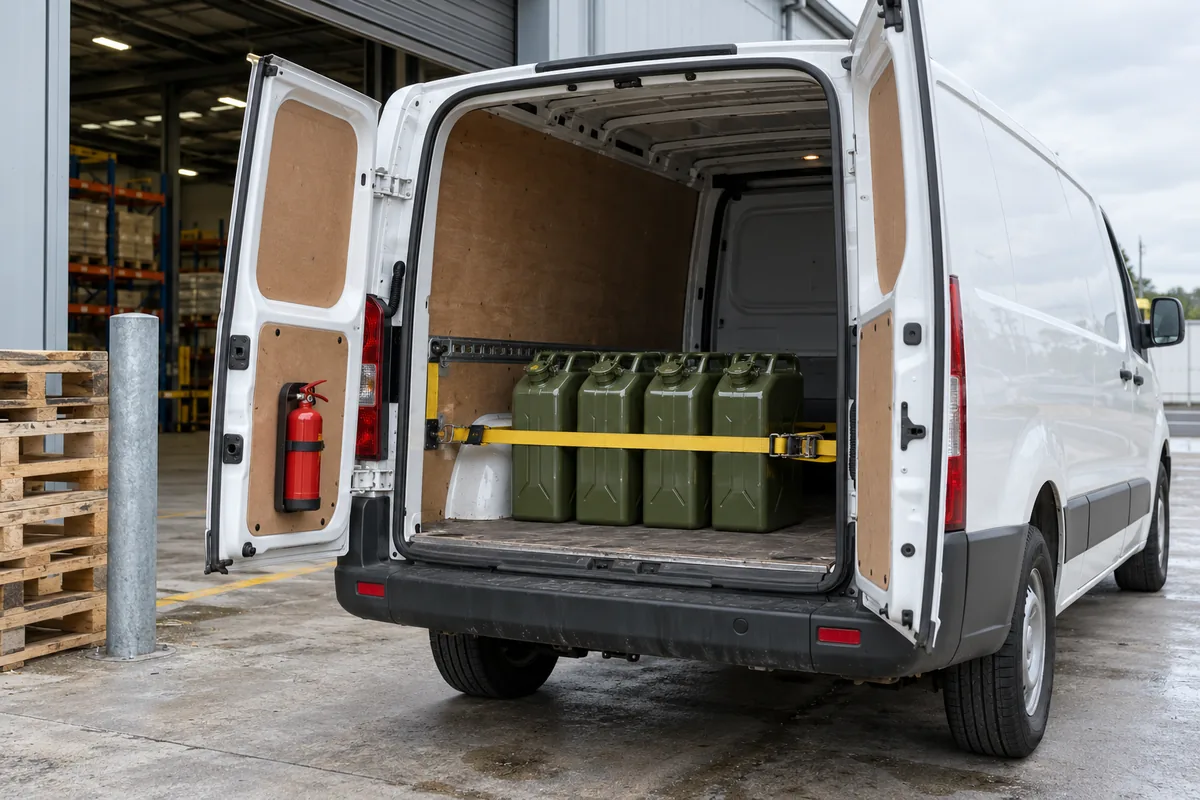
An ADR transport category is a number from 0 to 4, printed in column (15) of Table A, that caps how much of a dangerous good one vehicle may carry under the small-load exemption in ADR 1.1.3.6. Category 0 gets no exemption. Category 1 allows 20 litres or kilograms per transport unit, category 2 allows 333, category 3 allows 1,000 and category 4 has no limit.
A transport category is the hazard band ADR gives each dangerous goods entry to decide how much of it may travel in packages on one vehicle before the full regime applies. ADR 2025, 1.1.3.6.1 assigns every entry to category 0, 1, 2, 3 or 4, as shown in column (15) of Table A in Chapter 3.2. A lower number means a smaller allowance: category 1 holds the most dangerous goods that still get relief, and category 4 goods have no limit.
The category belongs to the goods and the limit to the transport unit, which ADR 1.2.1 defines as a motor vehicle on its own or with its attached trailer, so a van and its trailer share one allowance. Vehicle codes such as EX/II, EX/III, FL and AT describe vehicles built for explosives and tanks (ADR 9.1.1.2), and Part 9, where they sit, is one of the provisions the exemption lifts. The exemption covers goods in packages only (1.1.3.6.2), and HSE’s manual confirms that tankers and bulk loads fall outside it.
The table in ADR 2025, 1.1.3.6.3 gives the maximum total quantity per transport unit for each category, and 1.1.3.6.4 gives the multiplier used when categories are mixed. A load in one category is tested on its quantity; a mixed load is tested on points.
| Category | Main contents (ADR 1.1.3.6.3) | Maximum per transport unit | Points per litre or kg |
|---|---|---|---|
| 0 | A closed list: Class 1 explosives 1.1A, 1.1L, 1.2L and 1.3L, all Class 4.2 packing group I substances, hydrogen cyanide (UN 1051) and other named entries | 0: no exemption | Not applicable |
| 1 | Packing group I not in category 0; toxic gases; toxic and corrosive aerosols; listed explosives, self-reactive substances and organic peroxides | 20 (50 kg for the note a entries) | 50 (20 for note a) |
| 2 | Packing group II not in categories 0, 1 or 4; flammable gases and aerosols; Class 6.1 packing group III; lithium batteries | 333 | 3 |
| 3 | Packing group III not in categories 0, 2 or 4; asphyxiant and oxidising gases and aerosols; wet batteries (UN 2794, 2795) | 1,000 | 1 |
| 4 | Empty uncleaned packagings of goods outside category 0; Class 1 division 1.4S; Class 7 excepted packages (UN 2908 to 2911); a few named entries | Unlimited | 0: not counted |
Transport category 2 covers petrol, acetone and most other packing group II liquids, flammable gases such as propane and butane, flammable aerosols and lithium-ion batteries. Transport category 3 takes diesel, kerosene, packing group III acids and alkalis, compressed air, nitrogen, oxygen and wet lead-acid batteries. Category 1 stops at 20, the contents of one 20 litre can of a packing group I liquid, and note a raises that to 50 kg for nine entries, among them anhydrous ammonia (UN 1005) and chlorine (UN 1017).
Column (15) of Table A holds two codes in one cell. ADR 2025, 3.2.1 explains that the figure at the top is the transport category for the 1.1.3.6 exemption and the code in brackets beneath it is the tunnel restriction code that Chapter 8.6 applies. Petrol, UN 1203, reads 2 over (D/E). Where an entry shows a dash in place of the figure, no transport category has been assigned. ADR 2025 explained walks through the other columns.
Start from section 14 of the safety data sheet, which gives the UN number, class and packing group. Then find the Table A row with the same UN number, proper shipping name and packing group. One UN number can carry several rows: UN 1993, flammable liquid, n.o.s., has six in ADR 2025, spread across categories 1, 2 and 3. Our UN number packaging finder and the guide to UN numbers help with the first step. The BAM dangerous goods database, DGG-Info, shows column (15) for each ADR 2025 entry.
Packing group sets the default. The general rows of 1.1.3.6.3 put packing group I in category 1, packing group II in category 2 and packing group III in category 3, unless a named entry or a class rule moves them. HSE’s carriage of dangerous goods manual warns that packing group and transport category are not the same in all cases. Five rules in the same table break the pattern:
The Table A row decides, because one product can sit in different rows. Paint, UN 1263, has rows in packing groups I, II and III, which fall in categories 1, 2 and 3. A 20 litre tin uses the whole category 1 allowance if its safety data sheet says packing group I, and a fiftieth of the category 3 allowance if it says III. Packing groups explained covers how the group is assigned in the first place.
Petrol is transport category 2 and diesel transport category 3, so a vehicle may carry three times as much diesel as petrol under the exemption. The table gives the category of common goods from ADR 2025 Table A, the same data our ADR 1,000-point calculator uses for its 168 entries. The limit column applies when nothing else dangerous is on board.
| Goods | UN number | Class, packing group | Transport category | Limit on its own | Tunnel code |
|---|---|---|---|---|---|
| Petrol | UN 1203 | 3, II | 2 | 333 L | D/E |
| Diesel, gas oil, light heating oil | UN 1202 | 3, III | 3 | 1,000 L | D/E |
| Kerosene (paraffin) | UN 1223 | 3, III | 3 | 1,000 L | D/E |
| Acetone | UN 1090 | 3, II | 2 | 333 L | D/E |
| Solvent-based paint | UN 1263 | 3, I / II / III | 1 / 2 / 3 | 20 / 333 / 1,000 L | D/E (some III rows E) |
| Sulphuric acid, over 51% | UN 1830 | 8, II | 2 | 333 L | E |
| Sodium hydroxide solution | UN 1824 | 8, II or III | 2 or 3 | 333 or 1,000 L | E |
| Propane, butane, LPG | UN 1978, 1011, 1075 | 2, group F | 2 | 333 kg | B/D |
| Oxygen, compressed | UN 1072 | 2, group O | 3 | 1,000 L water capacity | E |
| Aerosols, flammable | UN 1950 | 2, group F | 2 | 333 kg | D |
| Lithium-ion batteries | UN 3480 | 9 | 2 | 333 kg | E |
| Wet lead-acid batteries | UN 2794 | 8 | 3 | 1,000 kg | E |
| Environmentally hazardous liquid | UN 3082 | 9, III | 3 | 1,000 L | (-), none |
| Empty uncleaned packaging | Varies | Varies | 4 (0 if it held category 0 goods) | No limit | None on its own (8.6.3.3) |
Jet fuel, UN 1863, takes the category of its packing group. The pages for UN 1203 and UN 1202 give the rest of each entry.
For a mixed load, ADR 1.1.3.6.4 multiplies the quantity in category 1 by 50 (by 20 for the note a entries), category 2 by 3 and category 3 by 1, and the total must not exceed 1,000. Category 4 goods are left out of the sum. Category 0 has a maximum of 0, so its goods never travel under the exemption. Note b to the table ties the two tests together: each category’s maximum corresponds to a calculated value of 1,000. That is why 20 in category 1, 333 in category 2 and 1,000 in category 3 all reach the same line.
The quantity that counts depends on the goods (1.1.3.6.3). Liquids count in litres of contents, and solids, liquefied gases and dissolved gases in net kilograms. Compressed gases count by the water capacity of the receptacle, and aerosols, batteries and other articles by their mass without packaging. Our guide to the 1,000-point rule and limited quantities works through mixed loads, and the calculator does the sum line by line.
Within the limits, ADR 1.1.3.6.2 lets packages travel without a defined set of provisions, and the rest of ADR still applies. HSE’s manual adds that using the exemption is optional. A load under 1,000 points needs no orange plates, so nothing on the outside of the vehicle shows the duties that remain.
| Provision | Under 1.1.3.6 | ADR 2025 |
|---|---|---|
| Orange plates on the vehicle | Not required | Chapter 5.3 |
| Instructions in writing | Not required | 5.4.3 |
| ADR driver training certificate | Not required | Part 8 (8.2.1) |
| Security provisions | Not required, with narrow exceptions for explosives and radioactive material | Chapter 1.10 |
| Tunnel restrictions | Do not apply | 8.6.3.3 |
| Vehicle construction and approval | Not required | Part 9 |
| Transport document | Required, carried in the cab | 5.4.1, 8.1.2.1(a) |
| Fire extinguisher | One, 2 kg dry powder, for fire classes A, B and C | 8.1.4.2 to 8.1.4.5 |
| Training for everyone involved | Required, to suit each person’s duties | Chapter 1.3, 8.2.3 |
| Crew rules | No opening packages, no sparking portable lights, no smoking or e-cigarettes during handling | 8.3.3 to 8.3.5 |
| Flammable liquids or gases in a closed vehicle | Only lights that cannot ignite vapour in the load compartment | 8.5, S2(1) |
| Packaging, marks, labels and stowage | Required | Parts 4 to 6, 7.5.7 |
In Great Britain, HSE’s manual says a small load need not carry the documentation, except for explosives and radioactive material, though the consignor must still give the carrier the information (ADR 1.4.2.1.1(b) and regulation 5 of CDG 2009).
Road tunnels carry a category, and dangerous goods carry a code that says which categories they may enter. Under ADR 1.9.5, the competent authority assigns each restricted tunnel a category from A to E, and 8.6.2 shows it on a sign with a letter panel; a tunnel with no sign is category A. The tunnel restriction code sits in brackets in column (15), and when a vehicle carries goods with different codes, the most restrictive one applies to the whole load (8.6.3.2).
| Tunnel category | Sign | Restricts goods that may lead to (1.9.5.2.2) |
|---|---|---|
| A | No sign | No restriction |
| B | Panel B | A very large explosion |
| C | Panel C | As B, or a large explosion or large toxic release |
| D | Panel D | As C, or a large fire |
| E | Panel E | Any dangerous goods except entries coded (-), and limited quantities over 8 tonnes gross per transport unit |
The codes restrict only vehicles that must show orange plates, plus limited-quantity vehicles marked under 3.4.13 in category E tunnels (8.6.4). Goods carried under the 1.1.3 exemptions, 1.1.3.6 included, are free of tunnel restrictions and do not count towards the load’s code (8.6.3.3). A split code such as D/E or B/D sets a stricter rule for tank or bulk carriage than for packages.
The same bands cap carriage ancillary to a firm’s main work. Under 1.1.3.1(c), deliveries to or returns from building sites, and carriage for surveys, repairs and maintenance, are outside ADR within 450 litres per packaging and the 1.1.3.6 maximums, provided leaks are prevented. Supply and distribution rounds do not qualify. A diesel bowser of up to 450 litres can travel that way, as fuel bowser regulations in the UK explains.
Accident reporting uses the same steps. Under 1.8.5.3, a release counts as a loss of product for the occurrence report at 50 kg or litres in category 0 or 1, 333 in category 2 and 1,000 in category 3 or 4. An imminent release of that size counts too. The dangerous goods safety adviser sees that the report is prepared, and the DGSA guide sets out when a business moving small quantities needs an adviser at all. Dangerous goods transport for liquids covers the same goods by sea and air, where transport categories do not apply.
We make the packages the exemption assumes: UN-marked steel jerricans for petrol and diesel, upright steel fuel tanks and HDPE jerricans for chemicals. Our dangerous goods jerrican designs hold UN certification per design type and are made under quality assurance the competent authority accepts, in factories certified to ISO 9001, ISO 14001 and ISO 45001. A load under 1.1.3.6 still travels in that packaging, marked and labelled.
We do not classify goods, calculate loads or act as a safety adviser. Send us the UN number and packing group from section 14 and the quantity you move per vehicle, and we reply with the design whose mark covers it. For plastic designs, the five-year period in ADR 4.1.1.15 runs from the date of manufacture; steel has no such limit.
| Your use case | Recommended can | Why this one |
|---|---|---|
| Petrol (category 2) and diesel (category 3) | 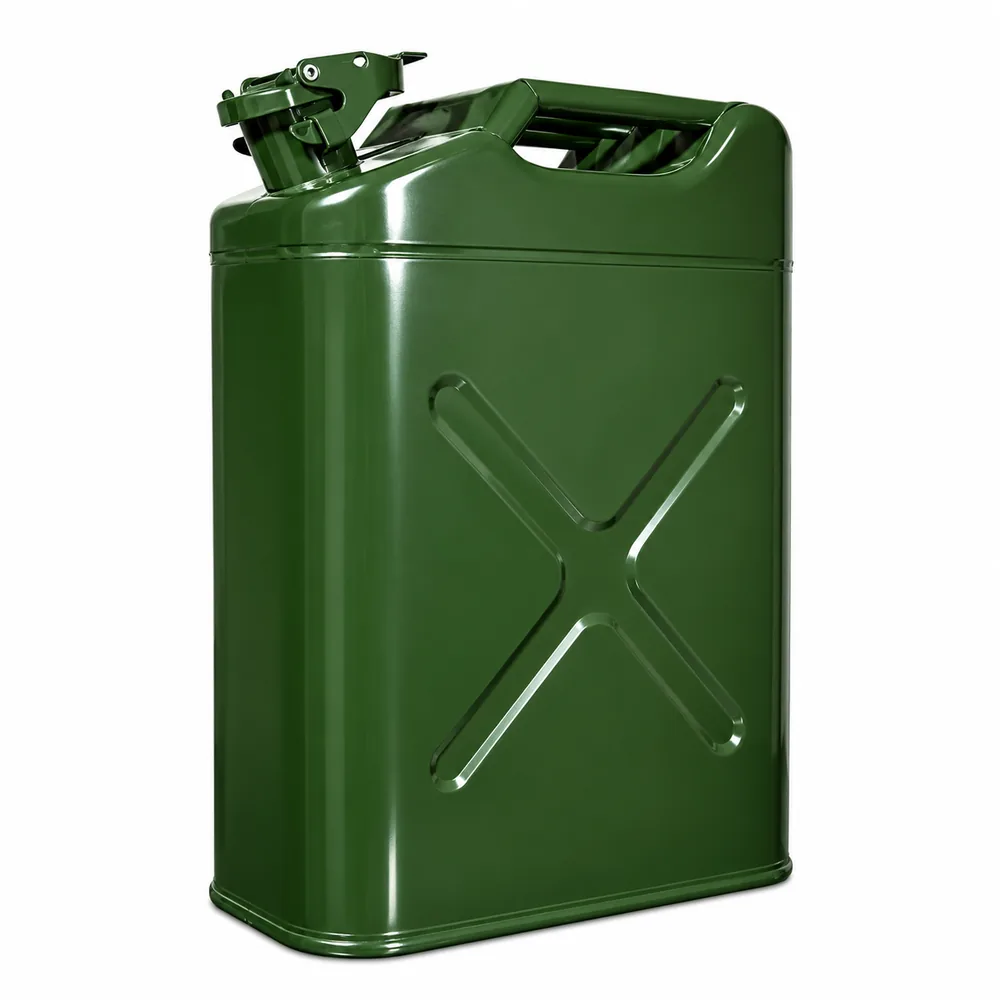 20L NATO Steel Fuel Can |
UN-marked pressed steel coated for hydrocarbons; steel has no five-year limit under ADR 4.1.1.15. |
| Colour-coded fleet fuel | 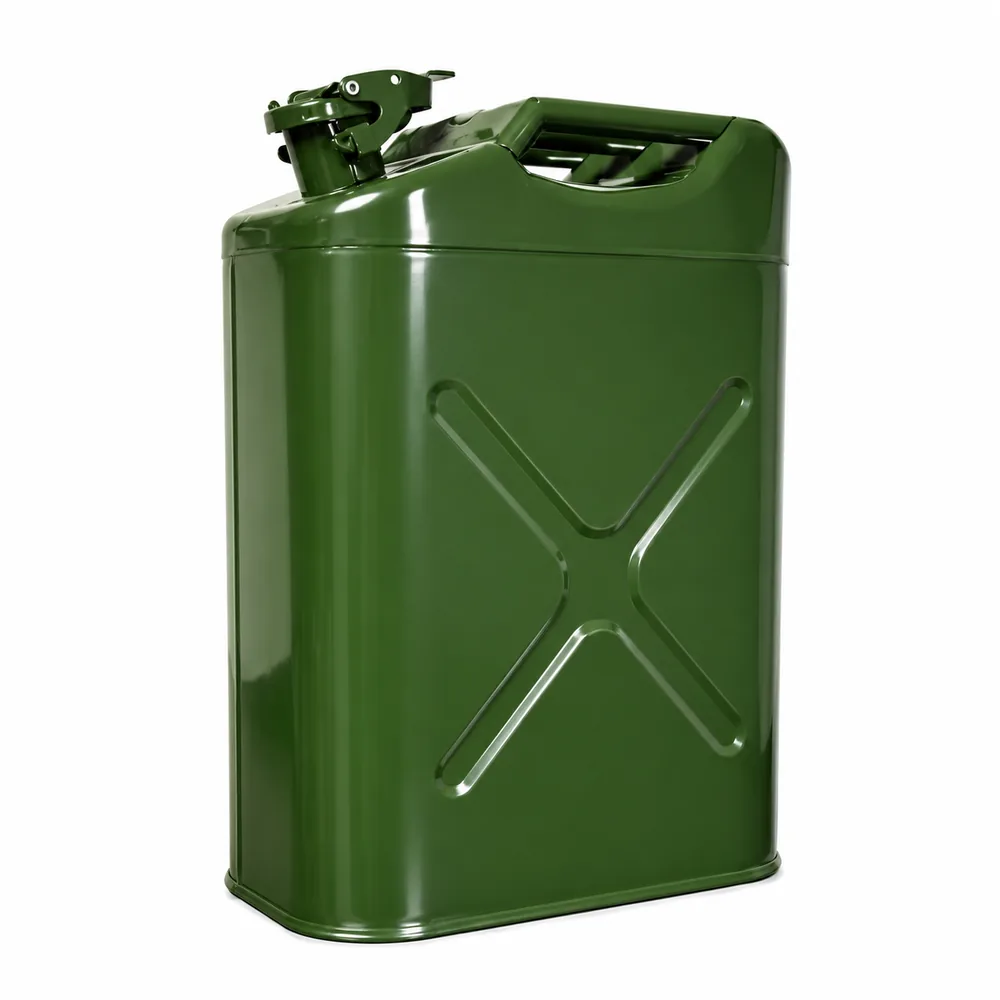 20L Upright Steel Fuel Tank |
Upright pressed steel in RAL colours; ask for the UN 3A1 certificate that covers the design and your fill. |
| Packing group II and III chemicals | 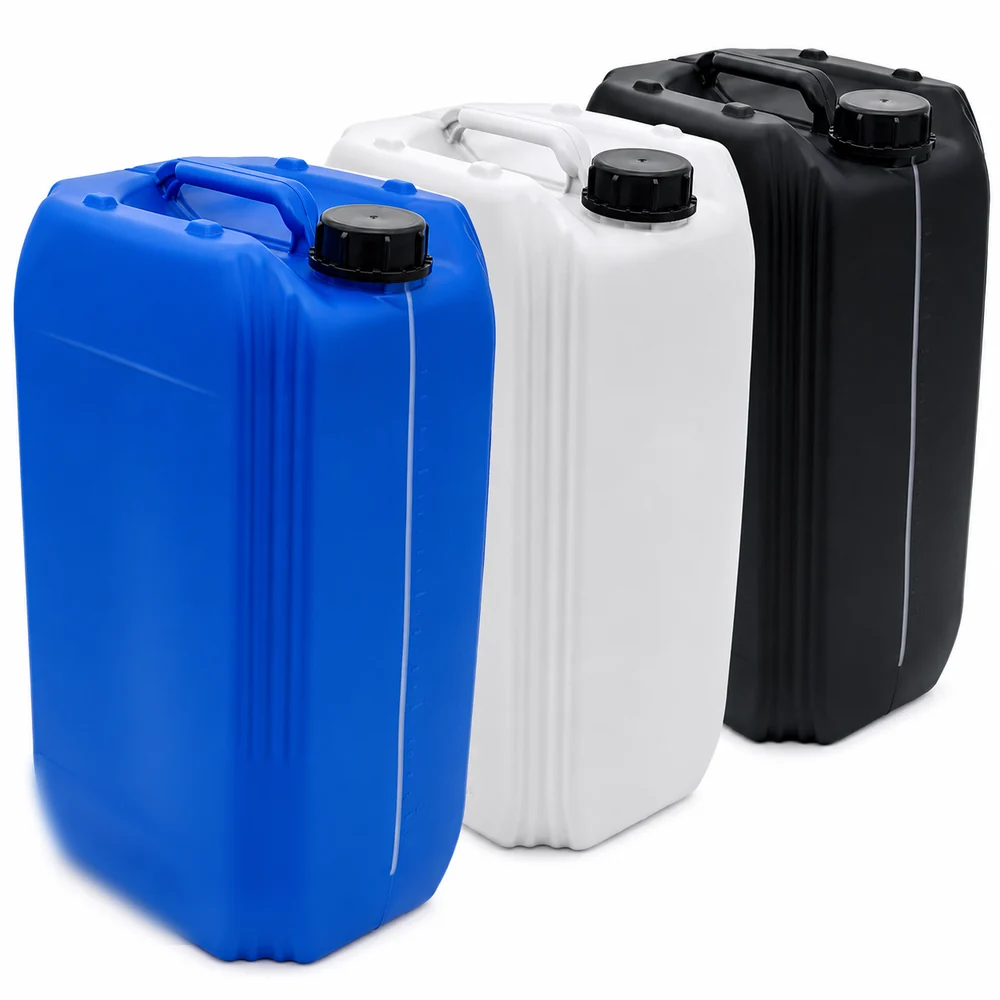 25L Stackable Plastic Jerrycan |
Stackable HDPE available UN 3H1 certified for set contents; its date of manufacture starts the five-year period in ADR 4.1.1.15. |
Transport category 2. ADR 1.1.3.6.3 puts every Class 2 gas in the flammable group F, such as propane, butane, LPG, acetylene and hydrogen, in category 2, with 333 allowed per transport unit. Liquefied and dissolved gases count by net mass in kilograms, compressed gases by the water capacity of the cylinder in litres. Toxic flammable gases (groups TF and TFC) sit in category 1, limited to 20, and flammable aerosols in category 2.
Category 4 is the band with no quantity limit under 1.1.3.6 and no points in a mixed load. It holds empty uncleaned packagings that last held goods outside category 0, Class 1 articles of division 1.4S, Class 7 excepted packages (UN 2908 to 2911) and a short list of named entries, including discarded empty uncleaned packagings (UN 3509). Category 4 goods still need their packaging, marks, transport document and the 2 kg extinguisher.
Yes, if they held dangerous goods and have not been cleaned. ADR 1.1.3.6.1 puts an empty uncleaned packaging in transport category 4 when its last contents were in categories 1 to 3, so it adds no points but still travels closed and marked. One that held a category 0 substance stays in category 0. Once adequate measures have nullified every hazard, ADR 1.1.3.5 takes packagings that held Classes 2, 3, 4.1, 5.1, 6.1, 8 and 9 out of ADR.
No. The limit applies per transport unit, which ADR 1.2.1 defines as a motor vehicle without a trailer, or a motor vehicle with its attached trailer. A van towing a trailer has one allowance for both, so 200 litres of petrol in the van and 200 litres in the trailer make 400 litres, over the category 2 maximum of 333. A second vehicle is a second transport unit with its own allowance.
No. The category 0 maximum in ADR 1.1.3.6.3 is 0, so any amount puts the vehicle under full ADR. Category 0 is a short named list: Class 1 explosives 1.1A, 1.1L, 1.2L and 1.3L, every Class 4.2 substance in packing group I, entries such as hydrogen cyanide (UN 1051) and some Class 7 radioactive material. Empty uncleaned packagings that held them stay in category 0, except those under UN 2908.
Yes, when you intend to use 1.1.3.6. ADR 5.4.1.1.1(f), Note 1, asks for the total quantity and the calculated value of the dangerous goods in each transport category, worked out under 1.1.3.6.3 and 1.1.3.6.4. The document travels in the cab (8.1.2.1(a)). A load of mixed categories therefore shows the quantity and points for each category, which anyone checking can add up against 1,000.
No, although for most liquids the numbers line up: packing group I goes to category 1, II to 2 and III to 3. Packing group ranks danger within a class and sets the test level for the packaging. Transport category sets the load limit under 1.1.3.6. Gases and most articles have no packing group, and Class 6.1 substances in packing group III sit in category 2, so read column (15) of Table A.
Yes. The French phrase refers to the same calculation in ADR 1.1.3.6.4: category 1 quantities times 50, category 2 times 3 and category 3 times 1, with a total of no more than 1,000 per transport unit. The English and French texts of ADR share their paragraph numbers and Table A, so 1.1.3.6 leads to the same provision and the same categories in both languages.
The whole load moves to full ADR. The vehicle needs orange plates front and rear, instructions in writing in the cab, a driver holding an ADR training certificate and at least two fire extinguishers sized to its maximum permissible mass under 8.1.4.1. Tunnel restrictions apply from that point, by the code in column (15). For petrol alone the line falls at 333 litres, so 334 litres brings the full list.
No. ADR 1.1.3.6.5 leaves out goods exempted under 1.1.3.2 to 1.1.3.5, which takes in limited and excepted quantities and the vehicle's own fuel, as well as private carriage under 1.1.3.1(a). Limited-quantity cartons can share a van with a 1.1.3.6 load without using any of its allowance. They follow their own rules in Chapter 3.4, including the limited quantity mark on the packages.
The standards and regulations this page relies on, at their issuing body. Where a market rule is named here, check the current revision before you specify against it.
Last reviewed by David Guru, Co-Founder & Business Development Director.
Tell us the UN number, the packing group, your market and your volumes. We come back with the design certified to the right code, the plant named on its certificate and a quotation.