
What the four-digit number identifies, how it differs from the UN code on a can, where to look one up, and how big the package mark and the plates must be.
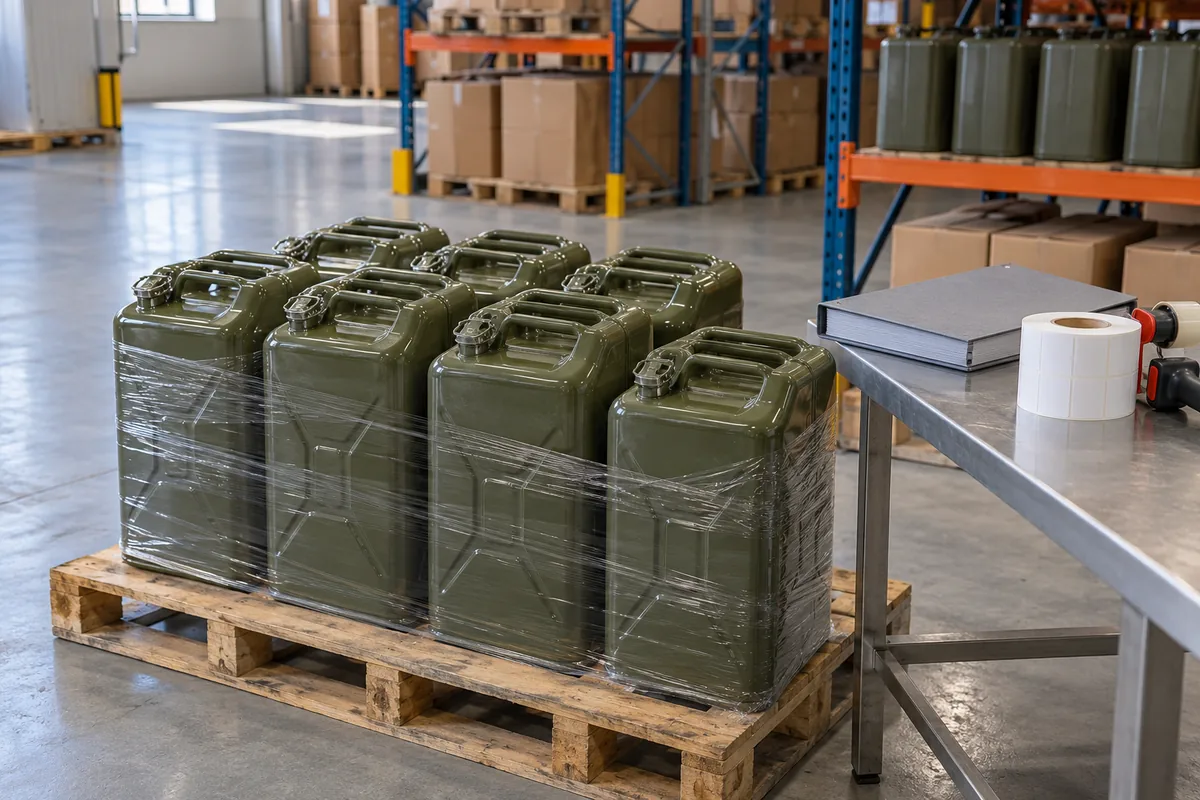
A UN number is the four-digit number the United Nations assigns to a dangerous substance or group of substances: UN 1203 is petrol, UN 1202 diesel. It names the contents, never the container. Find it in section 14 of the safety data sheet, and mark it on the package as UN plus the number, at least 12 mm high on packages above 30 litres or 30 kg (ADR 5.2.1.1).
Work it out
Which containers may carry your UN number?UN number packaging finderWhat does a UN mark mean?UN packaging code decoderUN stands for United Nations. ADR and RID define a UN number as “the four-figure identification number of the substance or article taken from the UN Model Regulations” (1.2.1). The UN Committee of Experts on the Transport of Dangerous Goods keeps the numbers in the Dangerous Goods List of its Model Regulations, now in a twenty-fourth revised edition (2025). Road, rail, sea and air rules and the US Hazardous Materials Table all use the same numbers, so UN 1203 means petrol in each.
The number describes what is inside a package. The code stamped into a jerry can, such as UN 3A1 or UN 3H1, is a UN packaging code: proof that the container design passed the drop, stacking, leakproofness and pressure tests. A new can leaves the factory with that code and no UN number. The packer adds the UN number at filling, since marking and labelling the package is the packer’s duty (ADR 1.4.3.2). The UN packaging code decoder reads a stamped code part by part, and UN packaging codes explained lists them.
An HS code is a third, unrelated number. The World Customs Organization’s Harmonized System sorts traded goods into more than 5,000 groups, each with a six-digit code, and more than 200 countries and economies base their customs tariffs on it. It sets duty and says nothing about hazard. An export of petrol in steel cans involves all three: UN 1203 for the fuel, UN 3A1 on the can and an HS code on the customs declaration, which tariff classification and origin covers.
A UN number is the first of four items that describe dangerous goods, followed by the proper shipping name, the class and the packing group. ADR Table A gives them in columns (1), (2), (3a) and (4), and the transport document lists them in that order with nothing in between (ADR 5.4.1.1.1). Petrol by road reads UN 1203 PETROL, 3, II, followed by its tunnel code, (D/E). Packing groups I, II and III grade the danger within a class, as packing groups explained sets out.
Entries come in four kinds (ADR 2.1.1.2):
| Kind of entry | What it covers | Example |
|---|---|---|
| Single entry | One well-defined substance or article | UN 1090 ACETONE |
| Generic entry | A well-defined group that is not n.o.s. | UN 1133 ADHESIVES |
| Specific n.o.s. | A group of one chemical or technical nature | UN 1987 ALCOHOLS, N.O.S. |
| General n.o.s. | A group sharing one or more dangerous properties | UN 1993 FLAMMABLE LIQUID, N.O.S. |
N.o.s. means not otherwise specified, and a general n.o.s. entry applies only when no generic or specific entry fits (ADR 2.1.2.5). One number can cover several rows: UN 1993 has six in ADR 2025, split by packing group and vapour pressure.
The number does not tell you the class, with one exception. Every entry numbered below 1000 is a Class 1 explosive, from UN 0004 to UN 0514 in ADR 2025. Above that, number and class are unrelated: UN 1202 is a flammable liquid, UN 1789 a corrosive, UN 1845 Class 9 and UN 1978 a gas.
Start with section 14 of the safety data sheet, headed Transport information. US rules make it one of 16 fixed sections on every sheet (29 CFR 1910.1200(g)(2)). In the EU, REACH Annex II (Regulation (EU) 2020/878) asks for the UN or ID number there, then the proper shipping name, class and packing group (14.1 to 14.4).
Then check the number in the list for your mode: ADR Table A by road in Europe, the IMDG Dangerous Goods List at sea, and column 4 of the Hazardous Materials Table in the US (49 CFR 172.101). BAM, Germany’s federal materials institute, runs a free database of single entries. For a liquid going into a jerrican, drum or IBC, our UN number packaging finder reads ADR 2025 Table A for 157 UN numbers and returns the class, the packing group and the containers each may use.
With no safety data sheet, classify the product first: its named entry if Table A has one, otherwise a class and packing group from its properties and then the most specific collective entry (ADR 2.1.2.5). The consignor answers for that classification (ADR 1.4.2.1.1(a)), and a dangerous goods safety adviser can do it.
The 157 liquids in our finder fall into five classes. Each number below opens its page on this site, with the containers that entry allows.
| Class | Group | UN numbers |
|---|---|---|
| 3 | Fuels | UN 1203 petrol, UN 1202 diesel and gas oil, UN 1223 kerosene, UN 1863 jet fuel (Jet A-1, JP-8), UN 3475 ethanol and petrol mixture |
| 3 | Solvents and alcohols | UN 1090 acetone, UN 1170 ethanol, UN 1219 isopropanol, UN 1230 methanol, UN 1294 toluene, UN 1307 xylenes |
| 3 | Paints, inks and adhesives | UN 1263 paint, UN 1210 printing ink, UN 1133 adhesives |
| 3 | Collective entries | UN 1993 flammable liquid, n.o.s., UN 1268 petroleum distillates, n.o.s. |
| 5.1 | Oxidisers | UN 2014 hydrogen peroxide 20 to 60%, UN 2984 8% to below 20% |
| 6.1 | Toxic | UN 1593 dichloromethane, UN 2810 toxic liquid, organic, n.o.s. |
| 8 | Corrosive | UN 1830 sulphuric acid over 51%, UN 2796 sulphuric acid 51% or less, UN 1789 hydrochloric acid, UN 1824 sodium hydroxide solution, UN 1791 hypochlorite solution |
| 9 | Environmentally hazardous | UN 3082 environmentally hazardous substance, liquid, n.o.s. |
“The UN number for flammable liquid” has no single answer: a Class 3 liquid named in the list takes its own number, and any other falls to a collective entry such as UN 1993 or UN 1268. Red diesel is gas oil with a marker dye and travels as UN 1202; red diesel rules covers the tax side.
ADR 2025 lists its entries in UN number order from UN 0004 to UN 3560, the same range as RID 2025. The range has gaps: no number between UN 0515 and UN 1000 is in use, and ADR 2027 deletes the entry for UN 2941.
You cannot register or apply for a UN number. New numbers come from the UN Committee of Experts, which publishes a revised edition of the Model Regulations every two years, and the road, rail, sea and air rules then adopt them. ADR 2027 moves to Rev. 24 and adds UN 3561 to UN 3564: two chlorophenol entries, and lithium metal and sodium ion batteries installed in cargo transport units (ECE/TRANS/WP.15/274). A new product goes under an entry that already exists, named or collective.
Lithium ion batteries are UN 3480, or UN 3481 inside or packed with equipment, and dry ice is UN 1845; the table, from ADR 2025 Table A and the US Hazardous Materials Table, gives the rest. None of them ships in a Fortitude21 container: gases go in cylinders and other pressure receptacles (packing instruction P200 for propane, LPG and oxygen), and batteries and dry ice have packaging rules of their own.
| What you are shipping | UN number | Class | Notes |
|---|---|---|---|
| Lithium ion batteries | UN 3480 | 9 | Batteries on their own |
| Lithium ion batteries in or packed with equipment | UN 3481 | 9 | A battery inside a tool or boxed with it |
| Lithium metal batteries | UN 3090 | 9 | Includes lithium alloy |
| Lithium metal batteries in or packed with equipment | UN 3091 | 9 | As UN 3481 |
| Lead acid batteries, wet | UN 2794 | 8 | UN 2800 if non-spillable |
| Dry ice (carbon dioxide, solid) | UN 1845 | 9 | Outside ADR except 5.5.3 |
| Propane | UN 1978 | 2 | Flammable gas, label 2.1 |
| LPG (petroleum gases, liquefied) | UN 1075 | 2 | Flammable gas, label 2.1 |
| Oxygen, compressed | UN 1072 | 2 | Labels 2.2 and 5.1 |
| Fire extinguishers with compressed or liquefied gas | UN 1044 | 2 | Label 2.2 |
| Environmentally hazardous solid, n.o.s. | UN 3077 | 9 | The liquid is UN 3082 |
ADR and RID exempt UN 1845 from everything except section 5.5.3, on dry ice and the asphyxiation risk of coolants, and a package of dry ice sent as a consignment is marked DRY ICE or CARBON DIOXIDE, SOLID (5.5.3.4.1). The US regulates it only by air and by water (49 CFR 172.101, symbols A and W). The UN specification packaging guide covers the US packaging rules for dry ice and lithium batteries.
The UN number goes on each package as the letters UN and the number, clearly and durably, at least 12 mm high (ADR 5.2.1.1). Smaller packages take smaller characters, and the IMDG Code (5.2.1.1) and 49 CFR 172.301(a)(1) set the same steps.
| Package | Minimum height of the letters UN and the number |
|---|---|
| Over 30 litres capacity or 30 kg net mass | 12 mm |
| 30 litres or 30 kg or less, and cylinders of 60 litres water capacity or less | 6 mm |
| 5 litres or 5 kg or less | A size appropriate to the package |
Every jerrican we make holds 30 litres or less, so 6 mm is the minimum on our cans; a 60 litre jerrican or a drum needs 12 mm. A sticker, a stencil or print all qualify, provided the mark stays readily visible and legible and withstands the weather (ADR 5.2.1.2).
What goes beside the number differs by mode. By road under ADR the package shows the UN number without the proper shipping name, except for Class 1 and on refillable gas receptacles (5.2.1.5 and 5.2.1.6). At sea the IMDG Code adds the proper shipping name, and so does the US, where the number takes the prefix UN, NA or ID (172.301(a)(1)).
An NA number is a US identification number for a name “not recognized for transportation outside of the United States”, and an ID number belongs to a name the ICAO Technical Instructions recognise, such as ID8000 for a consumer commodity. Both sit beside UN numbers in column 4 of the Hazardous Materials Table (49 CFR 172.101(e)).
Diesel has both: a row as UN1202 and a domestic row as NA1993, each Class 3, Packing Group III, and NA1993 also covers combustible liquid, n.o.s. and fuel oil. A load leaving the US needs the UN entry. The US hazmat shipping guide covers the rest of 49 CFR.
Under ADR the UN number goes on an orange plate, never on the placard. A placard is a 250 mm diamond that repeats the hazard label and shows the class (ADR 5.3.1.7.1). The orange plate is 40 cm wide and 30 cm high, with a 15 mm black border and black digits 100 mm high (5.3.2.2). A vehicle carrying packages above the small-load limits of the 1,000-point rule shows plain plates front and rear. Tankers and bulk loads show the hazard identification number above the UN number (5.3.2.1): 33 over 1203 for petrol, 30 over 1202 for diesel, 80 over 1830 for sulphuric acid.
In the US the number may go on the placard itself. 49 CFR 172.332 allows an orange panel 160 by 400 mm with 100 mm numerals, or a white band 100 by 215 mm across the placard with 88 mm numerals, on the placard for the material’s primary hazard class only. The number is required on bulk packagings such as cargo tanks and IBCs (172.302), and on a vehicle carrying 4,000 kg or more of one material in non-bulk packages loaded at one facility (172.301(a)(3)). It may never appear on a DANGEROUS, explosives, radioactive or subsidiary hazard placard (172.334(a)).
Yes, until it is cleaned. An empty packaging that held dangerous goods is subject to the same requirements as a full one unless the hazard has been removed (ADR 4.1.1.11), and it stays marked and labelled as if full (5.1.3.1). An empty, uncleaned can that held JP-8 still shows UN 1863. Its transport document may describe it as EMPTY PACKAGING followed by the class of the last contents, 3 (5.4.1.1.6.2.1).
Packagings discarded for disposal, recycling or recovery may travel as UN 3509, PACKAGINGS, DISCARDED, EMPTY, UNCLEANED, Class 9, under special provision 663 (4.1.1.11, note). In the US an empty packaging with residue travels as it did when full (49 CFR 173.29(a)) until it is cleaned and its hazard marks are removed or covered (173.29(b)). A new, unused can holds nothing dangerous and needs no UN number. Cleaning and reusing jerry cans covers the cleaning.
We make the container, and the UN number belongs to what you put in it. Our dangerous-goods jerrican designs hold UN certification, steel in the 3A1 family and HDPE in 3H1, each certified per design type and made under quality assurance the competent authority accepts, in factories certified to ISO 9001, 14001 and 45001. Each can leaves us with its UN packaging code stamped in; you mark the UN number when you fill it.
Send us the UN number and packing group from section 14 of your safety data sheet, with the specific gravity and the destination. We reply with the design whose mark covers it, or tell you that none of ours does. For steel pails and tins, ask which UN rating the quoted build carries.
| Your use case | Recommended can | Why this one |
|---|---|---|
| Petrol, diesel and jet fuel: UN 1203, 1202, 1863 | 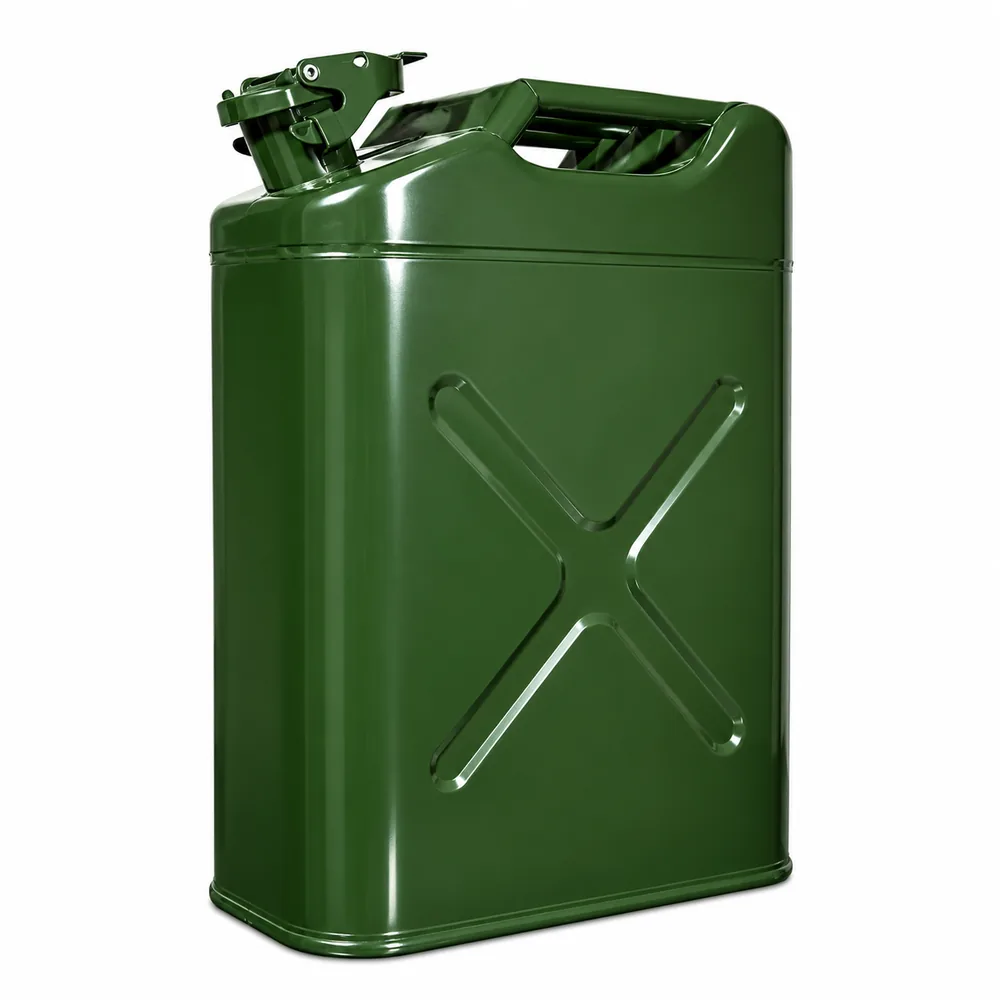 20L NATO Steel Fuel Can |
A UN-marked 3A1 steel jerrican; the packer adds the fuel’s UN number at filling. |
| Liquid chemicals in Classes 8 and 9 | 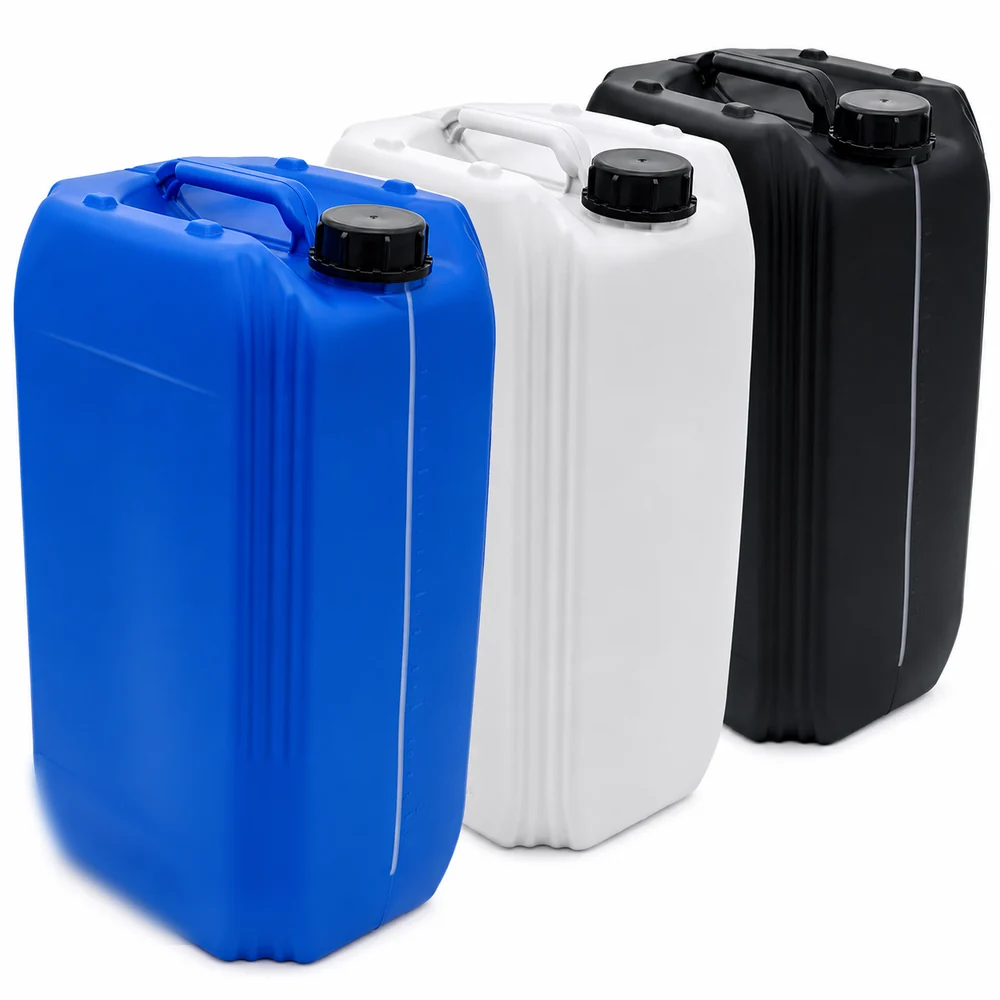 25L Stackable Plastic Jerrycan |
A stackable 25 litre HDPE jerrican offered UN 3H1 certified; check its marked density and the plastic against your liquid. |
| Solvents and fuels in plastic, such as UN 1993 | 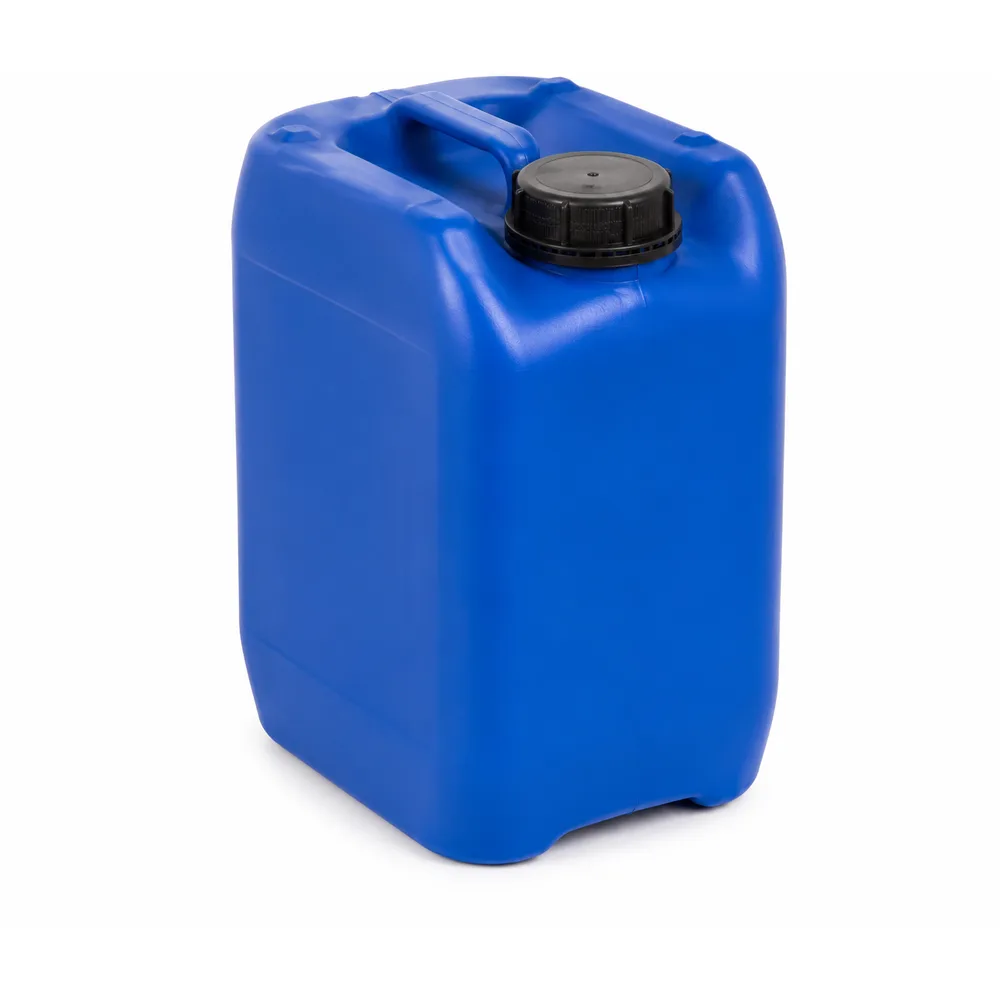 Fluorinated HDPE Jerrycan |
Fluorinated HDPE, offered UN 3H1 certified, for liquids that permeate plain HDPE. |
| Paints, inks and adhesives: UN 1263, 1210, 1133 | 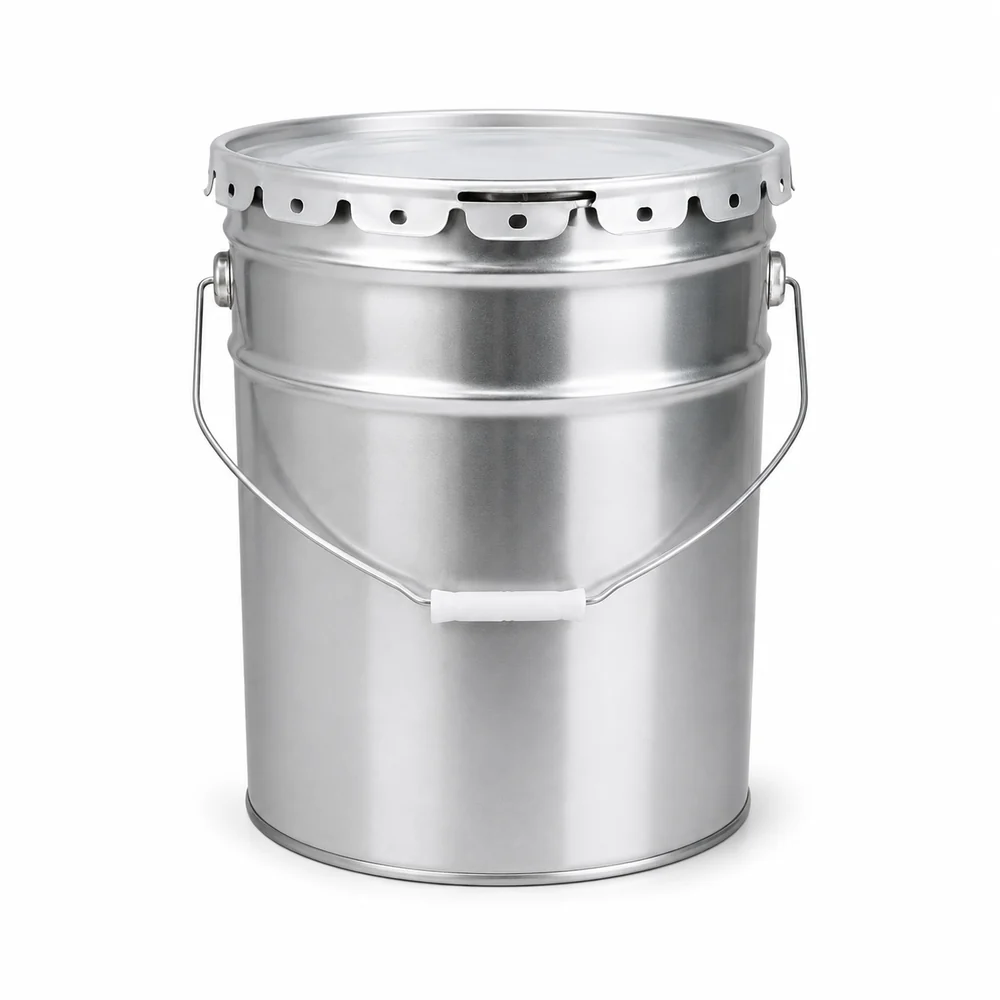 Metal Pail with Flower Lid or Lever Ring, 4L to 35L |
A tinplate open-head pail from 4 to 35 litres; ask which UN rating the build carries before you fill it with dangerous goods. |
| Small packs of paint or solvent | 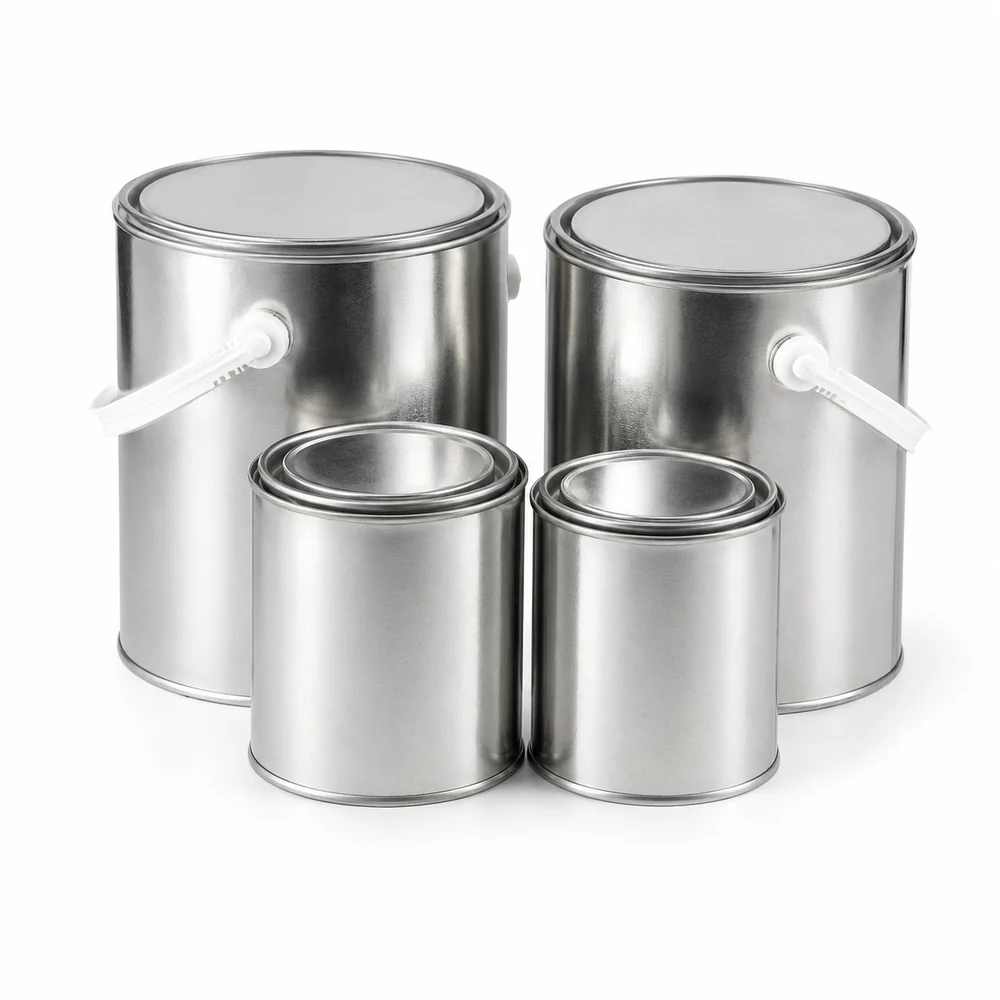 Round Metal Tin Can, 50ml to 6L |
Tinplate cans from 50 ml to 6 litres, with UN-rated builds available. |
UN 1203. Petrol, gasoline and motor spirit share one entry in ADR 2025 Table A: Class 3, Packing Group II, with a limited quantity of 1 litre per inner packaging. A tanker carrying it shows 33 over 1203 on its orange plates, and its containers need a UN mark showing X or Y. A blend with more than 10% ethanol travels as UN 3475 instead.
UN 1202, gas oil or diesel fuel or light heating oil with a flash point of 60 °C or less: Class 3, Packing Group III, limited quantity 5 litres, hazard identification number 30. Red diesel is the same gas oil with a marker dye, so it keeps UN 1202. For transport inside the US, the Hazardous Materials Table also lists diesel fuel as NA1993, a number not recognised outside the US.
UN 1993 is FLAMMABLE LIQUID, N.O.S., the general entry for a Class 3 liquid with no entry of its own. ADR 2025 gives it six rows across Packing Groups I, II and III, split by vapour pressure and viscosity, so the safety data sheet decides which row applies. The shipping name takes the technical name in brackets, as in UN 1993 FLAMMABLE LIQUID, N.O.S. (CONTAINS XYLENE AND BENZENE), 3, II (ADR 3.1.2.8.1).
UN 3082 is ENVIRONMENTALLY HAZARDOUS SUBSTANCE, LIQUID, N.O.S.: Class 9, Packing Group III, limited quantity 5 litres, hazard identification number 90. It covers liquids dangerous to the aquatic environment that meet no other class. Its solid twin is UN 3077. Packages carry the environmentally hazardous substance mark next to the UN number, except single or inner packagings of 5 litres or less (ADR 5.2.1.8).
Usually UN 1263, PAINT or PAINT RELATED MATERIAL, Class 3, in Packing Group I, II or III according to flash point and boiling point. Paint with a second hazard has its own entries: UN 3066 for corrosive paint in Class 8, UN 3469 for flammable paint that is also corrosive, and UN 3470 for corrosive paint that is also flammable. A paint that meets no class criteria is not dangerous goods and has no UN number.
UN 1830 for sulphuric acid with more than 51% acid: Class 8, Packing Group II, hazard identification number 80. At 51% acid or less, or as battery acid, it is UN 2796, also Class 8, Packing Group II. Fuming sulphuric acid is UN 1831, Packing Group I, with a toxic subsidiary hazard. Each strength needs a container whose material and marked relative density suit it.
The IMDG Code is the International Maritime Dangerous Goods Code, published by the IMO, the International Maritime Organization. Its 2024 edition, Amendment 42-24, became mandatory on 1 January 2026. It uses the UN numbers and the nine hazard classes of the UN Model Regulations, so an IMO Class 3 cargo is UN Class 3. The sea rules differ from road rules in packing, stowage, segregation and the marine pollutant mark.
Yes, and that is the usual layout. The UN number is a mark and the diamond is a label, and the rules treat them as two items. In the US the label goes on the same surface as the proper shipping name marking, which carries the UN number, and near it (49 CFR 172.406(a)). ADR asks only that marks be readily visible, legible and able to withstand the weather (5.2.1.2).
No. Only dangerous goods have one. Water and AdBlue have none, and some liquids that sound hazardous fall outside ADR. An aqueous solution with 24% alcohol or less by volume is not subject to it (special provision 144). A viscous flammable liquid with a flash point from 23 to 60 °C can be excepted if it passes the tests in 2.2.3.1.5. Section 14 of the safety data sheet is the place to check.
Yes. In Great Britain, regulation 5 of the Carriage of Dangerous Goods and Use of Transportable Pressure Equipment Regulations 2009 bars any road or rail carriage that does not comply with ADR or RID. The UN numbers, the 12 mm package mark and the orange plates are therefore the same as in the EU. Sea transport from UK ports follows the IMDG Code, which uses the same numbers.
The standards and regulations this page relies on, at their issuing body. Where a market rule is named here, check the current revision before you specify against it.
Last reviewed by David Guru, Co-Founder & Business Development Director.
Tell us the UN number, the packing group, your market and your volumes. We come back with the design certified to the right code, the plant named on its certificate and a quotation.