
What 49 CFR means by UN specification packaging, how to read the mark part by part, and when a shipment may go without it.
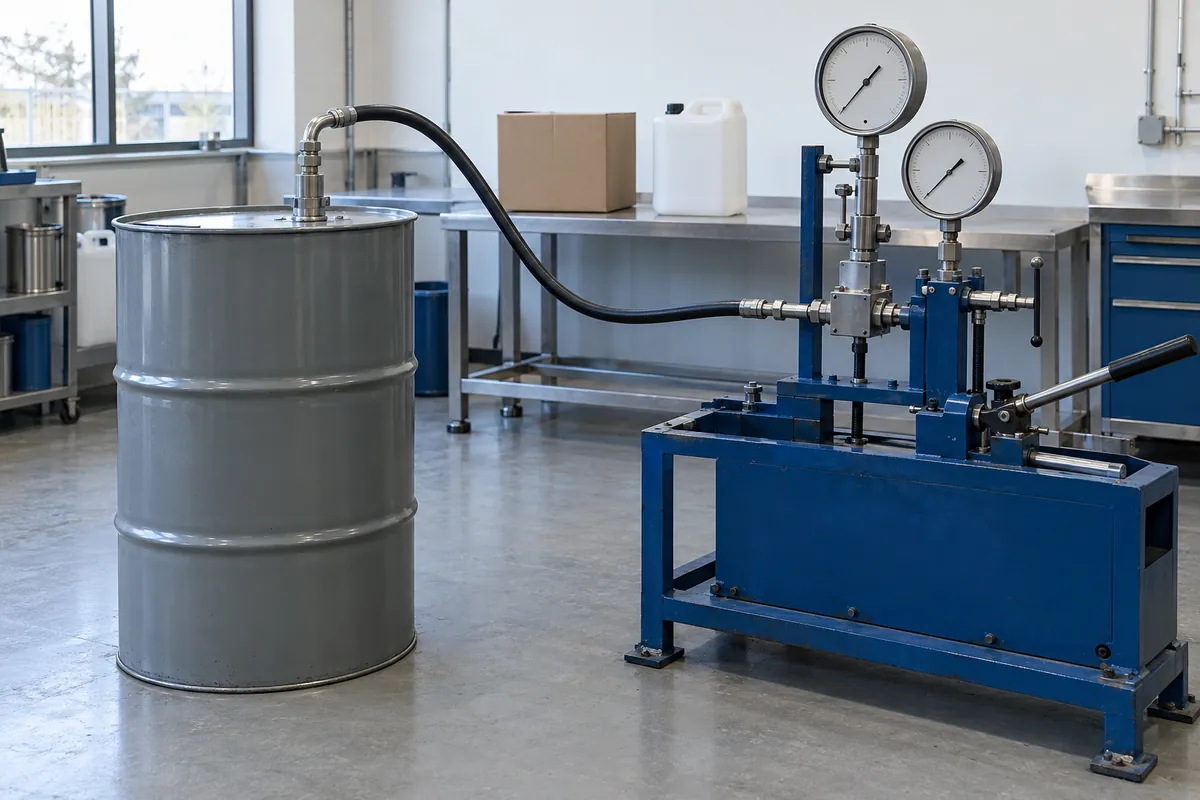
UN specification packaging is the US name (49 CFR 171.8) for a drum, jerrican, box or bag whose design type passed the UN drop, leakproofness, pressure and stacking tests and carries the mark set out in 49 CFR 178.503. Most hazardous materials in packages need it. Limited quantities, excepted quantities, materials of trade and dry ice are the common exceptions.
Quick answer: What is UN specification packaging?
The US term, defined in 49 CFR 171.8, for a drum, jerrican, box or bag built to a design type that has passed the UN drop, leakproofness, pressure and stacking tests, and marked as 49 CFR 178.503 sets out. Most packaged hazardous materials need it; the usual exceptions are limited and excepted quantities, materials of trade and dry ice.
Work it out
What does a UN mark mean?UN packaging code decoderWhich containers may carry your UN number?UN number packaging finderUN specification packaging is packaging built to a design type that passed the performance tests of the UN Recommendations and is marked to show it. 49 CFR 171.8 defines specification packaging as packaging made to a standard in part 178 or 179, and UN standard packaging as packaging that conforms to the UN Recommendations; 178.503(f) speaks of a “UN specification package”. Buyers say UN rated, UN approved or UN certified for the same thing. This guide covers non-bulk packagings, which for a liquid means 450 litres or less (171.8).
The specification attaches to a design type. A change in structural design, size, material, wall thickness or manner of construction makes a different packaging that needs its own tests (178.601(c)(4)). In the United States the maker certifies the design: applying the UN mark is the certification that every requirement has been met (178.2(b)). The maker then retests single packagings at least every 12 months and leak-tests every packaging for liquids it produces (178.601(e) and (f)).
A UN packaging symbol consists of a lower-case u above a lower-case n inside a circle (UN Model Regulations 6.1.3.1(a); 49 CFR 178.503(e)(1)). Embossed metal packagings may show the capital letters UN instead. The symbol may be used for no purpose other than certifying that a packaging, flexible bulk container, portable tank or MEGC meets the UN requirements.
The US rule allows up to four small gaps in the circle, totalling no more than 15% of the circumference, with the u and the n unbroken (178.503(e)(1)(ii)). Characters must be at least 12 mm high, or 6 mm on packagings of 30 L or 30 kg or less (178.3(a)(4)). The mark goes on a non-removable part, never on a removable head alone, and on a package over 30 kg gross it must appear on the top or a side (178.503(b); 178.3(a)(5)).
A UN specification marking indicates that the design type passed the UN tests to a stated packing group level, density or gross mass and test pressure, and it names the year, the authorising country and the maker. Read it left to right: 49 CFR 178.503(a) and the UN Model Regulations 6.1.3.1 fix the same order, with slashes between the parts.
| Part | Steel drum example, 178.503(e) | What it tells you |
|---|---|---|
| UN symbol | u over n in a circle | The design type passed the UN tests |
| Packaging code | 1A1 | Steel drum, non-removable head |
| Performance level | Y | Packing Groups II and III; X adds I, Z covers III alone |
| Specific gravity or mass | 1.4 | Liquids up to 1.4, left off at 1.2 or below; for solids, the maximum gross mass in kg |
| Test pressure or S | 150 | Hydrostatic test pressure in kPa; S for solids or inner packagings |
| Year | 83 | Made in 1983; plastic drums and jerricans add the month |
| Country | USA | The state that authorised the mark |
| Maker | VL824 | Registered symbol of the maker or approval agency |
| Thickness | 1.0 | Steel thickness in mm, on drums and jerricans meant for reuse |
The solids examples in 178.503(e) put an S where the pressure goes: 4G/Y145/S/83 is a fibreboard box for inner packagings at up to 145 kg gross. The mark records how the design was made and tested, so it does not say the packaging suits your substance (RID 2025 and ADR, 6.1.3, Note 1). Paste any mark into the UN packaging code decoder to split it part by part.
A UN packaging code is a digit for the kind of packaging, a capital letter for the material and, for drums and jerricans, a digit for the head (49 CFR 178.502). 1 is a drum, 3 a jerrican and 4 a box; A is steel, G fibreboard and H plastic. A final 1 means a non-removable head and 2 a removable one, and any opening wider than 7 cm counts as removable (178.504, 178.509 and 178.511).
| Code | What it is | Largest size in 49 CFR |
|---|---|---|
| 1A1 | Steel drum, non-removable head | 450 L, 400 kg net |
| 1A2 | Steel drum, removable head | 450 L, 400 kg net |
| 3A1 | Steel jerrican, non-removable head | 60 L, 120 kg net |
| 3H1 | Plastic jerrican, non-removable head | 60 L, 120 kg net |
| 3H2 | Plastic jerrican, removable head | 60 L, 120 kg net |
| 4G | Fibreboard box | 400 kg net |
A combination packaging takes the code of its outer packaging, so a fibreboard box of tins is a 4G whatever the tins are (178.502(c)). The code also decides which rules a packaging can serve: closed-head drums and jerricans are the standard for liquids, yet the lithium battery and lab-pack rules list removable-head drums, removable-head jerricans and boxes. Each common code has its own page: UN 1A1, UN 1A2, UN 3A1, UN 3H1 and UN 4G, with the full list in UN packaging codes explained.
Yes, for most hazardous materials in packages, unless an exception applies. A packaging is authorised only if the section named in column 8 of the Hazardous Materials Table permits it (49 CFR 173.24(c)). For a Packing Group II liquid that section is 173.202, which calls for part 178 packagings at the Packing Group I or II level: an X or Y mark. Packing Group III liquids go under 173.203, where X, Y or Z will do.
Petrol shows how to read the table. Gasoline is UN1203, Class 3, Packing Group II, with exceptions in 173.150, non-bulk packagings in 173.202, and a limit of 5 L per package on passenger aircraft and 60 L on cargo aircraft (172.101). A Z-marked can may not carry it, however well made. Diesel fuel, UN1202, is Packing Group III and points to 173.203. Under ADR 2025, packing instruction P001 caps a jerrican at 60 litres and, for Packing Groups II and III, a drum at 450 litres.
Our UN number packaging finder lists the codes and sizes ADR allows for a UN number, packing groups explained covers how the group is assigned, and dangerous goods transport for liquids covers the rest of the shipment.
Small quantities and some trades are excepted, each with a size cap, and each package still has to meet the general rules in 49 CFR part 173, subpart B. These are the US exceptions a buyer of liquids meets most often.
| Exception | Rule | Size cap | Packaging instead |
|---|---|---|---|
| Limited quantity, Class 3 | 173.150(b) | Inner packagings of 0.5 L (PG I), 1.0 L (PG II) or 5.0 L (PG III); 30 kg gross | Strong outer packaging |
| Limited quantity, Class 8 | 173.154(b) | Inner packagings of 1.0 L (PG II) or 5.0 L (PG III); 30 kg gross | Strong outer packaging |
| Excepted quantity | 173.4a | 30 mL per inner packaging; 300 mL to 1 L per outer packaging | Package able to pass a 1.8 m drop |
| Material of trade | 173.6 | 0.5 L (PG I) or 30 L (PG II and III); 200 kg per vehicle; road only | Original packaging or one as strong |
| Combustible liquid | 173.150(f) | Non-bulk, unless a hazardous substance, waste or marine pollutant | Outside the regulations |
The material-of-trade route matters to anyone carrying fuel on a work vehicle. A 20 L can of petrol sits inside the 30 L cap. Section 173.6(b)(4) accepts a metal or plastic can that meets either the hazardous materials rules or the OSHA safety-can rules (29 CFR 1910.106(d)(2) or 1926.152(a)(1)), so a contractor’s safety can may carry no UN mark. See EPA and CARB fuel can compliance. In Europe, ADR 3.4 and 3.5 give similar reliefs for limited and excepted quantities, set out in ADR limited quantities and the 1,000-point rule.
UN specification packaging is not required for dry ice. The Hazardous Materials Table marks carbon dioxide, solid (UN1845) with the letters A and W, so it is regulated only by air or water unless it is a hazardous substance or waste (49 CFR 172.101(b)). By air or water, 173.217(a) wants packaging that lets the gas escape and meets subpart B, but need not meet part 178. A package by air may hold up to 200 kg and must show the net mass, and up to 2.5 kg used as a refrigerant is excepted from most other rules (173.217(c)).
Lithium batteries go the other way. Cells and batteries (UN3480 and UN3090) outside the small-battery exception travel in inner packagings inside a box, removable-head drum or removable-head jerrican meeting part 178 at the Packing Group II level (173.185(b)(3)(ii)). Lithium ion cells of up to 20 Wh and batteries of up to 100 Wh may use a strong rigid outer package that survives a 1.2 m drop instead. So may lithium metal cells and batteries of up to 1 g and 2 g of lithium (173.185(c)).
Fully regulated hazardous waste, the kind that travels on an EPA manifest, must be packaged under 49 CFR parts 173, 178 and 179 (40 CFR 262.30), and it is barred from the material-of-trade exception (173.6(a)(5)). The waste rules in 173.12 allow lab packs whose outer drum or box is UN-marked to at least Packing Group III, and one reuse of a packaging by road after a 24-hour wait and a leak check.
UN specification packaging tests depend on the packing group the design is aimed at, whether it holds liquids or solids, and the kind of packaging (49 CFR 178.603 to 178.608). The packing group sets the drop height and the leakproofness pressure, liquids add the leakproofness and hydrostatic tests, and bags skip the stack test.
| Test | Who must pass it | How the packing group changes it |
|---|---|---|
| Drop | Every design type; plastics chilled to −18 °C first | 1.8, 1.2 or 0.8 m for PG I, II or III, up to specific gravity 1.2 |
| Leakproofness | Packagings for liquids, and every production unit | 30 kPa for PG I, 20 kPa for PG II and III |
| Hydrostatic pressure | Metal, plastic and composite packagings for liquids | Set from the vapour pressure; at least 250 kPa for PG I |
| Stacking | Every design except bags: a 3.0 m stack for 24 hours, or 28 days at 40 °C for plastic drums and jerricans for liquids | No change |
| Vibration | Every packaging, for one hour on a vibrating platform | No change |
The mark carries the results. The letter reports the packing group, the specific gravity reports how heavy a liquid went into the drop and stack tests, and the pressure reports the hydrostatic result. Our guide to UN certificates and test reports lists what the report behind a mark must contain.
For concentrated sulphuric acid, look for a Y mark of 1.9 or more, or an X mark of 1.3 or more. Sulphuric acid with more than 51% acid is UN1830, Class 8, Packing Group II, with non-bulk packagings in 173.202 (49 CFR 172.101). At 96 to 98% it has a specific gravity of 1.84, according to the NIOSH Pocket Guide.
The filling limit is the marked figure, or 1.2 where none is marked (173.24a(b)(1)). Marks round down (178.503(a)(4)(i)), so a design tested at 1.85 shows Y1.8 and may not carry the acid. A Packing Group I packaging may take a Packing Group II liquid up to the greater of 1.8 or 1.5 times its marked figure, so X1.3 reaches 1.95 while a plain X stops at 1.8. Tested with water, the design must also drop from 1.9 m: the gravity rounded up, times 1.0 m (178.603(e)(2)).
The mark does not prove the plastic resists the acid, and 173.24(e) puts compatibility on the person offering the shipment. Check the resin in the chemical compatibility guide, and see fluorinated and plain HDPE for solvents.
Under 49 CFR 173.24(d)(2), a UN packaging made abroad may be used in the United States if it conforms in full to the UN Recommendations and could pass the part 178 tests. The packaging must also come from a country whose competent authority gives reciprocal treatment to US-made UN packaging. Its mark carries the sign of the authorising state, such as D for Germany, in place of USA.
Ask the supplier for the approval certificate behind the mark. UN approved packaging explains how approval works in Europe and the UK, where an authority signs off the design before the mark goes on.
We make steel and plastic jerricans in Vietnam and China. Our dangerous-goods jerrican designs hold UN certification: steel cans in the 3A1 family and HDPE jerricans in the 3H1 and 3H2 families. Each is certified per design type and made under quality assurance the competent authority accepts, in factories certified to ISO 9001, ISO 14001 and ISO 45001.
Send us the UN number, the packing group, the specific gravity of your liquid and the destination. We reply with the design whose full mark covers it and the authority named on its certificate, or tell you that none of ours does.
| Your use case | Recommended can | Why this one |
|---|---|---|
| Petrol and other Packing Group II fuels, steel | 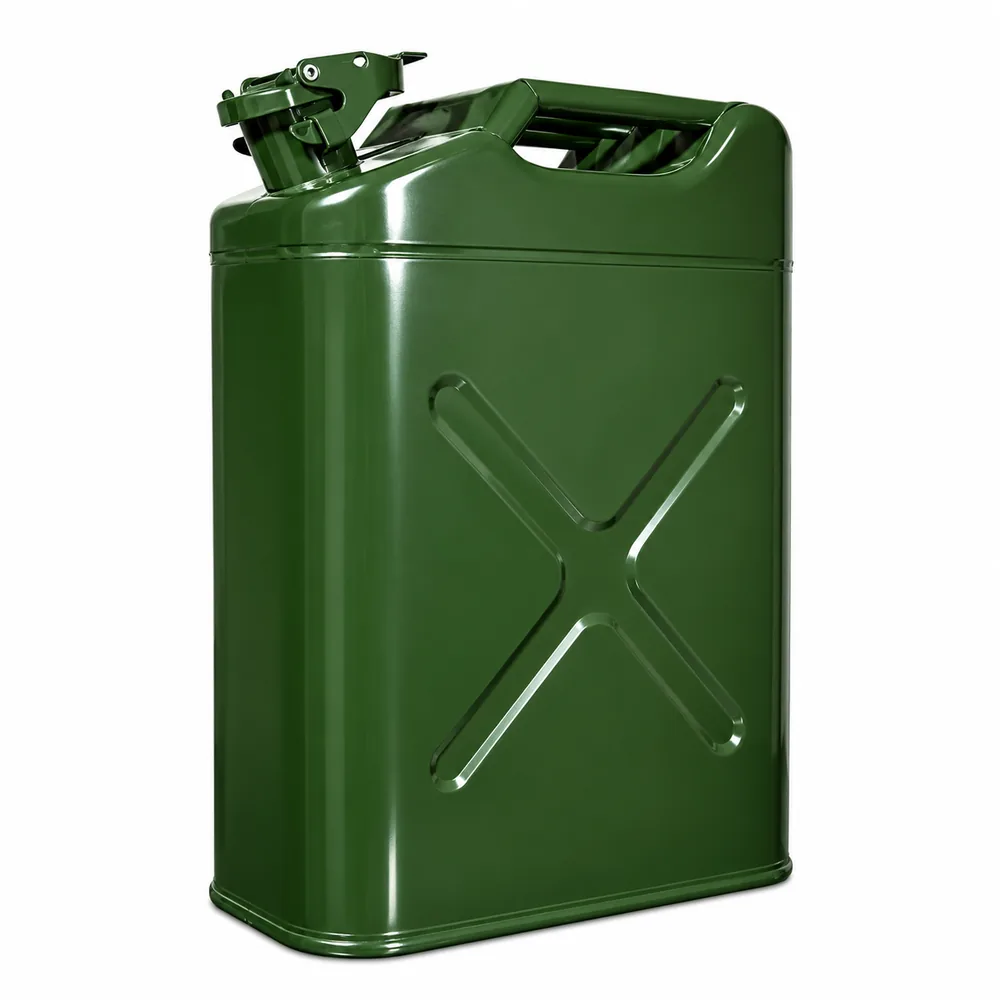 20L NATO Steel Fuel Can |
A closed-head steel jerrican in the 3A1 family; ask for the full mark of the design quoted. |
| Liquid chemicals, UN 3H1 | 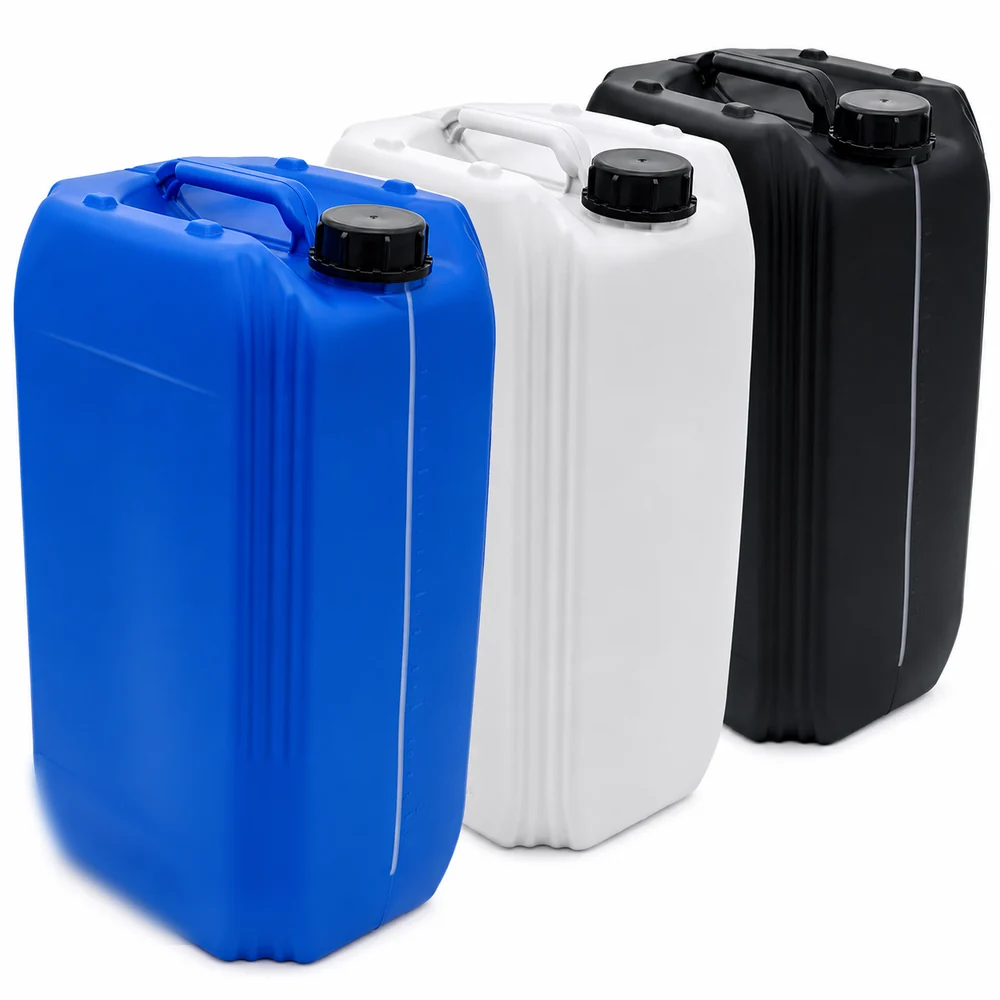 25L Stackable Plastic Jerrycan |
A stackable 25 litre HDPE jerrican; check its marked specific gravity against your liquid. |
| Solvents and fuels in plastic | 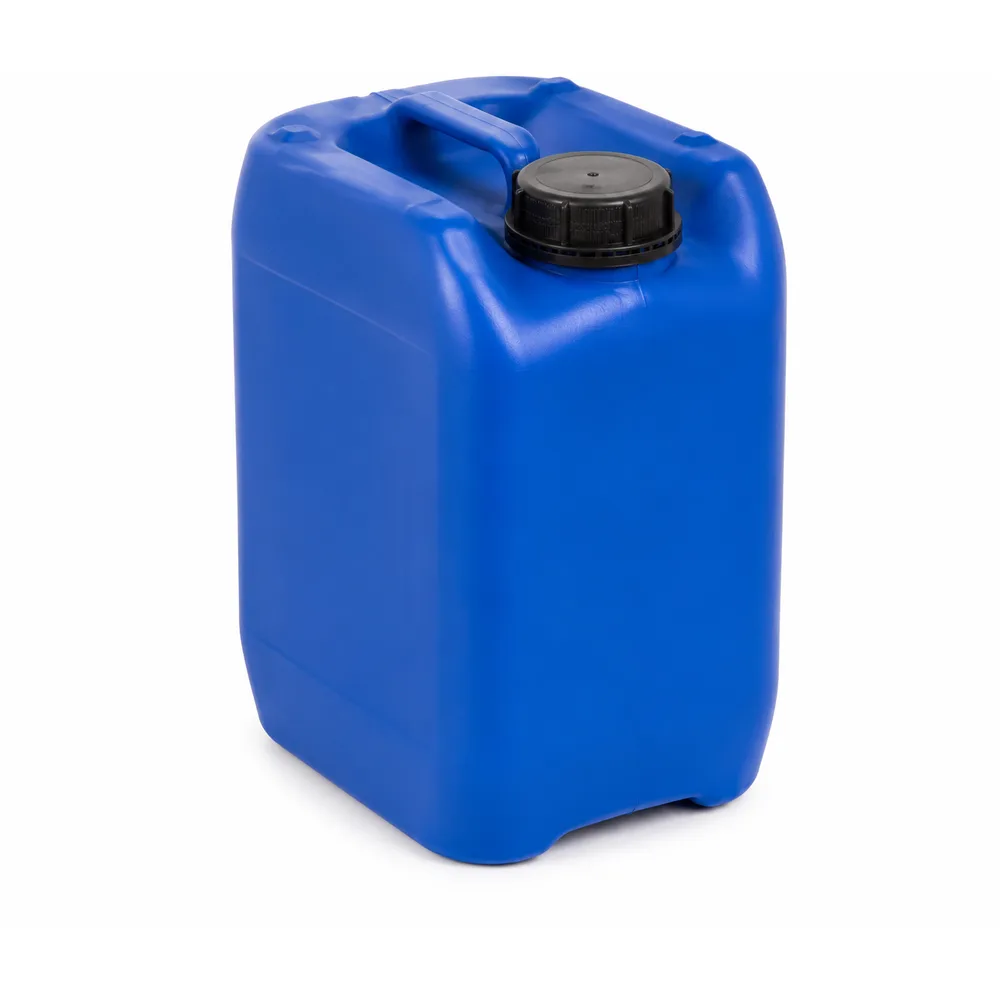 Fluorinated HDPE Jerrycan |
Fluorinated HDPE for liquids that permeate or swell plain HDPE. |
| Pastes, powders and viscous product, UN 3H2 |  Wide-Mouth HDPE Jerrycan — UN 3H2 pattern |
A removable-head HDPE design for product that will not pour through a narrow neck. |
A UN rated container is a drum, jerrican, box or IBC whose design type passed the UN performance tests and carries the UN mark. UN rated, UN approved, UN certified and the US term UN specification packaging describe the same thing. The rating sits in the mark: X, Y or Z for the packing groups covered, then the specific gravity or gross mass and the test pressure the design passed.
Fibreboard is the letter G, so a fibreboard box is 4G and a fibre drum is 1G (49 CFR 178.502). A 4G box carries liquids only as the outer of a combination packaging, around inner bottles or tins. Its mark ends in a gross mass and the letter S, as in the 178.503 example 4G/Y145/S/83: tested to Packing Groups II and III at up to 145 kg gross.
Steel is the letter A. A steel drum is 1A1 with a non-removable head or 1A2 with a removable head, a steel jerrican is 3A1 or 3A2, and a steel box is 4A (49 CFR 178.502, 178.504 and 178.511). In a composite code the outer material comes second, so 6HA1 is a plastic receptacle inside a steel drum.
A 1A1 is a steel drum with a non-removable head, filled and emptied through openings no wider than 7 cm. 49 CFR 178.504 caps it at 450 litres and 400 kg net, and it is the usual steel drum for liquids. A drum with a lid that comes off, or with any opening wider than 7 cm, is a 1A2.
No. Limited quantities, excepted quantities, materials of trade, dry ice and small lithium cells and batteries travel without a UN mark when they meet the conditions of their exception. A combustible liquid in non-bulk packaging falls outside the US rules unless it is a hazardous substance, a hazardous waste or a marine pollutant. Every package still has to meet the general requirements of 49 CFR part 173, subpart B.
The manufacturer. Under 49 CFR 178.2(b) the UN mark the maker applies is the certification that the design passed every test, and no US authority approves a standard non-bulk UN design before it is marked. The maker, or the approval agency acting for it, is named in the mark by a symbol registered with PHMSA, and single packagings must be retested at least every 12 months (178.601(e)).
Yes, after inspection and, for packagings for liquids, a fresh leakproofness test at 48 kPa for Packing Group I or 20 kPa for Groups II and III (49 CFR 173.28(b)(2)). The tester marks the letter L, its symbol and the year. Metal and plastic drums and jerricans may be reused only if their wall thickness is marked; a plastic jerrican of up to 20 litres needs at least 1.1 mm.
Five years from its date of manufacture under ADR, RID and the UN Model Regulations, unless the competent authority approves a longer period or the substance calls for a shorter one (4.1.1.15). That is why plastic drums and jerricans show the month of manufacture as well as the year (49 CFR 178.503(a)(6)), often on a clock symbol beside the mark.
A V, as in 4GV, marks an outer packaging tested under the selective-testing rule that lets inner packagings of any type go inside without further testing, on the conditions in 49 CFR 178.601(g)(2). A W marks a packaging made to a specification or test method that PHMSA approved as equivalent under 178.601(h). Both letters follow the packaging code (178.503(a)(2)).
Both count as specification packaging under 49 CFR 171.8. A DOT specification is a US standard written into parts 178 and 179, and it binds a packaging wherever it is made. A UN standard follows the UN Recommendations; part 178 binds it when made in the US, and a UN packaging made abroad qualifies under 173.24(d)(2). Specifications removed from part 178 on 1 October 1991 may not be used for new packagings (178.2(f)).
The marking shows that the design type passed the UN tests. It reads left to right: the UN symbol, the packaging code such as 1A1 or 3H1, and X, Y or Z for the packing groups it covers. Then come the specific gravity or gross mass, the test pressure or S, the year, the country and the maker's symbol. Whether it resists your substance is a separate check.
Three things: the packing group the design is aimed at, whether it holds liquids or solids, and the kind of packaging (49 CFR 178.603 to 178.608). The packing group sets the drop height, 1.8, 1.2 or 0.8 m for groups I, II and III, and the leakproofness pressure. Packagings for liquids add the leakproofness and hydrostatic pressure tests, plastics are chilled to minus 18 °C before the drop, and bags skip the stacking test. A specific gravity above 1.2 raises the drop height.
Yes. Section 173.213 covers solid hazardous materials in Packing Group III, and every package under it must meet part 178 at the Packing Group I, II or III performance level, so an X, Y or Z mark will do (173.213(a)). It lists the codes allowed, from 1A1 steel drums and 3H1 plastic jerricans to 4G fibreboard boxes and 5H4 plastic film bags. An exception named in column 8A of the Hazardous Materials Table, such as a limited quantity, can still apply.
The standards and regulations this page relies on, at their issuing body. Where a market rule is named here, check the current revision before you specify against it.
Last reviewed by Clarence Cheang, Co-Founder.
Tell us the UN number, the packing group, your market and your volumes. We come back with the design certified to the right code, the plant named on its certificate and a quotation.