
The code on most UN-approved plastic jerry cans, character by character, with its limits, tests and service life.
UN 3H1 is the packaging code for a plastic jerrican with a closed head: 3 for jerrican, H for plastic, 1 for a head that does not come off. It holds at most 60 litres and 120 kg net, and may carry dangerous goods for five years from the month it was made.
Decode a full 3H1 mark Ask for 3H1 containers
| Character | Meaning |
|---|---|
3 | Jerrican: a metal or plastic packaging of rectangular or polygonal cross-section |
H | Plastics |
1 | Non-removable head, with openings no wider than 7 cm |
| Maximum capacity | 60 litres (6.1.4.8.7; ADR 6.1.4.8.9) |
|---|---|
| Maximum net mass | 120 kg |
As a single packaging for liquids, packing instruction P001 sets the working limits by packing group. For a 3H1 that is 60 litres in every packing group, and 120 kg for solids.
Liquids or solids, in any packing group the mark allows. Under ADR a plastic jerrican for flammable liquids must meet a permeability limit, which polyethylene designs have to prove by test only for benzene, toluene and xylene. A 3H1 may be made with recycled plastic only under a recognised quality programme, and is then marked REC.
| Test | What the design has to survive | Paragraph |
|---|---|---|
| Drop | Cooled to −18 °C, filled to at least 98 per cent and dropped on its weakest points: from 1.8 m for packing group I, 1.2 m for II and 0.8 m for III. Tested with water, a liquid denser than 1.2 drops from its relative density times 1.5, 1.0 or 0.67 m. | 6.1.5.3 |
| Leakproofness | Held under water for five minutes at an air pressure of 30 kPa for packing group I or 20 kPa for II and III. Every container made for liquids passes the same test before its first use. | 6.1.5.4, 6.1.1.3 |
| Internal pressure | Held for 30 minutes at the hydraulic pressure the mark states, at least 250 kPa for packing group I. | 6.1.5.5 |
| Stacking | Carries the weight of a 3 m stack of identical full packages for 28 days at 40 °C when made for liquids, 24 hours when made for solids. | 6.1.5.6 |
| Compatibility | The plastic has to be shown to resist the contents. ADR names the methods: six months filled with the goods, or for polyethylene three weeks at 40 °C with standard liquids. | 6.1.5.2.4; ADR 6.1.5.2.5, 6.1.6 |
| Permeability, ADR | For flammable liquids, no more than 0.008 g per litre per hour lost through the wall at 23 °C. Polyethylene designs need the test only for benzene, toluene, xylene and mixtures with them. | ADR 6.1.5.7 |
A design marked S for solids needs the drop and stacking tests only. The leakproofness and pressure tests belong to designs for liquids.
Five years from the month of manufacture for dangerous goods, unless the competent authority approves a longer period or the substance sets a shorter one: two years, for example, for nitric acid over 55 per cent. The month and year are marked, usually on a clock symbol. The clock does not restart after reconditioning (4.1.1.15).
Both are plastic jerricans. 3H1 has a fixed head with openings no wider than 7 cm. 3H2 has a removable head, or any opening wider than 7 cm, and may carry packing group II and III liquids as well as solids. In packing group I a 3H2 takes only viscous liquids. A 31H1 is a different thing altogether: the 31 means an IBC for liquids, not a jerrican.
UN 3H1/Y1.2/150/25/D/BAM 12345A closed-head plastic jerrican, approved for packing groups II and III, for liquids up to relative density 1.2, pressure-tested at 150 kPa, made in 2025, design approved in Germany.
| Part | On the mark | What it means |
|---|---|---|
| Packaging code | 3H1 | Closed-head plastic jerrican (3 = jerrican, H = plastic, 1 = non-removable head) |
| Performance level | Y | Approved for packing groups II and III (medium and low danger) |
| Relative density | 1.2 | Tested for liquids up to a relative density of 1.2 (water is 1.0) |
| Test pressure | 150 | Passed a hydraulic pressure test at 150 kPa |
| Year of manufacture | 25 | Made in 2025 |
| Approving country | D | Design approved in Germany |
| Manufacturer or approval number | BAM 12345 | Approval reference from BAM, the German approval authority, identifying the certified design |
Plastic drums and jerricans also carry the month of manufacture, usually on a clock symbol beside the mark.
Another 3H1 mark, decoded: UN 3H1/X1.9/250/25/NL/VL832
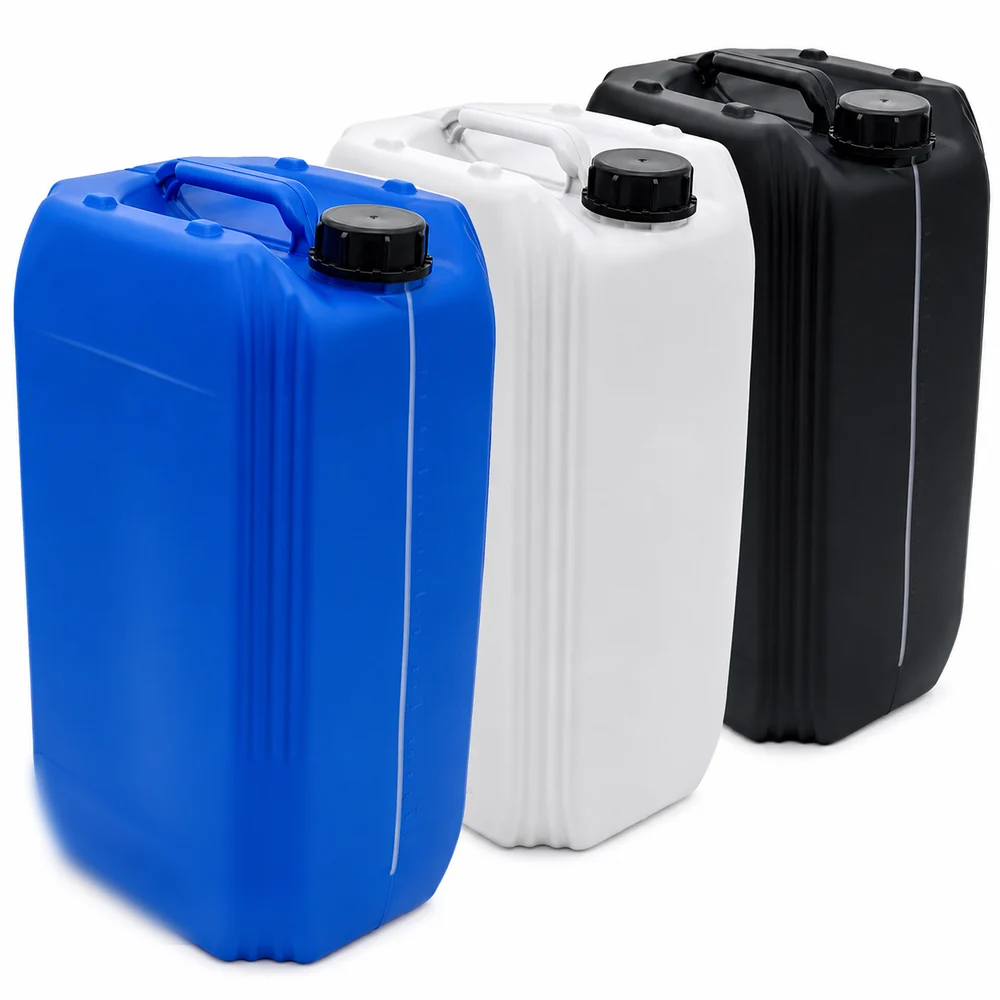 25L Stackable Plastic Jerrycan25 litresUN version available
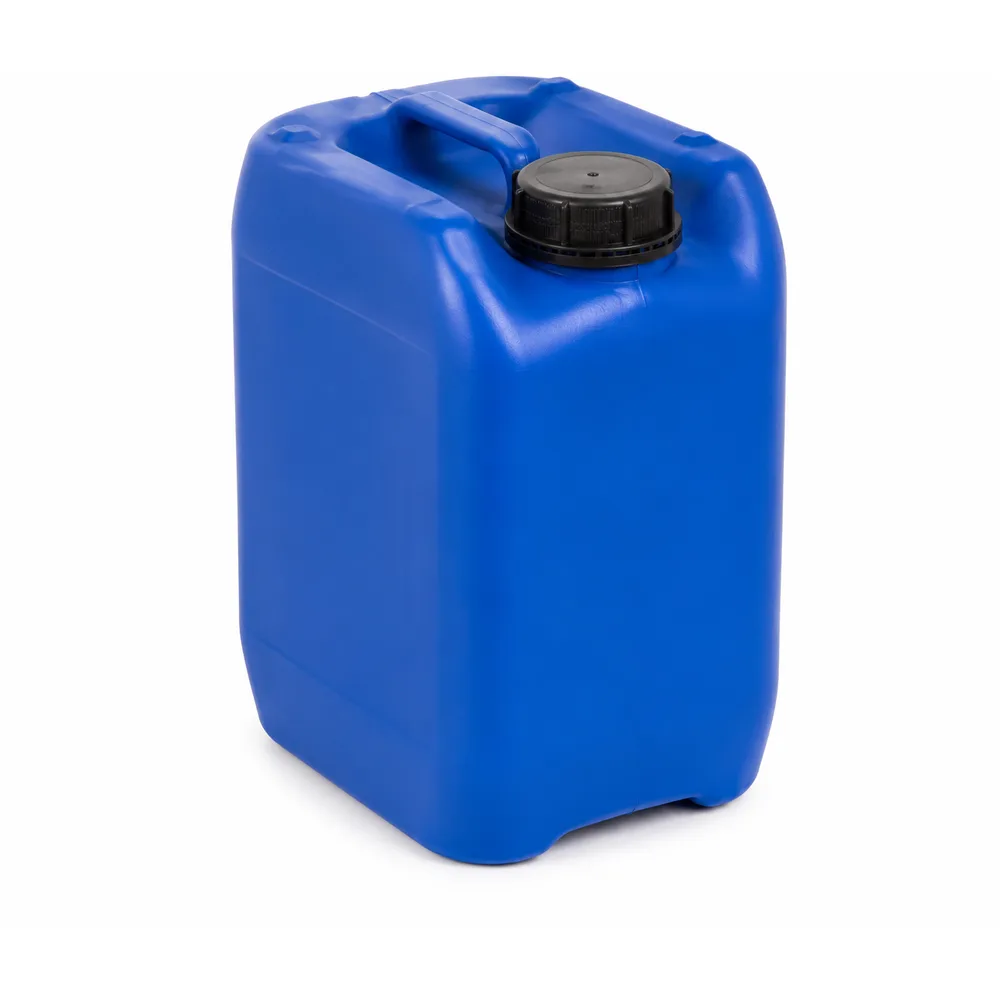 Fluorinated HDPE Jerrycan5, 10, 20, 25 and 30 litresUN version available
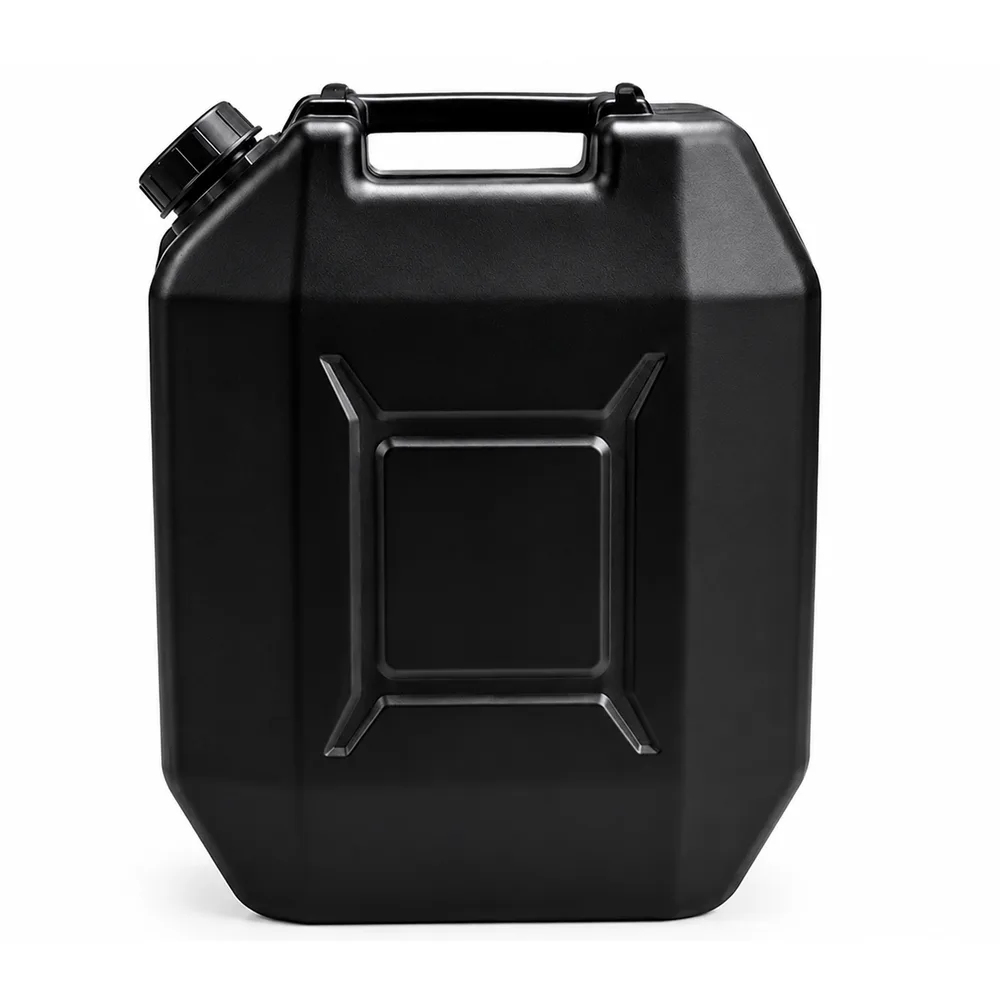 Antistatic HDPE Jerrycan5, 10, 20, 25 and 30 litresUN version available
Approval is per design and per plant, and each design carries its own level, density and test pressure. Send your contents and we confirm the design that matches your mark.
It means the can is a plastic jerrican with a closed head that passed the UN tests for dangerous goods packaging. 3 is jerrican, H is plastic and 1 is a head that does not come off.
For dangerous goods, five years counted from the month on the mark. The competent authority can allow longer, and a few substances, nitric acid over 55 per cent among them, cut it to two.
60 litres capacity and 120 kg net mass. Anything larger is a drum or an IBC.
The standards and regulations this page relies on, at their issuing body. Where a market rule is named here, check the current revision before you specify against it.
Checked against the UN Model Regulations, Rev. 24, and ADR 2025 on 5 October 2026. Decode any other mark with our UN packaging code decoder.
Send what goes in them, the size and where they ship. We reply with the design certified to this code, the plant named on its certificate, and a price.