
What PG I, II or III on a safety data sheet means for the container you ship it in.
A packing group grades how dangerous a substance is within its hazard class: PG I high, PG II medium, PG III low (UN Model Regulations 2.0.1.3). “PG II” on a safety data sheet means the container needs a UN mark lettered X or Y, a design drop-tested from at least 1.2 m, and the P001 size limits.
Work it out
Which containers may carry your UN number?UN number packaging finderWhat does a UN mark mean?UN packaging code decoderThe UN Model Regulations (UN MR) set three packing groups at paragraph 2.0.1.3, and ADR repeats the rule at 2.1.1.3: Group I for high danger, Group II for medium and Group III for low. The Dangerous Goods List fixes the group per entry, and where it lists more than one, the consignor determines it from the substance’s properties (UN MR 3.2.1).
Some goods get no packing group: Class 1 explosives, Class 2 gases, Class 7 radioactive material, Divisions 5.2 and 6.2, and the self-reactive substances of Division 4.1. Articles get none either. Class 9 and the flammable solids of Class 4.1 stop short of Group I and use II and III only (ADR 2.2.9.1.15 and 2.2.41.1.8). US 49 CFR 171.8 calls the bands great, medium and minor danger, and the term in all three texts is “packing group”, so “packaging group” is a misnomer.
The class names the type of danger and the packing group grades its severity. Each class grades on its own yardstick (ADR 2.1.2.1): flash point and boiling point for Class 3, time to skin damage for Class 8, lethal dose for Division 6.1. A PG II corrosive and a PG II flammable liquid sit in the middle band of two different scales, and the shared numeral says nothing about which is worse.
Within one class the group separates close relatives: petrol is 3/II, kerosene 3/III, and jet fuel (UN 1863) can be I, II or III depending on the batch. A substance with two hazards still gets one class and one group through the precedence table in ADR 2.1.3.10, so methanol travels as Class 3 with a 6.1 subsidiary hazard in PG II.
A safety data sheet carries the packing group in section 14, Transport information. The OSHA layout in 29 CFR 1910.1200 Appendix D lists the UN number, the proper shipping name and the transport hazard class, then the packing group “if applicable”. The value comes from the Dangerous Goods List: column 5 of the UN list (3.2.1), column (4) of ADR Table A and column 5 of the US table at 49 CFR 172.101.
On the transport document the group follows the class. UN MR 5.4.1.4.1 fixes the order (UN number, proper shipping name, class, any subsidiary hazard in brackets, packing group) and 5.4.1.4.2 allows nothing between them, so petrol reads UN 1203 PETROL 3 II. ADR 5.4.1.1.1 appends the tunnel code to give UN 1203 PETROL, 3, II, (D/E), and 49 CFR 172.202(b) sets the same sequence for US shipping papers. The UN number packaging finder turns that line into a container for 72 entries in ADR 2025 Table A.
Class 3 grades on the closed-cup flash point and the initial boiling point, in a table at UN MR 2.3.2.6, ADR 2.2.3.1.3 and 49 CFR 173.121(a)(1).
ADR Table A lists petrol, acetone and toluene at PG II, and kerosene and diesel at PG III. Viscous products can drop a group: paints, enamels, lacquers, varnishes, adhesives and polishes with a flash point below 23 °C may travel as PG III if they pass the viscosity and solvent-separation tests and sit in receptacles of 450 litres or less (ADR 2.2.3.1.4; UN MR 2.3.2.2). That rule gives UN 1263 paint two extra PG III rows for viscous paint.
Above 60 °C the regimes part company. The UN text ends Class 3 there, and BAM’s UN record files higher-flash diesel under UN 3082, Class 9, PG III, while ADR keeps a UN 1202 Class 3 PG III entry up to a flash point of 100 °C. In the US a liquid flashing at 38 °C or above may be reclassed as combustible (49 CFR 173.120(b)(2)), which puts it outside the Hazardous Materials Regulations in non-bulk packaging unless it is a hazardous substance, waste or marine pollutant (173.150(f)(2)).
Class 8 grades by how fast a substance causes irreversible skin damage (UN MR 2.8.3.3, ADR 2.2.8.1.5.3, 49 CFR 173.137). Division 6.1 grades by lethal dose and lethal concentration (UN MR 2.6.2.2.4.1, ADR 2.2.61.1.7, 49 CFR 173.133).
| Packing group | Class 8: exposure time to irreversible skin damage | Division 6.1: oral LD50, mg/kg | Division 6.1: dermal LD50, mg/kg | Division 6.1: dust or mist LC50, mg/l |
|---|---|---|---|---|
| I | ≤ 3 minutes, observed up to 60 minutes | ≤ 5.0 | ≤ 50 | ≤ 0.2 |
| II | > 3, ≤ 60 minutes, observed up to 14 days | > 5.0, ≤ 50 | > 50, ≤ 200 | > 0.2, ≤ 2.0 |
| III | > 60 minutes, ≤ 4 hours, observed up to 14 days; or no skin damage but corrosion of steel or aluminium above 6.25 mm a year at 55 °C | > 50, ≤ 300 | > 200, ≤ 1,000 | > 2.0, ≤ 4.0 |
Two tie-break rules settle borderline cases. A test that proves a substance corrosive but cannot separate PG II from PG III puts it in PG II (ADR 2.2.8.1.5.2), and where oral, dermal and inhalation results disagree, the most severe route sets the group (ADR 2.2.61.1.7.1).
The packing group reaches the container through one letter in the UN mark. Under 6.1.3.1(c), worded the same in the UN text, in ADR and in 49 CFR 178.503(a)(3), X means the design type passed the tests for packing groups I, II and III, Y for II and III, and Z for III only, so a PG II liquid needs X or Y. On a packaging for liquids the figure after the letter is the relative density tested, which the maker may leave off up to 1.2. The UN packaging codes guide and the UN code decoder read the rest of the mark.
NOTE 3 at the head of section 6.1.3 adds a density allowance when a packaging steps down a group. A PG I design tested at relative density 1.2 may carry PG II liquids up to 1.8 or PG III liquids up to 2.7, provided it still meets every performance criterion (US: 49 CFR 173.24a(b)(1)). NOTE 1 limits what the mark proves to tests “related to the manufacture, but not to the use” of the packaging, so chemical compatibility stays the filler’s check.
The letter also stands for test severity: drop height rises with the group (6.1.5.3.5), and packagings for PG I liquids must hold at least 250 kPa gauge in the hydraulic test (ADR 6.1.5.5.5).
Packing instruction P001 sets the largest single packaging for liquids in each group (ADR 4.1.4.1; the UN text matches). For jerricans the group changes the closure rule and leaves the 60 litre cap alone, while drums lose 200 litres at PG I.
| Single packaging under P001 | PG I | PG II | PG III |
|---|---|---|---|
| Drum, closed head (1A1, 1B1, 1N1, 1H1) | 250 L | 450 L | 450 L |
| Drum, removable head (1A2, 1B2, 1N2, 1H2) | 250 L, viscosity above 2,680 mm²/s only | 450 L | 450 L |
| Jerrican, closed head (3A1, 3B1, 3H1) | 60 L | 60 L | 60 L |
| Jerrican, removable head (3A2, 3B2, 3H2) | 60 L, viscosity above 2,680 mm²/s only | 60 L | 60 L |
| Composite (6HA1, 6HB1, 6HH1) | 250 L | 250 L | 250 L |
| IBC (separate IBC02 or IBC03 instruction) | None in the rows checked | IBC02 on most entries | IBC03 on most entries |
Note a to P001 in ADR lets a removable-head drum or jerrican take a PG I liquid only above 2,680 mm²/s, so a free-flowing PG I solvent needs a closed head and an X mark. IBCs drop out at PG I. The IBC mark reserves X for solids (6.5.2.1.1(c)), and the PG I liquid rows checked in ADR 2025 Table A, for UN 1263 paint and UN 1863 jet fuel, list no IBC instruction. The UN 31HA1 and UN 31H1 pages show how an IBC mark reads.
Combination packagings work on inner limits instead: 10 L for glass, 30 L for plastics and 40 L for metal, inside an outer drum of up to 250 kg at PG I and 400 kg at PG II and III. The finder shows all three paint groups side by side at UN 1263, and our guide to jerry can, drum or IBC covers the choice of format.
Entries come from ADR 2025 Table A, cross-checked against BAM’s database and 49 CFR 172.101. Each UN number opens the finder at that entry.
| UN number | Substance | Class | Packing group | Limited quantity per inner packaging |
|---|---|---|---|---|
| UN 1203 | Petrol (motor spirit, gasoline) | 3 | II | 1 L |
| UN 1202 | Diesel fuel, gas oil, light heating oil | 3 | III | 5 L |
| UN 1223 | Kerosene | 3 | III | 5 L |
| UN 1863 | Jet fuel (fuel, aviation, turbine engine) | 3 | I, II or III | 500 ml / 1 L / 5 L |
| UN 1090 | Acetone | 3 | II | 1 L |
| UN 1170 | Ethanol and ethanol solutions | 3 | II or III | 1 L / 5 L |
| UN 1230 | Methanol | 3 (6.1) | II | 1 L |
| UN 1219 | Isopropanol | 3 | II | 1 L |
| UN 1294 | Toluene | 3 | II | 1 L |
| UN 1263 | Paint and paint related material | 3 | I, II or III | 500 ml / 5 L / 5 L |
| UN 1830 | Sulphuric acid, more than 51% acid | 8 | II | 1 L |
| UN 1789 | Hydrochloric acid | 8 | II or III | 1 L / 5 L |
| UN 1824 | Sodium hydroxide solution | 8 | II or III | 1 L / 5 L |
| UN 1791 | Hypochlorite solution | 8 | II or III | 1 L / 5 L |
| UN 2014 | Hydrogen peroxide solution, 20–60% | 5.1 (8) | II | 1 L |
| None | AdBlue (urea solution, 32.5%) | Not dangerous goods | None | Not applicable |
Sulphuric acid above 51% is PG II only; PG I belongs to fuming sulphuric acid, UN 1831. Hydrogen peroxide at 20–60% carries a Class 8 subsidiary hazard and packs under instruction P504, so the P001 limits above do not reach it. From 8% to below 20% it becomes UN 2984, PG III, and below 8% it falls outside ADR (special provision 65).
Ethanol diluted with water to 24% alcohol by volume or less is outside ADR (special provision 144), and paint is the one Class 3 entry here with a 5 L limited quantity at PG II. AdBlue has no UN number, and BAM’s ADR 2025 record lists urea as not subject to ADR, so it has no packing group and needs no UN-marked container. The DEF and AdBlue guide covers what it does need.
The limited quantity allowance shrinks as the danger rises. ADR 3.4.1 takes the limit per inner packaging from column (7a) of Table A, where a zero means no relief, and 3.4.2 caps the package at 30 kg gross. Jet fuel shows the ladder within one entry: 500 ml at PG I, 1 L at PG II and 5 L at PG III. In the US, 49 CFR 173.150(b) sets the same 0.5, 1.0 and 5.0 L steps for Class 3, and 173.154(b) leaves a PG I corrosive with no limited quantity.
Every one of these limits sits below a 20 L jerrican, so jerrican loads look to the 1.1.3.6 threshold in our ADR reliefs guide, and the dangerous goods transport guide covers the rules by mode.
We offer HDPE jerricans UN certified as 3H1 (closed head) or 3H2 (removable head), and UN-marked steel fuel cans. Approval is per design and per plant, so the letter and the tested density come from the certificate for your build. Send us the UN number and packing group from section 14 and we confirm which design covers it before you commit.
| Your use case | Recommended can | Why this one |
|---|---|---|
| PG II or III chemicals, UN 3H1 | 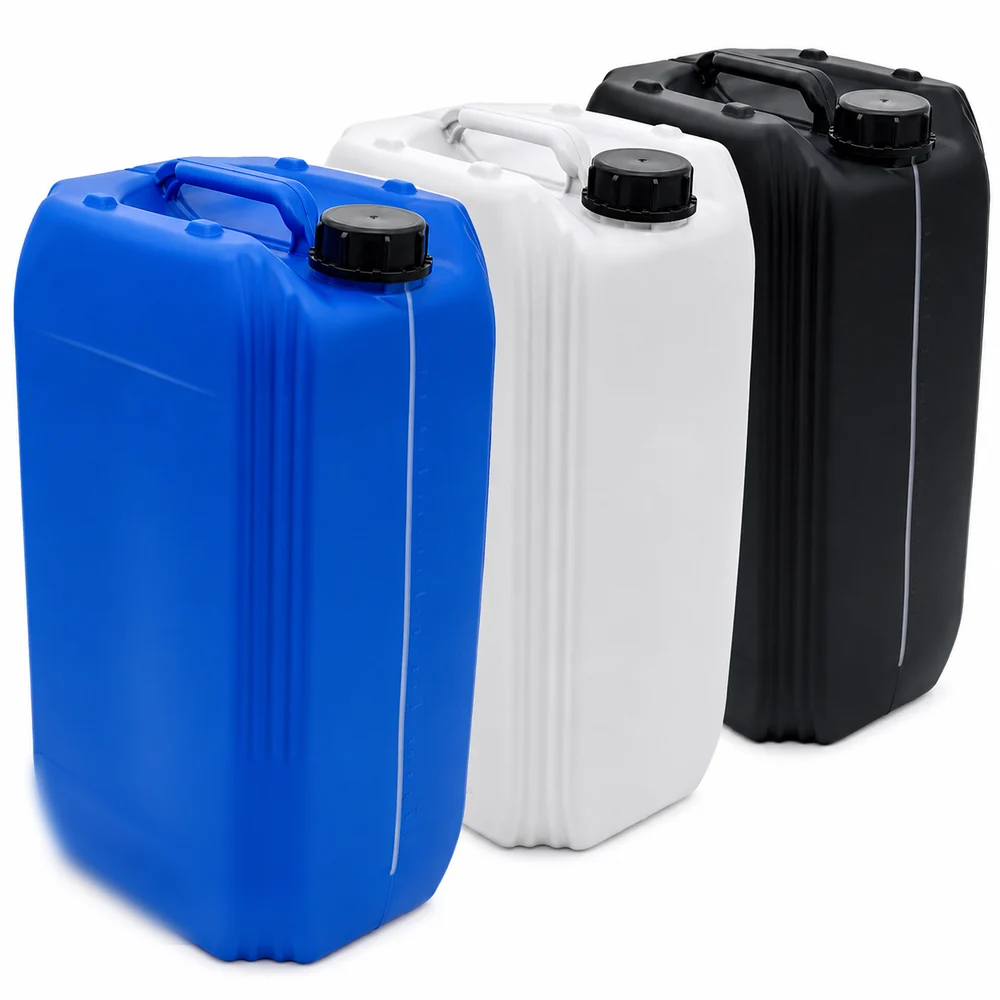 25L Stackable Plastic Jerrycan 25L Stackable Plastic Jerrycan |
Closed-head HDPE, offered UN 3H1 certified for your contents. |
| Viscous product, UN 3H2 | 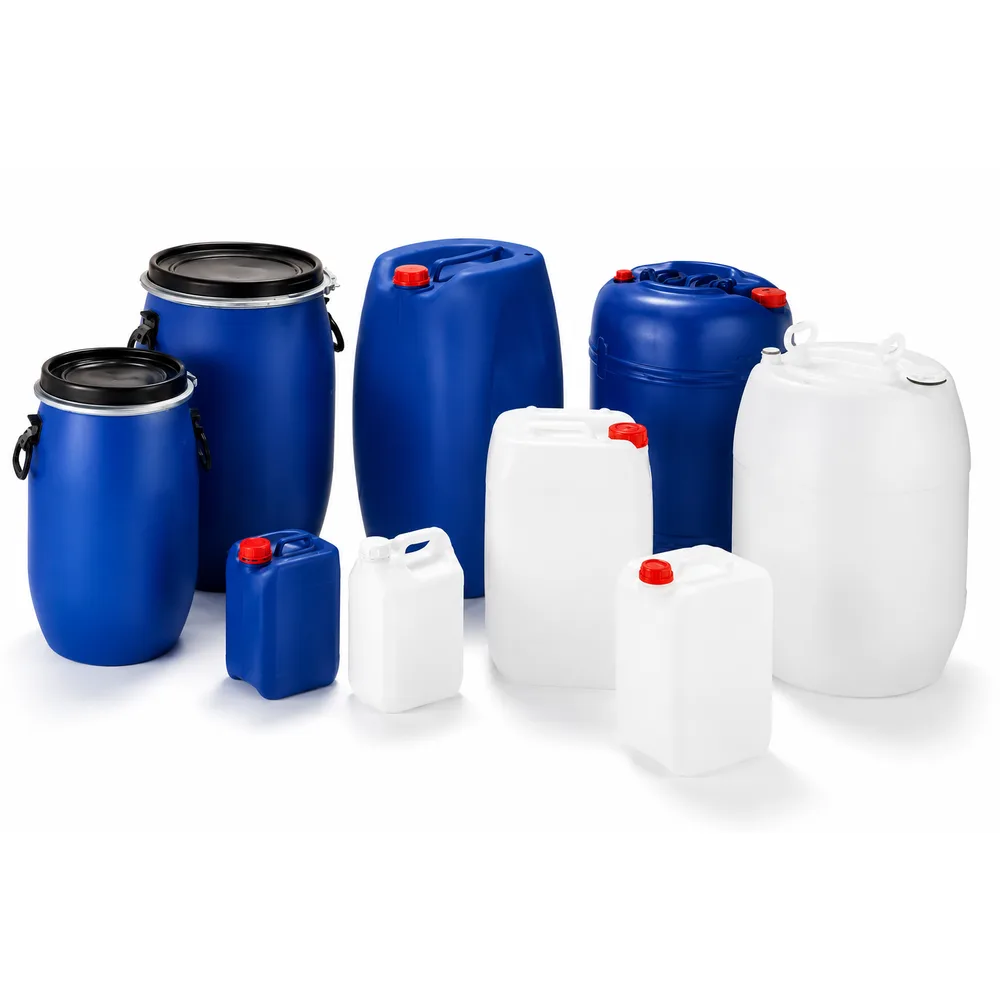 Wide-Mouth HDPE Jerrycan — UN 3H2 pattern Wide-Mouth HDPE Jerrycan — UN 3H2 pattern |
Removable head, which takes PG I only above 2,680 mm²/s. |
| Solvents that permeate HDPE | 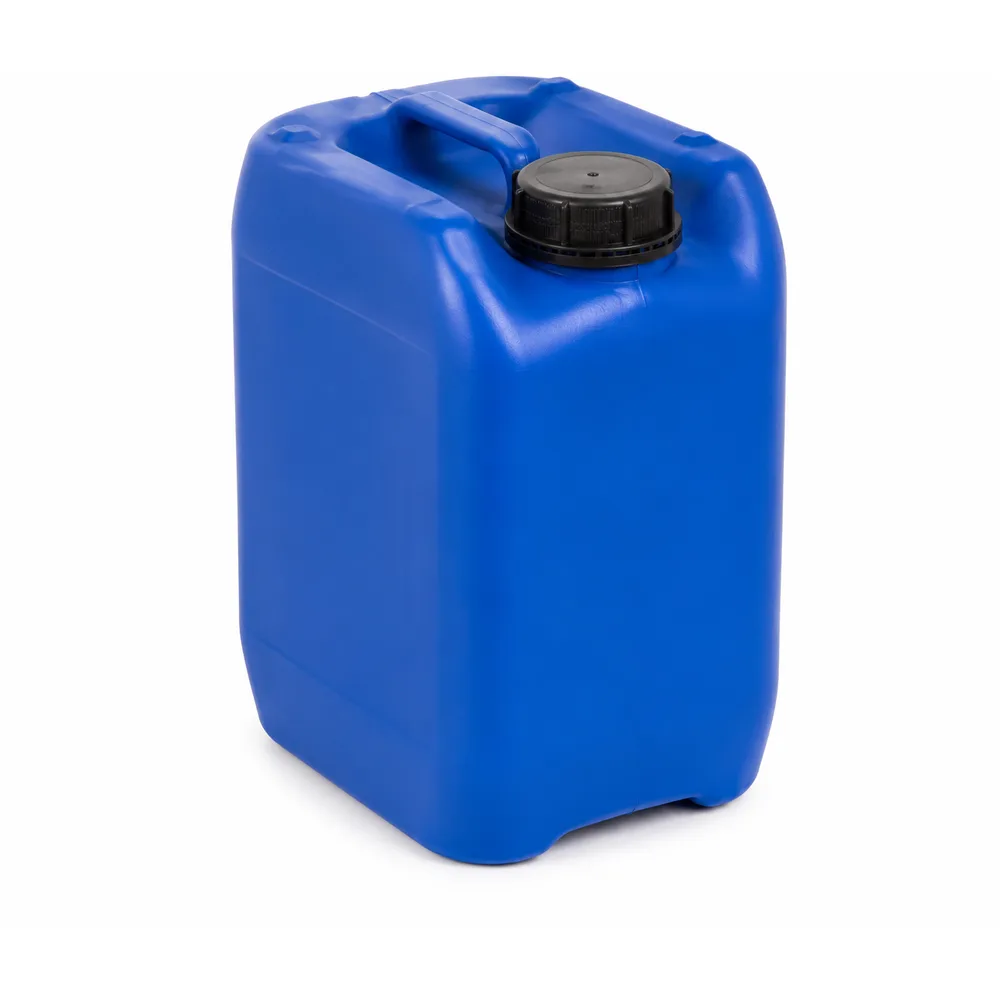 Fluorinated HDPE Jerrycan Fluorinated HDPE Jerrycan |
Fluorinated barrier wall, with UN 3H1 certification available. |
| Petrol, UN 1203, PG II | 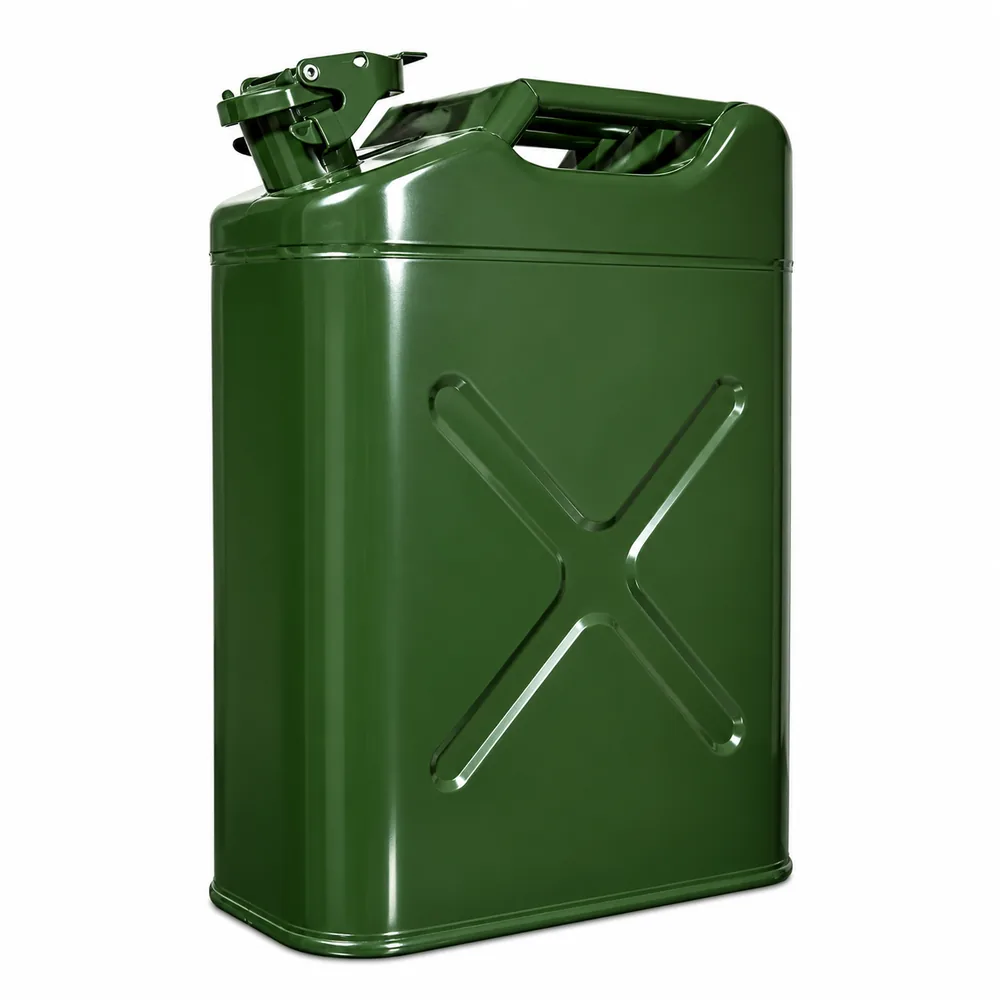 20L NATO Steel Fuel Can 20L NATO Steel Fuel Can |
UN-marked steel can; ask us for the code and letter. |
| AdBlue, no packing group | 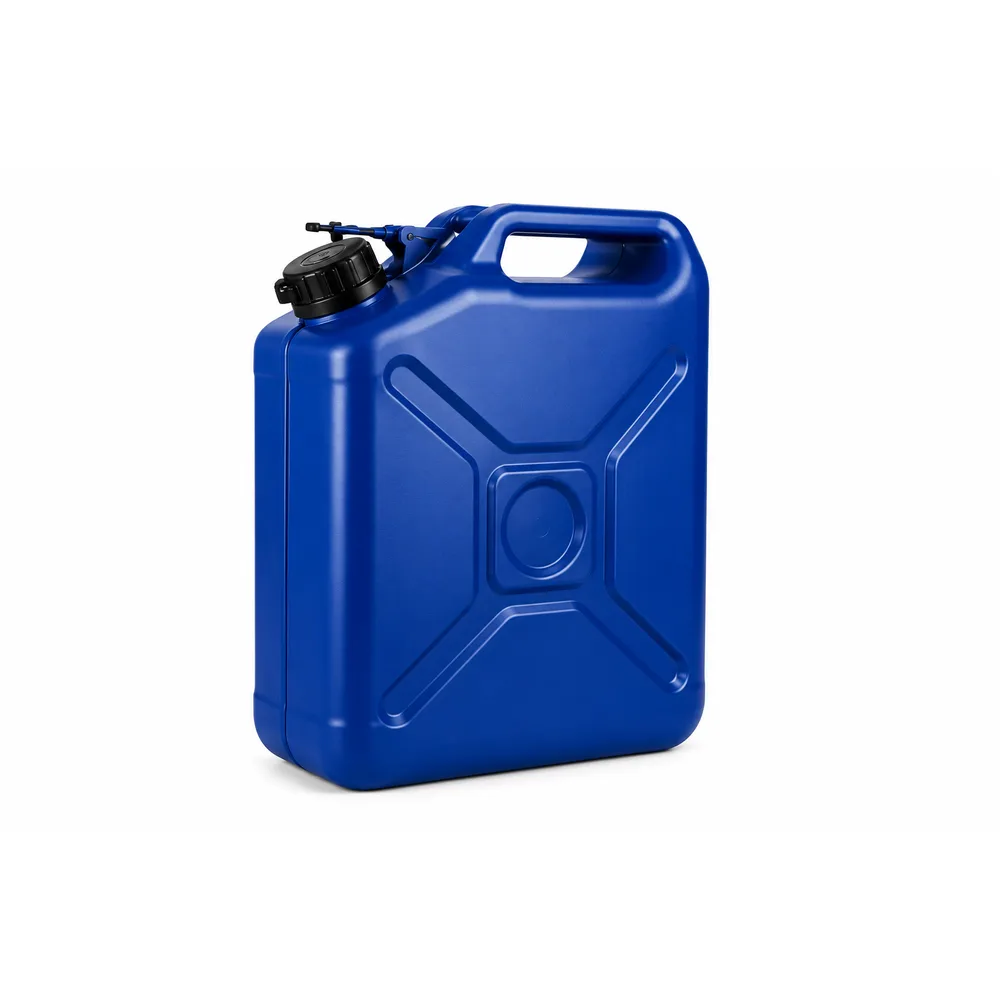 DEF Can — Diesel Exhaust Fluid DEF Can — Diesel Exhaust Fluid |
AdBlue is not a dangerous good, so the can needs no UN mark. |
PG II means packing group II, the medium-danger band within a hazard class under UN Model Regulations 2.0.1.3. For the container it means a UN mark with the letter X or Y, a design drop-tested from at least 1.2 metres, and P001 limits of 60 litres for a jerrican and 450 litres for a drum.
Packing group I is the most dangerous and III the least. The UN and ADR texts call the bands high, medium and low danger, and US 49 CFR 171.8 says great, medium and minor. The grading works within one hazard class, so a PG II corrosive and a PG II flammable liquid are graded on different tests.
Class 1 explosives, Class 2 gases, Class 7 radioactive material, Division 5.2 organic peroxides, Division 6.2 infectious substances and the self-reactive substances of Division 4.1 get no packing group under UN Model Regulations 2.0.1.3. Articles get none either. Class 9 and the flammable solids of Class 4.1 use packing groups II and III only.
No. The IBC mark reserves the letter X, the only letter covering packing group I, for IBCs that carry solids (ADR 6.5.2.1.1(c)), so a liquids IBC carries Y or Z. In ADR 2025 Table A, the packing group I rows for paint (UN 1263) and jet fuel (UN 1863) list P001 and no IBC instruction.
Not for a closed-head jerrican: packing instruction P001 caps 3A1, 3B1 and 3H1 jerricans at 60 litres in every packing group. The group changes the mark letter and the closure. A removable-head jerrican such as 3H2 may carry a packing group I liquid only above 2,680 mm²/s viscosity, and drums fall from 450 to 250 litres at packing group I.
Look in section 14 of the safety data sheet, Transport information, after the UN number, proper shipping name and hazard class. The same value appears in the Dangerous Goods List, column 4 of ADR Table A, and on the transport document after the class, as in UN 1203 PETROL 3 II. Where an entry lists more than one group, the substance data decides.
The standards and regulations this page relies on, at their issuing body. Where a market rule is named here, check the current revision before you specify against it.
Last reviewed by David Guru, Co-Founder & Business Development Director.
The UN number, packing group, container size and destination are enough for a first answer: the design, the letter its mark carries, the plant on the certificate and a price.