
Which air and sea editions apply in 2026, how much petrol may fly, how the IMDG Code segregates and marks a sea load, and how four transport regimes compare.
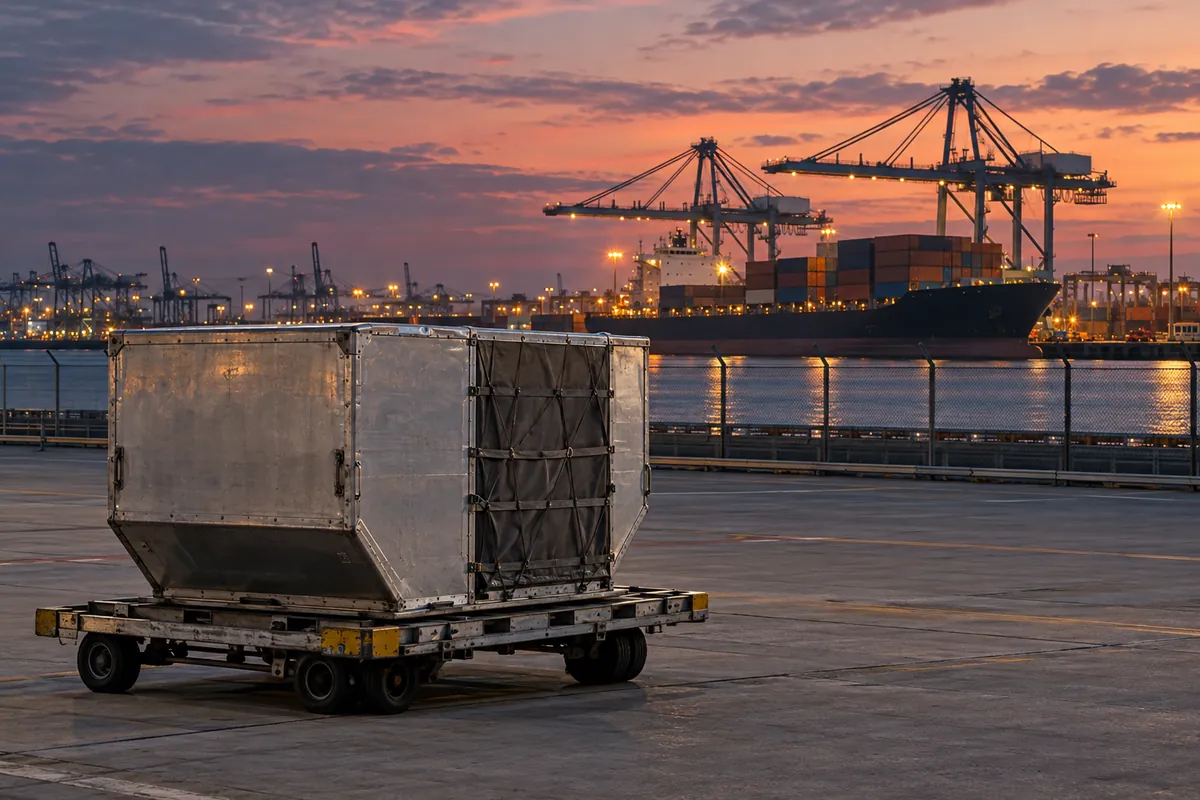
Dangerous goods fly under the ICAO Technical Instructions, which airlines apply through the IATA Dangerous Goods Regulations: the 67th edition for 2026, the 68th from 1 January 2027. At sea the IMDG Code applies, Amendment 42-24, mandatory since 1 January 2026. Both keep the UN numbers, classes and packaging marks used by road. Petrol flies 5 L per package on a passenger aircraft and 60 L on a cargo aircraft.
Quick answer: Which rules cover shipping dangerous goods by air and sea?
Air shipments follow the ICAO Technical Instructions, applied by airlines through the IATA Dangerous Goods Regulations: the 67th edition in 2026, the 68th from 1 January 2027. Sea shipments follow the IMDG Code, Amendment 42-24, the only valid text since 1 January 2026. A filled petrol jerrican flies only on a cargo aircraft, up to 60 litres per package.
Work it out
What does a UN mark mean?UN packaging code decoderWhich containers may carry your UN number?UN number packaging finderThe IATA Dangerous Goods Regulations are the airline industry’s manual for shipping dangerous goods by air. IATA calls the DGR a “field manual” version of the ICAO Technical Instructions (ICAO Doc 9284), written by airline experts. IATA airlines set some requirements above the Technical Instructions, and the DGR spells those out. The Technical Instructions are the law: Regulation (EU) No 965/2012 requires air transport of dangerous goods to follow Annex 18 to the Chicago Convention as amplified by them (CAT.GEN.MPA.200). In the US, 49 CFR 171.24 lets a US shipper use them with the US variations.
Airlines, forwarders and ground handlers check consignments against the DGR, and it puts classification on the shipper. Sections 1 to 9 cover:
| DGR section | What it covers |
|---|---|
| 1 Applicability | Shipper and operator duties, training (1.5), security, incident reporting |
| 2 Limitations | Forbidden and hidden goods, passenger items, State and operator variations (2.8) |
| 3 Classification | The hazard classes and the criteria for each |
| 4 Identification | The List of Dangerous Goods (4.2) and special provisions (4.4) |
| 5 Packing | The numbered packing instructions |
| 6 Packaging specifications | UN packaging construction and tests |
| 7 Marking and labelling | Marks, hazard labels and handling labels |
| 8 Documentation | The Shipper’s Declaration and the air waybill |
| 9 Handling | Storage, loading, segregation, inspection and record keeping |
The 67th edition applies until 31 December 2026, and the 68th takes over on 1 January 2027. IATA publishes a new edition every year, each dated 1 January. The 67th carries the 2025–2026 Technical Instructions and the 68th the 2027–2028 edition, each with changes adopted by IATA’s Dangerous Goods Board.
The 68th edition changes battery and passenger rules above all: two power banks per passenger, UN 3561 to 3564 added to the list, and amended packing instructions such as 650 and the 965 to 970 battery series. Y341, 353 and 364, the instructions for petrol, are not on the amended list. During an edition ICAO can issue an addendum, as it did for power banks on 27 March 2026, and State and operator variations in DGR 2.8 add stricter local rules.
Yes, as declared dangerous goods, but a filled jerrican flies only on a cargo aircraft. The 2025–2026 Technical Instructions give petrol, UN 1203, Class 3, Packing Group II, three packing instructions, as listed in Germany’s BAM DGG-Info database:
| Aircraft | Packing instruction | What it allows | Most per package |
|---|---|---|---|
| Passenger or cargo, limited quantity | Y341 | Inner packagings of 0.5 L in an outer box, drum or jerrican, 30 kg gross | 1 L |
| Passenger | 353 | Combination packagings only, inners up to 1 L glass or 5 L plastic or metal | 5 L |
| Cargo aircraft only | 364 | Combination packagings with inners up to 10 L metal, or a single 3A1 or 3H1 jerrican or 1A1 steel drum | 60 L |
In the single-packaging columns, steel and plastic jerricans are forbidden on passenger aircraft and allowed up to 60 L on cargo aircraft, where the package carries the black and orange Cargo Aircraft Only label, 120 × 110 mm. 49 CFR 172.101 gives gasoline the same 5 L and 60 L. A limited quantity package must still survive a 1.2 m drop and a 24-hour stack test, so IATA warns that an ordinary cardboard box will not do. UN 1203 lists the containers petrol may use by road.
Couriers that refuse fuel cans are within their rights. IATA points out that DGR 1.2.4 leaves an airline free to refuse any substance or to demand more than the regulations, and operator variations (DGR 2.8.3) record those choices. A used can is no way round it: a drained petrol can holds vapour and stays regulated as if full until cleaned and purged (49 CFR 173.29). Ask the carrier before you promise a customer air delivery.
A fully regulated air consignment travels with a Shipper’s Declaration for Dangerous Goods, which the shipper signs to certify that the cargo is packed, labelled and declared to the DGR. IATA publishes the form as a fillable PDF, and the electronic e-DGD carries the same data in IATA’s Cargo XML format. US shippers add the air certification in 49 CFR 172.204(c), covered in US hazmat shipping basics.
Anyone who prepares the consignment must be trained and assessed as competent before doing the work (DGR 1.5). Recurrent training is due within 24 months of the last; training taken in the final 3 months of validity runs 24 months from the old expiry month. The employer keeps the record of training and assessment for at least 36 months (DGR 1.5.1.4, per IATA’s training guidance). A course certificate is a record for the employer, not a licence, and the 24-month air cycle is shorter than the three years in 49 CFR 172.704.
The IMDG Code, the International Maritime Dangerous Goods Code, is the International Maritime Organization’s rulebook for dangerous goods carried by sea in packaged form. SOLAS chapter VII makes it mandatory, and MARPOL Annex III extends it to harmful substances, the marine pollutants. IMO adopted the Code in 1965 as a recommendation and made it mandatory from 1 January 2004.
IMO amends the Code on a two-year cycle, from member states’ proposals and changes to the UN Model Regulations. The 2024 edition, Amendment 42-24, could be used from 1 January 2025 and has been the only valid text since 1 January 2026 (MCA, MIN 715). IMO’s amendment chart shows Amendment 43-26 usable from 1 January 2027 and standing alone in 2028. The Code is published in two volumes, with the Dangerous Goods List in chapter 3.2, plus a separate Supplement. In the UK it applies through SI 2024/636: a shipper who fails its classification, packing or documentation duties commits an offence punishable by a fine or up to two years in prison (regulations 12 and 32).
The IMDG Code uses the nine UN hazard classes, from Class 1 explosives to Class 9 miscellaneous, the same classes as ADR and 49 CFR. Petrol keeps UN 1203, Class 3, Packing Group II at sea, and its emergency schedules are F-E for fire and S-E for spillage.
Incompatible classes are kept apart by four segregation terms (IMDG 7.2.2.2), set class against class in the segregation table. Goods that need any segregation may not share an outer packaging or a container, save for listed exceptions in chapter 7.2. 49 CFR 176.83 uses the same four terms and gives the distances for break-bulk cargo on deck:
| Code and term | On deck, break-bulk | Petrol is kept this far from |
|---|---|---|
| 1 Away from | At least 3 m | Class 2.2 non-flammable gases |
| 2 Separated from | At least 6 m; different holds under deck | Classes 1.4, 2.1, 2.3, 4.2, 4.3, 5.1, 5.2 and 7 |
| 3 Separated by a complete compartment or hold from | At least 12 m | Class 6.2 infectious substances |
| 4 Separated longitudinally by an intervening complete compartment or hold from | At least 24 m | Explosives of Divisions 1.1, 1.2, 1.3, 1.5 and 1.6 |
Stowage categories A to E say where on which ship a substance may go. Petrol is category E: on or under deck on a cargo ship, or on a passenger ship carrying no more than 25 passengers or one per 3 m of length, whichever is greater. Other passenger ships may not carry it.
A package of a marine pollutant carries the fish-and-tree mark, a diamond at least 100 × 100 mm with a black symbol on white (IMDG 5.2.1.6). The exception is a single or inner packaging of 5 L or 5 kg or less (2.10.2.7, reworded for clarity in Amendment 42-24). For petrol, BAM follows German guidance and industry studies and classes UN 1203 as environmentally hazardous unless test data show otherwise. On that basis a 20 L can of petrol by sea carries the mark, and the declaration names it a MARINE POLLUTANT (5.4.1.4.3.5).
Two documents go to the shipping line. The shipper’s dangerous goods declaration (IMDG 5.4.1) describes the goods. Whoever packs the container signs a container packing certificate (5.4.2): the container was clean, dry and fit, holds no incompatible goods, and only sound packages went in, secured, marked and placarded, with drums upright. The Multimodal Dangerous Goods Form (5.4.5) combines both, as Australia’s AMSA form 250 shows; IMO treats its layout as a recommendation, so other formats with the same content serve. ADR 5.4.2 requires the certificate on the road leg to the port, and 49 CFR 176.27(c) sets a similar list in the US.
A container of fully regulated goods is placarded under IMDG chapter 5.3. One holding only limited quantities is not placarded and carries the limited quantity mark instead (3.4.5.5.1).
Only to the packaged dangerous goods on them. SOLAS chapter VII covers packaged goods, solid bulk cargoes, liquid chemicals and liquefied gases in bulk, and the IMDG Code is the code for the first of those. UK law shows the split. SI 2024/636 applies the IMDG Code to packaged goods (Part 2) and the IMSBC Code to solid bulk cargoes (Part 3). It applies the International Bulk Chemical Code to ships carrying dangerous liquid chemicals in bulk (Part 4) and the International Gas Carrier Code to liquefied gases in bulk (Part 5).
A chemical tanker’s cargo in its tanks is outside the IMDG Code, but drums or jerricans carried as cargo on a tanker or a bulk carrier are packaged goods and follow it. The IMSBC Code has been mandatory since 1 January 2011 (MIN 715).
All four start from the UN Model Regulations, so petrol is UN 1203, Class 3, Packing Group II under each. They differ in who writes them, how often they change and what each asks of a shipment.
| ADR (road, Europe) | 49 CFR (US ground) | ICAO TI and IATA DGR (air) | IMDG Code (sea) | |
|---|---|---|---|---|
| Legal force | UN treaty, in national law such as the UK CDG Regulations 2009 | US federal regulation (PHMSA) | Chicago Convention Annex 18 | SOLAS chapter VII, MARPOL Annex III |
| In force, October 2026 | ADR 2025 | Title 49 as amended | TI 2025–2026; DGR 67th edition | Amendment 42-24 |
| Petrol in a 20 L steel jerrican | Allowed, jerricans to 60 L | Allowed (173.202) | Cargo aircraft only, PI 364 | Allowed, stowage category E |
| Petrol limited quantity | 1 L per inner | 1.0 L per inner (173.150) | 0.5 L inner, 1 L per package (Y341) | 1 L per inner |
| Main document | Transport document (5.4.1) | Shipping paper with signed certification | Shipper’s Declaration, signed | Declaration and container packing certificate |
| Staff training | For the duties, recorded (1.3) | At least every 3 years (172.704) | Within 24 months (DGR 1.5) | Shore-side staff (chapter 1.3) |
| Extra for the route | Tunnel code D/E, orange plates | Placards from 454 kg | Cargo Aircraft Only label | Segregation, stowage, marine pollutant mark |
IMDG vs DOT: 49 CFR 171.25 lets a shipper use the IMDG Code for any movement that is partly by vessel, with US placards on the road legs. The US text lags: 49 CFR 171.7 still cites Amendment 41-22 and the 2023–2024 Technical Instructions. PHMSA proposed the update in February 2026 (91 FR 5996), and its December 2024 enforcement discretion notice lets shippers follow Amendment 42-24 and the 2025–2026 Technical Instructions meanwhile. For ADR vs IMDG on the road legs to a port, see ADR 2025 explained.
The UN mark is recognised in every mode because each regime takes its packaging tests from the UN Model Regulations. A steel 3A1 or plastic 3H1 jerrican marked Y covers Packing Groups II and III, so it may carry petrol by road under ADR, by sea under the IMDG Code and on a cargo aircraft under PI 364. UN specification packaging explains the mark, the UN code decoder reads one part by part, and packing groups explained covers the X, Y and Z ratings.
Air adds a pressure check: packagings for liquids must withstand a pressure differential (Technical Instructions 4;1.1.6), 95 kPa for most liquids under 49 CFR 173.27(c). In any mode, plain HDPE lets petrol permeate, so a plastic fuel can needs a barrier such as fluorination. The UN number packaging finder lists the containers ADR allows for each UN number.
We make steel and plastic jerricans, pails, tins and spill containment in Vietnam and China. Our dangerous-goods jerrican designs hold UN certification, steel in the 3A1 family and HDPE in 3H1. Each is certified per design type and made under quality assurance the competent authority accepts, in factories certified to ISO 9001, 14001 and 45001. One UN mark serves road, sea and cargo aircraft legs, and the air limits decide whether petrol can fly at all.
Send us the UN number, packing group, specific gravity and the modes you ship by. We reply with the design whose mark covers it, or say that none of ours does. Classification, declarations, training and stowage stay with the shipper.
| Your use case | Recommended can | Why this one |
|---|---|---|
| Petrol or diesel by sea or cargo aircraft, UN 3A1 | 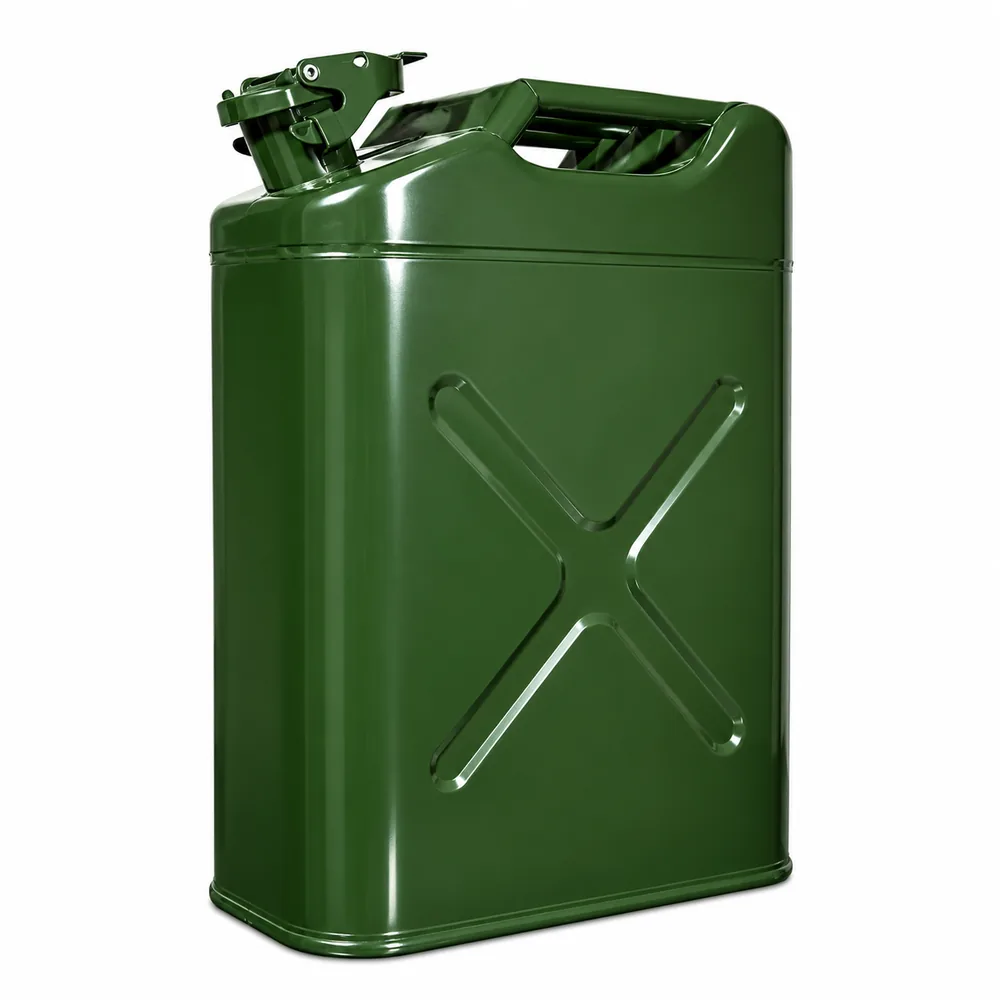 20L NATO Steel Fuel Can |
A closed-head steel jerrican; 3A1 is listed in PI 364 and IMDG P001 up to 60 L. Ask for the full mark of the design quoted. |
| Liquid chemicals by sea, UN 3H1 | 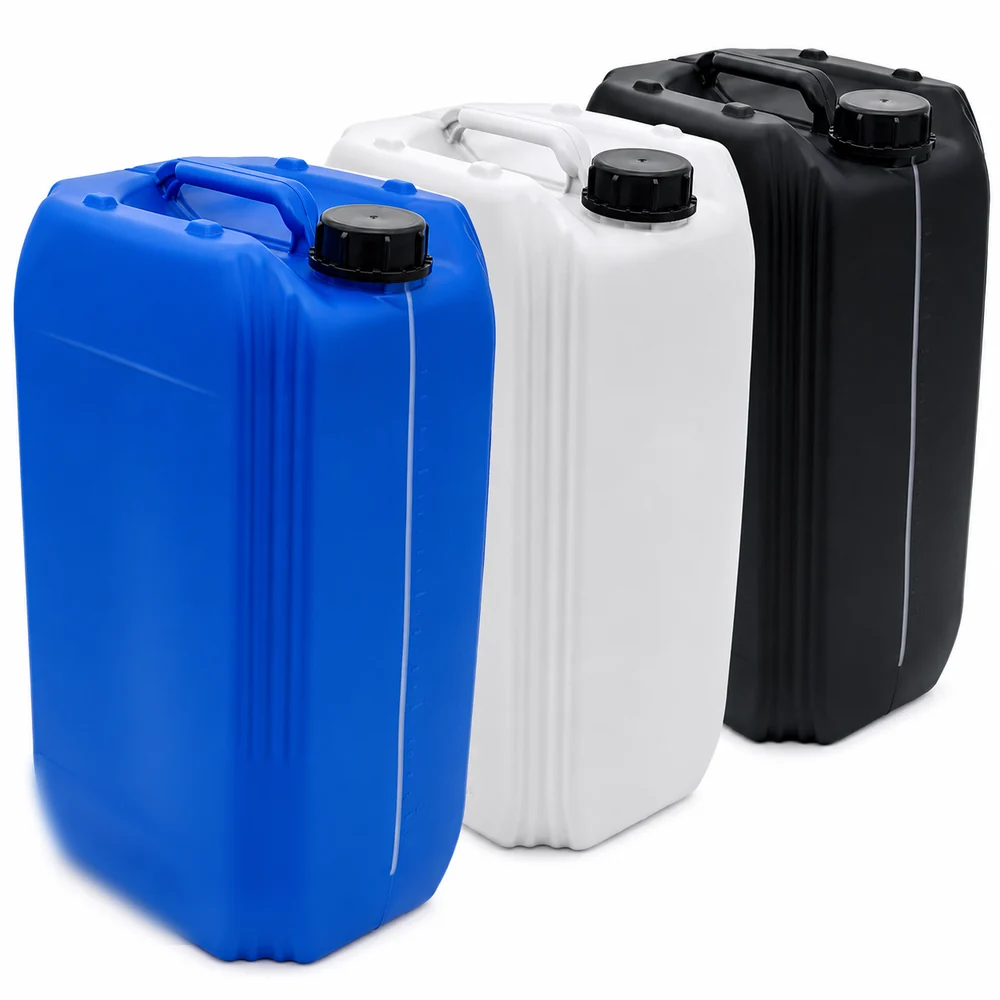 25L Stackable Plastic Jerrycan |
A stackable 25 litre HDPE jerrican; check its marked specific gravity and the plastic against your liquid. |
| Fuels and solvents in plastic | 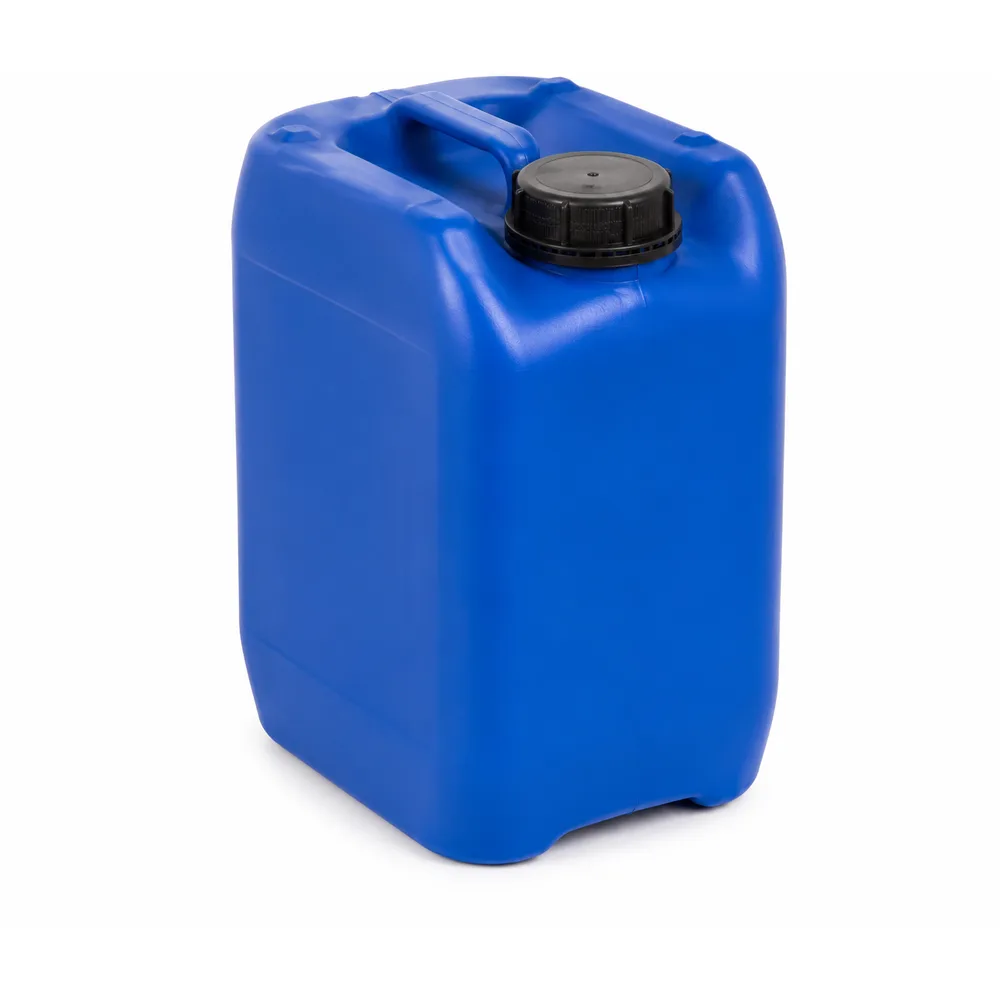 Fluorinated HDPE Jerrycan |
A fluorinated barrier for liquids that permeate plain HDPE, the compatibility check every mode puts on the shipper. |
| Viscous liquids, pastes and solids | 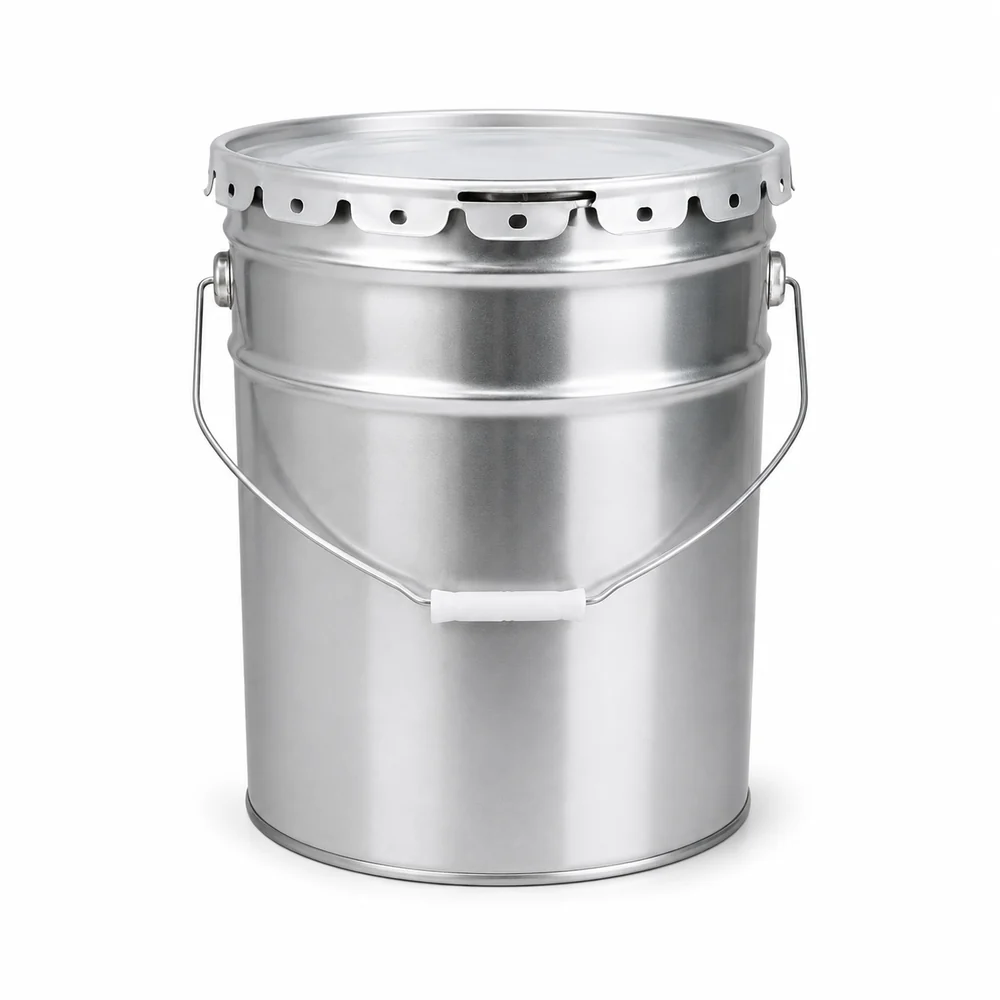 Metal Pail with Flower Lid or Lever Ring, 4L to 35L |
A removable-head steel pail; ask which UN mark a build carries before you fill it with dangerous goods. |
IMDG stands for International Maritime Dangerous Goods, as in the IMDG Code: the International Maritime Organization’s rules for dangerous goods carried by sea in packaged form. In logistics and trucking, “IMDG cargo” or an “IMDG container” means a load declared as dangerous goods under the Code, with the marks, placards and documents it requires. SOLAS chapter VII makes the Code mandatory.
The IMO is the organisation and the IMDG Code is one of its rulebooks. The International Maritime Organization, a UN agency, adopts the Code through its Maritime Safety Committee and amends it every two years. Shippers still say “IMO class” for what the Code calls a class. A UN number such as UN 1203 identifies the substance itself and stays the same by road, sea and air.
Non-IMDG cargo is cargo that is not dangerous goods under the IMDG Code, so it needs no dangerous goods declaration, marks or segregation on board. Whether a load qualifies turns on its classification, which is the shipper’s duty: UK law requires a shipper to meet Part 2 (classification) and Part 5 (consignment procedures) of the Code (SI 2024/636, regulation 12). An empty, uncleaned fuel can is still dangerous goods.
No. IATA sells the DGR and IMO sells the IMDG Code, in print and as electronic editions. Some official material is free: IATA’s list of significant changes for each DGR edition, its Shipper’s Declaration form and its training guidance. The US rules in 49 CFR sit on the eCFR, and per-substance ADR, IMDG and ICAO data in Germany’s BAM DGG-Info database.
No. Tunnel restriction codes belong to ADR, the European road rules, and apply on the road legs to and from the port. Petrol, UN 1203, carries code D/E: packages may not pass through category E tunnels, and tank or bulk loads may not pass category D or E tunnels (ADR 2025, Table A column 15, as listed by BAM). On the ship, the IMDG Code governs stowage and segregation instead.
TDG is Canada’s Transportation of Dangerous Goods Regulations, which cover every mode in Canada; the IMDG Code covers sea transport worldwide. The two meet at the coast. TDG Part 11 requires the IMDG Code for a voyage between Canada and another country, unless it is an inland or sheltered-waters voyage, and for some long domestic voyages. TDG Part 12 brings in the ICAO Technical Instructions for air in the same way.
IMDG training is the training chapter 1.3 of the Code requires for shore-side personnel: the people who classify, pack, mark, document or handle dangerous goods for a sea voyage. A course provider’s certificate is a record of that training, not a licence. IMO lists paragraphs 1.3.1.4 to 1.3.1.7 as recommendatory, so the core duty to train is mandatory through SOLAS. Air training under the DGR runs on a 24-month cycle of its own.
A packing instruction is the numbered rule that says which packagings a substance may use by air and how much each may hold. For most liquids the List of Dangerous Goods gives a Y-prefixed instruction for limited quantities, one for passenger aircraft and one for cargo aircraft only: petrol uses Y341, 353 and 364. Packing Instruction 650, for example, covers UN 3373, Biological substance, Category B.
Only as dangerous goods, unless it is new or has been cleaned and purged. The IMDG Code treats an empty packaging that held a dangerous substance in the same way as a full one until the hazard is removed (4.1.1.11 and 5.1.3.1), and 49 CFR 173.29 says the same in the US. A drained petrol can still holds vapour, so it keeps the UN number, labels and paperwork of a full one.
Each edition is replaced by the next on 1 January, and three things can override it during the year. ICAO can issue an addendum to the Technical Instructions, as it did for power banks on 27 March 2026. A State variation can add stricter national rules, and an operator variation can narrow what one airline accepts. IATA also notes that DGR 1.2.4 leaves an airline free to refuse any substance.
Petrol, UN 1203, may travel by sea as a limited quantity in inner packagings of up to 1 L, in a combination package of up to 30 kg gross, or 20 kg on a shrink-wrapped tray. Each package carries the limited quantity diamond, at least 100 mm a side. A container holding only limited quantities is marked rather than placarded (IMDG 3.4.5.5.1). A 20 L jerrican is far above the limit and ships fully regulated.
The IMDG Code is the International Maritime Organization's rulebook for packaged dangerous goods at sea, worldwide. DOT's Hazardous Materials Regulations, 49 CFR parts 171 to 180, cover every mode inside the US. They meet at the port: 49 CFR 171.25 lets a shipper follow the IMDG Code for any movement that is partly by vessel, with US placards on the road and rail legs. The US text still cites Amendment 41-22, and PHMSA lets shippers follow Amendment 42-24 until it catches up.
Nine, the same UN hazard classes that ADR and 49 CFR use: 1 explosives, 2 gases, 3 flammable liquids, 4 flammable solids, 5 oxidising substances and organic peroxides, 6 toxic and infectious substances, 7 radioactive material, 8 corrosives and 9 miscellaneous dangerous substances and articles. Classes 1, 2, 4, 5 and 6 split into divisions, such as 2.1 flammable gases, 4.3 substances dangerous when wet and 6.1 toxic substances. Petrol keeps UN 1203, Class 3, at sea.
The standards and regulations this page relies on, at their issuing body. Where a market rule is named here, check the current revision before you specify against it.
Last reviewed by David Guru, Co-Founder & Business Development Director.
Tell us the UN number, the packing group, your market and your volumes. We come back with the design certified to the right code, the plant named on its certificate and a quotation.