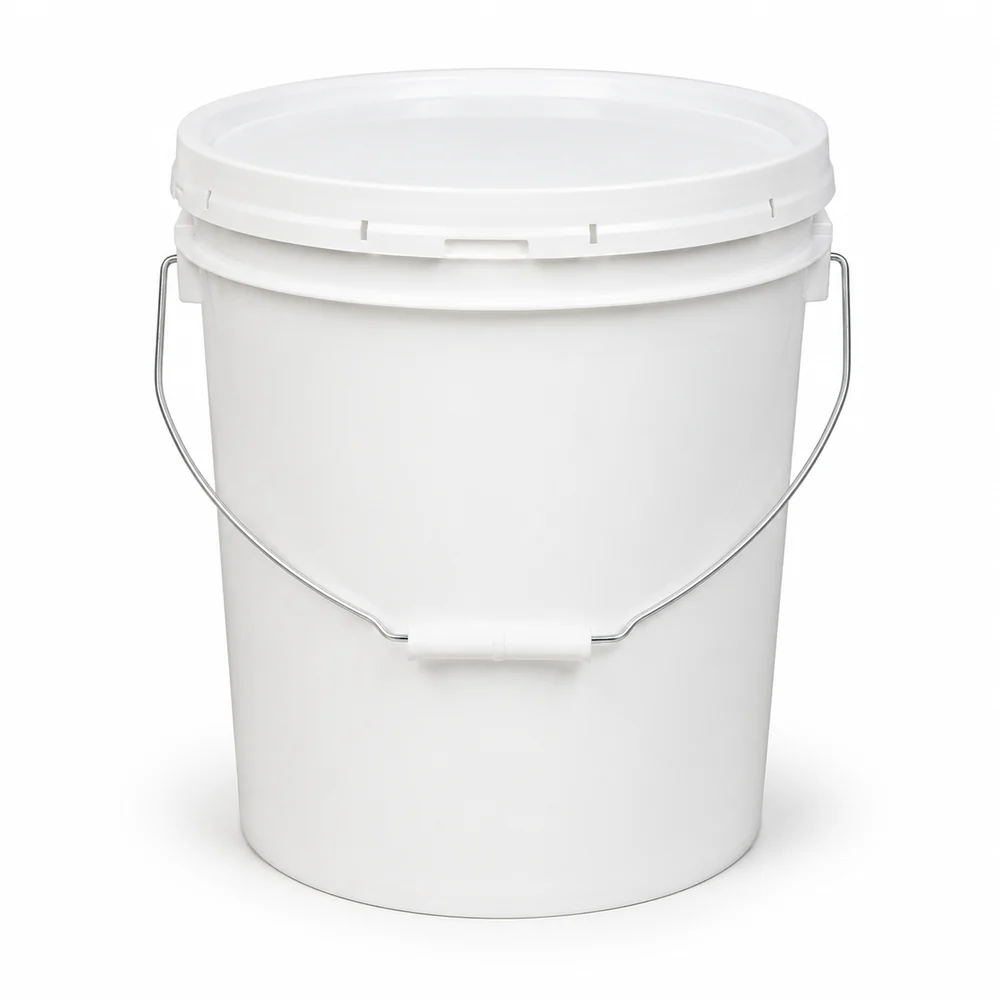
Plastic pail
Round PP Bucket, 2.5L to 20L
Injection-moulded polypropylene pail in eighteen sizes from 2.5 to 20 litres, with tamper-evident lid, plastic or steel handle and in-mould labelling.

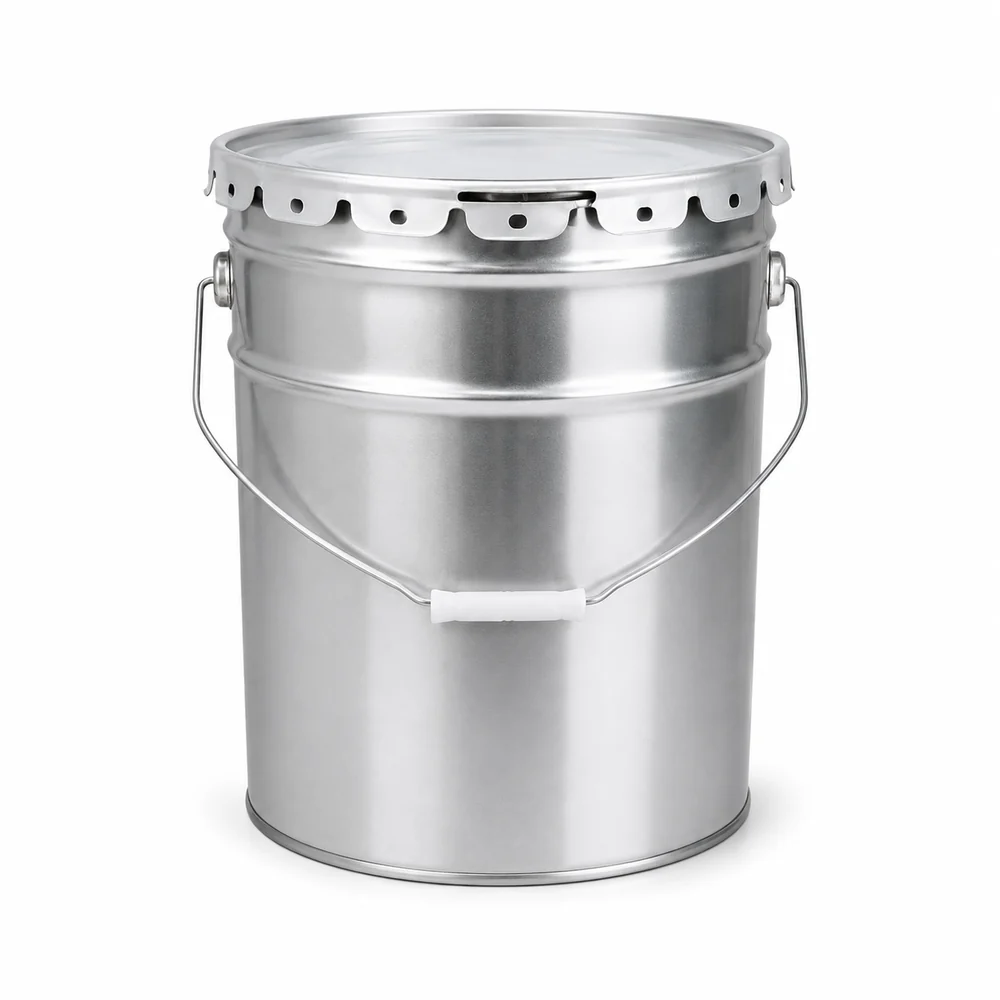
Where polypropylene will not hold the contents. Tinplate steel, two closure systems, and the stacking strength to palletise for a sea crossing.
| Capacity range | 4 to 35 litres, seventeen sizes |
|---|---|
| Material | Tin-plated steel |
| Wall thickness | 0.25 to 0.38 mm depending on size |
| Closure — flower lid | Crimped petal lid, permanent seal, opened once |
| Closure — iron hoop | Lever lock ring, reusable and airtight |
| Internal lacquer | Gold or clear, specified against the contents |
| Decoration | Four-colour offset lithographic printing, full surface |
| Handle | Galvanised steel bail with plastic or steel grip |
| Lead time | Approximately one month for a standard production run; samples in 7–15 days. Confirmed against your specification at quotation. |
These depend on your order, your market or the certificate that covers your run, so we quote them rather than publish one figure that would be wrong for most buyers. Ask and you get the number for your specification.
Before you order: UN ratings are specific to contents, packing group and fill weight, and are certified per design type, made under quality assurance the authority accepts. A rating quoted for one build does not transfer to another. Ask us for the certificate that covers yours.
17 sizes, with the container quantities a distributor needs to cost a shipment. Loading figures are unpalletised.
| Item photo | Size | Capacity | Closure | Top × Bottom × Height | Wall | Per 20GP | Per 40HQ |
|---|---|---|---|---|---|---|---|
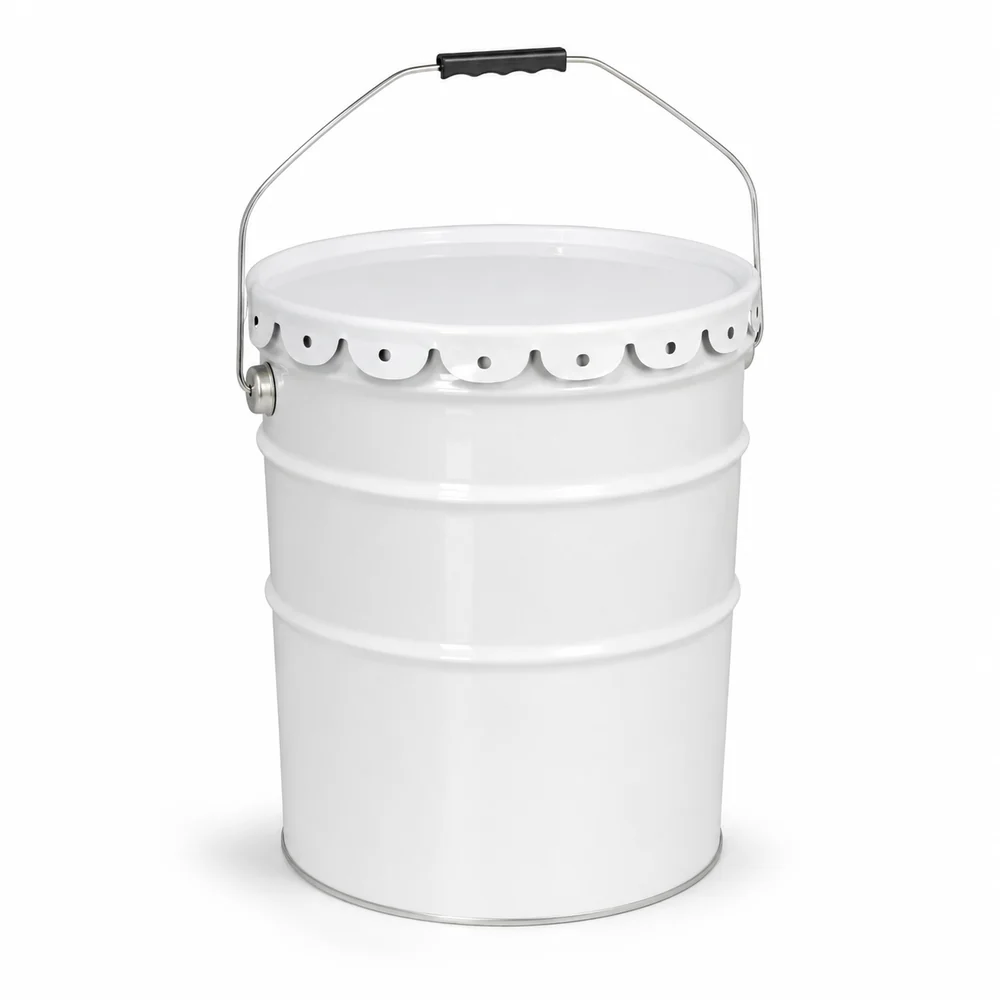 | 4L | 4 L | Flower lid | 195 × 178 × 200 mm | 0.25 mm | 15,000 | 33,000 |
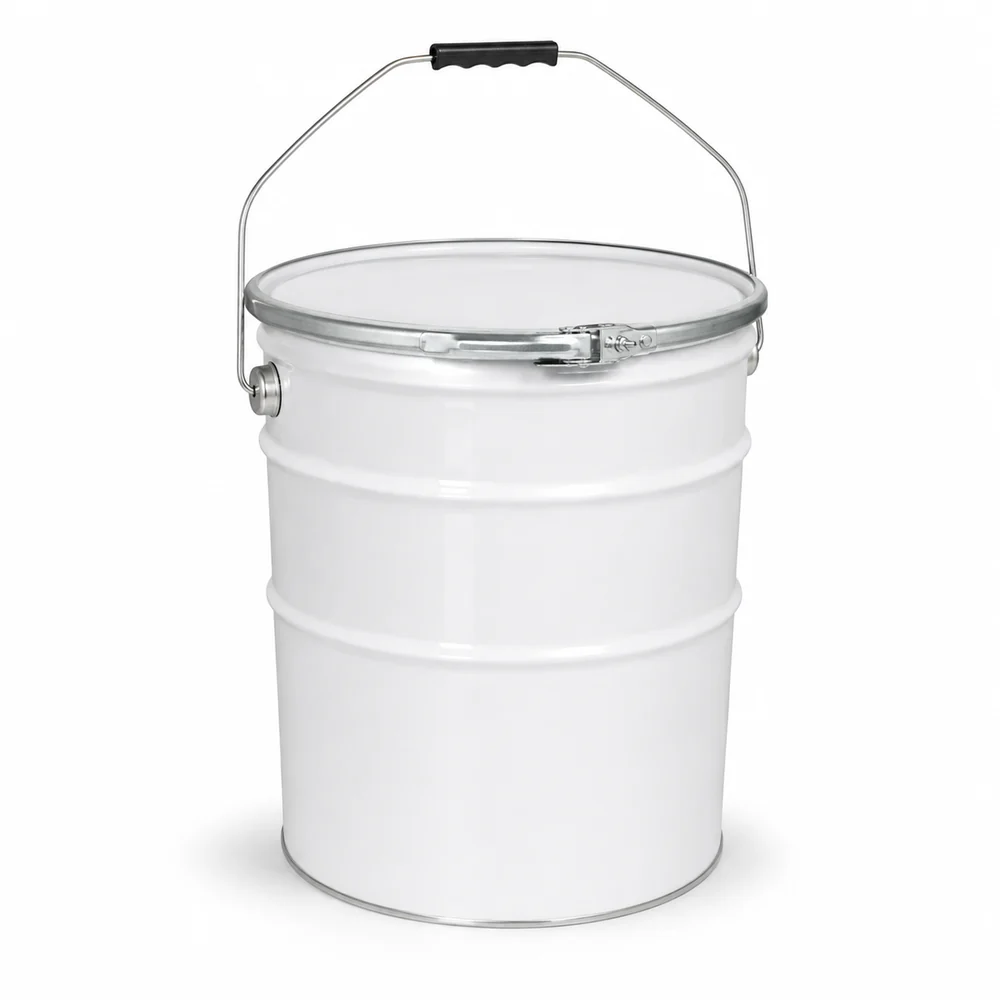 | 5L | 5 L | Iron hoop | 193 × 176 × 220 mm | 0.25 mm | 8,500 | 22,000 |
| 5L-2 | 5 L | Flower lid | 193 × 176 × 220 mm | 0.25 mm | 13,500 | 29,700 |
| 6L | 6 L | Flower lid | 245 × 225 × 200 mm | 0.25 mm | 6,500 | 14,000 |
| 8L | 8 L | Flower lid | 245 × 225 × 240 mm | 0.28 mm | 6,400 | 14,000 |
| 10L | 10 L | Flower lid | 245 × 225 × 271 mm | 0.28 mm | 5,500 | 12,000 |
| 13L | 13 L | Flower lid | 297 × 275 × 250 mm | 0.32 mm | 3,500 | 8,000 |
| 15L | 15 L | Iron hoop | 297 × 275 × 305 mm | 0.32 mm | 3,400 | 8,148 |
| 18L | 18 L | Flower lid | 297 × 275 × 328 mm | 0.32 mm | 3,300 | 8,300 |
| 5 Gallon | 18.9 L | Flower lid | 297 × 275 × 355 mm | 0.32 mm | 3,300 | 8,300 |
| 20L | 20 L | Flower lid | 297 × 275 × 368 mm | 0.32 mm | 3,400 | 8,400 |
| 22L | 22 L | Flower lid | 297 × 275 × 390 mm | 0.32 mm | 3,300 | 8,000 |
| 25L-1 | 25 L | Flower lid | 297 × 275 × 443 mm | 0.35 mm | 3,300 | 8,000 |
| 25L-2 | 25 L | Iron hoop | 297 × 275 × 443 mm | 0.35 mm | 2,800 | 6,400 |
| 30L | 30 L | Flower lid | 320 × 305 × 400 mm | 0.35 mm | 2,000 | 4,300 |
| 35L-1 | 35 L | Flower lid | 320 × 305 × 460 mm | 0.38 mm | 2,000 | 4,400 |
| 35L-2 | 35 L | Iron hoop | 320 × 305 × 460 mm | 0.38 mm | 2,000 | 4,400 |
Figures are the factory’s published catalogue values, transcribed as printed. Confirm against the drawing issued with your order — wall thickness and closure are specified against the contents, so the build for your product may differ from the standard shown.
A flower lid is crimped down and opened once, which is what you want for a shipped product that must arrive sealed. A lever ring reopens and reseals airtight, which is what you want where the end user works out of the pail over weeks.
Solvent-based paints, adhesives, resins and hot-fill contents attack or deform polypropylene. Tinplate does not, and it does not permeate.
Wall thickness steps up with capacity to 0.38 mm at 35 litres, so a filled stack holds its shape through a sea freight leg rather than arriving barrel-shaped.
Offset lithography across the full body, not a label panel. For paint and coatings, where the pail is the shelf presence, that is the difference between a brand and a drum with a sticker.
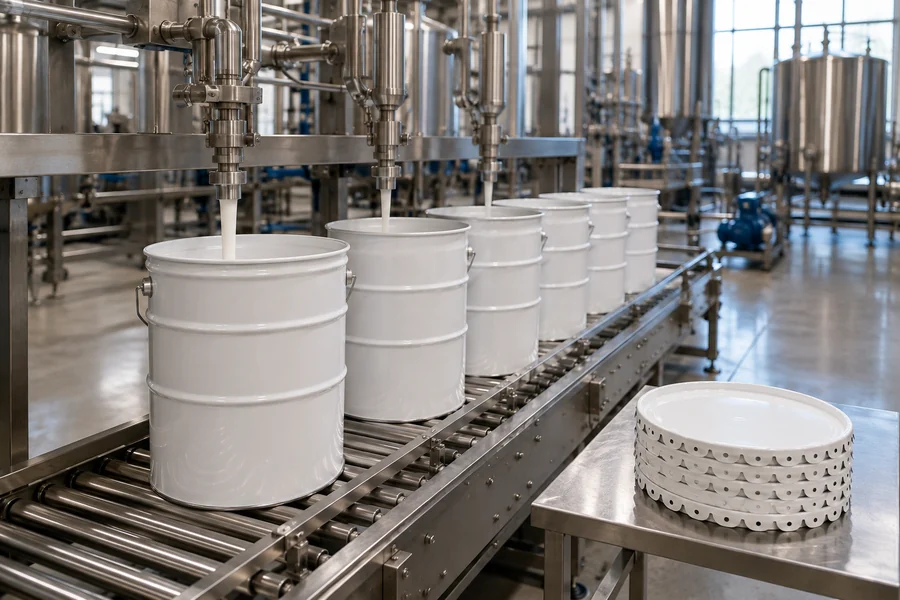
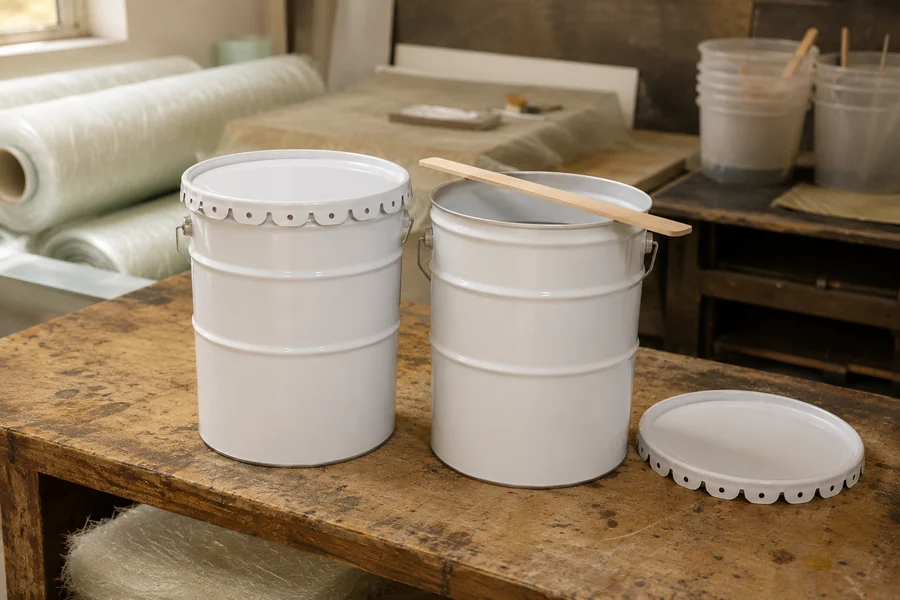
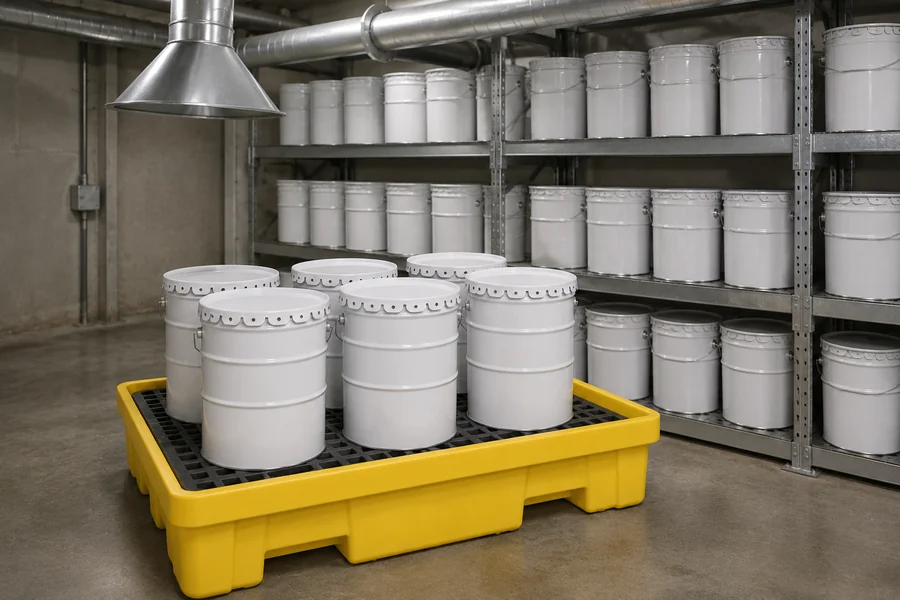
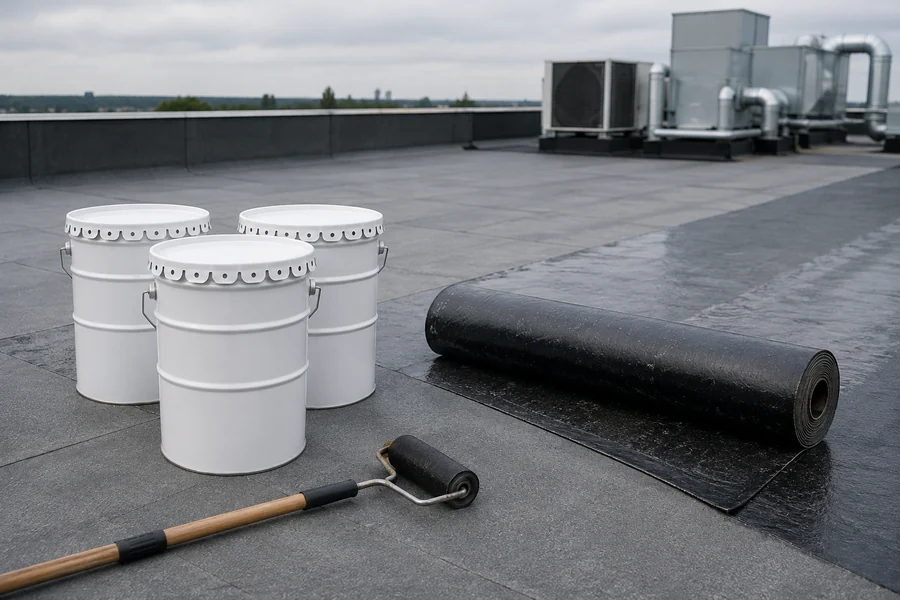
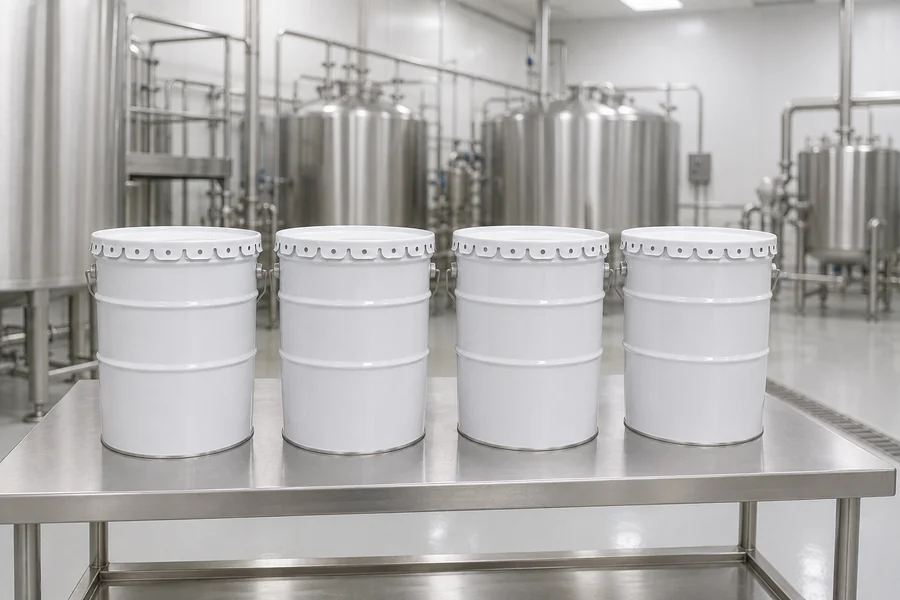
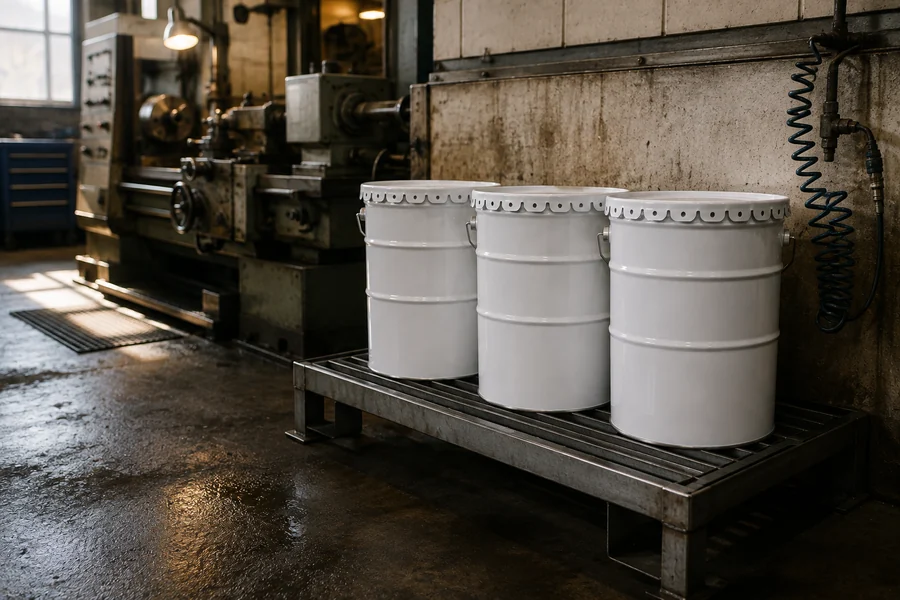
The body is pressed from cold-rolled steel to the pattern, seam-welded, then finished as set out in the specification above: internal coating, galvanising or powder coat according to what the can carries. Pressing runs across our Vietnam and China plants under one specification managed from Singapore, so the drawing and closure stay identical whichever plant fills the order.
Every can is checked before it leaves the plant:
The regimes that apply to this type of container in each market we ship to, with the detail behind each one a click away. This is what the market asks for; what this particular design already holds is in the specification above.
Orientation for specification, not legal advice, and not a statement that this design holds a given approval. Requirements turn on the exact design, contents and destination, and they change. Tell us the market at enquiry and we confirm what applies to your specification, what we hold and what we would need to obtain.
A flower lid is crimped down and opened once, which is what a shipped product needs so it arrives sealed. A lever ring reopens and reseals airtight, which is what the end user needs when they work out of the pail over weeks.
Solvent-based paints, adhesives, resins and hot-fill contents attack or deform polypropylene. Tinplate does not, and it does not permeate. Where the contents allow plastic, plastic is usually cheaper.
UN 1A2. A drum is any cylindrical packaging by definition, A is steel and 2 is a removable head. Approval is specific to the design, the contents, the packing group and the plant, so a rating quoted for one build does not transfer.
It is the barrier between the contents and the steel, and it is specified against the contents rather than applied generically. Gold suits acidic and aggressive products, clear where the tinplate finish is part of the look. The wrong one fails months into shelf life.
Yes, but the documentation follows the coating rather than the steel. On a lacquered pail the internal coating is the food-contact article, so the Declaration of Compliance is written against 1935/2004 and 21 CFR 175.300, not against a plastics instrument.
The whole body. Four-colour offset lithography runs across the full surface before forming, not on a label panel. For paint and coatings, where the pail is the shelf presence, that is the difference between a brand and a drum with a sticker.
That is what the gauge is for. Wall thickness steps up with capacity to 0.38 mm at 35 litres, so a palletised stack arrives square rather than barrel-shaped. Tell us the stack height and the route and we specify against it.
Steel containers classify in HS 7310, which is a CBAM listed good, so in principle yes. A mass-based de minimis of 50 tonnes per importer per year exempts most container buyers, and it counts across every CBAM good you import, not just this line.
Temper and substrate weight, tin coating weight in g per square metre, and the coating system by chemistry rather than by colour. A thickness in millimetres does not specify tinplate, and neither do the words gold lacquer.
Quoted against your specification, since the lacquer, the closure and the print all move it. Production is approximately one month, with samples in 7 to 15 days.
Injection-moulded polypropylene pail in eighteen sizes from 2.5 to 20 litres, with tamper-evident lid, plastic or steel handle and in-mould labelling.
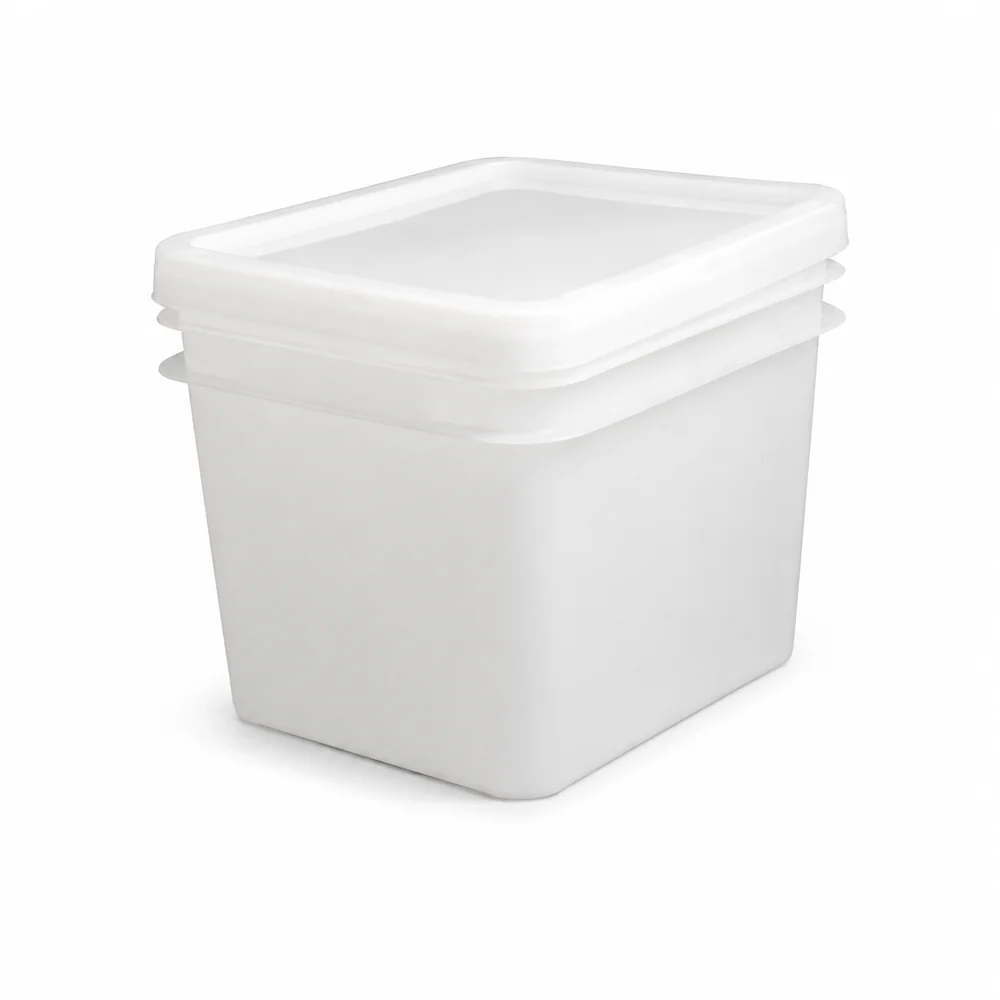
Square and rectangular polypropylene pails from 3.7 to 32.44 litres. Flat faces for full-bleed labelling and a footprint that squares off on a pallet.
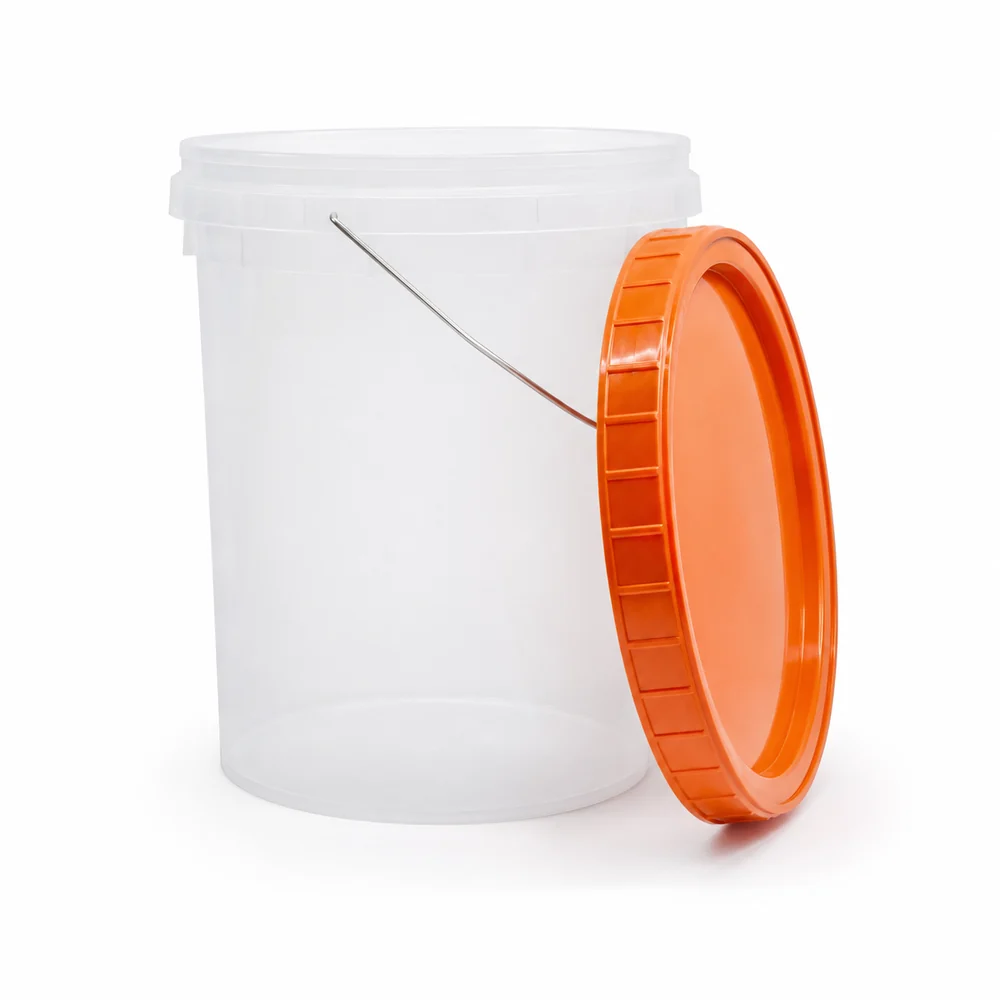
The 20L pail in the geometry each market expects, plus screw-lid, oil, oval and 30L fermentation formats.
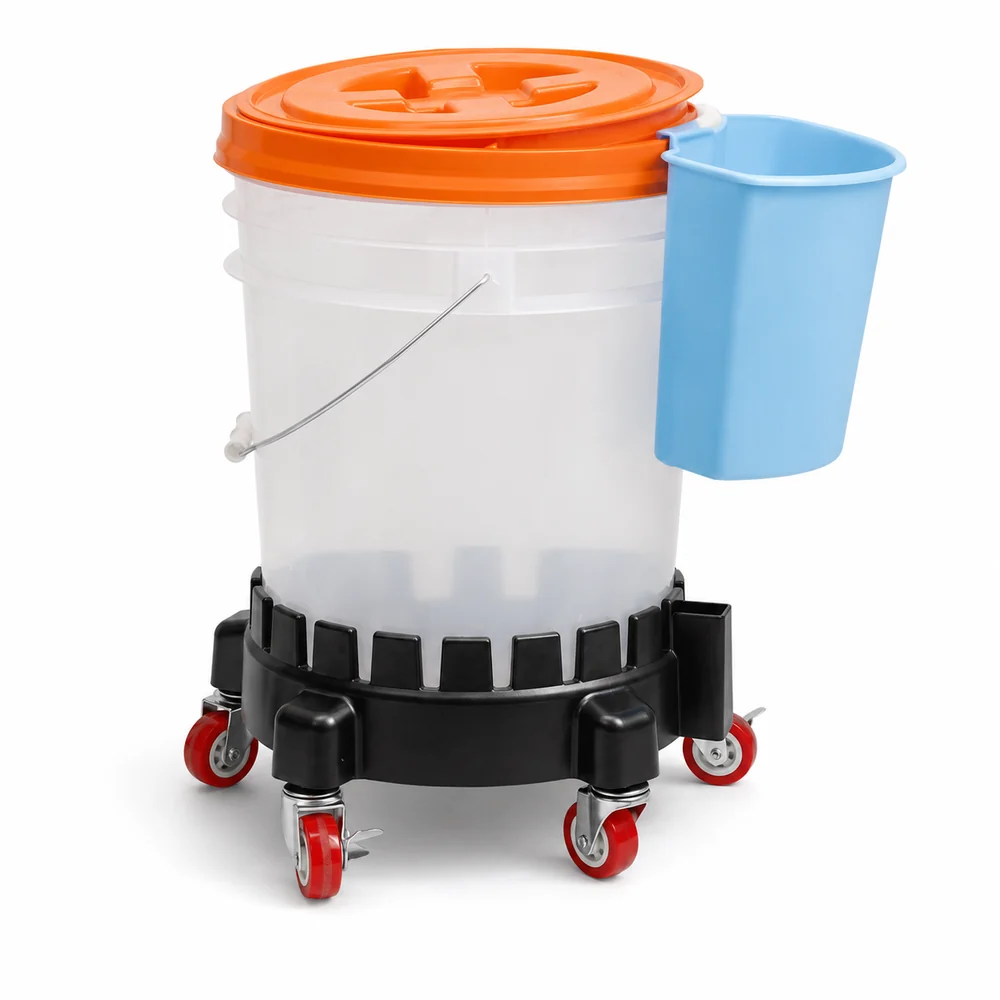
20 litre detailing bucket with screw lid, grit filter, five-castor dolly and wash caddy. Sold as a system or as components.
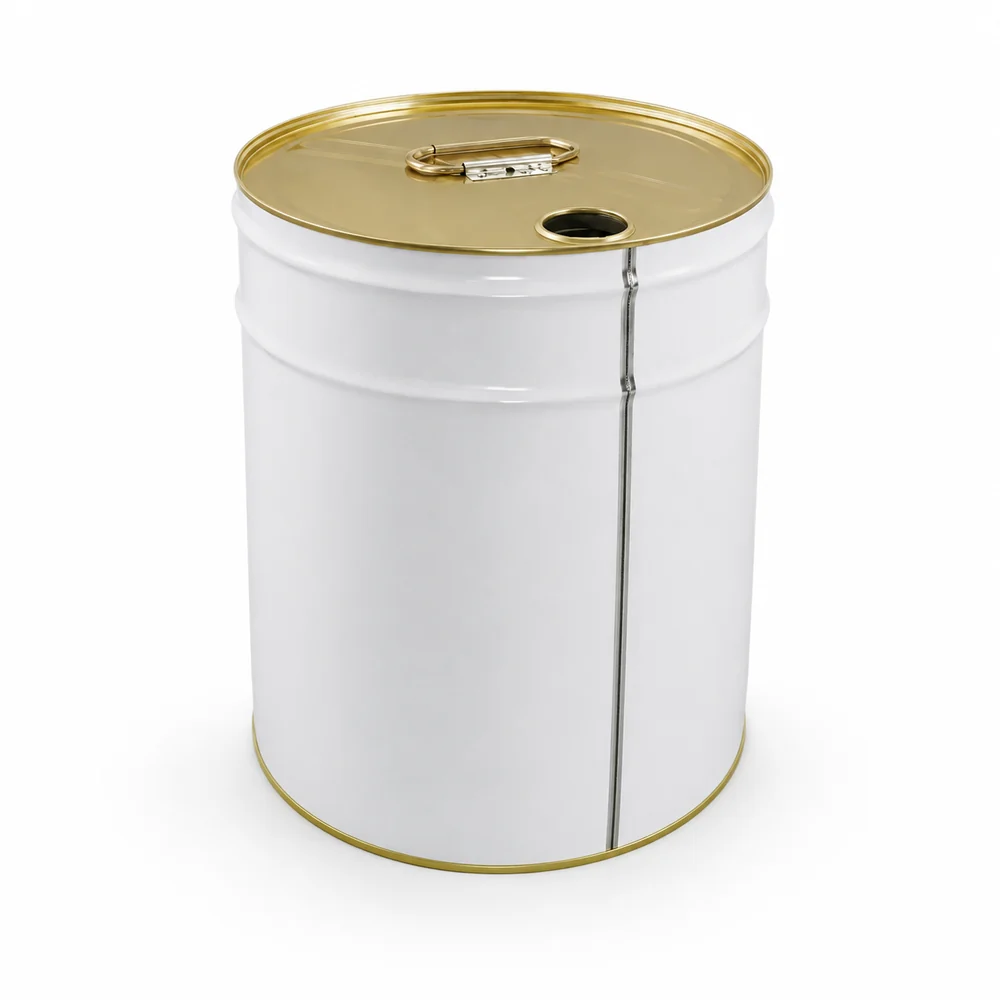
Tight-head and open-head round tinplate buckets from 5 to 25 litres, with precision-rolled seams specified against permeation.
Tell us your destination market, target volumes and whether you need private labelling.