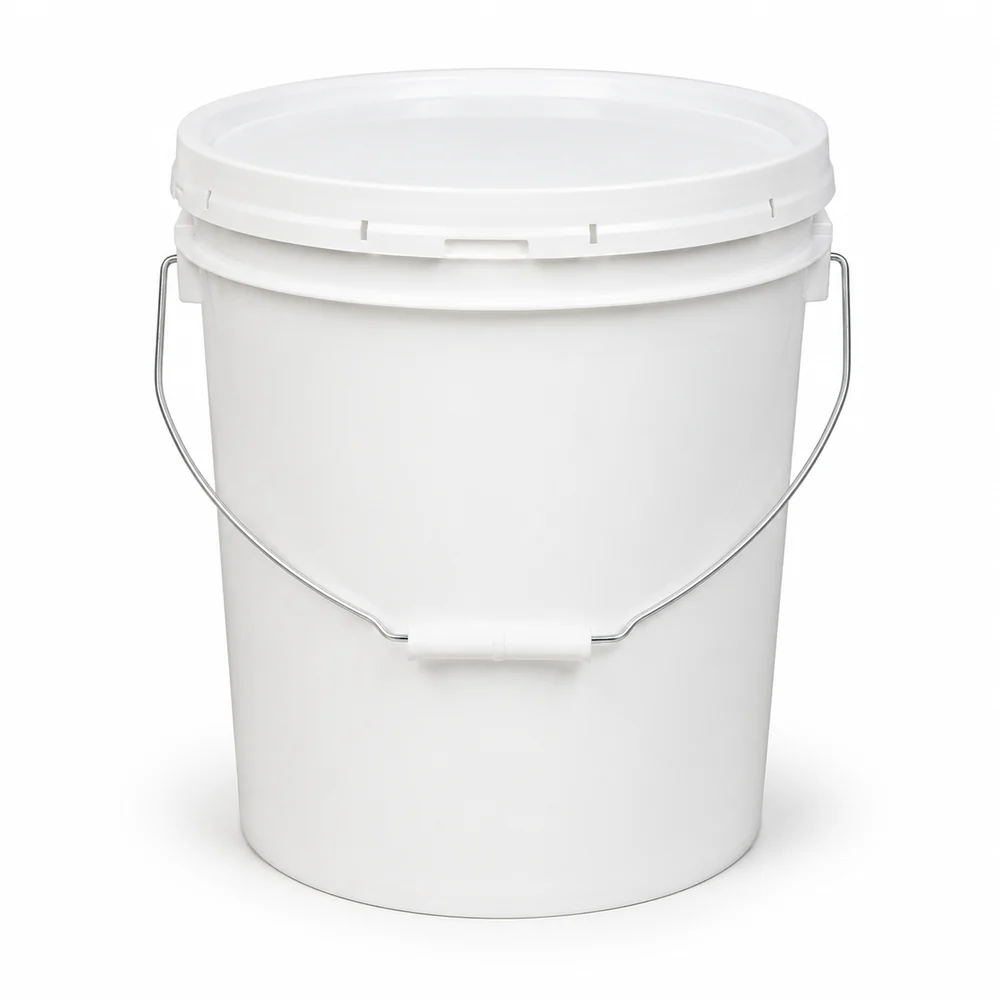
Plastic pail
Round PP Bucket, 2.5L to 20L
Injection-moulded polypropylene pail in eighteen sizes from 2.5 to 20 litres, with tamper-evident lid, plastic or steel handle and in-mould labelling.

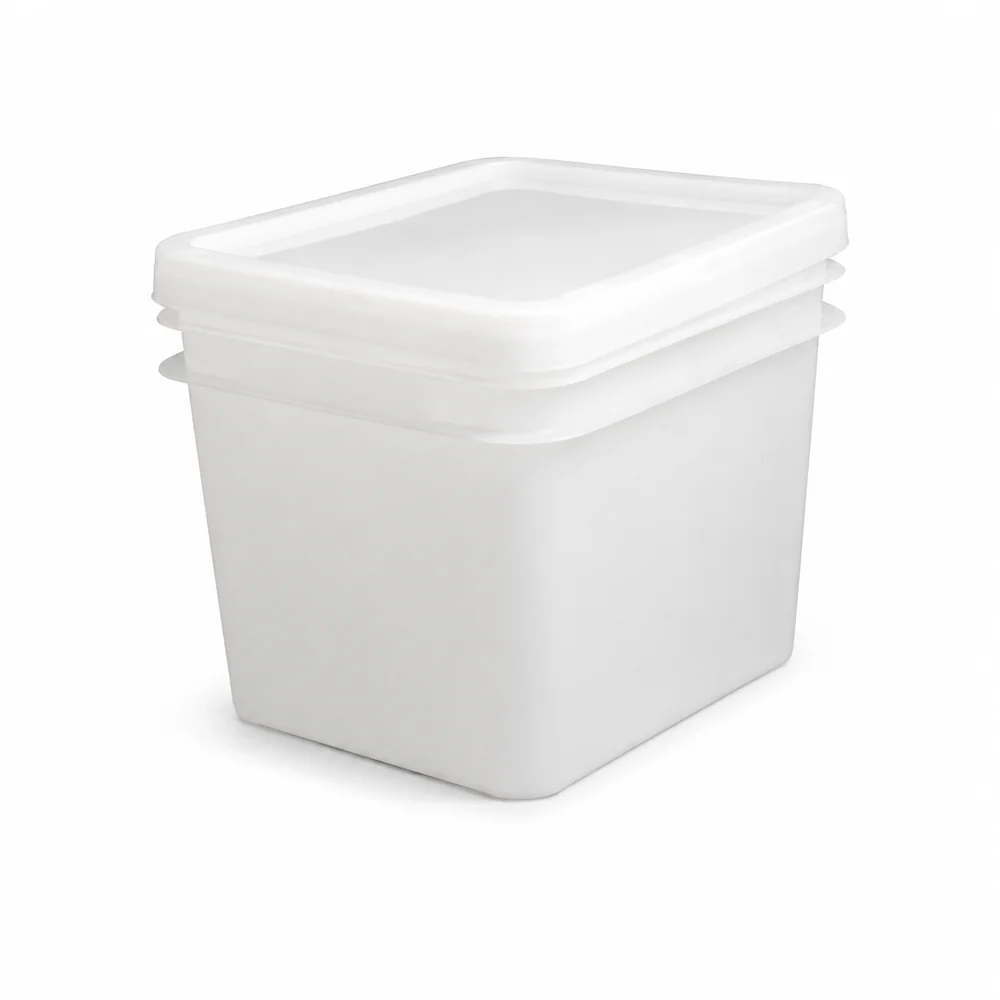
A round pail wastes the corners of a pallet and curves your label. These do neither: flat faces to print on, and a footprint that tiles.
| Capacity range | 3.7 to 32.44 litres, eight sizes |
|---|---|
| Material | Virgin polypropylene, food-contact grade available |
| Wall thickness | 0.8 to 2.4 mm depending on size and build |
| Closure | Snap-on lid, tamper-evident tear band standard |
| Handle | Plastic or galvanised steel bail, per size |
| Decoration | In-mould labelling across the full flat face |
| Pallet efficiency | Square footprint, no corner void between units |
| Lead time | Approximately one month for a standard production run; samples in 7–15 days. Confirmed against your specification at quotation. |
These depend on your order, your market or the certificate that covers your run, so we quote them rather than publish one figure that would be wrong for most buyers. Ask and you get the number for your specification.
Before you order: A square pail is weaker at the corners than a round one under top load. If you palletise more than three high, tell us the stack height and we will specify the wall for it.
8 sizes, with the container quantities a distributor needs to cost a shipment. Loading figures are unpalletised.
| Item photo | Size | Capacity | Top × Bottom × Height | Wall / lid | Lid opening | Per 20GP | Per 40HQ |
|---|---|---|---|---|---|---|---|
| 3.7L rectangular | 3.7 L | 220 × 140 × 185 mm | 0.8 / 0.9 mm | 215 × 140 mm | 27,360 | — |
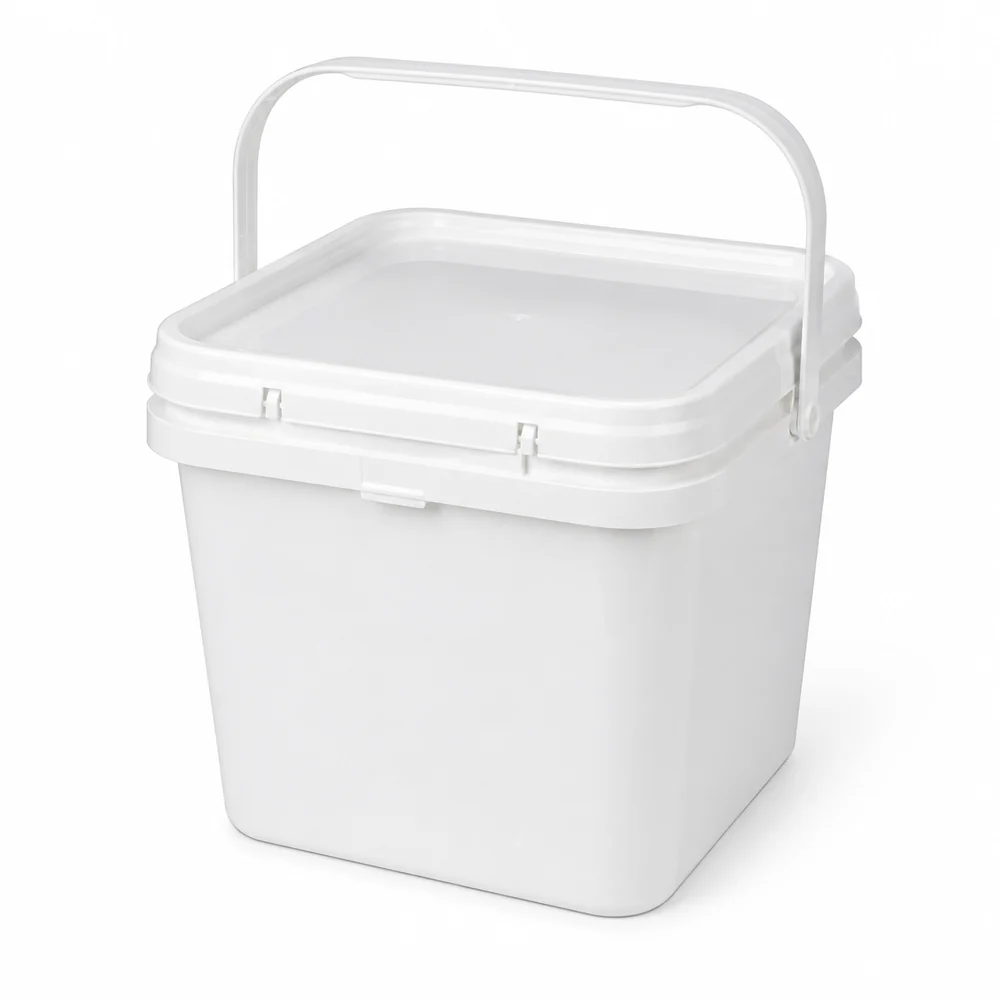 | 8L square | 8 L | 243 × 214 × 192 mm | 1.9 / 1.9 mm | 248 mm | 6,440 | 14,280 |
| 9L rectangular | 9 L | 280 × 195 × 215 mm | 1.1 / 1.2 mm | 288 × 201 mm | 12,528 | 27,840 |
| 10L rectangular | 10 L | 286 × 230 × 212 mm | 1.8 / 1.7 mm | 283 × 226 mm | 7,538 | 17,556 |
| 20L rectangular | 20 L | 378 × 283 × 250 mm | 2.2 / 2.2 mm | 381 × 286 mm | 2,760 | 6,240 |
| 20L square | 20 L | 265 × 235 × 386 mm | 2.2 / 1.7 mm | 275 mm | 2,686 | 6,192 |
| 6.5 Gallon | 24.26 L | 350 × 295 × 340 mm | 2.4 / 2.2 mm | 322 × 305 mm | 2,358 | 5,523 |
| 8.5 Gallon | 32.44 L | 350 × 295 × 450 mm | 2.4 / 2.2 mm | 322 × 305 mm | 2,227 | 5,260 |
Figures are the factory’s published catalogue values, transcribed as printed. Confirm against the drawing issued with your order — wall thickness and closure are specified against the contents, so the build for your product may differ from the standard shown.
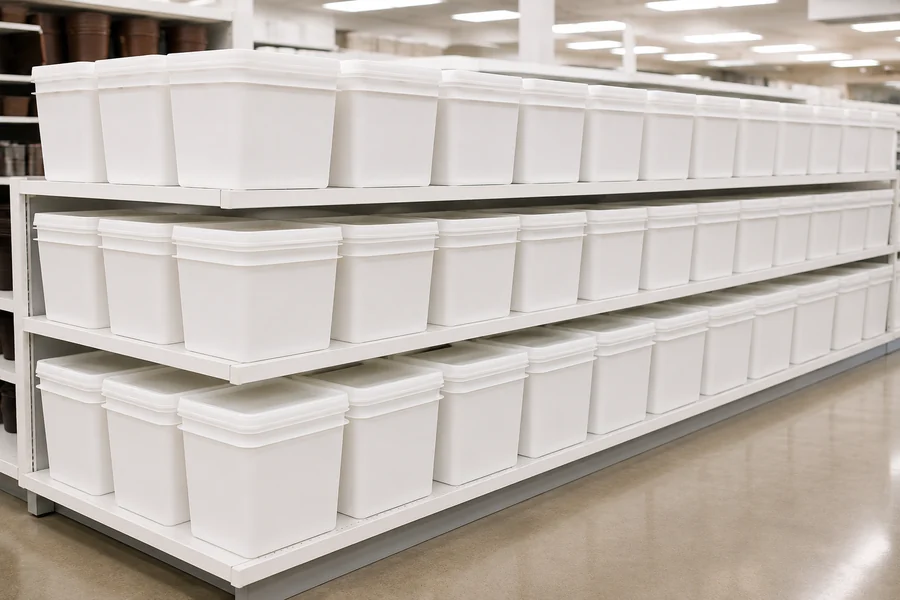
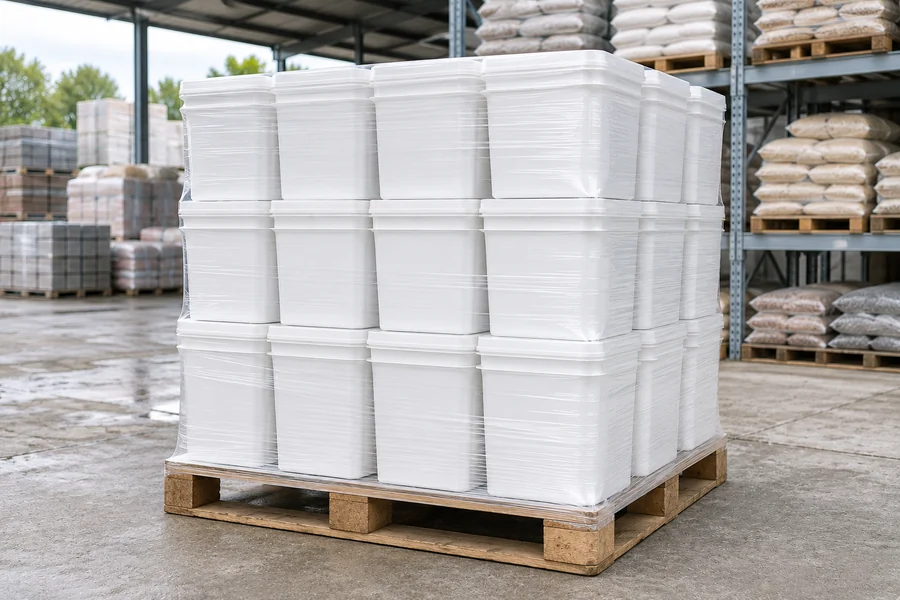
Round pails leave a void at every corner. A square footprint tiles, which is why the same pallet carries more fill and the same container carries more pails.
In-mould labelling on a curve distorts type and limits artwork to a band. A flat face takes a full-bleed panel, which is what a retail-facing or private-label product needs.
Rectangular for a deep shelf and a wide label; square for pallet density. Both run the same closures and the same tamper band as the round line.
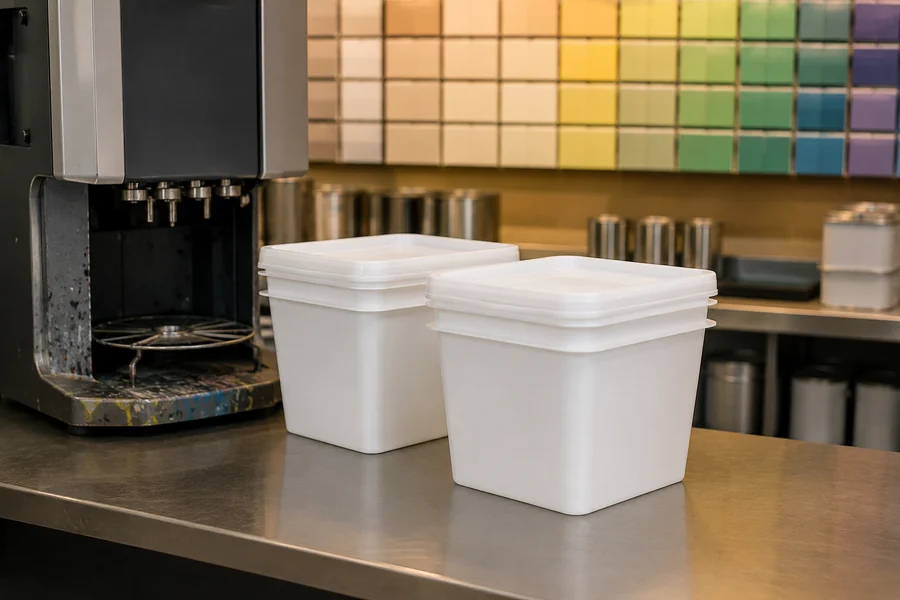
Recessed lid and moulded base register into each other, so a filled stack holds alignment in transit rather than relying on stretch wrap alone.
The body is pressed from cold-rolled steel to the pattern, seam-welded, then finished as set out in the specification above: internal coating, galvanising or powder coat according to what the can carries. Pressing runs across our Vietnam and China plants under one specification managed from Singapore, so the drawing and closure stay identical whichever plant fills the order.
Every can is checked before it leaves the plant:
The regimes that apply to this type of container in each market we ship to, with the detail behind each one a click away. This is what the market asks for; what this particular design already holds is in the specification above.
Orientation for specification, not legal advice, and not a statement that this design holds a given approval. Requirements turn on the exact design, contents and destination, and they change. Tell us the market at enquiry and we confirm what applies to your specification, what we hold and what we would need to obtain.
Two reasons: a flat face takes a full-bleed label where a curved one distorts it, and a square footprint leaves no corner void on a pallet. You fit more litres in the same floor space and the pack reads better on a shelf.
Enough to matter over a container. Round pails leave a void at every corner of the grid; square ones tessellate. The exact figure depends on the size and the pallet, so ask us to run it against your pattern before you commit.
At the corners, under top load, yes. Round bodies distribute hoop stress evenly and square ones concentrate it. If you palletise more than three high, tell us the stack height and we specify the wall for it within the 0.8 to 2.4 mm range.
UN 3H2. The UN definitions go by cross-section: a rectangular or polygonal body is a jerrican, not a drum, so it falls in the 3-series even though a round pail of the same capacity is 1H2.
Yes. Both lines run the same closures and the same tamper band, so a mixed range does not mean a second set of lid stock or a second closing head on the filling line.
A food-contact grade is available and specified per build. The document you receive is a Declaration of Compliance naming the framework regulation and the plastics instrument for your market, not a generic statement.
Yes. In-mould labelling runs across the full flat face, which is the reason most buyers choose this geometry for retail. There is no shrink-sleeve seam and no label edge to lift.
Eight, from 3.7 to 32.44 litres, covering both rectangular and square bodies. The odd top figure is the factory's published value, transcribed as printed rather than rounded.
Yes, on the same basis as any plastic packaging component: £228.82 per tonne below 30 per cent recycled content, registration at 10 tonnes. Ask for the recycled content figure for your run, because it decides whether the tax is charged at all.
Quoted against your specification rather than published, since it moves with size, decoration and colour. Production runs approximately one month, with samples in 7 to 15 days.
Injection-moulded polypropylene pail in eighteen sizes from 2.5 to 20 litres, with tamper-evident lid, plastic or steel handle and in-mould labelling.
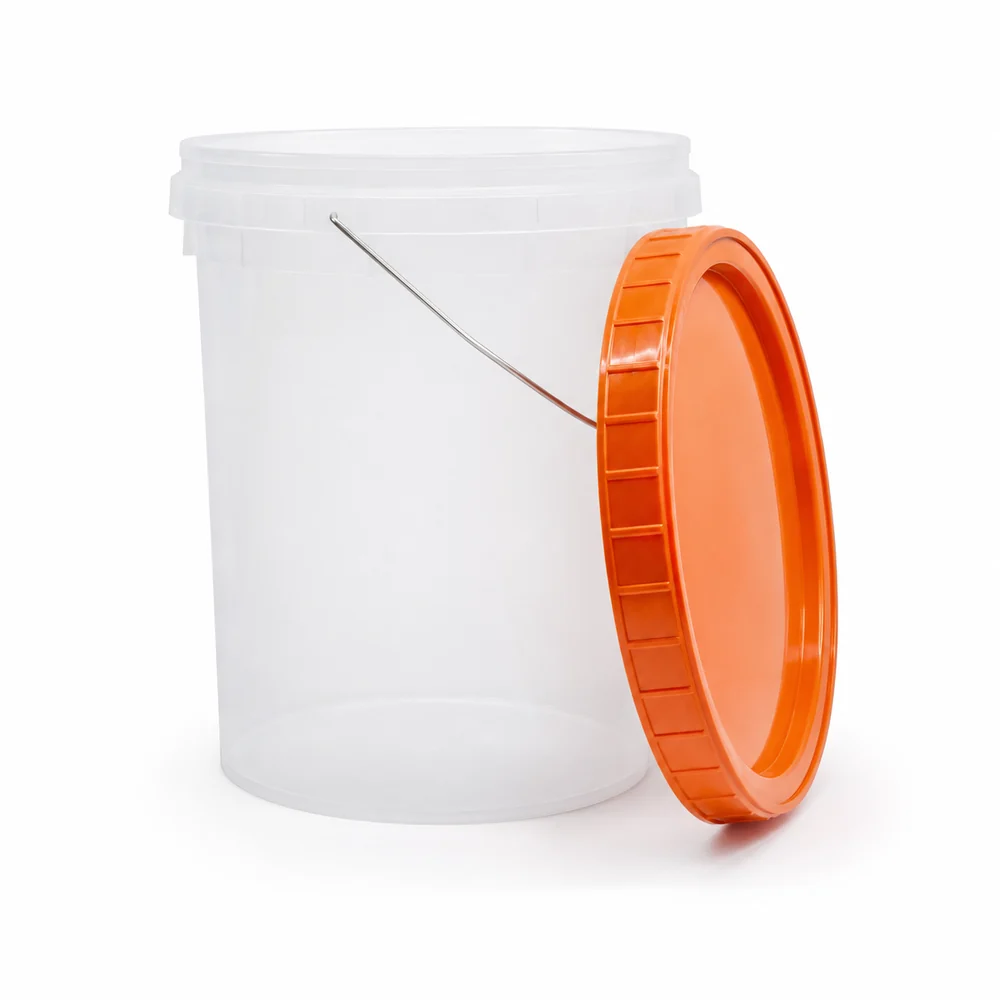
The 20L pail in the geometry each market expects, plus screw-lid, oil, oval and 30L fermentation formats.
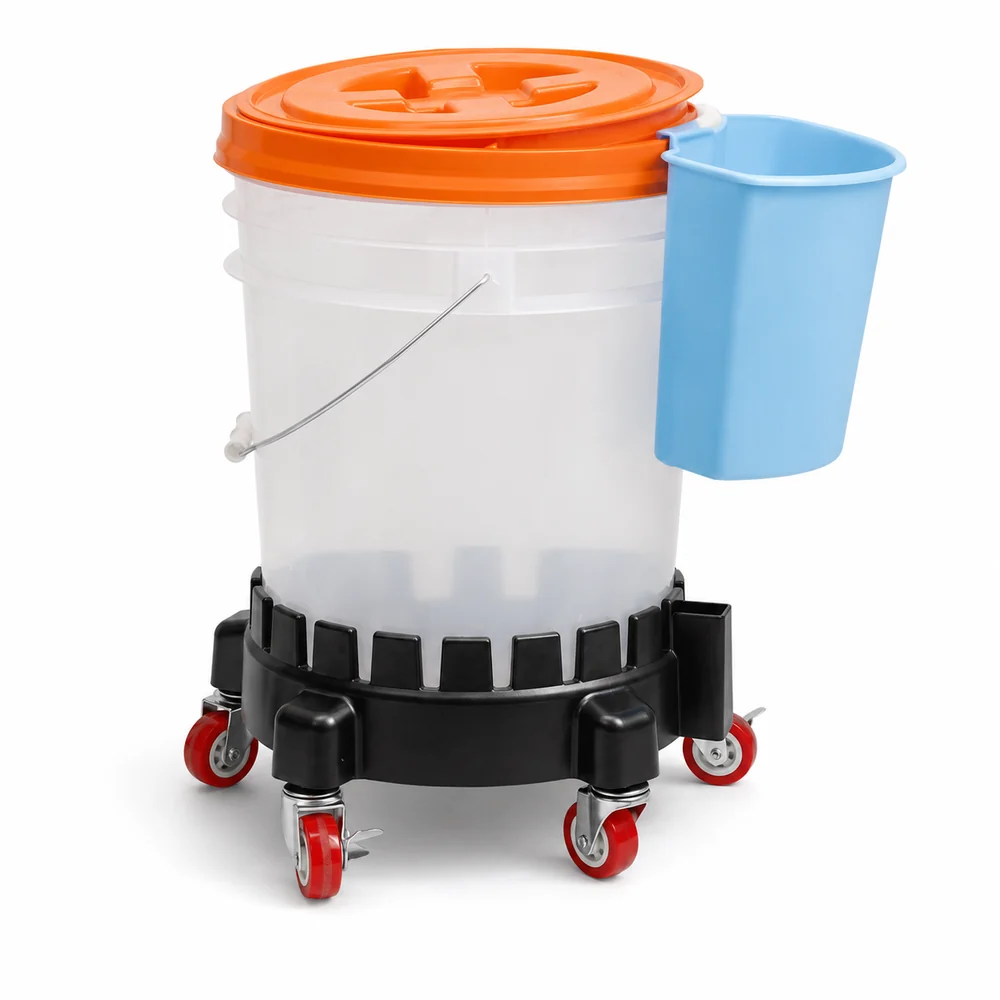
20 litre detailing bucket with screw lid, grit filter, five-castor dolly and wash caddy. Sold as a system or as components.
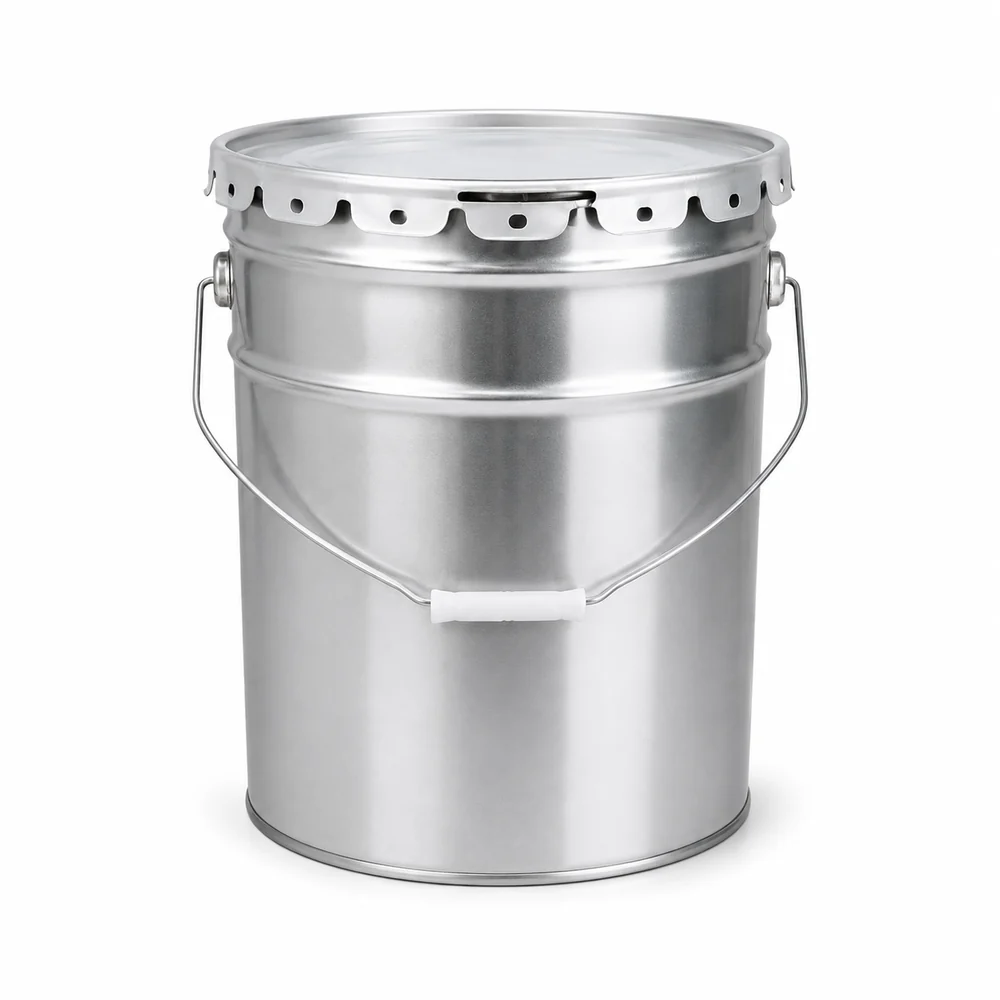
Tinplate steel open-head pail in seventeen sizes from 4 to 35 litres, with a flower lid for a permanent seal or an iron hoop lever ring for reusable access.
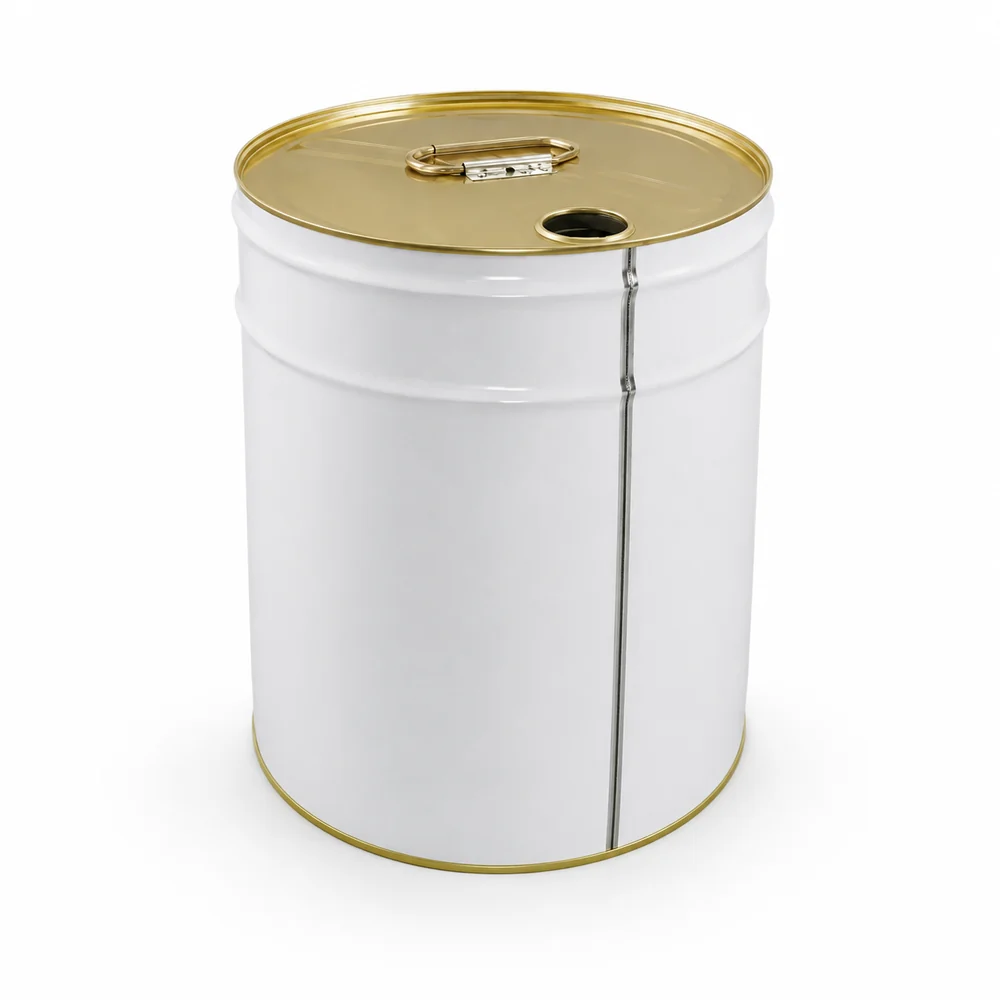
Tight-head and open-head round tinplate buckets from 5 to 25 litres, with precision-rolled seams specified against permeation.
Tell us your destination market, target volumes and whether you need private labelling.