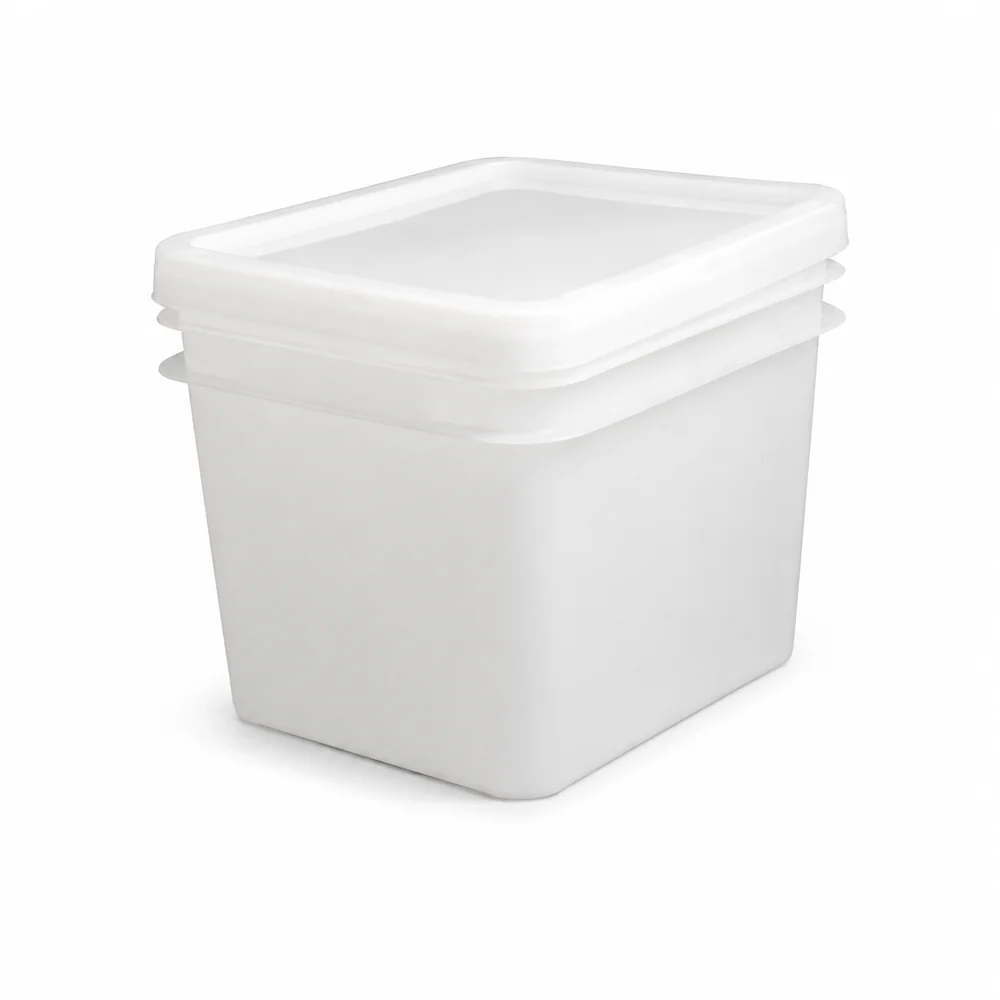
Plastic pail
Rectangular & Square PP Bucket, 3.7L to 32L
Square and rectangular polypropylene pails from 3.7 to 32.44 litres. Flat faces for full-bleed labelling and a footprint that squares off on a pallet.

The workhorse of the range. Eighteen sizes on one tool family, so a buyer running four fill volumes runs one closure, one lid and one label spec across all of them.
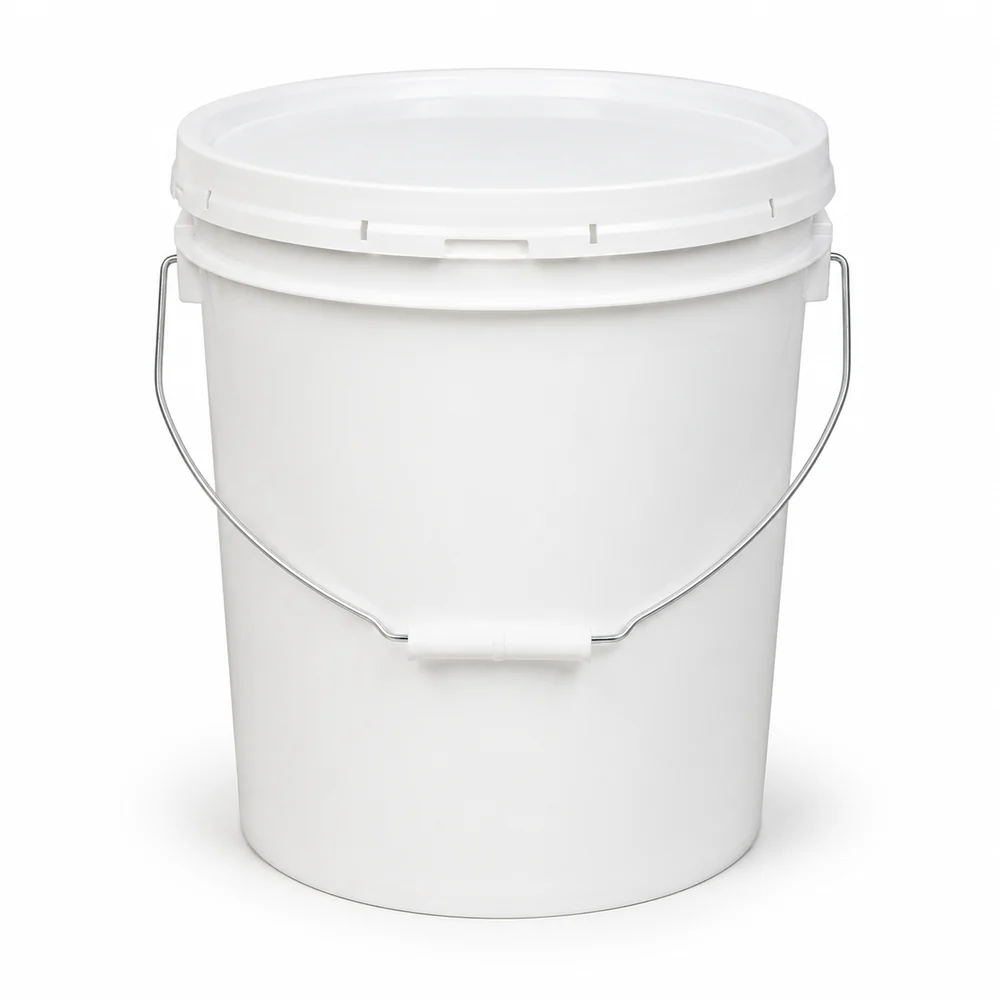
| Capacity range | 2.5 to 20 litres, eighteen sizes |
|---|---|
| Material | Virgin polypropylene, food-contact grade available |
| Wall thickness | 0.8 to 2.0 mm depending on size and build |
| Closure | Snap-on lid, tamper-evident tear band standard |
| Handle | Plastic or galvanised steel bail, per size |
| Decoration | In-mould labelling, heat transfer, or plain for self-labelling |
| Stacking | Nesting empty, stacking filled |
| Lead time | Approximately one month for a standard production run; samples in 7–15 days. Confirmed against your specification at quotation. |
These depend on your order, your market or the certificate that covers your run, so we quote them rather than publish one figure that would be wrong for most buyers. Ask and you get the number for your specification.
Before you order: Polypropylene is not universally compatible. Solvent-based and strongly oxidising contents may need a tinplate pail instead, and dangerous goods need a UN-rated build. Tell us the contents before you specify the material.
18 sizes, with the container quantities a distributor needs to cost a shipment. Loading figures are unpalletised.
| Item photo | Size | Capacity | Top × Bottom × Height | Wall / lid | Lid Ø | Per 20GP | Per 40HQ |
|---|---|---|---|---|---|---|---|
| 2.5L | 2.5 L | 197 × 173 × 143 mm | 0.8 / 0.8 mm | 203 mm | 12,500 | 28,000 |
| 3L | 3 L | 171 × 147 × 198 mm | 1.8 / 0.8 mm | 180 mm | 19,264 | 43,824 |
| 4L | 4 L | 204 × 174 × 187 mm | 1.1 / 1.2 mm | 202 mm | 17,000 | 34,000 |
| 1 Gallon | 4 L | 191 × 173 × 183 mm | 1.4 / 1.4 mm | 212 mm | 12,925 | 29,986 |
| 5L-1 | 5 L | 210 × 185 × 210 mm | 1.1 / 1.3 mm | 235 mm | 14,700 | 29,400 |
| 5L-2 | 5 L | 210 × 185 × 210 mm | 1.2 / 1.2 mm | 235 mm | 9,660 | 22,880 |
| 2 Gallon | 8.2 L | 230 × 204 × 240 mm | 1.4 / 1.3 mm | 275 mm | 7,866 | 18,252 |
| 2.5 Gallon | 9.69 L | 245 × 214 × 252 mm | 1.2 / 1.1 mm | — | 6,912 | 15,876 |
| 10L | 10 L | 258 × 231 × 263 mm | 1.5 / 1.2 mm | 277 mm | 5,702 | 13,160 |
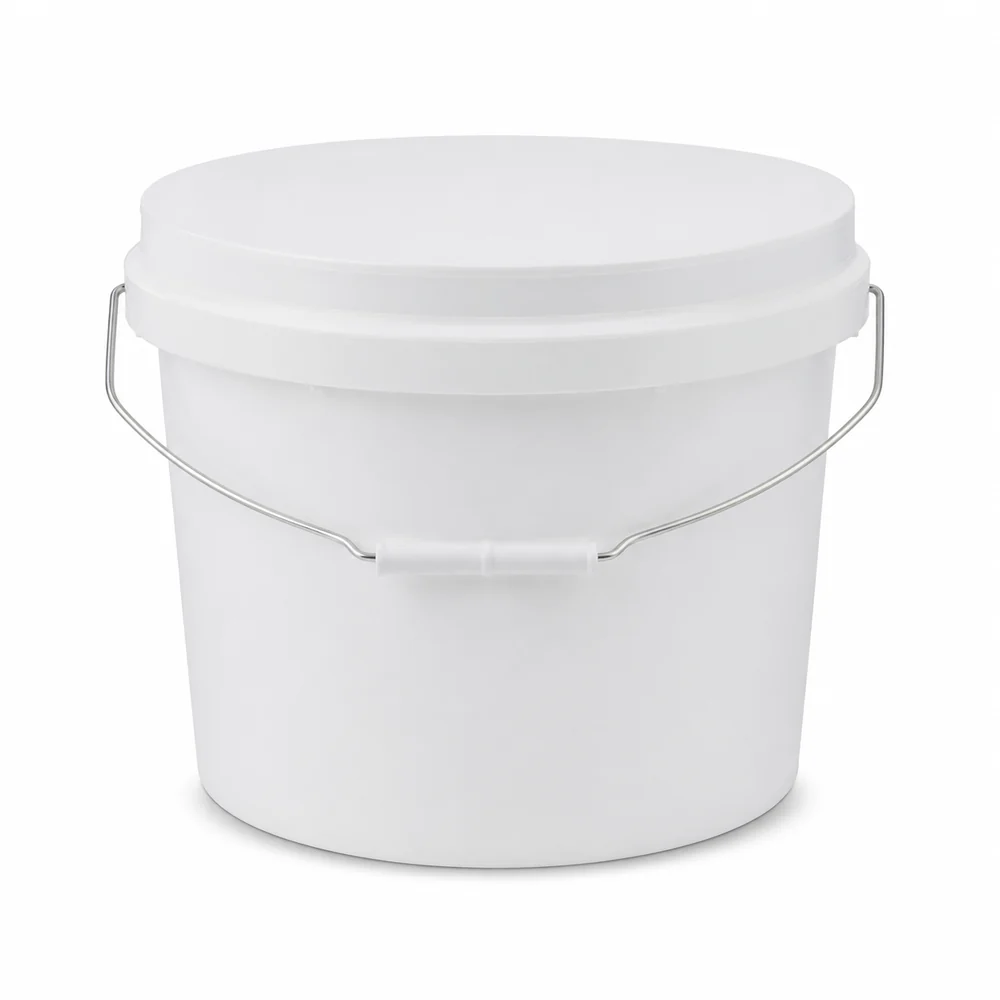 | 10L short | 10 L | 285 × 243 × 242 mm | 1.5 / 1.3 mm | 283 mm | 5,376 | 10,560 |
| 3 Gallon | 11.35 L | 248 × 219 × 300 mm | — | 256 mm | 5,920 | 12,800 |
| 12L | 12 L | 290 × 230 × 280 mm | 1.5 / 1.3 mm | 275 mm | 5,520 | 12,090 |
| 13L | 13 L | 300 × 265 × 280 mm | 1.8 / 1.7 mm | 310 mm | 4,410 | 10,230 |
| 15L | 15 L | 272 × 256 × 323 mm | 1.6 / 1.5 mm | 301 mm | 3,850 | 8,932 |
| 16L | 16 L | 285 × 255 × 335 mm | 1.9 / 1.7 mm | 304 mm | 3,675 | 8,726 |
| 18L | 18 L | 295 × 265 × 345 mm | 1.8 / 1.8 mm | 315 mm | 2,900 | 6,730 |
| 5 Gallon | 19 L | 294 × 264 × 365 mm | 2.0 / 1.8 mm | 312 mm | 3,234 | 7,462 |
| 20L | 20 L | 300 × 275 × 360 mm | 2.0 / 1.4 mm | 323 mm | 3,020 | 6,990 |
Figures are the factory’s published catalogue values, transcribed as printed. Confirm against the drawing issued with your order — wall thickness and closure are specified against the contents, so the build for your product may differ from the standard shown.
A filler running 5L, 10L and 20L on the same line changes the mould, not the capping head, the lid supplier or the label artwork. The saving is in the changeover, not the unit price.
The tear band is moulded into the lid rather than added as a shrink sleeve, so it cannot be resealed to look untouched and there is no second component to buy.
The label is fused into the wall during moulding. It survives solvent wipe, freezer and outdoor storage, where a self-adhesive label lifts at the edges within a season.
Units per 20GP and 40HQ are on this page for every size. Freight is a large part of landed cost on a light, bulky product, and a supplier who will not publish loading figures is asking you to find out after you have paid.
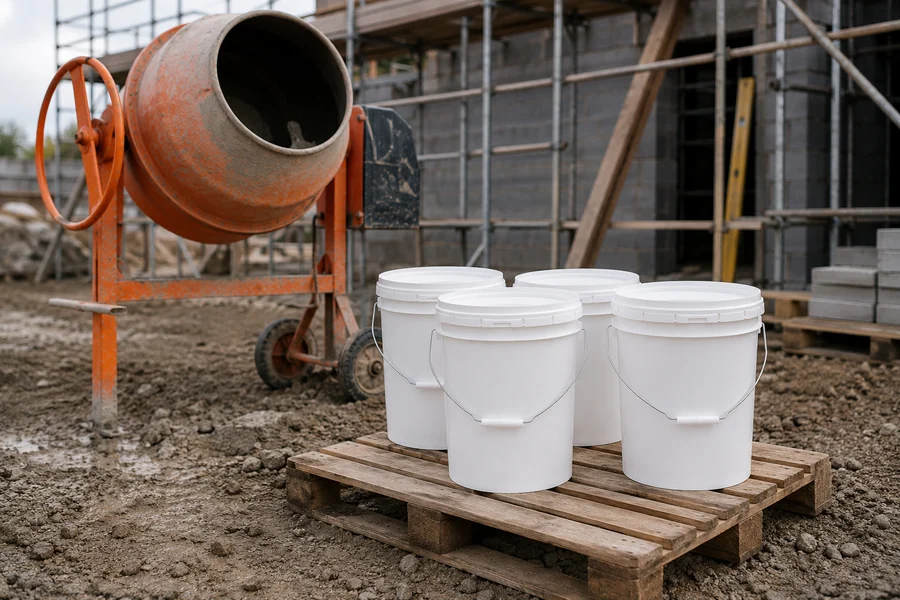
The body is pressed from cold-rolled steel to the pattern, seam-welded, then finished as set out in the specification above: internal coating, galvanising or powder coat according to what the can carries. Pressing runs across our Vietnam and China plants under one specification managed from Singapore, so the drawing and closure stay identical whichever plant fills the order.
Every can is checked before it leaves the plant:
The regimes that apply to this type of container in each market we ship to, with the detail behind each one a click away. This is what the market asks for; what this particular design already holds is in the specification above.
Orientation for specification, not legal advice, and not a statement that this design holds a given approval. Requirements turn on the exact design, contents and destination, and they change. Tell us the market at enquiry and we confirm what applies to your specification, what we hold and what we would need to obtain.
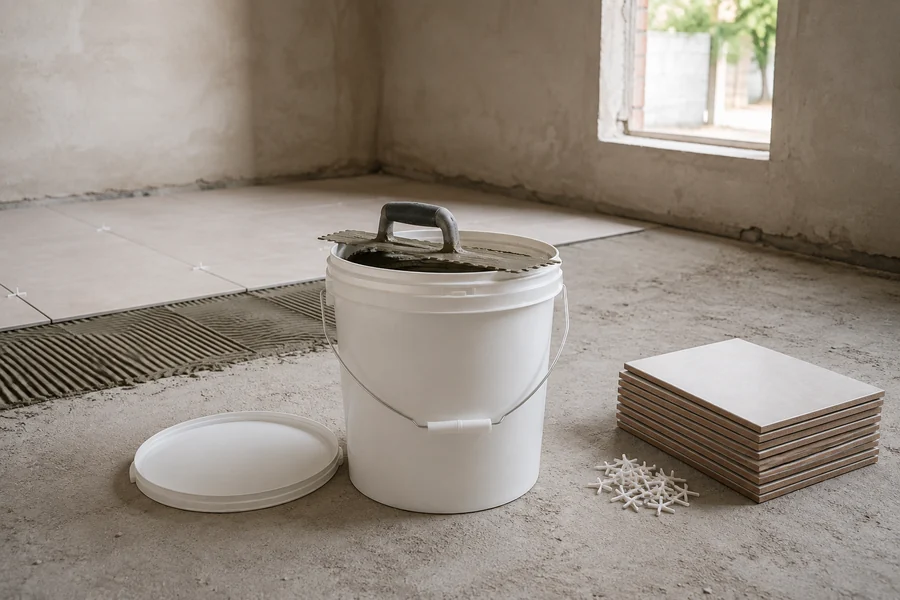
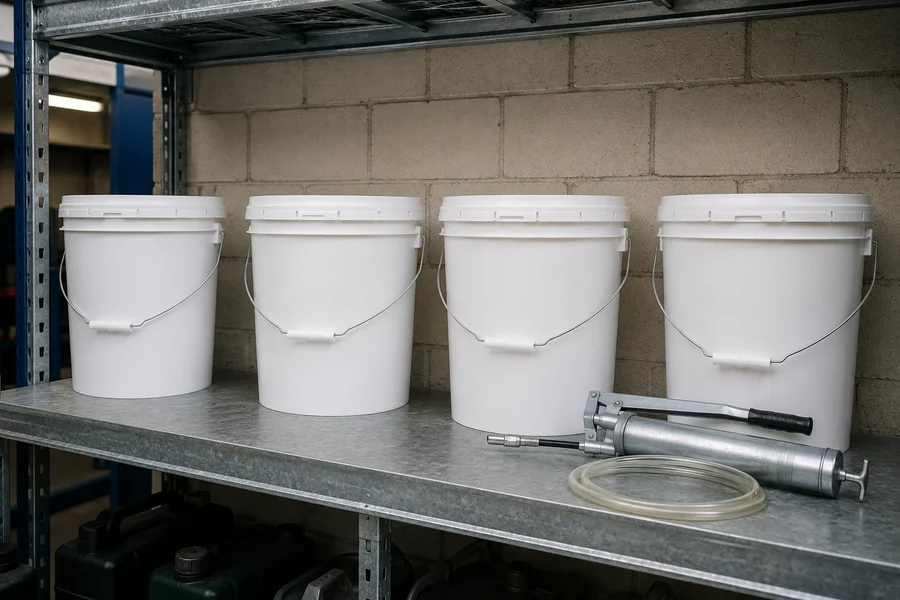
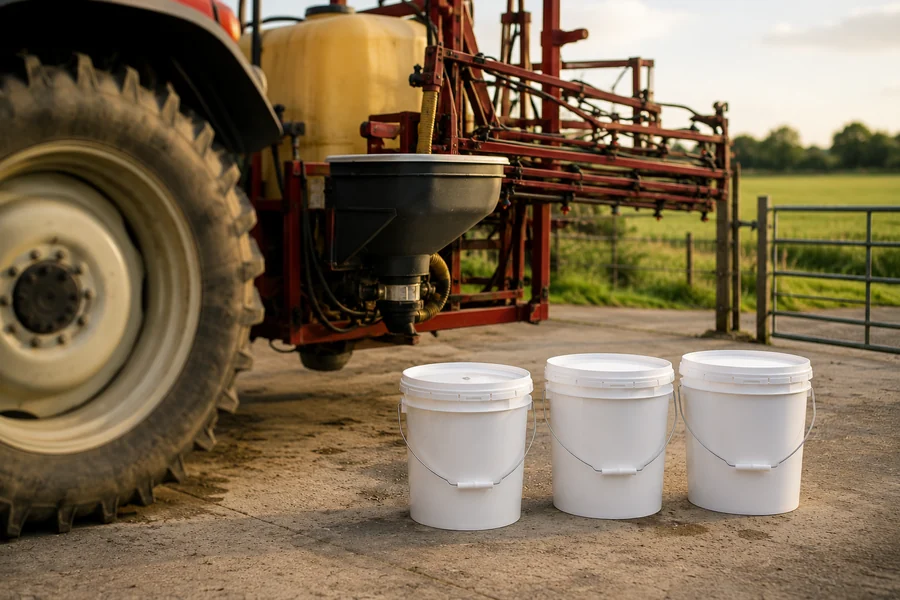
Water-based paints, adhesives and sealants, greases, agrochemicals, edible oils and construction chemicals. Polypropylene is not universally compatible: solvent-based and strongly oxidising contents usually need a tinplate pail instead. Tell us the contents before the material is settled.
A food-contact grade is available and is specified per build rather than supplied by default. The deliverable is a Declaration of Compliance naming EU framework Regulation 1935/2004 and plastics Regulation 10/2011, or 21 CFR 177 for the US.
Strong solvents craze polypropylene, and a pail that holds detergent for years can fail in weeks on a solvent. The wall thickness does not fix it. Where the contents are solvent-based we quote the tinplate pail.
UN 1H2. A drum is defined by shape as any cylindrical packaging, H is plastic and 2 is a removable head. Approval is per design type, so ask us for the certificate covering your build and the plant that makes it.
Standard. The snap-on lid carries a tear band on every size, which matters wherever the pail is decanted and resold and a broken seal has to show.
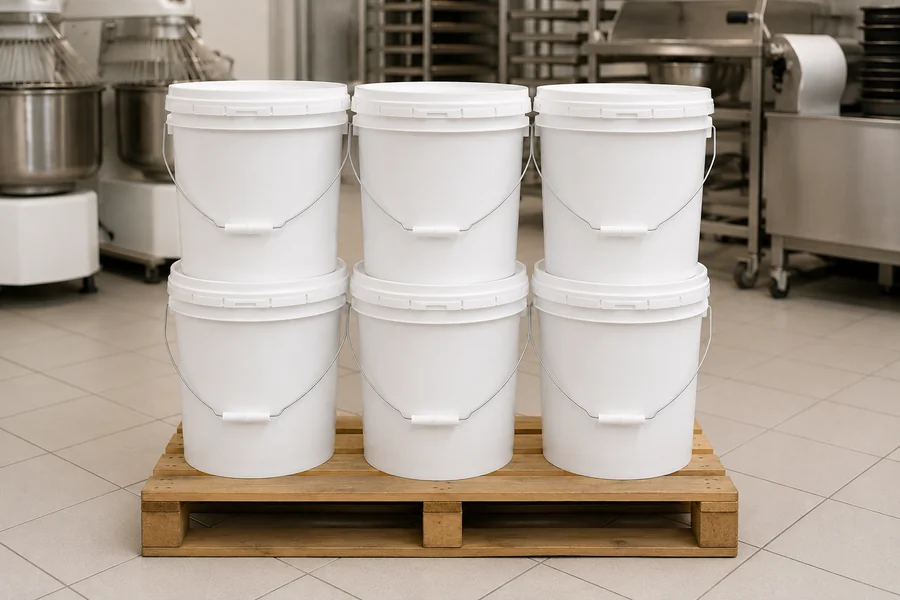
Yes, both. They nest empty to cut inbound freight and stack filled on a pallet. Tell us your stack height at enquiry, because it decides the wall thickness within the 0.8 to 2.0 mm range.
Yes. In-mould labelling, heat transfer, or plain for your own labelling line. In-mould artwork is settled before tooling rather than during production, so raise it at enquiry.
Yes. Polypropylene pails are plastic packaging components, taxed at £228.82 per tonne below 30 per cent recycled content, with registration at 10 tonnes in a rolling 12 months. Recycled content is quoted per run.
The minimum is quoted against your specification rather than published, because it moves with the size, the decoration and whether the run is a stock colour. Production is approximately one month, with samples in 7 to 15 days.
By the fill and the pallet, not the litre figure. Give us the fill volume, the stack height and the market, and we come back with the size and the wall that suit the shipment rather than the nearest round number.
Square and rectangular polypropylene pails from 3.7 to 32.44 litres. Flat faces for full-bleed labelling and a footprint that squares off on a pallet.
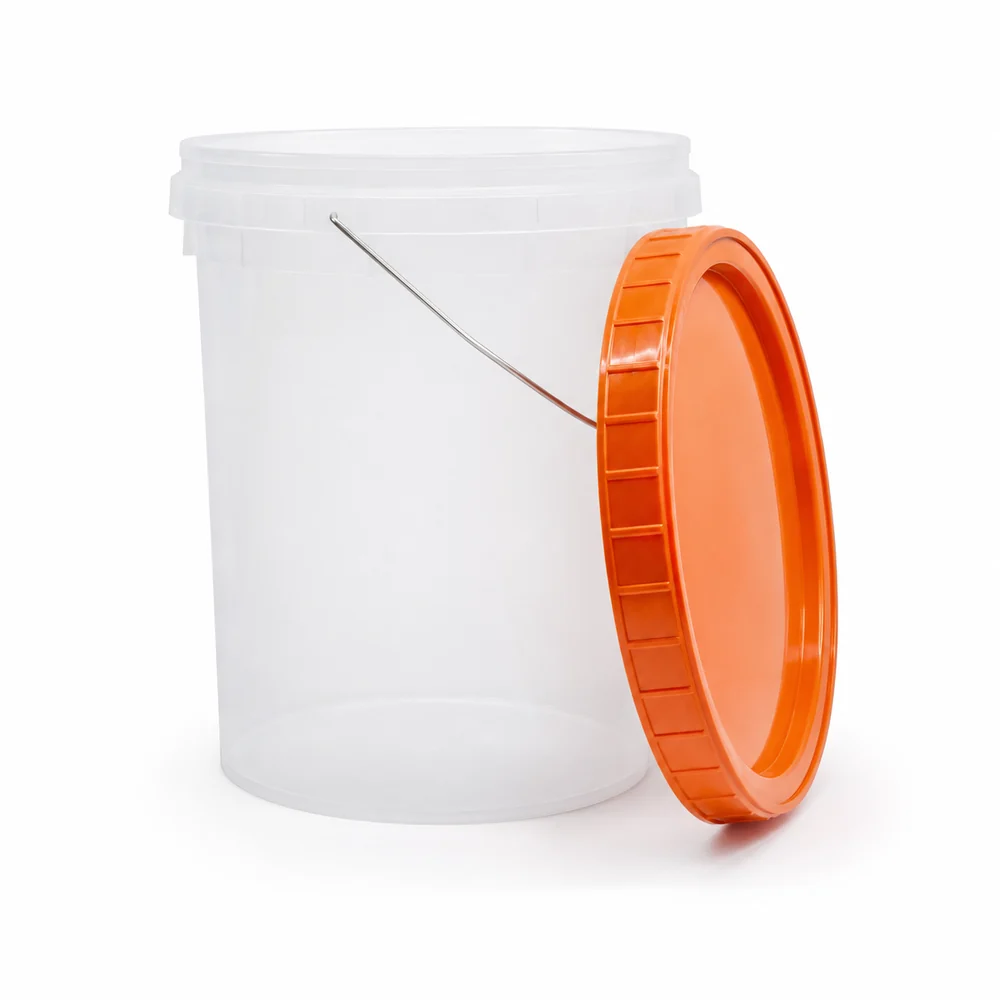
The 20L pail in the geometry each market expects, plus screw-lid, oil, oval and 30L fermentation formats.
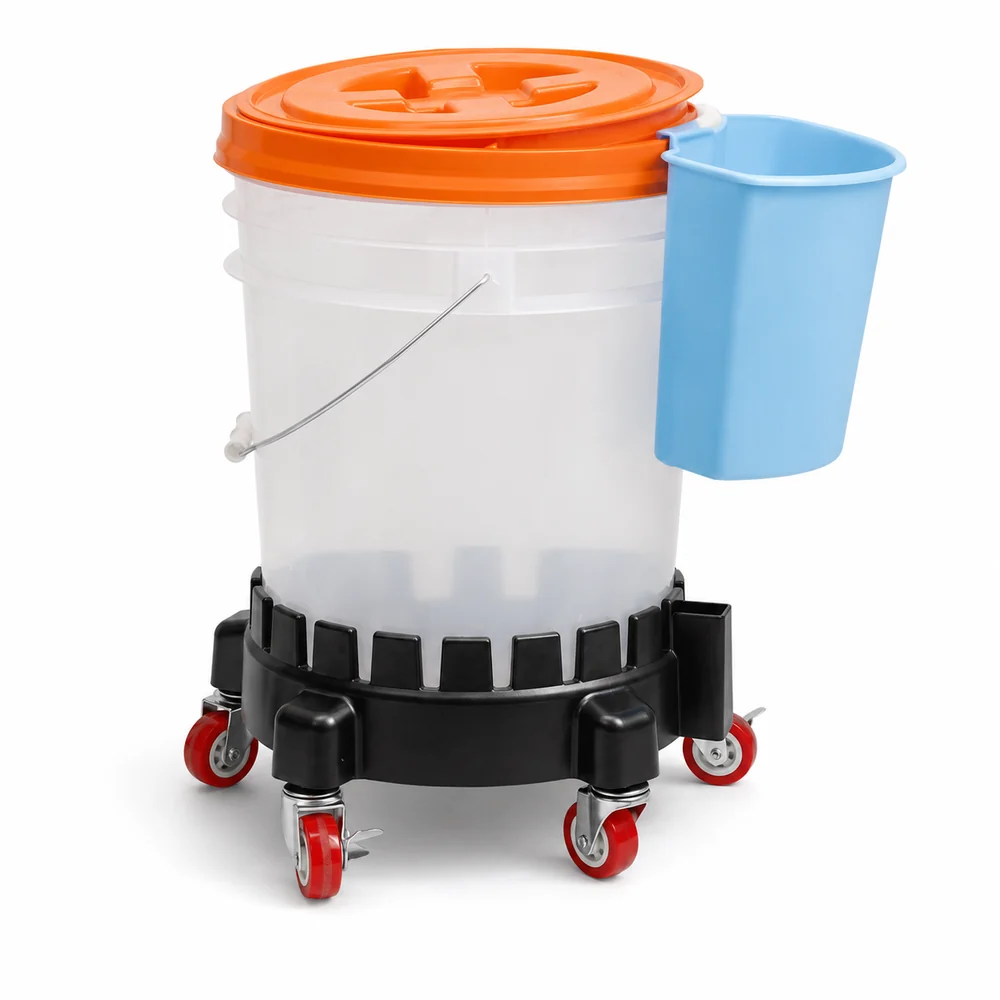
20 litre detailing bucket with screw lid, grit filter, five-castor dolly and wash caddy. Sold as a system or as components.
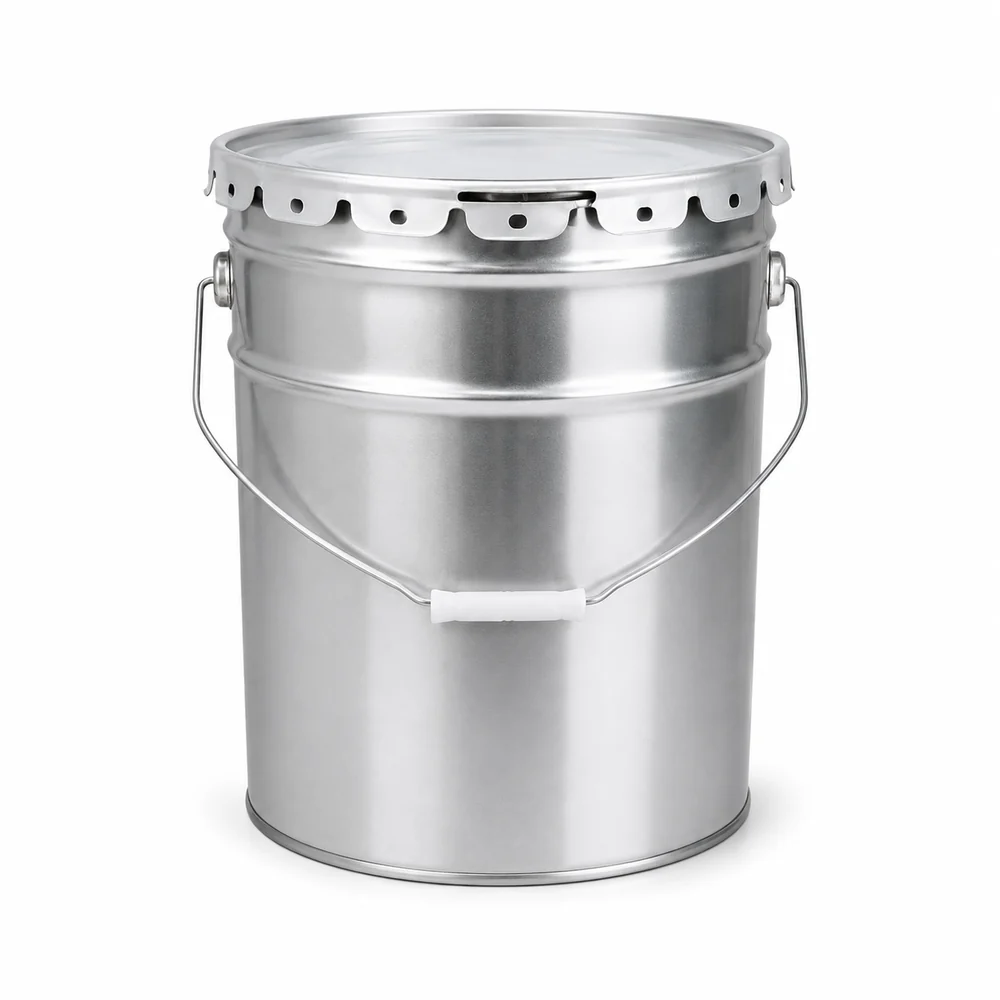
Tinplate steel open-head pail in seventeen sizes from 4 to 35 litres, with a flower lid for a permanent seal or an iron hoop lever ring for reusable access.
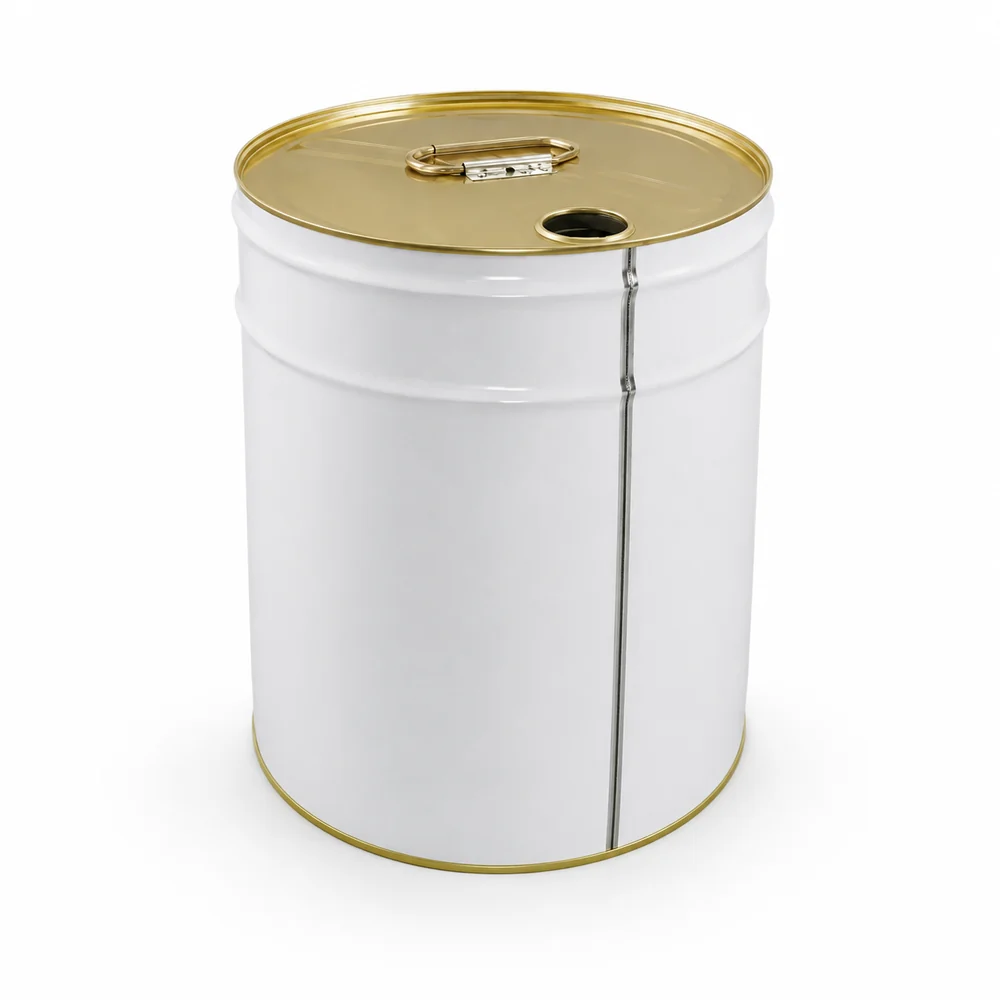
Tight-head and open-head round tinplate buckets from 5 to 25 litres, with precision-rolled seams specified against permeation.
Tell us your destination market, target volumes and whether you need private labelling.