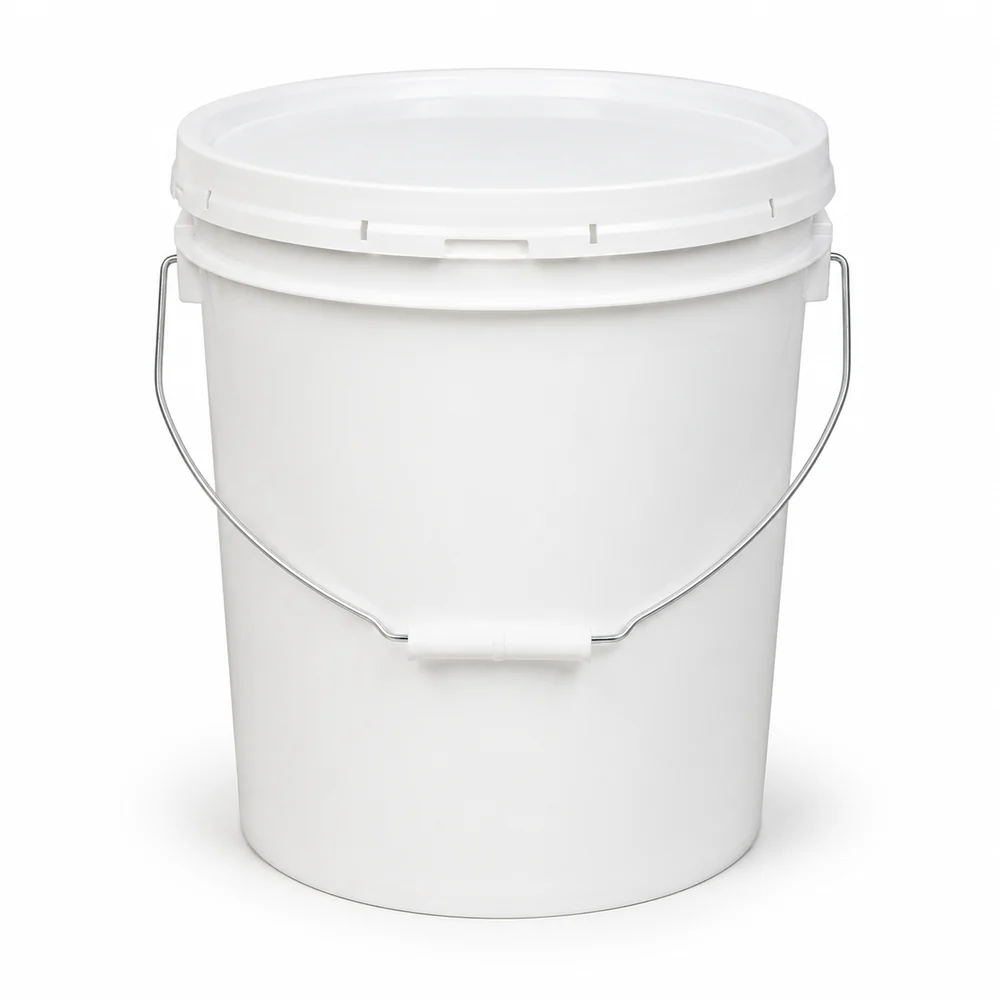
Plastic pail
Round PP Bucket, 2.5L to 20L
Injection-moulded polypropylene pail in eighteen sizes from 2.5 to 20 litres, with tamper-evident lid, plastic or steel handle and in-mould labelling.

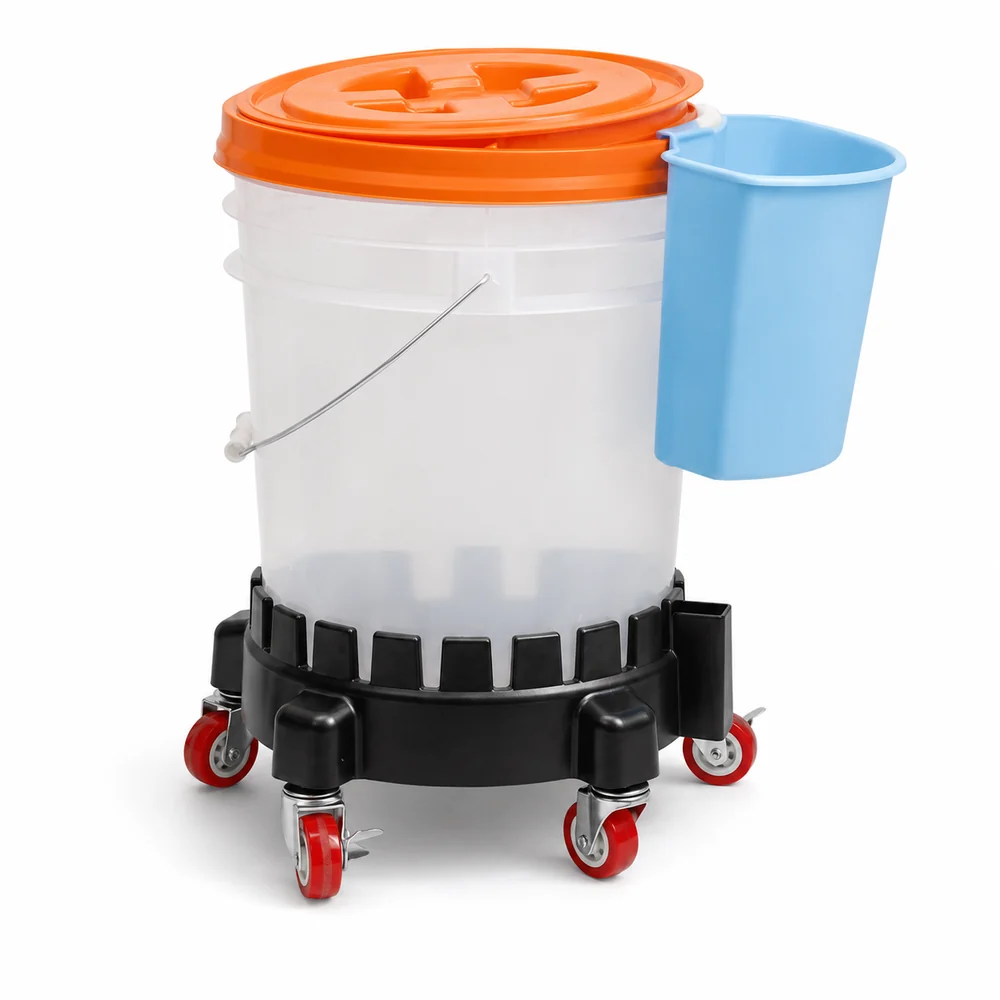
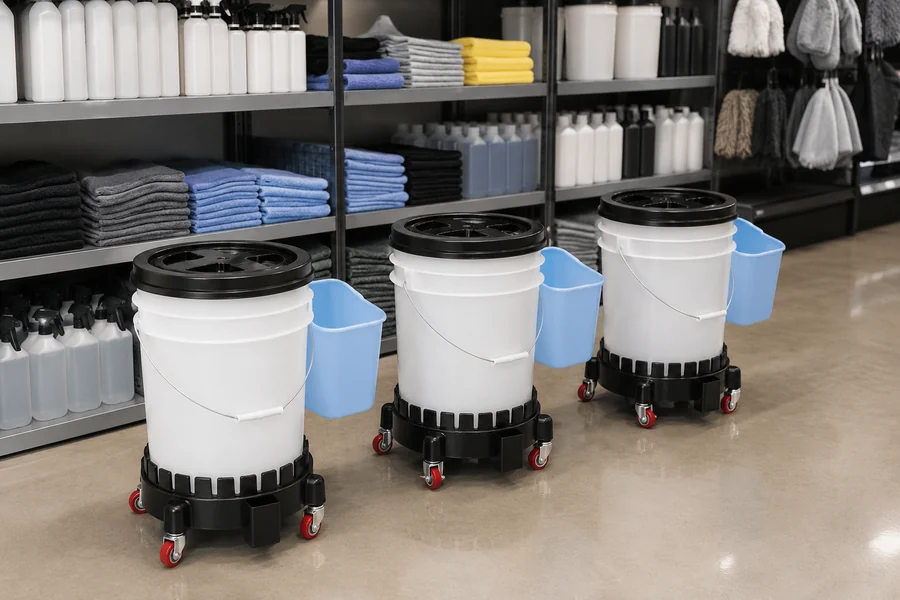
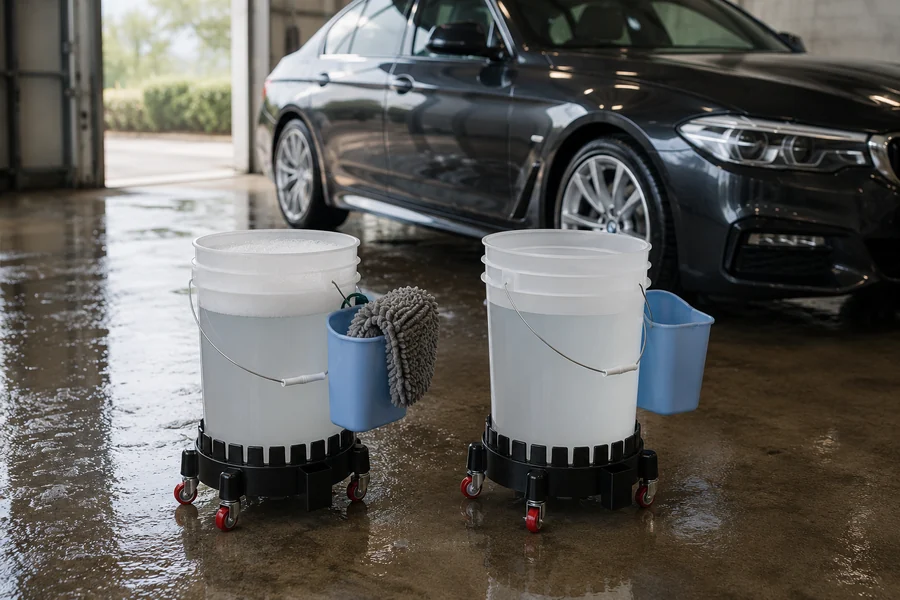
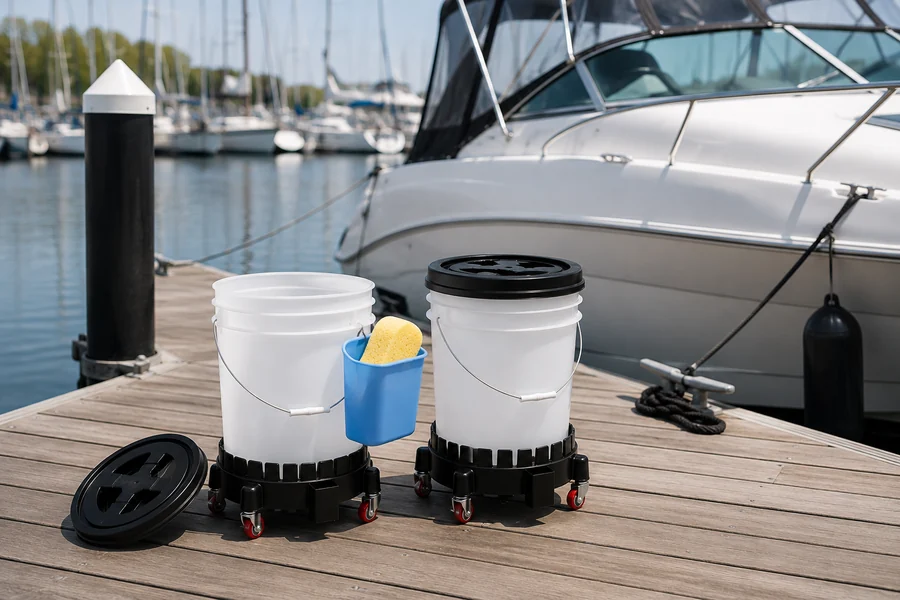
The two-bucket wash method needs more than two buckets. This is the bucket, the grit guard that makes it work, and the dolly that saves the operator dragging twenty kilos across a forecourt.
| Bucket capacity | 20 litres |
|---|---|
| Material | Virgin polypropylene |
| Bucket dimensions | 305 × 265 × 385 mm |
| Bucket wall / lid | 2.2 / 2.0 mm |
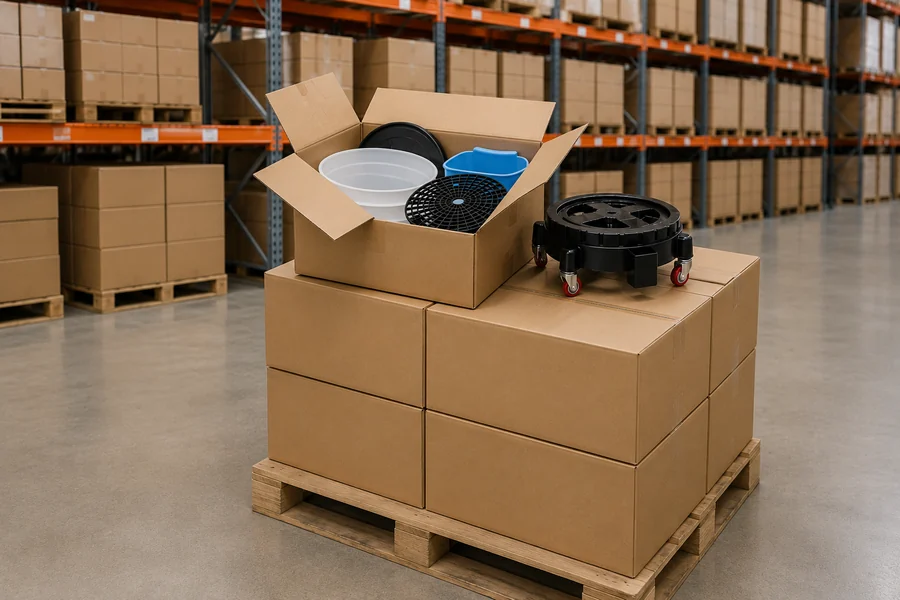
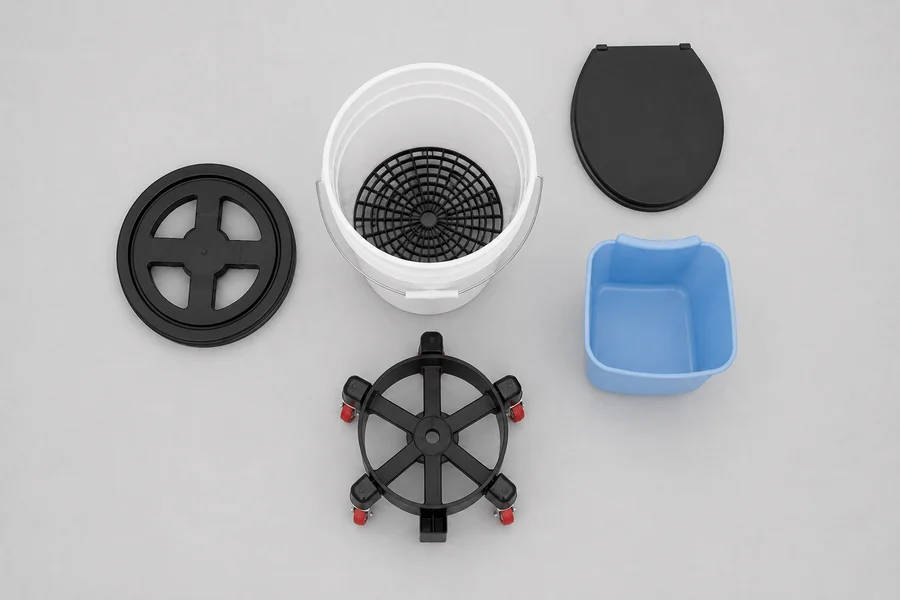
| Components | Bucket, screw lid, grit filter, five-castor dolly, wash caddy, toilet lid |
| Dolly | Five castors, 1,000 g, ships four per carton |
| Grit filter | 266 × 63 mm, seats in the base |
| Body options | Opaque or translucent |
| Decoration | In-mould labelling or heat transfer |
| Lead time | Approximately one month for a standard production run; samples in 7–15 days. Confirmed against your specification at quotation. |
These depend on your order, your market or the certificate that covers your run, so we quote them rather than publish one figure that would be wrong for most buyers. Ask and you get the number for your specification.
Before you order: The toilet lid accessory fits the 20L USA style 1 body only. If you are pairing accessories across formats, confirm the body geometry with us first.
6 sizes, with the container quantities a distributor needs to cost a shipment. Loading figures are unpalletised.
| Item photo | Item | Weight | Key dimension | Per 20GP | Per 40HQ |
|---|---|---|---|---|---|
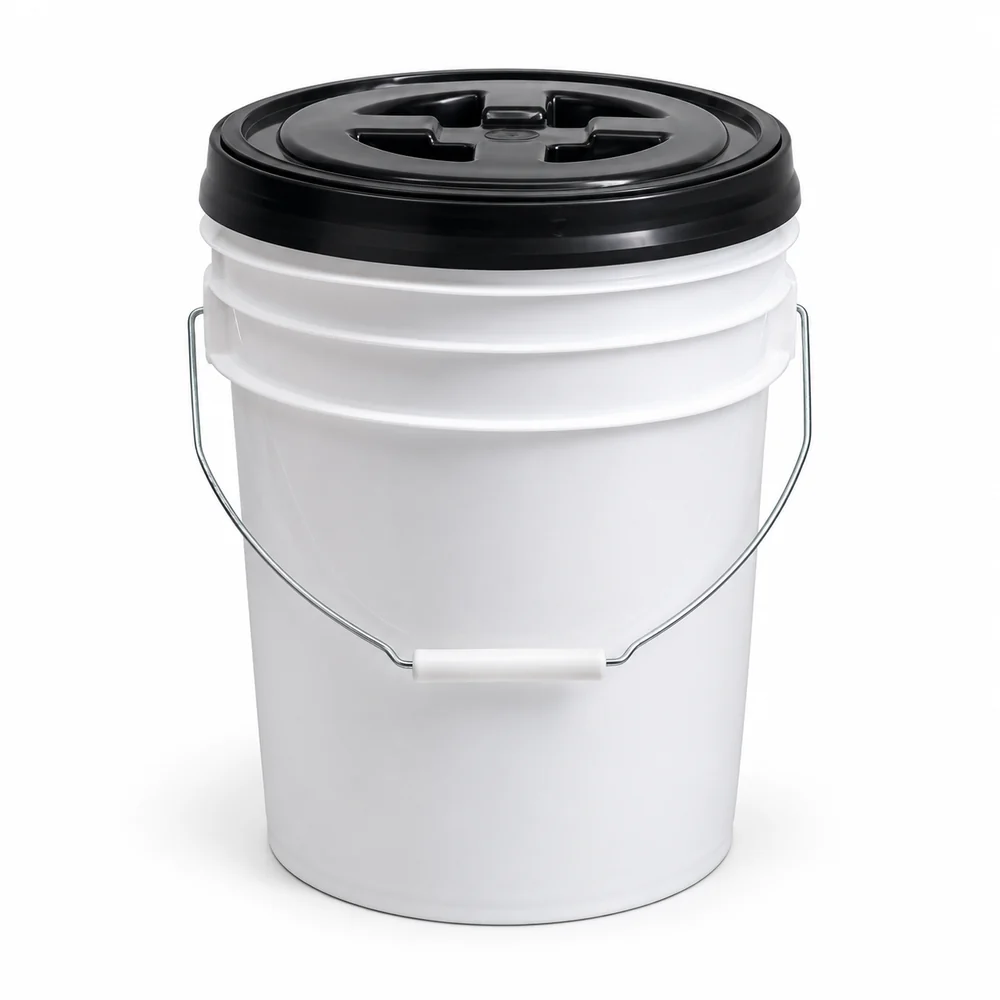 | 20L car wash bucket | 1,220.5 g | 305 × 265 × 385 mm | 2,499 | 6,020 |
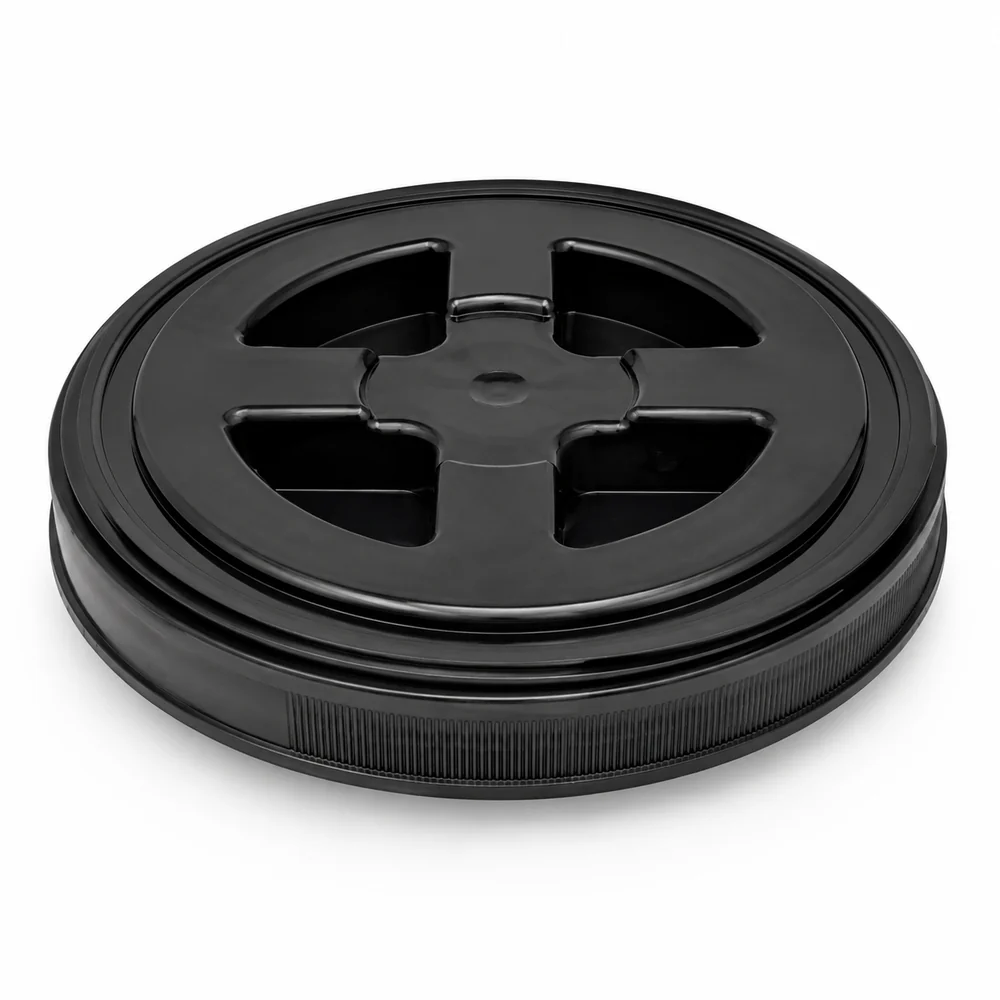 | Screw lid | 420.5 g | 314 × 39 mm | 7,543 | 20,832 |
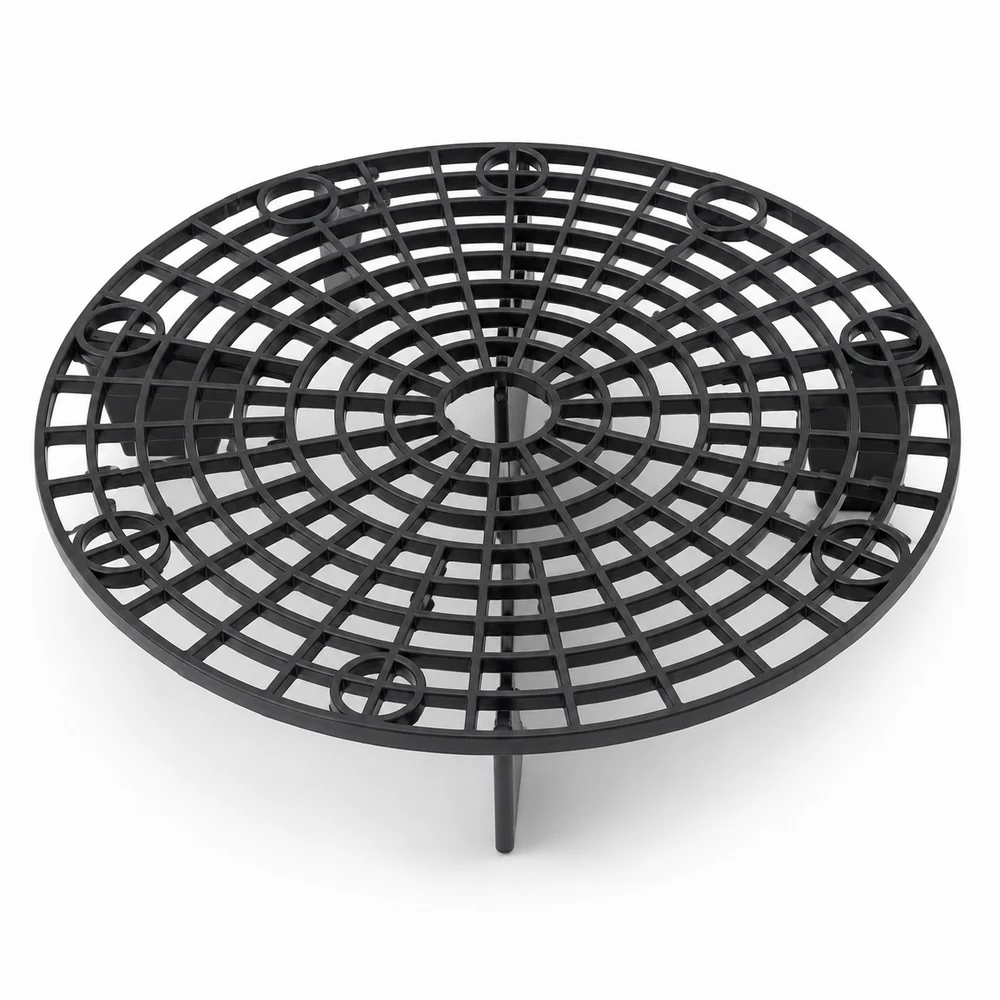 | Grit filter | 211 g | 266 × 63 mm | 10,560 | 24,948 |
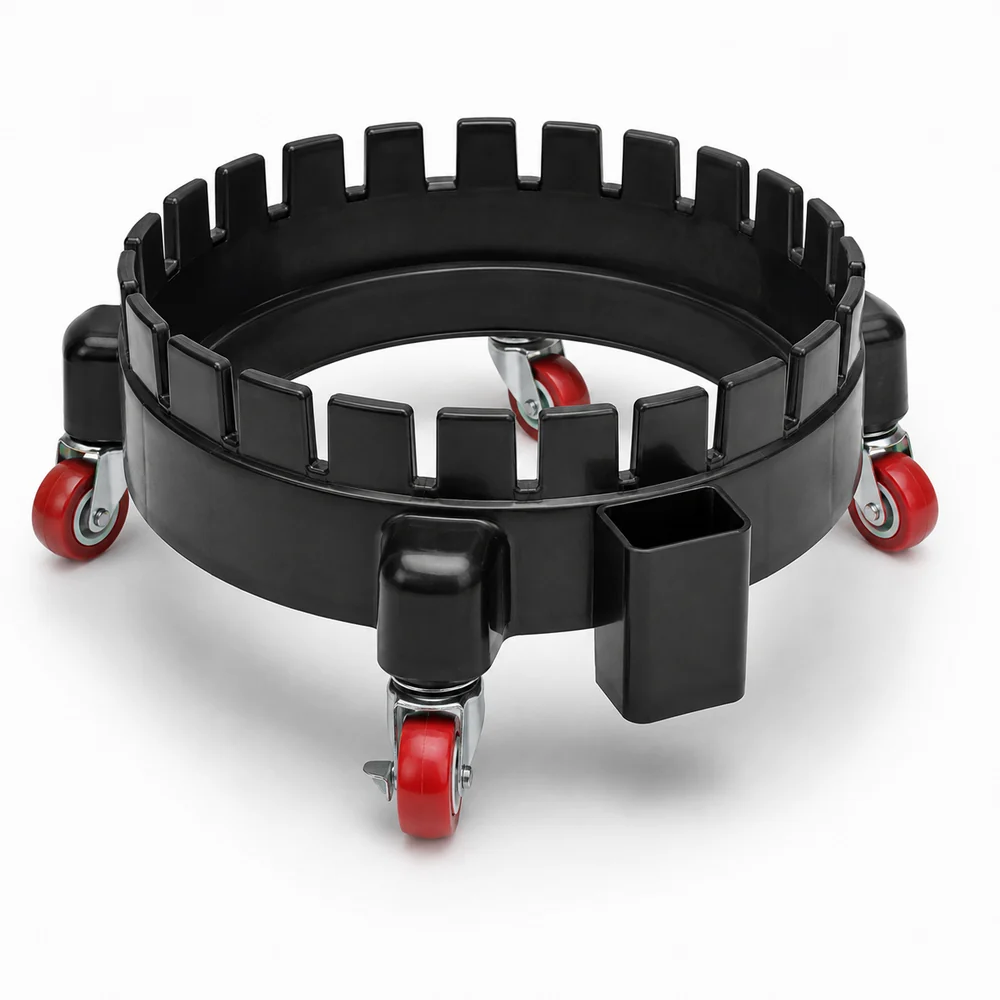 | Dolly, five castors | 1,000 g | 4 per 38 × 38 × 38.5 cm carton | 1,988 | 4,584 |
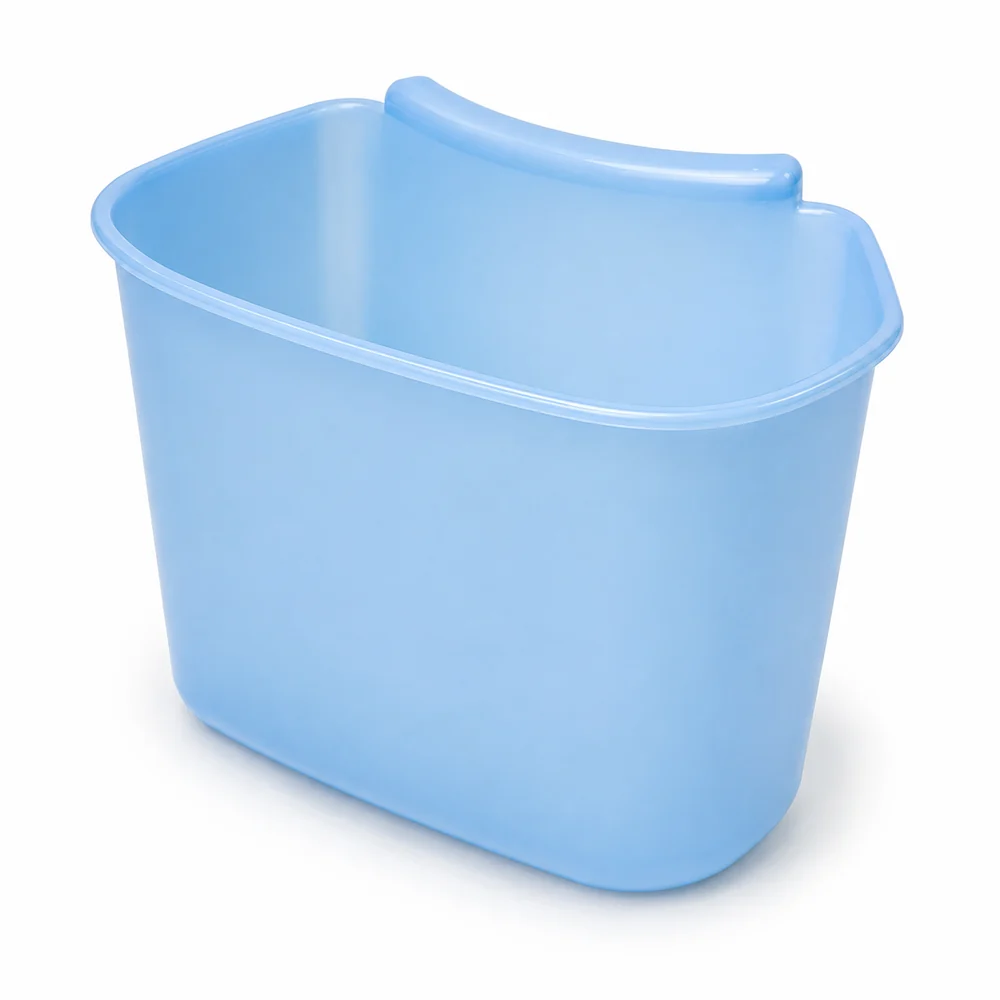 | Wash caddy | 252 g | 76 per 33 × 33 × 116 cm carton | 20,000 | 49,000 |
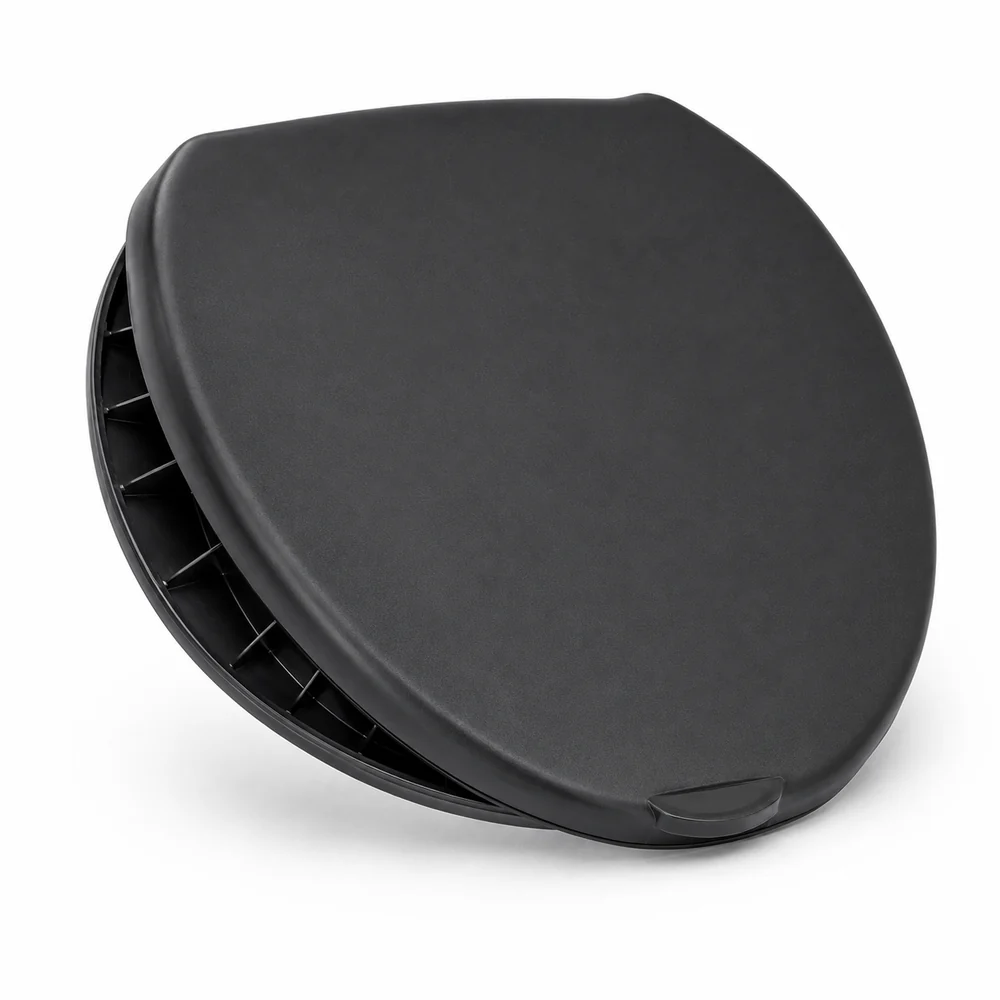 | Toilet lid | 500 g | 365 × 330 mm, fits 20L USA style 1 | — | — |
Figures are the factory’s published catalogue values, transcribed as printed. Confirm against the drawing issued with your order — wall thickness and closure are specified against the contents, so the build for your product may differ from the standard shown.
A two-bucket wash only works if the grit stays at the bottom. The filter traps it under a screen so the mitt cannot pick it back up, which is what stops swirl marks. Without it you have two buckets and the same problem.
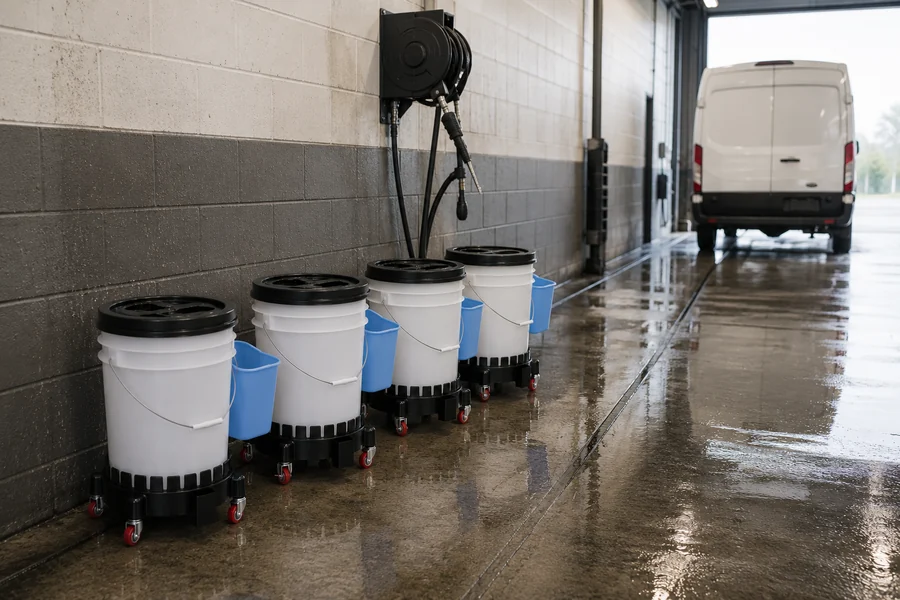
A filled bucket dragged across a forecourt scratches the bucket, the floor and eventually a panel. Five castors and a rolled rim mean the operator pushes it.
A detailing bucket is opened and closed all day and stored with solution in it. A screw lid survives that cycle; a snap lid stops sealing after a few dozen.
Retailers who want to build their own kit, or who already stock a bucket, can take the grit filter, dolly or caddy on their own. Container quantities for each are on this page.
The body is pressed from cold-rolled steel to the pattern, seam-welded, then finished as set out in the specification above: internal coating, galvanising or powder coat according to what the can carries. Pressing runs across our Vietnam and China plants under one specification managed from Singapore, so the drawing and closure stay identical whichever plant fills the order.
Every can is checked before it leaves the plant:
The regimes that apply to this type of container in each market we ship to, with the detail behind each one a click away. This is what the market asks for; what this particular design already holds is in the specification above.
Orientation for specification, not legal advice, and not a statement that this design holds a given approval. Requirements turn on the exact design, contents and destination, and they change. Tell us the market at enquiry and we confirm what applies to your specification, what we hold and what we would need to obtain.
A 20 litre bucket, screw lid, grit filter, five-castor dolly, wash caddy and toilet lid. It sells as a complete system or as individual components, so a retailer can build the kit that fits their price point.
It sits in the base and traps the grit washed off the panel, so the mitt picks up clean water on the next dip instead of dragging the same grit back across the paint. It measures 266 by 63 mm.
No. Every component sells separately. Most private-label buyers start with the bucket and filter and add the dolly and caddy once the line proves out.
No. The toilet lid fits the 20 litre USA style 1 body only. If you are pairing accessories across formats, confirm the body geometry with us before ordering, because a near-miss does not seat.
Translucent lets the user see the water line and how dirty it has become, which sells well in the detailing channel. Opaque gives a better printed finish. Both run the same body and the same wall.
305 by 265 by 385 mm, with a 2.2 mm wall and a 2.0 mm lid. That is a heavier section than a general-purpose pail, because a detailing bucket is carried full and dropped.
Yes. In-mould labelling or heat transfer on the bucket, and the kit can be packed to your specification. Private-label kits are one of the main uses of this line.
Four per carton, five castors each, at about 1,000 g per dolly. It ships separately from the bucket, which is worth knowing when you are costing freight on a mixed kit.
It applies to plastic packaging components. A bucket sold as a product rather than as packaging for goods may fall outside it, and the answer turns on how you sell it. Confirm the treatment for your channel before you assume either way.
Quoted against the kit you specify, since a bucket-only order and a full six-component kit are different runs. Production is approximately one month, with samples in 7 to 15 days.
Injection-moulded polypropylene pail in eighteen sizes from 2.5 to 20 litres, with tamper-evident lid, plastic or steel handle and in-mould labelling.
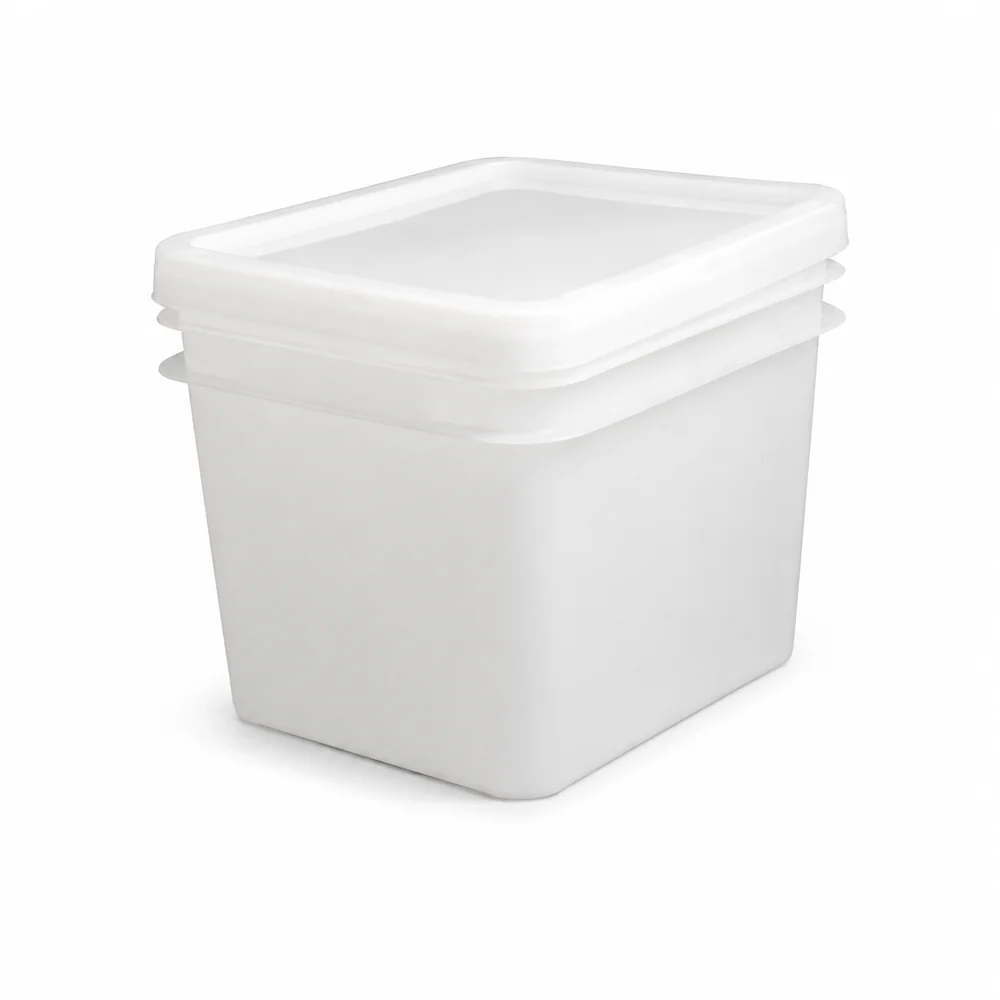
Square and rectangular polypropylene pails from 3.7 to 32.44 litres. Flat faces for full-bleed labelling and a footprint that squares off on a pallet.
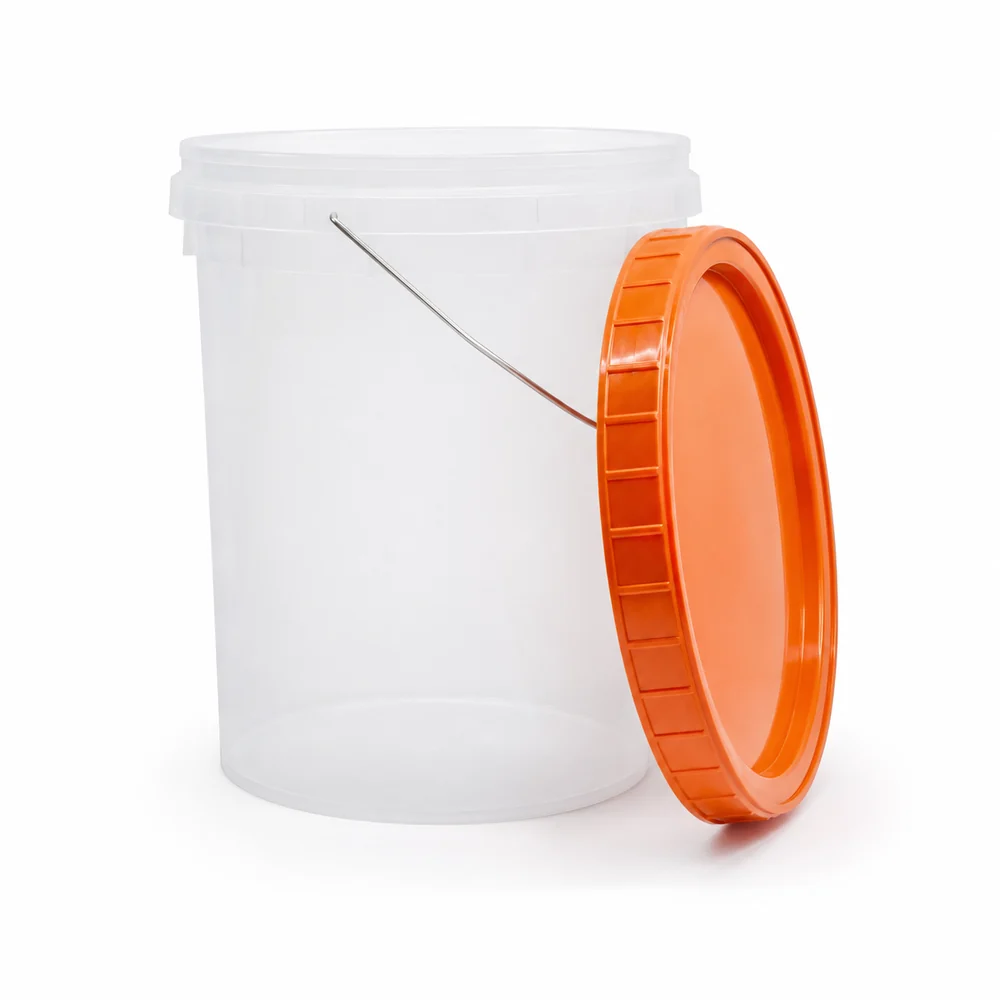
The 20L pail in the geometry each market expects, plus screw-lid, oil, oval and 30L fermentation formats.
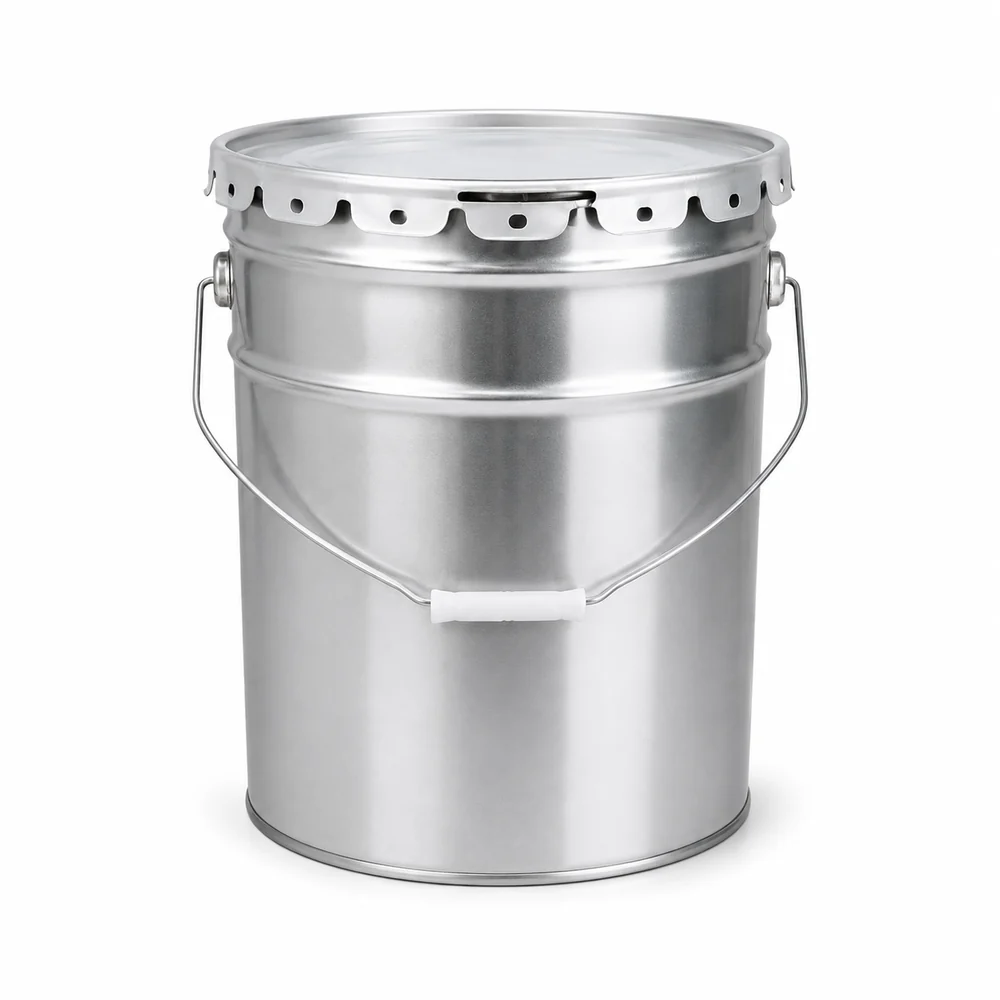
Tinplate steel open-head pail in seventeen sizes from 4 to 35 litres, with a flower lid for a permanent seal or an iron hoop lever ring for reusable access.
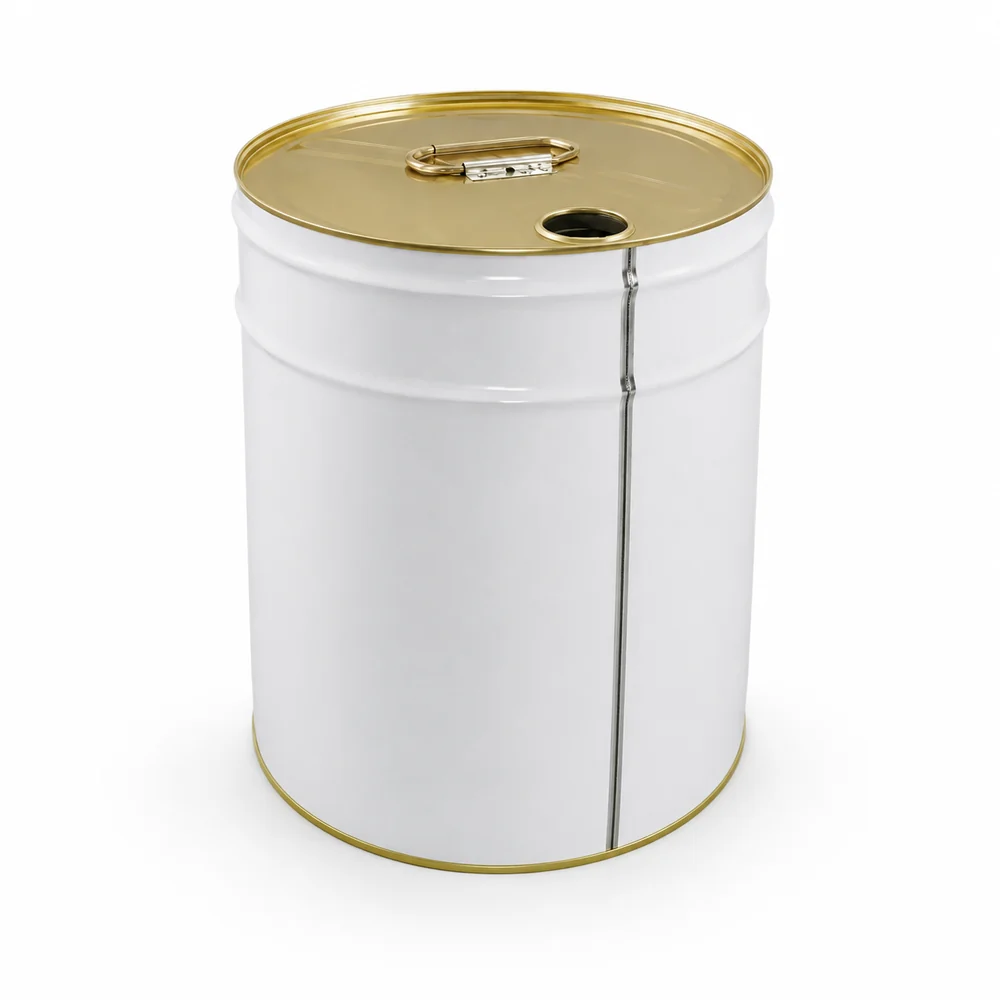
Tight-head and open-head round tinplate buckets from 5 to 25 litres, with precision-rolled seams specified against permeation.
Tell us your destination market, target volumes and whether you need private labelling.