
Charged by weight on packaging below 30 per cent recycled content, and it lands on the importer rather than the factory.
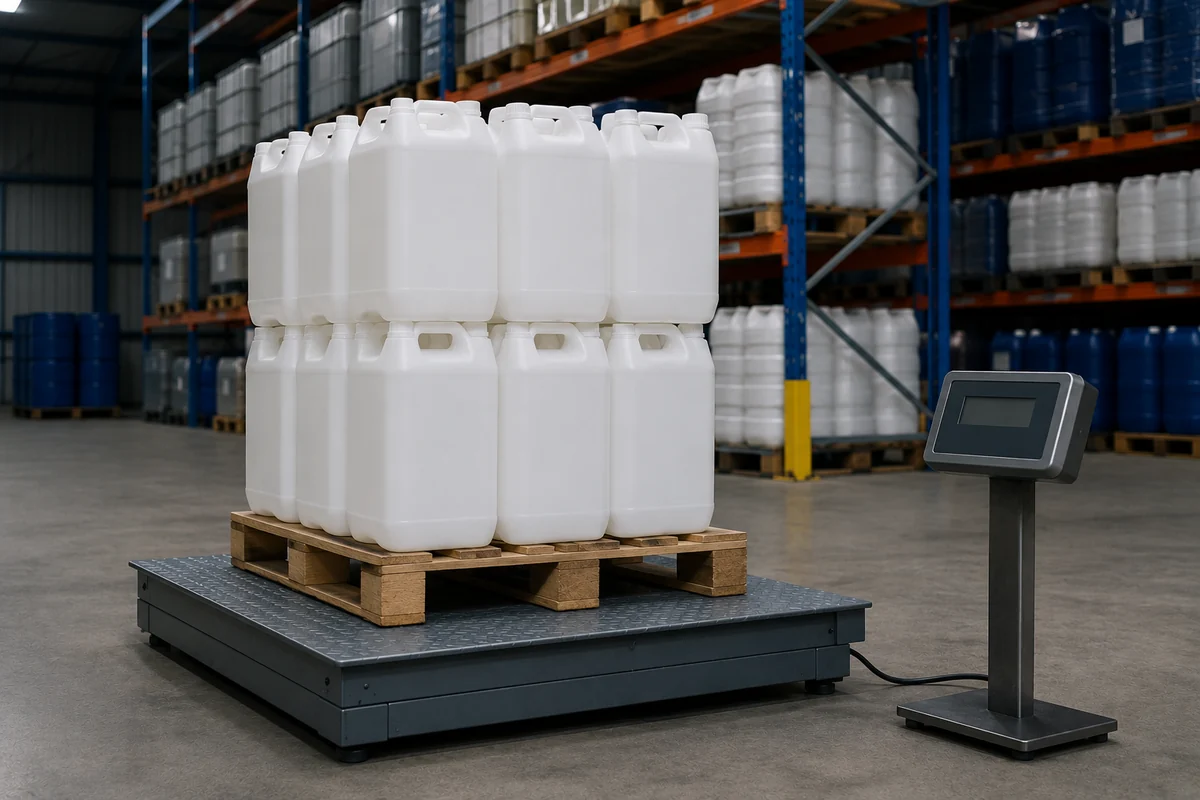
If you import plastic containers into the UK, there is a tax on the ones that do not contain at least 30 per cent recycled plastic. It is charged by weight, it is a fixed cost per tonne rather than a percentage of value, and it lands on the importer.
| What | Where it sits |
|---|---|
| Rate from 1 April 2026 | £228.82 per tonne |
| Applies to | Plastic packaging with less than 30% recycled content by weight |
| Registration threshold | 10 tonnes of finished plastic packaging components manufactured in or imported into the UK in any 12-month period |
| Who pays | The UK manufacturer or the importer |
Two details people get wrong. Packaging that meets or beats the 30 per cent threshold is not taxed, but it still counts towards your 10-tonne registration total, so hitting the threshold with fully recycled content still means registering. And the tax is per tonne of packaging, so it scales with how heavy your containers are rather than what they sell for.
Before any of that, settle whether the item is plastic packaging at all, because the test is not what the item is called. A component made of more than one material counts as plastic where plastic is the heaviest single material by weight, and then the whole weight is taxed rather than the plastic part of it. A steel jerrican with an HDPE cap is not a plastic component, because the steel dominates. An HDPE jerrican with a steel handle almost certainly is, and the tax falls on its full weight including the handle.
That rule cuts both ways and it is worth running across a whole range rather than one product. A closure, a spout or a tap sold as a separate line is its own packaging component and is assessed on its own, so a business importing plastic closures for metal cans can be inside the regime while believing its containers keep it out. The 10-tonne threshold counts every finished plastic packaging component, across every product line.
| Format | Approximate weight | Units to reach 10 tonnes |
|---|---|---|
| 20 L HDPE jerrycan, UN grade | ~1.15 kg | ~8,700 per year |
| 20 L HDPE jerrycan, economy grade | ~0.90 kg | ~11,000 per year |
| 10 L HDPE jerrycan | ~0.60 kg | ~16,700 per year |
Indicative weights for planning. The threshold counts all finished plastic packaging components you import in a rolling twelve months, across every product, not just containers. Confirm actual unit weights on your own specification before filing.
Packaging that is exported does not ultimately bear the tax. Where you intend to export a component within twelve months you can defer the liability rather than pay and reclaim, and where tax has already been paid on packaging that is subsequently exported you can claim a credit. For a distributor who imports into the UK and re-exports part of the volume into Ireland or the continent, that is the difference between a real cost and a cash-flow timing question.
The condition is evidence, as it is everywhere in this regime. Deferral and credit both rest on being able to show the packaging left the UK, tied to the specific components the claim covers. Build that link into the stock records at the point the goods arrive, because reconstructing it from shipping paperwork a year later is the version that fails.
This is where importing gets harder than manufacturing. A UK moulder documents recycled content from its own process. An importer has to obtain equivalent certification from an overseas supplier and turn it into evidence HMRC will accept, which is a different and larger task than getting a supplier to say a number in an email.
A consultation launched in May 2026 is looking specifically at strengthening certification requirements for recycled-content claims on imported packaging, so the evidentiary bar is more likely to rise than fall. Build the paper trail now rather than reconstructing it under audit.
There is also a reason to care about whether your supplier and your customers are compliant, not only whether you are. HMRC can issue secondary liability and joint and several liability notices to businesses in the supply chain where tax has gone unpaid and the business knew, or ought reasonably to have known, that it had. Due diligence on the parties either side of you is therefore part of your own defence rather than a courtesy, and HMRC expects it to be documented and repeated rather than done once at onboarding.
For a container buyer the practical shape of that is short: keep the recycled-content certification, keep the weight data the tax is calculated on, keep the export evidence, and keep a record of the checks you ran on the supplier. Records have to be held for six years, and the audit that asks for them will not be in the year you built them.
Sometimes, and the arithmetic is simple enough to do before you ask for a quote. Compare the per-tonne tax saved against the per-tonne price difference between virgin and 30-per-cent-recycled grade. At £228.82 per tonne of packaging, a recycled grade costing less than that premium per tonne is cheaper delivered, before counting any commercial value in the claim itself.
Two cautions. Recycled content is not available or appropriate for every application, particularly food contact and some dangerous-goods approvals, where the approval was granted against a specific material. And a recycled grade changes the material, so a UN-approved design may need re-testing.
That re-testing is the cost most comparisons leave out, and on a small programme it can dwarf the tax arithmetic. A design type tested in virgin resin has not been tested in a recycled blend, so drop, stack and leakproofness testing runs again at the plant, on tooling already producing representative parts. A large annual volume swallows that quickly. A modest one may not, which is why the honest answer is to run both numbers rather than assume the recycled route wins.
Straight answer. Our standard HDPE line is virgin blow-moulding grade specified for the contents. A certified 30 per cent recycled grade is not the standard build today; it is available as a specified material change, with the certification an importer needs to support the claim. Ask for it at enquiry and we quote it against the virgin grade so you can compare delivered cost including the tax.
What the change actually involves, so the quote makes sense:
The arithmetic is worth doing before you decide. At £228.82 per tonne, a recycled grade costing less than that premium per tonne is cheaper delivered. Where it is not, the virgin grade plus the tax is the right answer and we will say so.
| Your use case | Recommended can | Why this one |
|---|---|---|
| Avoiding the tax entirely | 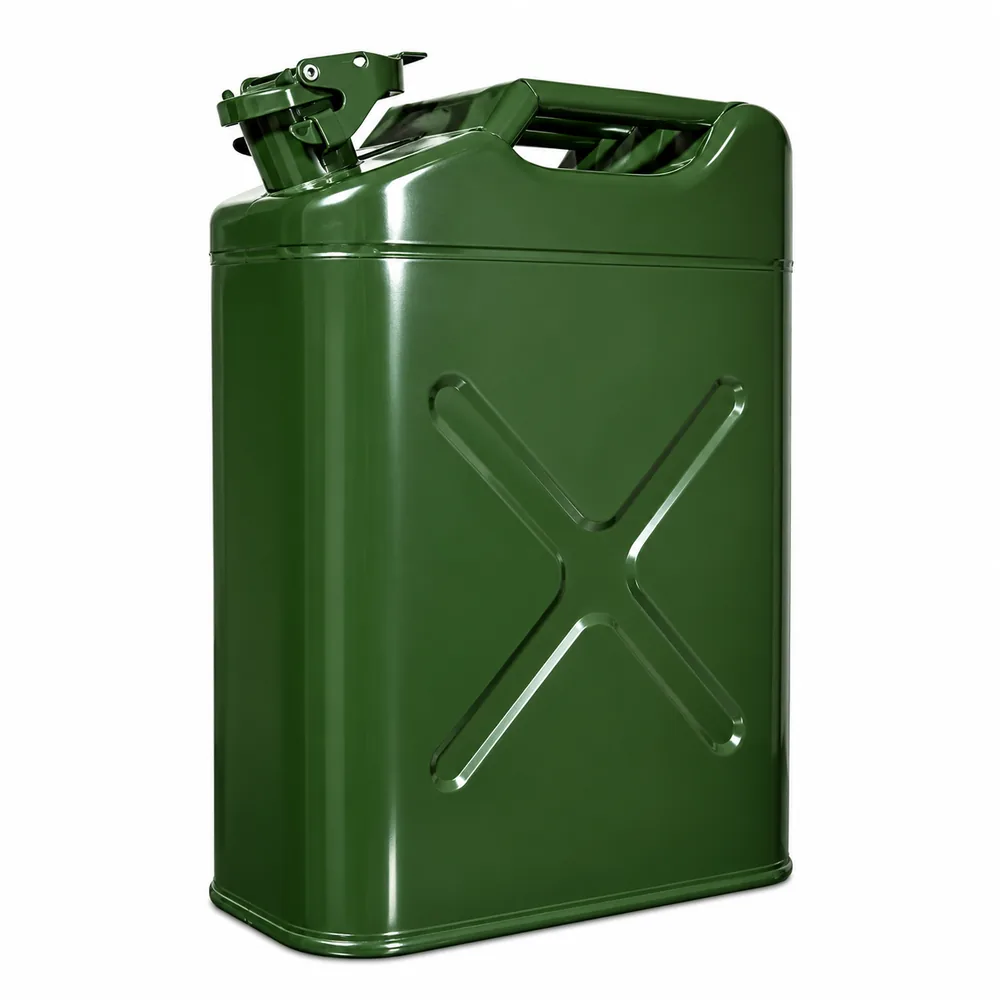 20L NATO Steel Fuel Can 20L NATO Steel Fuel Can |
Steel is not plastic packaging. Different regime. |
| Long-life alternative to plastic | 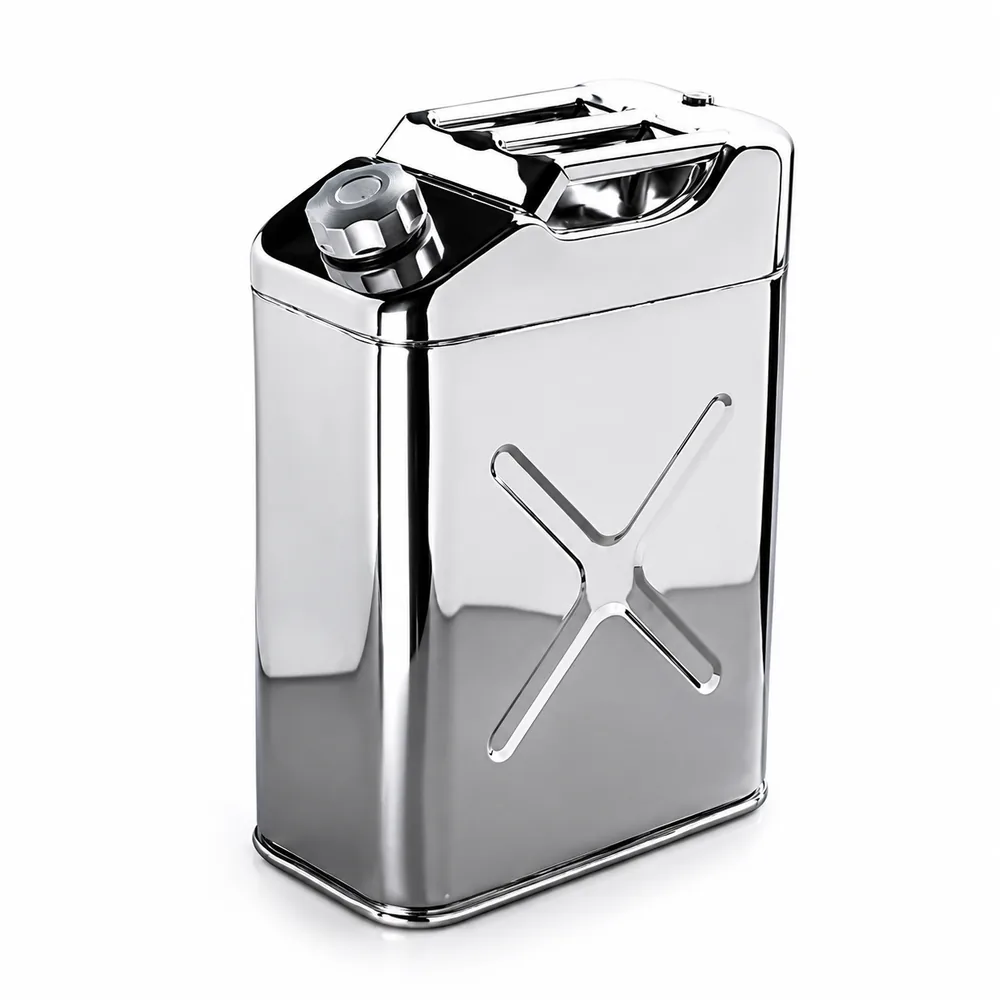 20L Stainless Steel Water Can 20L Stainless Steel Water Can |
No plastic tax, no recycled-content claim needed. |
| Volume plastic, weight matters | 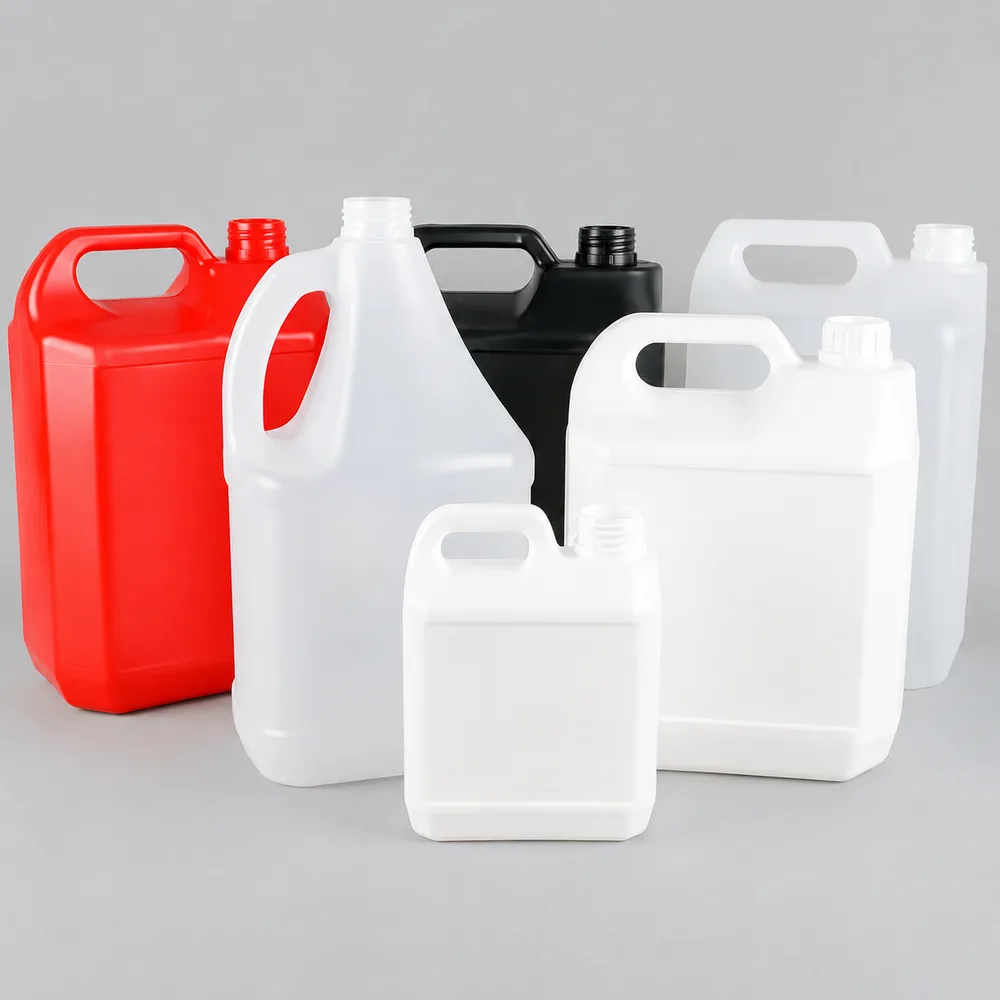 Economy HDPE Jerrycan — non-UN Economy HDPE Jerrycan — non-UN |
Lighter grade, so fewer tonnes per unit shipped. |
| Food contact in plastic |  Food-Grade HDPE Jerrycan Food-Grade HDPE Jerrycan |
Where recycled content is usually not appropriate. |
From 1 April 2026 the rate is £228.82 per tonne, charged on plastic packaging components containing less than 30 per cent recycled plastic by weight. It is a fixed cost per tonne of packaging rather than a percentage of the value of the goods.
When you manufacture in or import into the UK 10 tonnes or more of finished plastic packaging components in any 12-month period. Packaging that meets the 30 per cent recycled threshold is not taxed but still counts towards that 10 tonne registration total.
Roughly 8,700 units of a 20 litre UN-grade HDPE jerrycan at about 1.15 kg each, or around 11,000 of a lighter economy grade. The threshold counts every finished plastic packaging component you import in a rolling twelve months, across all products, not just containers.
Compare the tax saved per tonne against the price premium per tonne for a 30 per cent recycled grade. Below £228.82 per tonne of premium it is cheaper delivered. Two cautions: recycled content is often unsuitable for food contact, and changing the material can require re-testing of a UN-approved design.
The importer. The overseas manufacturer has no UK liability, which is why importers carry the harder evidence burden: they must obtain equivalent certification from the supplier and convert it into evidence HMRC accepts for any recycled-content claim.
The standards and regulations this page relies on, at their issuing body. Where a market rule is named here, check the current revision before you specify against it.
Last reviewed .
Tell us your market, your fuel and your volumes. We come back with a specification sheet and a quotation.