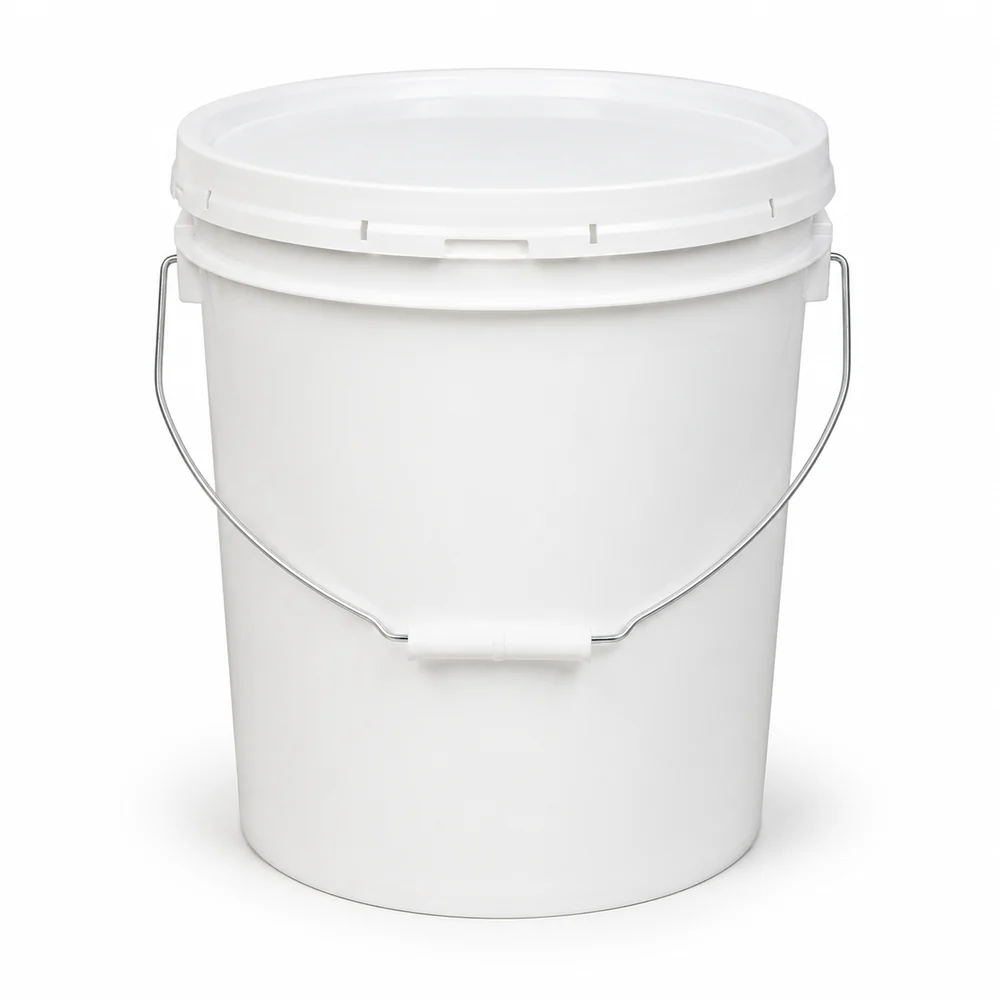
Plastic pail
Round PP Bucket, 2.5L to 20L
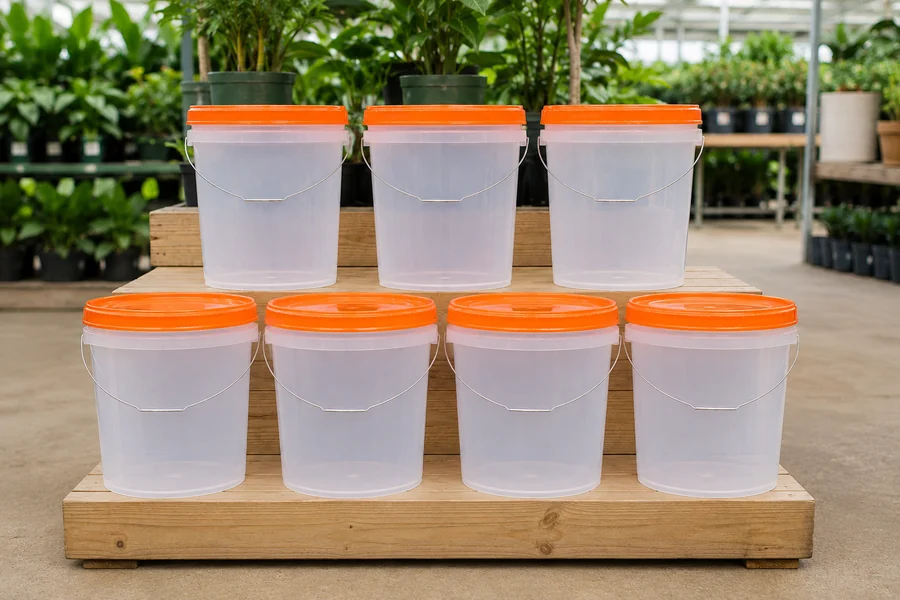
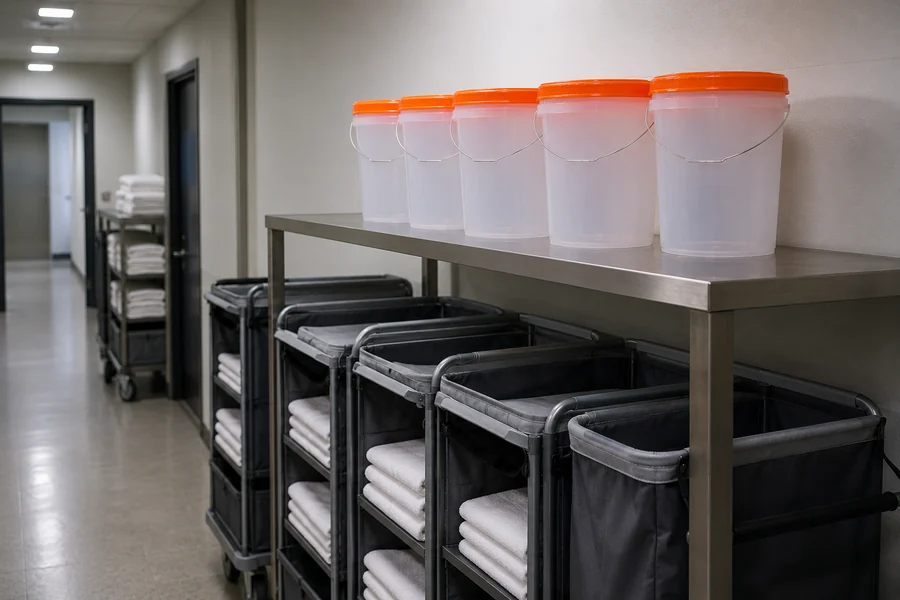
Injection-moulded polypropylene pail in eighteen sizes from 2.5 to 20 litres, with tamper-evident lid, plastic or steel handle and in-mould labelling.

A 20 litre pail is not one shape. Australia, the United States and the oil trade each expect a different one, and a buyer who ships the wrong geometry finds out at the distributor, not at the factory.
| Capacity range | 7.5 to 30 litres, eight formats |
|---|---|
| Material | Virgin polypropylene |
| Wall thickness | 1.1 to 2.2 mm depending on format |
| Regional formats | Australia style, USA style 1, USA style 2 |
| Specialty formats | Screw-lid, oil bucket, 30L fermentation with airlock grommet, 7.5L and 15L oval |
| Closure | Format-specific: snap-on, screw or lever |
| Decoration | In-mould labelling or heat transfer |
| Lead time | Approximately one month for a standard production run; samples in 7–15 days. Confirmed against your specification at quotation. |
These depend on your order, your market or the certificate that covers your run, so we quote them rather than publish one figure that would be wrong for most buyers. Ask and you get the number for your specification.
Before you order: Regional geometry is not interchangeable. Tell us the destination market and, if you can, the pail your distributor stocks today, and we will match the format rather than the litre figure.
8 sizes, with the container quantities a distributor needs to cost a shipment. Loading figures are unpalletised.
| Item photo | Format | Capacity | Top × Bottom × Height | Wall / lid | Lid Ø | Per 20GP | Per 40HQ |
|---|---|---|---|---|---|---|---|
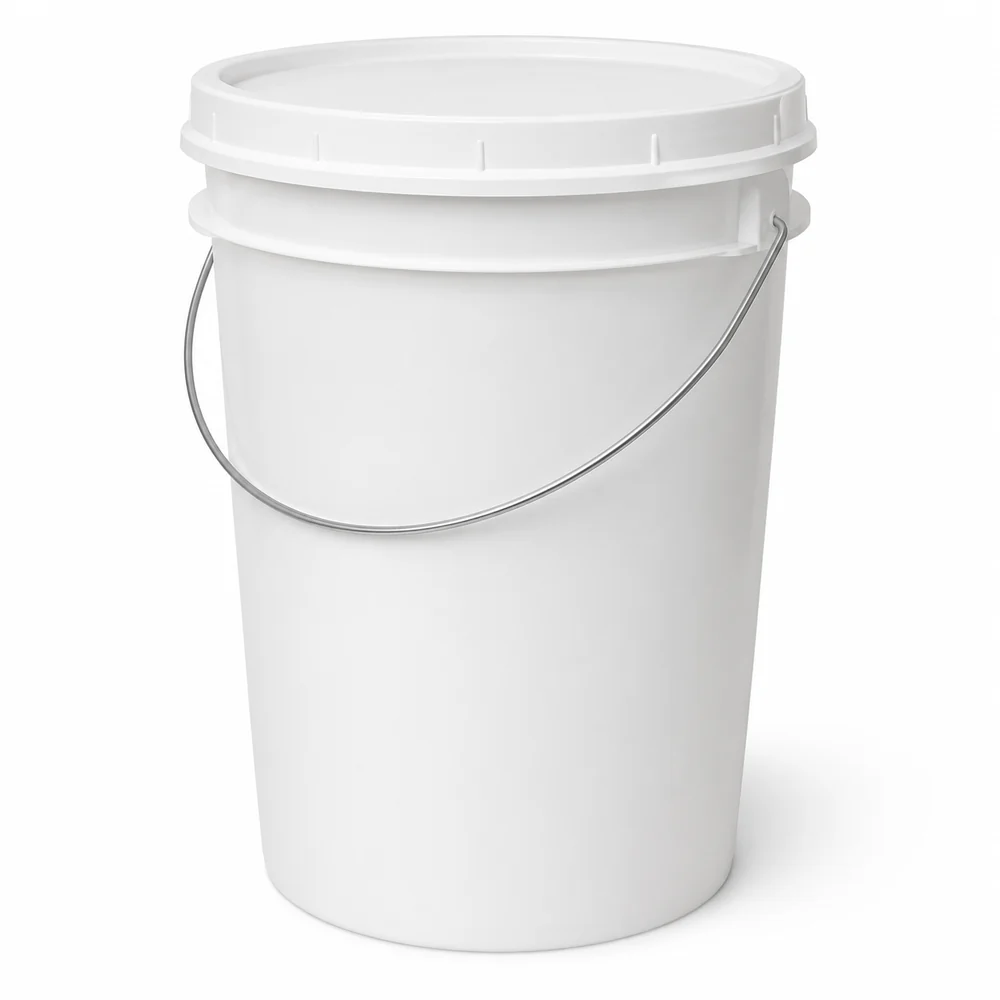 | Australia style | 20 L | 298 × 260 × 404 mm | 1.9 / 1.7 mm | 248 mm | 3,381 | 7,826 |
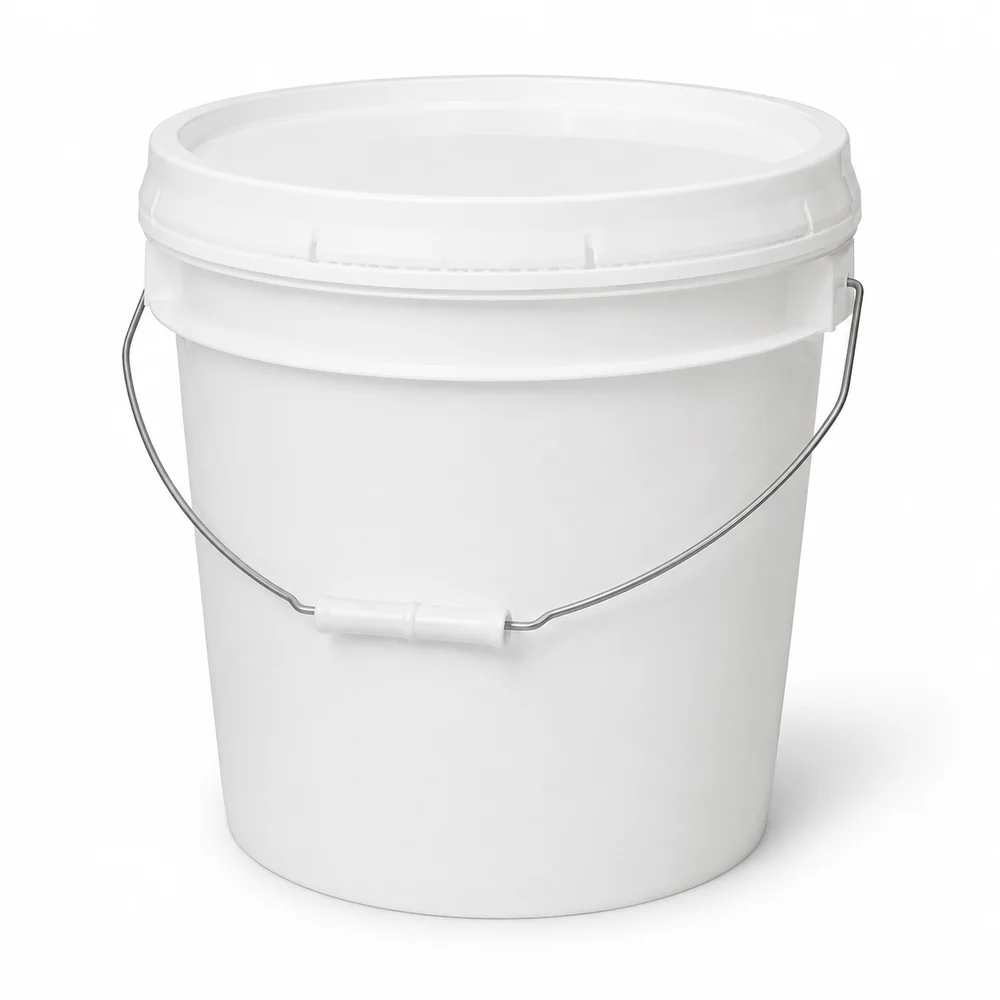 | USA style 1 | 20 L | 305 × 265 × 385 mm | 2.2 / 2.0 mm | 314 mm | 2,499 | 6,020 |
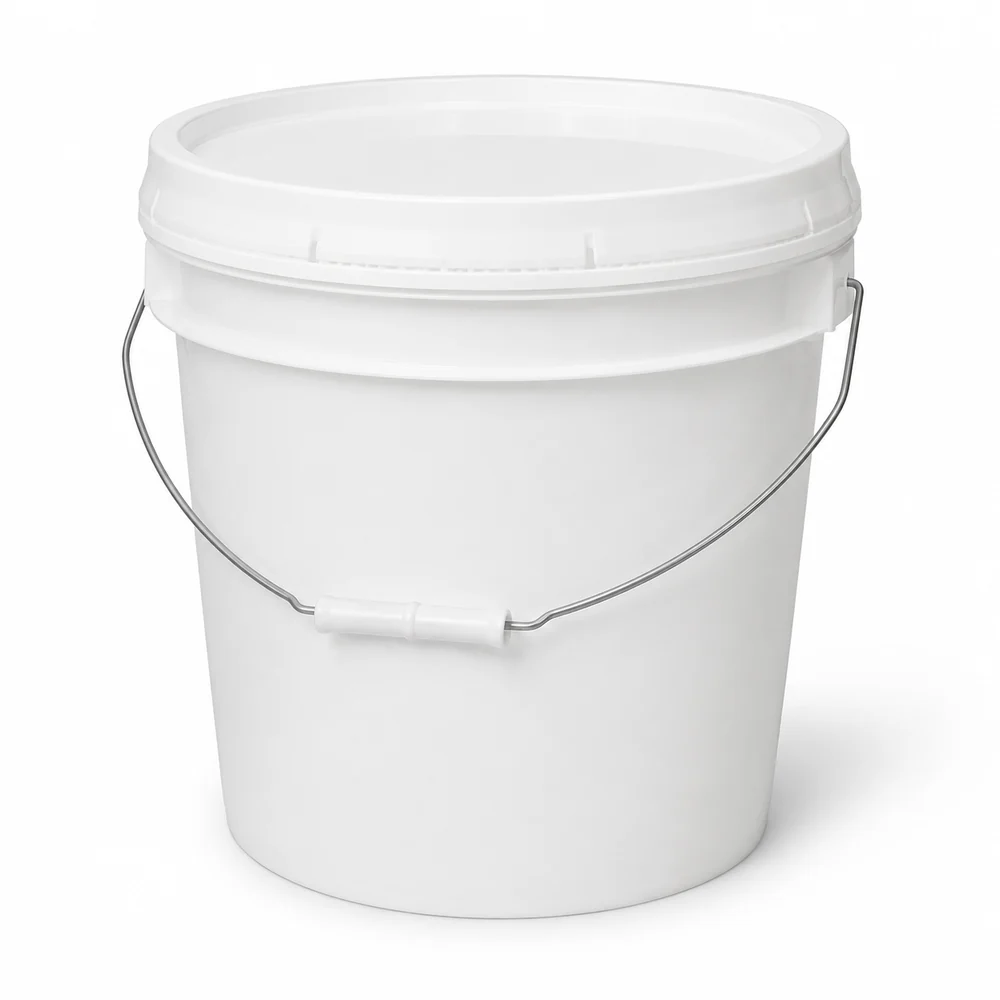 | USA style 2 | 20 L | 305 × 265 × 385 mm | 2.2 / 2.0 mm | 318 mm | 2,499 | 6,020 |
| Screw-lid bucket | 20 L | 310 × 273 × 373 mm | 2.0 / 2.2 mm | 323 mm | 2,390 | 5,730 |
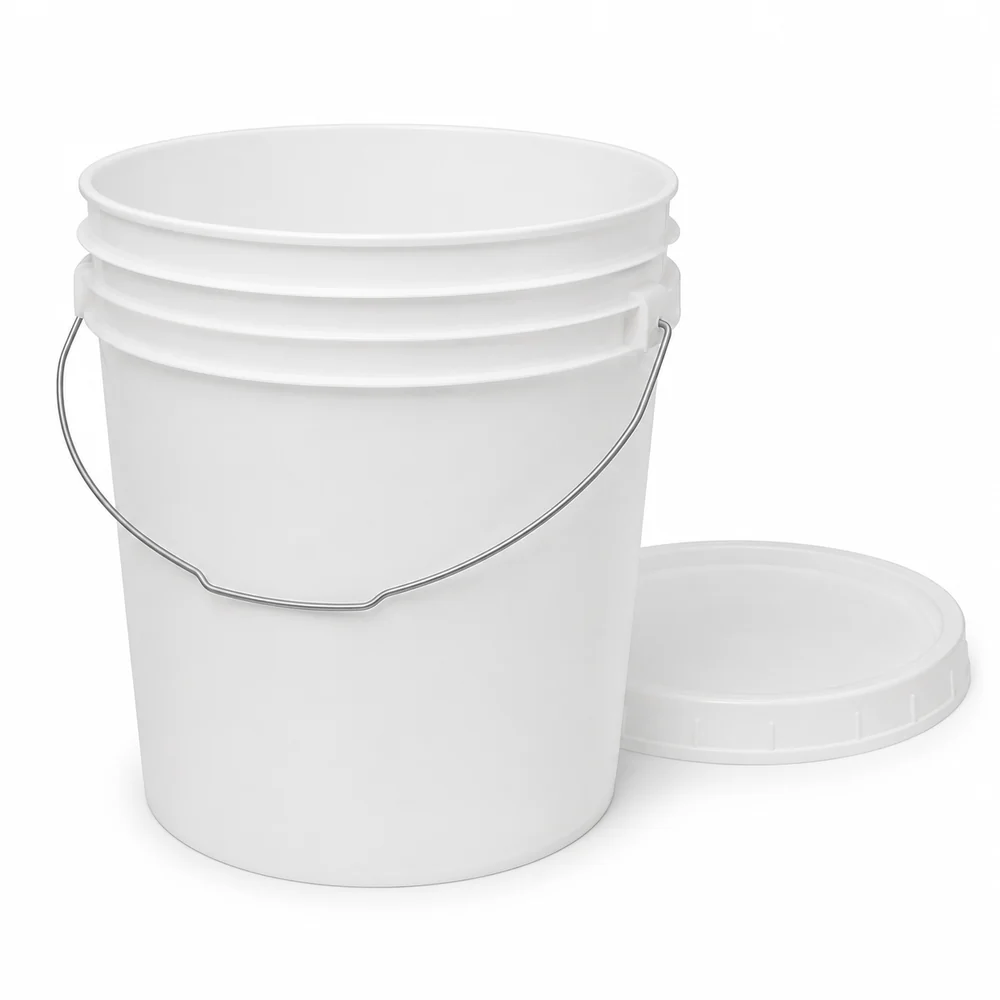 | Oil bucket | 20 L | 307 × 271 × 375 mm | 2.0 / 2.0 mm | 321 mm | 2,898 | 6,993 |
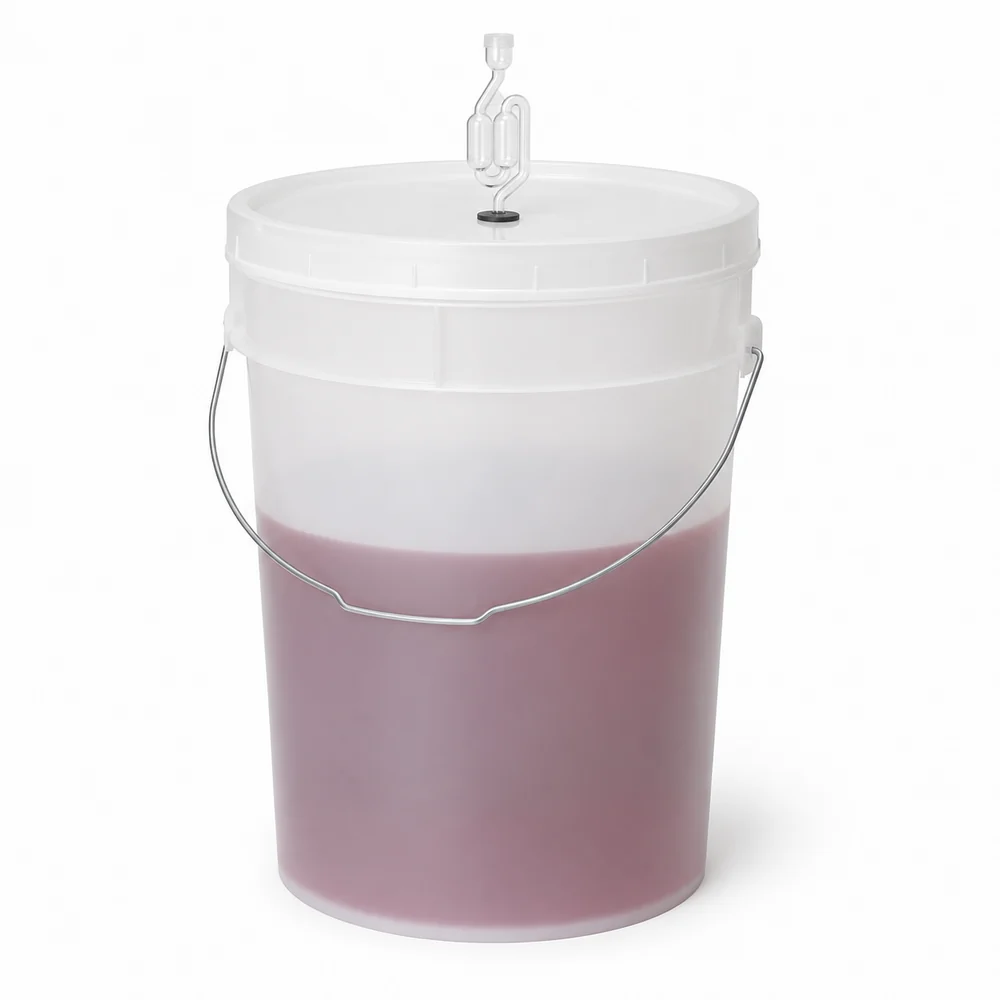 | Fermentation bucket | 30 L | 362 × 313 × 426 mm | 2.0 / 1.9 mm | 371 mm | 2,880 | 6,720 |
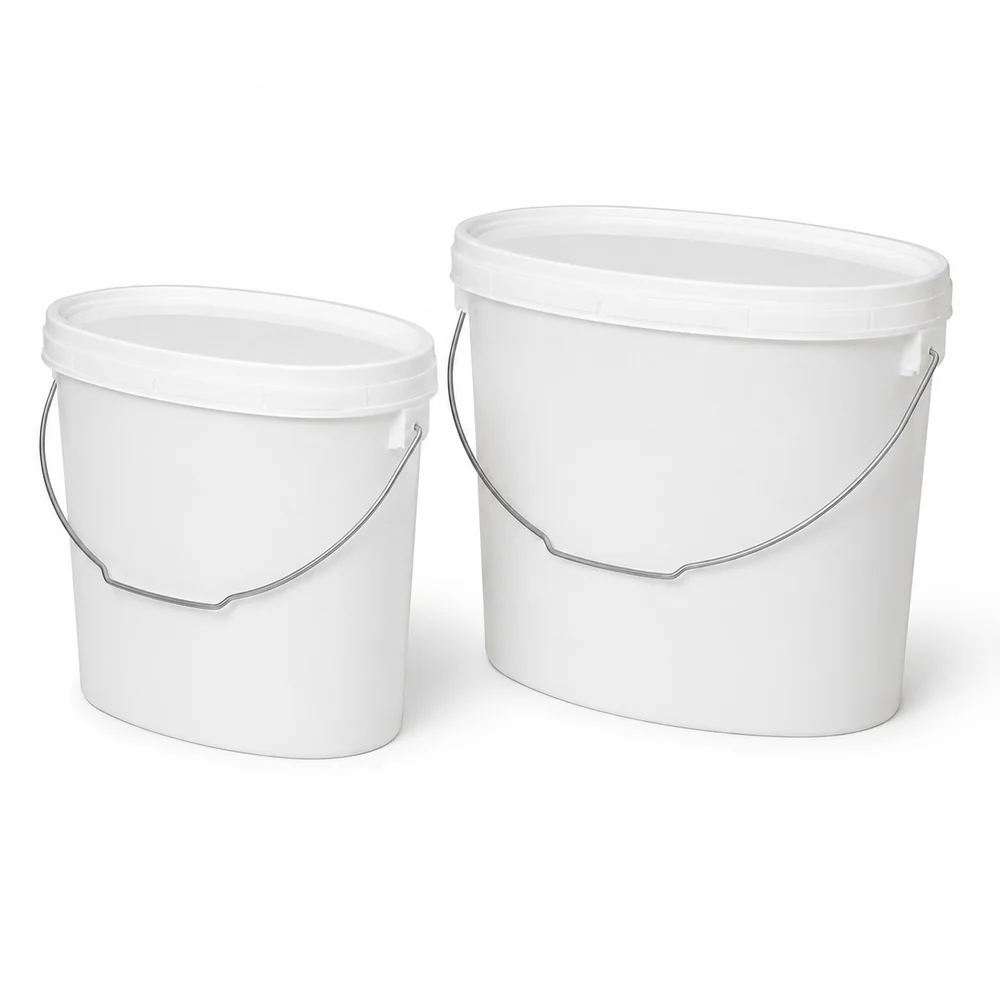 | Oval | 7.5 L | 294 × 207 × 183 mm | 1.1 / 0.9 mm | 296 × 217 mm | 11,230 | 25,000 |
| Oval | 15 L | 381 × 297 × 251 mm | 1.5 / 1.4 mm | 380 × 300 mm | 5,500 | 12,030 |
Figures are the factory’s published catalogue values, transcribed as printed. Confirm against the drawing issued with your order — wall thickness and closure are specified against the contents, so the build for your product may differ from the standard shown.
Australian and US 20L pails differ in taper, lid diameter and height. Shipping the wrong one means your product will not sit in the racking or take the lids a distributor already holds.
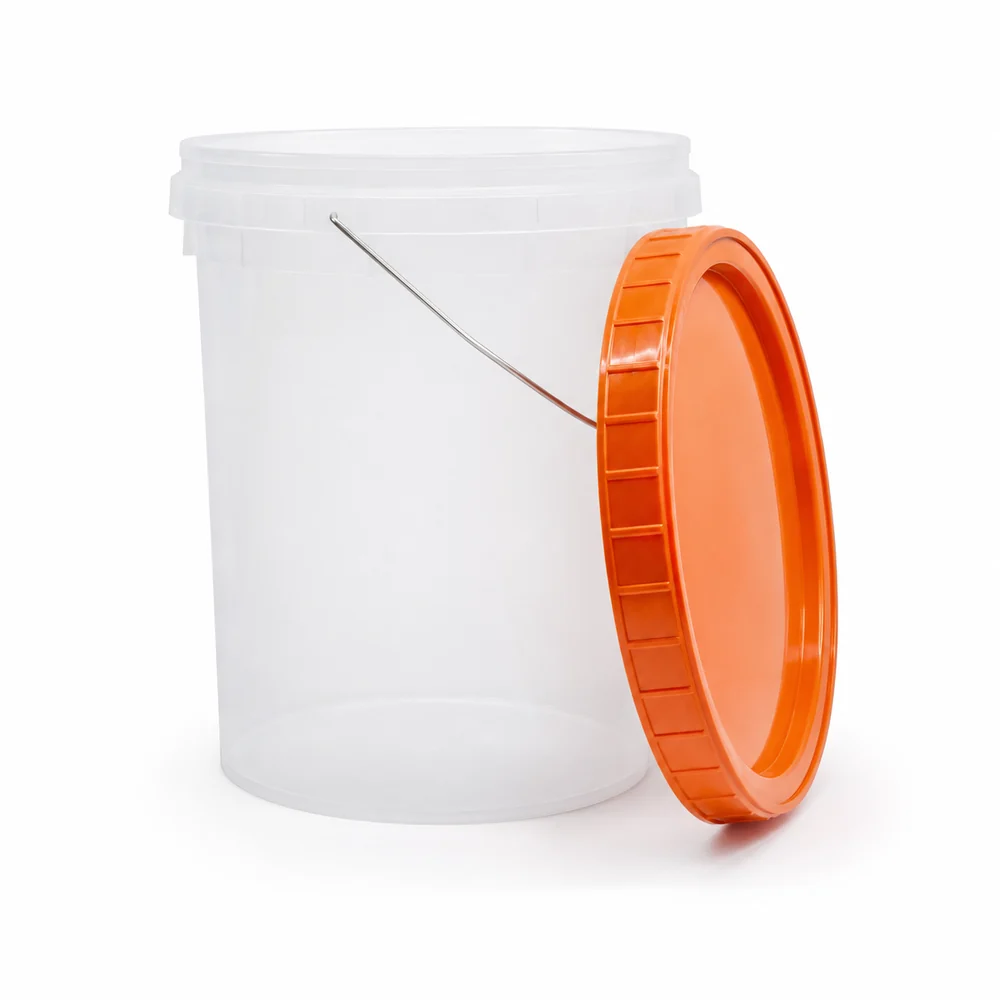
A snap-on lid is a single-use seal in practice. Where the end user opens and recloses, the screw format reseals without a lid tool and without deforming the rim.
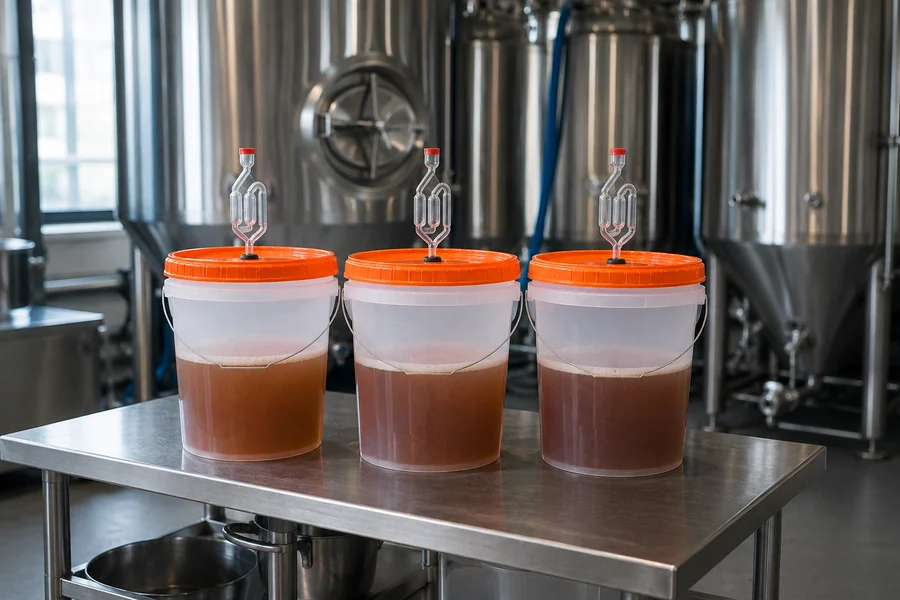
The 30L carries a grommet seat for an airlock and a taller headspace, which is the difference between a food pail and a fermenter.
The 7.5L and 15L ovals sit closer to the leg when carried and fit a narrower shelf. The same reason a jerry can is not round.
The body is pressed from cold-rolled steel to the pattern, seam-welded, then finished as set out in the specification above: internal coating, galvanising or powder coat according to what the can carries. Pressing runs across our Vietnam and China plants under one specification managed from Singapore, so the drawing and closure stay identical whichever plant fills the order.
Every can is checked before it leaves the plant:
The regimes that apply to this type of container in each market we ship to, with the detail behind each one a click away. This is what the market asks for; what this particular design already holds is in the specification above.
Orientation for specification, not legal advice, and not a statement that this design holds a given approval. Requirements turn on the exact design, contents and destination, and they change. Tell us the market at enquiry and we confirm what applies to your specification, what we hold and what we would need to obtain.
Every market has a 20 litre pail geometry its distributors already stock, and they are not interchangeable. Australia style, USA style 1 and USA style 2 hold similar volumes in different bodies, and lids do not cross over.
Tell us the destination market and, if you can, the pail your distributor stocks today. We match the format rather than the litre figure, which is the part that goes wrong when a range is specified from a catalogue.
Home and craft brewing. It carries a grommet in the lid for an airlock, so the vessel vents carbon dioxide without letting air back in. It is the same polypropylene body as the rest of the line.
It is built for it, but the food-contact documentation is specified per build. Ask for the Declaration of Compliance covering your market before you sell into a food or beverage channel.
A screw lid reopens and reseals cleanly over and over, which suits a product the end user works out of for weeks. A snap-on lid is faster on the filling line and takes a tamper band. The choice follows the use, not the price.
Carrying and pouring by hand. The 7.5 and 15 litre ovals sit closer to the leg than a round pail of the same volume, which is why they show up in janitorial and garden channels rather than on pallets.
It is a distinct format rather than the same body with a different label, built for lubricant and motor oil filling. Tell us the viscosity and the fill temperature and we will confirm the format and the wall.
Yes, and most buyers do, because the point of this line is covering several markets from one supplier. Each format has its own tooling, so the minimum applies per format rather than to the order as a whole.
Not as standard. The specialty line is built as packaging for non-hazardous contents. Where your contents are dangerous goods, tell us and we quote a UN-rated build, which is certified per design type.
Quoted per format against your specification. Production is approximately one month, with samples in 7 to 15 days, confirmed at quotation.
Injection-moulded polypropylene pail in eighteen sizes from 2.5 to 20 litres, with tamper-evident lid, plastic or steel handle and in-mould labelling.
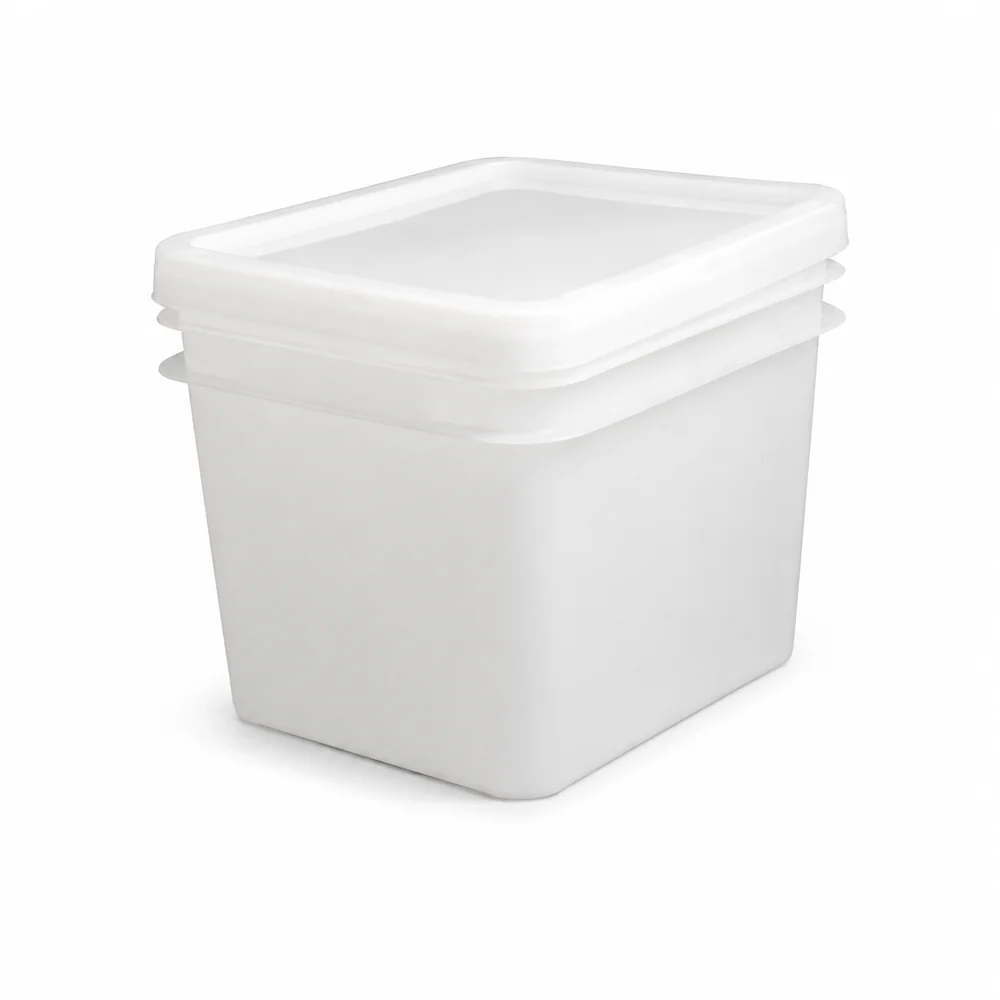
Square and rectangular polypropylene pails from 3.7 to 32.44 litres. Flat faces for full-bleed labelling and a footprint that squares off on a pallet.
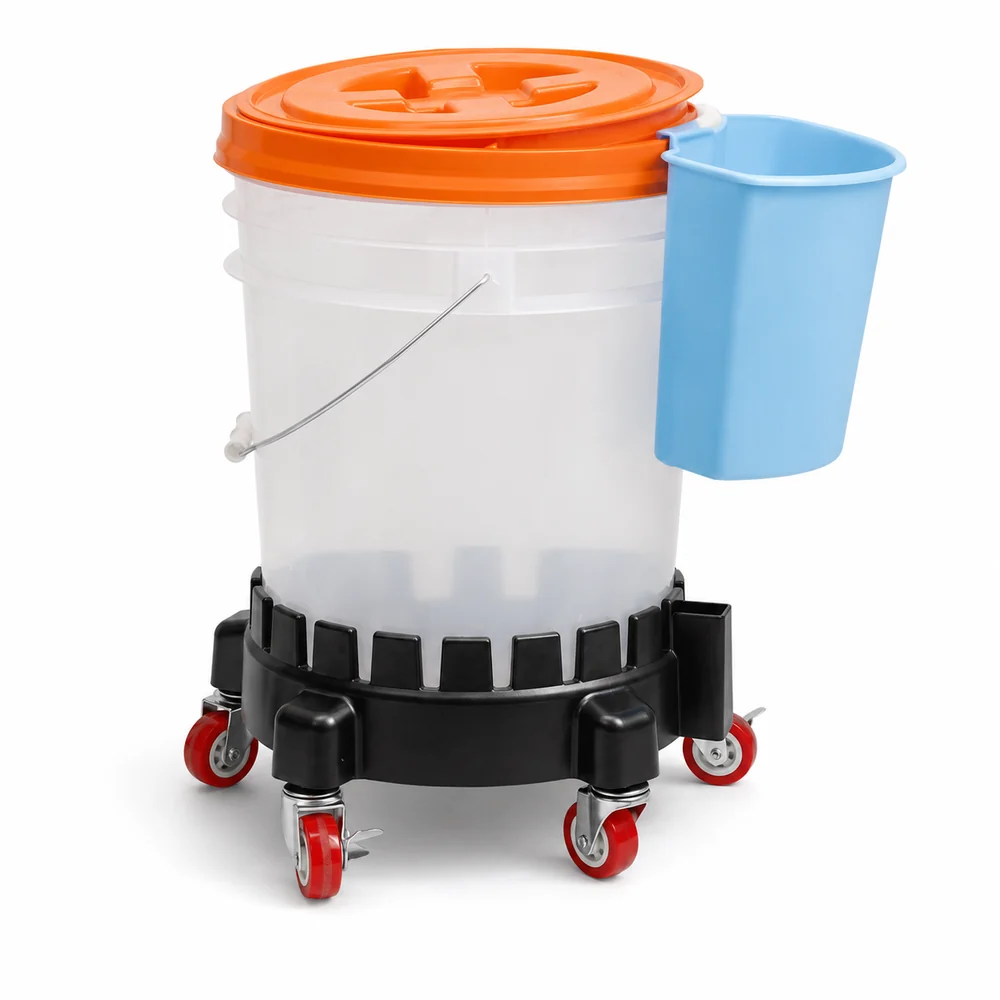
20 litre detailing bucket with screw lid, grit filter, five-castor dolly and wash caddy. Sold as a system or as components.
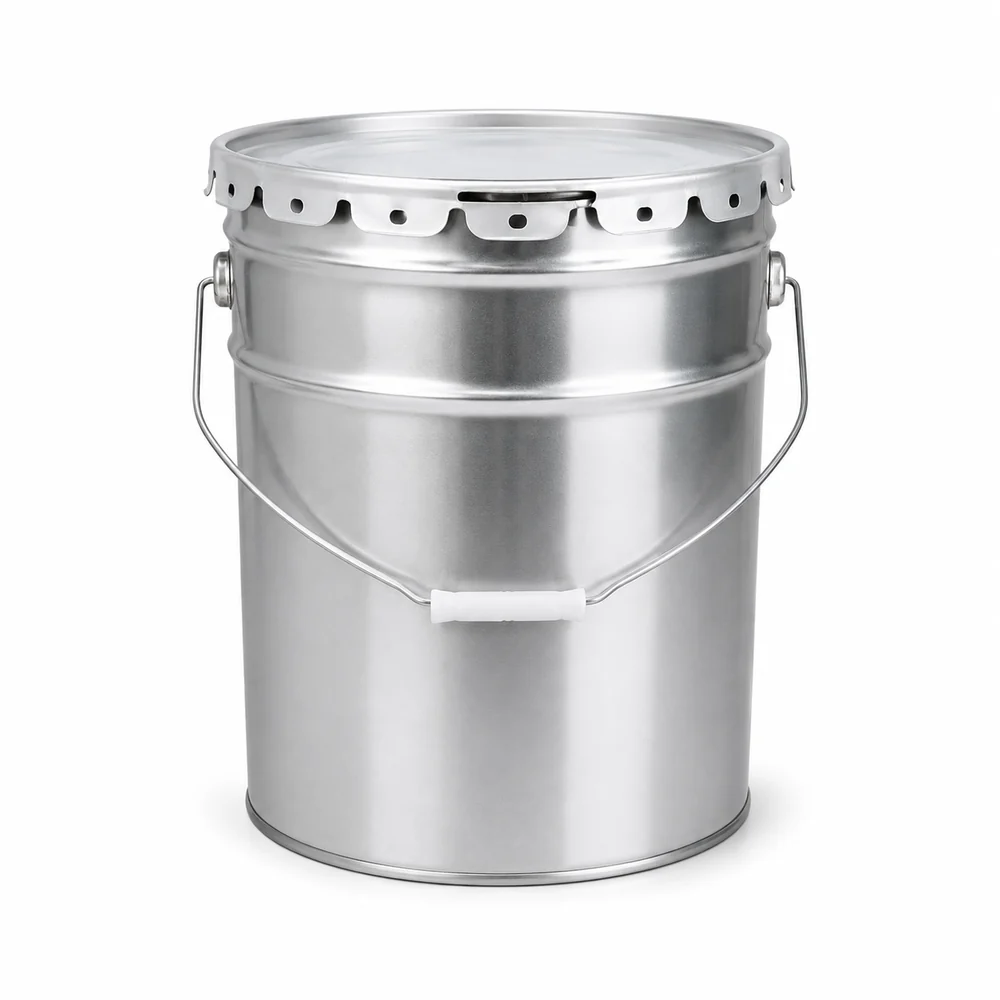
Tinplate steel open-head pail in seventeen sizes from 4 to 35 litres, with a flower lid for a permanent seal or an iron hoop lever ring for reusable access.
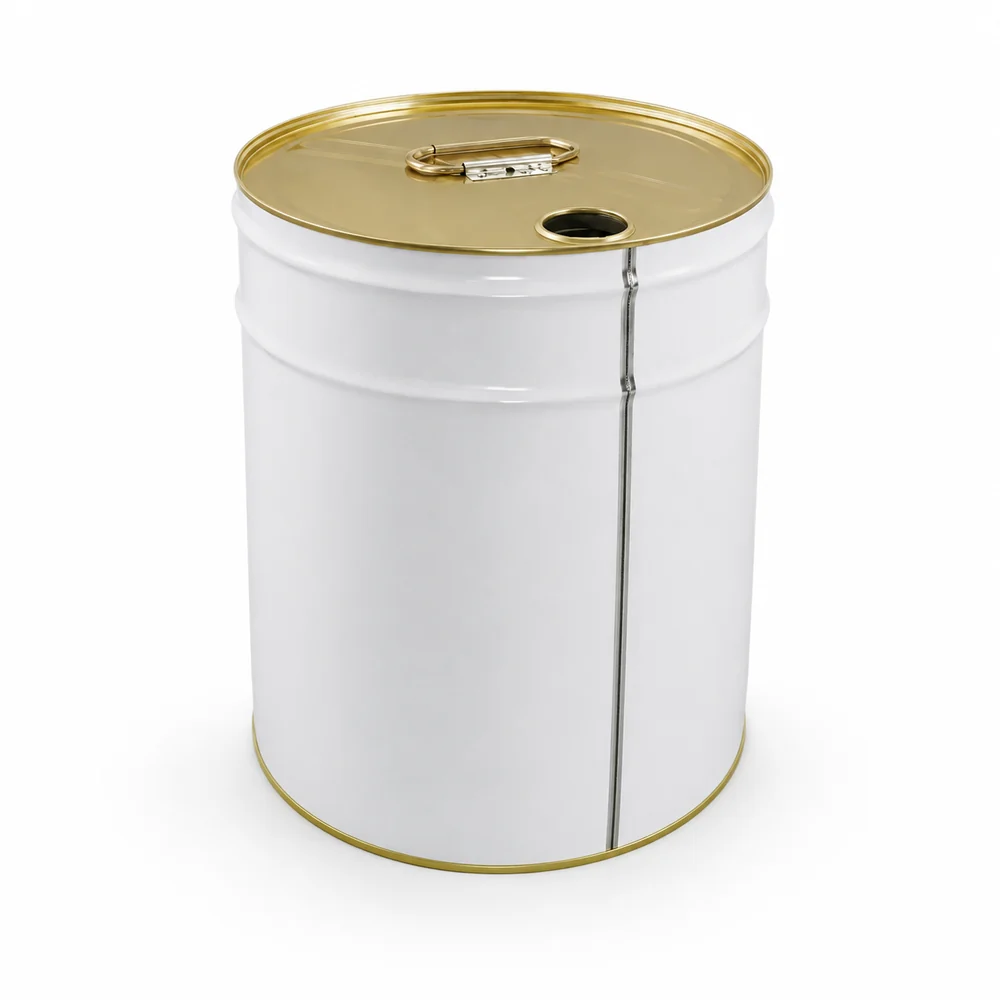
Tight-head and open-head round tinplate buckets from 5 to 25 litres, with precision-rolled seams specified against permeation.
Tell us your destination market, target volumes and whether you need private labelling.