
EU GPSR: the responsible person a non-EU supplier needs
A consumer product reaches the EU market only with an EU-established operator accountable for it. Who that is in a container supply chain.
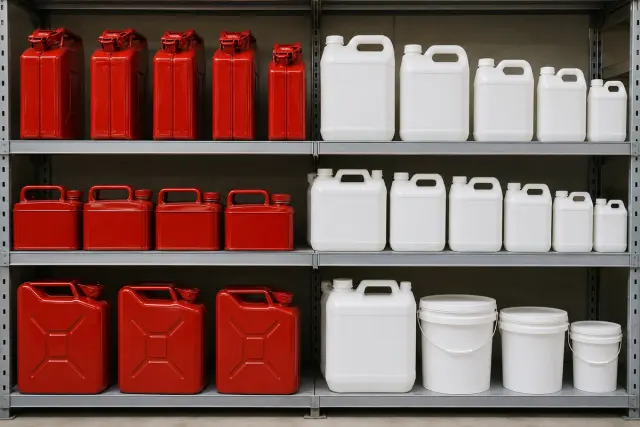
Since December 2024, a consumer product may be placed on the EU market only if there is an EU-established economic operator responsible for it. For a manufacturer outside the EU that is not a formality to add later. Without one, the product cannot lawfully be sold, and marketplaces enforce it before any authority does.
Quick answer: Does a non-EU manufacturer need an EU responsible person?
Yes, for consumer products. Since 13 December 2024, under Regulation (EU) 2023/988, a consumer product may reach the EU market only if an EU-established economic operator is responsible for it. The operator's contact details go on the product or packaging, the parcel or an accompanying document. Selling direct, a manufacturer appoints an EU authorised representative.
What GPSR requires
Regulation (EU) 2023/988, the General Product Safety Regulation, has applied since 13 December 2024. It replaces the old general product safety directive and covers consumer products that no more specific EU legislation already governs, which is where most containers sold to end users sit.
The obligation that catches non-EU manufacturers is the responsible person: an economic operator established in the EU, appointed to carry defined product-safety duties.
- Named as the contact point for market surveillance authorities
- Holding access to the technical documentation, and able to supply it on request
- Checking compliance and keeping documented evidence of having done so
- Cooperating with market surveillance authorities on any corrective action
Their contact details must appear on the product or its packaging, on the parcel, or in an accompanying document. This is the part that shows up as a listing suspension, because marketplaces check for it.
Of those four places, the product or its packaging is the one worth choosing, because it travels with the goods. Details in an accompanying document depend on the document staying with the consignment, and details on a parcel disappear the moment a distributor re-boxes. Building the responsible person's details into the in-line marking or the label artwork puts them where nobody can separate them from the can.
GPSR regulations overview: what changed from the 2001 directive
GPSR is the General Product Safety Regulation, Regulation (EU) 2023/988 of 10 May 2023. It entered into force on 12 June 2023 and has applied since 13 December 2024, when Article 50 repealed the General Product Safety Directive 2001/95/EC. The core rule carried over from Article 3(1) of the directive: only safe products may be placed on the market (Article 5). The duties that prove it are new.
| Topic | Directive 2001/95/EC | Regulation (EU) 2023/988 |
|---|---|---|
| Legal form | Directive, written into national law (the UK’s 2005 Regulations) | Regulation, binding in every member state as written (Article 52) |
| Maker’s details on the product | Producer identity and product reference or batch, as an example measure (Article 5(1)) | Name, trade name or trademark, postal and electronic address, and a type, batch or serial number (Article 9(5) and (6)) |
| Risk file | No technical documentation duty | Internal risk analysis and technical documentation before sale, kept 10 years (Article 9(2) and (3)) |
| Operator in the EU | For a maker outside the EU, its representative or the importer counted as the producer (Article 2(e)) | No sale unless an EU-established operator is responsible and named on or with the product (Article 16) |
| Online offers | No listing content set | Maker, responsible person, picture, type and warnings (Article 19) |
| Reporting | Inform the authorities of a product posing a risk (Article 5(3)) | Safety Business Gateway for dangerous products (Article 9(8)) and serious accidents (Article 20) |
The scope test did not move. Article 3(1) defines a product as any item supplied or made available “which is intended for consumers or is likely, under reasonably foreseeable conditions, to be used by consumers even if not intended for them”. That is the test Article 2(a) of the directive used. Article 2(1) applies the regulation only where no other EU law with the same objective covers the product’s safety, and then only to the risks that law leaves out. Article 2(2) lists the exclusions, among them food, feed and medicines; containers are not on the list.
So an industrial container sits outside GPSR only when it is neither sold to consumers nor likely to reach them. The UK’s Office for Product Safety and Standards (OPSS) reads the same text for Northern Ireland this way: packaging used to transport and deliver a product to a consumer is exempt. So is packaging sold business to business, while packaging sold to consumers for their own use is in scope. On that reading a pail sold empty to a paint filler is a business sale, while a jerry can sold empty through a hardware shop is a consumer product.
Who actually holds the role in a container supply chain
Which company holds the role depends on how the goods reach the consumer, and getting this wrong is the usual failure.
The failure is usually a gap rather than a mistake: everybody in the chain assumes somebody else holds the role, and nobody is named on the pack. That is also why it surfaces as a listing suspension rather than as an enforcement action, because a marketplace can check for the details automatically and an authority cannot. Settle who holds it in writing before the first shipment, and put the name on the artwork rather than on a label applied later.
| How you sell | Who is normally the responsible person |
|---|---|
| You import into the EU and resell under your own brand | You. Importing under your brand makes you the manufacturer for these purposes |
| You import and resell the manufacturer’s brand | You, as the EU importer, unless an authorised representative is appointed |
| A non-EU manufacturer sells direct to EU consumers | An appointed EU authorised representative or fulfilment service provider |
| Business-to-business sale, never reaching a consumer | GPSR is aimed at consumer products; check whether your channel is genuinely B2B throughout |
| B2B sale of a product consumers also buy | Treat it as in scope. The test is foreseeable use, not intended channel |
What it does not replace
GPSR sits alongside everything else. A fuel container still needs UN approval to move as dangerous goods, still meets the destination market’s own container rules, and still answers the packaging and EPR regime. GPSR asks a different question: is there an accountable operator inside the EU, and is the product safe for a consumer to use.
That second half is easy to lose behind the first. The responsible person is the visible obligation and the safety requirement is the substantive one. Appointing somebody does not make an unsafe product sellable, and a safe product is still unsellable without the appointment. Both have to hold, and they are satisfied by different work: one by a contract, the other by a risk assessment and a technical file.
The B2B carve-out in the table above is narrower than most suppliers assume. GPSR applies to products intended for consumers or likely to be used by consumers under reasonably foreseeable conditions, which explicitly reaches goods designed for professional use that subsequently reach the consumer market. A jerry can is close to the centre of that description: the same 20-litre steel can sits on a contractor's truck and on a hardware shelf, and the design does not change between them.
So the safer default for a container is to assume scope rather than to argue it. Preparing a technical file, a risk assessment and traceable batch marking for a product that turns out to be exempt costs some documentation work. Discovering the requirement after a marketplace suspends a listing costs the listing, the stock position and the selling season.
What to have ready
- The appointed responsible person, named, with contact details on pack or in the documentation
- Technical documentation for the product, accessible to them
- A risk assessment appropriate to the product and its foreseeable use
- Traceability: batch or model identification that lets a specific run be found
- Clear warnings and instructions in the language of the member state where it is sold
- For an online listing: the manufacturer's name and contact, the responsible person's details, product identifiers and any warnings, visible before purchase
- A route to notify an accident. GPSR requires a manufacturer aware of an accident caused by its product to report it through the EU Safety Business Gateway
- A recall procedure that can reach affected buyers directly, offering a choice of at least two remedies from repair, replacement or refund
GPSR labelling requirements: what goes on the can, the label and the listing
A consumer container placed on the EU market carries five kinds of information: an identifier, the manufacturer, the importer, the responsible person and the safety information, each with its own rule on where it may go.
| What | Whose duty | Where it may go |
|---|---|---|
| Type, batch or serial number, easily visible and legible | Manufacturer, Article 9(5) | On the product; packaging or an accompanying document only where its size or nature does not allow it |
| Name, registered trade name or trademark, postal and electronic address | Manufacturer, Article 9(6) | On the product; packaging or document only where that is not possible |
| The same details for the importer | Importer, Article 11(3) | As above, without covering the manufacturer’s label |
| Name and contact details, including postal and electronic address | Responsible person, Article 16(3) | Product, packaging, parcel or accompanying document |
| Instructions and safety information | Manufacturer and importer, Articles 9(7) and 11(4) | With the product, in a language the member state decides its consumers understand |
The Commission’s guidelines (Notice C/2025/6233) say that in principle only the size of a product, not its looks, justifies moving these details off it. A 20 L can has the room, so plan them into the embossing, the print or the label artwork. A QR code may add the same information digitally (Article 21) but never replaces the printed details.
An online offer must show the manufacturer, the responsible person when the manufacturer is outside the EU, a picture, the type and any warnings (Article 19). The importer’s details are not on that list.
For a container maker outside the EU, the work runs in this order:
- Settle scope. Decide from Article 3(1) whether consumers will or may use the can.
- Build the technical file to Article 9(2): a description, the characteristics relevant to safety and, where the risks call for it, how each risk is removed or reduced, test results and the standards applied. Keep it current for 10 years (Article 9(3)); the importer keeps a copy as long (Article 11(6)).
- Keep series production in line with the file (Article 9(4)).
- Mark and label the five items above, with the warnings translated for each target market.
- Open a complaints channel. A public telephone number, email address or web page for complaints and accidents (Article 9(11)), plus a register of complaints, recalls and corrective action (Article 9(12)).
- Name the EU operator. Agree in writing which EU importer, authorised representative or fulfilment service provider holds the responsible person role, and give it access to the file.
Ordering cans under your own brand makes you the manufacturer for all of this (see private-label and OEM manufacturing). The UN mark for dangerous goods is a separate requirement, and the jerry can buyer checklist lists what to ask a supplier for.
GPSR in the UK: the 2005 Regulations in Great Britain, EU GPSR in Northern Ireland
Great Britain still applies the General Product Safety Regulations 2005 (SI 2005/1803), in force since 1 October 2005. Northern Ireland has applied Regulation (EU) 2023/988 since 13 December 2024 under the Windsor Framework; OPSS says it superseded the 2005 Regulations there.
| Question | Great Britain | Northern Ireland |
|---|---|---|
| Law | General Product Safety Regulations 2005 | Regulation (EU) 2023/988 |
| Who answers for a maker based abroad | The “producer”: its UK representative or, failing one, the UK business that places the product on the market (regulation 2) | A responsible economic operator established in Northern Ireland or the EU (Article 16) |
| On the product or packaging | The producer’s name and address and the product reference or batch, except where that is not reasonable (regulation 7(4)) | The five items in the labelling table above |
| Reporting a dangerous product | Written notice to the enforcement authority, normally local trading standards | The Safety Business Gateway (Articles 9(8) and 20) |
OPSS lets a GB importer that cannot yet mark each item put its address on the shipping documents, the invoice or the outer shipper instead, but only until 31 December 2027.
The Product Regulation and Metrology Act 2025, in force since Royal Assent on 21 July 2025 (section 15), lets ministers make new product rules (section 1). On 28 October 2026 legislation.gov.uk lists no amendment to the 2005 Regulations under it.
A petrol can sold in Great Britain also meets the UK petrol container rules and UK packaging EPR, the EU has its own PPWR and EPR duties; the guide to packaging regulations by country sets them side by side.
Where we stand on this
The responsible person must be established in the EU, so no manufacturer outside the Union can be one, us included. That follows from the regulation, and any overseas supplier claiming to act as your responsible person has misread it.
We make the role straightforward to fill. The person appointed needs access to technical documentation and has to be able to evidence compliance checks. We supply that file:
- Full specification and material identification for the design
- Test and inspection reports where they apply to your product
- UN certification for dangerous-goods designs, with the certificate number and the plant named on it
- ISO 9001, ISO 14001, ISO 45001, covering quality, environmental and occupational health and safety management
- Batch or run identification, so a specific production run is traceable
- Labelling built to carry your responsible person’s details, applied in line rather than as a sticker
That last one is why this belongs at enquiry rather than after. Contact details on pack means artwork, which means tooling and print, which is settled before production. Tell us who the responsible person will be and we build the labelling around them from the first run. If the role is not appointed yet, tell us that too. It has to be resolved before goods can lawfully be sold, and it is quicker to arrange than to unwind a suspended listing.
Where to start
| Your use case | Recommended can | Why this one |
|---|---|---|
| Consumer and retail fuel | 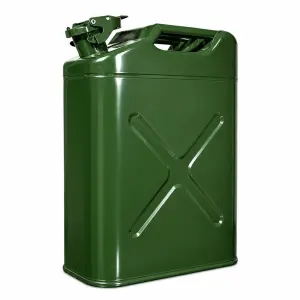 20L NATO Steel Fuel Can |
Where GPSR labelling lands hardest. |
| Consumer safety features |  Child-Resistant Closures |
A closure choice with a safety rationale behind it. |
| Consumer water storage |  20L Stainless Steel Water Can |
Retail channel, so consumer rules apply. |
| Accessories sold at retail | 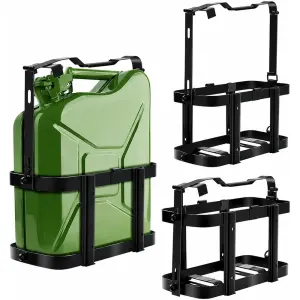 Jerry Can Holders & Mounts |
In scope too; the rules follow the channel. |
Common questions
What is a GPSR responsible person?
An economic operator established in the EU, which Article 16 requires before a consumer product can be placed on the market. It is the EU manufacturer, the importer, an authorised representative under written mandate, or a fulfilment service provider when none of the others is in the EU.
It makes the technical documentation available to authorities, supplies information on request, reports risks and accidents, cooperates on corrective action and regularly checks the product and its labelling.
Does a non-EU manufacturer need an EU responsible person?
Yes, for consumer products. Since 13 December 2024 a consumer product may be placed on the EU market only if an EU-established economic operator is responsible for it. Without one the product cannot lawfully be sold, and online marketplaces enforce this before any authority does.
Where must the responsible person contact details appear?
On the product or its packaging, on the parcel, or in an accompanying document. This is the requirement that most often surfaces as a marketplace listing suspension, because it is machine-checkable in a way the rest of the regulation is not.
Who is the responsible person when I import containers into the EU?
Normally you. Importing under your own brand makes you the manufacturer for these purposes; importing and reselling the maker brand makes you the EU importer carrying the role, unless an authorised representative is appointed. A non-EU manufacturer selling direct to consumers needs an appointed representative or fulfilment service provider.
Does GPSR replace UN packaging approval?
No. GPSR sits alongside the rest. A fuel container still needs UN approval to move as dangerous goods, still meets the destination market container rules and still answers the packaging and EPR regime. GPSR asks a different question: is there an accountable operator inside the EU, and is the product safe in consumer use.
Is there a GPSR certificate?
No. Regulation (EU) 2023/988 sets up no certificate, no conformity mark and no notified body for general consumer products. The manufacturer shows safety through its own internal risk analysis and technical documentation (Article 9(2)). A test report or a voluntary third-party scheme can support that file, and the Commission’s guidelines list such schemes among the evidence to weigh, but a document sold as a “GPSR certificate” has no legal status of its own.
Does GPSR require product testing?
GPSR sets no mandatory test for general consumer products. Article 9(2) asks for an internal risk analysis, and the technical documentation records the outcome of any tests where the risks call for them. A product that meets a European standard whose reference is published in the Official Journal is presumed safe for the risks that standard covers (Article 7(1)).
Where no such standard exists, the manufacturer shows by other means how each risk was removed or reduced.
What is the GPSR Verordnung?
It is the German name for the same law: Verordnung (EU) 2023/988 über die allgemeine Produktsicherheit. In Dutch it is Verordening (EU) 2023/988 inzake algemene productveiligheid. As a regulation it binds every member state in the same terms, published in each official EU language, so a German or Dutch buyer works to the same duties as everyone else. Each member state sets its own penalties for breaches (Article 44).
Do products placed on the market before 13 December 2024 need GPSR labels?
No. Article 51 lets products that conformed to Directive 2001/95/EC and were placed on the EU market before 13 December 2024 stay on sale. The Commission’s guidelines confirm that the new labelling and traceability details do not apply to them.
Placing on the market is judged unit by unit, so a can first supplied in the EU after that date needs the full GPSR marking, even if it was made earlier.
Where is the official GPSR text on EUR-Lex?
Regulation (EU) 2023/988 is in the Official Journal, L 135 of 23 May 2023, page 1, in every official EU language on EUR-Lex. The Commission’s guidelines for businesses followed as Commission Notice C/2025/6233 of 21 November 2025, with a checklist for each role and a model template for technical documentation. Only the regulation has legal force, as the guidelines themselves state.
What must a GPSR authorised representative mandate cover?
The mandate must be written, and Article 10(2) sets four minimum tasks. The first is giving a market surveillance authority, on a reasoned request, the information and documents that show the product is safe. The others are telling the manufacturer when it believes a product is dangerous, notifying action taken on risks through the Safety Business Gateway, and cooperating with national authorities on that action. The representative must be established in the EU and show the mandate to an authority on request.
Is a website enough as the GPSR electronic address?
No. The Commission’s guidelines read the electronic address in Articles 9(6), 11(3) and 16(3) as an email address or a dedicated section of a website through which consumers can contact the business directly. A website with no direct contact route does not qualify.
Where a single contact point differs from the main address, the manufacturer and the importer give its postal or electronic address as well.
Does GPSR apply to healthcare products?
Not to medicines: Article 2(2)(a) excludes medicinal products for human or veterinary use. Products already governed by EU safety law with the same objective come under GPSR only for the risks that law leaves out (Article 2(1)). For products under EU harmonisation legislation, most of the economic operator duties in Chapter III do not apply, though the rules on online offers and accident reporting still do.
Does GPSR apply to Northern Ireland?
Yes. Regulation (EU) 2023/988 has applied directly in Northern Ireland since 13 December 2024, when it replaced the General Product Safety Regulations 2005 there. Those 2005 Regulations continue to apply in Great Britain. OPSS guidance on GOV.UK sets out the duties of manufacturers and their authorised representatives, importers, distributors, fulfilment service providers and online marketplaces.
Does GPSR apply to food?
No. Article 2(2) of Regulation (EU) 2023/988 excludes food and feed, which have their own safety law. Containers for food are a different case: recital 11 keeps materials and articles intended to come into contact with food in scope for the risks that Regulation (EC) No 1935/2004 and other food law do not cover.
Food law deals with chemical and biological risks, so the physical safety of a food-grade bucket or water can sold to consumers falls under GPSR.
What does GPSR stand for?
GPSR stands for General Product Safety Regulation, Regulation (EU) 2023/988 of 10 May 2023. It has applied since 13 December 2024, when it repealed the General Product Safety Directive 2001/95/EC. It covers consumer products that no more specific EU law governs, which takes in most containers sold to end users, and it requires an operator established in the EU to be responsible for each product placed on the market.
References
The standards and regulations this page relies on, at their issuing body. Where a market rule is named here, check the current revision before you specify against it.
- Regulation (EU) 2023/988: General Product Safety Regulation
- European Commission: product safety and market surveillance
- Regulation (EU) 2025/40: Packaging and Packaging Waste (PPWR)
- ECHA: REACH regulation
- Commission Notice C/2025/6233: Guidelines on the application of the EU general product safety legislative framework by businesses, European Commission, Official Journal C series, 21 November 2025
- Directive 2001/95/EC of the European Parliament and of the Council of 3 December 2001 on general product safety, Articles 2, 3, 5 and 21 (repealed from 13 December 2024)
- The General Product Safety Regulations 2005 (SI 2005/1803), regulations 1, 2, 5 and 7, legislation.gov.uk
- General Product Safety Regulations 2005: Great Britain, Office for Product Safety and Standards guidance, updated 13 December 2024
- EU Regulation 2023/988 on General Product Safety: detailed guidance (Northern Ireland), Office for Product Safety and Standards, updated 4 November 2025
- Placing CE, or CE and UKNI marked products on the market in Northern Ireland (EU rules for manufactured goods under the Windsor Framework), Department for Business and Trade, updated 8 April 2026
- Product Regulation and Metrology Act 2025 (c. 20), sections 1 and 15, legislation.gov.uk
First published
Last reviewed by David Guru, Co-Founder & Business Development Director. How we review our guides Fortitude21 makes and sells liquid containers; our guides carry no affiliate links.
Talk to us about your import programme
Tell us the destination market, the products and your volumes. We come back with a specification sheet, the tariff code and a quotation.