
Who may still use red diesel in the UK, what changed on 1 April 2022, what HMRC checks, and how to buy, store and carry it.

Red diesel is gas oil sold at a rebated rate of fuel duty, dyed red and chemically marked so HMRC can detect it. Since 1 April 2022 it is legal only in ‘excepted machines’: farming, horticulture, fish farming and forestry, railways, boats other than pleasure craft, golf courses and amateur sports clubs, travelling fairs, and heat or power for non-commercial premises. Everything else needs white diesel.
Quick answer: Who can use red diesel in the UK?
Since 1 April 2022, only excepted machines. The list covers farm, forestry, horticulture and fish farming work, railways, golf courses and community amateur sports clubs, travelling fairs, boats other than pleasure craft, and heat and power for non-commercial premises. Construction plant and hired site generators run on white diesel, and misuse can bring seizure, back duty and a penalty.
Red diesel is rebated gas oil, also called marked diesel or marked gas oil (HMRC Excise Notice 75, 1.2). It is the same gas oil as white road diesel, taxed at a lower rate because of the machine that burns it and the work that machine does.
Regulation 3 of the Hydrocarbon Oil (Marking) Regulations 2002 sets the minimum doses. The red dye works out at 4 mg per litre; the chemical markers are what an HMRC officer tests for (Notice 75, 9.3).
| Added to red diesel | Type | Minimum per 1,000,000 L |
|---|---|---|
| Solvent red | Dye | 4 kg |
| Solvent orange | Dye | 0.4 kg |
| General marker | Chemical marker | 3 kg |
| Common UK fiscal marker | Chemical marker | 2.5 kg |
| Quinizarin | Chemical marker | 1.75 kg |
| n-butyl phenyl ether | Chemical marker | 9.5 kg (14.25 kg at most) |
Rebated kerosene carries coumarin in place of quinizarin and no dye, so it is not red. White diesel, also called clear or road diesel, carries neither dye nor markers.
Before April 2022 the rebate was withheld only from road vehicles, so construction plant, generators and commercial boilers ran on red diesel. Section 102 of the Finance Act 2021 and its Schedule 21 replaced that test from 1 April 2022 with a closed list of excepted machines, now Schedule 1A to the Hydrocarbon Oil Duties Act 1979. Anything off the list cannot use rebated fuel (Notice 75, 2.1).
HMRC’s 2021 policy paper gives the reason: red diesel was about 15% of UK diesel use and produced nearly 14 million tonnes of carbon dioxide a year. The change applies across the UK and still stands in October 2026; the April 2026 update of Notice 75 added firewood production and unsealed farm tracks to the accepted purposes. Hire firms must flush the tank when a machine moves from allowed to other work (7.3), and no dual-tank system may swap fuels (7.2).
A machine qualifies by its type and by what it is doing at the time (Notice 75, sections 2 to 6):
| Category | May use red diesel for | Notice 75 |
|---|---|---|
| Agricultural vehicle | Farming, horticulture, fish farming, forestry; cutting verges and hedges beside public roads; clearing snow, ice or floods | 3.2, 3.3 |
| Special vehicle: digger, mobile crane, works truck, road roller | Farming, horticulture, fish farming or forestry; golf course or sports club land | 3.4, 3.5 |
| Unlicensed or SORN vehicle | Farm or forestry use off public roads; golf; sports club; travelling fair land | 3.6, 3.7 |
| Rail vehicle | Propulsion on a railway with rails at least 35 cm apart; trams excluded | 3.9 |
| Vessel | Any use, except propelling a private pleasure craft | 2.3, 5 |
| Mowing machine | Farm land, golf course, sports club or fair land | 6 |
| Other machine or appliance | Farming, forestry, tree work, travelling fairs, golf, sports clubs, heat and power for non-commercial premises | 4 |
| Kerosene heating system | Heating any premises | 2.4 |
A sports club here means a registered community amateur sports club (7.11), and a golf course under construction does not count (7.9).
Yes, for purposes relating to agriculture, horticulture, fish farming or forestry. An agricultural vehicle must be a tractor, a single-seat off-road vehicle of no more than 1,000 kg, or a vehicle with built-in machinery for handling produce, such as a combine harvester. A vehicle licensed to use public roads only between two plots of the same occupier less than 1.5 km apart also qualifies (Notice 75, 3.2). A truck carrying farm produce does not qualify.
The Memorandum of Agreement in sections 12 to 14, agreed with the farming, forestry and horticulture bodies, draws the line. Accepted: moving your own inputs, produce and livestock, stock fencing, ditch clearing that benefits farmland, unsealed farm tracks, and cutting and drying harvested logs for firewood. Excluded: landscaping, flood defences, peat extraction, sports pitches and haulage. A contractor doing farm work may use red diesel travelling to the job; one hired only to move a crop is a haulier on white diesel. A farm vehicle may also do any other job on the land where it is kept (3.3). For cans and bowsers, see agricultural fuel storage.
Yes, where 75% or more of the heat or electricity goes to premises not used for commercial purposes, meaning trading for profit (Notice 75, 7.14 and 7.16). Homes count, including one someone works from, as do NHS hospitals, state schools, town halls, libraries, places of worship and charities carrying out their primary purpose (7.17).
A shop, office, hotel or warehouse with a gas oil boiler must buy white diesel. Kerosene is the exception: Schedule 1A, paragraph 8(1)(e), lets a heating system burning heavy oil other than gas oil heat any premises at the rebated rate (Notice 75, 2.4).
Generators follow the same tests. One qualifies working for farming or forestry, tree work (7.7), a golf course or sports club, a travelling fair, or non-commercial premises. A hired generator on a building site or at a commercial event runs on white diesel. A generator towed or carried by a vehicle counts as a separate machine if the vehicle’s engine does not drive it (section 4). See generator fuel storage.
Every vessel except a private pleasure craft may use red diesel for any purpose, as may machines permanently on board (Notice 75, section 5), so fishing boats, workboats and ferries qualify. A pleasure craft in Great Britain may fill with red diesel if the owner declares the share that drives the engine and the supplier charges full duty on it (Excise Notice 554). A heater or generator fed from a separate tank may use red diesel (Schedule 1A, 6(3)).
Northern Ireland has used the same excepted machine list since 1 April 2022, because Schedule 21 extends to the whole UK. Pleasure craft are the exception: since 1 October 2021 one with a single tank must fill with white diesel, and a registered supplier may discount the rebate on 40% of the fuel for non-propulsion use (Notice 554, 2.3). Northern Ireland also has its own oil storage rules. For cans on deck, see marine fuel containers.
Red diesel is legal to buy, hold and use in an excepted machine. Putting it in a car, van, lorry or any machine off the list is illegal, as is mixing it with white diesel (Notice 75, 10.1), removing a marker or adding anything to hide one (11.2). The last two are fuel laundering.
HMRC officers may sample fuel in any vehicle, machine, vessel or storage tank, enter premises other than a private home to test oil, ask for documents and require evidence that fuel is UK duty-paid (9.4). Refuse a sample and they may hold the vehicle until they get one (9.1). Section 11 lists what follows misuse:
A supplier with reason to believe the fuel will be misused is liable too (Hydrocarbon Oil Duties Act 1979, section 13(2)). Appeal a seizure in writing within one month (11.4).
Red and white diesel are the same gas oil with different duty, dye and markers. DfT Guidance Note 23 says red diesel is coloured for taxation purposes and is no separate type of diesel for carriage.
| Fuel | Duty | Dye and markers | Lawful use |
|---|---|---|---|
| White (road) diesel | Full rate | None | Any diesel engine |
| Red diesel | Rebated | Red and orange dyes, four markers | Excepted machines only |
| Kerosene | Nil for heating | Markers, no dye | Heating any premises; vehicles only with an HMRC permit |
Road diesel may hold at most 10 mg/kg of sulphur (retained Directive 98/70/EC, Annex II). Since 1 January 2011 gas oil for non-road machinery, tractors and recreational craft has had the same ceiling, with 20 mg/kg allowed at the point of sale (Article 4(2); SI 2010/3035, regulation 7). Machine-grade red diesel is ultra-low sulphur, though that rule fixes no cetane number or density and does not cover heating gas oil. For a car owner the larger risk is HMRC: seizure, back duty and a penalty.
‘Heating oil’ can mean kerosene or gas oil, so read the delivery note. In Ireland, Revenue dyes reduced-rate marked gas oil green, so ‘green diesel’ there means what red diesel means here.
Buy from a registered dealer in controlled oil (RDCO). Under HMRC Excise Notice 192 a dealer must be approved and must take reasonable steps to be satisfied that your use is entitled (2.6, 5.3). A genuine dealer prints its RDCO approval number on its invoices and states its HMRC approval on its website (5.3). A shop selling red diesel only in sealed containers of 20 litres or less is outside the scheme; filling small containers from bulk needs approval (3.1, 3.2).
Each supply comes with a delivery note saying the fuel is not for road use (5.6). For more than 100 litres from a yard, forecourt or marina, the dealer records your name, address, stated use and VAT number (5.7). Keep the notes: an officer can ask for the documents behind the fuel in a tank (Notice 75, 9.4).
No rule caps how much you may buy; the use and the storage rules set the limit. An essential user who cannot get white diesel, such as a GP or a water company, can apply for a rebated fuel licence and pay the duty difference (Notice 75, section 8).
Red diesel is oil, so it falls under the same pollution rules as any diesel. GOV.UK’s farm fuel guidance names red and white diesel as agricultural fuel oil.
| Where | Rule | Store caught when |
|---|---|---|
| England, business | Oil Storage (England) Regulations 2001 | A container over 200 L outside a building |
| England, farm | SSAFO Regulations 2010 | Over 1,500 L of fuel oil on the farm |
| Wales | Oil Storage (Wales) Regulations 2016 | A container over 200 L, farms included |
| Scotland | EASR 2018, rules 26 and 28 | Any container except a portable one under 200 L |
| Northern Ireland, business | Oil Storage Regulations (NI) 2010 | A container over 200 L |
| Northern Ireland, farm | Farm fuel oil regulations (NI) 2003 | Over 1,250 L on the farm |
Where a rule applies, the bund holds 110% of the largest container or 25% of the total, whichever is greater; drums may use a 25% drip tray, and a single IBC or bowser needs 110%. A bowser’s tap or valve must be locked shut when not in use (GOV.UK). See UK oil storage regulations and the bund capacity calculator.
Keep red and white diesel in separate, labelled tanks. Dealers must flush a tank switched from red to white and label each red diesel tank, drum and pump for excepted machines only (Notice 192, 5.4); the same label on a farm tank prevents a wrong fill. Beyond the UK, see secondary containment requirements.
A jerry can of red diesel is outside the UK petrol container limits. The Petroleum (Consolidation) Regulations 2014 define petrol by a flash point below 21 °C, while GB CLP lets diesel and gas oil flashing at 55–75 °C be regarded as Category 3 (UK petrol container rules). No UK law sets the can’s colour; mark the contents instead (jerry can colours).
On the road, red diesel is UN 1202, Class 3, packing group III. DfT Guidance Note 23 gives the ADR thresholds:
| Who carries | Limit | Conditions |
|---|---|---|
| Private individual | 60 L per container, 240 L per vehicle | Refillable containers closed against leaks (ADR 1.1.3.1(a)) |
| Worker, own use at work | 450 L per packaging, 1,000 L per vehicle | Ancillary to the main business (1.1.3.1) |
| Business | 1,000 L per vehicle | UN-approved packaging, 2 kg dry powder extinguisher, basic driver training (1.1.3.6) |
| Any carrier | Over 1,000 L | Full ADR and CDG 2009 |
A plastic jerrican carrying dangerous goods has a five-year life from manufacture (ADR 4.1.1.15). To choose between steel and HDPE, see steel vs HDPE fuel cans. Use the ADR 1,000-point calculator for a mixed load and read storing fuel safely for shelf life.
We make steel fuel cans and the spill containment under drums and IBCs. The 20 litre horizontal agricultural can, pressed from 0.8 mm galvanised steel, bolts flat to a tractor or implement frame. The 20 litre NATO-pattern steel can is UN-marked for carrying diesel by road and comes in olive drab or any RAL colour.
Our drum spill pallets have sumps of 42 to 488 litres and our IBC pallets 120 to 1,600 litres. For a UK oil store choose one without a drain plug, as the oil rules bar any drain opening in a bund. Tell us the fuel, the machines and the nation, and we will specify the can and the bund.
| Your use case | Recommended can | Why this one |
|---|---|---|
| Red diesel out to farm machinery | 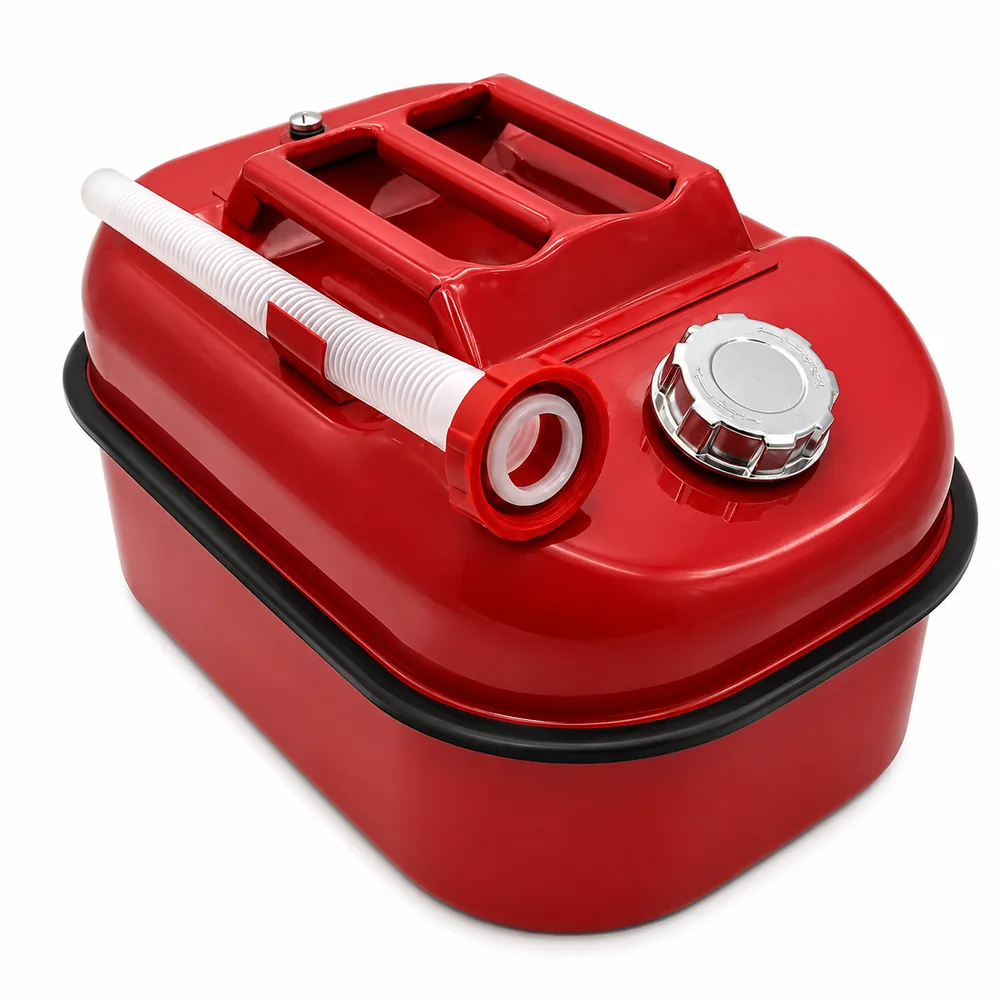 20L Horizontal Agricultural Fuel Can |
Galvanised 0.8 mm steel, built to bolt flat on a tractor or implement frame. |
| Carrying red diesel by road | 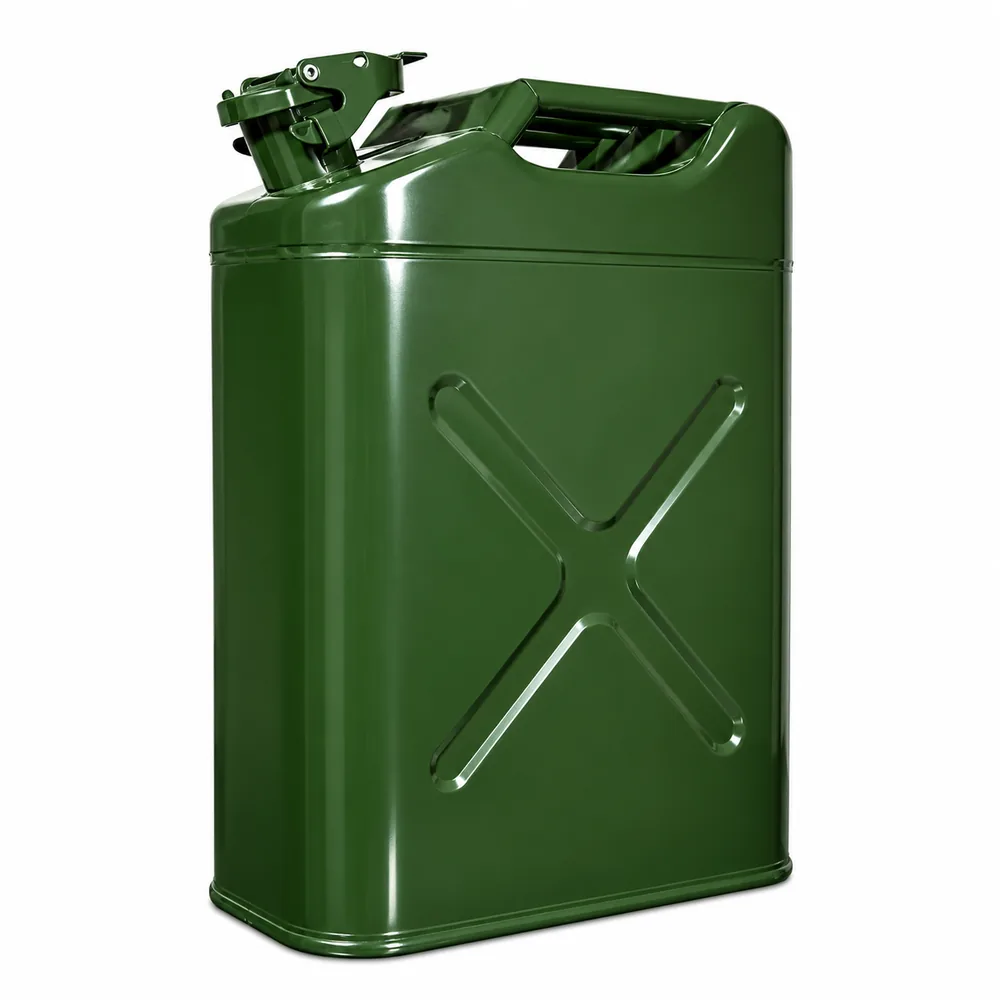 20L NATO Steel Fuel Can |
UN-marked steel for UN 1202 under ADR, with a vented cap, in olive drab or any RAL colour. |
| Refuelling generators and small plant | 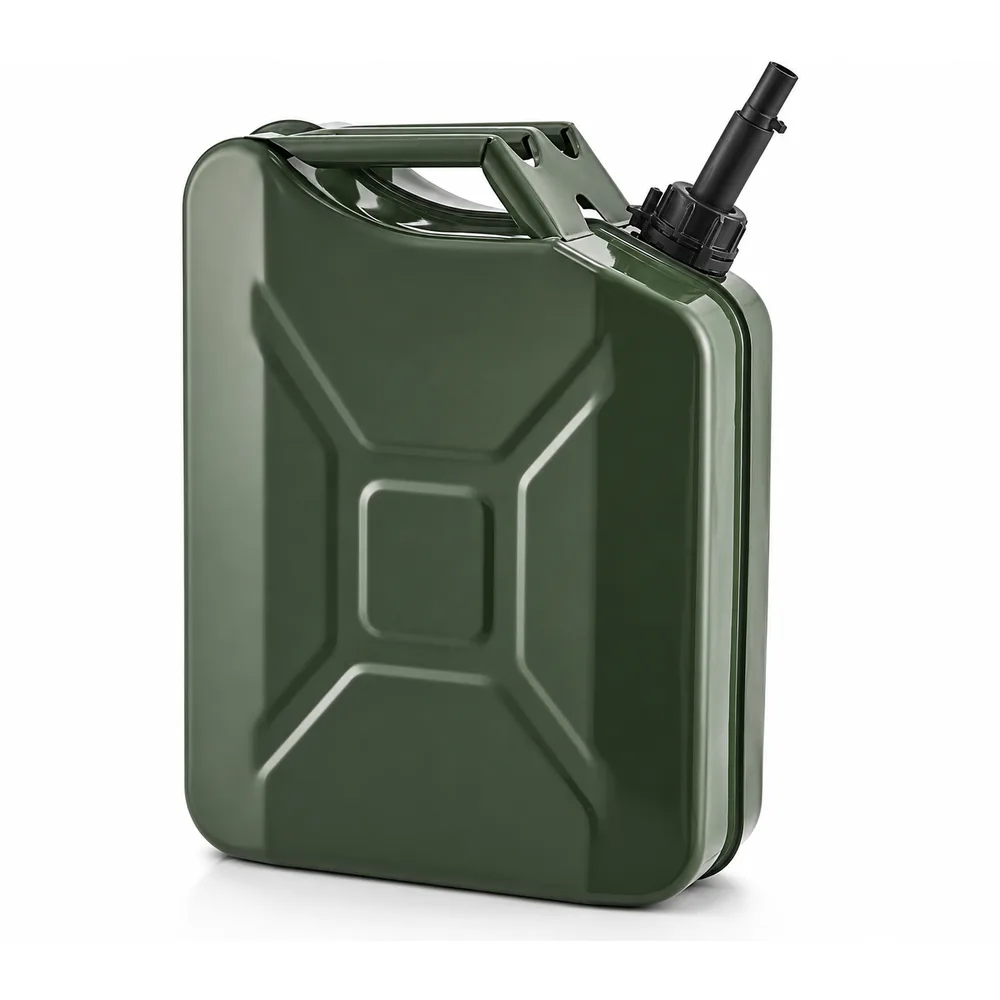 20L Steel Fuel Tank with Spout |
A flexible spout puts the fuel in the filler neck, with no funnel. |
| Drums of red diesel |  Drum Spill Pallets |
Sumps from 42 to 488 litres, for one to four drums of oil. |
| IBCs of red diesel | 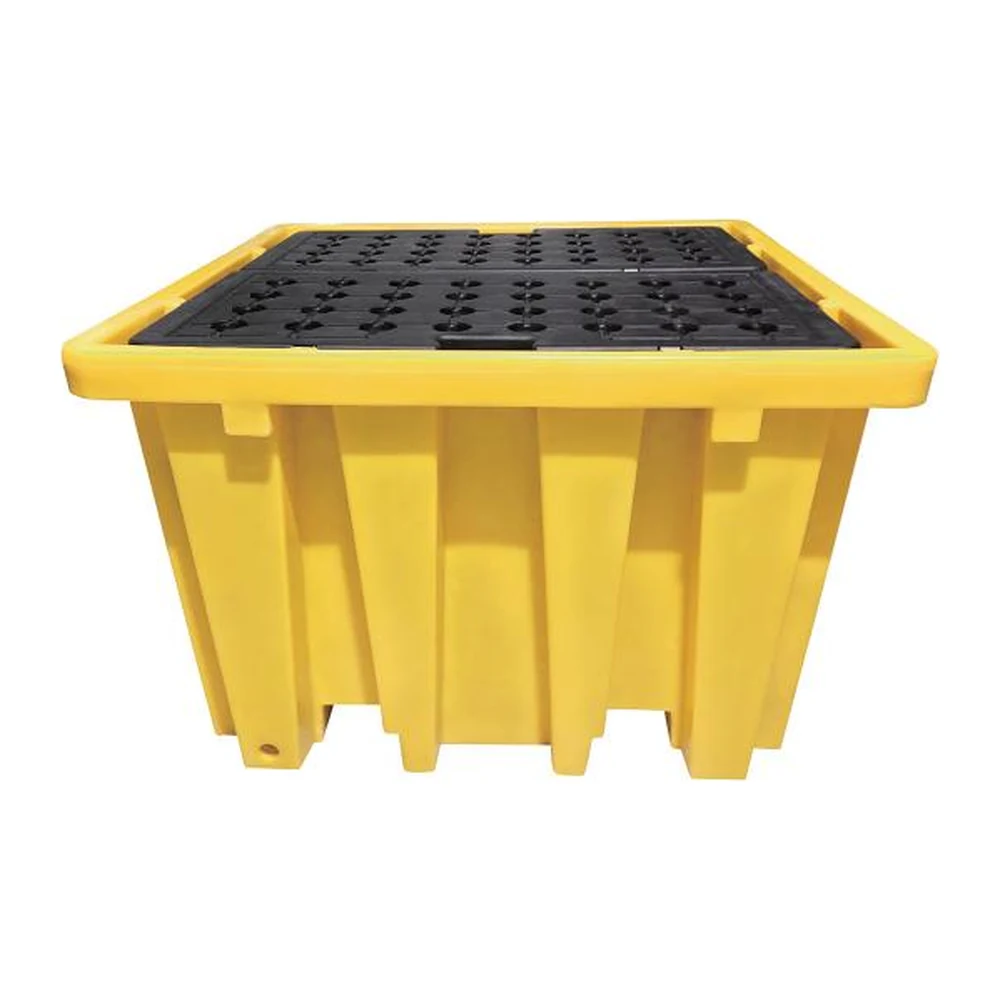 IBC & Multi-Container Spill Pallets |
Sumps from 120 to 1,600 litres; one 1,000 litre IBC needs 1,100. |
No. Excise Notice 75 (paragraph 10.1) bars mixing rebated and full-duty fuel in any tank, and mixing is one of the acts that attract a civil penalty (11.2). HMRC may seize the fuel and the vehicle or machine. A business that runs both fuels should keep separate, labelled tanks and cans, and flush any tank switched from red to white diesel until no marker remains.
Yes. Red diesel is gas oil, so it ages the way any diesel does. Water is the main threat: condensation in a part-full tank settles under the fuel and feeds the microbial growth that blocks filters. Keep tanks and cans full and sealed, drain any water bottom, and use the oldest stock first. Our storing fuel safely guide covers shelf life.
We do not quote fuel prices; they vary by supplier, volume and week. Red diesel costs less than white diesel because most of the duty is rebated, and HMRC publishes the current rate in its rates and allowances list under ‘Marked gas oil’ (Notice 75, 1.2). To compare a price per gallon, one imperial gallon is 4.546 litres and one US gallon 3.785 litres.
Yes. Registered dealers in controlled oil still sell red diesel in the UK for the machines and uses that kept the rebate on 1 April 2022: farming, forestry, fish farming, rail, boats other than pleasure craft, golf courses, amateur sports clubs, travelling fairs and non-commercial heating. HMRC last updated Excise Notice 75, which sets the rules, on 18 September 2026.
No. Construction lost the rebate on 1 April 2022, so diggers, cranes, dumpers and hired site generators run on white diesel. A special vehicle such as a digger may use red diesel only for farm, forestry or fish farming work, or on a golf course or sports club land (Notice 75, 3.5). Building sealed roads or buildings for a farm is not an accepted purpose either (section 12).
Only for farm, forestry or horticultural work, or on a golf course or amateur sports club land. A forklift is a works truck, which Notice 75 treats as a special vehicle (3.4), and special vehicles may use red diesel only for those purposes (3.5). A forklift in a warehouse, factory or builders’ merchant needs white diesel.
Yes, when it cuts and dries harvested timber logs to be supplied as firewood. HMRC added firewood production to the accepted forestry purposes in its April 2026 update of Notice 75 (section 13), and the vehicles and machines that move the logs to and from where they are cut, dried and stored qualify too. Further processing into products such as fencing or furniture does not.
Yes, for keeping an existing course and its facilities playable, including repair and renovation, and for heat and power to the clubhouse and changing rooms (Notice 75, 7.10). Driving ranges count. Building a new course, range or clubhouse does not, so that work runs on white diesel. A course vehicle may cross a road between two parts of the course by the shortest route (3.8).
Yes, as long as it never goes into the car’s tank. Under ADR 1.1.3.1(a), as DfT Guidance Note 23 explains, a private individual may carry diesel in refillable containers of up to 60 litres each and 240 litres per vehicle, closed against leaks. Keep the delivery note with it, because an HMRC officer can ask you to account for fuel in your possession (Notice 75, 9.4).
In Great Britain a narrowboat or other private pleasure craft may fill with red diesel if the owner declares the share that drives the engine and pays full duty on it (Excise Notice 554). A heater or generator fed from a tank separate from the engine supply may use red diesel, and HMRC’s 2021 policy paper kept it for non-propulsion use on permanently moored houseboats. In Northern Ireland a single-tank pleasure craft must use white diesel.
Yes, when the journey is part of farm, forestry or horticultural work: driving to and from a field or a contract job, carrying inputs, taking produce or livestock you raised to market, or cutting verges and clearing snow beside public roads (Notice 75, 3.3 and section 12). A tractor hired only to haul someone else’s crop or livestock is doing haulage and needs white diesel.
To HMRC, through its report tax fraud or avoidance service, online or by telephone. The A3 poster every red diesel dealer must display says the same (Excise Notice 192, 5.3). HMRC can test fuel in vehicles, machines, boats and storage tanks, and it seizes any vehicle or machine found running on rebated fuel it is not entitled to use (Notice 75, 11.1).
HMRC's Excise Notice 75 and DfT's Guidance Note 23 name no engine damage from red diesel itself. DfT says red diesel is coloured for taxation purposes rather than safety, and gas oil for machines has had the same 10 mg/kg sulphur ceiling as road diesel since 1 January 2011. Laundered fuel is the exception: HM Treasury and HMRC say the chemicals and acids used to strip the marker stay in the fuel and damage fuel pumps in diesel cars.
Yes. Red diesel carries 5% VAT when it goes to a home or to a charity for non-business use, and on any supply of 2,300 litres or less, whatever the use. A larger delivery to a business pays the 20% standard rate. HMRC counts all deliveries to one site on one day as one supply, and oil used as road fuel is standard-rated (VAT Notice 701/19, paragraphs 3.2, 6.1.1 and 6.2.2).
Yes, for machines. Gas oil sold for non-road machinery, farm and forestry tractors and recreational craft has had a 10 mg/kg sulphur ceiling since 1 January 2011, the same as road diesel (Directive 98/70/EC, Article 4(2) and Annex II). Contamination in the supply chain may take it to 20 mg/kg at the point of sale (SI 2010/3035, regulation 7). Heating gas oil sits outside that rule.
Red diesel is red. The Hydrocarbon Oil (Marking) Regulations 2002 require at least 4 mg of red dye and 0.4 mg of orange dye per litre of gas oil, and HMRC says the colour of the dye gives the fuel its name. Chemical markers go in as well, and HMRC officers test for them (Notice 75, 9.3). White diesel carries no dye or marker, and rebated kerosene carries a marker and no dye.
Yes, when green diesel means Irish marked gas oil. Both are rebated off-road diesel, marked so officers can detect misuse: red dye in the UK, green in Ireland (HM Treasury and HMRC, 2014). Irish Revenue taxes marked gas oil at a reduced rate and bans it from road vehicles. In the UK only the excepted machines listed in Notice 75 may use red diesel.
The standards and regulations this page relies on, at their issuing body. Where a market rule is named here, check the current revision before you specify against it.
Last reviewed by Clarence Cheang, Co-Founder.
Tell us your market, your fuel and your volumes. We come back with a specification sheet and a quotation.