
Which fuel can colours are set by law, which by an agency guideline and which by habit, for petrol, diesel, kerosene, water and AdBlue.
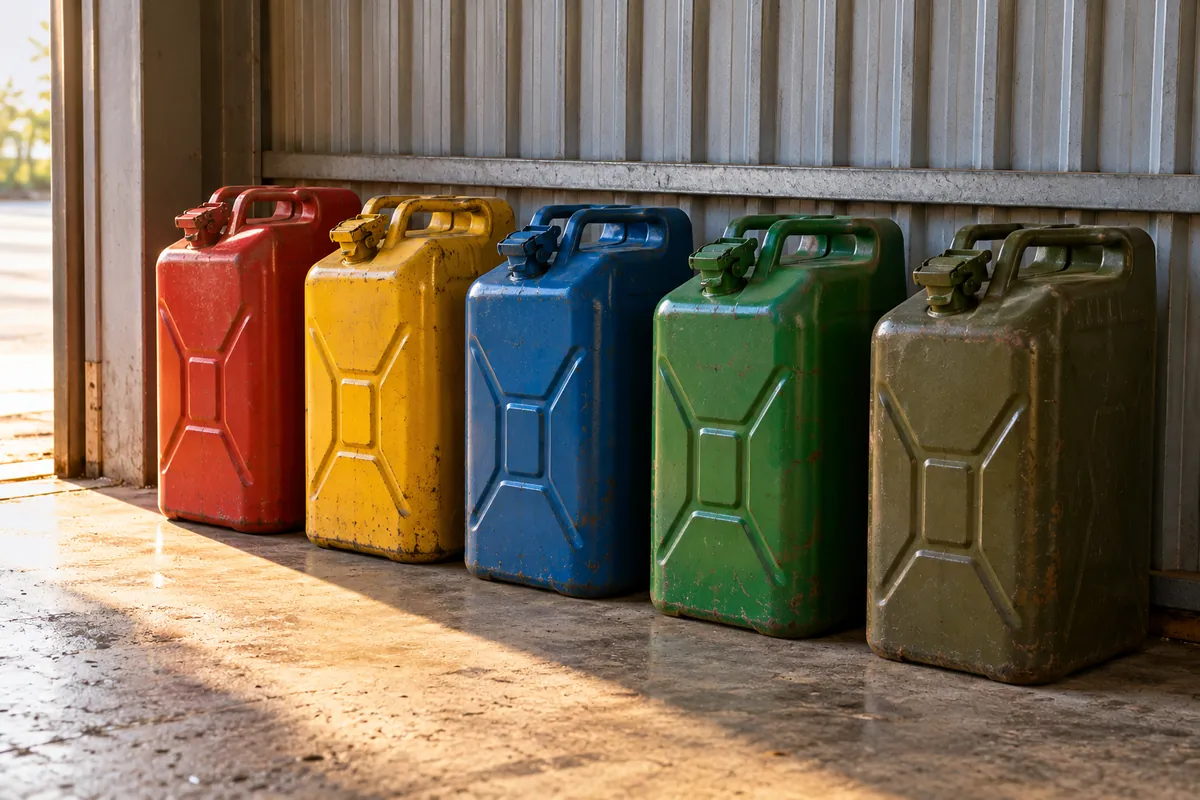
No UK law sets a jerry can colour: Great Britain requires the words PETROL and HIGHLY FLAMMABLE on a petrol can instead. Where a rule does fix colours, as in California, Illinois and Australia’s AFAC scheme, petrol is red, diesel a yellow and kerosene a blue. Military cans come in camouflage colours that tell you nothing about the fuel inside.
Quick answer: Is there a colour code for jerry cans?
Only where a local rule or scheme sets one. California's CP-501 and Australia's AFAC guideline make petrol red, diesel yellow and kerosene blue. Great Britain sets no colour; a petrol can there must carry the words PETROL and HIGHLY FLAMMABLE. US military cans come in desert sand or field drab, colours that say nothing about the fuel.
A can’s colour means what a local rule or scheme says it means, and nothing where there is none. Four kinds of source give colours a meaning: US state codes, California’s certification procedure for gas cans, Australia’s AFAC guideline for agencies, and military specifications that choose colours for camouflage. Great Britain regulates the words on a petrol can and leaves the colour to the maker.
| Where | Set by | Petrol | Diesel | Kerosene |
|---|---|---|---|---|
| Great Britain | Petroleum (Consolidation) Regulations 2014: words, no colour | Any colour, marked PETROL | Any colour | Any colour |
| California | CARB CP-501, section 2.2 | Red | Yellow | Blue |
| Illinois | 41 Ill. Adm. Code 174.410 | Red | Not red | Blue |
| Wisconsin | Wis. Stat. 168.11 | Bright red | Not red | Not red |
| US workplaces | OSHA 29 CFR 1910.144 | Red, with a yellow band or name | Not set | Not set |
| Australia | AFAC guideline, adopted by agencies | Red | Olive yellow | Powder blue |
| US military | A-A-59592A | Desert sand or field drab | The same | The same |
Red means petrol in each scheme that sets a fuel colour, and Illinois and Wisconsin go further and keep diesel and kerosene out of red cans. Water, AdBlue and most oils sit outside these schemes, so the colours you see on those cans are a maker’s or a buyer’s choice.
Great Britain has no colour code for jerry cans. The Petroleum (Consolidation) Regulations 2014, Schedule 3, paragraph 1(e), require a portable petrol container to be marked or labelled, legibly and indelibly. The marking is the words “PETROL” and “HIGHLY FLAMMABLE”, an appropriate hazard warning sign, the nominal capacity in litres, and the maker’s name and date of manufacture. Paragraph 1(a) of the same schedule caps the container at 10 litres in plastic and 20 litres in metal. Colour does not appear, and HSE’s guidance for container makers repeats the marking list without adding one.
The older Petroleum-Spirit (Plastic Containers) Regulations 1982 took the same line: words, a hazard sign, no colour. Northern Ireland still works from its 1929 and 1982 rules, with smaller limits in a domestic garage or within 6 metres of a building (two metal containers of up to 10 litres, or two approved plastic ones of up to 5 litres). HSENI’s guidance names no colour either. Diesel sits outside the petrol container rules, so a UK diesel can may be any colour. Our UK petrol container rules guide covers the capacity and storage thresholds in full.
“Red diesel” does not call for a red can. The name belongs to rebated gas oil, which carries chemical markers in the fuel (HMRC Excise Notice 75, section 9.3), and the notice says nothing about the container.
Yellow, where a rule sets one. California’s CP-501 makes certified diesel cans yellow, and AFAC uses olive yellow, listed as RAL 1020 by the ACT Rural Fire Service. The UK sets no colour for a diesel can. Two US states say instead what diesel must stay out of: Wisconsin bars kerosene, diesel and burner oil with a flash point of 100 °F (37.8 °C) or more from any visible container “in any manner colored red” (Wis. Stat. 168.11(3)). Illinois allows nothing but gasoline or benzol in a red container (41 Ill. Adm. Code 174.410(c)).
The reason is misfuelling: diesel in a petrol engine, or petrol in a diesel tank, means draining the tank, so keeping diesel out of red cans makes the wrong can harder to pick up. For a UK site with no rule to follow, yellow for diesel matches both published schemes, and the word DIESEL in letters a driver can read at arm’s length does more than the colour. Military fuel cans are the exception: one sand or drab can carries any service fuel, and the marking does the work.
Red is the danger colour in US workplace law, and that is where the petrol-can habit has its firmest footing. OSHA 29 CFR 1910.144(a)(1)(ii) requires safety cans and other portable containers of flammable liquids with a flash point at or below 80 °F (26.7 °C), shipping containers excluded, to be painted red. They must also carry a yellow band around the can or the name of the contents stencilled or painted on it in yellow. OSHA’s 1977 interpretation, now archived, read that band as one that goes all the way round.
Petrol flashes far below 80 °F, so a petrol can in a US workplace is red. Diesel and kerosene flash above the line and fall outside the rule. California, Illinois, New Jersey, Wisconsin and AFAC all give petrol red as well, which makes red the safest colour for petrol in any market. In Great Britain the colour carries no legal weight: a green or black petrol can is lawful if it carries the required words.
Yes, in some places it is the law. No federal rule sets the colour of a consumer gas can: the EPA labelling rule for portable fuel containers (40 CFR 59.615) asks for an emissions label and the month and year of manufacture, and names no colour. The colour rules come from California, from state fire codes and, for workplaces, from OSHA.
| Rule | Applies to | What it requires |
|---|---|---|
| CARB CP-501, section 2.2 | Gas cans certified for sale in California | Gasoline red, diesel yellow, kerosene blue, with the fuel’s name embossed or labelled in at least 34-point type |
| OSHA 29 CFR 1910.144(a)(1)(ii) | Workplace containers of liquids flashing at 80 °F or below | Red, with a yellow band or the contents named in yellow |
| 41 Ill. Adm. Code 174.410 | Portable containers in Illinois | Gasoline red, named in letters ½ inch high or more; kerosene blue; nothing else in red |
| Wis. Stat. 168.11 | Visible containers in Wisconsin | Fuel flashing below 100 °F in bright red and named; nothing flashing at 100 °F or above in red |
| N.J.A.C. 12:196-1.6(d) | New Jersey containers of 10 gallons or less | Red for gasoline or other flammable liquid, named in contrasting letters |
The colour also matters at the pump. New Jersey requires a sign in the dispensing area warning that filling a portable container is unlawful unless it is metal, or approved and red (N.J.A.C. 12:196-1.10). ASTM F852/F852M-22, the US specification for consumer fuel containers, lists colour among its requirements, but its published summary does not name the colours. Green for oil or two-stroke mix is a trade habit; we found no US rule that sets it.
California certifies the colour together with the self-closing spout and the emissions performance, so a red can alone is not a California gas can. Our EPA and CARB guide covers the rules that decide whether a can may be sold in the US.
Australian fire and land-management agencies colour-code fuel cans to a guideline from AFAC, the Australasian Fire and Emergency Service Authorities Council. It sets ten colours, all for fuels and oils. The ACT Rural Fire Service procedure SOP 1.2.5, which adopts the guideline, lists each with an AS 2700 colour and a RAL equivalent, and notes that the guideline replaced an earlier AFAC position, now withdrawn.
| Contents | AFAC colour | AS 2700 | RAL |
|---|---|---|---|
| Unleaded petrol | Signal red | R13 | 3000 |
| Ethanol blend | Orange | X15 | 2008 |
| Diesel | Olive yellow | Y41 | 1020 |
| Two-stroke 25:1 | Bottle green | G11 | 6009 |
| Two-stroke 50:1 | Pipeline grey | N43 | 7042 |
| Drip torch mix | Shamrock green | G23 | 6002 |
| Kerosene | Powder blue | B32 | 5024 |
| Chain and bar oil | Bright blue | B23 | 5005 |
| Oil | Black | N61 | 9005 |
| Biodiesel | Nut brown | X55 | 8011 |
The guideline binds the agencies that adopt it and sets no rule of sale. WorkSafe Victoria’s guidance on fuel jerricans treats a can carrying both the UN approval mark and the AS 2906 mark as compliant, and says nothing about colour. Agencies apply it in different ways: the ACT RFS labels its containers in the scheme colour, while others buy the can moulded or coated in it. AdBlue and water have no AFAC colour. Our AS/NZS 2906 and AFAC guide covers the product standard that sits beside the colours.
The RAL numbers are one agency’s listed equivalents, useful for ordering. Approve a physical sample against the buying agency’s own reference before production, because a near-miss on shade is a rejected delivery in that channel.
Military fuel cans are coloured for camouflage, so the colour tells you the theatre and nothing about the fuel. The US Commercial Item Description A-A-59592A (14 January 2009), for the 20-litre military fuel can, offers two types: Type 1 in desert sand (FED-STD-595 colour 30279) and Type 2 in field drab (colour 33105), both in a flat finish. No colour is tied to any one fuel.
The contents are told by words. The same document requires UN dangerous-goods marking plus the statements “FOR STORAGE OF FUELS ONLY” and “DO NOT USE FOR DRINKING WATER”. The olive drab on civilian NATO-pattern cans, our own standard finish included, is a look borrowed from service use and says nothing about what a can was tested to. The UN mark does that, and our UN packaging code decoder reads it part by part. See also the NATO jerry can pattern and genuine vs fake NATO cans.
No rule we found sets a colour for water cans in the UK, the US or Australia, and AFAC gives water no colour. Blue is the common civilian habit, and our own NATO-pattern steel water can ships in blue as standard. The habit has a catch: blue means kerosene in California’s CP-501, in the Illinois fire code and in AFAC’s powder blue, and AFAC’s bright blue means chain and bar oil.
So treat a blue water can as half the identification. Mark it WATER or DRINKING WATER, store it apart from kerosene, and never fill it from a can that has held fuel. The material and its food-contact documentation make a can safe for water, so read the water and food-grade range, stainless vs plastic water containers and when to retire a jerry can before you settle on a colour.
No rule we found sets the colour of an AdBlue or DEF can. ISO 22241 governs the fluid and the materials that may touch it, and the trade marks DEF with blue caps and labels, which is what our DEF can carries. Dedication matters more than colour: a can that has held diesel contaminates AdBlue. The DEF and AdBlue container guide covers materials and storage.
Oils and two-stroke mixes are where the schemes part company. AFAC gives them four colours: bottle green for 25:1 two-stroke, pipeline grey for 50:1, black for oil and bright blue for chain and bar oil. In the US, green for oil or mix is a trade habit with no rule behind it, and in the UK nothing applies. If your crews run saws and strimmers on two ratios, the AFAC split between bottle green and pipeline grey is the one published answer.
Choose one scheme, write it into the site procedure and buy to it. Where no rule binds you, red for petrol, yellow for diesel and blue for kerosene matches both AFAC and CP-501, so it reads the same to contractors from either market. Add the AFAC colours for oils and mixes if you need them, and keep blue off water cans where kerosene is on site. The jerry can sizing calculator tells you how many cans of each fuel the store needs.
Then make the words carry the weight. A colour fades in sun, gets painted over and means something else to a contractor from another country; a moulded, embossed or stencilled name stays put. Order colours by a RAL number or the scheme’s own code, with a physical sample approved before production. On steel that is a powder-coat specification. On HDPE it is a masterbatch set at moulding, so a colour change on plastic means a new production run. Our private-label and OEM guide covers artwork and minimums.
We make cans in the colours above to order. The 20-litre NATO steel fuel can is powder coated olive drab as standard or in any RAL colour you specify, coated inside for hydrocarbons and UN-marked: certified per design type, made under quality assurance the competent authority accepts. The NATO steel water can ships in blue, the stainless water can raw or powder coated, and the DEF can with a blue cap. HDPE cans come in natural, blue, black or your RAL reference.
Colour is a finish and carries no approval. We hold UN certification for our dangerous-goods designs, and our factories hold ISO 9001, 14001 and 45001. We hold no CARB or EPA certification, so a red can from us is not a California-certified gas can. We hold no AFAC listing or AS/NZS 2906 certification either. We can match an AFAC colour, and acceptance runs through the buying agency. Tell us the scheme, the fuels and the volumes, and we quote colour, marking and closure together.
| Your use case | Recommended can | Why this one |
|---|---|---|
| Petrol or diesel in your scheme colour | 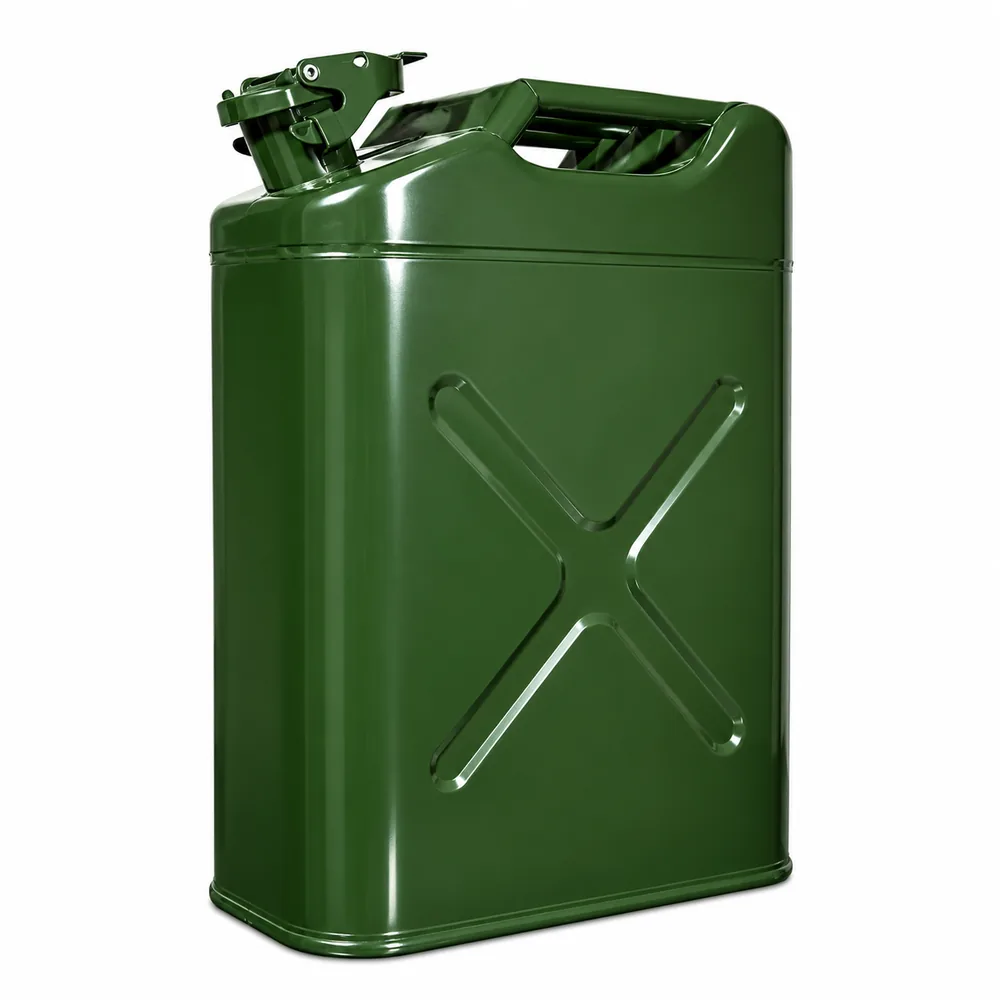 20L NATO Steel Fuel Can |
Olive drab as standard or any RAL colour; UN-marked steel, coated inside for hydrocarbons. |
| Water, in the blue civilian habit | 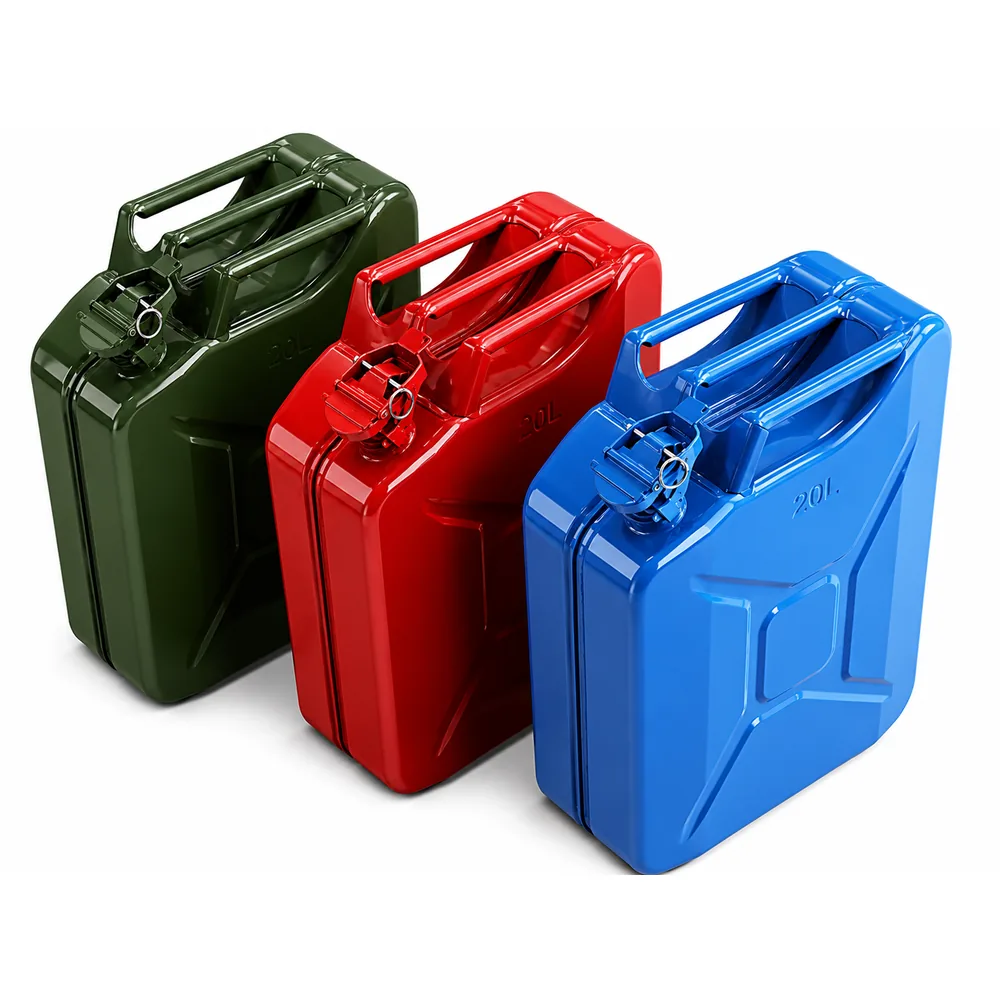 20L NATO Steel Water Can |
Blue as standard; mark it WATER wherever kerosene shares the store. |
| Drinking water that must never pass for fuel | 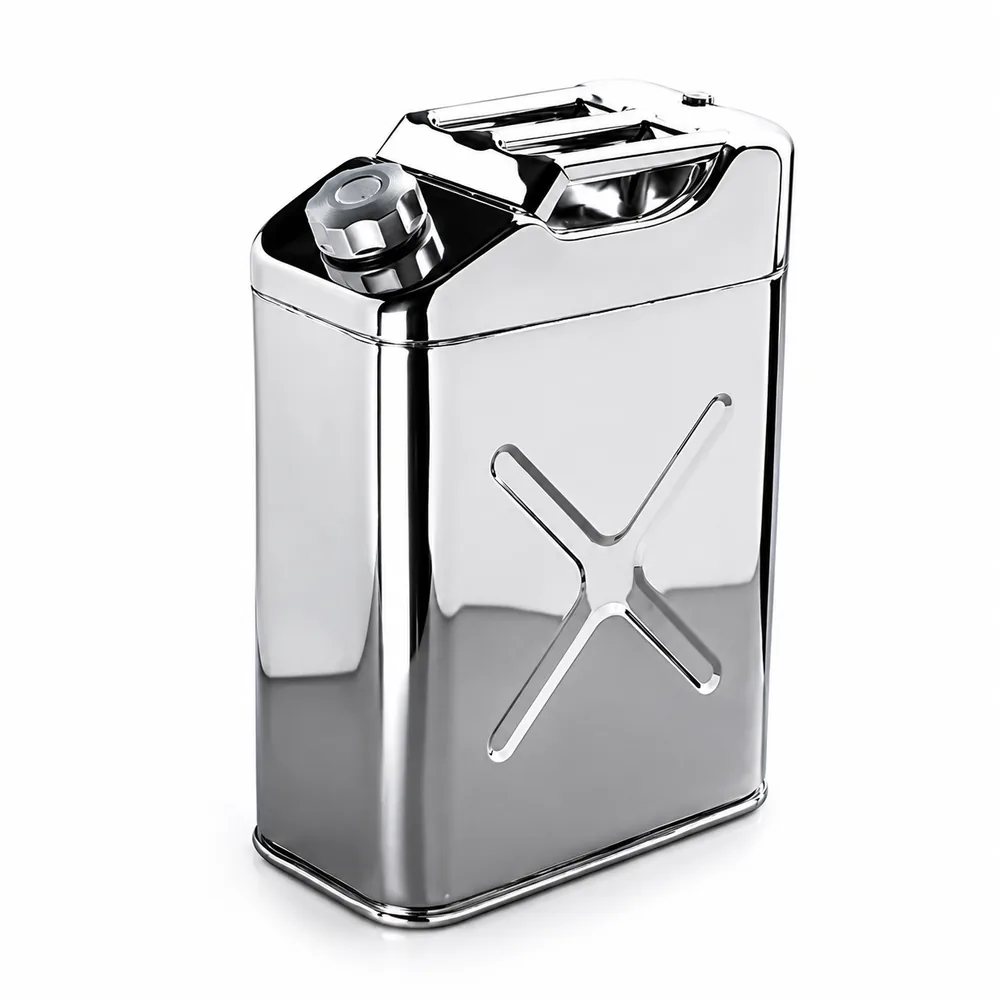 20L Stainless Steel Water Can |
AISI 304 food-grade stainless, raw or powder coated to a RAL colour. |
| AdBlue and DEF | 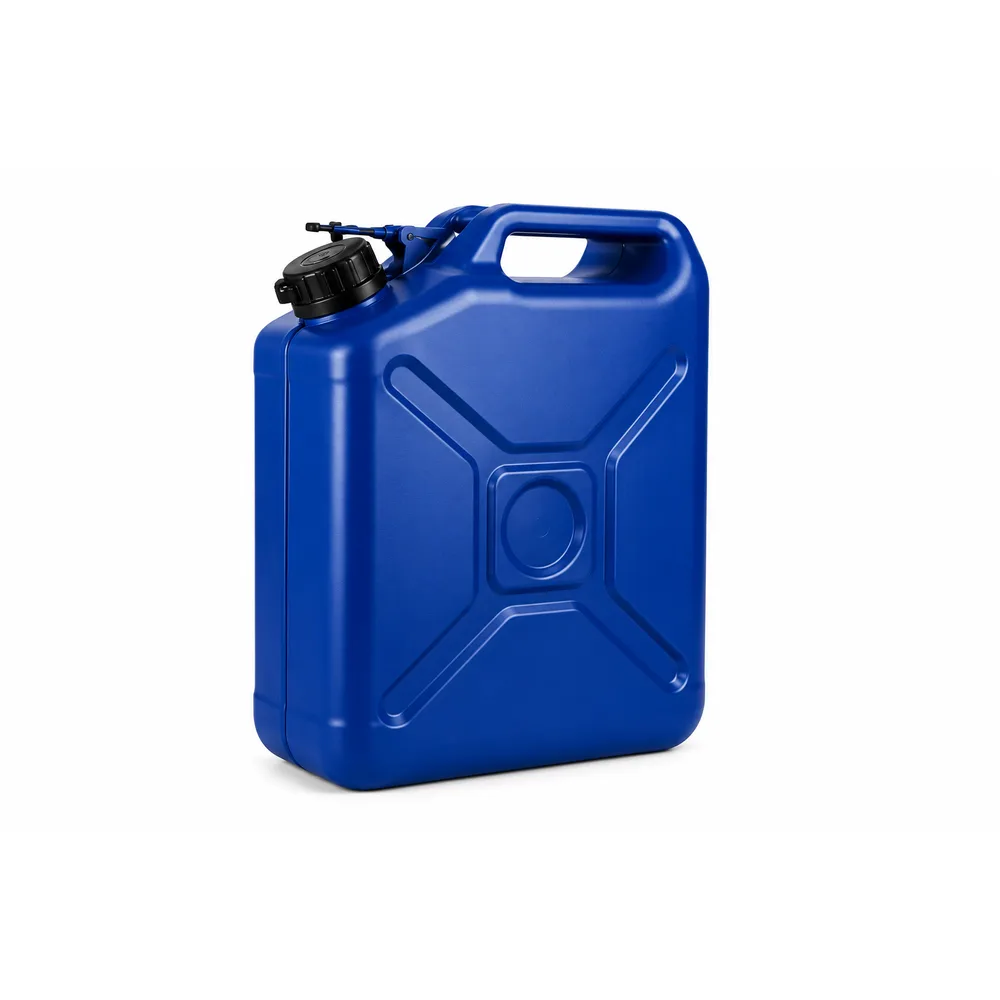 DEF Can — Diesel Exhaust Fluid |
Blue cap and a misfuelling-resistant spout, for fluid made to ISO 22241. |
| Colour-coded cans for non-hazardous liquids | 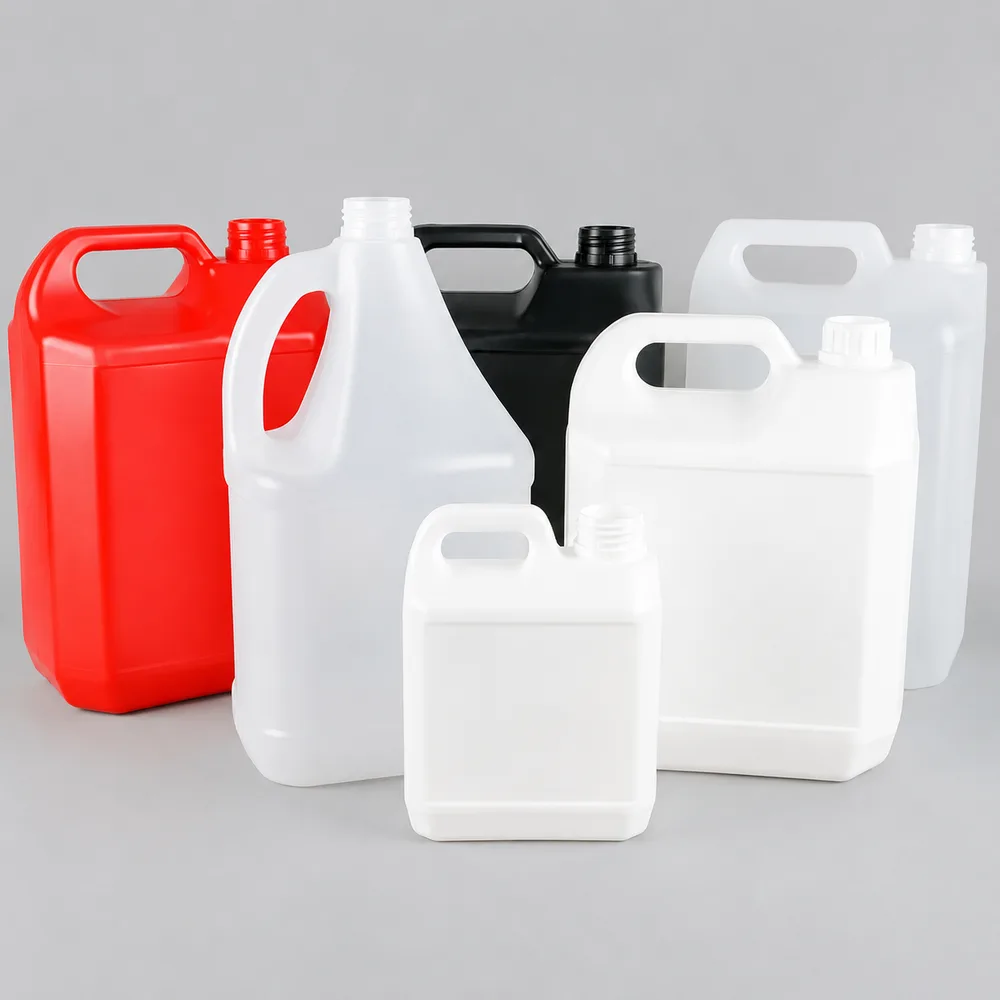 Economy HDPE Jerrycan — non-UN |
Natural, blue, black or your RAL; not for fuel or other dangerous goods. |
Any colour. The Petroleum (Consolidation) Regulations 2014 set no colour for a portable petrol container in Great Britain. They require the words PETROL and HIGHLY FLAMMABLE, a hazard warning sign, the nominal capacity and the maker’s name and date of manufacture, and they cap the can at 10 litres in plastic and 20 litres in metal. Red is a habit, and a green or black petrol can is lawful.
No UK rule sets one, and diesel falls outside the petrol container rules, so any colour is lawful. If you want a convention, yellow matches both published schemes: California’s CP-501 uses yellow and Australia’s AFAC uses olive yellow. Avoid red, which reads as petrol, and mark the can DIESEL so the word settles any doubt.
It depends on the market. In Australia’s AFAC scheme, bottle green means two-stroke mix at 25:1 and shamrock green means drip torch mix. In the US, green for oil or mixed fuel is a trade habit with no rule behind it. In the UK a green can means nothing in law, and it may hold petrol if it is marked PETROL and HIGHLY FLAMMABLE.
Kerosene, under California’s CP-501, the Illinois fire code and Australia’s AFAC scheme, where the shade is powder blue. AFAC also uses bright blue for chain and bar oil. Outside those schemes blue is the usual civilian colour for water, which is why a blue water can should also be marked WATER and kept away from kerosene.
Diesel. California’s CP-501 requires diesel cans certified for sale there to be yellow and marked DIESEL, and Australia’s AFAC scheme uses olive yellow, listed as RAL 1020 by the ACT Rural Fire Service. Under the OSHA workplace colour code, yellow marks caution, and on a red petrol can it is the colour of the band or the contents name.
In parts of the US, yes. Wisconsin bars diesel, kerosene and burner oil with a flash point of 100 °F or more from any visible container coloured red (Wis. Stat. 168.11(3)), and Illinois allows only gasoline or benzol in red containers (41 Ill. Adm. Code 174.410(c)). Great Britain and Australia have no such law, though agencies following AFAC keep red for unleaded petrol.
No. Red diesel is rebated gas oil that carries chemical markers in the fuel itself, and HMRC Excise Notice 75, which sets the rules for it, says nothing about the colour of the container. Store it in any suitable diesel can, and mark the can with its contents so rebated and road fuel stay apart on a mixed site.
Camouflage colours that say nothing about the fuel. The US 20-litre military fuel can specification, A-A-59592A, offers desert sand or field drab, and the words on the can separate it from a water can: FOR STORAGE OF FUELS ONLY and DO NOT USE FOR DRINKING WATER. Olive drab is the familiar finish on civilian NATO-pattern cans.
No. The AFAC colours come from a guideline that fire and land-management agencies adopt in their own procedures, such as ACT Rural Fire Service SOP 1.2.5. For a fuel jerrican, WorkSafe Victoria treats the UN approval mark plus the AS 2906 mark as compliant and names no colour. If you sell to an agency, its procedure makes the colour part of the order.
We found none. The schemes that set colours are national or local: California’s CP-501, US state codes, the OSHA workplace rule and Australia’s AFAC guideline. ASTM F852/F852M-22, the US consumer container specification, lists colour among its requirements, but its published summary does not say which colours, and the full text is sold by ASTM.
Yes. Give the colour as a RAL number or the scheme’s own code, and approve a physical sample before production. Steel cans take a powder-coat colour; HDPE cans take a masterbatch colour set at moulding, so a change means a new run. We supply our cans in your RAL colour with your mark, and quote minimums with the specification.
No single code exists. California's CP-501 and Australia's AFAC scheme set petrol red, diesel yellow and kerosene blue, and Illinois also reserves red for petrol and blue for kerosene. OSHA requires workplace safety cans of liquids that flash at 80 °F or below to be red. Great Britain fixes only the words PETROL and HIGHLY FLAMMABLE on a petrol can, and military cans come in camouflage colours that say nothing about the fuel.
No federal rule sets the colour of a consumer gas can. The EPA labelling rule, 40 CFR 59.615, asks for an emissions label and the month and year of manufacture. Colours come from California, where CP-501 makes certified gas cans red for gasoline, yellow for diesel and blue for kerosene, from state codes in Illinois, Wisconsin and New Jersey, and from OSHA for workplaces. Green for oil or two-stroke mix is a trade habit, and we found no US rule that sets it.
The standards and regulations this page relies on, at their issuing body. Where a market rule is named here, check the current revision before you specify against it.
Last reviewed by Clarence Cheang, Co-Founder.
Tell us your market, your fuel and your volumes. We come back with a specification sheet and a quotation.