
From your specification to a shipped, own-brand product: marking, colour, tooling and minimums.
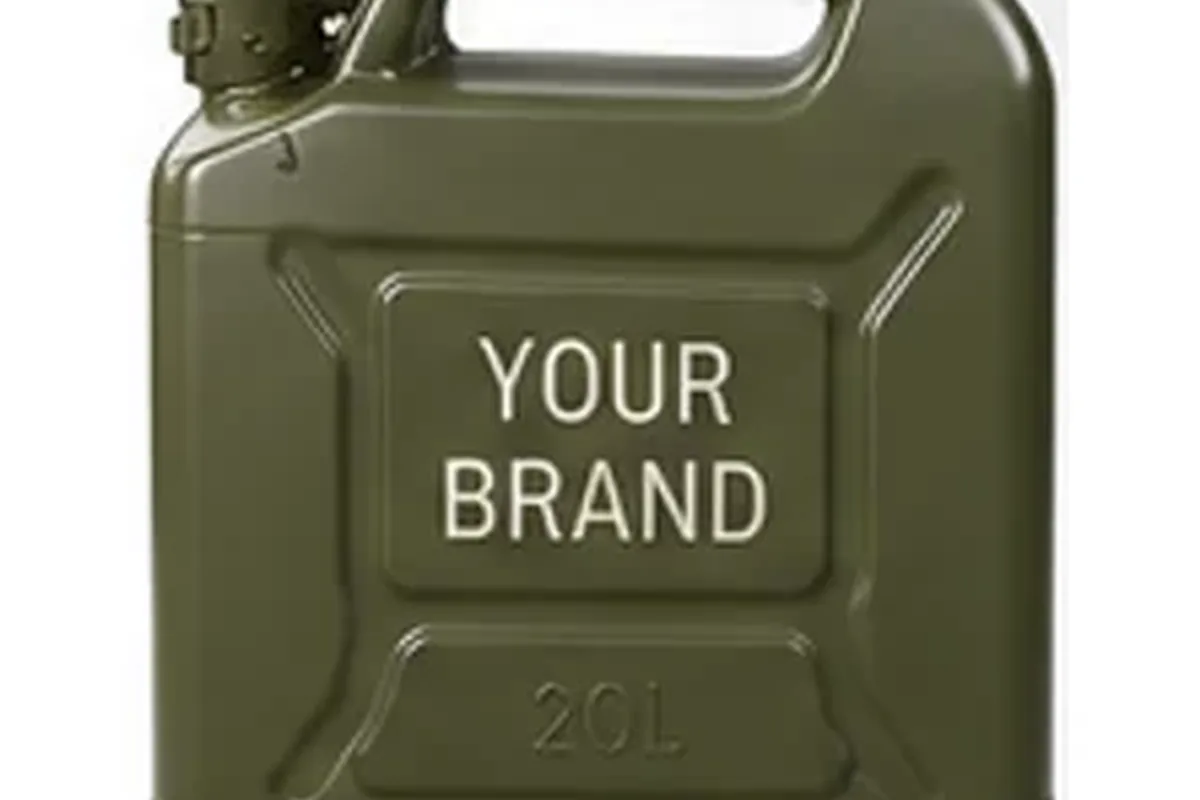
A private-label programme puts your brand on a proven container without you owning a factory.
The container already works. You add the name, the colour and the mark, and skip the years it takes to prove a body in the field. This is the fastest route to a branded jerry can, and it carries the least risk, because the shape and the closure are already tested.
There is one consequence of putting your name on it that is worth understanding before the first order rather than after. In EU and UK product law, placing a product on the market under your own name or trademark makes you the manufacturer for legal purposes, whoever pressed the metal. Under Article 13 of the EU General Product Safety Regulation a distributor who rebrands is treated as the manufacturer and takes the manufacturer's obligations with it: the risk assessment, the technical file, the labelling, and the duty to act when a safety problem appears.
That is not a reason to avoid private label. It is the reason to specify the documentation package in the same conversation as the colour. What you need from a factory is the evidence that lets you discharge those obligations: the test reports behind the UN approval, the material certificates, the inspection records per shipment and a technical file you can hand a market surveillance authority. A programme priced only on unit cost has left that out, and it is expensive to add later.
The packaging side works the same way and catches people separately. Under the EU packaging rules the importer is the producer for registration, reporting and fee purposes, so a UK or EU brand importing its own branded cans carries the EPR obligation itself. Our notes on GPSR and the responsible person and the EU packaging rules set out who holds what.
We mark a can in line rather than with a sticker that peels. Metal bodies are laser etched or embossed; plastic bodies carry moulded-in or printed marking. The mark is part of the product, not applied after. A laser-etched or embossed mark survives fuel, sun and abrasion, where a label lifts at the edge and walks off. On a plastic can the mark is moulded into the wall, so it lasts as long as the can does. A buyer who reorders sees the same mark in the same place every time.
Mark placement is worth fixing on the drawing rather than agreeing verbally, because it interacts with things that are already decided. A mark on a panel the UN code occupies has to move. A mark across a pressed cross sits on a curved surface and reads badly. A mark on the face that sits against a holder gets abraded. Settle the face, the position and the size once, in writing, and every subsequent run reproduces it without a conversation.
The three routes are not interchangeable and they sit at very different points on cost and permanence.
The practical question is how long the mark has to outlive the sale. A brand that matters at the point of purchase can live with a label; a brand that has to be legible on an asset a fire agency issues for fifteen years cannot.
One constraint sits above all three and is easy to trip over. On a UN-approved can, the approval belongs to a specific design made at a specific plant, and the marking that proves it is part of that design. Branding that sits alongside the UN mark is fine. Branding that obscures it, crowds it or is embossed into the panel the approval was tested with is a change to the approved article, and the approval is what the buyer is actually paying for. Settle the mark position against the UN marking at artwork stage, not on the line.
The same logic reaches the closure. A cap, a gasket compound and a spout form part of the tested design, so a private-label programme that substitutes a cheaper gasket or a different spout has altered the approved article even though the body is untouched. Our note on second sourcing covers the related trap, which is that an approval does not travel to a second plant.
A metal can is powder coated to a specified RAL colour; a plastic can is moulded in a colour from masterbatch. Match a house colour across a range so a shelf reads as one brand. RAL numbers and masterbatch codes hold the colour steady from one run to the next, so a reorder lands next to last year's stock and matches it. Two practical limits are worth setting expectations against. A powder-coated steel can and a masterbatch-moulded plastic can will not match exactly to the same RAL number, because one is a cured film on metal and the other is pigment through the wall, and they scatter light differently. And any coloured surface drifts under ultraviolet, so an outdoor can fades on a schedule set by the pigment rather than the code. Specify the colour, and agree the tolerance and how it is judged.
The powder coat does more than carry colour: it also protects the steel. See corrosion protection and galvanizing for how the coating and the base treatment work together.
Standard patterns need no new tooling and reach you fastest. A custom shape or closure is a tooling conversation: steel tooling for a pressed metal can, a mould for a blow-moulded plastic one. We scope the tooling cost and lead time against your volume. Exhaust the cheap moves first. A standard pattern in your house colour with an etched mark reads as your product and ships at the lowest minimum. Pay for a tool once the shape itself, and not the branding, is what you need to own.
Put the arithmetic on it and the decision usually makes itself. A tool is a fixed cost spread over everything it makes, so its per-unit contribution is the tooling cost divided by the units you will actually run, not by the units in the optimistic forecast. Over a first year of a few thousand cans, a tool adds a material sum to every unit. Over tens of thousands across several years it disappears into the noise. The break point is a number, and it is worth calculating before it is argued about.
Lead time moves the same way and is the part buyers underestimate. A standard body in a house colour with an etched mark runs on the existing line: samples in one to two weeks and production in about a month. A custom tool adds its own design, cutting and trial cycle in front of all of that, and the first article off a new tool needs re-approval if the change touches anything the UN test covered. A tooling decision is a schedule decision as much as a cost one.
Custom colour and marking set a minimum order quantity, which we quote against your specification. Production runs across parallel bases in Vietnam and China under one Singapore contract desk, which gives two routes to capacity under one drawing. When a sourcing policy rules out a single country, the second base answers it without a redraw. Government and institutional buyers who carry country-of-origin rules find this useful; see defence and government procurement.
Ask what a second base does to the minimum, though, because it usually raises it rather than splitting it. Each plant needs its own tooling set up and its own first article, so a volume that was comfortable at one site can sit below the threshold at two. The programmes that work either commit enough volume for both or nominate a primary base and hold the second as a qualified alternate rather than a running one.
Your programme keeps its artwork, colourways and tooling. We supply the specification sheet, the compliance documents your market needs, and inspection records per shipment, and we do not resell your programme to a competitor. The drawing is yours. The tool we cut for you stays yours, and the colour and mark that make the can read as your brand do not turn up on someone else's shelf.
Put the tooling position in the contract rather than in an email, and be specific about three things: who owns the tool, where it is physically held, and what happens to it if the relationship ends. Ownership without a right to take possession is a weaker position than it sounds, and a tool that cannot be moved is a commercial lock-in whatever the paperwork says about title. The same applies to the drawing and the artwork files.
Two errors cost programmes money. The first is adding branding as a second run, after a plain batch has already shipped, which pays for handling twice. Build the brand into the first run. The second is commissioning custom tooling when a standard can in a house colour with an etched mark would have done the same job for far less. Ask what the shape has to do that a standard body cannot, and only then cut a tool.
The question is worth answering in writing, because the honest answers are short. A tool is justified when the shape has to fit a space nothing standard fits, when a closure has to interface with equipment you already own, or when the form itself is the product difference you are selling. It is not justified by wanting to look distinct on a shelf, which a colour and a mark achieve at a fraction of the cost and none of the lead time.
Tell us the product, the market and the volume, and we return a specification sheet and a quotation. See our capabilities.
Any of these carries your brand. Here is the range you can label.
| Your use case | Recommended can | Why this one |
|---|---|---|
| Your own-brand fuel line | 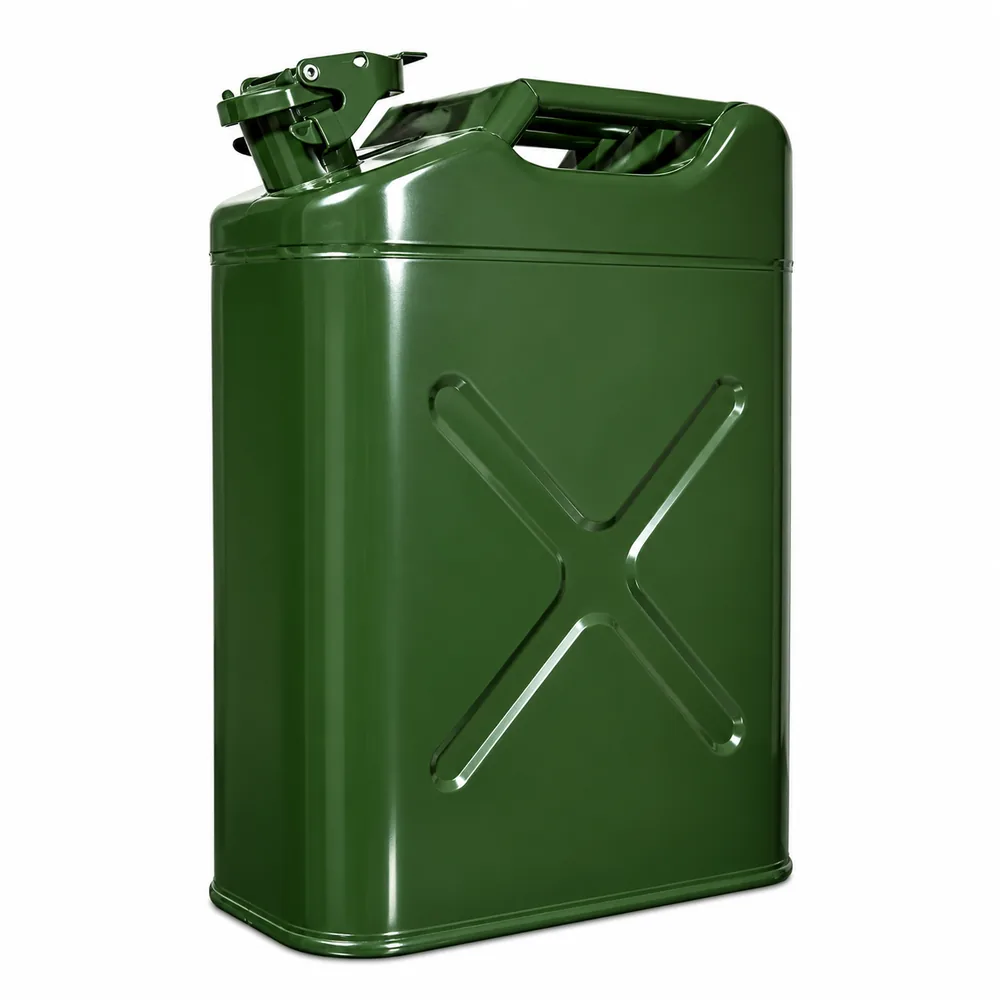 20L NATO Steel Fuel Can 20L NATO Steel Fuel Can |
Powder-coated to your RAL, mark etched in. |
| Your own-brand water line | 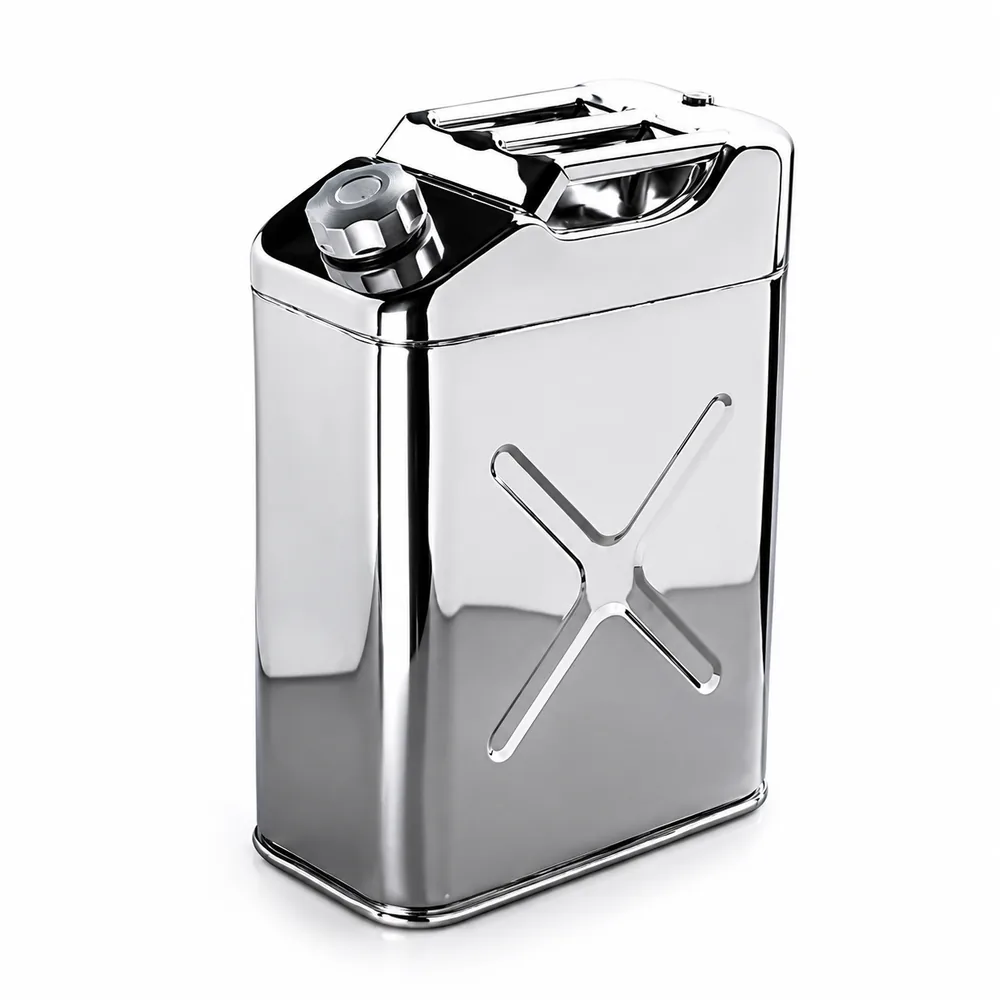 20L Stainless Steel Water Can 20L Stainless Steel Water Can |
AISI 304 stainless, laser-etched brand. |
| Your own-brand HDPE line | 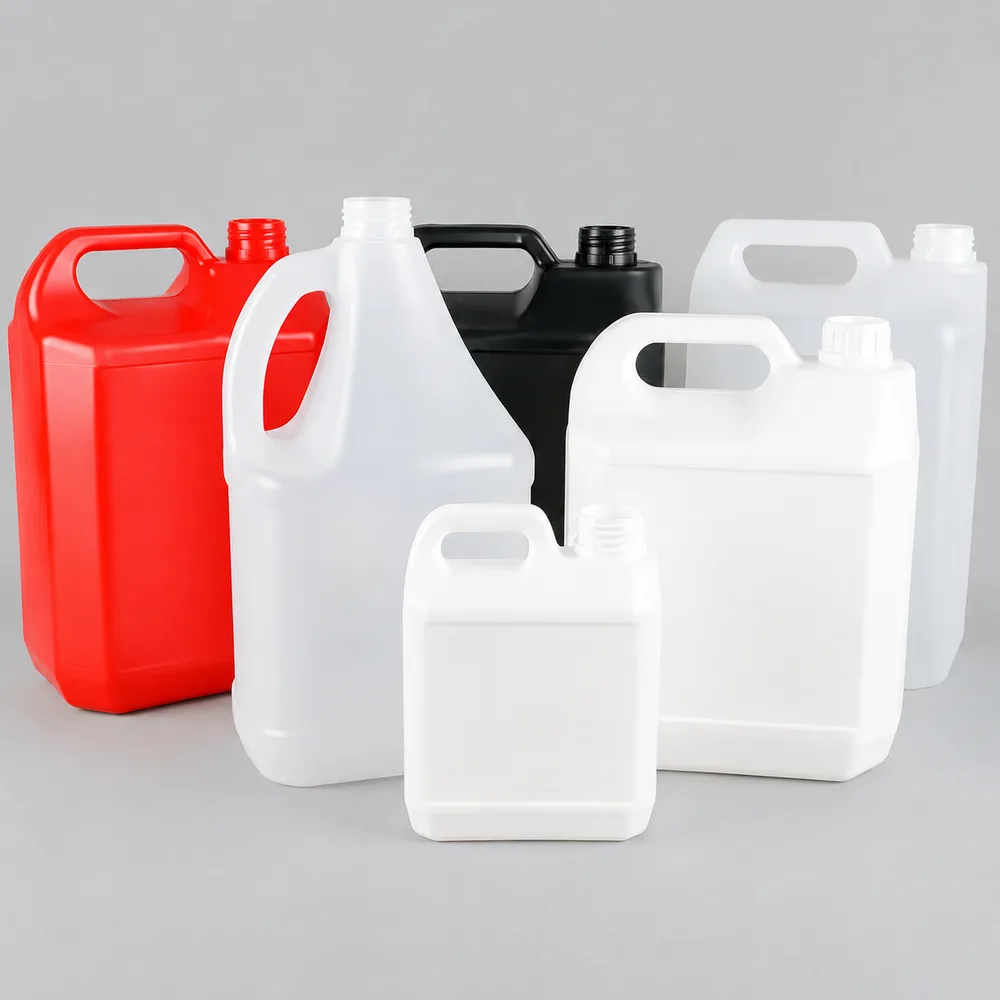 Economy HDPE Jerrycan — non-UN Economy HDPE Jerrycan — non-UN |
Moulded in your masterbatch colour. |
| Branded closures and spouts | 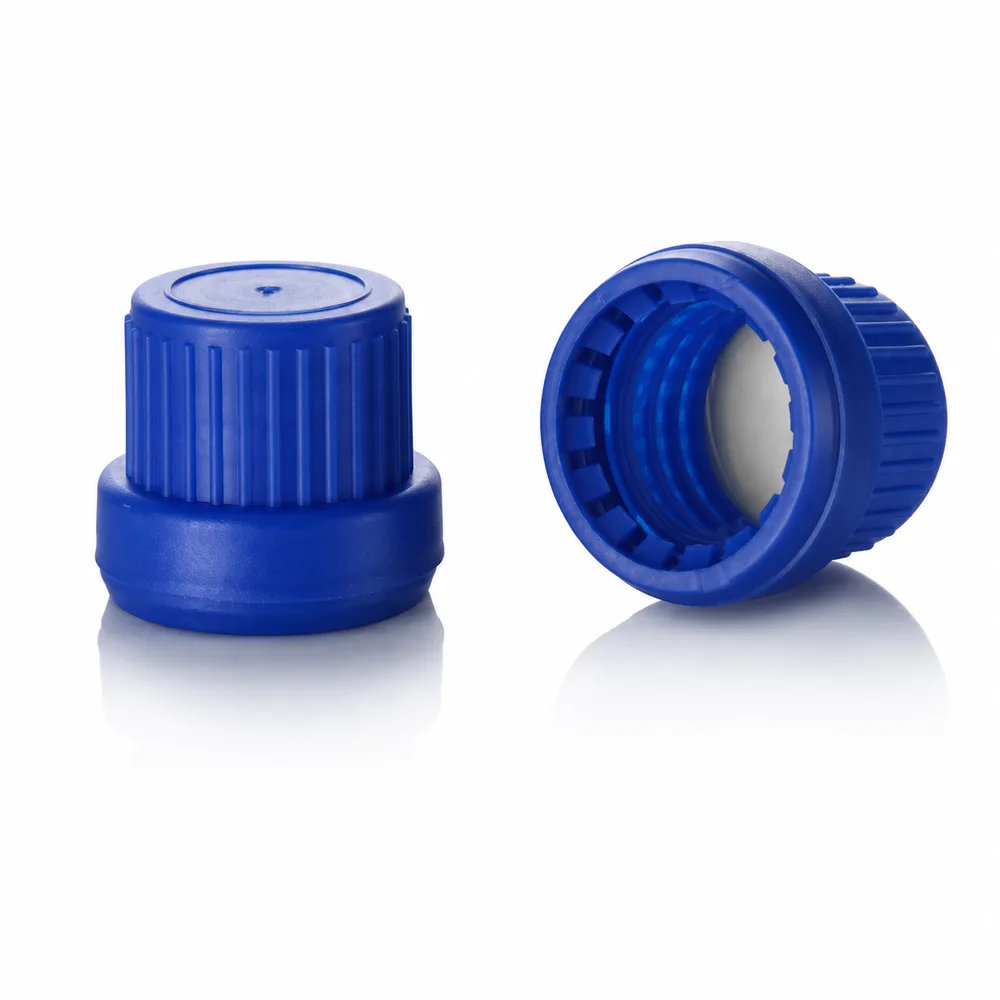 Caps, Closures & Gaskets Caps, Closures & Gaskets |
Complete the private-label set. |
Minimums are driven by what has to change. A colour change or a printed label runs at low volume; an embossed logo or a changed neck needs tooling and therefore a much larger commitment. Because it moves with the model and the customisation, we quote it against your actual specification rather than publishing one figure that would be wrong for most buyers.
Yes, provided the branding does not obscure or duplicate the UN marking and the design itself does not change. Any alteration to the body, wall thickness, closure or material invalidates the existing approval and requires re-testing of the new design type.
A standard production run is approximately one month, confirmed against your specification at quotation. Samples come in 7 to 15 days, so you can check the build before committing to volume. New tooling or a modified press tool adds to that, and a change touching a UN-approved design adds re-testing on top.
Both. Build to your drawing, or take one of ours and change the colour, marking, closure or format. Which route is faster depends on how far the customisation moves from an approved design, so feasibility, price and lead time come back against your actual requirement rather than a generic list.
Around 50,000 units a month across four production lines. It is an estimate rather than a ceiling, because a deep-drawn steel can and a blow-moulded HDPE one do not run at the same rate and the monthly mix moves the figure either way.
The standards and regulations this page relies on, at their issuing body. Where a market rule is named here, check the current revision before you specify against it.
Last reviewed .
Tell us your market, your fuel and your volumes. We come back with a specification sheet and a quotation.