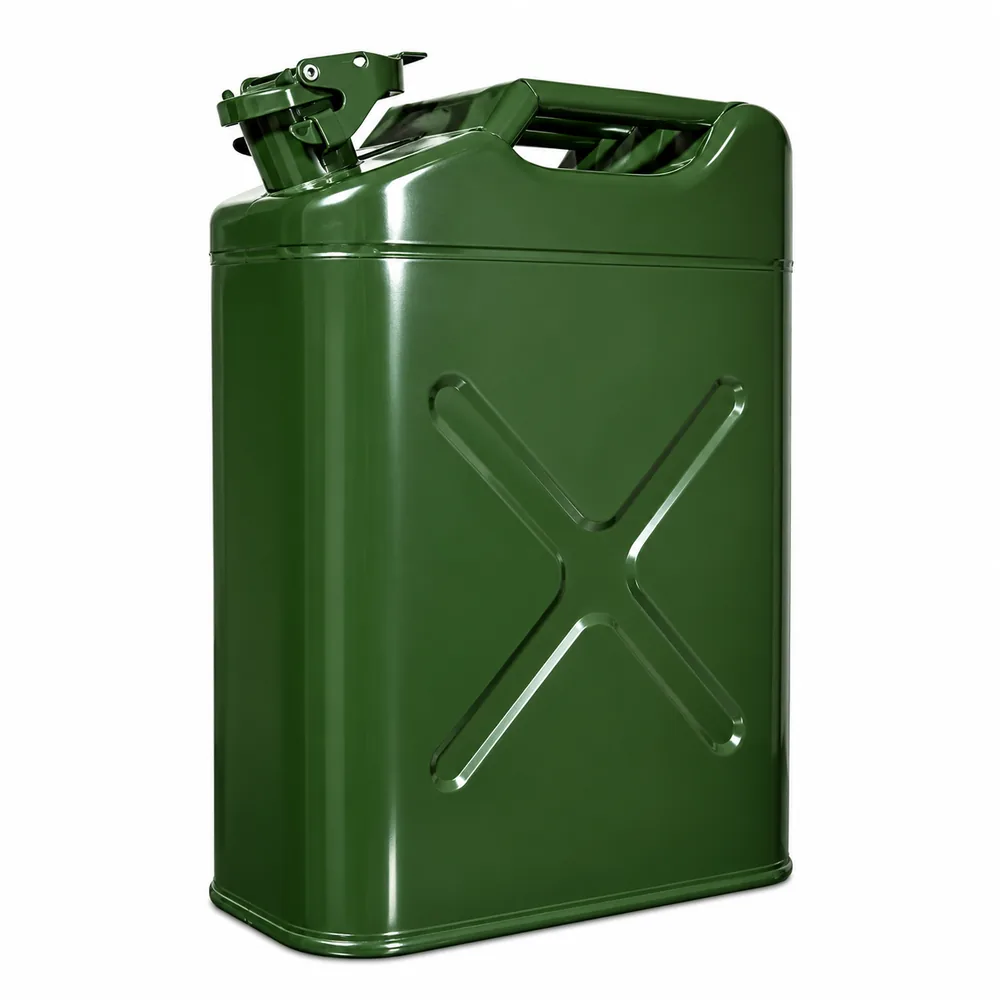
Fuel
20L NATO Steel Fuel Can
F21-NF-20Classic NATO-pattern pressed steel fuel can, vented screw cap, internally coated for hydrocarbons. UN-marked for dangerous goods transport.

Product code F21-NW-20
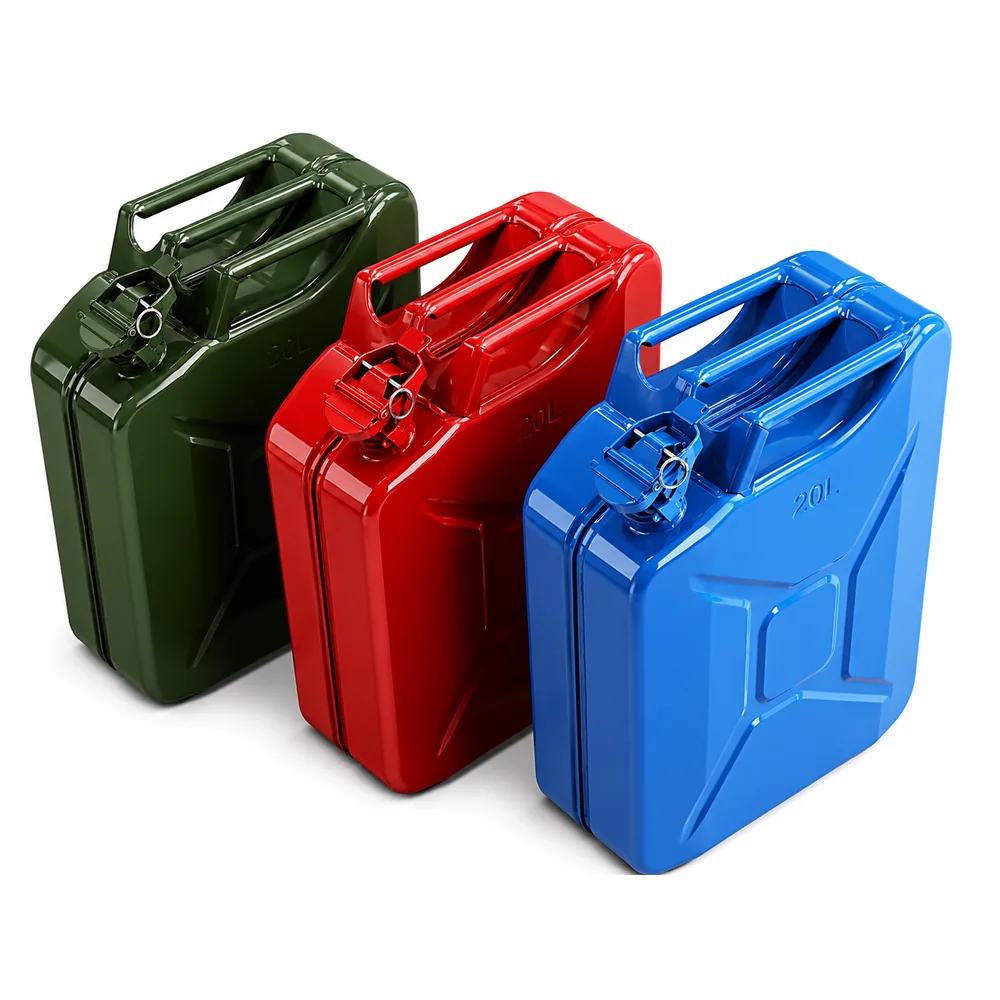
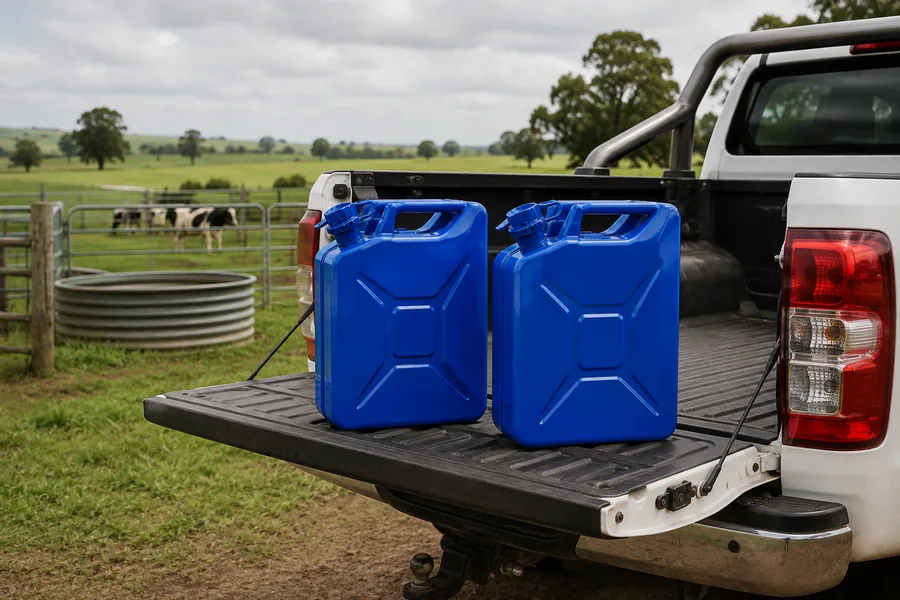
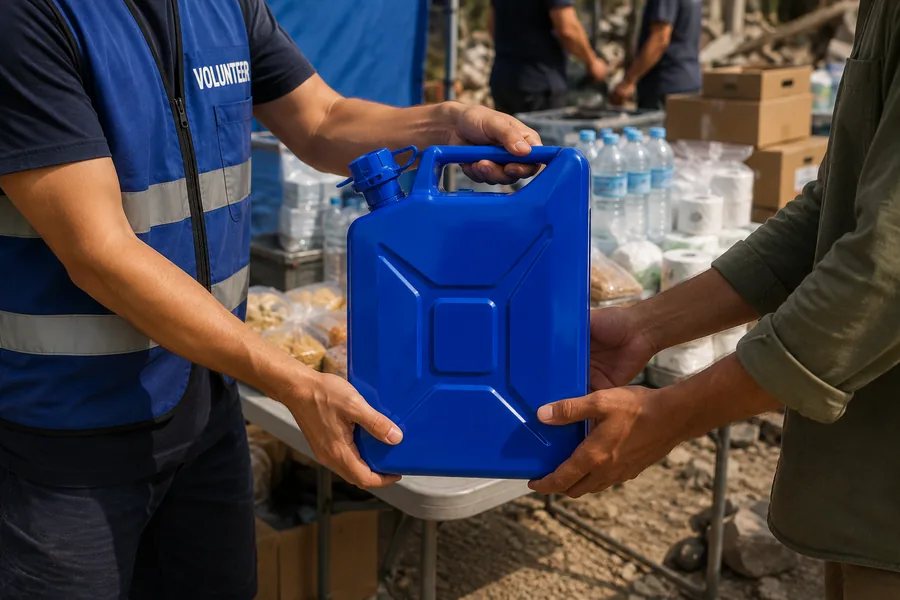
NATO-pattern pressed steel, finished and marked for water. The blue convention the field already reads as potable, in the geometry your carriers already take.
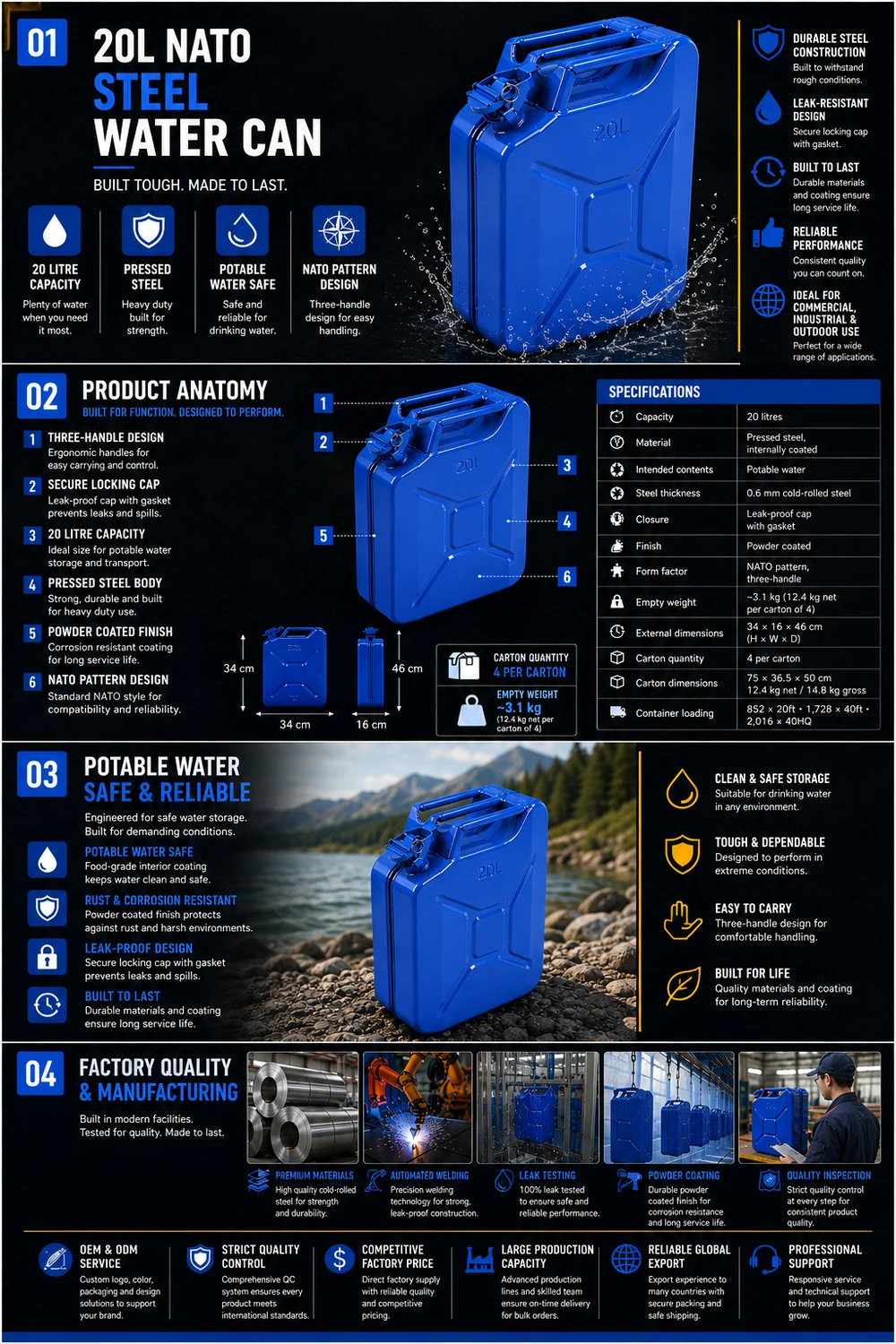
| Product code | F21-NW-20 |
|---|---|
| Capacity | 20 litres |
| Material | Pressed steel with potable-water interior specification |
| Intended contents | Potable water |
| Form factor | NATO pattern, three-handle |
| Closure | Screw cap with gasket |
| Finish | Powder coated, blue standard |
| Empty weight | ~2.6 kg (10.3 kg net per carton of 4) |
| External dimensions | 34 × 16 × 46 cm |
| Carton quantity | 4 per carton |
| Lead time | Approximately one month for a standard production run; samples in 7–15 days. Confirmed against your specification at quotation. |
| Steel thickness | 0.5 mm cold-rolled steel standard; 0.9 mm heavy-gauge build available to order |
| Carton dimensions | 73 × 36 × 49 cm, 10.3 kg net / 12 kg gross |
| Container loading | 900 × 20ft · 1,900 × 40ft · 2,100 × 40HQ |
These depend on your order, your market or the certificate that covers your run, so we quote them rather than publish one figure that would be wrong for most buyers. Ask and you get the number for your specification.
Before you order: Interior specification determines potable-water suitability. If you need food-grade certification, specify the AISI 304 stainless line instead and we will tell you plainly which is appropriate for your market.
Dimensions, material thickness, carton and container figures come from the current production specification. Empty weights are derived from the quoted net carton weight. Confirm against the drawing issued with your order.
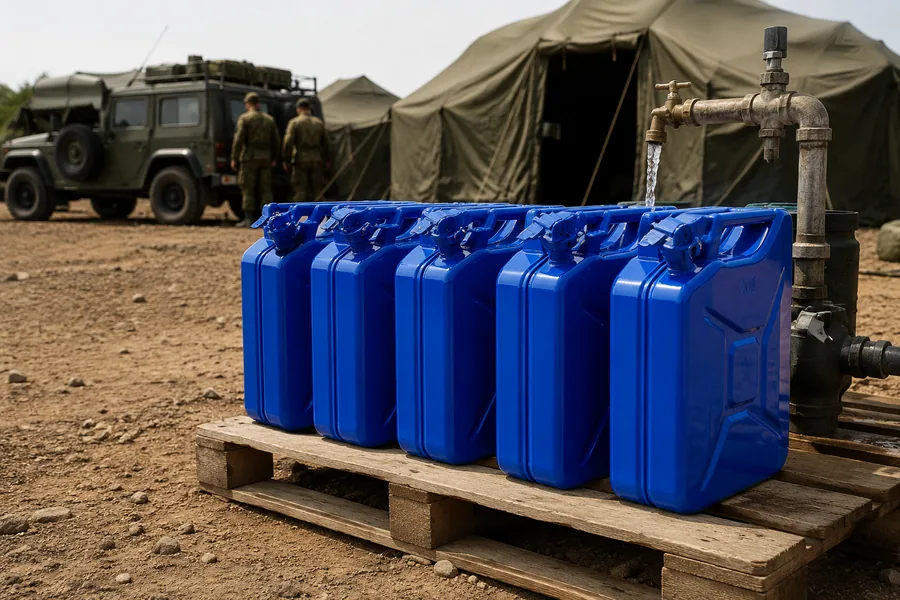
The blue convention prevents the single most dangerous mistake on a busy vehicle: a fuel can and a water can that look identical.
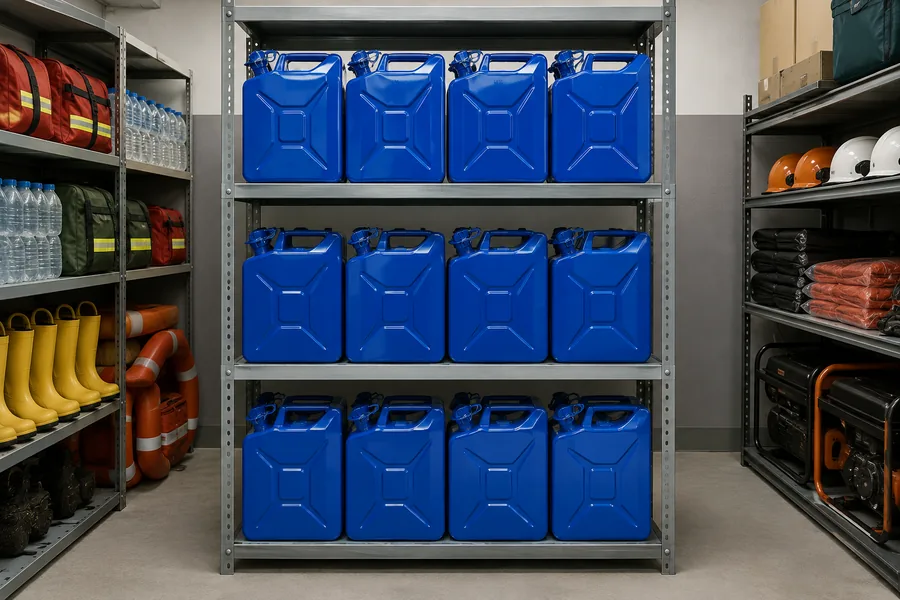
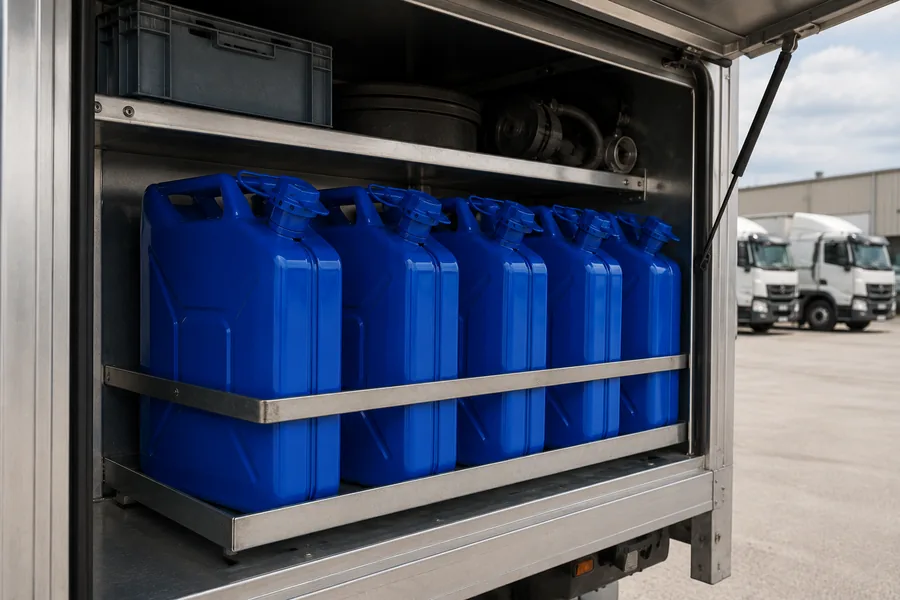
Identical NATO geometry, so a fleet can run water and fuel in the same racks without a second mounting system.
For buyers who want the NATO pattern and field robustness at a lower price point than food-grade stainless.
Contents marking applied in-line so it survives handling rather than peeling off in a season.

The same breakdown our distributors put in front of their own buyers.
The body is pressed from cold-rolled steel to the pattern, seam-welded, then finished as set out in the specification above: internal coating, galvanising or powder coat according to what the can carries. Pressing runs across our Vietnam and China plants under one specification managed from Singapore, so the drawing and closure stay identical whichever plant fills the order.
Every can is checked before it leaves the plant:
Water is not a dangerous good, so no UN transport marking applies.
Potable water
Fuels, acids, alkalis and cleaning chemicals. This can is finished for water service; hydrocarbons belong in the coated steel line, and food-grade certification in the AISI 304 stainless line.
Related guides: Chemical compatibility
The regimes that apply to this type of container in each market we ship to, with the detail behind each one a click away. This is what the market asks for; what this particular design already holds is in the specification above.
Orientation for specification, not legal advice, and not a statement that this design holds a given approval. Requirements turn on the exact design, contents and destination, and they change. Tell us the market at enquiry and we confirm what applies to your specification, what we hold and what we would need to obtain.
Potable water. The interior is specified for water and the body is finished blue, the colour the field already reads as drinking water.
No. This can is specified for water, not hydrocarbons. Use our NATO steel fuel can, which is internally coated for petrol, diesel and kerosene.
The interior is specified for potable water, and if you need formal food-contact certification we specify the AISI 304 stainless line instead. Tell us your market and we will say plainly which is appropriate.
No. It is a coated steel water can, and steel and zinc react with acids and alkalis. Keep chemicals in our HDPE jerrycan range.
Pressed cold-rolled steel at 0.5 mm, with a potable-water interior specification. Empty weight is about 2.6 kg.
No. Water is not a dangerous good, so there is no UN transport marking to certify. If you need food-contact paperwork, ask us and we will tell you what the stainless line provides.
Yes. It refills and reseals with a gasketed screw cap, and the steel body is recyclable. Rinse and dry between fills as you would any water container.
Yes. It is powder coated blue as standard, other RAL colours to specification, and we can laser etch or emboss your mark for a private-label programme.
Yes. It is the same NATO three-handle pattern and footprint as our fuel can, so it uses the same racks, holders and mounts.
Four cans per carton, made in Vietnam and China and managed from Singapore. MOQ and lead time are confirmed on quotation.
Classic NATO-pattern pressed steel fuel can, vented screw cap, internally coated for hydrocarbons. UN-marked for dangerous goods transport.
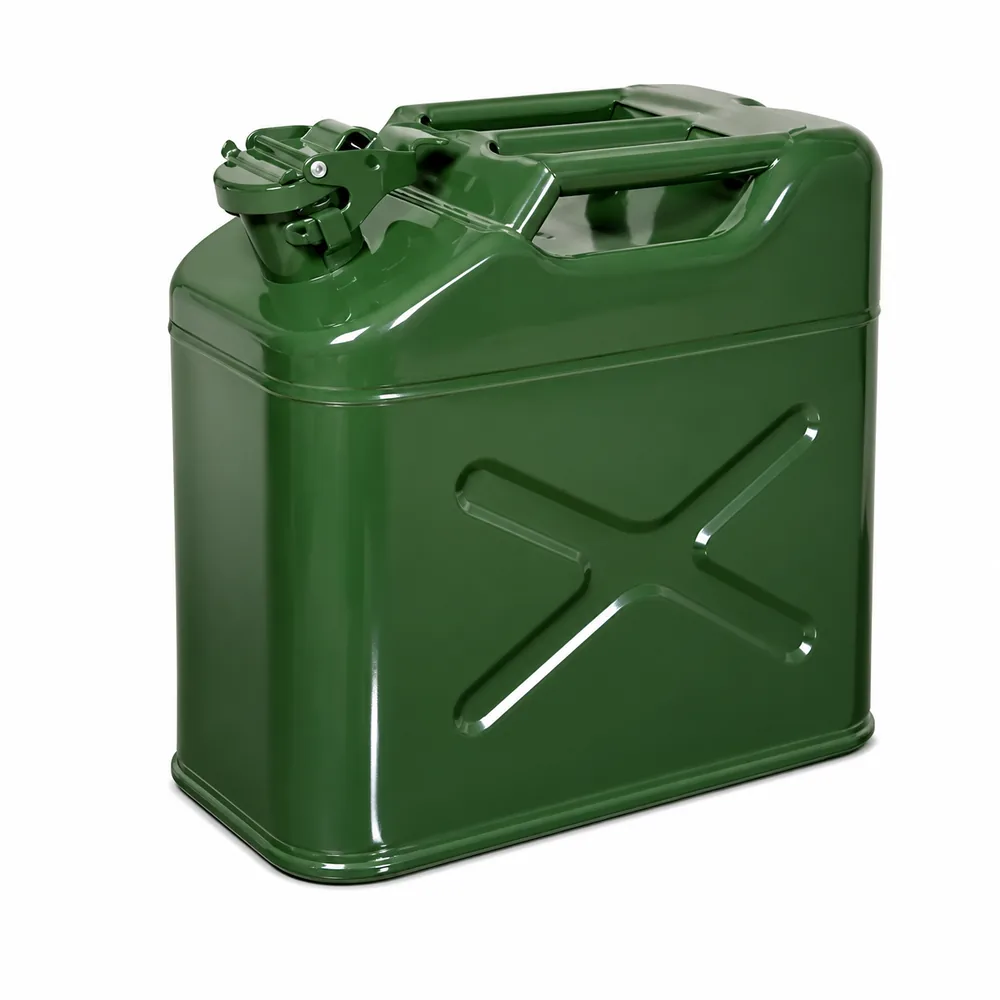
Half-size NATO-pattern steel can for lighter loads, smaller vehicles and buyers who want the pattern without 20 kilograms of fill.
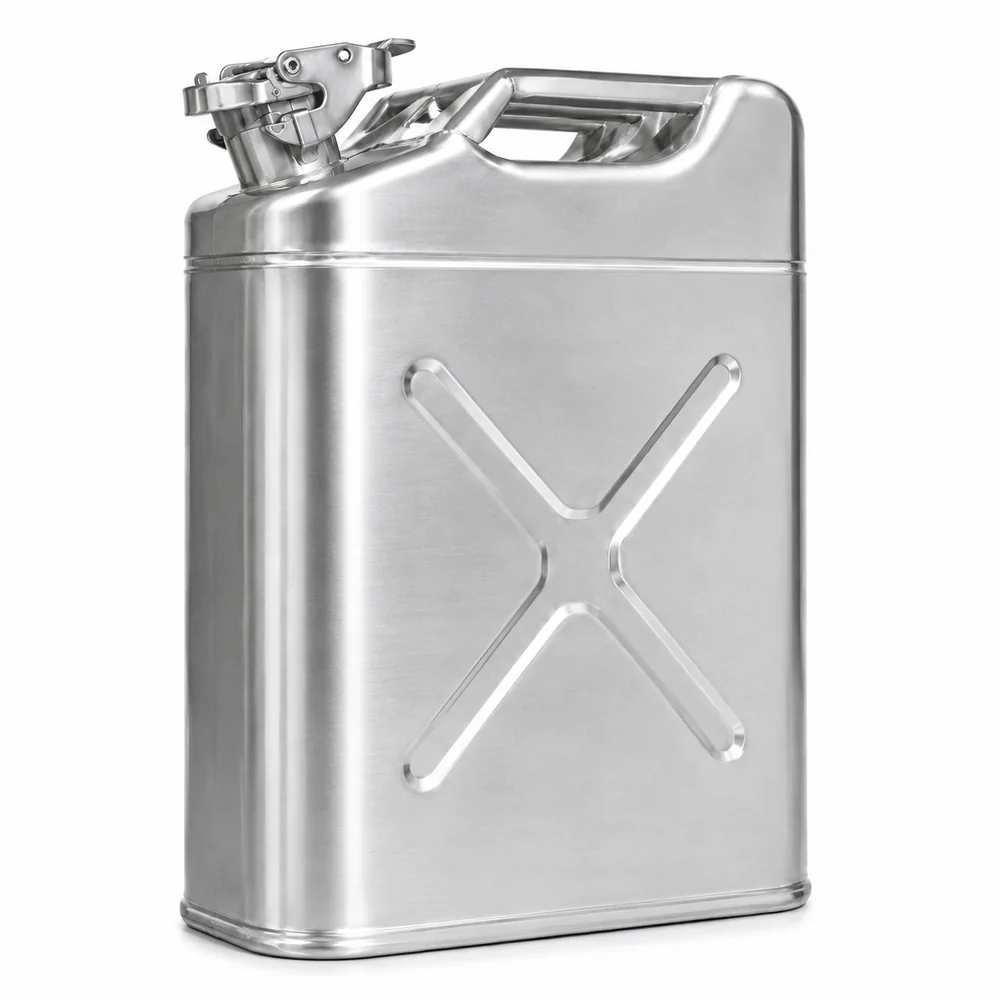
NATO-pattern aluminium can supplied with a pouring spout. Meaningfully lighter than pressed steel where payload is accounted for.
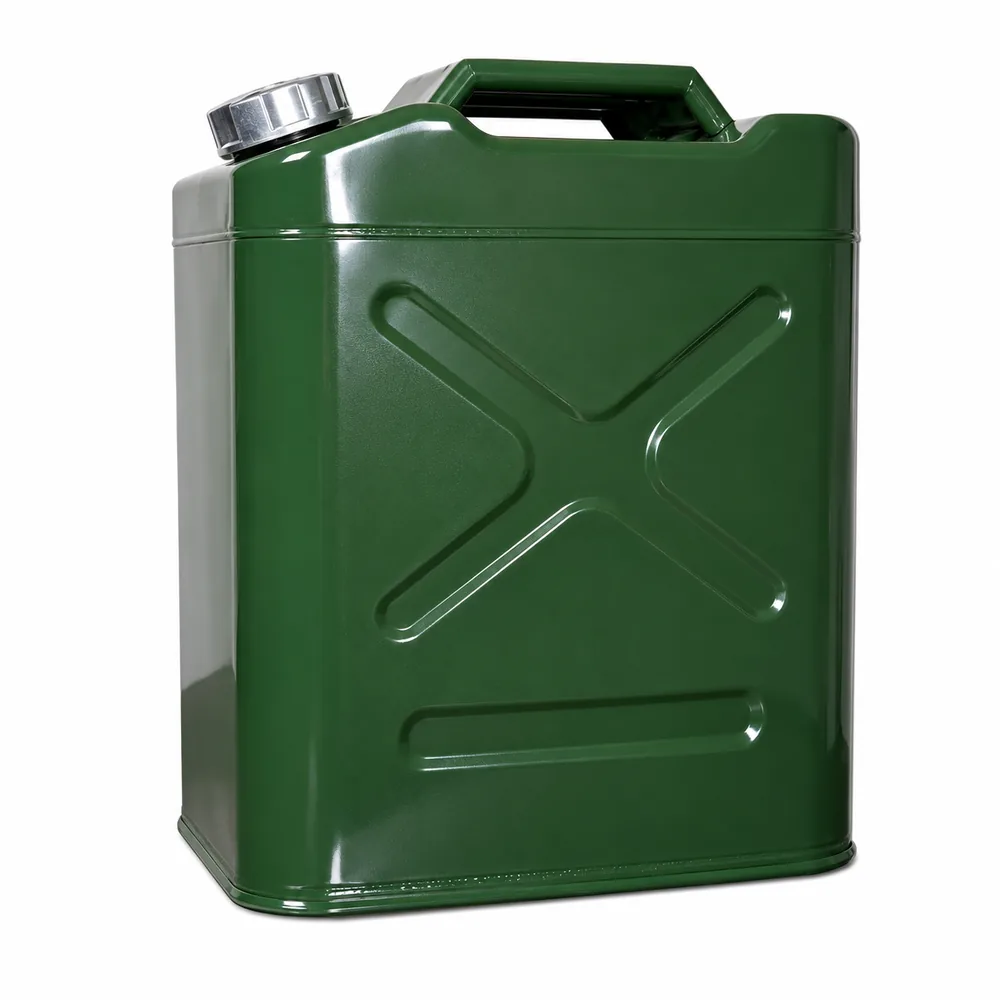
Oversized NATO-pattern cans in 25 and 30 litre, galvanised or stainless. Same footprint as the 20L, meaningfully more range per stop.
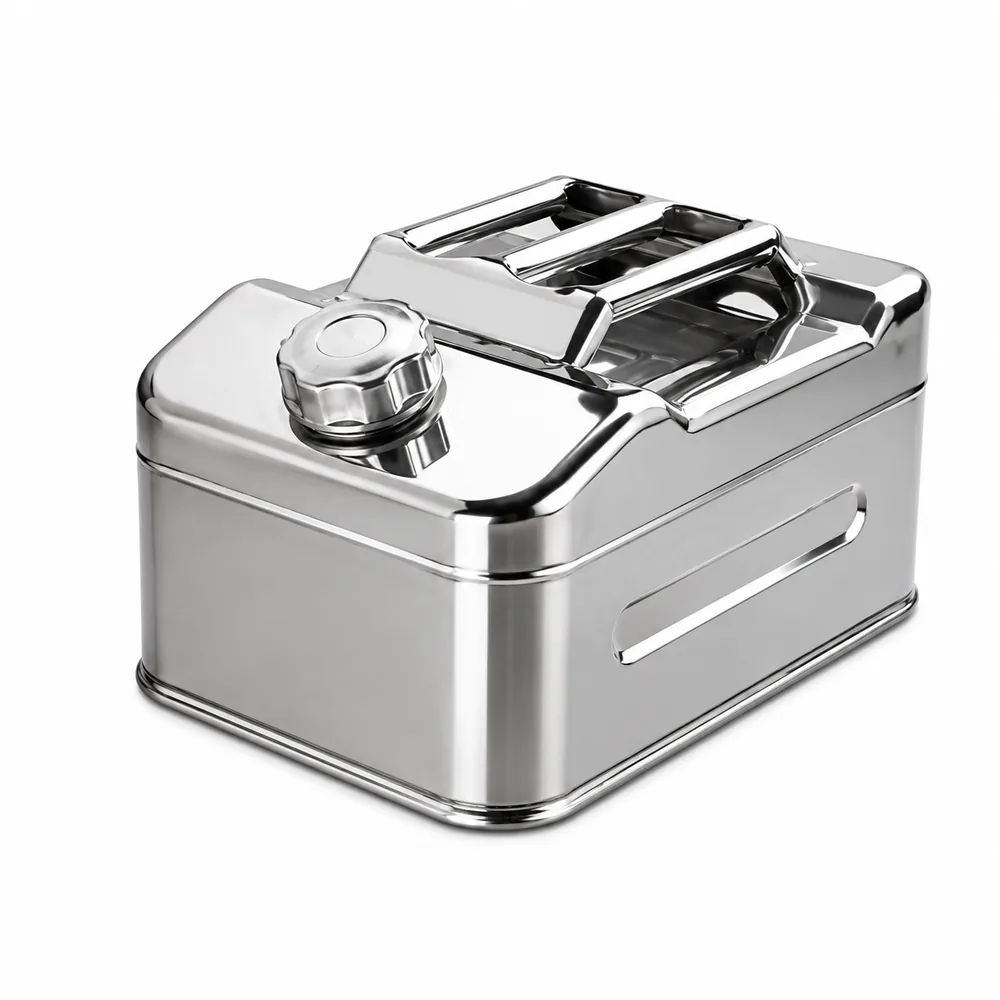
The NATO upright pattern in bare stainless steel, 10 and 20 litre. Standard geometry with no paint to chip and no rust to chase.
Tell us your destination market, target volumes and whether you need private labelling.