
Per-person figures by setting, the UK and US rules, and worked sizing for three sites.
No UK regulator or US federal rule sets how much water a care home, school or office must store, so you plan from published per-person figures. WHO gives 40 to 60 litres a day per in-patient plus 5 per member of staff, 3 litres per pupil for a school day, and 2.5 to 3 litres per person for drinking alone.
For a family reserve, see our household guide to emergency water storage. WHO Technical Note 9 (updated July 2013, Table 9.1) puts survival need, for drinking and food, at 2.5 to 3 litres per person per day, and basic needs with hygiene and cooking added at 7.5 to 15. The Sphere Handbook (2018) sets 15 litres per person per day as its humanitarian minimum.
Health facilities need more. WHO Technical Note 17 (Table 17.1) gives 40 to 60 litres per in-patient per day, 15 for each carer who stays with a patient, 5 per member of staff and 5 per out-patient consultation. WHO’s 2008 health-care standards say the in-patient figure covers hand hygiene, cleaning, laundry, drinking and cooking, and that flush toilets push the need higher. Drinking takes a small share: a review cited by UKHSA in December 2025 recommended at least 1,600 mL of fluid a day for adults aged 60 and over.
In England and Wales, the Security and Emergency Measures Direction 2022 (SEMD), made under section 208 of the Water Industry Act 1991, makes each water company plan a minimum supply “by alternative means” when piped water fails (paragraph 4(4)(b)). The Direction holds no litre figure, so companies state it in their own policies. Affinity Water plans at least 10 litres per person per day, rising to 20 once an interruption passes five days, and UKHSA’s December 2025 evidence summary confirms the 10-litre minimum. The Drinking Water Inspectorate audits compliance.
Paragraphs 4(4)(d) and (e) make companies prioritise vulnerable customers and sites. Affinity Water puts care homes, hospices and nursing homes in Tier 2 and schools, GP surgeries and day-care in Tier 3, and serves both by tanker, static tank or bottled water. The same page tells them not to rely on that supply and to put business continuity measures in place. Affinity Water sets up public bottled-water stations in supermarket car parks, community centres and sports centres, where a frail resident cannot queue.
The UK Government’s Prepare site says there is no standard figure, cites WHO’s 2.5 to 3 litres for survival, and says 10 litres a day covers basic cooking and hygiene. It advises households to buy bottled water rather than fill their own containers, because the water comes sealed in a food-grade bottle. Follow that advice for drinking. Sweden’s food agency, Livsmedelsverket, tells people with weak immune systems to boil water stored in jerry cans or drink bought bottled water.
A care home or school spends most of its water elsewhere: handwashing, medication rounds, food preparation, cleaning and toilets. The CDC, EPA and AWWA planning guide for hospitals and healthcare facilities (2019, section 7.1) splits the job. For an outage of 8 hours or less, it uses bottled water for drinking and food-grade containers of 19 and 38 litres (5 and 10 US gallons) for food preparation, handwashing and the rest. Its Case Study 2 shows what happens without them: when a 165-bed Florida nursing home lost water in Hurricane Ivan in 2004, flushing toilets had become a problem by day two, and staff carried pool water from their own homes in buckets.
We found no Drinking Water Inspectorate, NHS England or CQC document that sets a stored volume for a care home. CQC sets a reporting trigger instead: under regulation 18(2)(g)(ii) of the Care Quality Commission (Registration) Regulations 2009, a registered provider notifies CQC when an interruption to its water supply lasts longer than 24 continuous hours. The NHS estates guidance HTM 04-01 Part A (2016) recommends a nominal 12 hours of on-site storage for NHS premises (paragraph 8.5), and paragraph 8.6 says no reliable guidance on storage capacity exists.
Two outside figures help. Sphere (2018) asks health-care settings to store at least 48 hours of safe water. Livsmedelsverket’s planning guidelines give 10 to 20 litres per care place per day for drinking, hygiene and cooking, as quoted in Nacka municipality’s 2020 planning annex. A nursing home that keeps laundry and cleaning going sits nearer WHO’s 40-litre in-patient floor.
The federal rule for long-term care, 42 CFR 483.73(b)(1), makes a facility plan for the subsistence needs of staff and residents, whether they evacuate or shelter in place, including “food, water, medical, and pharmaceutical supplies”, and review that plan at least once a year. CMS’s State Operations Manual Appendix Z (Rev. 204, April 2021, tag E-0015) states that no requirement sets an amount of provisions, such as 72 hours’ worth, and points facilities to state agencies and accreditors.
Florida’s nursing-home criteria (AHCA Form 3110-6006, April 2025, criterion 3.3.2) tie water to the facility’s risk assessment and defer to county rules. Miami-Dade requires at least three days of potable water at 11.4 litres (3 US gallons) per person per day for the licensed capacity, and a facility storing 3 to 6 days must hold a vendor water contract, which it resubmits each year. Florida adult family care homes keep 7.6 litres (2 US gallons) of drinking water per resident and household member (r. 59A-37.010(2)(b)). California sets the highest figure, for general acute care hospitals only: 189 litres (50 US gallons) per licensed bed per 24 hours for 72 hours, under CDPH All Facilities Letter 23-21 (June 2023). We found no California figure for skilled nursing facilities.
For schools, WHO Technical Note 9 and Sphere’s Appendix 3 give 3 litres per pupil per day for drinking and handwashing, with toilets excluded. WHO’s standards for schools in low-cost settings set the normal-operation minimum at 5 litres per person per day at a day school and 20 at a boarding school. In England, DfE asks schools and childcare settings to hold an emergency plan but names no water quantity.
UK and US workplace law requires drinking water and sets no volume. Regulation 22 of the Workplace (Health, Safety and Welfare) Regulations 1992 calls for “an adequate supply of wholesome drinking water”. HSE’s code L24 (2nd edition, 2013) accepts bottled water as a supplementary source (paragraph 212) and wants refillable containers enclosed and refilled at least once a day (paragraph 209). OSHA 29 CFR 1910.141(b)(1) requires potable water and portable dispensers that close and have a tap. For the volume, plan from household advice: 3 litres per person per day for 72 hours in the Netherlands, 2 litres a day for up to 10 days in Germany, 3 to 5 per adult a day for a week in Sweden, and 3.8 litres (1 US gallon) a day for 3 days from the CDC.
Plan the duration around two gaps. The first runs until a tanker or bottled water reaches you, and Affinity Water tells care homes and schools not to count on that delivery. The second starts when company supply arrives at 10 litres a head, a quarter of WHO’s in-patient floor, and lasts until the target rises to 20 on day five. The published planning points then run from 8 hours (CDC’s bottled-water threshold) and 12 for NHS premises to 48 for Sphere and 72 for Miami-Dade, FEMA’s child-care course and the EU’s 2025 Preparedness Union Strategy.
The table runs those figures through three sites. The 12 care-home staff on shift are an assumption, so put your own rota in their place.
| Site and basis | Calculation | Litres | 20 L cans, rounded up |
|---|---|---|---|
| 40-bed care home, Miami-Dade rule, 3 days | 40 × 11.355 L × 3 | 1,363 | 69 |
| 40-bed care home, Swedish care-place figure (upper end), 3 days | 40 × 20 L × 3 | 2,400 | 120 |
| 40-bed care home plus 12 staff, WHO health-care figures, 3 days | (40 × 40 L + 12 × 5 L) × 3 | 4,980 | 249 |
| 600-pupil school, WHO and Sphere school figure, 1 day | 600 × 3 L × 1 | 1,800 | 90 |
| Office of 120, CDC household figure, 3 days | 120 × 3.785 L × 3 | 1,363 | 69 |
1 US gallon is 3.785 litres, so Miami-Dade’s 3 gallons is 11.355 litres.
The care-home spread, 1,363 to 4,980 litres, runs from a county minimum to WHO’s figure for a facility that keeps laundry and cleaning going. The jerry can sizing calculator runs the same sum, people × days × litres per person per day: pick “Our own planning figure” to enter a rate such as 40 litres, or open the school example in the calculator. It adds a 10 per cent margin by default.
CDC and Ready.gov tell you to replace water you bottle yourself every six months, and CDC’s hospital guide (section 7.7) notes that the American Red Cross and FEMA advise the same interval for bought bottled water; the 2-year “sell by” date on US bottles is a stock-keeping date. The same guide wants water filled on site checked for residual chlorine, retreated when needed, and tested at least once a day while you draw on it (sections 7.6.3 and 7.7). Livsmedelsverket sets no fixed limit and asks for a check once or twice a year. On a six-month cycle, the 249-can care home above washes and refills about ten cans a week.
CDC’s cleaning method is soap and water, a rinse, then 1 teaspoon (about 5 mL) of unscented household bleach (5 to 9% sodium hypochlorite) in 0.95 litres (1 US quart) of water: cover, shake so the solution wets all inside surfaces, wait at least 30 seconds, pour it out and let the can air-dry. Our guide to cleaning and reusing jerry cans covers inspection and gaskets.
Store the cans cool, out of direct sunlight and frost-free, stacked no higher than the maker allows (CDC hospital guide, section 7.7). CDC’s household page gives 10 to 21 °C (50 to 70 °F) and a dated “drinking water” label, and CMS asks for provisions above ground level against flooding. Use food-grade containers with tight closures, and never one that has held bleach, pesticides or other toxic chemicals. CDC warns that containers over 26 litres (7 US gallons) may be too heavy for one person to lift, and 4,980 litres of water weighs close to 5 tonnes, so check the floor before you stack. We found no official body that ranks stainless steel above food-grade HDPE for stored drinking water, or the reverse. With plastic, Livsmedelsverket warns that scratches give bacteria a foothold.
In the EU, water counts as food once it leaves the tap (Regulation (EC) No 178/2002, Article 2), so on our reading a can you fill there is a food contact material under Regulation (EC) No 1935/2004; ask your adviser to confirm that for your market. HDPE also falls under Regulation (EU) No 10/2011, with an overall migration limit of 60 mg/kg and a Declaration of Compliance, while stainless steel has no specific EU measure beyond the general rules. Our guides to food-contact certification and EU drinking water contact list the documents to request.
We make AISI 304 stainless water cans in 5, 10 and 20 litres and food-grade HDPE jerrycans from 5 to 30 litres, for the half of the CDC split that bottles leave open: handwashing, food preparation and cleaning water you refill and rotate on site. The 20-litre stainless water can has no liner or coating in the wetted path; HDPE costs less and weighs less. Size the order in the jerry can sizing calculator or browse the water and food-grade range.
| Your use case | Recommended can | Why this one |
|---|---|---|
| The main reserve, rotated twice a year | 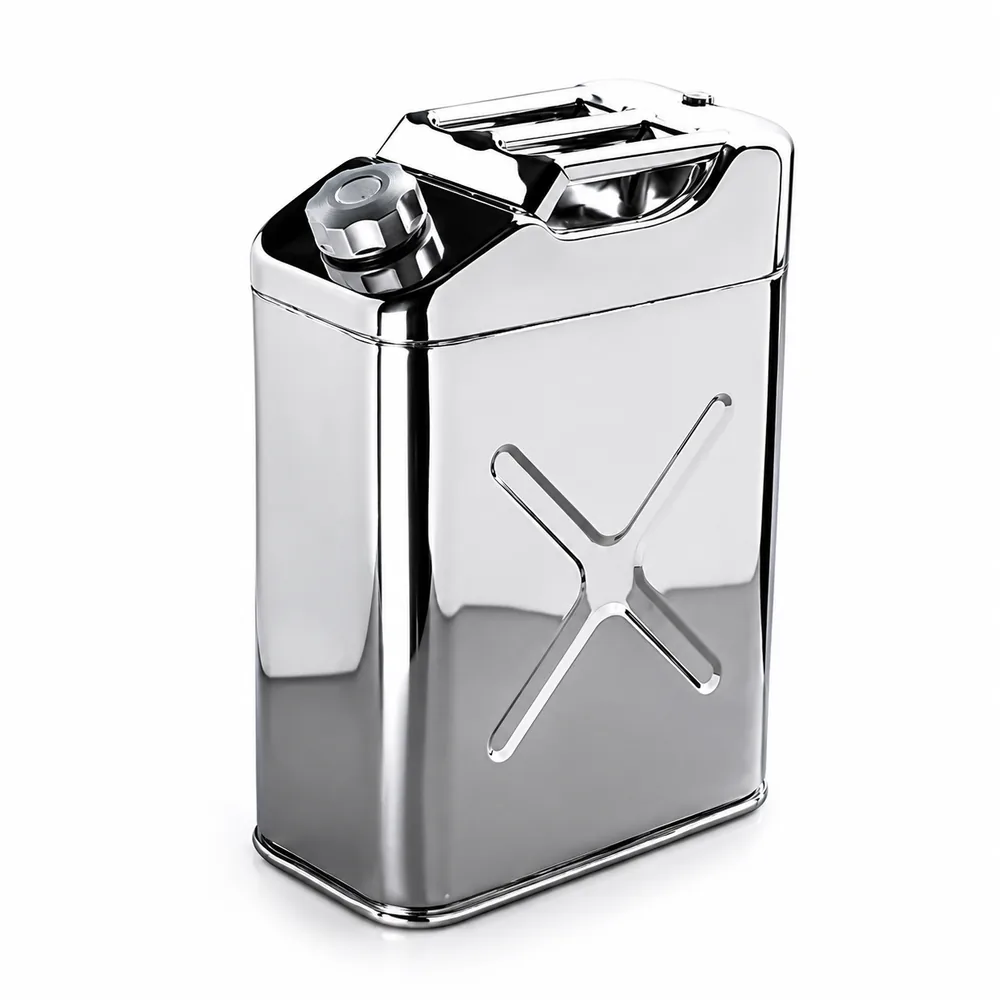 20L Stainless Steel Water Can 20L Stainless Steel Water Can |
AISI 304 across the wetted path, with no liner or coating to fail. |
| Water carried to rooms and classrooms | 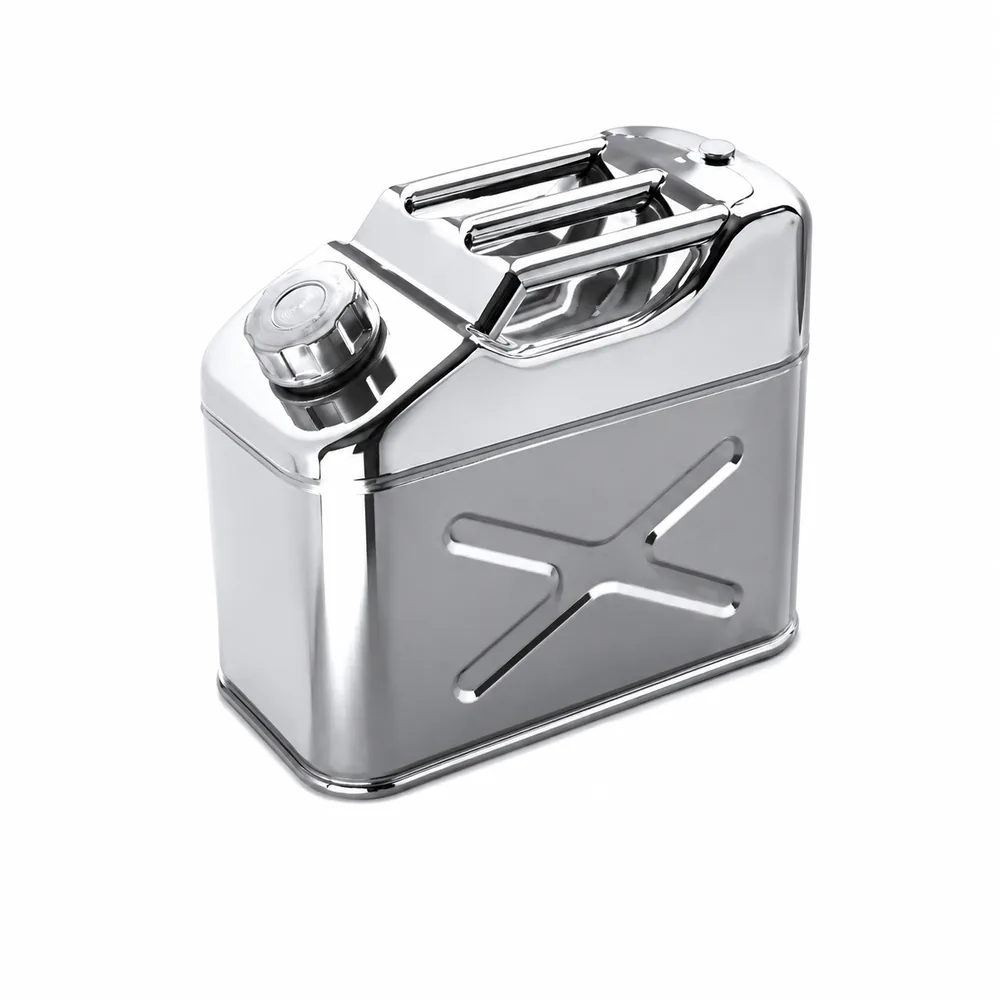 10L Stainless Steel Water Can 10L Stainless Steel Water Can |
About 10 kg of water when full, well inside the 26-litre lifting limit in CDC’s guide. |
| Bulk volume at lower cost | 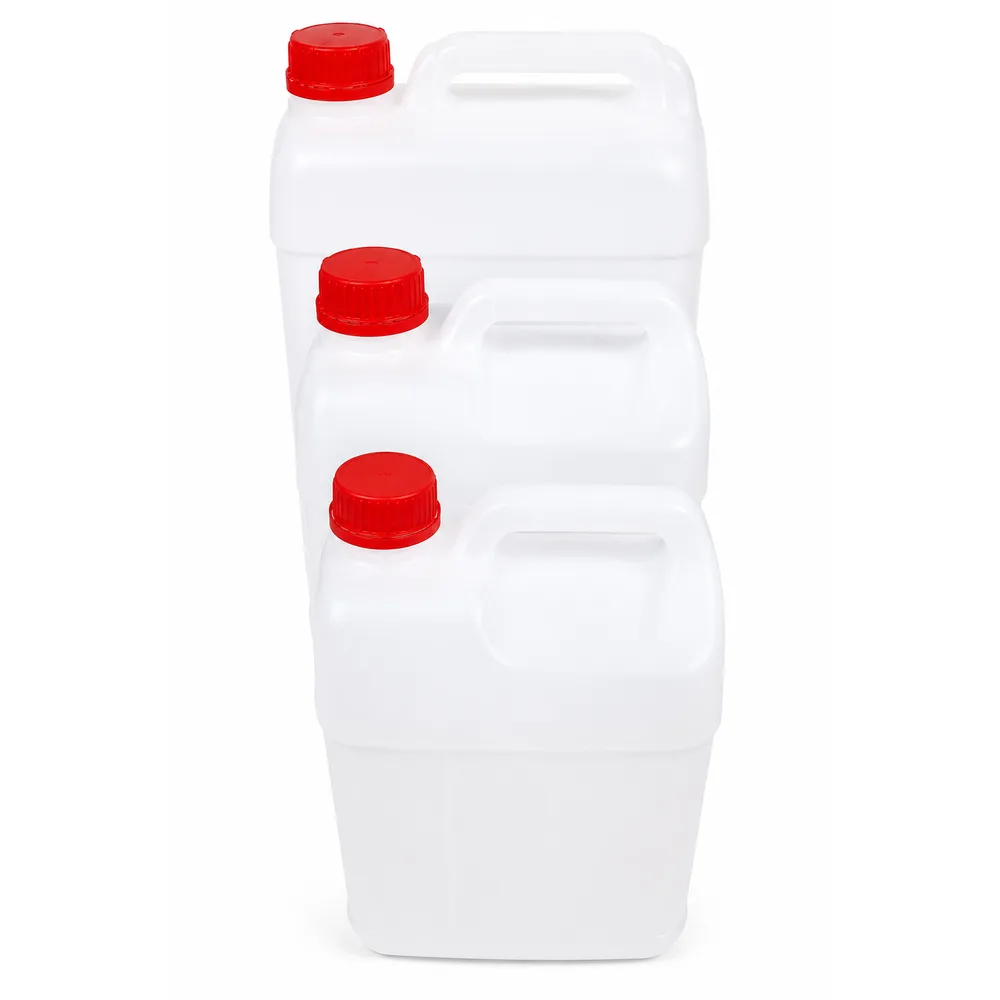 Food-Grade HDPE Jerrycan Food-Grade HDPE Jerrycan |
Food-contact HDPE from 5 to 30 litres; translucent, so store it in the dark. |
| A handwashing point | 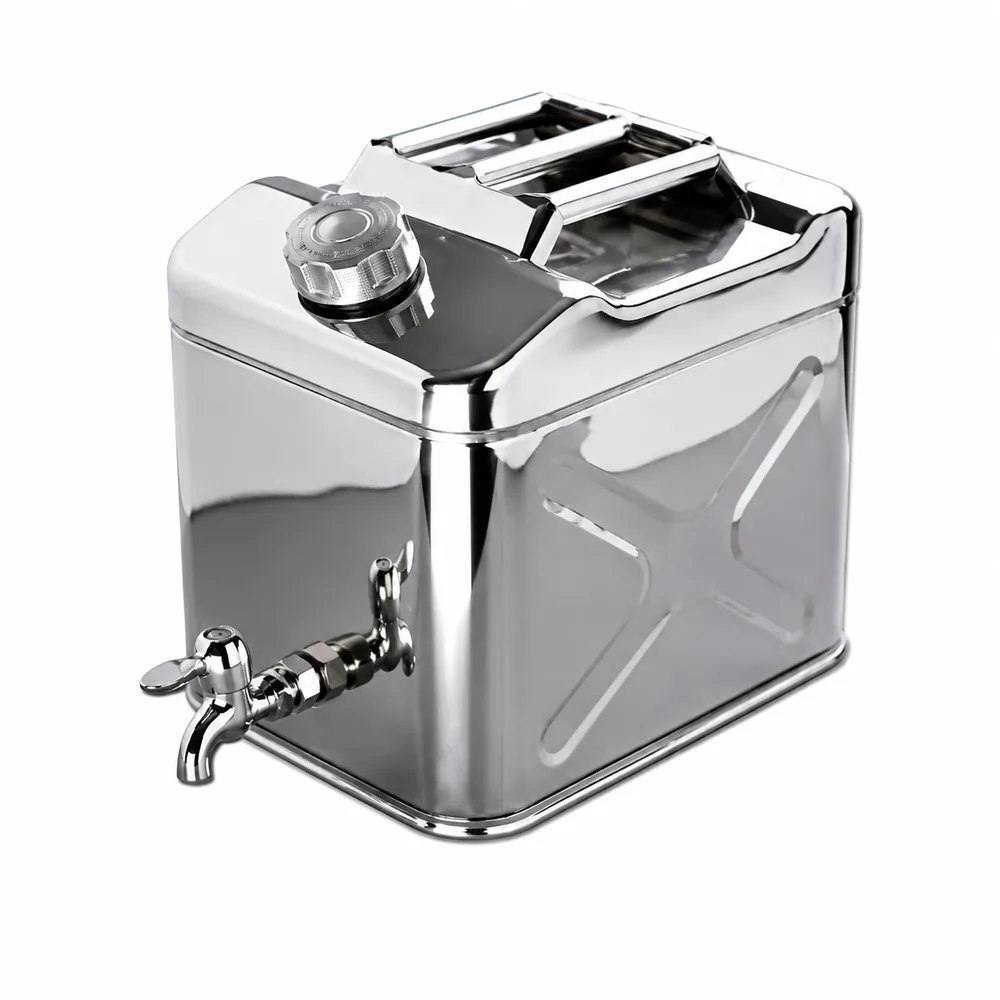 20L Stainless Dispensing Can with Tap 20L Stainless Dispensing Can with Tap |
An integrated tap draws water without lifting; confirm the tap seal for drinking water when you order. |
Neither CMS nor any UK regulator we found sets a volume, so plan from published figures. Miami-Dade requires 11.4 litres (3 US gallons) per person per day for licensed capacity, for at least three days. WHO gives 40 to 60 litres per in-patient per day plus 5 per member of staff. On those figures a 40-bed home needs 1,363 to 4,980 litres for three days.
WHO Technical Note 9 and the Sphere Handbook give 3 litres per pupil per day for drinking and handwashing, with toilets excluded. A 600-pupil school therefore needs 1,800 litres, or 90 twenty-litre cans, for one day. In normal operation WHO sets 5 litres per person per day for a day school and 20 litres for a boarding school.
Under the Security and Emergency Measures Direction 2022, water companies in England and Wales must plan an alternative supply. Company policies put it at 10 litres per person per day from the start, rising to 20 litres after five days. Care homes and schools are priority customers, but Affinity Water tells them not to rely on that supply and to put business continuity measures in place.
Bottled water suits drinking, and the UK Government advises households to buy it rather than fill their own containers. A care home or school also needs water for handwashing, medication, food preparation, cleaning and toilets. The CDC hospital planning guide uses bottled water for drinking and large food-grade containers for food preparation and handwashing.
Federal law sets no amount. 42 CFR 483.73 requires food, water, medical and pharmaceutical supplies for residents and staff, and CMS Appendix Z states that no requirement sets a quantity. Counties and states can: Miami-Dade requires 11.4 litres (3 US gallons) per person per day for licensed capacity for at least three days, and California requires 189 litres (50 US gallons) per licensed bed per day for 72 hours in acute hospitals.
CDC and Ready.gov say to replace water you bottle yourself every six months, and the American Red Cross and FEMA recommend the same interval for bought bottled water. The Swedish food agency, Livsmedelsverket, sets no fixed limit and asks for a check once or twice a year. Wash and sanitise each container before refilling, and store it cool, dark and frost-free.
The standards and regulations this page relies on, at their issuing body. Where a market rule is named here, check the current revision before you specify against it.
Last reviewed by David Guru, Co-Founder & Business Development Director.
People, days and litres per person per day are enough for a first answer: the number of cans by size, the material and a price.