
Who the petrol storage law for Great Britain reaches, what a petroleum storage certificate involves, and where DSEAR or the Northern Ireland rules take over.
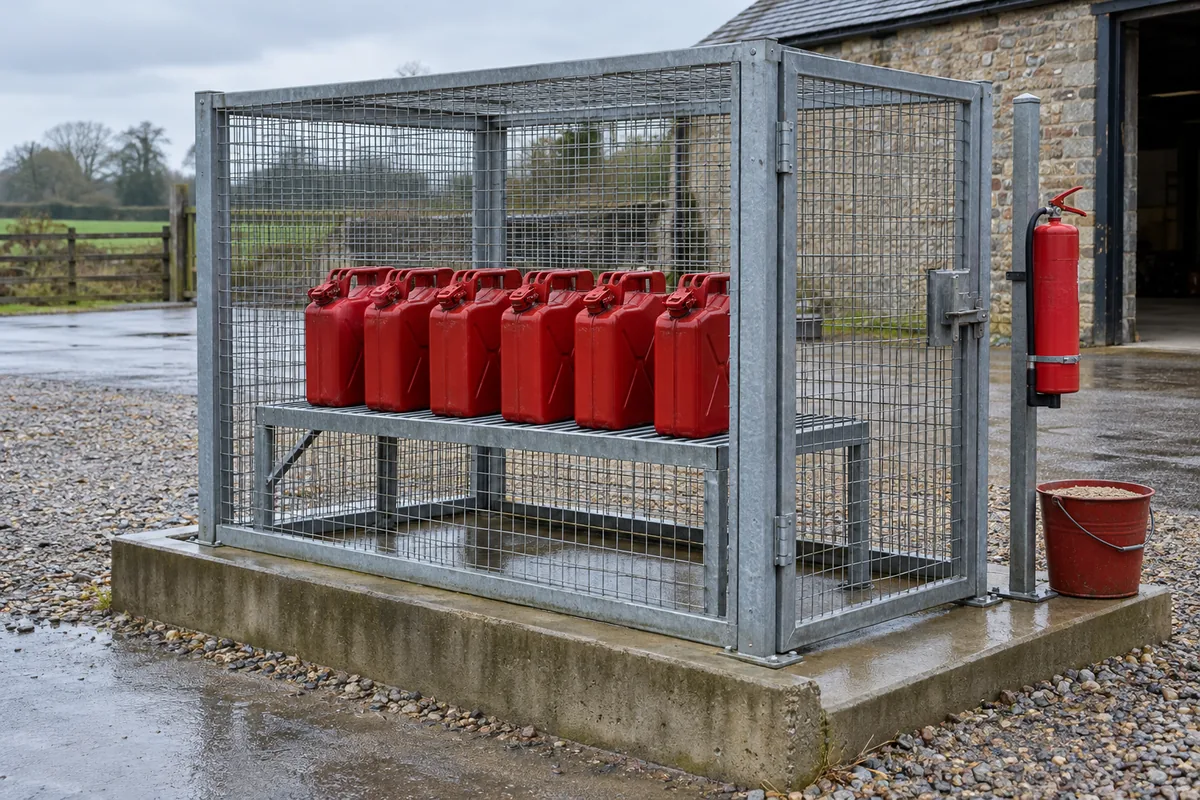
The Petroleum (Consolidation) Regulations 2014 (SI 2014/1637) are the petrol storage law for England, Scotland and Wales. A workplace that pumps petrol from a fixed tank into vehicles needs a petroleum storage certificate from its Petroleum Enforcement Authority. A home or club may keep 30 litres without notice, up to 275 litres after written notice, and more under a licence. Other workplaces answer to DSEAR instead.
Quick answer: What do the Petroleum (Consolidation) Regulations 2014 cover?
They are the petrol storage law for Great Britain. A workplace that fills vehicles from a fixed petrol tank needs a storage certificate, issued by the local Petroleum Enforcement Authority. Homes and clubs may store 30 litres without telling anyone and up to 275 litres after written notice; more needs a licence. Other workplaces follow DSEAR.
Work it out
They are the petrol storage regulations for Great Britain, made under the Health and Safety at Work etc. Act 1974 and in force since 1 October 2014. Petrol means petroleum, or a mixture containing it, that is liquid or viscous at 15 °C and has a flash point below 21 °C (regulation 2). Regulation 4 bans keeping petrol except under a storage certificate on dispensing premises, or within Part 3 at homes and other non-workplace premises.
They replaced 12 older laws, listed in paragraph 2.1 of the Explanatory Memorandum, among them the Petroleum (Consolidation) Act 1928 and the Petroleum-Spirit (Plastic Containers) Regulations 1982. The main change was to swap petrol licences at filling stations for storage certificates. HSE’s second statutory review, signed off on 2 August 2024, recommended keeping the Regulations unchanged.
| Part or schedule | What it covers |
|---|---|
| Part 1, regulations 1–4 | Definitions, scope and the general ban on keeping petrol |
| Part 2, regulations 5–12 | Dispensing premises: storage certificates, operator changes, appeals and dispensing rules |
| Part 3, regulations 13–17 | Homes, clubs and other non-workplace premises: the 30 and 275 litre steps and licences |
| Part 4, regulations 18–26 | Enforcement, container standards, repairs, road tankers, transition and review |
| Schedules 1–4 | Prescribed material changes; storage at non-workplace premises; portable container standards; repeals |
They apply at two kinds of place: dispensing premises, and non-workplace premises such as homes and clubs. Regulation 3 leaves out every other workplace, except one within the curtilage of a home, and every establishment under the Control of Major Accident Hazards Regulations 2015. HSE reads dispensing as pumping from a fixed tank into a vehicle’s fuel tank, so a static tank that fills only containers, or a mobile tank of any kind, needs no certificate.
| Situation | Law that applies | What you need |
|---|---|---|
| Filling station, retail or fleet, pumping petrol from a fixed tank into vehicles | 2014 Regulations, Part 2; DSEAR | A petroleum storage certificate from the PEA |
| Workplace keeping petrol in cans or a bowser, or filling only containers from a tank | DSEAR | A DSEAR risk assessment; no certificate |
| Home, club or association, up to 30 L | Schedule 2, paragraph 1 | Nothing to file; the storage-place rules apply |
| Home, club or association, over 30 L up to 275 L | Schedule 2, paragraph 2 | Written notice to the PEA before storage, renewed every January |
| Home, club or association, over 275 L | Regulation 14 | A licence for private use, for up to three years |
| Large fuel depot under COMAH 2015 | COMAH 2015; DSEAR | Outside the 2014 Regulations (regulation 3(1)(b)) |
| Anywhere in Northern Ireland | The 1929 and 1982 petroleum-spirit regulations | Ask the Petroleum Licensing Authority at the district council |
Petrol in a fuel tank connected to an engine is not counted (Schedule 2, paragraph 5), nor is up to 500 ml in a suitable container that is stopped (regulation 13(2)). Diesel does not meet the 21 °C test, so neither the certificate nor the home limits reach it; red diesel rules covers its storage.
A petroleum storage certificate is the permission to keep petrol on dispensing premises. The PEA must grant one when satisfied that the tanks, pipework and dispensers may reasonably be used to store petrol without an unacceptable risk to anyone’s health or safety (regulation 6(1)). It names the PEA and the premises and carries three drawings: the site layout, the tanks and pipework, and the petrol drainage (regulation 6(4)).
It has no expiry date. A certificate stays valid until a prescribed material change, or until the site goes more than 12 months in a row without keeping petrol (regulation 7). It belongs to the premises, so a sale or a new operator leaves it in force; both operators notify the PEA in writing between six months and 28 days beforehand (regulations 9 and 10). HSE notes that, unlike the old licence, a certificate carries no conditions and cannot be revoked, so later enforcement runs through DSEAR.
Schedule 1 lists four prescribed material changes: taking a petrol tank out of use, removing or decommissioning one, installing any tank, pipework or vapour pipework for petrol, and installing a pump or dispenser in a new location. Each is notified at least 28 days before work starts (regulation 8(2)) and brings a new certificate. HSE does not count replacing a tank or pipework as one.
Apply to the PEA between six months and 28 days before petrol storage begins (regulation 6(5)). The PEA is the fire and rescue authority in Greater London and the metropolitan counties, the county council elsewhere in England (which may include district, borough, city or unitary councils), and the council in Wales and Scotland (regulation 2). Many councils run it through trading standards, as Aberdeenshire and Oxfordshire do. HSE says you need to apply only for a new site or one out of use for more than 12 months; sites licensed before October 2014 converted to certificates as their licences expired (regulation 23).
The application gives the applicant’s name and address, the site address and the three drawings (regulation 6(3)); HSE recommends paper copies at a scale of 1:100. A refusal can be appealed to the Secretary of State (regulation 11).
The fee is charged for each year of the certificate, in three bands set by the most petrol the site stores: up to 2,500 litres, over 2,500 up to 50,000 litres, and over 50,000 litres. A licence for more than 275 litres at a home or club uses the same bands. The amounts sit in Schedule 7, Part 6 of the Health and Safety and Nuclear (Fees) Regulations 2022, which HSE says are reviewed each year, so take the current figure from your PEA. HSE allows payment up to 10 years ahead, though its 2024 review found that not every PEA offers the 10-year option.
A workplace that stores petrol but does not dispense it falls under the Dangerous Substances and Explosive Atmospheres Regulations 2002 instead. HSE names golf courses and scrap yards as examples and treats filling containers there as ancillary. DSEAR sets no quantity limit: the employer assesses the fire and explosion risk (regulation 5), removes or controls it (regulation 6) and classifies places where an explosive atmosphere may occur (regulation 7). DSEAR and ATEX for fuel stores covers the zones, and COSHH storage requirements covers a store that also holds substances hazardous to health.
For work activities, HSE lets a business fill UN-approved petrol containers larger than 10 or 20 litres at a filling station when the station agrees in advance. The containers must meet the Carriage of Dangerous Goods Regulations 2009, and the business must share a risk assessment that covers the filling. On the road, petrol is UN 1203 under ADR. Generator fuel storage, agricultural fuel storage and fuel bowser regulations cover the common workplace cases.
Part 3 covers homes and non-workplace premises such as clubs, where petrol must be kept otherwise than for sale (regulation 13(1)(b)). Schedule 2 sets where it may sit, and the rules tighten above 30 litres:
| Rule | Up to 30 L (paragraph 1) | Over 30 up to 275 L (paragraph 2) |
|---|---|---|
| Containers | Suitable portable containers or one demountable fuel tank; in a vehicle, two containers at most | Suitable portable containers, demountable fuel tanks or both |
| Storage place | In, above, below, attached to or within the curtilage of a building; not in a flat or public building, though below a flat is allowed | Up to 30 L as before; the rest in a detached building, or a store attached to a non-domestic building |
| Fire separation | From the rest of the building and its exit routes, or from the building it adjoins | From the building, for an attached store |
| Fire and spill kit | Not required | Fire extinguishing and spillage containment kit in or near the store |
| Notice to the PEA | None | In writing before storage starts, then every January |
Paragraph 3 applies to both bands. The store must not be living accommodation or a place where petrol is dispensed; an indoor store needs a direct exit to the open air and ventilation to it. Ignition and heat sources must be controlled, and petrol may be used there only in an engine’s fuel tank or, up to 150 ml at a time, for cleaning or repairs. Fire separation means a fire-resisting external wall, or an internal wall, partition or ceiling with fire-resistant linings, where any door is self-closing and of hardwood or other fire-resisting material (paragraph 7).
Above 275 litres the PEA may grant a licence for private use (regulation 14). It names the licensee and the places petrol is kept, may carry conditions on storage, dispensing, fire equipment and security, lasts up to three years and cannot be transferred. HSE says pumping petrol into a vehicle or boat at a home or club needs one. How long stored petrol keeps is on storing fuel safely.
Schedule 3 sets one standard for every portable petrol storage container, and regulation 19 makes anyone who manufactures, imports or supplies one meet it, with a due-diligence defence for a supplier who did not make it. UK petrol container regulations covers the limits and the marking. The main change for containers was size: plastic petrol cans had been capped at 5 litres (Petroleum-Spirit (Plastic Containers) Regulations 1982, regulation 3(1)(b)), and HSE says petrol may now be stored in larger plastic and metal containers.
Cans made to the old rules could still be made and sold until 1 October 2016 (regulation 22(1)), and an older can in good repair still counts as suitable (Schedule 2, paragraph 6). HSE’s 2014 container guidance notes there is no international, European or British standard for petrol storage containers. It says a UN-approved metal or plastic container that meets ADR’s performance requirements for petrol would be considered robust for most storage conditions.
A demountable fuel tank is the fuel tank of a boat, vehicle, hovercraft or aircraft engine, designed to come off and go back on without leaking. A forecourt may fill one (regulation 12(1)(b)), and a home may keep up to 30 litres in a single demountable tank without notice (Schedule 2, paragraph 1).
Scotland and Wales follow the same Regulations as England, and the enforcing body is the main difference. In Wales the PEA is the county or county borough council and in Scotland the council (regulation 2). A Scottish appeal against a refused certificate or licence runs under the Scottish hearings rules of 1974 (regulations 11(4) and 15(4)).
Northern Ireland has its own legislation (Explanatory Memorandum, paragraph 5.1). HSENI applies the Petroleum Spirit (Motor Vehicles etc.) Regulations 1929 and the Petroleum Spirit (Plastic Containers) Regulations 1982 there. In a domestic garage or within six metres of a building, they allow two metal containers of up to 10 litres or two approved plastic containers of up to 5 litres. More, or larger containers, needs notice to the Petroleum Licensing Authority at the district council, and more than 275 litres needs a petrol licence. Workplaces there follow the Dangerous Substances and Explosive Atmospheres Regulations (Northern Ireland) 2003. Ireland, a separate state, licenses petrol stores through the local or harbour authority under the Dangerous Substances (Retail and Private Petroleum Stores) Regulations 1979.
A petrol tank can answer to three sets of rules: the 2014 Regulations for the certificate, DSEAR for the fire and explosion risk, and in England the Control of Pollution (Oil Storage) (England) Regulations 2001. These count petrol as oil (regulation 1(2)). Those leave out containers of 200 litres or less, tanks inside a building or wholly underground, and refining or onward distribution sites (regulation 2(2)). An above-ground petrol tank of more than 200 litres outdoors at an English business needs secondary containment of at least 110% of its capacity: the bund capacity calculator works it out, and UK oil storage regulations covers the other nations.
Larger bulk storage at an establishment under COMAH 2015 sits outside the 2014 Regulations (regulation 3(1)(b)). Regulation 21 bans filling a fuel tank or a portable container straight from a road tanker carrying petrol. For filling station design and operation, HSE points operators to two industry guides, the Blue Book and the Red Guide.
We make steel cans inside the Schedule 3 limit for a metal petrol container. They are the 20 litre NATO-pattern fuel can, a 10 litre NATO can, a 3 litre compact can and a 20 litre upright tank, each coated inside for hydrocarbons. Our dangerous-goods designs hold UN certification, certified per design type and made under quality assurance the competent authority accepts.
Name the British petrol market when you ask for a quotation, so the Schedule 3 wording, hazard sign, nominal capacity and date of manufacture go on with the rest of the marking. We do not build tanks, dispensers or bowsers. For the spillage containment Schedule 2 asks for above 30 litres, we make drip trays and salvage drums.
| Your use case | Recommended can | Why this one |
|---|---|---|
| Petrol at the 20 litre metal limit | 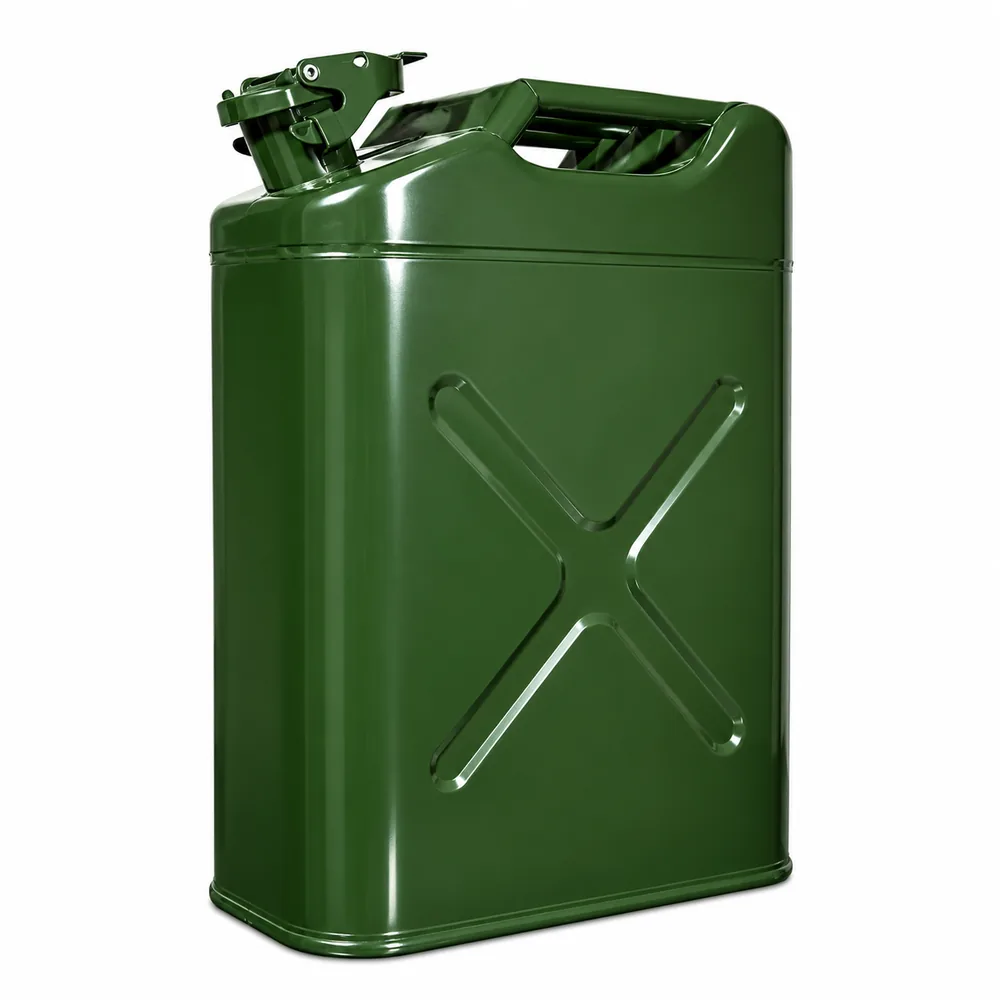 20L NATO Steel Fuel Can |
UN-marked pressed steel, coated inside for hydrocarbons, at the largest size Schedule 3 allows for a metal petrol container. |
| Lighter petrol stock for homes and clubs | 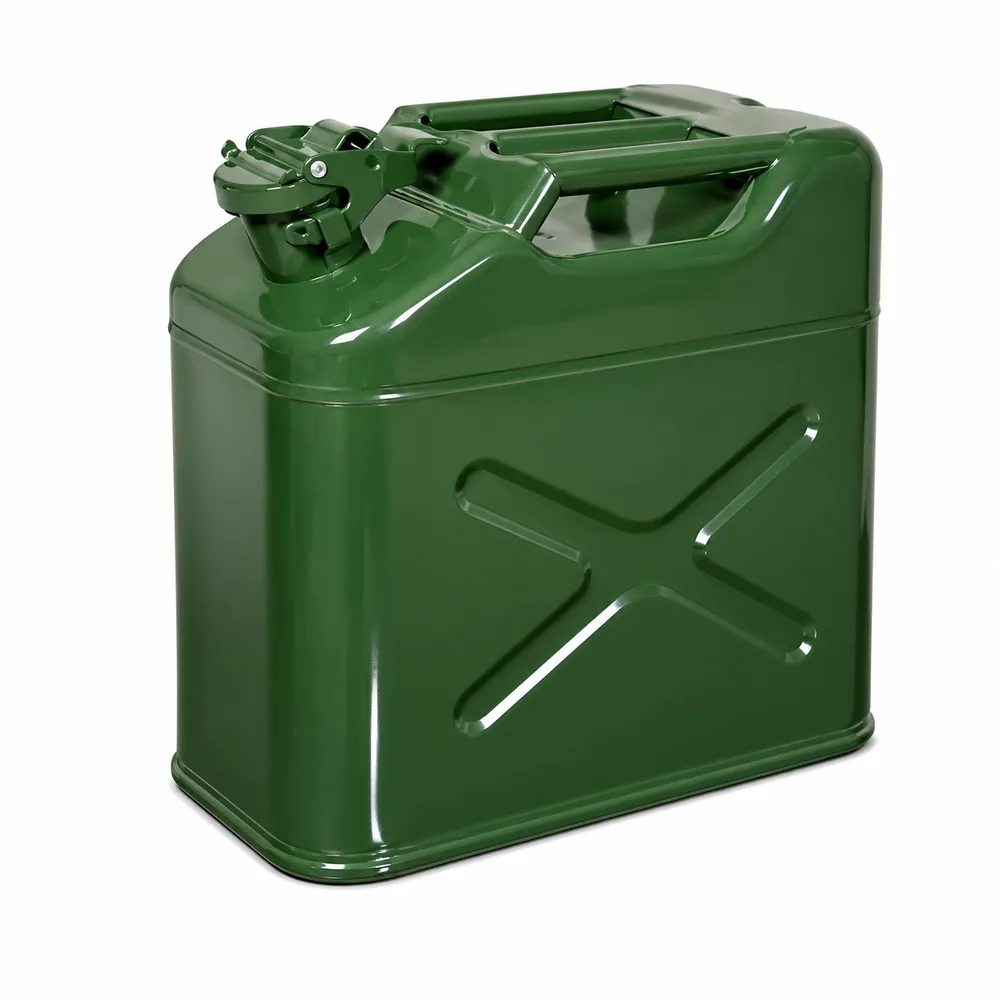 10L NATO Steel Can |
The NATO pattern at half the filled weight; the fuel build is certified to UN 3A1 per design type. |
| Reserve petrol for small engines | 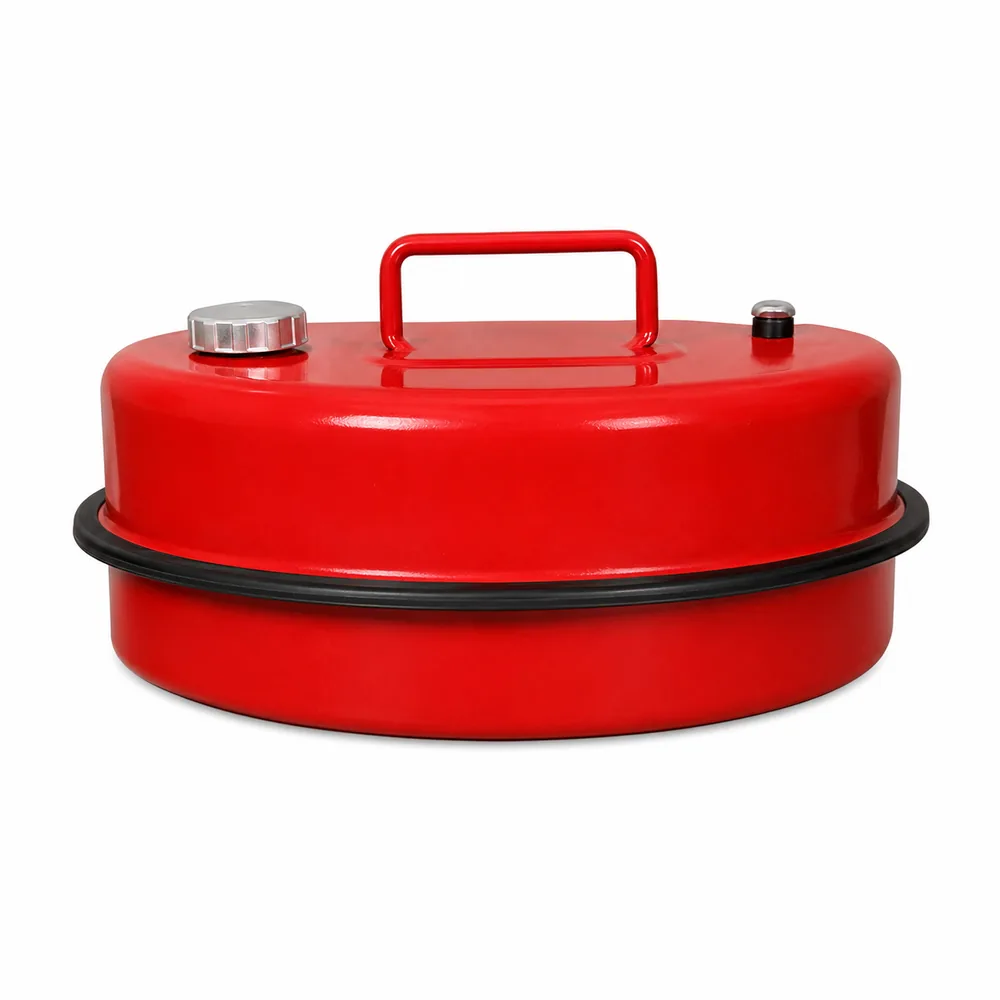 3L Compact Fuel Can |
Three litres of steel with an anti-corrosion, anti-UV finish, well inside every Schedule 3 limit. |
| Fleet and retail petrol programmes | 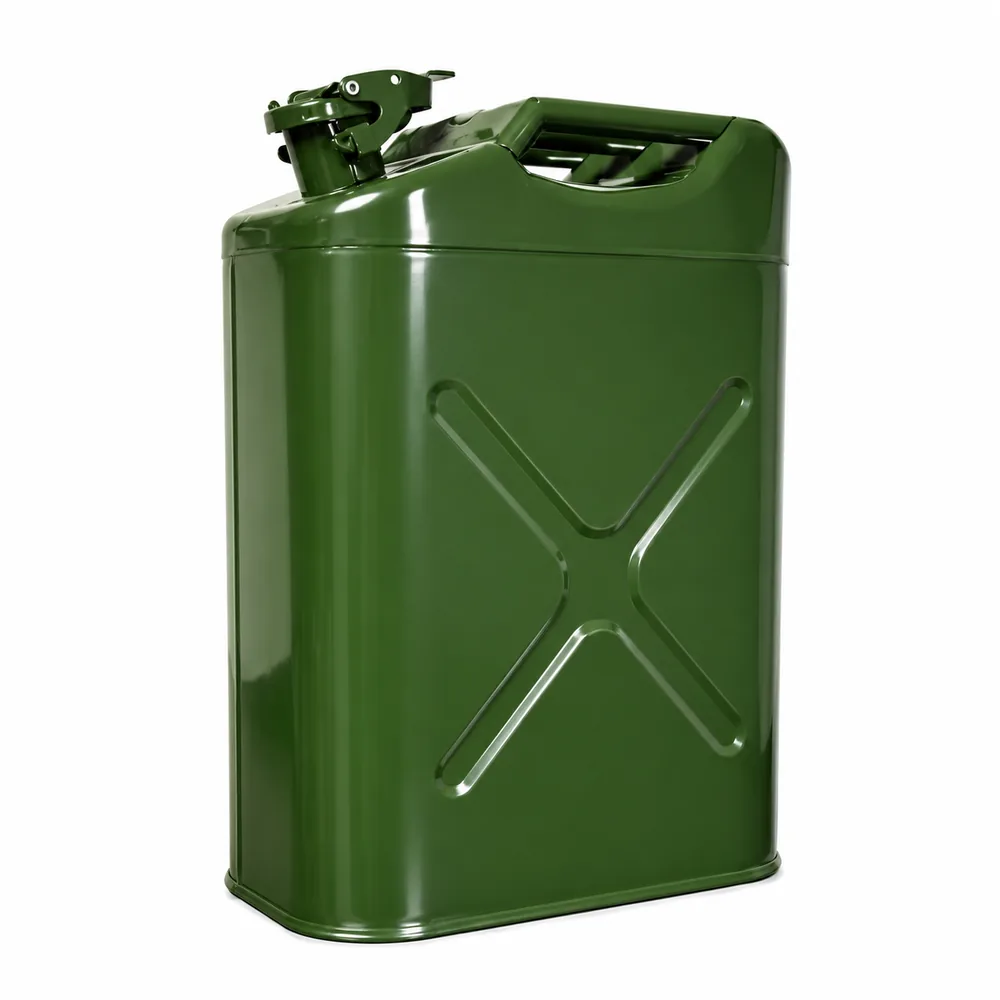 20L Upright Steel Fuel Tank |
Upright pressed steel in RAL colours, coated inside for petrol, diesel and kerosene. |
Yes. They have applied in England, Scotland and Wales since 1 October 2014, and their one amendment so far points the major-hazard exclusion at the COMAH Regulations 2015. Regulation 26 required a review within five years. HSE has run two, in 2019 and on 2 August 2024, and the second found the Regulations meet their aims and recommended keeping them with no changes.
On legislation.gov.uk, which publishes SI 2014/1637 as web text and as the original printed PDF, with the Explanatory Memorandum and the 2024 review beside it. HSE’s petrol pages explain the rules for filling stations, homes and clubs, container makers and workplaces, and its seven-page Portable petrol storage containers guidance of October 2014 is a PDF. GOV.UK’s licence finder takes a postcode and names your local authority.
No. The certificate, the home limits and the container sizes apply to petrol, which the 2014 Regulations define by a flash point below 21 °C, and diesel does not meet that test. Diesel at work still falls under DSEAR, because CLP classes it as a flammable liquid (HSE), and in England a diesel tank of more than 200 litres kept outdoors at a business needs secondary containment under the oil storage rules.
No. Since 1 October 2014 a site that dispenses petrol holds a storage certificate, which has no expiry date, carries no conditions and stays with the premises. A licence now covers more than 275 litres at a home or club: it is personal to the licensee, can carry conditions and lasts up to three years. GOV.UK’s licence finder still calls both a petroleum storage licence, and the same authority issues each.
No. Part 3 lets you keep petrol at a home or club only when it is kept otherwise than for sale (regulation 13(1)(b)). A licence for more than 275 litres may authorise keeping petrol for private use alone, which excludes keeping it for sale (regulation 14(2) and (3)). Nobody may supply petrol to a person under 16 either (regulation 12(3)).
The 2014 Regulations set no number. HSE leaves it to the filling station’s own risk assessment and points to section 8 of the Red Guide, the industry guidance on fire and explosion risk at filling stations. Each can must be a suitable portable container, so 10 litres or less in plastic and 20 litres or less in metal (regulation 12(1)(b)). A business filling larger UN-approved containers for work needs the station’s agreement in advance.
Not inside the flat. Schedule 2, paragraph 1 lets you keep up to 30 litres in, above, below or attached to a building, but not where that building is a flat or a public building. It allows two exceptions, each fire-separated from the building: a store below a flat, such as a garage underneath it, and a store attached to a public building. Above 30 litres the extra petrol must go in a detached building or a fire-separated store attached to a non-domestic building.
Only after clearing it of petrol and petrol vapour. Regulation 20 bars a person storing petrol at a home or club from repairing, or letting anyone repair, a container or vessel they know has held petrol. The bar applies unless they first take all reasonable precautions to make it free of petrol and flammable vapour. The duty names vapour as well as liquid, because a can that looks empty can still hold it.
Breaking them is a criminal offence under section 33(1)(c) of the Health and Safety at Work etc. Act 1974. Tried on indictment, it carries up to two years in prison, a fine, or both (Schedule 3A), and a magistrates’ court can also fine and imprison. The Petroleum Enforcement Authority enforces the Regulations in its area, and DSEAR at petrol filling stations as well (regulation 18).
Yes, with five exceptions. Regulation 3(2) lifts five provisions for Her Majesty’s Forces. They are the two under-16 rules (regulation 12(2) and (3)) and the limit on dispensing away from dispensing premises (12(4)). The other two are the PEA’s enforcement role over filling from road tankers (18(1)(b)) and the ban on filling straight from a road tanker (21). HSE’s 2024 review notes that Ministry of Defence sites, which once regulated themselves, now fall under the Regulations, with PEAs as regulator.
Yes, for ships. The International Maritime Organization’s MARPOL Annex I, in force since 1983, controls oil pollution from ships, and the IMDG Code governs packaged dangerous goods at sea, such as petrol in cans shipped as UN 1203. The 2014 Regulations cover keeping and dispensing petrol in Great Britain, including filling a motor boat at a dispenser (regulation 12(1)(a)), and leave carriage by sea to those codes.
The standards and regulations this page relies on, at their issuing body. Where a market rule is named here, check the current revision before you specify against it.
Last reviewed by David Guru, Co-Founder & Business Development Director.
Tell us your market, your fuel and your volumes. We come back with a specification sheet and a quotation.