
What the law requires, what HSE guidance adds, and how to set up the store, the cabinet and the sign on the door.
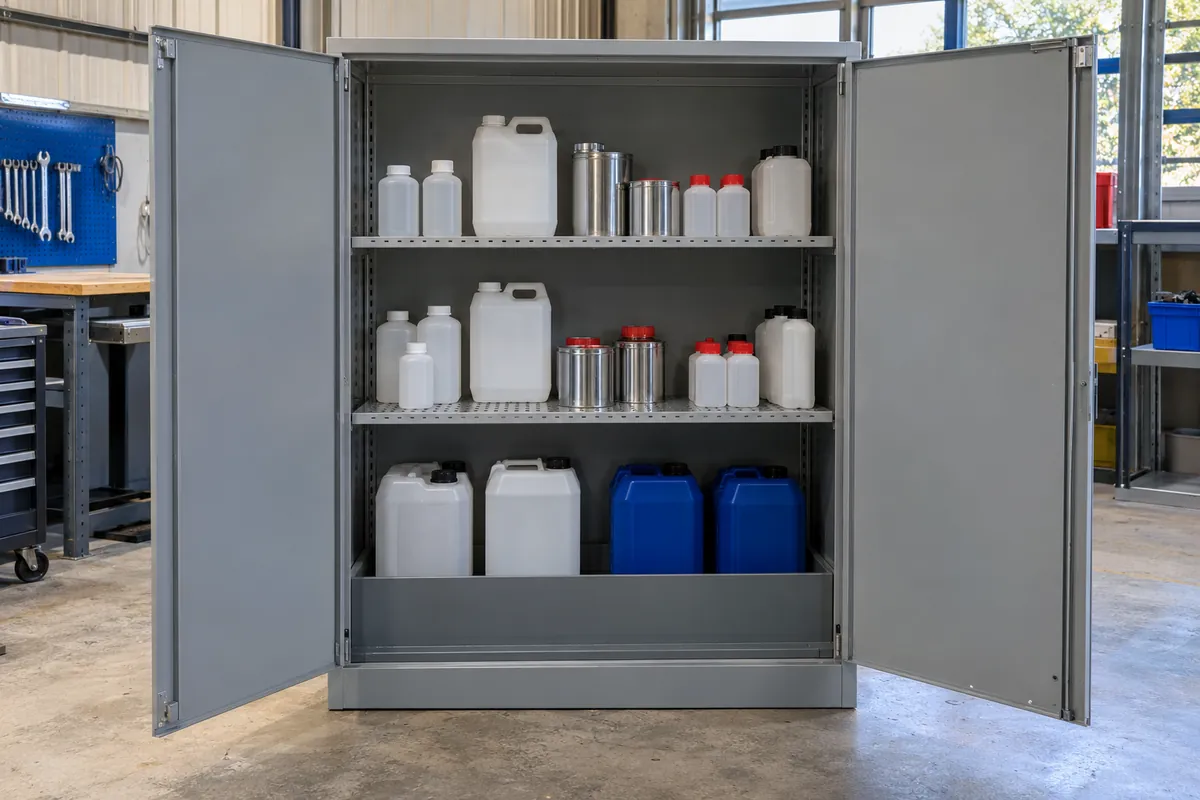
COSHH has no single storage regulation. Regulation 7(4)(a) of the COSHH Regulations 2002 requires “arrangements for the safe handling, storage and transport” of hazardous substances, and your regulation 6 risk assessment decides what those are. In practice: closed, labelled containers, the smallest workable quantity, segregation by hazard, a sump under liquids, a warning sign on the store, and DSEAR on top for anything flammable.
Quick answer: What are the COSHH storage requirements?
COSHH has no single storage rule: regulation 7(4)(a) asks for arrangements for safe storage, and your regulation 6 risk assessment sets them. In practice that means closed, labelled containers, the minimum quantity, segregation by hazard class, a sump under liquids and a warning sign on the store, with DSEAR on top for anything flammable.
The Control of Substances Hazardous to Health Regulations 2002 (SI 2002/2677) apply across Great Britain. Storage is named once, in regulation 7(4)(a), as one of the control measures an employer must apply. The rest of what a store needs follows from four duties: assess the risk before the work starts (regulation 6), prevent or control exposure (regulation 7), keep the quantity on site to the minimum the work requires (regulation 7(4)(c)(iii)), and prepare for spills and other emergencies (regulation 13).
The detail sits in layers with different legal weight, and sales copy for cabinets and signs tends to blur them.
| Layer | What it says about storage | Legal status |
|---|---|---|
| COSHH Regulations 2002 | Reg 6: assess first. Reg 7(4)(a): arrangements for safe storage | Law |
| L5 Approved Code of Practice, 6th edition (2013) | Para 127: carcinogens in closed, clearly labelled containers | Special status: depart from it and prove compliance another way |
| HSE guidance: INDG136, HSG51, HSG71 | 50 L in a workroom flammables cabinet; 3 m between incompatible classes | Not compulsory; following it is normally enough |
| Standards and trade practice | BS EN 14470-1 cabinets; cabinet colours | Not a UK legal requirement |
COSHH covers harm to health: a substance breathed in, swallowed or splashed on skin. It stops where a substance is hazardous solely because it is flammable, explosive or radioactive (regulation 5(1)(b)). The Dangerous Substances and Explosive Atmospheres Regulations 2002 (DSEAR) take the fire and explosion side, and HSE lists what they cover: solvents, paints, varnishes, flammable gases such as LPG, combustible dusts, pressurised gases and substances that corrode metal.
A solvent thinner that is harmful to breathe and flammable falls under both: COSHH for the vapour in a worker’s lungs, DSEAR for the vapour reaching a heater (DSEAR and ATEX for fuel and chemical stores).
| Question | COSHH 2002 | DSEAR 2002 |
|---|---|---|
| Hazard covered | Health: toxic, corrosive, irritant, sensitising, carcinogenic | Fire, explosion, pressurised gas, corrosion of metal |
| Storage duty | Reg 7(4)(a): safe handling, storage and transport | Reg 6(6): safe handling, storage and transport |
| Quantity | Reg 7(4)(c)(iii): the minimum the work needs | Reg 6(4)(a): reduced to a minimum |
The Control of Pollution (Oil Storage) (England) Regulations 2001 cover oil kept outdoors in any container over 200 litres. They ask for secondary containment of 110% of the largest container or 25% of the total, whichever is greater (UK oil storage regulations). The Petroleum (Consolidation) Regulations 2014 cover petrol dispensed into vehicle tanks and petrol at non-workplace premises; DSEAR covers it at other workplaces (UK petrol container rules).
In a designated store, cabinet or cage away from the work itself, holding no more than the work needs, with every container closed and carrying its supplier label. Section 7 of the safety data sheet, “Handling and storage”, gives the conditions for safe storage and any incompatibilities (REACH Annex II, 7.2). A good location is:
Schedule 1, Part III, para 1 of the Health and Safety (Safety Signs and Signals) Regulations 1996 requires containers used at work for hazardous chemicals, and containers used to store them, to carry the CLP hazard pictograms. The exception covers a container used briefly or one whose contents change often, and then other measures must give the same protection. Choose a container the liquid will not attack (chemical compatibility guide). A UN mark is a transport approval. For storage, what counts is compatibility and a label (UN approved packaging).
Store by hazard class, never alphabetically or by department. DSEAR regulation 6(4)(g) requires incompatible dangerous substances to be segregated, and HSE’s chemical warehousing guide, HSG71, sets out in Table 2 how far apart each pair of classes should be. The table works from the transport class in section 14 of the safety data sheet (class 3 flammable liquids, 5.1 oxidisers, 6.1 toxic substances, 8 corrosives), the same system that assigns packing groups.
HSG71 gives three outcomes. “Segregate from” means a separate building compartment or outdoor compound, with imperforate walls of at least 30 minutes’ fire resistance. “Keep apart” means at least 3 m between packages in the store. “Separation may not be necessary” means confirm with the supplier.
The table ignores reactions within a class (HSG71 para 120). Acids with hypochlorites give off chlorine, acids with cyanides hydrogen cyanide, acids with sulphides hydrogen sulphide, and acids with alkalis heat. A cleaner’s cupboard with an acid descaler beside bleach is the everyday case. Give incompatible liquids separate sumps, so a leak from one cannot run into the other (HSG71 para 206).
No regulation specifies a “COSHH cabinet”. A cabinet is one way to meet regulation 7(4)(a), and its design depends on the contents. For toxic and corrosive substances that will not burn, it needs a material the contents will not attack, an integral sump, a door that closes, the warning sign, and ventilation where the assessment finds vapour building up. Acids attack galvanising and powder coat, so a steel cupboard holding them corrodes from the inside.
For flammable liquids, HSG51 asks for a cabinet or bin of fire-resisting construction with a sump holding 110% of the largest container in it (para 207). It also asks for 30 minutes’ integrity, gap-free joints, close-fitting doors and supports and fastenings that melt above 750 °C (para 214). HSE’s stated purpose for those 30 minutes is time for people to escape (para 213). The inside of the cabinet counts as zone 2 under DSEAR (para 208). Cabinets tested to BS EN 14470-1 go further, and HSE states that using them is not a UK legal requirement (para 216).
| Liquid in a workroom cabinet or bin | HSG51 recommended maximum (para 211) |
|---|---|
| Extremely or highly flammable, or flashpoint below the room’s maximum temperature | 50 L |
| Other flammable liquids, flashpoint up to 60 °C | 250 L |
HSE calls these recommended maxima (para 212). Store more and record the justification in your risk assessment; for mixed contents, treat the whole cabinet as holding its lowest-flashpoint liquid.
None of the four is written into COSHH; each falls to the risk assessment.
| Question | Answer | Source |
|---|---|---|
| Locked? | Yes, wherever untrained staff, the public or children could reach it. Restrict the keys to authorised people. | HSG51 paras 76–77; COSHH reg 7(4)(c)(i), fewest people exposed |
| Vented? | Where the assessment finds vapour building up inside, as with fuming acids. Extraction fitted to control exposure needs a thorough examination and test at least every 14 months. | COSHH reg 7(3)(b) and 9(2)(a); HSG51 para 212 |
| Earthed? | Where the DSEAR assessment finds static could ignite flammable vapour. A cabinet of non-flammable substances has no ignition risk to control. | DSEAR reg 6(4)(f)(i); L138 para 243; HSG51 para 208 |
| Yellow? | No. The law fixes the colour of the warning sign, a yellow triangle with a black pictogram, and leaves the cabinet colour to the maker. | Safety Signs Regulations 1996, Sch 1; L64 para 63 |
A vent changes the fire cabinet you bought: the duct has to keep the 30-minute rating, and HSG51 Appendix 2 asks for fire-resisting ductwork discharging to open air at least 3 m above ground. Ask the cabinet maker before you drill.
The sign on the store is law. Schedule 1, Part III, para 5 of the Safety Signs Regulations 1996 requires any area, room or enclosure holding significant quantities of hazardous substances to carry a warning sign, unless the container labels do the job on their own. A store of several hazards may use the general danger sign, placed near the store or on its door.
HSE’s guidance L64 (para 63) names the yellow triangle with a black pictogram; where no matching warning sign exists, the CLP pictogram is used instead. A flammables store adds a “No smoking, no naked lights” sign at the entrance, and the EX sign where the area is zoned (HSG51 paras 142–143). Most sites holding 25 tonnes or more of dangerous substances must also mark the site entrance under the Dangerous Substances (Notification and Marking of Sites) Regulations 1990 (L64 para 65). A COSHH poster is optional, though regulation 13(2)(b) asks for emergency information to be displayed where appropriate.
Regulation 13 requires emergency procedures, first-aid facilities and warning systems for an incident involving a hazardous substance, unless the quantities on site present only a slight risk (regulation 13(4)). L5 gives a serious spillage of a corrosive as an example (para 278), and asks the emergency plan to record where substances are stored and an estimate of the amount held on an average day (para 285).
The sump size depends on the liquid. England’s general rules put a figure in law for oil alone: 110% of the largest container or 25% of the total, whichever is greater. For other liquids the same 25% or 110% is common practice, written into GPP 26, the pollution-prevention guide for Wales, Scotland and Northern Ireland. For flammables, HSG51 para 55 asks for at least 110% of the largest metal container and warns that plastic containers in a fire may all fail within about 10 minutes, so plan for the whole inventory. The spill pallet sizing calculator runs the arithmetic, and choosing a spill pallet covers load ratings and materials.
Keep absorbent, a salvage drum and a lidded bin for used pads within reach of the store. Where section 4 of the safety data sheet calls for eye irrigation, an eyewash at the store answers the first-aid duty in regulation 13(1)(a).
Outdoor storage suits flammable liquids, because vapour from a leak disperses in an open, uncongested location at ground level away from ignition sources (HSG51 paras 145–146). A shed or other dedicated building needs permanent ventilation at high and low level and a sill that holds a spill (paras 169–175). HSG51 Table 1 sets the minimum gap between the store and any occupied building, boundary, process unit, tank or ignition source by the quantity held. A fire wall at least 2 m high with 30 minutes’ fire resistance can stand in for the distance (paras 161 and 166).
Unless the whole site is secure, fence the compound with lockable gates and fit locks to store doors (HSG51 para 77); for a few drums, a robust lockable metal cage with protection from vehicles will do (para 243). Rain that collects in a sump takes the space a spill needs. HSG51 para 149 allows a manual drain valve under a procedure that closes it after use. The English oil storage rules bar any valve or opening that drains an oil bund, so there you pump it out or keep the rain off with a cover. GPP 26 adds 100 mm of wall height on large outdoor bunds.
Regulation 12 requires information, instruction and training for anyone liable to be exposed, including access to the safety data sheets. A short talk at the store, walking through these checks, is one way to deliver it:
The store is where the largest quantity sits unattended. A leaking corrosive, a reaction between incompatible products or a fire reaching plastic containers turns routine stock into a regulation 13 emergency.
We make the containment and response equipment that sits in and around a COSHH store. Polyethylene drum spill pallets have sumps from 42 to 488 litres, and bench and drip trays run from 4 to 150 litres for bottles and pails. Covered spill pallets keep rain out of an outdoor sump. Salvage drums range from 75 to 360 litres, portable eyewash units come in 30 and 53 litres, and yellow wheeled bins hold used absorbent. Ask for the chemical resistance statement for your liquid before choosing a sump.
We do not make fire-resisting cabinets, so a flammables or COSHH cabinet comes from a cabinet maker, and a cover on one of our pallets keeps rain off without making it a fire-rated enclosure. For decanting, our UN-certified jerrican designs give a closed container that takes a CLP label; each is certified per design type, made under quality assurance the competent authority accepts.
| Your use case | Recommended can | Why this one |
|---|---|---|
| Drums of chemicals in storage | 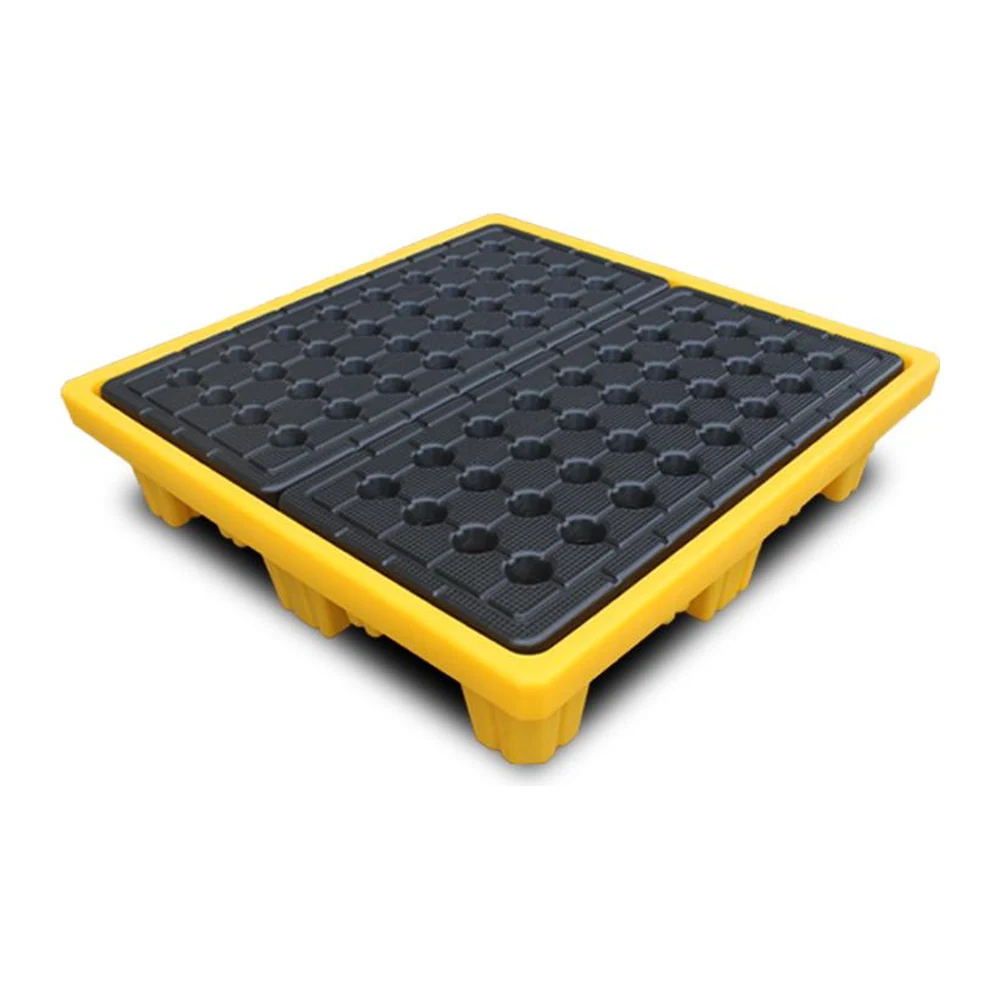 Drum Spill Pallets |
Sumps from 42 to 488 litres hold what a failed drum releases. |
| Bottles and pails on a shelf or bench | 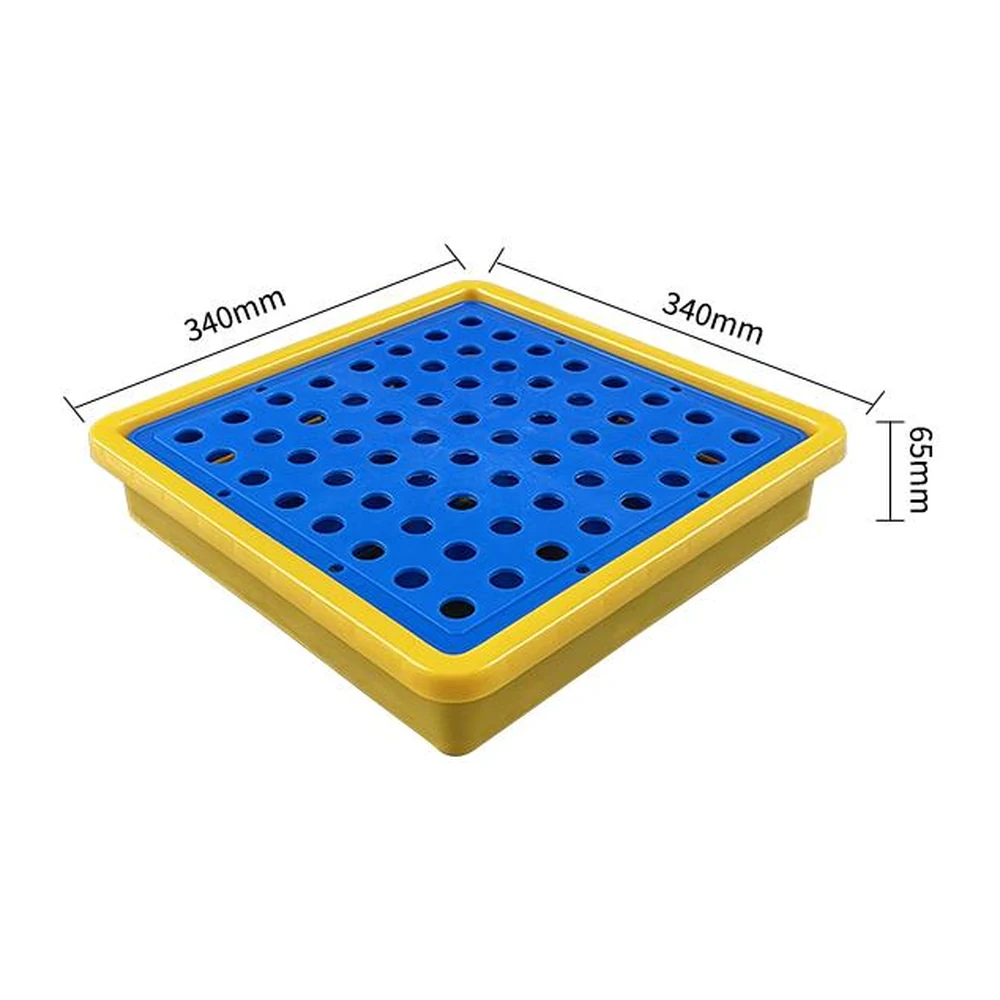 Bench Trays & Drip Trays |
Sumps from 4 to 150 litres fit inside a cupboard or under a dispensing point. |
| Outdoor drum stores | 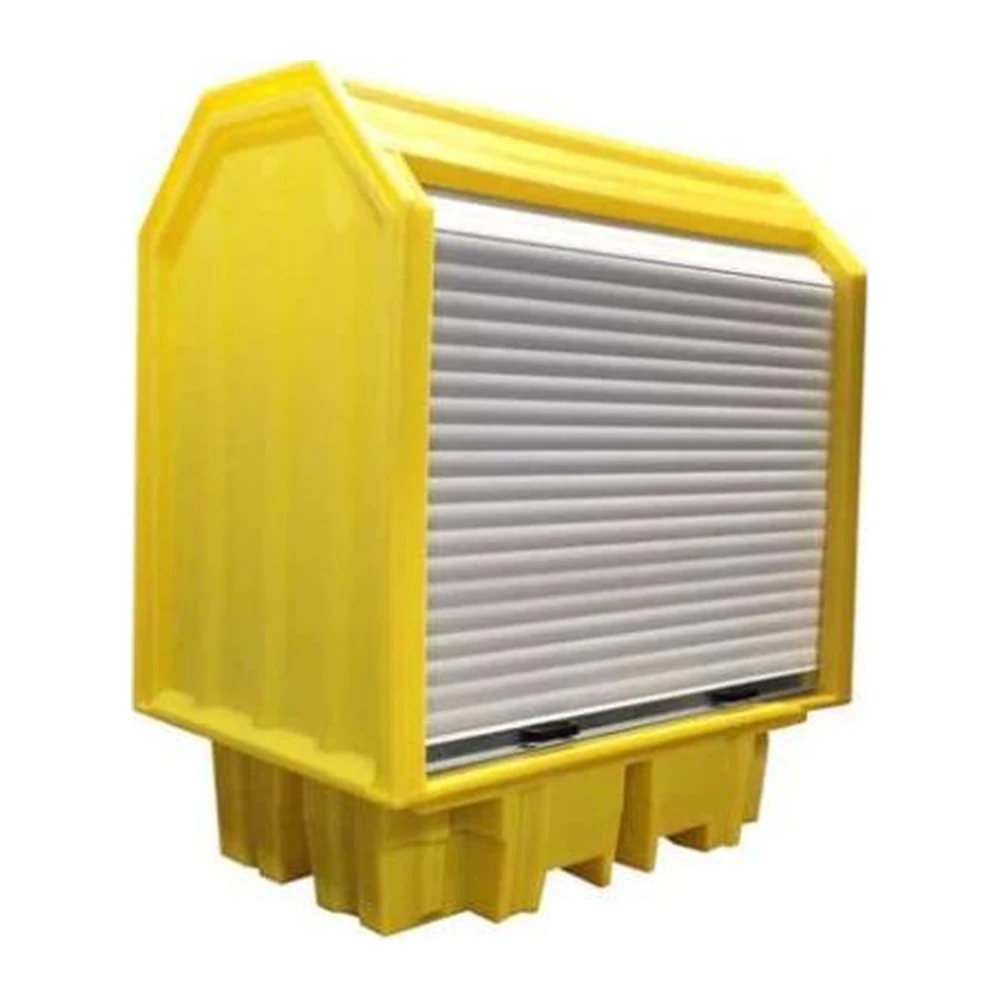 Covered Spill Pallets & Covers |
A cover keeps rain out of the sump, so its capacity stays free for a spill. |
| A leaking container | 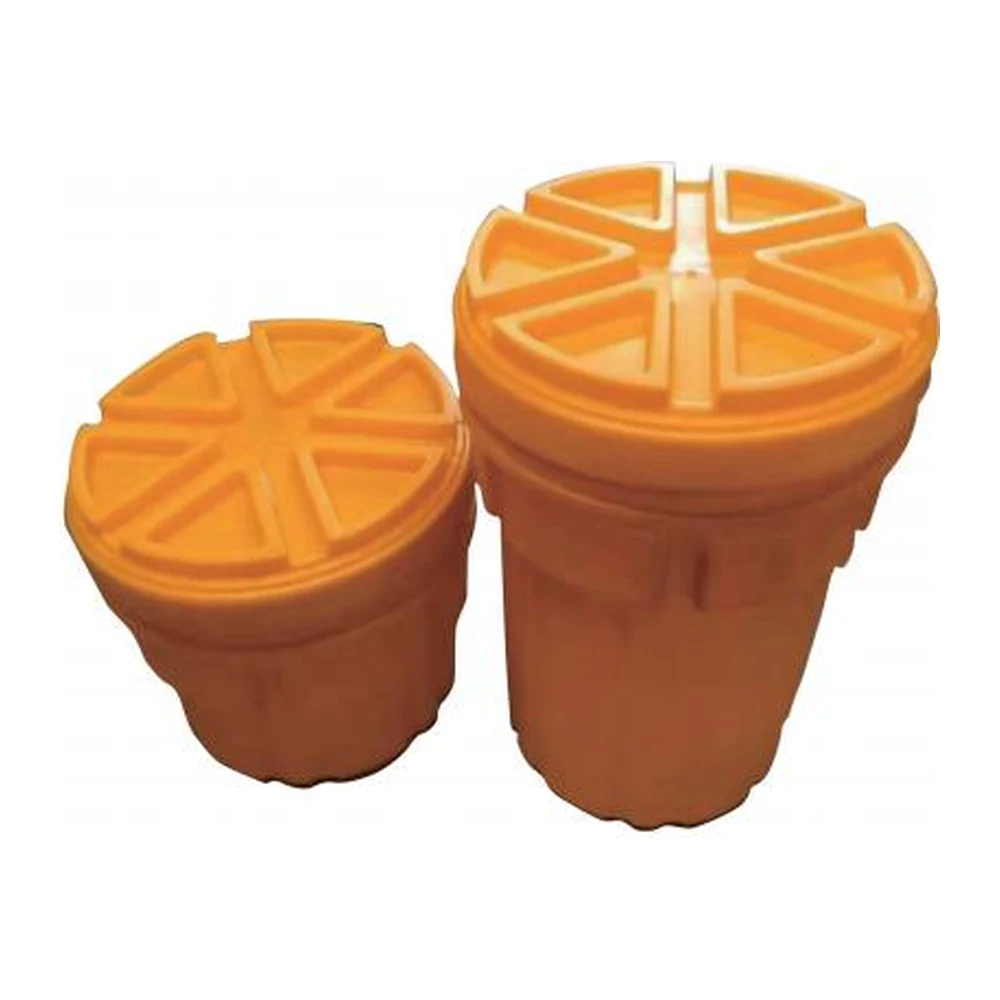 Salvage Drums & Spill Response Storage |
Overpacks of 75 to 360 litres let a split drum be moved off site. |
| Corrosives in store or in use | 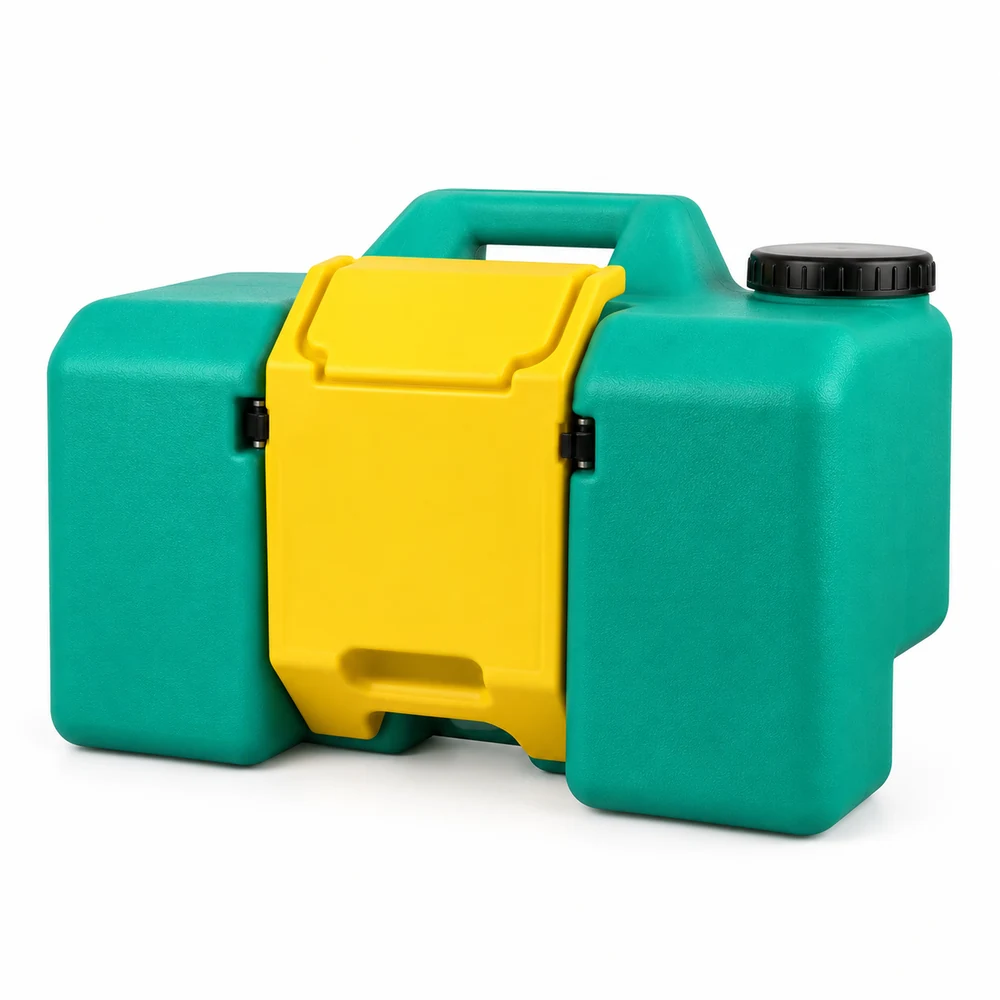 Emergency Eyewash & Safety Showers |
Portable 30 and 53 litre units where no plumbed water reaches the store. |
| Used absorbent | 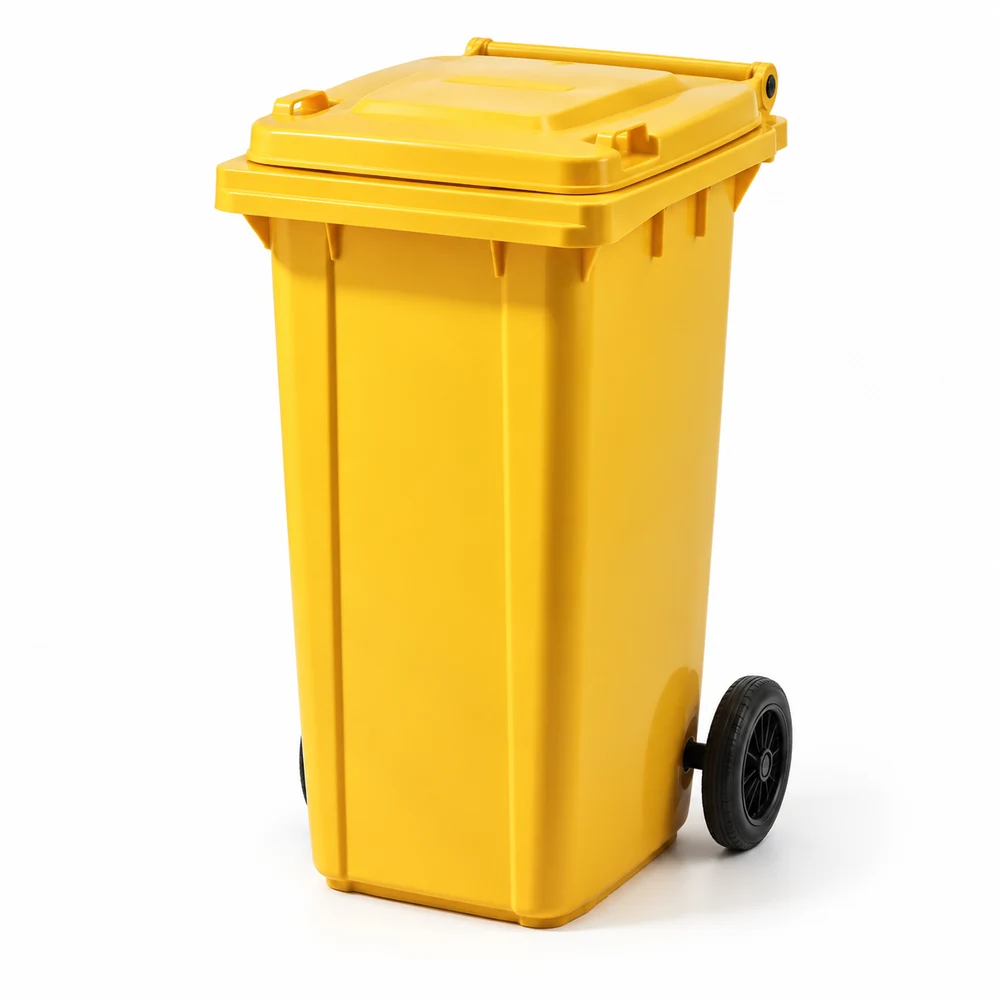 Wheeled Bins |
Lidded bins of 120 to 660 litres hold contaminated pads until collection. |
COSHH storage means keeping substances hazardous to health so that nobody is exposed to them while they are not in use. A COSHH store is the room, cabinet or cage set aside for them: closed and labelled containers, the minimum quantity, incompatible products apart, liquids over a sump and a warning sign on the door. The term comes from regulation 7(4)(a) of the COSHH Regulations 2002, which lists storage arrangements among the control measures.
A COSHH folder holds the safety data sheet for each hazardous product on site and the COSHH assessments that cover them. Employers with five or more employees must record the significant findings of each assessment and the steps taken to control exposure (regulation 6(4)), and regulation 12 requires employees to be given access to the relevant safety data sheets. Keep it, on paper or on screen, where staff can reach it. Medicines, pesticides and cosmetics come without a safety data sheet.
Yes. Regulation 6 requires a suitable and sufficient assessment before any work that could expose an employee to a hazardous substance, whatever the size of the business. The five-employee threshold in regulation 6(4) decides whether you must write the significant findings down. HSE's leaflet INDG136 says it makes sense to record them anyway, because the record is the list of controls you have to keep in place.
Not where the COSHH substances are oxidisers or corrosives. HSE guidance HSG51 (para 210) says flammable liquids should be stored apart from substances that raise the fire risk or damage the container or cabinet. It names oxidisers and corrosive materials and calls it inappropriate to keep them in the same cabinet. HSG71 Table 2 asks for 3 metres between toxic substances and flammable liquids in a store. A product that is both harmful and flammable belongs in the flammables cabinet.
COSHH sets no storage rules for medicines given to a patient: regulation 5(1)(c) excludes the risk to a person who receives a substance in medical treatment, and HSE's INDG136 notes that medicines come under their own legislation. COSHH does cover staff who handle drugs that can harm them. HSE treats cytotoxic drugs as hazardous substances under COSHH and expects safe handling, storage and transport of the drugs and of any waste contaminated by them.
At most workplaces petrol storage falls under DSEAR. HSE guidance HSG51 sets the practice: no more than 50 litres in a fire-resisting cabinet or bin in a workroom, because petrol gives off flammable vapour far below room temperature, and an outdoor store or dedicated building for more. The Petroleum (Consolidation) Regulations 2014 apply where petrol is dispensed into vehicle tanks and at non-workplace premises. COSHH still applies to any health hazard the safety data sheet lists.
Yes, once it is modified. HSE guidance HSG51 (para 244) accepts a freight container as secure outdoor storage for flammable liquids if it gets the features of a dedicated store. Those are permanent ventilation openings at high and low level, ideally on two opposite walls (para 170), and a sill or sump that keeps a spill inside (para 175). Site it at the HSG51 Table 1 distances, keep it locked and put the warning sign on the door.
COSHH sets no fixed interval for a store. Regulation 9 requires control measures to be kept in efficient working order and good repair, and regulation 6(3) requires the assessment to be reviewed regularly. GPP 26, the pollution-prevention guide for Wales, Scotland and Northern Ireland, recommends checking containers and secondary containment at least weekly, and more often in hot, wet or freezing weather. Keep a record of each check.
The employer. COSHH puts the duties to assess, control and plan for emergencies on the employer, and HSE's warehousing guide HSG71 expects a competent person to decide where each product is stored (para 46). Employees have duties too: regulation 8(2) requires them to use the control measures provided and to report any defect they find. HSG51 para 219 asks for procedures that return containers to the cabinet when they are not in use.
Yes, through its own version: the Control of Substances Hazardous to Health Regulations (Northern Ireland) 2003, enforced by HSENI. They follow the structure of the 2002 regulations for Great Britain, with risk assessment in regulation 6 and prevention or control of exposure in regulation 7, so the storage approach on this page carries across. Check HSENI guidance for any local difference before you rely on a Great Britain document.
The standards and regulations this page relies on, at their issuing body. Where a market rule is named here, check the current revision before you specify against it.
Last reviewed by Clarence Cheang, Co-Founder.
Tell us the containers, the liquid and where the store is. We come back with the pallet or bund, its load rating and a quotation.