
What OSHA, the EPA and UK law ask of a drum store: quantity limits, bunds, stacking heights, bung position, labels and the weekly check.
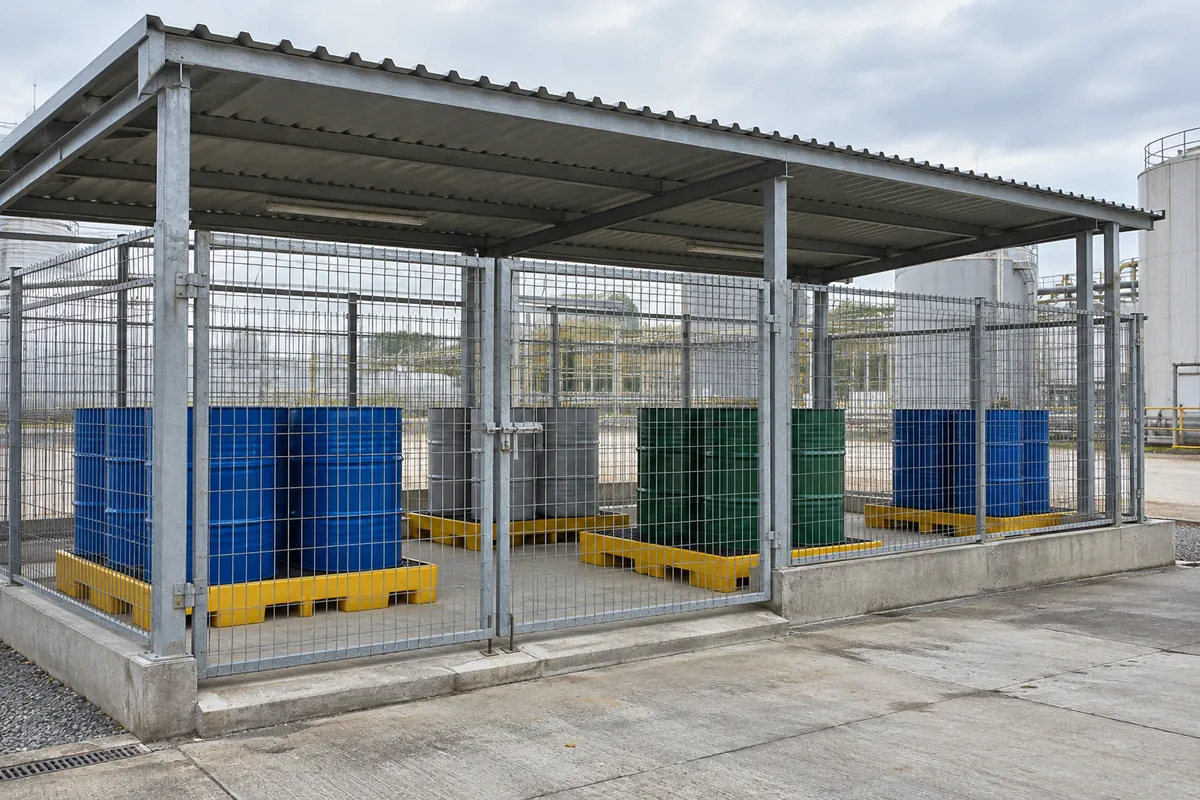
No single law covers drum storage: fire rules govern flammable contents, pollution rules govern oil and waste, and handling rules govern stacking. In practice a compliant store keeps drums closed and labelled, on pallets or racking, no more than three high when upright (HSE HSG51). It stands them over a sump of 110% of the largest drum or 25% of the total, and someone checks them every week.
Quick answer: What are the drum storage requirements?
The contents decide: fire rules cover flammable liquids and pollution rules cover oil and waste. Keep every drum closed and labelled, stored on pallets or racking and stacked upright at most three high (HSE HSG51). Stand them over a sump sized to the greater of 110% of the largest drum or 25% of the total, and inspect weekly.
They depend on what the drum holds. Petrol brings in fire law and engine oil brings in pollution law; a drum of spent solvent can bring in fire and waste law together. Any drum stacked in tiers also falls under the handling rules. The drum itself, with its sizes and UN codes, is in our 205 litre and 55 gallon drum guide.
| Rule | Drums it covers | What it asks of the store |
|---|---|---|
| OSHA 29 CFR 1910.106 | Flammable liquids, flash point up to 93 °C | Quantities, cabinets, piles, aisles |
| OSHA 1910.176 and 1910.1200 | Any stacked drum; hazardous chemicals | Stable stacks, labels |
| EPA RCRA, 40 CFR 262 and 264 | Hazardous waste | Closed drums, weekly checks, labels, siting |
| EPA SPCC, 40 CFR 112 | Oil, at sites above 1,320 US gal | Containment for the largest drum plus rain |
| Oil Storage Regulations 2001 (England) | Oil containers over 200 L, outdoors | A bund of 110% or 25% |
| DSEAR, HSG51 and HSG71 (Great Britain) | Flammable and dangerous substances at work | Sills, stacking, segregation |
| GPP 26 (Wales, Scotland, Northern Ireland) | Drums of any liquid | Containment, siting, weekly checks |
OSHA has no standard written for drums alone. Its rule on stored materials, 29 CFR 1910.176(b), requires containers stored in tiers to be stacked, blocked, interlocked and limited in height so they are secure against sliding or collapse. Aisles must stay clear for forklifts, permanent aisles must be marked (1910.176(a)), and floors must be kept free of leaks and spills (1910.22(a)(3)).
Every drum of a hazardous chemical needs a label giving the product and its hazards, and a supplier’s label may not be removed unless the drum is relabelled at once (1910.1200(f)(6) and (f)(9)). On hazardous waste sites, 1910.120(j)(1) adds that drums are inspected before they are moved, unlabelled drums are treated as hazardous, and salvage drums and absorbent are kept where spills may occur.
OSHA 1910.106 treats any liquid with a flash point at or below 93 °C (199.4 °F) as flammable, diesel included. Categories 1 and 2 flash below 23 °C, Category 3 from 23 to 60 °C and Category 4 above 60 °C. Metal drums to DOT specification are approved for all four, up to 60 gallons (Table H-12). Its quantity limits:
| Where the drums stand | OSHA limit |
|---|---|
| Storage cabinet | 60 gal (227 L) of Category 1 to 3, within 120 gal (454 L) in total ((d)(3)(i); OSHA interpretation, 2011) |
| Plant floor, per fire area | 25 gal (95 L) of Category 1; 120 gal (454 L) of Category 2 to 4 ((e)(2)(ii)(b)) |
| Inside storage room | A 3 ft (0.9 m) aisle; no drum over 30 gal stacked on another ((d)(4)(v)) |
| Warehouse pile, Category 1 | 50 drums with fire protection, 12 without (Table H-14) |
| Outdoors beside a building | 20 drums (1,100 gal); more needs 10 ft (3 m) clear ((d)(6)(ii)) |
One 55 gallon drum of a Category 1 liquid therefore cannot stand on an open plant floor. Dispense by pump or through an approved self-closing valve, never by air pressure on the drum, and bond the drum to the receiving container for liquids flashing below 37.8 °C ((e)(2)(iv)(d) and (e)(6)(ii)).
In Great Britain, flammable drums fall under DSEAR, and HSE classes diesel as flammable since the CLP threshold rose to 60 °C (DSEAR and ATEX). HSE’s HSG51 asks for a sill or low bund of at least 110% of the largest metal container and warns that plastic containers in a fire may all fail within about 10 minutes (para 55). It calls a cabinet for 200 litre drums inappropriate without enhanced fire performance (para 241). A few drums may stand outdoors on impervious ground, on a pallet, in a lockable metal cage (para 243).
Under the EPA’s RCRA rules, the duties rise with the amount of hazardous waste and the time it stays. At every tier the drum must suit the waste, stay closed except while waste goes in or out, and be emptied into a sound container if it leaks (40 CFR 262.15 to 262.17 and 264.171 to 264.173).
| Tier | Limit | Drum storage duties |
|---|---|---|
| Satellite accumulation (262.15) | Up to 55 US gal, at the point of generation | Closed, marked “Hazardous Waste” with its hazards |
| Small quantity generator (262.16) | Up to 6,000 kg for 180 days | Adds weekly inspection, the start date and aisle space |
| Large quantity generator (262.17) | 90 days | Adds ignitable and reactive waste 15 m (50 ft) from the property line |
| Permitted storage (264, subpart I) | Set by the permit | Weekly inspection, 15 m for ignitables, containment of 10% of the total or the largest drum, whichever is greater |
A large quantity generator may keep ignitable waste inside the 15 m line only with written approval from the local fire code authority (262.17(a)(1)(vi)). It keeps aisle space for people and emergency equipment (262.255), and separates incompatible drums with a dike, berm or wall (262.17(a)(1)(vii)(C)). Only permitted storage carries a federal containment volume (264.175), which our SPCC and RCRA containment guide works for drums.
In the US, the SPCC rule counts every oil container of 55 US gallons or more and applies above 1,320 gallons stored above ground, where a spill could reach navigable waters (40 CFR 112.1). On drums alone, the 25th drum crosses the line. Drums then need a dike or catchment basin for the largest drum plus freeboard for rain (112.8(c)(11)), however many share it.
In England, the Control of Pollution (Oil Storage) Regulations 2001 reach oil containers over 200 litres kept outdoors at a business, so a 205 litre drum is in scope and a 200 litre drum is not (regulation 2(2)). The bund holds 110% of the largest drum or 25% of the total, whichever is greater, and a drip tray under drums needs 25% of them (3(2)(a) and 3(5)). The bund may have no drain valve, and a tap on a drum must sit inside it (3(2)(d) and 3(3)). Wales, Scotland and Northern Ireland use the same figures and also cover oil indoors (UK oil storage regulations).
With equal drums the drip tray saves space up to four drums; from the fifth, 25% of the total governs both. For chemicals, GPP 26 asks for 25% of the drums or 110% of the largest (5.2.3), and HSG71 for 110% of the largest container in outdoor and in-rack bunds (paras 200 and 206). Secondary containment requirements gives other countries’ figures, and the spill pallet sizing calculator sizes any mix.
Yes, chocked so they cannot roll (HSG51, para 93; HSG71, para 130), with the bungs turned to the side. GPP 26 recommends turning horizontal drums so both bungs sit level, at 3 and 9 o’clock, so less product is lost if one leaks. A leaking bung at 6 o’clock can drain the drum; one at 3 o’clock drains it only to its own level.
Upright storage keeps both bungs above the liquid, though GPP 26 warns that steel drums stored upright outdoors are at risk of rusting from rainwater, so cover them. A drum in a cradle becomes a dispensing point: a tap in the 2 inch bung, the 3/4 inch bung opened as a vent, and a sump under the cradle.
A tight-head steel drum has a 2 inch (51 mm) filling bung and a 3/4 inch (19 mm) vent bung, set opposite each other in the top head (US federal specification PPP-D-729E, 3.5.3.1). ISO 15750-3 standardises steel drum closures, including a G 2 and G 3/4 system. Thread forms vary under the same nominal size, and plastic drums use their own, so match a tap, pump or drum adapter to the drum.
| Bung | Size | Its job in storage |
|---|---|---|
| Filling bung | 2 in (51 mm) | Takes the pump or tap; on top upright, at 3 or 9 o’clock in a cradle |
| Vent bung | 3/4 in (19 mm) | Lets air in while dispensing; closed in storage |
A bung wrench is a bar with lugs shaped to the plug. Open a bung slowly so pressure escapes before the thread lets go, with a non-sparking wrench where flammable vapour may be present, as OSHA requires on hazardous waste sites (1910.120(j)(2)(v) and (vi)).
In Great Britain, HSE’s flammable liquids guide puts the practical limit for 200 litre metal drums at three high upright and four high on their sides, unless designed racking holds them (HSG51, para 92). HSG71 says 205 litre metal drums are normally stacked no more than four high, preferably on pallets, at least 0.5 m below the lights (para 130). GPP 26 adds that no drum should stand directly on another, because that raises the risk of drums splitting or falling. HSG51 asks for gangways of at least 1.5 m between stacks wherever possible (para 128).
US federal rules set no tier count. OSHA bars stacking containers over 30 gallons in a flammable liquid storage room, requires pallets or dunnage between containers in piles where stability needs it (1910.106(d)(4)(v) and (d)(5)(vi)(c)). OSHA also wants every stack secure against collapse (1910.176(b)). A UN drum design must bear identical packages stacked to 3 m, test drum included (49 CFR 178.606(c)): three full 880 mm drums on the bottom one.
Drum racking needs its maximum safe working load posted, a visual check weekly or as risk assessment sets, and an expert inspection at least every 12 months (HSE HSG76, paras 634, 645 and 646). A spill pallet in a rack must be a rackable model (choosing a spill pallet), and no drum should stand where a fall or a jet from a leak would land outside the bund (GPP 26, 5.2.5).
A stored drum keeps the label it arrived with, and a drum filled on site needs its own. OSHA asks for the product identifier and hazards, in English, on every workplace container of a hazardous chemical (1910.1200(f)(6) and (f)(10)). A hazardous waste drum carries the words “Hazardous Waste”, its hazards and, at a generator’s central store, the date accumulation began (262.16(b)(6) and 262.17(a)(5)).
In Great Britain, HSG51 asks for each flammable container to show its contents and how flammable they are (para 51). The Safety Signs Regulations 1996 ask for hazard pictograms on storage containers and a warning sign on the store (Schedule 1, Part III), covered in COSHH storage requirements. GPP 26 recommends labelling each storage area with what it may hold (section 4).
Check a drum store at least weekly. The EPA requires it at the hazardous waste stores of small and large quantity generators and permitted facilities, looking for leaks and corrosion (262.16(b)(2)(iv), 262.17(a)(1)(v) and 264.174). GPP 26 recommends weekly checks of any drum store, more often in hot, wet or freezing weather, with a written record (section 7).
GPP 26 lists what to look for: damaged or leaking drums, rain in the bund, a clean sump, intact labels, stack heights and quantities within limits, and closed taps. HSG51 adds racking (para 88). Check rainwater in a bund for contamination before you pump it out.
Keep drums under a roof, off the ground and out of the sun, and rotate the stock. HSG51 asks for maximum storage times taken from the safety data sheet (para 87) and ullage for the liquid to expand at the highest temperature it will meet (para 69). It also asks for shade under a light, non-combustible cover with open sides, away from heaters and hot pipes (paras 72 and 73).
Standing water corrodes a drum from the base; HSG71 says drainage or a pallet cuts the risk, and a roof may cost less than managing rainwater (para 201). Plastic drums can degrade in sunlight and turn brittle with age (HSG51, para 70; GPP 26, 5.1), and may carry dangerous goods for five years from manufacture (ADR 2025, 4.1.1.15). GPP 26 recommends keeping stores at least 10 m from surface water and 50 m from a borehole, well or spring (5.2.2). Outdoors, OSHA asks for a 6 inch (152 mm) curb or grading that sends spills away from buildings (1910.106(d)(6)(iii)), and HSG51 accepts a converted freight container as a store (para 244). Keep incompatible drums apart, as chemical storage best practices sets out.
We make what a drum store stands on. Polyethylene drum spill pallets take one to four drums with sumps from 42 to 488 litres, and the rackable four-drum version carries 500 kg in a rack. Double-layer 3 mm steel pallets serve stores where a fire assessment rules out plastic, though their drum sumps of 203 to 216 litres fall short of the 226 litres a 205 litre oil drum needs as a UK bund. Decks, ramps, cradles and dollies with their own sumps complete the store.
Drums themselves are not in our range. For decanting we make jerry cans; our dangerous-goods jerrican designs carry UN certification per design type, made under quality assurance the competent authority accepts.
| Your use case | Recommended can | Why this one |
|---|---|---|
| Drums in storage | 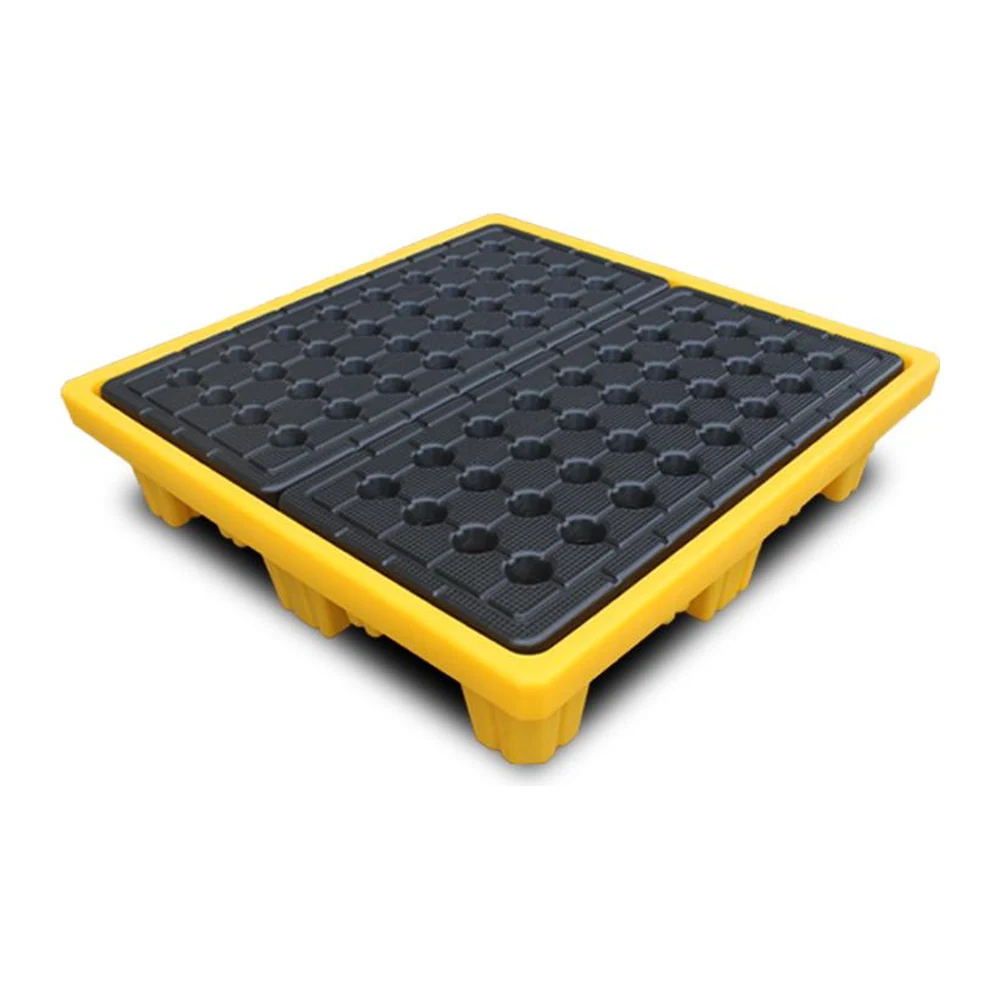 Drum Spill Pallets |
Sumps from 42 to 488 litres for one to four drums; the four-drum version racks at 500 kg. |
| Flammable liquid stores | 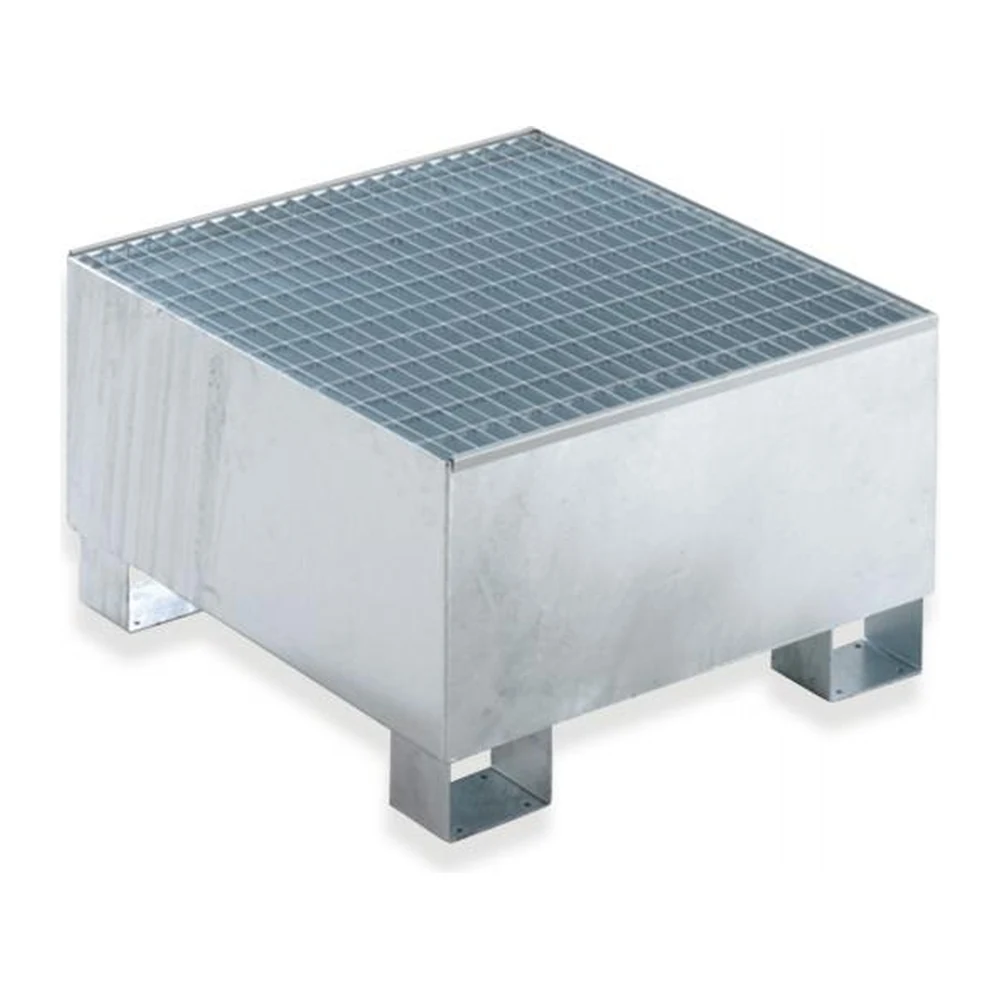 Steel Spill Pallets |
Double-layer 3 mm steel where a fire assessment rules out a plastic sump. |
| Drums stored on their side | 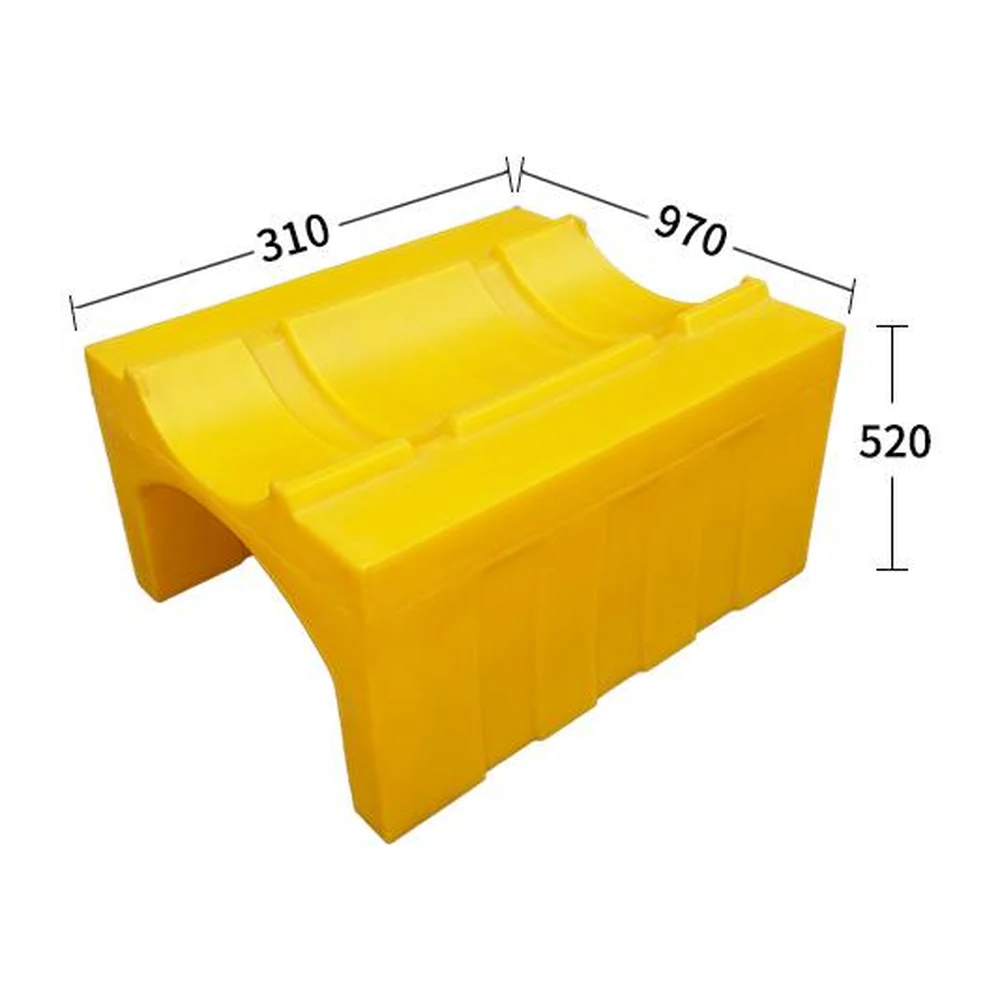 Drum Cradles & Dispensing Stands |
Cradles rated 260 to 600 kg hold a drum for tapping and stack for two-tier dispensing. |
| Drums being worked | 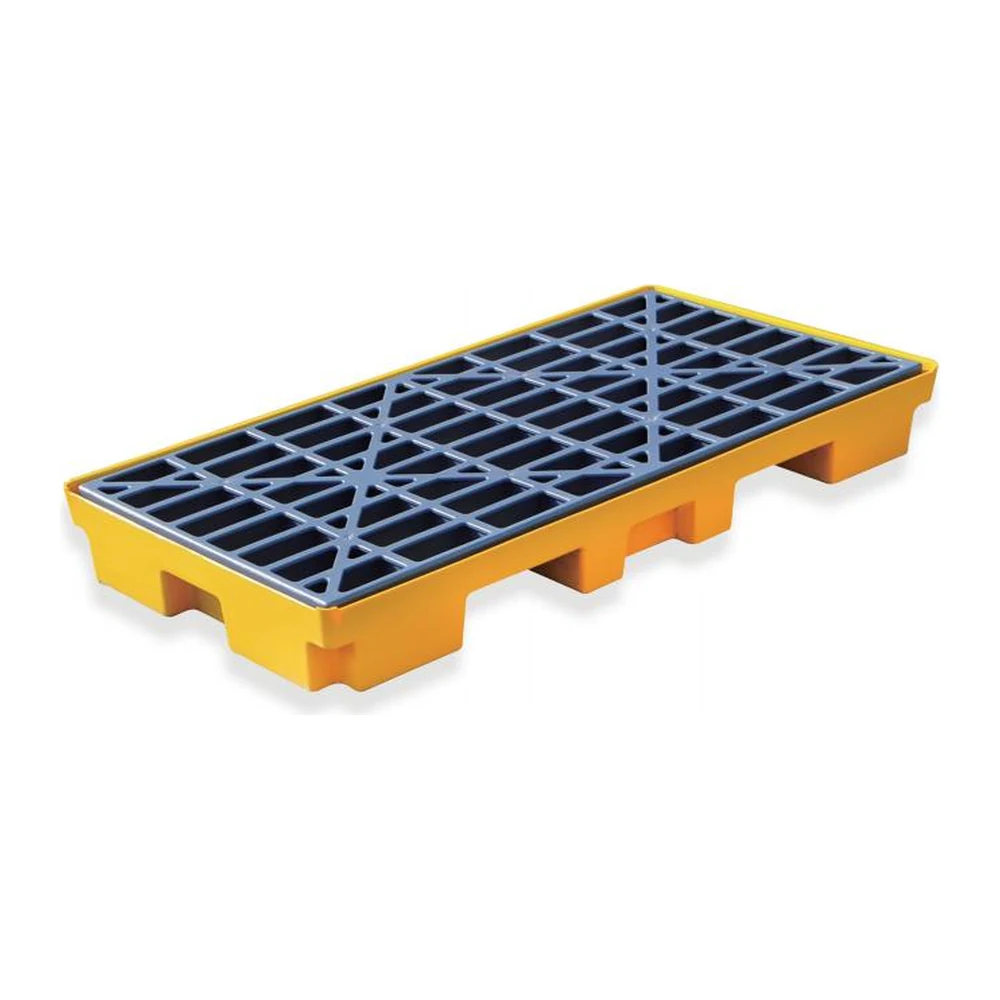 Drum Spill Decks |
Low decks with an open grate that shows a leak at the dispensing point. |
| Moving full drums | 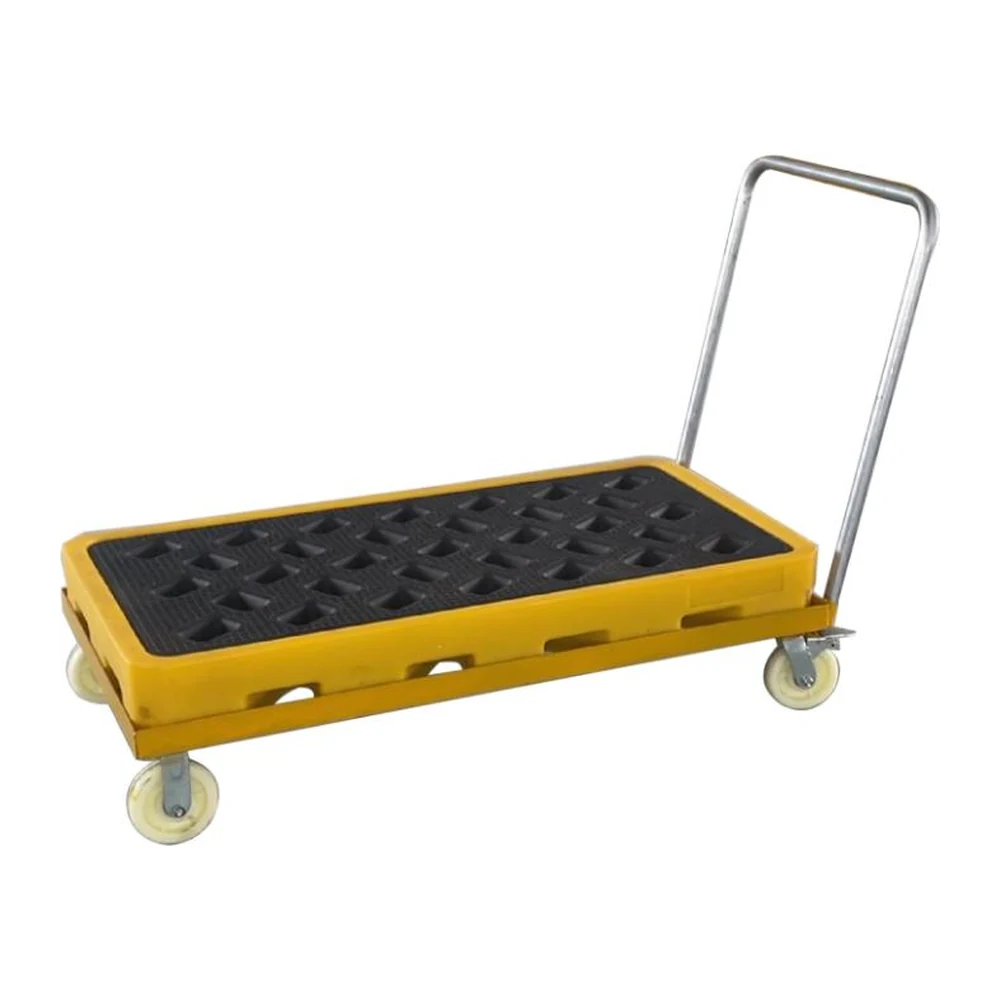 Drum Dollies & Trolleys |
Dollies with 20 and 300 litre sumps keep containment under the drum in transit. |
| Loading a spill pallet | 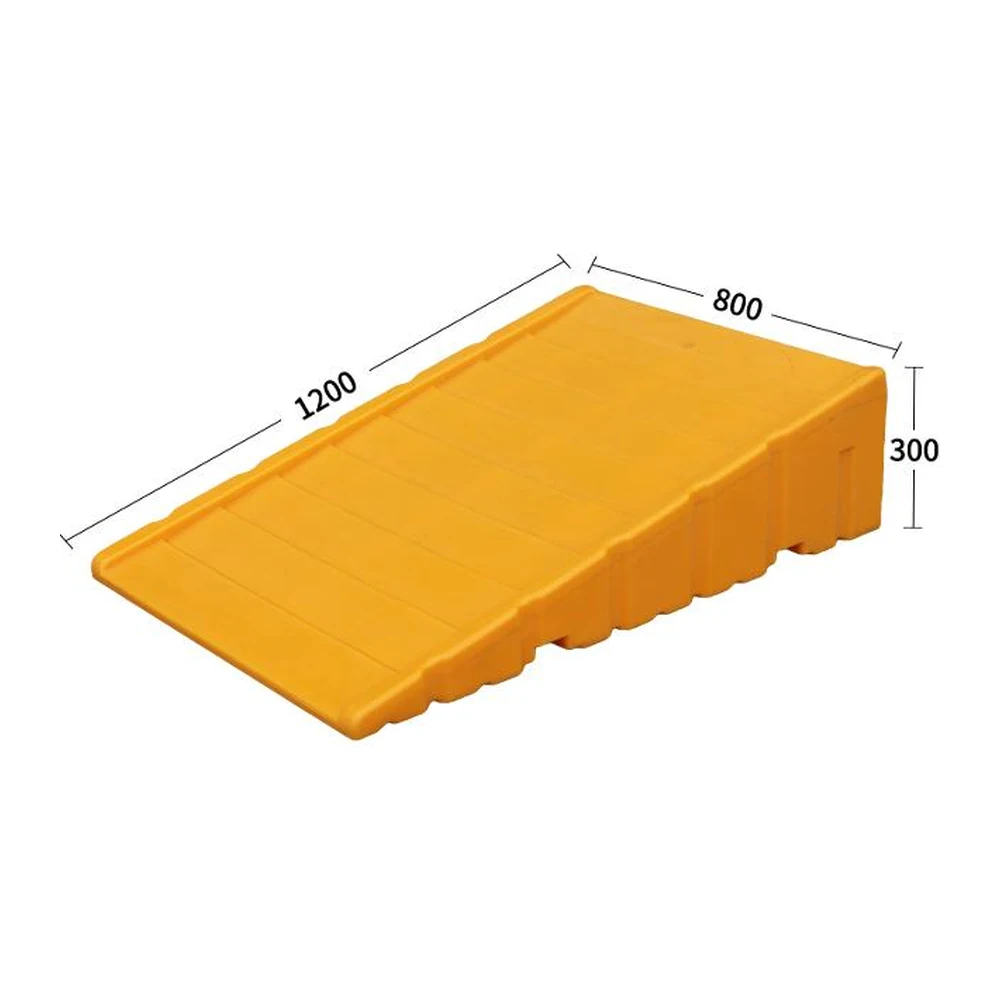 Spill Pallet Ramps |
Ramps matched to pallet heights from 10 to 30 cm, so a full drum rolls on. |
Drum storage means keeping liquids or solids in drums, most often 205 litre or 55 gallon steel or plastic drums, until they are used, shipped or sent for disposal. The term also covers the equipment and the place: spill pallets, racks, cradles, cabinets and the drum store itself. The rules that apply depend on the contents: fire rules for flammable liquids, pollution rules for oil and waste, and handling rules for any drum stacked in tiers.
A frame that holds drums off the floor, upright or on their sides. Horizontal racks and cradles let a drum be tapped where it lies, and GPP 26 notes that some carry their own sump so drums can be dispensed over the containment. HSE counts drum racking as a type of racking, so it needs its maximum safe working load displayed and regular inspection, as pallet racking does (HSG76, paras 631, 633 and 642).
In the US it can, within the cabinet limit. OSHA caps a flammable storage cabinet at 60 US gallons of Category 1, 2 or 3 liquids, within 120 gallons in total (1910.106(d)(3)(i), as OSHA read it in 2011). One 55 gallon drum of a Category 1 to 3 liquid takes almost all of that 60 gallons. In Great Britain, HSE guidance calls a cabinet for 200 litre drums inappropriate unless it has enhanced fire performance (HSG51, para 241), and recommends no more than 50 litres in a workroom cabinet for liquids that flash below room temperature.
Yes, in a food-grade drum that has never held chemicals. The CDC advises food-grade containers, never ones that held toxic substances, kept at 10 to 21 °C (50 to 70 °F), out of direct sunlight and away from fuel and pesticides. It advises replacing stored tap water every six months. A full steel drum of water weighs over 200 kg, so fill it where it will stay.
In England, a diesel drum over 200 litres kept outdoors at a business needs a bund of 110% of the largest drum or 25% of the total, or a drip tray of 25%, under the Oil Storage Regulations 2001. HSE classes diesel as a flammable liquid, so DSEAR applies at work, with a proportionate approach. In the US, OSHA 1910.106 covers diesel as a flammable liquid, and SPCC counts each 55 gallon diesel drum towards its 1,320 gallon threshold.
As flammable liquids, unless the safety data sheet says otherwise. Plastic drums are the weaker choice in a fire: HSE warns that plastic containers may all fail within about 10 minutes (HSG51, para 55). Keep solvents apart from oxidisers, bond the drum to the receiving container before you decant, and do the decanting outside the store (HSG51, para 89). GPP 26 asks for extra care with chlorinated solvents, because a small spill can pollute groundwater.
When everything that pouring, pumping or aspirating would remove has gone. The residue left must then be no more than 2.5 cm (1 inch) deep, or no more than 3% by weight of the capacity for a drum of 119 gallons or less (40 CFR 261.7(b)(1)). The residue in an empty drum is then no longer regulated as hazardous waste. A drum that held an acute hazardous waste must first be triple rinsed or cleaned by an equivalent method.
Often, though not always by law. England’s oil storage regulations leave out oil kept inside a building; the rules in Wales, Scotland and Northern Ireland include it. For flammable liquids, HSE asks for an impervious floor and a sill or low bund holding at least 110% of the largest metal container (HSG51, para 55). OSHA asks for 4 inch (102 mm) sills or ramps at the doors of an inside storage room. HSG71 puts typical warehouse door sills at about 150 mm.
The 44 gallon drum is the imperial name for the same 200 litre class as the 55 gallon US drum. For steel drums the US federal specification sets a 2 inch filling bung and a 3/4 inch vent bung, and ISO 15750-3 includes a G 2 and G 3/4 closure system. Plastic drums use their own thread forms, so read the size and thread from the maker’s data sheet before you buy a tap, pump or adapter.
Spill pallets come in one, two and four-drum sizes, and GPP 26 mentions sump pallets for eight. Four drums of about 585 mm across make a square of about 1,170 mm. In England four 205 litre drums of oil need a 226 litre sump as a bund, or 205 litres as a drip tray. Under US SPCC, four 55 gallon drums need 55 gallons (208 litres) plus room for rain. With a fifth drum in the same bund, 25% of the total starts to govern in the UK.
Yes, with containment and protection from the weather. OSHA allows outdoor piles of flammable liquids within its Table H-16 limits, with a 6 inch curb or grading, and 10 ft clear of buildings once the store exceeds 1,100 gallons. In England an outdoor oil drum over 200 litres at a business needs a bund or drip tray. GPP 26 prefers indoor or covered storage, because rain collects in bunds and rusts steel drums stood upright.
The standards and regulations this page relies on, at their issuing body. Where a market rule is named here, check the current revision before you specify against it.
Last reviewed by David Guru, Co-Founder & Business Development Director.
Tell us the containers, the liquid and where the store is. We come back with the pallet or bund, its load rating and a quotation.