
What goes in a spill kit, which colour suits which liquid, how big to buy and where the law asks for one.
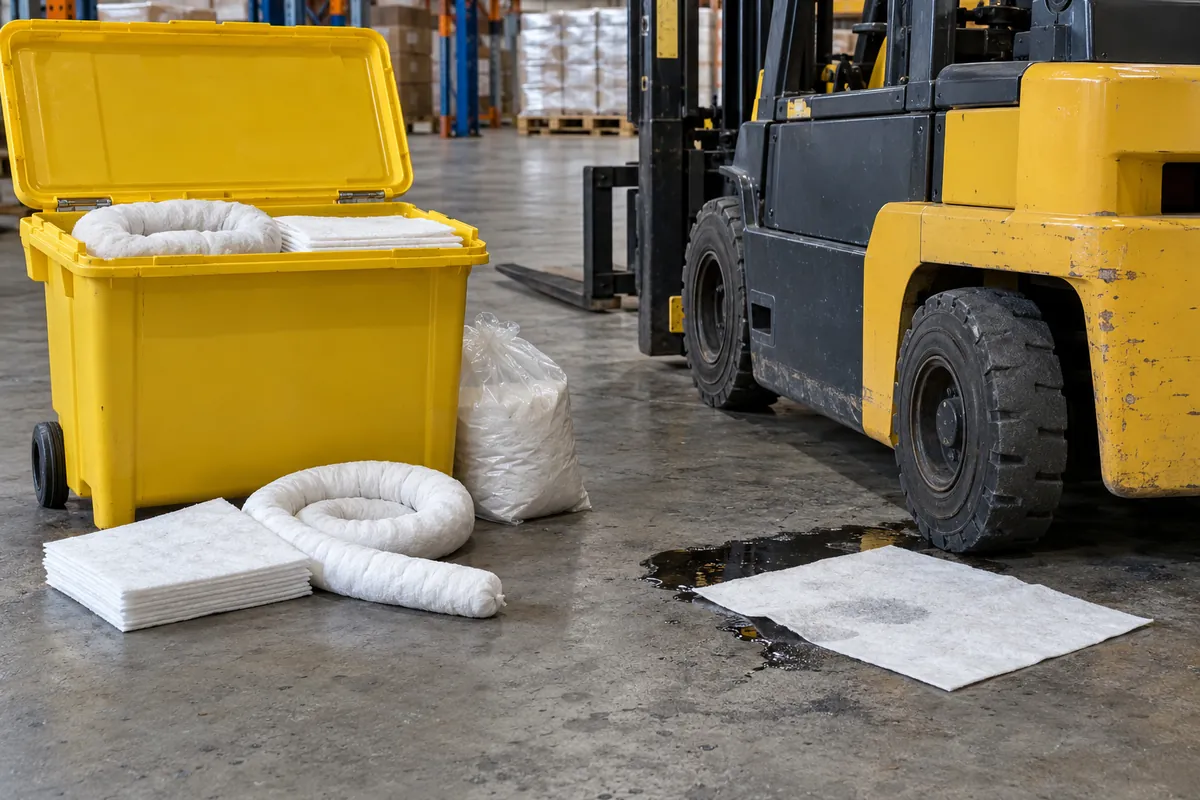
A spill kit is a container of absorbent, protective equipment and disposal bags kept where a liquid spill could happen. Kits come as oil-only (white), chemical (yellow) and general-purpose (grey), a colour code set by trade convention. Few laws name the kit itself. Most ask for spill response measures that suit what you store, and a kit is the usual way to meet them.
Quick answer: What should be in a spill kit?
Absorbent pads, socks, pillows or granules, a drain seal, leak sealing putty, gloves, goggles and a coverall matched to the liquid, and disposal bags. Choose the kit by the liquid: white for oil only, yellow for chemicals and grey for general maintenance, a trade colour convention. Section 6 of the safety data sheet gives the clean-up method.
A spill kit soaks up and holds back a liquid spill before it reaches a drain, a watercourse or a person. GPP 22, the spill guide published by Natural Resources Wales, SEPA and the Northern Ireland Environment Agency, describes a kit as pollution control equipment held in one place and chosen for the materials on the site.
The kit is the third layer of defence. The container holds the liquid and the bund or spill pallet catches what leaks from it. The kit deals with what escapes both: a drum knocked over on the way to the store, a hose that slips during decanting, a forklift puncture in the yard. A kit does not replace secondary containment. Size the containment first (secondary containment requirements, spill containment for fuel and chemicals), then add the kit.
White is the usual colour for an oil spill kit, yellow for chemicals and grey for general maintenance. The code is a trade convention. UK makers cite BS 7959-3:2007, the British Standard on colour coding of sorbents, which BSI lists as withdrawn on 5 March 2024. Some makers use another scheme, such as yellow for general purpose and pink for hazardous liquids, so read the label.
| Kit | Colour | Takes up | Do not use on |
|---|---|---|---|
| Oil only | White | Oil, diesel, petrol and other hydrocarbons; repels water | Water-based liquids, acids, alkalis |
| General purpose or maintenance | Grey | Water-based liquids, coolant, cutting fluid, oil, fuel, mild solvents | Aggressive acids and alkalis |
| Chemical (hazmat) | Yellow | Acids, alkalis, aggressive chemicals, solvents | Any liquid whose data sheet names another method |
Choose by the liquid. Section 6 of the safety data sheet gives the clean-up method and names techniques to avoid (REACH Annex II, 6.3). Canada’s National Fire Code asks for an absorbent compatible and non-reactive with the liquid (Article 4.1.6.3). An acid or alkali needs the chemical kit and, where the data sheet says so, a neutraliser. An unknown liquid gets the chemical kit: OSHA treats an unlabelled drum as hazardous until it is identified (1910.120(j)(1)(iv)). Chemical compatibility covers the container side.
A kit holds absorbent in the forms the spill needs, a way to seal a leak and cover a drain, protective equipment and bags for the waste. GPP 26, the guide to storing drums and IBCs, lists five items: leak sealing putty, over drums, drain seals, oil or chemical sorbents and PPE.
| Item | What it does |
|---|---|
| Pads and rolls | Cover and mop up a flat spill |
| Socks (booms) | Ring a spill to stop it spreading; guard a drain |
| Pillows | Soak up a persistent leak or a contained pool |
| Loose granules | Reach cracks and rough ground |
| Drain seal or mat | Covers a gully or manhole |
| Leak sealing putty | Plugs a hole in a drum until it can be moved |
| Gloves, goggles, coverall | PPE matched to the liquid |
| Disposal bags and ties | Hold used absorbent for collection |
Add what your liquids call for. EPA Victoria’s Publication 1698 also lists recovery drums, neutralisers for acids and bases, booms and portable pumps. For flammable liquids, HSE guidance HSG51 (paragraph 114) advises considering non-combustible absorbent granules for small spills, and the REACH data sheet rules mention non-sparking tools (Annex II, 6.3.2).
No regulator sets a spill kit size. Kits are sold by absorbent capacity in litres, from a few tens of litres in a grab bag to several hundred in a wheeled bin. The usual rule of thumb matches that capacity to the largest container that could spill outside a bund. It has no legal force.
Find the largest container in the area. If a spill pallet or bund holds all of it, the kit covers drips and decanting. If it can spill onto open floor or a yard, rate the kit at its full volume. Use a bag kit for a 20 L jerry can and a bin or drum kit of 205 L or more for a 205 L drum. A 1,000 L IBC belongs in a bund (IBC bund size), with the kit kept for what escapes. The spill pallet sizing calculator and spill pallet size by drum count set the bund.
Put a kit at each storage area, at the loading and decanting point and in the vehicle bay. Keep another away from the store in case a fire or large spill blocks the first (GPP 22 glossary; GPP 26, 8.2). Schedule 1 of the Safety Signs and Signals Regulations 1996 has eyewash and safety shower signs but no spill kit sign, so the sign is your choice.
Not by name. The Control of Pollution (Oil Storage) (England) Regulations 2001 require secondary containment for oil in containers over 200 litres kept outside a building (regulation 3(2)) and say nothing about spill kits. Environment Agency guidance on GOV.UK, “Pollution prevention for businesses”, tells businesses to have a spill kit suited to the products on site, near storage, loading areas and transfer routes. That is advice. The same page warns that polluting can bring an unlimited fine, up to five years in prison, or both.
The duties that are law sit around the kit. COSHH regulation 13 requires an employer to prepare procedures for accidents with hazardous substances, to take immediate steps to mitigate one and to give PPE to those permitted in the affected area. The exception, in regulation 13(4), is where the quantities present only a slight risk and the existing controls suffice. Regulation 12 requires suitable information, instruction and training. HSE guidance HSG51 (paragraph 114) asks you to consider absorbent granules for small flammable spills. See COSHH storage requirements and UK oil storage regulations.
Wales, Scotland and Northern Ireland have GPP 22 on spills and GPP 26 on drums and IBCs, which set out what a kit should hold and where it should sit. Both are guidance, and GPP 22 states that the Environment Agency does not endorse it for England.
No federal rule uses the words “spill kit”. The phrase returns no results in an eCFR search (checked 19 October 2026), so neither OSHA, EPA nor DOT requires a kit by name.
EPA. The SPCC rule, 40 CFR part 112, covers oil facilities that could reach navigable waters and hold over 1,320 US gallons aboveground, counting containers of 55 US gallons or more (112.1(d)(2)(ii)). Section 112.7(c) allows active or passive containment and lists sorbent materials among the onshore options. Sorbent does not replace a dike for bulk storage: 112.8(c)(2) and (c)(11) ask for secondary containment of the largest container (secondary containment requirements).
OSHA. HAZWOPER, 29 CFR 1910.120, requires DOT-specified salvage drums and suitable quantities of proper absorbent where spills, leaks or ruptures may occur in hazardous waste clean-up operations (paragraph (j)(1)(vii)). Paragraph (q) sets emergency responder training: awareness level for people who discover a release, at least eight hours at operations level, and annual refreshers. An incidental release that employees in the immediate area can absorb, neutralise or control is outside the standard. Hazard Communication training must still cover emergency procedures and PPE (1910.1200(h)(3)(iii)).
DOT. 49 CFR does not use the term either. Its salvage rule, 49 CFR 173.3(c), covers moving a damaged package in a UN-tested drum marked SALVAGE.
Canada. The National Fire Code of Canada 2020, Division B, requires absorbent material to be available in a flammable or combustible liquid storage area (Article 4.2.7.11) and absorbent and neutralising material in a laboratory (Article 5.5.3.3). Provinces adopt their own editions (Alberta’s 2023 Alberta Edition took effect on 1 May 2024). Ontario’s O. Reg. 224/07 requires the spill plans of prescribed industrial plants to keep response equipment available, inspected and ready, and staff trained to use it. British Columbia’s B.C. Reg. 185/2017 requires pipeline operators and bulk rail and highway carriers to keep inspection records for their response equipment.
Australia. Section 357 of Queensland’s Work Health and Safety Regulation 2011 requires a business, so far as is reasonably practicable, to provide a spill containment system that holds a spilled hazardous chemical and allows for its clean-up and disposal. Western Australia’s regulation 357 is the same. Neither names a kit. EPA Victoria’s Publication 1698 lists spill kits with absorbent suited to the substance among response equipment and asks whether kits are inspected and well stocked.
New Zealand. The nearest thing to a spill kit duty is regulation 13.45 of the Health and Safety at Work (Hazardous Substances) Regulations 2017. A workplace holding toxic (6.1A to 6.1C) or corrosive (8.2A, 8.2B) substances must have to hand equipment and materials for leaks and spills, major or minor, with clean-up equipment, or neutralising chemicals and absorbent materials. Regulations 5.6 to 5.9 add an emergency response plan above the Schedule 5 quantities, with the equipment it names on hand.
MARPOL Annex I regulation 37 requires an approved Shipboard Oil Pollution Emergency Plan (SOPEP) on oil tankers of 150 gross tonnage and above and other ships of 400 gross tonnage and above (IMO). The US Coast Guard version, 33 CFR 151.26, sets six mandatory sections and treats response equipment as optional content for a seventh, so a ship’s kit follows its approved plan. The Coast Guard also requires ships of 100 gross tons or more to have containment at fuel tank vents, overflows and fill pipes. That means a fixed container of half a barrel or one barrel on larger ships, or a portable container of at least 5 US gallons on smaller or older ones (33 CFR 155.320).
ADR’s equipment list requires a vehicle carrying goods with danger labels 3, 4.1, 4.3, 8 or 9 to carry a shovel, a drain seal and a collecting container. DfT guidance says commercial spill kits often include such items. GPP 22 advises every goods vehicle to carry a kit and PPE. The full list applies over the 1,000-point threshold; the ADR 1,000 points rule covers smaller loads.
Assess the spill before you act, because health and safety come first (GPP 22, 2.2 and 4.1). Read the safety data sheet, and treat an unknown liquid as hazardous. Call the emergency services if it is flammable or toxic or may escape to the environment (EPA Victoria, page 44). Put on the PPE from the kit, then work in order.
It becomes waste, and GPP 22 says absorbent soaked in oil or chemicals is classed as hazardous waste (special waste in Scotland). The list-of-waste code is 15 02 02* for absorbents contaminated by hazardous substances and 15 02 03 for absorbents that are not (GOV.UK). Keep hazardous waste apart from other waste, because mixing them makes the whole load hazardous, and pass it to a registered carrier with a consignment note (GPP 22, 7.1). In the US the generator must decide whether the waste is hazardous (40 CFR 262.11).
Store used pads in a lidded container until collection (COSHH storage requirements). Wet absorbent is heavy, so check a bin’s maximum load against the weight of saturated pads.
We do not make spill kits, pads, socks or granules. Buy those from an absorbent specialist and give them the liquids and the largest container. We make the equipment around the kit: polyethylene salvage drums from 75 to 360 litres that overpack a failed container, kit storage in cabinets, a mobile cart or a 65 litre box, and yellow HDPE wheeled bins of 120, 240 and 660 litres for used absorbent. We also make drum spill pallets with sumps from 42 to 488 litres, bench and drip trays with sumps from 4 to 150 litres, and portable eyewash units of 30 and 53 litres.
Ask us what approval a salvage drum carries before you move dangerous goods in it, and send the liquid and concentration so we can confirm the chemical resistance of a pallet or tray.
| Your use case | Recommended can | Why this one |
|---|---|---|
| A failed drum or pail | 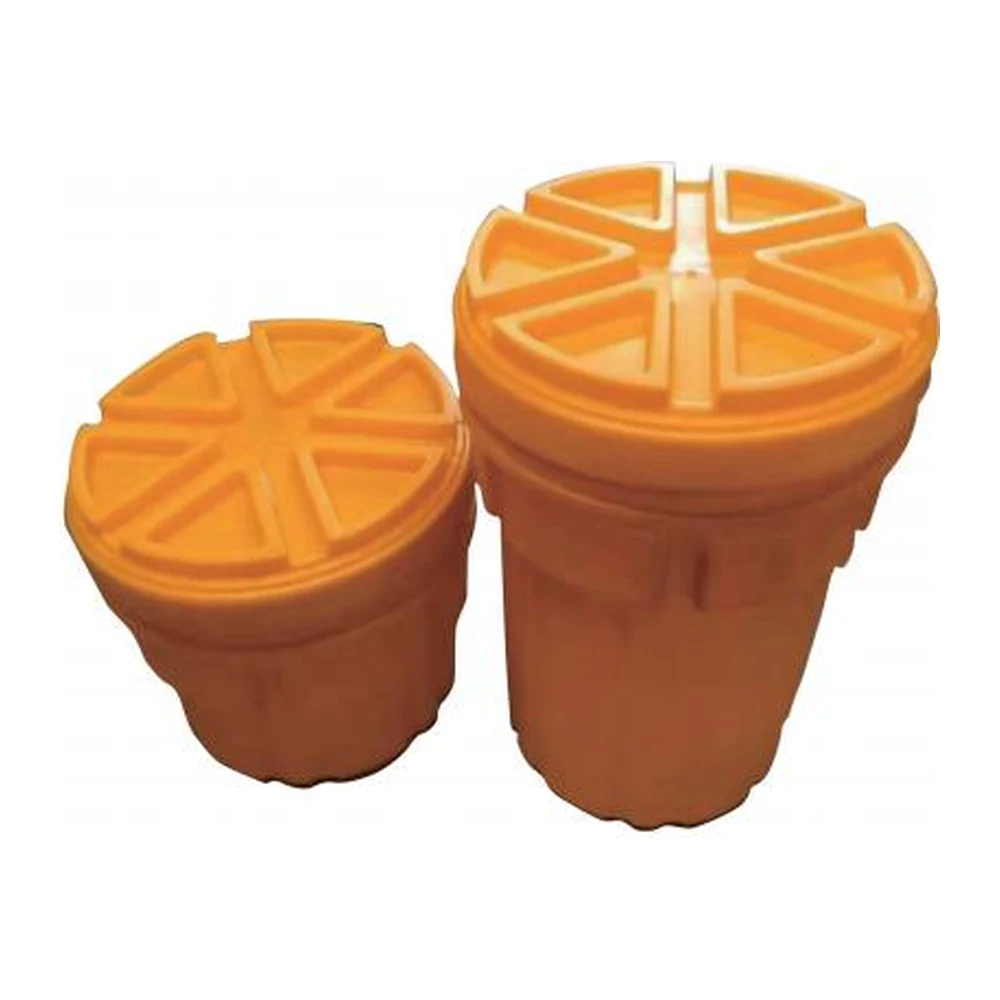 Salvage Drums & Spill Response Storage |
Salvage drums of 75 to 360 litres overpack a leaking container, and cabinets, a cart and a box keep the kit at the store. |
| Used absorbent | 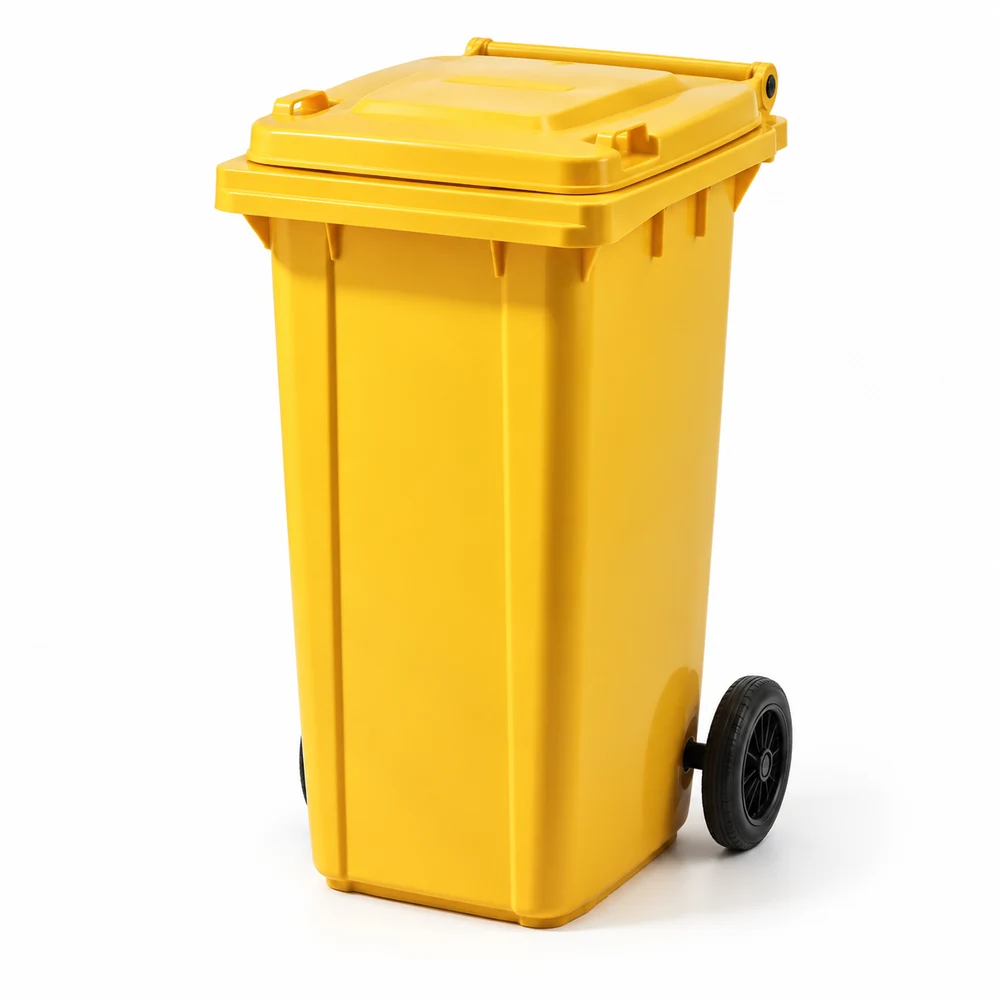 Wheeled Bins |
Lidded yellow bins of 120 to 660 litres hold saturated pads until collection. |
| Drums in storage | 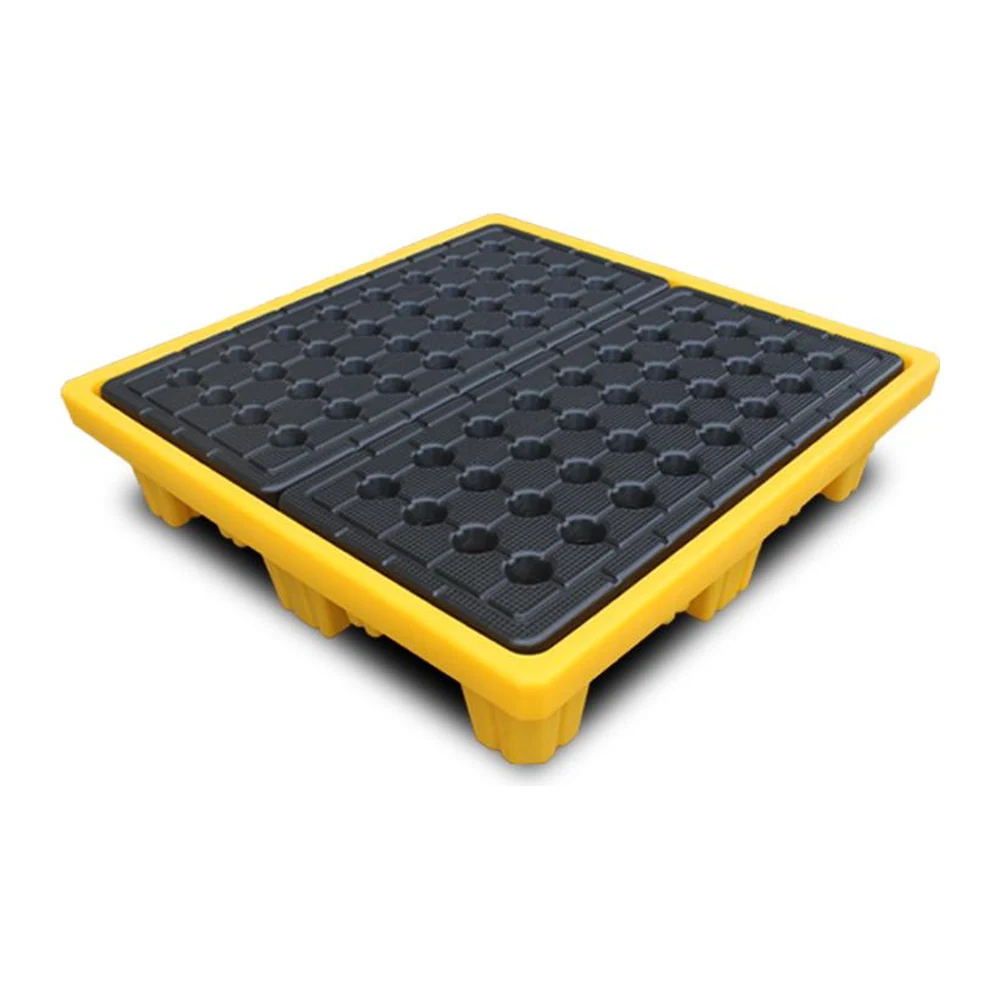 Drum Spill Pallets |
Sumps from 42 to 488 litres catch a burst drum, so the kit has less to do. |
| Pails and bottles at the bench | 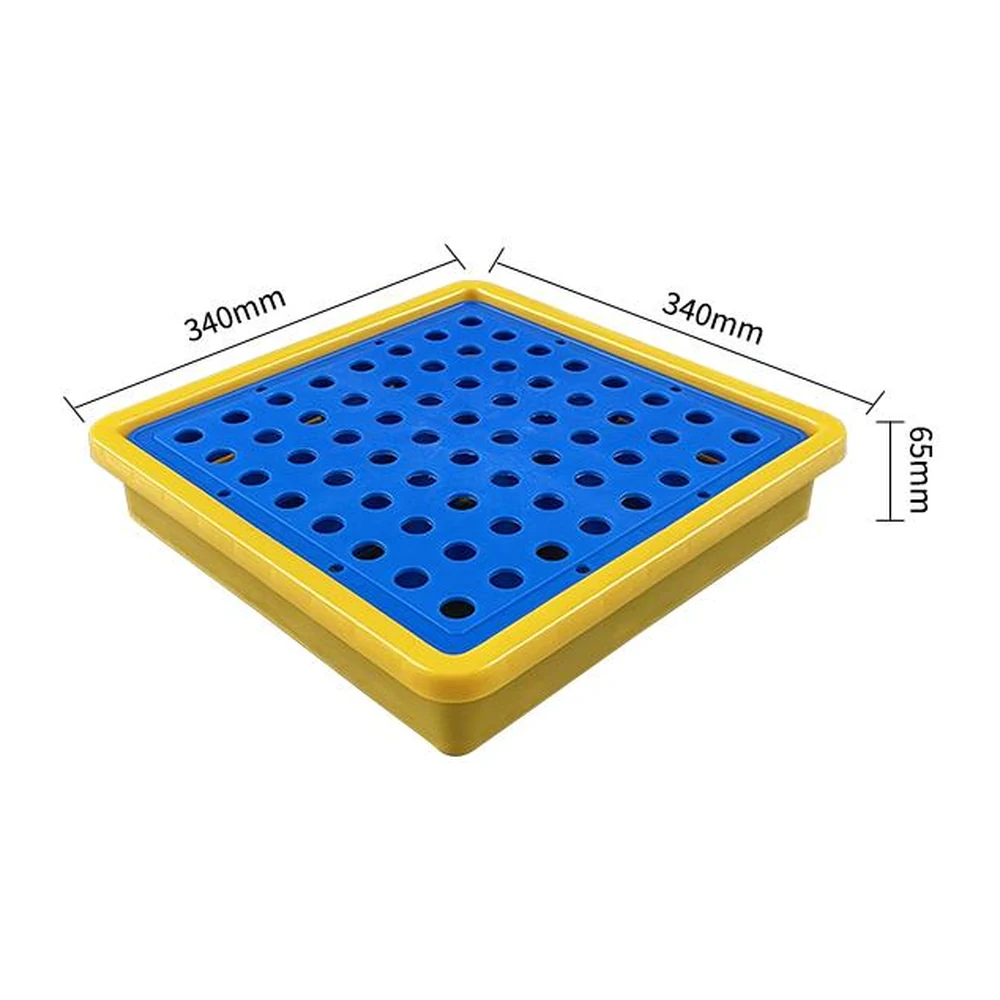 Bench Trays & Drip Trays |
Sumps from 4 to 150 litres catch drips at the point of use. |
| A splash to the eyes | 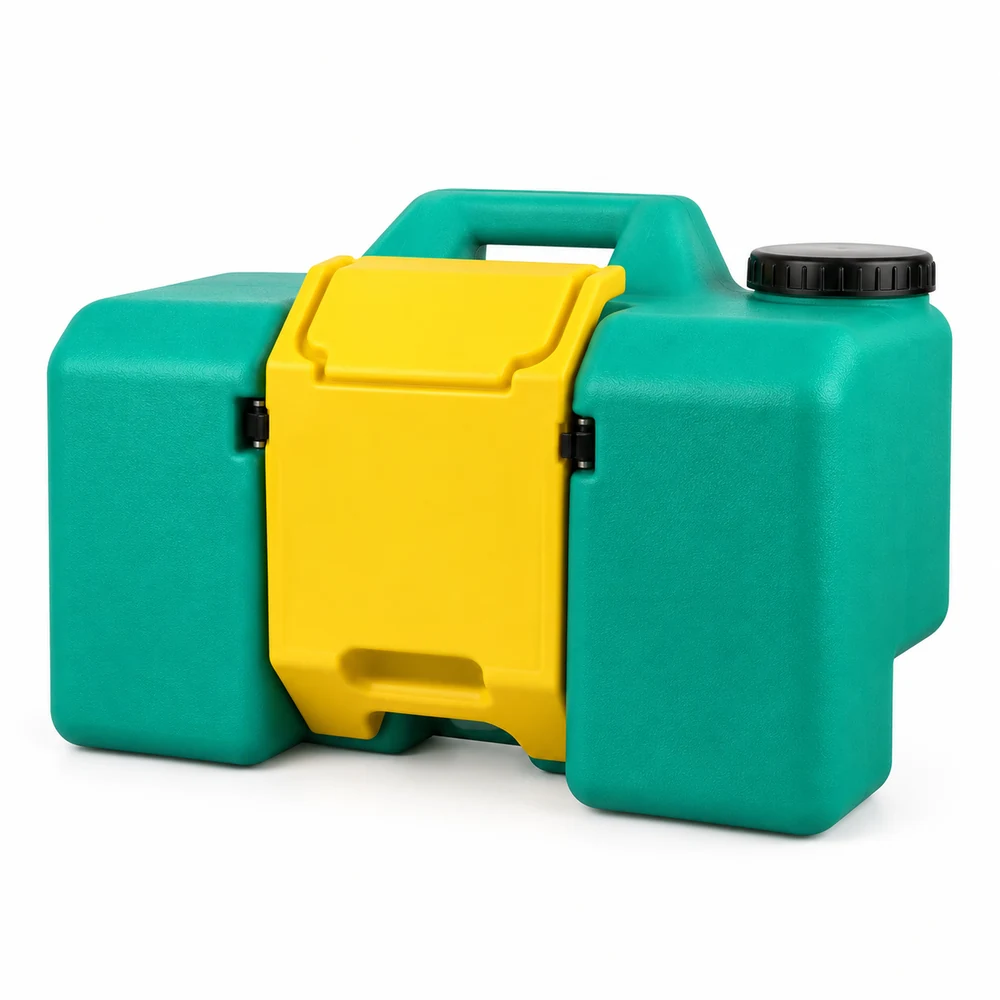 Emergency Eyewash & Safety Showers |
Portable 30 and 53 litre units flush the eyes where no plumbed water reaches. |
Enough that someone can reach one before a spill reaches a drain. No rule sets a number. GPP 22 and GPP 26 ask for a kit next to storage containers and delivery areas, and a second one away from them in case the first cannot be reached. Add a kit for each vehicle that carries liquids and one at every decanting point, then walk the route from the furthest container and time it.
None of the rules reviewed for this page gives a spill kit an expiry date. Check the maker’s data sheet: gloves, goggles and bags can carry their own shelf lives, and a damp or damaged pack loses capacity. Replace anything past its date and restock after every use, as GPP 26 asks.
Often enough that it is always complete, with the interval written in your emergency plan. None of the UK or US rules reviewed fixes one. EPA Victoria asks sites to inspect kits so they stay available and well stocked, and Ontario’s O. Reg. 224/07 asks prescribed plants to keep response equipment inspected and ready. GPP 26 asks for weekly checks of containers and containment, and for kits to be replenished after use.
It covers when to act, how to stay safe, how to use each item and when to stop and call for help. GPP 26 asks for training in when and how to use a kit and the PPE for the stored materials, with records and refresher courses. In the US, Hazard Communication training must cover emergency procedures and PPE, and HAZWOPER sets awareness and operations levels for emergency responders, with at least eight hours at operations level and annual refreshers.
No. A spill kit is response equipment, and a complete kit contains PPE such as gloves, goggles and coveralls. Regulation 4 of the PPE at Work Regulations 1992 requires an employer in Great Britain to provide suitable PPE where a risk is not controlled by other means, and 29 CFR 1910.132 does the same in the US. Check that the gloves in the kit resist your liquid.
None of the rules reviewed for this page requires either. A label that names the kit type and contents helps the responder, and a tamper-evident seal shows whether the kit has been opened. GPP 22 asks for equipment that is easy to reach but protected from damage and unauthorised use. Schedule 1 of the Safety Signs and Signals Regulations 1996 has no spill kit sign, so pick a clear one and keep it visible.
A spill pallet holds a leak under stored containers, and a spill kit soaks up a spill after it escapes. The pallet is passive containment sized by rule, such as 110% of the largest container or 25% of the total for oil in England. The kit is active response. Most sites need both, and the kit should cover what the pallet does not catch. See choosing a spill pallet.
An oil-only (white) or general-purpose (grey) kit suits both, and the liquid’s safety data sheet confirms it. Petrol (UN 1203) is a volatile Class 3 flammable liquid, so use non-combustible absorbent and non-sparking tools, keep ignition sources away and ventilate. Diesel (UN 1202) is less volatile. DSEAR can apply to both: see DSEAR and ATEX.
Use a kit on a spill you can identify and control from a safe position, such as a leak from one container on a floor. Call the emergency services if the spill involves a hazardous substance, such as a flammable or toxic liquid, or may escape to the environment. HAZWOPER draws the same line: an incidental release that employees in the immediate area can absorb, neutralise or control is outside emergency response.
It is a kit matched to what that room handles. A chemical laboratory kit holds absorbent and neutralising material for its acids, bases and solvents, and Canada’s National Fire Code requires both in a laboratory (Article 5.5.3.3). Biological, cytotoxic and radioactive spills need kits and procedures set by the site’s safety officer, and a chemical kit does not stand in for them.
Cat litter soaks up oil, but it has no stated capacity and is not made for fuel or chemical spills. A purpose-made absorbent carries a rated capacity and a data sheet. Whatever you use, scrape up every granule, as GPP 26 asks, and dispose of the used material as the waste that the liquid makes it.
A spill kit is a bag, bin or wheeled bin, usually white for oil, yellow for chemicals or grey for general use, packed with absorbent pads, socks, pillows or granules, a drain seal, gloves and goggles, and bags for used absorbent. A grab bag suits a 20 litre jerry can, and a bin or drum kit of 205 litres or more suits a 205 litre drum. The colour code is a trade convention, so read the label.
Dispersants belong to residue clean-up, which comes after the containing and absorbing that a kit does. GPP 22, section 7.4.1, says products such as dispersants are often pollutants on their own and can cause a worse problem if used wrongly, and some go directly into the water environment. It tells you to ask the environmental regulator which product suits your spill and to keep the effluent out of drains.
Not in the NIOSH sense. NIOSH defines engineering controls as measures that reduce or prevent hazards from coming into contact with workers, and lists protective barriers as an example. A bund or spill pallet is a barrier of that kind: it holds a leak without anyone acting. A spill kit works after the liquid has escaped and needs a person to use it, and the gloves and goggles inside it are PPE.
Yes, in US stormwater practice, where EPA lists spill kits within its spill prevention and control best management practice. Its fact sheet says a kit should hold absorbent pads, sorbent booms or socks, granular absorbent, protective clothing, heavy plastic bags and drain covers, and sit labelled and easy to reach. 40 CFR 122.2 defines a BMP to include practices that control spillage or leaks. No federal rule requires a kit by name.
No. No regulator sets a spill kit size, and kits are sold by absorbent capacity in litres, from a few tens of litres in a grab bag to several hundred in a wheeled bin. The usual rule of thumb, which has no legal force, matches that capacity to the largest container that could spill outside a bund. A bag kit suits a 20 litre jerry can, and a 205 litre drum calls for a bin or drum kit of 205 litres or more.
Oil-only absorbent, usually white, which takes up oil, diesel and petrol and repels water. Pack it as pads and rolls for flat spills, socks to ring a spill and guard a drain, pillows for a pool and loose granules for cracks and rough ground. Add a drain seal, leak sealing putty, gloves, goggles, a coverall and disposal bags. For petrol and other flammable liquids, HSE guidance asks you to consider non-combustible absorbent granules for small spills.
Stop, contain, absorb, dispose. Stop the leak at its source, then ring the spill with absorbent socks and cover any nearby drain. Spread granules or lay pads over the oil; granules reach into cracks and rough concrete. Sweep up every granule, then bag and label the used absorbent, which counts as hazardous waste once oil has soaked it. Never wash oil into a drain or use detergent unless your pollution plan, agreed with the regulator, allows it.
The standards and regulations this page relies on, at their issuing body. Where a market rule is named here, check the current revision before you specify against it.
Last reviewed by Clarence Cheang, Co-Founder.
Tell us the containers, the liquid and where the store is. We come back with the pallet or bund, its load rating and a quotation.