Drum Spill Decks
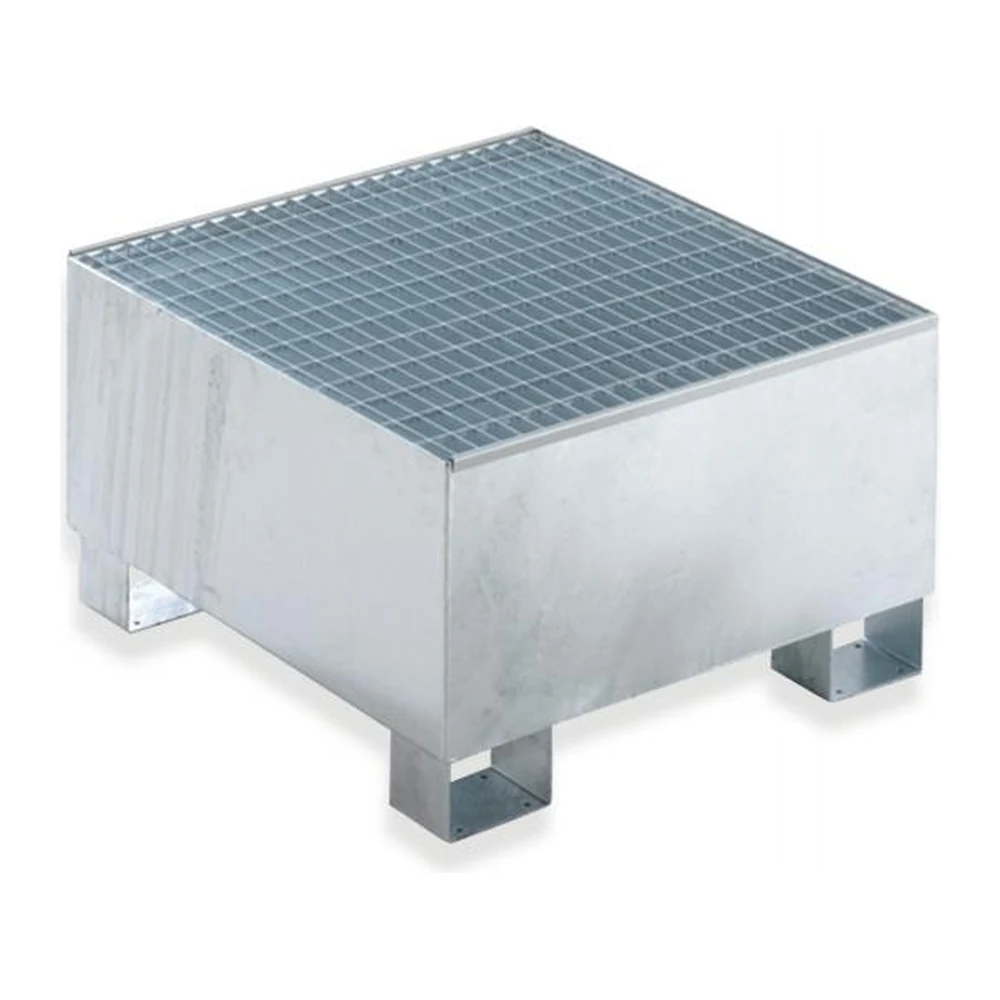
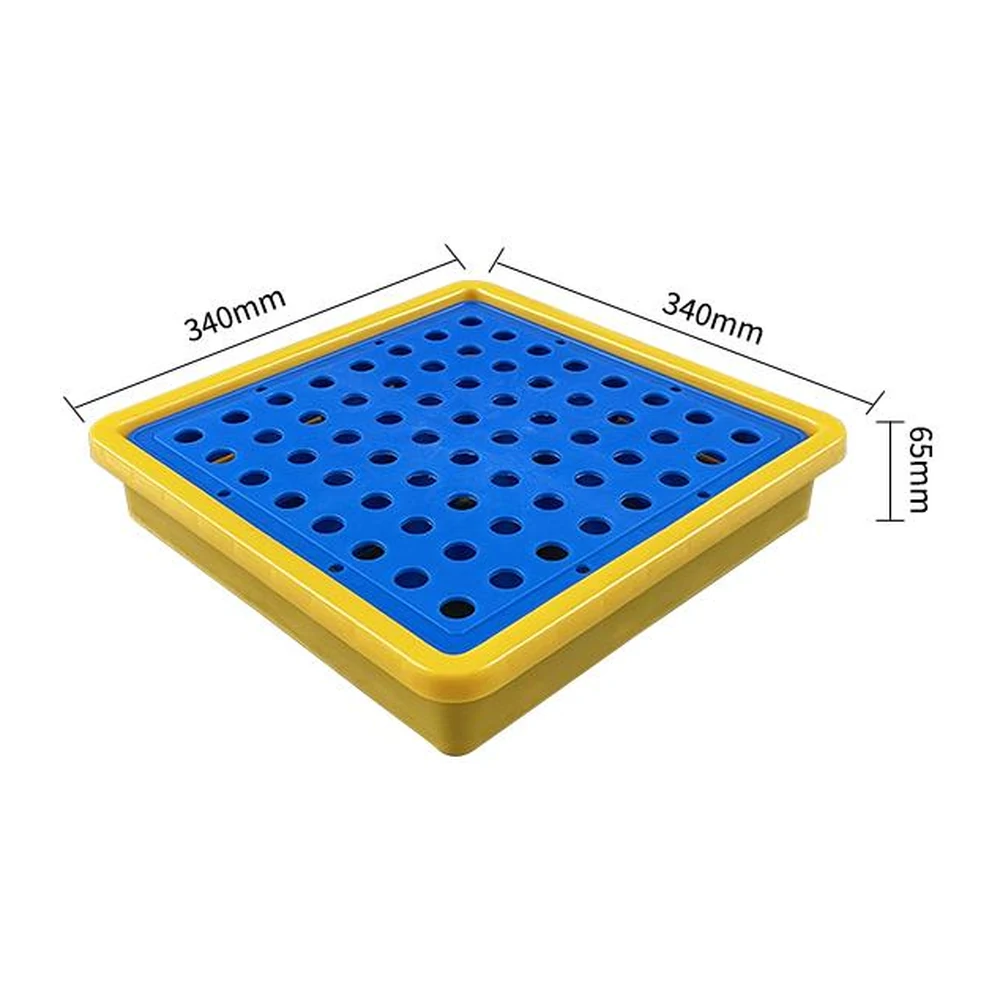
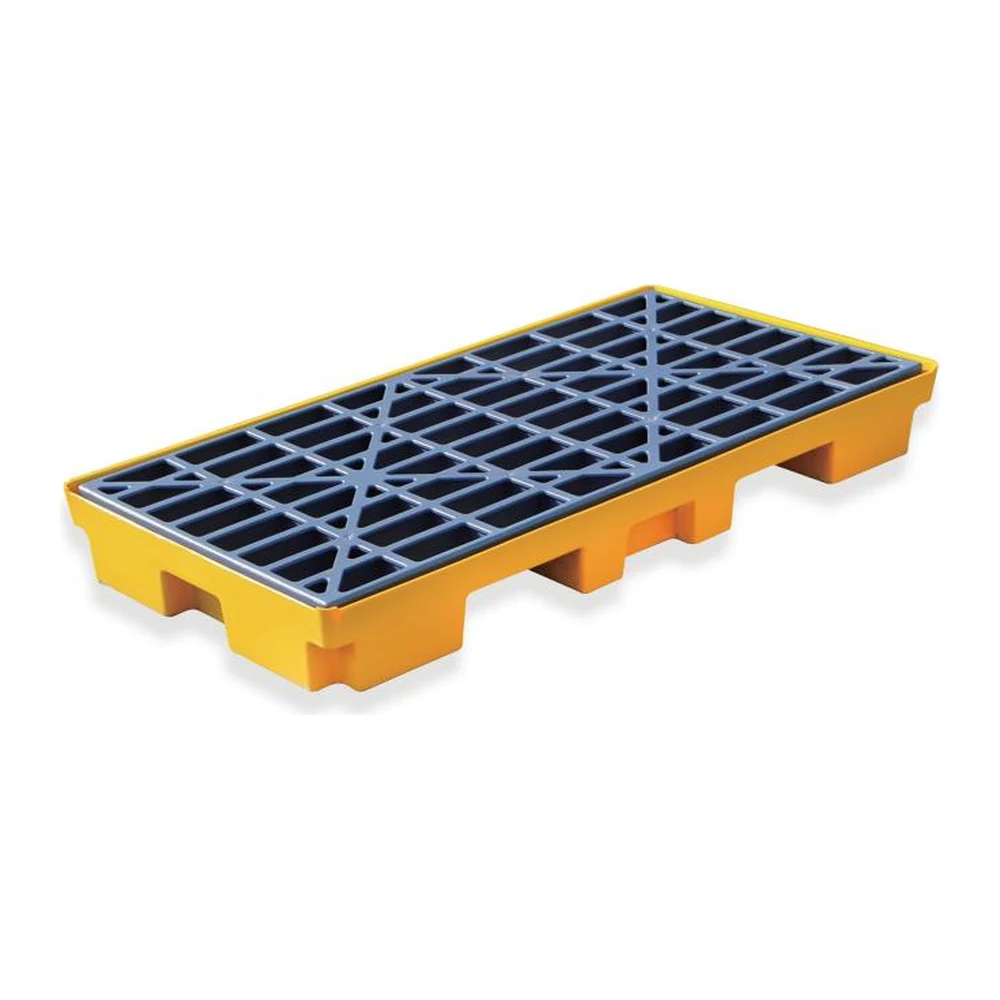
F21-SD-101 / -102 / -201 / -202 / -301 / -401Low-profile polyethylene decks for drums in use, with open grates that make a leak visible before it becomes a loss. Thirteen models from one drum to four.
Product code F21-WB-120 / -240 / -660
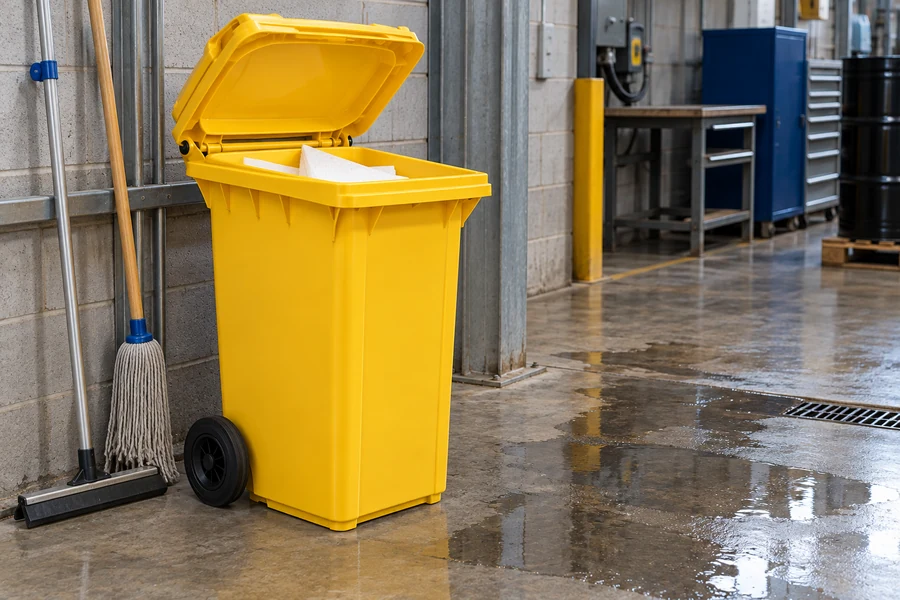
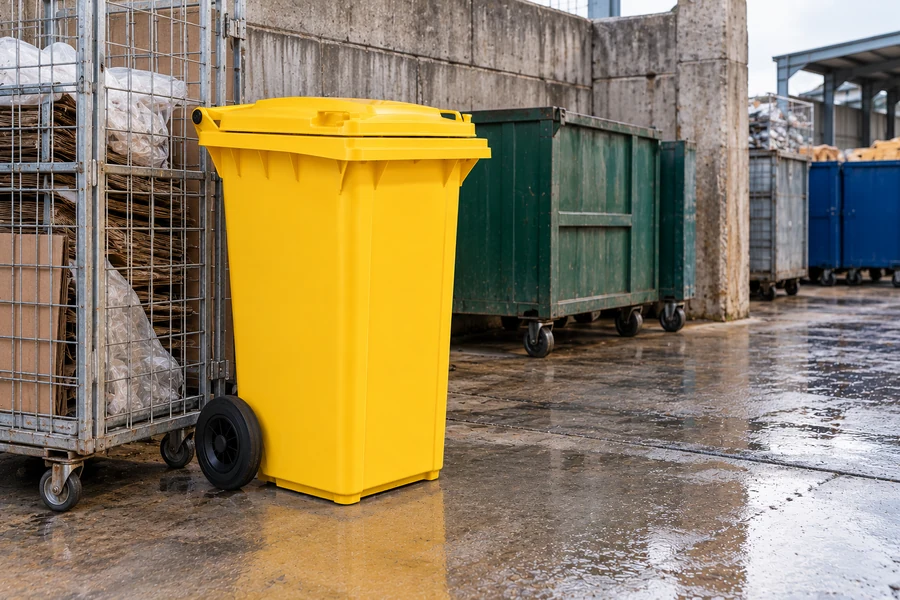
Where the used absorbent goes. A spill kit is only half a system: the pads come back saturated, and they need somewhere lidded and movable before the next shift walks past them.

| Product code | F21-WB-120 / -240 / -660 |
|---|---|
| Capacities | 120, 240 and 660 litres |
| Material | HDPE |
| Colour | Yellow |
| Lid | Hinged, on every size |
| Mobility | Two wheels with a rear handle on the 120 and 240; four castors and side handles on the 660 |
| Max load | 48 kg, 96 kg and 264 kg |
| Net weight | 6.6 kg, 9 kg and 39.5 kg ± 1 kg |
| Custom printing | Lid or body, on request |
| Lead time | Approximately one month for a standard production run; samples in 7–15 days. Confirmed against your specification at quotation. |
These depend on your order, your market or the certificate that covers your run, so we quote them rather than publish one figure that would be wrong for most buyers. Ask and you get the number for your specification.
Before you order: A bin that has collected absorbent inherits whatever the absorbent soaked up. Pads from a fuel or chemical spill are usually hazardous waste, and that decides who may take them away and under what paperwork. The bin carries no such classification of its own.
Three capacities. Read max load against saturated absorbent rather than against volume — wet pads reach the limit long before the bin looks full.
| Item photo | Model | Dimensions | Capacity | Max load | Per 20GP / 40HQ |
|---|---|---|---|---|---|
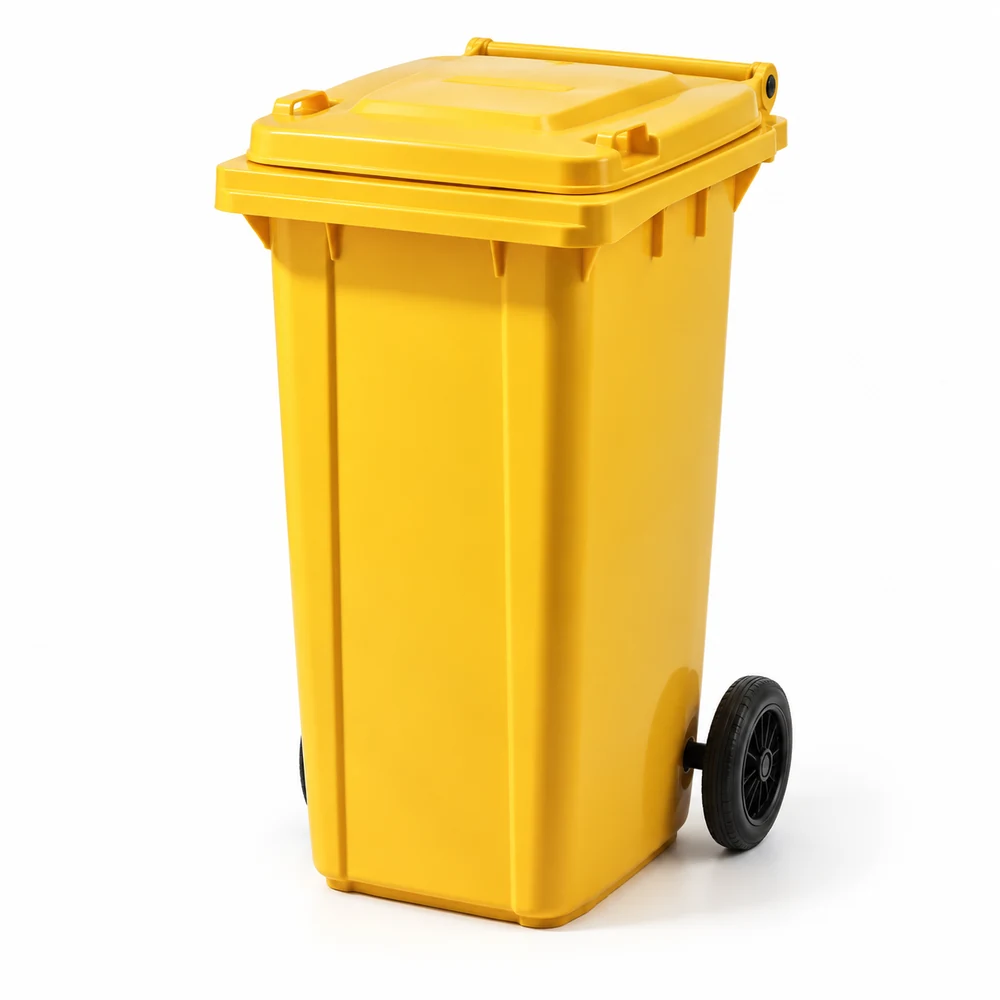
![]() | F21-WB-120 · 120 litre wheeled bin | 55 × 47 × 93 cm | 120 L | 48 kg | 700 / 1,700 |
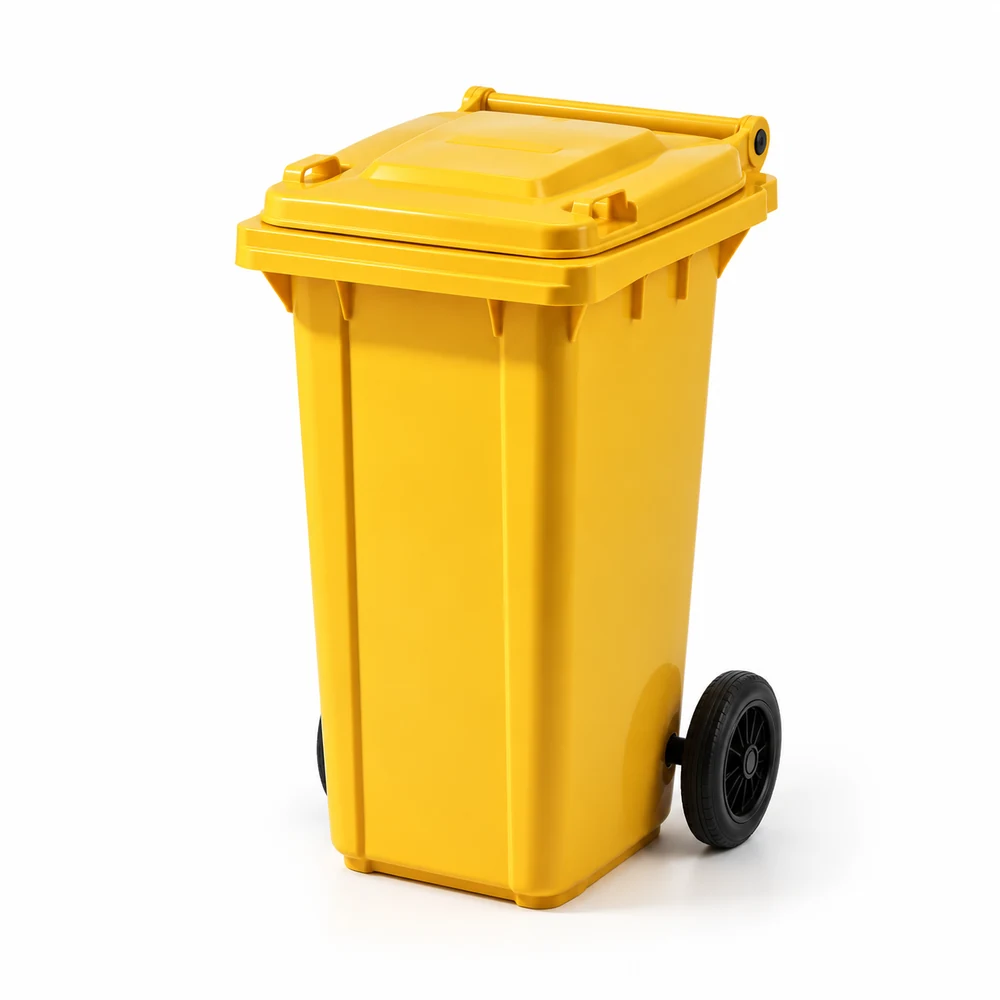
![]() | F21-WB-240 · 240 litre wheeled bin | 72 × 57.5 × 100 cm | 240 L | 96 kg | 500 / 1,150 |
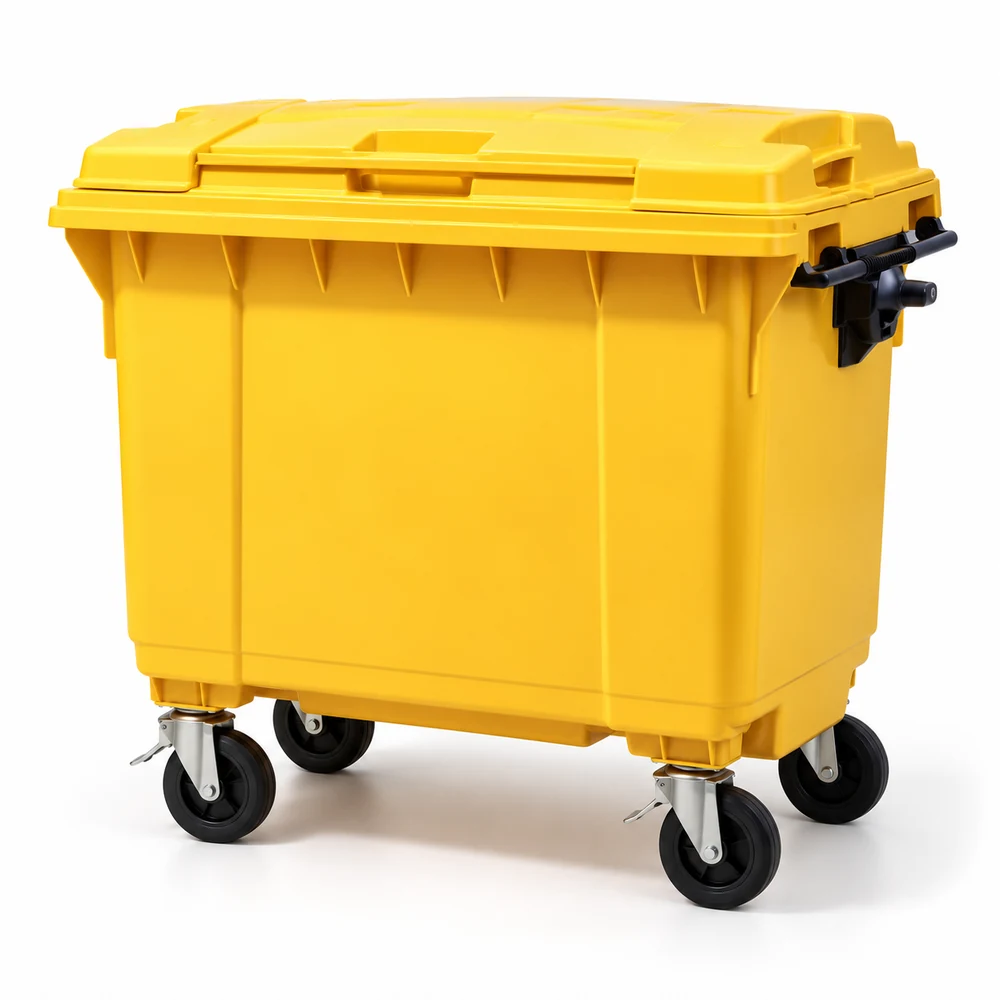
![]() | F21-WB-660 · 660 litre wheeled bin | 122 × 78.5 × 123 cm | 660 L | 264 kg | 60 / 150 |
Dimensions are length × width × height and weights are empty, both nominal. Load figures are the manufacturer’s published values; ask us for the test basis before you specify against them. The figure to check your containment rule against is the sump capacity, not the footprint.
A kit that has been used is a kit full of saturated pads. Until they are lidded and on wheels they are a slip hazard sitting next to the spill that made them.
The 120 and 240 tilt and pull on two wheels, which is what one person moves across a yard. The 660 runs on four castors, because a quarter of a tonne does not tilt.
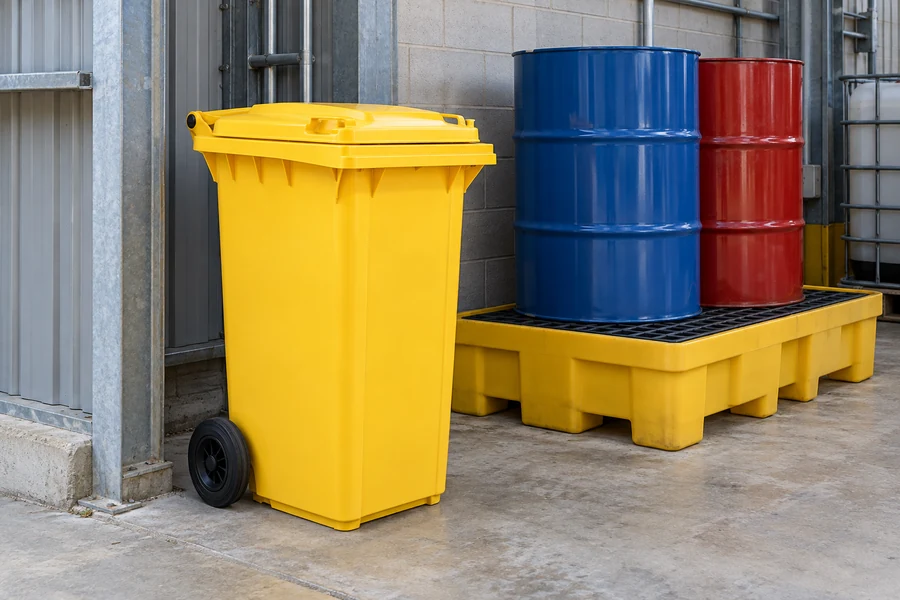
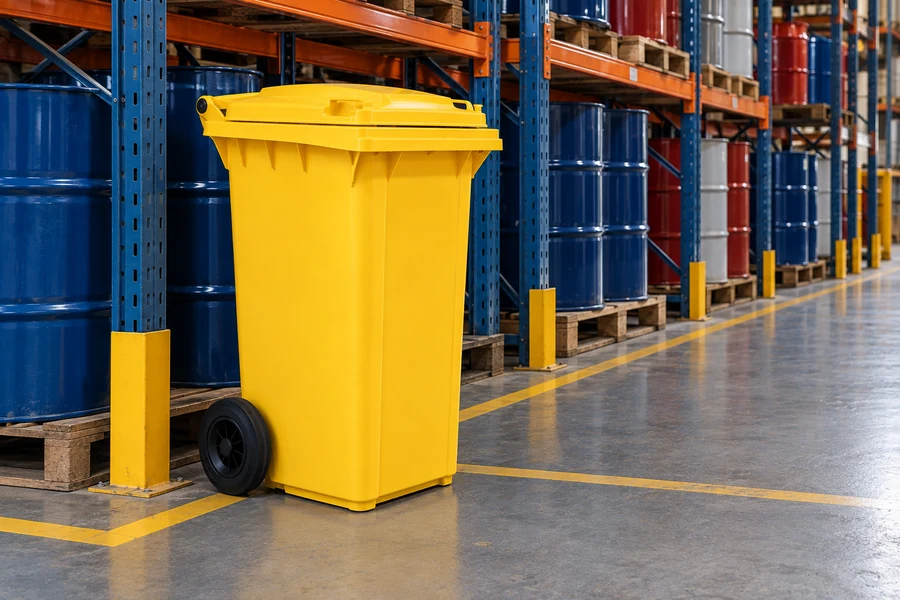
A yellow bin beside a bund is visibly not general waste, and nobody has to be told twice. Where a site wants the distinction in writing, the lid or body is printed to order.
Saturated absorbent is heavy, and 48 kg on the 120 is reached long before it looks full. The load rating, not the litre figure, is what sizes a bin for wet pads.


The regimes that apply to this type of container in each market we ship to, with the detail behind each one a click away. This is what the market asks for; what this particular design already holds is in the specification above.
Orientation for specification, not legal advice, and not a statement that this design holds a given approval. Requirements turn on the exact design, contents and destination, and they change. Tell us the market at enquiry and we confirm what applies to your specification, what we hold and what we would need to obtain.
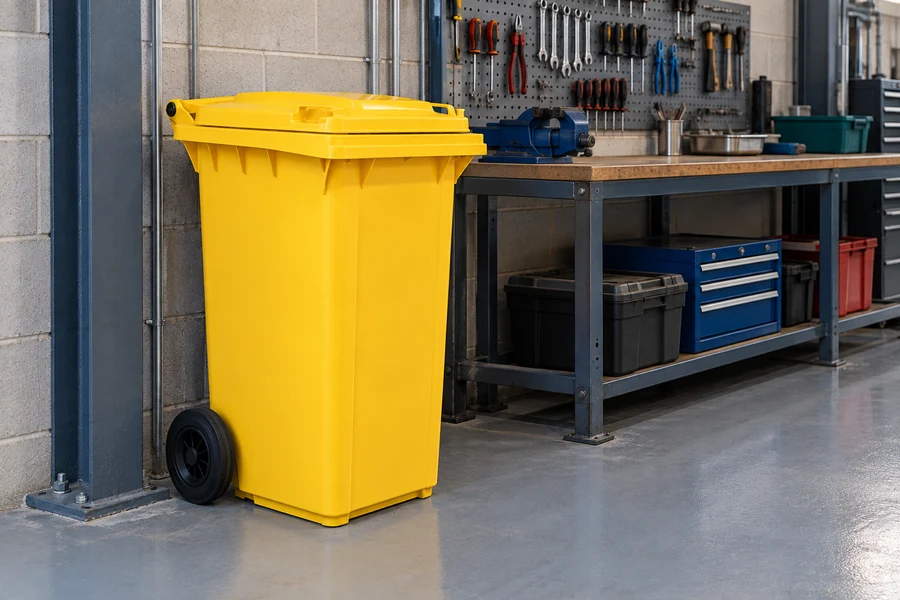
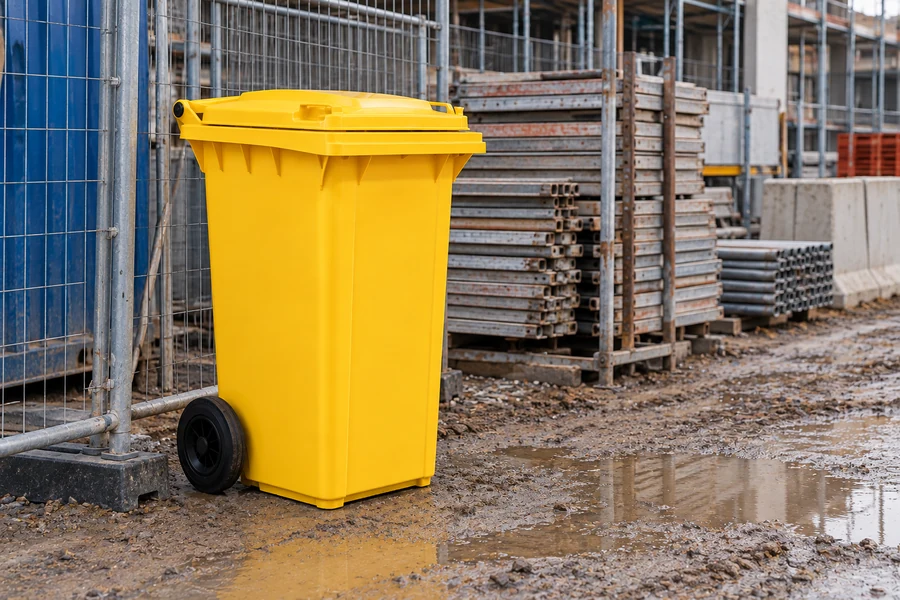
All three sizes are moulded HDPE in yellow. On a site that also runs general waste bins the colour does the labelling: a yellow bin standing at the bund reads as spill kit rather than rubbish without anyone having to mark it.
Max load is 48 kg on the 120 litre, 96 kg on the 240 and 264 kg on the 660. Saturated absorbent is heavy, so the load rating rather than the litre figure is what sizes a bin for used pads.
The 120 and 240 are two-wheeled bins in the sizes EN 840 Part 1 covers, and the 660 is a four-wheeled container under Part 2. Check the lifting profile against your collection contractor's vehicle before you order, because that is the dimension that has to match.
That is what they are for. The waste inside carries its own classification though: pads soaked with fuel or chemicals are usually hazardous waste, which decides how you store them and who is licensed to remove them. The bin itself carries no classification.
Yes, on the lid or the body. Send us the artwork and the quantity and we will quote the printing with the bins.
700 of the 120 litre per 20GP and 1,700 per 40HQ, 500 and 1,150 for the 240, and 60 and 150 for the 660. Those are the factory's published figures and they are unpalletised.

Low-profile polyethylene decks for drums in use, with open grates that make a leak visible before it becomes a loss. Thirteen models from one drum to four.

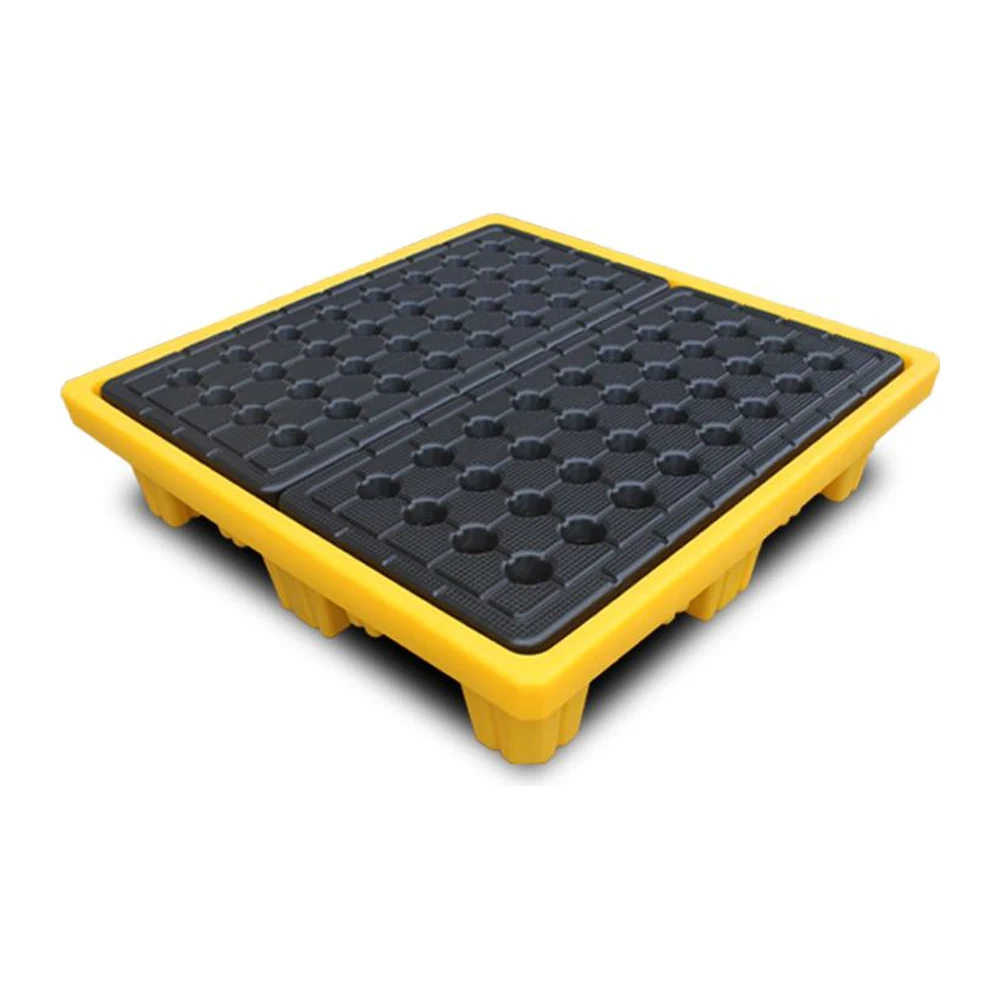
Deeper-sump polyethylene pallets for drums in storage, from one drum to four, with sumps from 42 to 488 litres and rackable and modular versions.

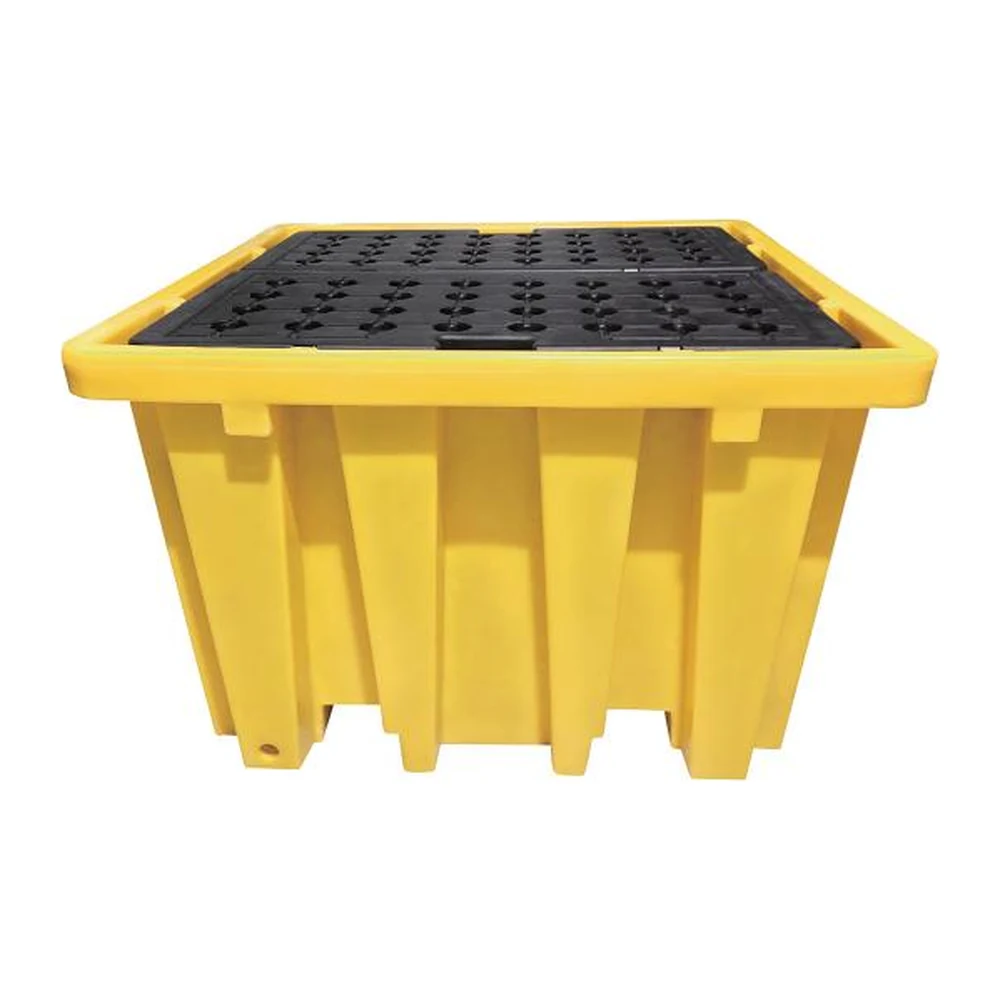
Spill pallets and low-profile decks for one, two or three IBC tanks, with sumps from 120 to 1,600 litres, plus linkable and rackable versions.

Double-layer 3 mm sheet steel spill pallets for one to four drums or one to two IBC tanks, powder coated or hot-dip galvanised, for sites that need non-combustible storage.

Containment for the lab bench, the workshop counter and pallets of 20 litre pails: tabletop trays from 4 litres, open drip trays to 150 litres, and pail pallets.

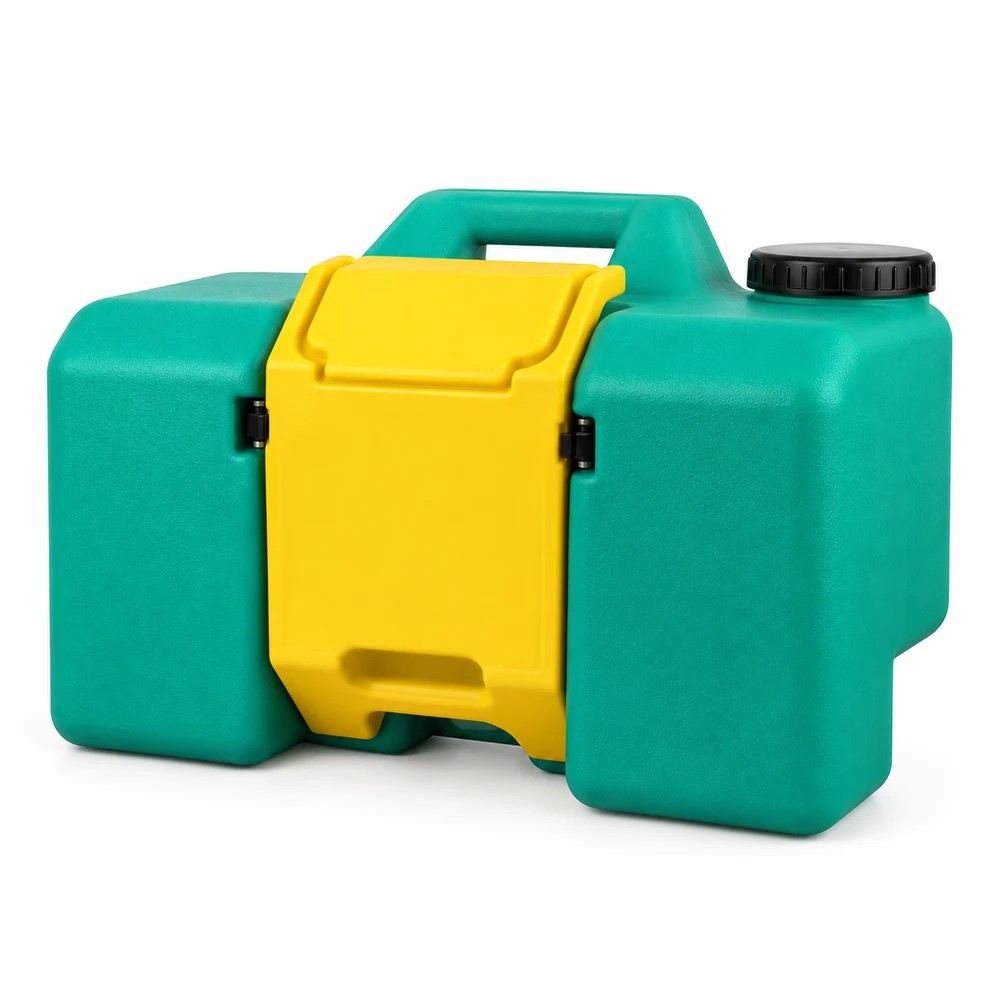
Polyethylene salvage overpack drums from 20 to 95 gallons, wheeled or static, plus cabinets, carts and boxes that keep the spill kit at the point of use.

Spill pallets with an integrated roller shutter or hard cover, and PVC tarp covers sized to the two-drum, four-drum, single IBC and double IBC pallets.

Self-contained portable eyewash units in 30 and 53 litres, and a floor-standing 304 stainless combination eyewash and safety shower for a plumbed supply.

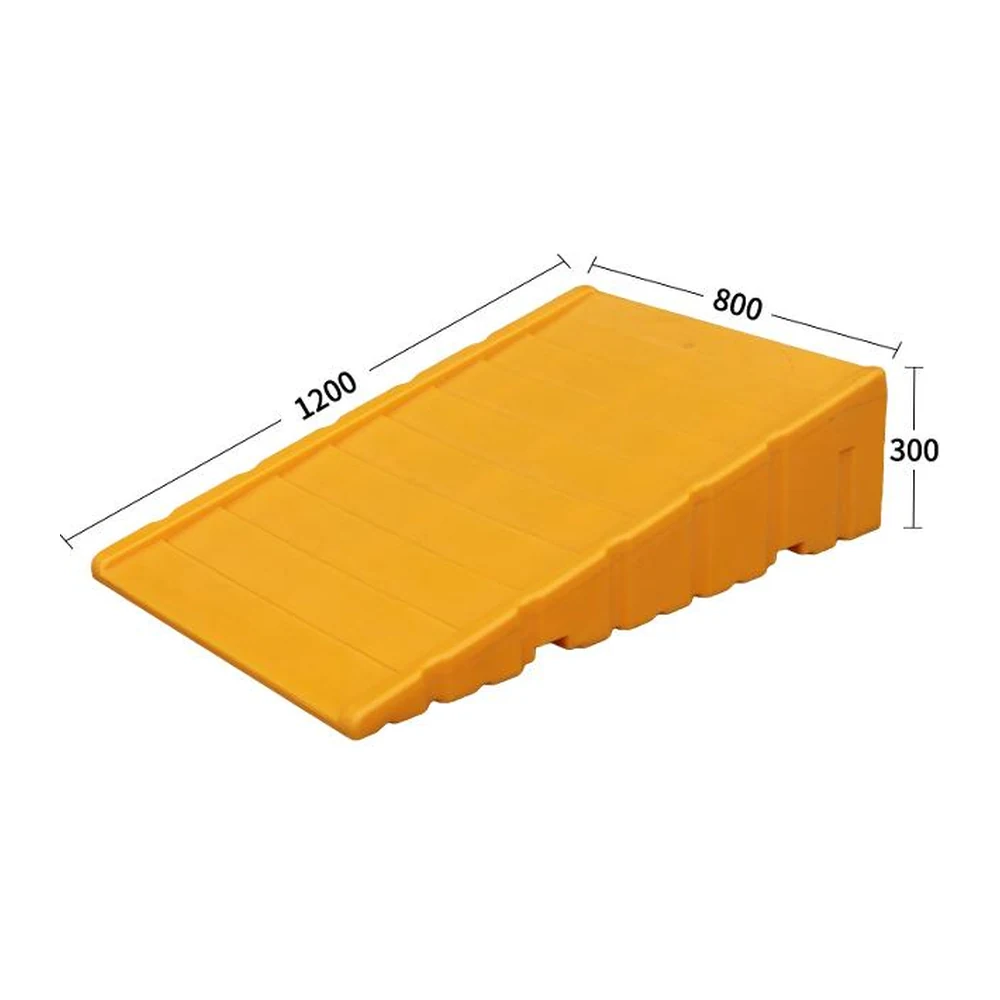
Single-piece and two-piece polyethylene ramps for loading drums onto a spill pallet or tray, sized to pallet heights from 10 to 30 cm.

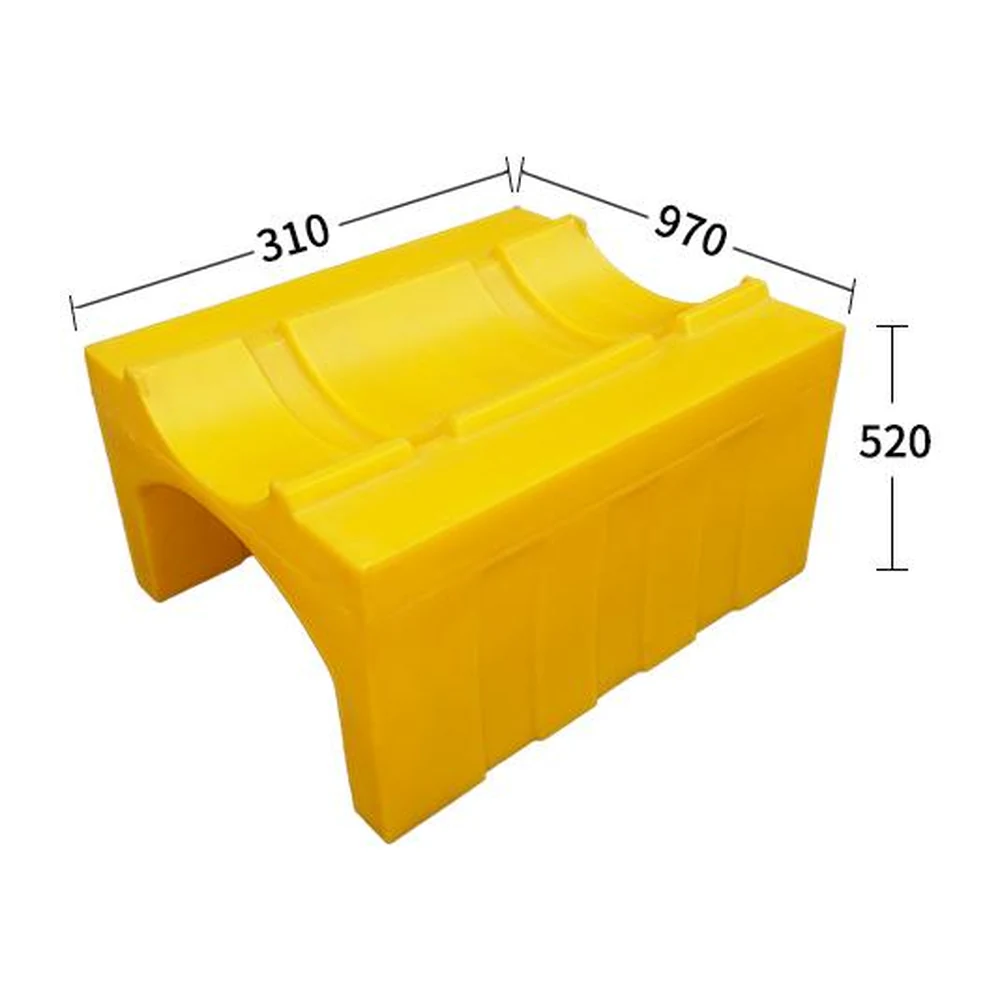
Stackable cradles that hold a drum horizontally for tapping, a drum rack dispensing base with a 380 litre sump, and a small container stacker.

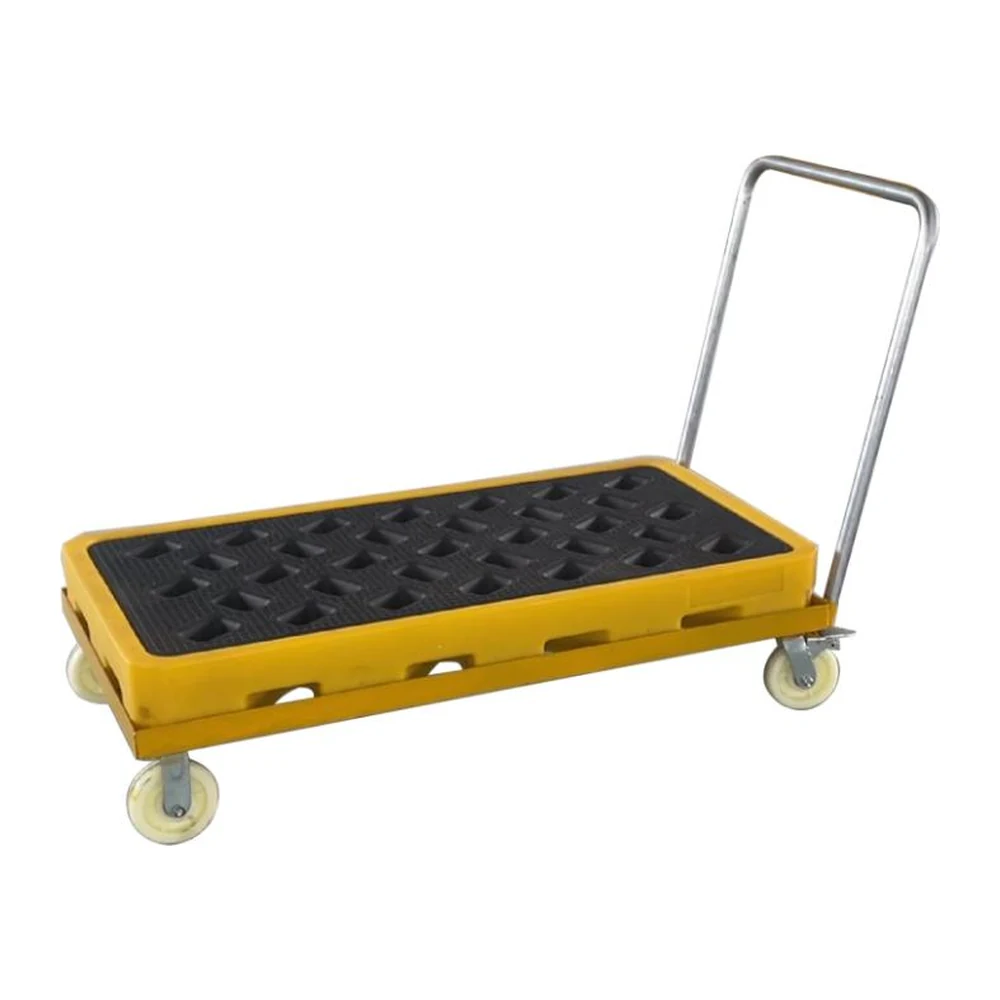
Poly drum dollies with integral sumps of 20 and 300 litres, a two-drum containment trolley, roll plastic pallets and a tilt truck.
Tell us your destination market, target volumes and whether you need private labelling.