
What DSEAR and the two ATEX directives ask of a site that keeps petrol, diesel or solvents: the risk assessment, the zones, the equipment and the containers.
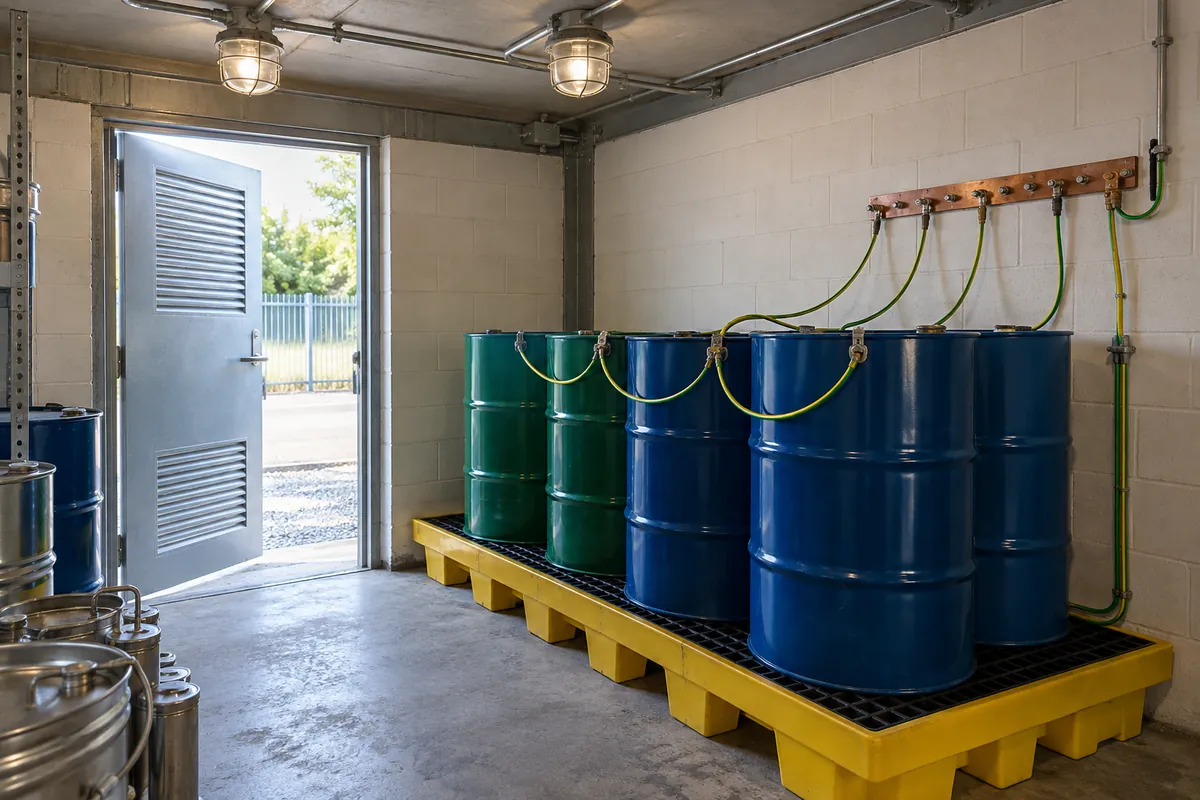
DSEAR, the Dangerous Substances and Explosive Atmospheres Regulations 2002, is the law in Great Britain for any employer holding petrol, diesel, solvents or combustible dust. It requires them to assess the fire and explosion risk and divide places where an explosive atmosphere may form into zones 0, 1 and 2 (gas) or 20, 21 and 22 (dust). They must fit ATEX equipment of the category each zone demands.
Quick answer: What does DSEAR require?
Any employer in Great Britain holding a dangerous substance, such as petrol, diesel or solvents, must assess the fire and explosion risk before new work starts (regulation 5), whatever the quantity. Places where an explosive atmosphere may form are zoned 0, 1 or 2 for gas and 20, 21 or 22 for dust, with ATEX equipment to match.
Yes. Regulation 5(1) of DSEAR (SI 2002/2776) requires a suitable and sufficient risk assessment wherever a dangerous substance is, or is liable to be, present at a workplace. No new work with it may start until the assessment is done (regulation 5(5)). The duty covers employers and the self-employed (regulation 4(2)). There is no minimum quantity: HSE lists petrol stored as fuel for cars, boats or horticultural machinery among the activities in scope.
DSEAR stands for the Dangerous Substances and Explosive Atmospheres Regulations 2002. They came into force on 9 December 2002 and apply in England, Scotland and Wales; Northern Ireland has its own regulations of 2003. HSE’s Approved Code of Practice L138 (second edition, 2013) explains how to comply. Since 1 June 2015 DSEAR has also covered gases under pressure and substances corrosive to metals, which brings acid and alkali stores in. There is no DSEAR 2025: later amendments updated cross-references for the 2016 equipment regulations and for Brexit.
ATEX is the name for two EU directives, from the French atmosphères explosibles in their titles. Directive 2014/34/EU, ATEX 114, governs equipment and replaced Directive 94/9/EC from 20 April 2016 (Articles 43 and 44). Directive 1999/92/EC governs the workplace. HSE calls it ATEX 137, after the treaty article it was made under; that article is now Article 153 of the Treaty on the Functioning of the European Union, so ATEX 153 names the same directive.
In Great Britain, DSEAR applies the workplace directive, with regulations 7 and 11 carrying its zoning and co-ordination rules, and the Equipment and Protective Systems Intended for Use in Potentially Explosive Atmospheres Regulations 2016 (SI 2016/1107) apply the equipment directive. DSEAR versus ATEX comes down to who holds the duty:
| Instrument | Binds | Requires |
|---|---|---|
| ATEX 114: Directive 2014/34/EU; in GB, the EPS Regulations 2016 | Manufacturers, importers, distributors | Equipment assessed and marked for a group and category |
| ATEX 137 or 153: Directive 1999/92/EC; in GB, DSEAR regulations 7 and 11 | Employers | Zones, matching equipment, signs, verification |
| DSEAR 2002 as a whole | Employers and the self-employed | Control of fire, explosion and corrosion-to-metal risks, zoned or not |
The last row is why a diesel store with no hazardous area still sits inside DSEAR. Health risks from the same substances fall under COSHH, covered in COSHH storage requirements.
An employer complies with ATEX by assessing the explosion risk, classifying zones, fitting equipment of the matching category and recording it all in an explosion protection document before work starts. Those duties come from Directive 1999/92/EC, which member states had to bring into national law by 30 June 2003 (Article 13).
Article 3 sets the order of protection: stop an explosive atmosphere forming; where that cannot be done, avoid igniting it; then limit the harm an explosion would do. Article 4 asks for the risks to be assessed overall, counting electrostatic discharge as an ignition source and taking in places connected by openings. Great Britain carries each duty in DSEAR:
| Directive 1999/92/EC | Employer duty | GB: DSEAR 2002 |
|---|---|---|
| Article 3 | Prevent the atmosphere, then avoid ignition, then mitigate | Regulation 6(2), 6(4) and 6(5) |
| Article 4 | Assess explosion risks overall, static and connected places included | Regulation 5(2) |
| Article 6 | Co-ordinate where several employers share a workplace | Regulation 11 |
| Article 7, Annexes I and III | Classify zones; warning signs at entry points | Regulation 7(1) and 7(3), Schedules 2 and 4 |
| Article 8 | Explosion protection document, drawn up before work starts | Regulation 5(4) record, from five employees |
| Annex II, Part A | Training, written instructions, permits to work, verification before first use | Regulation 9, Schedule 1 paragraph 6, regulation 7(4) |
| Annex II, Part B | Equipment category to suit each zone | Schedule 3 |
Article 8 lists what the document must show: the risks assessed, the measures taken, the zones and where the Annex II minimum requirements apply. It must show that workplace and equipment, warning devices included, are designed, operated and maintained with due regard for safety, and the arrangements for the safe use of work equipment. It is revised after significant changes and may combine existing assessments. Article 8 sets no minimum headcount. In Great Britain the DSEAR record sits beside the COSHH assessment for the same substances, and a site dispensing petrol from a tank also holds a storage certificate under the Petroleum (Consolidation) Regulations 2014.
A DSEAR risk assessment identifies each dangerous substance, the quantity, how it could ignite and what a fire or explosion would reach. Regulation 5(2) lists what it must consider:
| Regulation 5(2) | In a fuel or chemical store |
|---|---|
| (a), (b) Hazardous properties and supplier information | Flash point and flammable range, from each safety data sheet |
| (c) Amounts, combinations, storage and transport | Litres held, mixed stores, decanting, waste containers |
| (d) High-risk work such as maintenance | Hot work nearby, cleaning out a bund |
| (f), (g) Explosive atmospheres and ignition sources, including static | Leaks, ventilation, lights, vehicles, phones, pouring |
| (h), (i) Scale of effects and connected places | Escape routes, drains, pits and adjoining rooms |
Regulation 6 sets the order of the answers. Substitution comes first (6(2)), such as a high-flashpoint cleaner in place of a solvent. Then come the measures in 6(4), in priority order: the least quantity, controlling releases, ventilation, collecting spills, avoiding ignition sources including static, and keeping incompatible substances apart.
Once you employ five or more people, the significant findings must be written down (regulation 5(4)). That record is what people call a DSEAR report. It covers the measures taken, evidence that the workplace and work equipment are designed and maintained for safety and, where an explosive atmosphere may occur, the zone drawings, the verification under regulation 7(4) and any co-ordination with other employers. Review it when it may no longer be valid or the work changes (regulation 5(3)).
Yes. DSEAR’s first test of a dangerous substance is whether it meets a physical hazard criterion in the CLP Regulation, classified or not (regulation 2). CLP Annex I, Table 2.6.1 treats a liquid flashing at 60 °C or below as flammable, and lets diesel, gas oil and light heating oil flashing between 55 and 75 °C be regarded as Category 3. HSE confirms that diesel is now classified as a flammable liquid and asks for a proportionate approach, because the risk itself has not changed.
Flash point decides whether a store has a zone. Petrol flashes below −40 °C (NIOSH lists −45 °F) and ignites between 1.4% and 7.6% vapour in air, so it gives off ignitable vapour at any storage temperature. HSG51 says Category 3 liquids kept below their flash point produce no flammable atmosphere, though they burn in a fire and ignite as a mist or spray (paras 247 and 248). See storing fuel safely for how the two fuels age.
| Liquid | Flash point | CLP status | Zone in a cool store? |
|---|---|---|---|
| Petrol | Below −40 °C | Category 1 or 2 (under 23 °C) | Yes, assess its extent |
| Diesel, gas oil, heating oil | 55–75 °C band | May be regarded as Category 3 | No, unless heated or sprayed |
| Other liquids | Over 60 °C | Not flammable under CLP | Only if heated or sprayed (regulation 2(b)) |
A zone grades a place by how often and for how long an explosive atmosphere is present. DSEAR regulation 7(1) and Schedule 2 set six, three for gas, vapour or mist and three for dust clouds; anything outside them is non-hazardous.
| Gas, vapour, mist | Dust cloud | Explosive atmosphere is | Indicative hours a year (gas) |
|---|---|---|---|
| Zone 0 | Zone 20 | Present continuously, for long periods or frequently | Over 1,000 |
| Zone 1 | Zone 21 | Likely to occur occasionally in normal operation | 10 to 1,000 |
| Zone 2 | Zone 22 | Not likely in normal operation, and brief if it occurs | Under 10 |
HSE gives the hours as a guide and says no time limits were ever officially adopted. Zones also ignore consequences: where a release would be severe, HSE advises upgrading the equipment or the controls rather than drawing a larger zone. HSG51’s worked examples for container stores use zone 2, and zone 1 for drains and sumps.
Dust zones matter in woodworking and food: HSE names grain, flour and wood dust, and layers of dust count as a source (Schedule 2, note 1). Every zone brings three duties. The first is the yellow triangular EX sign at its entry points where necessary (regulation 7(3), Schedule 4). The second is clothing that does not cause electrostatic discharge (regulation 7(5)). The third is verification of overall explosion safety by a competent person before first use (regulation 7(4)).
ATEX certification is the conformity assessment a manufacturer completes under Directive 2014/34/EU before selling equipment for a hazardous area, and the rating is the marking that results. It covers equipment “capable of causing an explosion through their own potential sources of ignition” (Article 2), mechanical as well as electrical. Group II covers every place except mines, in categories 1, 2 and 3 by level of protection (Annex I).
Annex II, point 1.0.5 sets the marking. Read “Ex II 2G” as the Ex hexagon, group II, category 2 (fit for zones 1 and 2) and G for gas, vapour or mist, with D for dust. Standards add a protection concept, such as d for a flameproof enclosure or ia for intrinsic safety, and a temperature class from T1 to T6 that caps the hottest surface below the ignition temperature of the gas present.
Category 1 equipment, and category 2 electrical equipment and engines, need EU-type examination by a notified body; other category 2 equipment lodges its technical file with one, and category 3 is self-declared (Article 13). In Great Britain the mark is UKCA, which the trade calls UKEX. GOV.UK limits UKCA self-declaration to group II, category 3, and CE-marked ATEX equipment is still accepted under the Product Safety and Metrology etc. (Amendment) Regulations 2024.
A manufacturer complies with Directive 2014/34/EU by designing the product to the essential health and safety requirements in Annex II, completing the conformity assessment its category calls for and keeping a technical file. It then signs an EU declaration of conformity and applies the CE and Ex markings (Article 6). Products built to harmonised standards whose references appear in the Official Journal, such as EN 60079-11 for intrinsic safety, are presumed to meet those requirements (Article 12).
The Directive covers equipment with its own potential source of ignition, protective systems, safety devices working from outside the zone, and components (Article 1(1)). HSE warns that some hand-operated valves are sold as “ATEX-compliant” with ATEX markings though they fall outside the Regulations. Inside scope, Article 13 sets the route by category:
| Category | Conformity route (Article 13) | Notified body’s part |
|---|---|---|
| 1, for zones 0 and 20 | EU-type examination (Annex III, module B) plus production quality assurance (Annex IV, module D) or product verification (Annex V, module F) | Examines a specimen, then audits the factory or tests every product |
| 2: electrical equipment and engines | EU-type examination plus supervised product testing (Annex VI, module C1) or product quality assurance (Annex VII, module E) | Type examination, then supervised tests or audits |
| 2: other equipment | Internal production control (Annex VIII, module A) | Receives and keeps the technical file |
| 3, for zones 2 and 22 | Internal production control (Annex VIII, module A) | None |
| Any, one-off product | Unit verification (Annex IX, module G) | Examines that product |
Whatever the route, the manufacturer keeps the technical documentation and the EU declaration of conformity for 10 years after the product is placed on the market. The manufacturer marks each item with a type, batch or serial number and a postal address, and supplies instructions in a language end users understand (Article 6(3) to (8)). A copy of the declaration goes with each product (Article 6(2)); a component carries no CE mark and comes with a written attestation of conformity instead (Article 13(3)). In Great Britain, regulation 39 of SI 2016/1107 sets the same routes for the UKCA mark.
For equipment made outside the EU, the importer established in the EU checks that the maker has completed the assessment, adds its own name and postal address and keeps a copy of the declaration for 10 years (Article 8). A distributor checks the CE marking, the declaration and the instructions before selling (Article 9(2)). Before buying an electric drum pump, a lamp or a fuel transfer pump for a zone, ask for the declaration and, for category 1 or category 2 electrical equipment, the EU-type examination certificate.
An ATEX nameplate carries two strings. The legal marking set by Directive 2014/34/EU (Article 16 and Annex II, point 1.0.5) gives the CE mark, the notified body’s number, the Ex hexagon, the equipment group, the category and G or D. It sits alongside the maker’s name and address, the type, the serial number and the year of construction. The Ex marking from the EN/IEC 60079 standards adds the protection concept, the gas or dust group, the temperature class and the equipment protection level (EPL). The European Commission’s ATEX Guidelines (sixth edition, January 2026, section 147) note that the standards recommend keeping the two apart, so neither is mistaken for the other. A flameproof pump for a petrol store might read II 2 G on the first line and Ex db IIB T4 Gb on the second.
| Field | Example | What it tells you |
|---|---|---|
| CE and notified body number | CE + number | The body that checks production; category 3 equipment normally carries none (Article 16(3)) |
| Ex hexagon and group | II | Group I is mines with firedamp, in categories M1 and M2; group II is every other place (Article 2) |
| Category and atmosphere | 2 G | Category 1, 2 or 3 for zone 0, 1 or 2 with G for gas, vapour or mist; zone 20, 21 or 22 with D for dust |
| Protection concept | Ex db | How ignition is prevented: d flameproof enclosure, e increased safety, i intrinsic safety, m encapsulation, p pressurisation; a trailing a, b or c gives the EPL |
| Gas or dust group | IIB | IIA covers propane and petrol, IIB ethylene, IIC hydrogen and acetylene; IIIA combustible flyings, IIIB non-conductive dust, IIIC conductive dust. IIC equipment also suits IIB and IIA gases |
| Temperature class | T4 | Hottest surface 135 °C; choose a class below the ignition temperature of the gas present |
| EPL | Gb | G gas, D dust, M mines; a suits zone 0, b zone 1, c zone 2 |
Intrinsic safety, marked i, is one of those protection concepts. It holds the electrical energy in a circuit and its wiring below the level that could ignite the atmosphere by a spark or by heat (IEC 60079-11). TestSafe Australia, the NSW Government test laboratory, sets out three levels: ia must not cause ignition with two countable faults applied, ib with one, and ic in normal operation. OSHA’s own example of a zone 0 marking uses the top level: “Class I, Zone 0, AEx ia IIC T6” (29 CFR 1910.307(g)(5)(ii)(B)).
The marking belongs on equipment with its own potential source of ignition (Article 2(1)), mechanical as well as electrical. The ATEX Guidelines (section 41) name plastic containers for chemicals and buckets as items outside the Directive when their only charge comes from the process. They should not be Ex or CE marked under it, and the user controls the static through the workplace risk assessment, with bonding and the venting covered in fuel-can venting and pressure. Fortitude21’s cans and spill pallets have no electrical or moving parts and hold no ATEX certificate. An electric drum pump or a generator used inside a zone needs equipment of the category the zone demands; see drum storage requirements and generator fuel storage.
ATEX is European Union law, IECEx is an international certification scheme, and the class and division system comes from the US National Electrical Code, NFPA 70, which OSHA’s workplace rule, 29 CFR 1910.307, follows. One nameplate can carry all three markings, and each market checks for its own.
| Question | ATEX | IECEx | US: NEC and OSHA |
|---|---|---|---|
| Legal status | EU directive, binding through each member state’s law | A certification scheme of the IEC; Queensland’s regulator calls it “not a regulatory framework” | OSHA’s rule is federal law; state and local authorities enforce NEC provisions (1910.399) |
| Hazardous areas | Zones 0, 1, 2 (gas) and 20, 21, 22 (dust) | IEC zones, from IEC 60079-10-1 | Class I gas, II dust, III fibres, each Division 1 or 2 (Article 500); Class I zones 0, 1, 2 (Article 505) |
| Gas groups | IIA, IIB, IIC | IIA, IIB, IIC | Groups A to D: D matches IIA, C matches IIB, A and B make up IIC |
| Third-party assessment | Category 1, and category 2 electrical equipment and engines; category 3 is self-declared | Every certificate, whatever the zone, with surveillance audits of the factory | Listing or labelling by a nationally recognised testing laboratory (NRTL), or another route OSHA accepts |
| Typical marking | Ex hexagon II 2 G, then Ex db IIB T4 Gb | Ex db IIB T4 Gb with an IECEx certificate number | Class I, Division 1, Groups C and D, T4; or Class I, Zone 1, AEx db IIB T4 |
OSHA allows zones for Class I gas and vapour locations only; dust and fibre locations stay in the division system (1910.307(a)(4)). Its definitions also note that a store of flammable liquids in sealed containers would not normally be classed as hazardous unless other conditions apply (1910.399, note to Class I, Division 2). That bears on a can store run to the US gas can rules. In Great Britain the same store still needs a DSEAR assessment, segregation as in chemical storage best practice and, for oils, the bunding in UK oil storage regulations.
Each market accepts its own route. In Great Britain, GOV.UK’s product marking guidance (published 31 March 2026) says legislation in force since 1 October 2024 continues recognition of the CE marking, so equipment may carry the UKCA mark, which the trade calls UKEX, or CE. A UK approved body’s number follows the UKCA mark where that body checks production (SI 2016/1107, regulation 41). Northern Ireland takes CE, or UKNI with CE. The US Coast Guard will not accept equipment on the strength of an ATEX marking on the vessels and offshore units it regulates, because ATEX lets makers self-certify some equipment. Workplace Health and Safety Queensland looks for IECEx certificates, and IECEx itself says ATEX is all EU law requires.
ATEX zones 0 and 1 fall inside the US Class I, Division 1, and zone 2 corresponds to Class I, Division 2. For dust, zones 20 and 21 fall inside Class II, Division 1 and zone 22 corresponds to Division 2. NFPA 70, the US National Electrical Code, runs two systems side by side: classes and divisions in Article 500, and zones in Article 505 for gases and Article 506 for dusts and fibres. The map compares the definitions in 29 CFR 1910.399 with Directive 1999/92/EC, Annex I.
| Explosive atmosphere | ATEX zone | ATEX equipment | NEC Article 500 | NEC zone |
|---|---|---|---|---|
| Gas or vapour: continuous, long or frequent | Zone 0 | Category 1 G | Class I, Division 1 | Class I, Zone 0 |
| Gas or vapour: likely in normal operation | Zone 1 | Category 1 or 2 G | Class I, Division 1 | Class I, Zone 1 |
| Gas or vapour: not likely, and brief | Zone 2 | Category 1, 2 or 3 G | Class I, Division 2 | Class I, Zone 2 |
| Dust cloud: continuous, long or frequent | Zone 20 | Category 1 D | Class II, Division 1 | Zone 20 |
| Dust cloud: occasional in normal operation | Zone 21 | Category 1 or 2 D | Class II, Division 1 | Zone 21 |
| Dust cloud: not likely, and brief | Zone 22 | Category 1, 2 or 3 D | Class II, Division 2 | Zone 22 |
| Fibres and flyings | Zones 20 to 22, group IIIA | Category by zone, D | Class III, Division 1 or 2 | Zones 20 to 22 |
OSHA keeps dust and fibre areas in divisions, so the Article 506 zones do not apply under its workplace rule (1910.307(a)(4)). Equipment moves between levels one way: zone 0 equipment may serve zones 1 and 2, zone 1 equipment zone 2, and Division 1 equipment a Division 2 area of the same class and group (1910.307(e) and (g)(5)(i)). Division-approved equipment placed in a zone must also carry the zone, gas group and temperature class (1910.307(g)(5)(ii)(A)).
Class I, Division 2 corresponds to ATEX zone 2, where category 3 G is the minimum, yet the certificates differ. A category 3 ATEX product is declared by its maker (Article 13(1)(c)); OSHA wants a listing by a nationally recognised testing laboratory or another route it accepts (1910.399). An ATEX II 3 G lamp therefore needs a US listing before it goes into a Division 2 area, such as a generator fuel store or a can store run to the US gas can rules.
A container in a flammable store must be sound, closed and able to be earthed. HSG51 calls it the primary safeguard and asks for caps that resist leaking if it falls or rolls (para 47); one that meets the transport rules for its liquid, such as a UN performance-tested design, suits storage too (para 48). HSG140 rules out open-topped cans and buckets (para 199). Carriage is covered in dangerous goods transport.
Static is the hazard to plan for. DSEAR names electrostatic discharge as an ignition source to assess (regulation 5(2)(g)) and avoid (regulation 6(4)(f)). HSG140 says conducting parts must be earthed before liquid flows, portable containers earthed with bonding clips wired to earthed plant, and containers bonded together while decanting (paras 73 and 200). Liquids of 50 pS/m or less need extra care (para 75), and HSG51 asks for a discharge assessment wherever plastic containers hold them (para 60).
Steel conducts, so a clip on bare metal completes the earth path. Plain HDPE does not, which is why a carbon-loaded antistatic HDPE jerrycan exists, and HSG140 asks for anti-static features on plastic containers so that funnels and flame arresters cannot build a charge (para 198). See steel vs HDPE fuel cans and fuel-can venting and pressure. A can has no motor, circuit or moving part of its own, so cans are not sold with an Ex rating; DSEAR controls the static they pick up in handling.
HSG51 covers flammable liquids in containers up to 1,000 litres and gives worked zones you may adopt once you confirm the conditions match your site:
| Part of the store | Zone | HSG51 |
|---|---|---|
| Outdoor store, up to the height of the sill or bund wall | Zone 2 | Para 151 |
| Around each sealed container | Zone 2, 0.1 m at the openings | Para 151 |
| Drains, sumps and interceptors | Zone 1 | Paras 151 and 178 |
| Building on natural ventilation | The whole building zone 2 | Para 178 |
| Building shown to be well ventilated | Zone 2 might end 2 m above the highest container | Para 179 |
| Fire-resisting cabinet or bin | The whole inside zone 2 | Para 208 |
The open air at ground level is the preferred site, because vapour disperses (para 53). Bund the floor to at least 110% of the largest metal container, and allow for HSG51’s warning that plastic containers in a fire may all fail within about 10 minutes (para 55). Size the sump with the spill pallet calculator, and see choosing a spill pallet for steel against polyethylene.
In a workroom, HSG51 recommends no more than 50 litres in a fire-resisting cabinet or bin for extremely and highly flammable liquids and any flashing below the room’s maximum ambient temperature. For other flammable liquids flashing up to 60 °C it recommends no more than 250 litres (para 211). The cabinet gives 30 minutes’ fire integrity and holds 110% of its largest vessel (paras 207 and 214). Decant outside the store (para 89). HSG51 Table 1 then sets separation distances by quantity stored.
A workplace that pumps petrol from a storage tank into vehicle fuel tanks needs a storage certificate. It comes from the Petroleum Enforcement Authority, the fire and rescue authority or the council depending on the area (Petroleum (Consolidation) Regulations 2014, regulations 5 and 6). HSE says a tank that only fills containers, or a mobile tank, needs none: see the 2014 regulations explained. Apply between six months and 28 days before storage starts, with drawings of the layout, the tanks and pipework, and the drainage (regulation 6).
A prescribed material change, such as a new tank or a dispenser in a new place, must be notified 28 days before work starts and brings a new certificate, and 12 months without petrol ends it (regulations 7 and 8). The dispenser may fill only vehicles, boats, demountable tanks and suitable portable containers: 10 litres in plastic or 20 litres in metal (regulation 12, Schedule 3). The DSEAR assessment, the zones and the training stay with the employer.
A workplace that keeps petrol in cans with no tank or dispenser falls outside the 2014 Regulations (regulation 3(1)) and answers to DSEAR alone. The 30-litre and 275-litre thresholds in our UK petrol container guide apply to homes and other non-workplace premises.
We make the containers and the containment a DSEAR assessment asks for in a fuel or solvent store. We do not make ATEX equipment, and none of our products carries an Ex rating or ATEX certification.
For petrol, the 20-litre NATO steel fuel can has a conductive steel body that can be bonded and earthed. Our dangerous-goods jerrican designs hold UN certification per design type, made under quality assurance the competent authority accepts. Where plastic suits the job, the antistatic HDPE jerrycan is carbon-loaded so charge can drain to earth, and a bonding lug can be specified at order. Our flame mitigation devices answer the United States portable fuel container rule, 16 CFR Part 1461, and are not ATEX-certified.
For the store, double-layer 3 mm steel spill pallets give non-combustible containment for drums and IBCs, and covered pallets keep rain out of an outdoor sump. Send us the liquid, the quantity and the zone, and we will match both.
| Your use case | Recommended can | Why this one |
|---|---|---|
| Petrol in a zoned store | 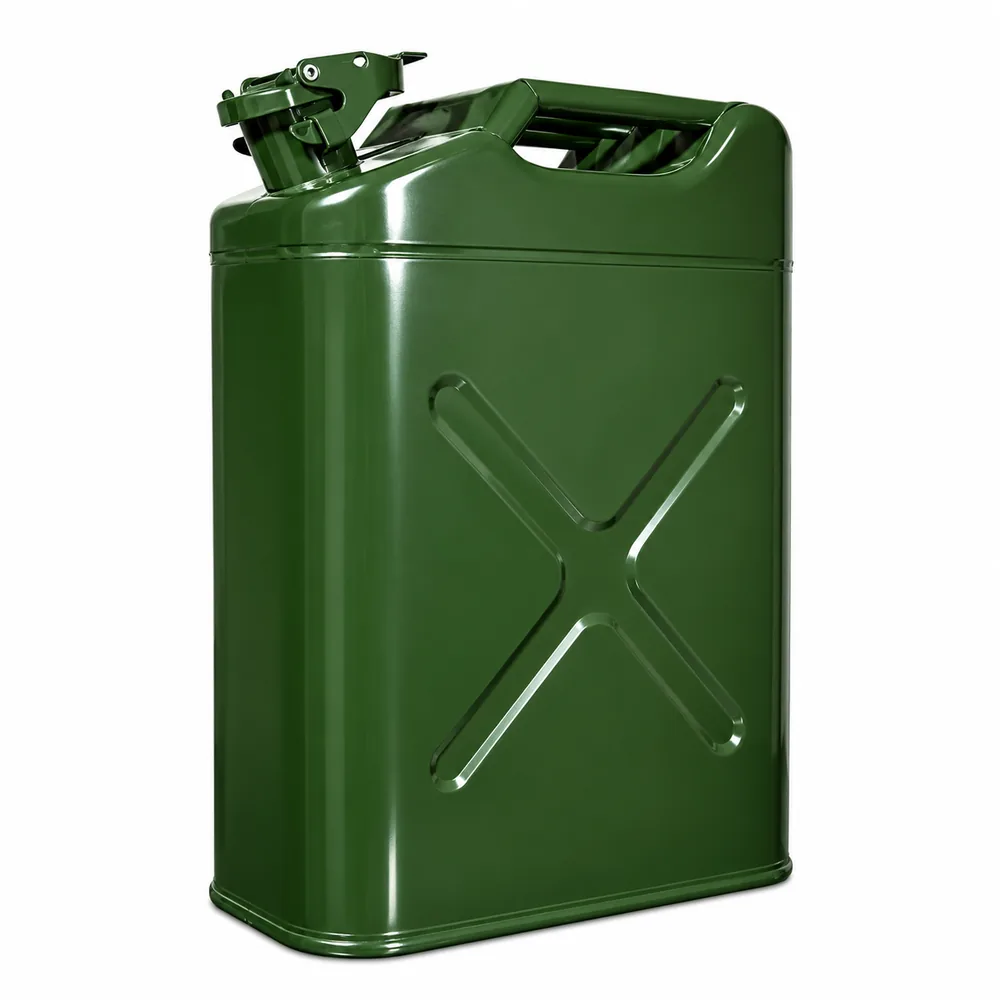 20L NATO Steel Fuel Can |
A conductive steel body that can be bonded and earthed. |
| Plastic in a classified area | 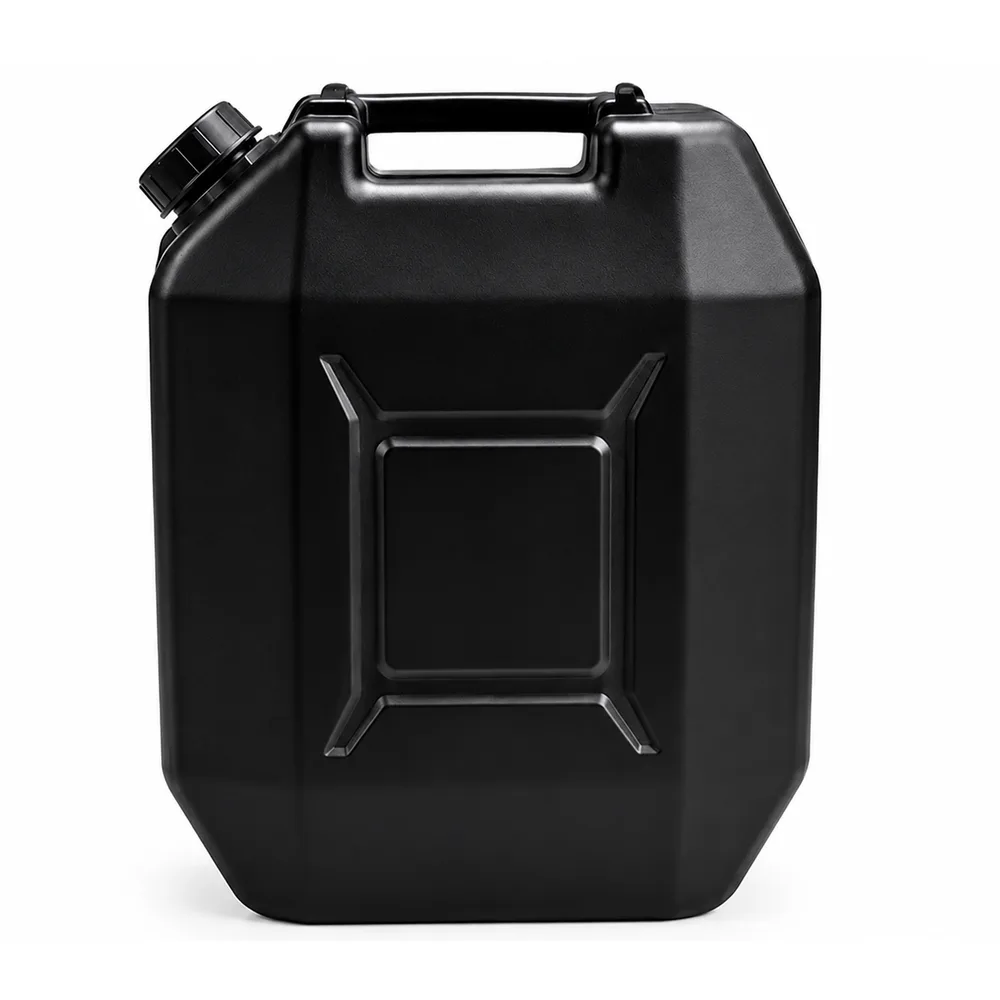 Antistatic HDPE Jerrycan |
Carbon-loaded HDPE lets charge drain to earth when the can is bonded. |
| Arrester in the neck | 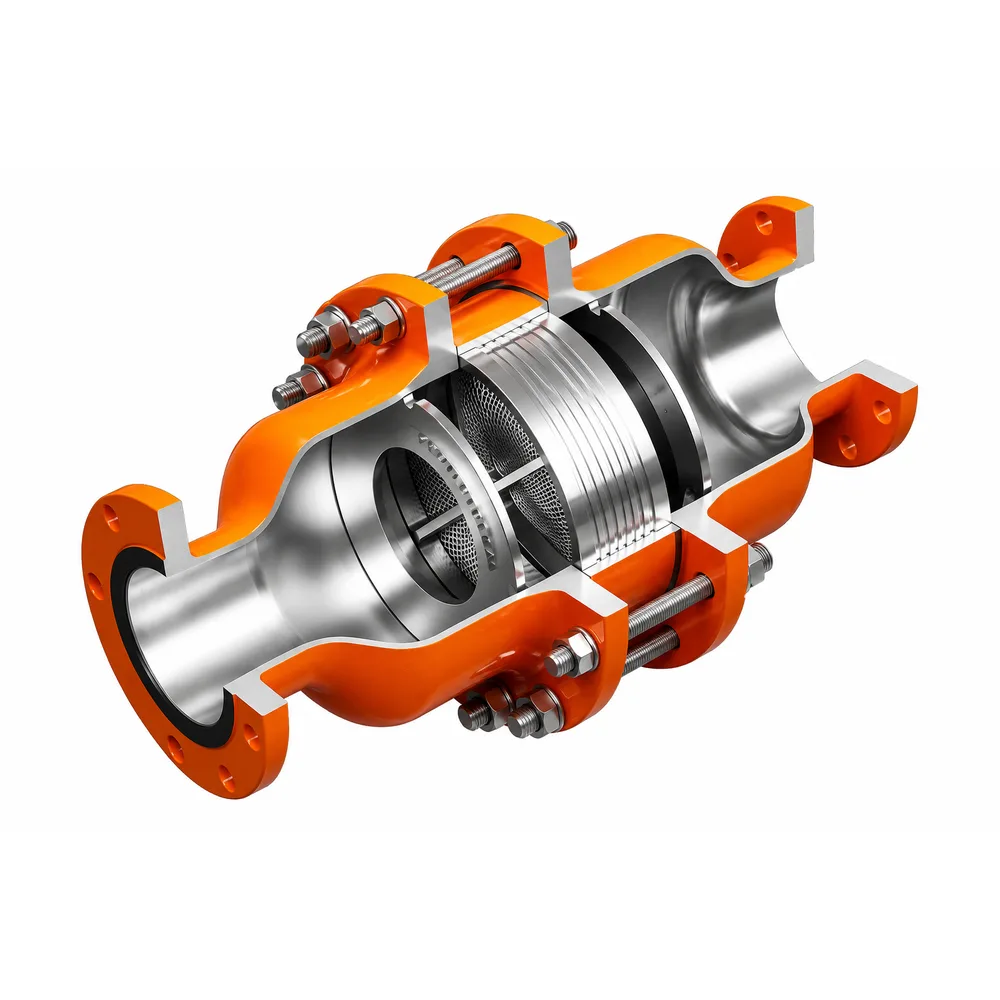 Flame Mitigation Devices |
Built for the US portable fuel container rule; not ATEX-certified. |
| Non-combustible bund | 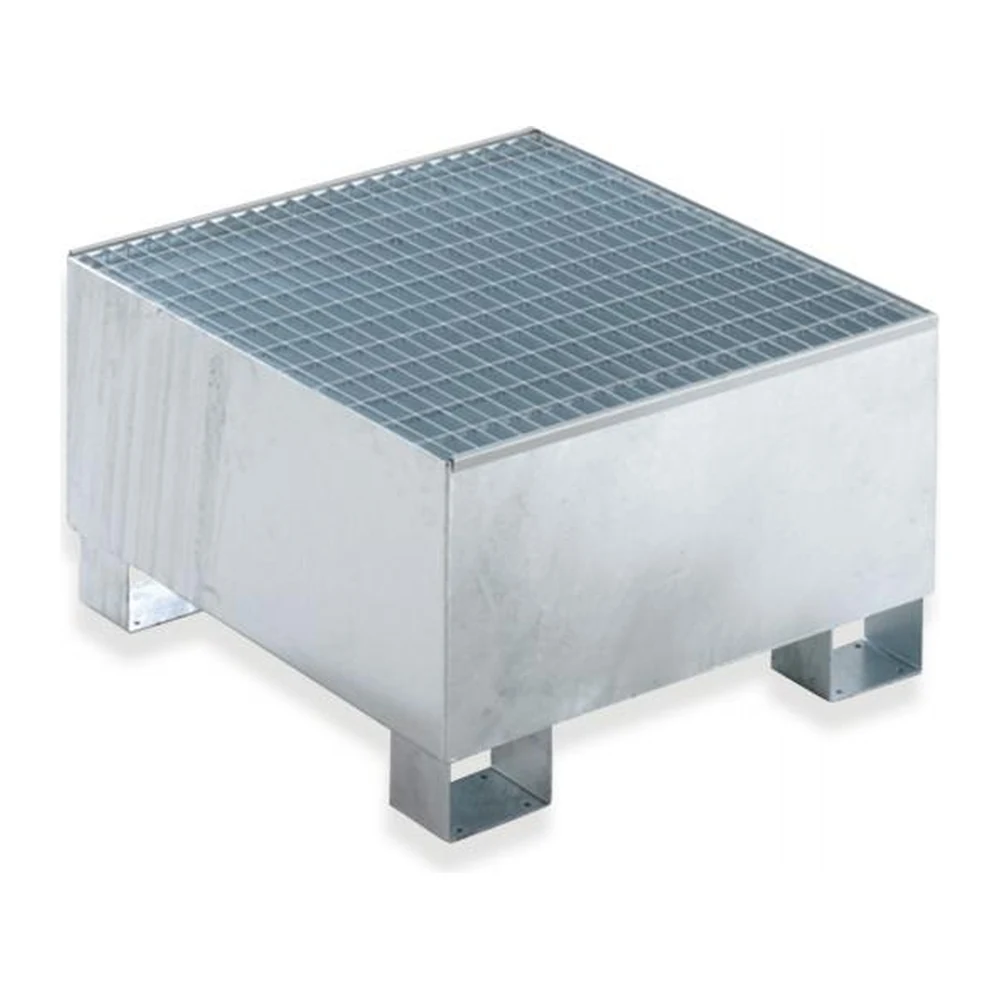 Steel Spill Pallets |
Double-layer 3 mm steel, sumps from 203 to 1,400 litres. |
| Outdoor fuel store | 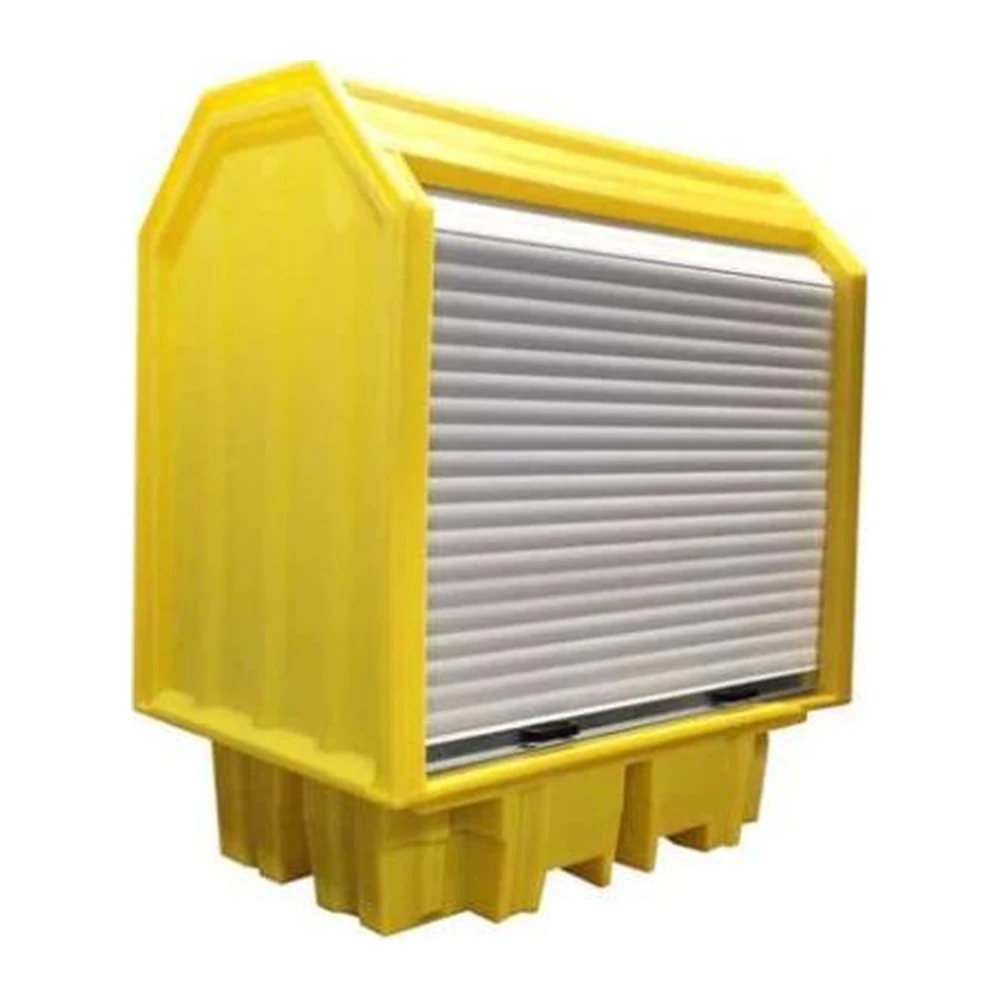 Covered Spill Pallets & Covers |
A cover keeps rain out of the sump the spill needs. |
No. DSEAR is fire and explosion safety law. It touches first aid in one place: regulation 8(1)(a) requires emergency procedures for incidents involving a dangerous substance, including appropriate first-aid facilities and safety drills tested at regular intervals. The general duty to provide first aid at work comes from the Health and Safety (First-Aid) Regulations 1981, which apply alongside DSEAR.
DSEAR covers safety risks from fire, explosion, similar energetic events and corrosion of metal. COSHH, the Control of Substances Hazardous to Health Regulations 2002, covers health risks such as toxicity and irritation. HSE asks employers to consider both, so a typical solvent store needs a DSEAR assessment for its flammability and a COSHH assessment for the vapour people breathe.
No. The US Class I, Division 1 covers places where ignitable concentrations exist under normal operating conditions, which the zone system splits between zone 0 and zone 1. Division 2 corresponds to zone 2. OSHA lets employers classify Class I locations by either system, but a zone 0 or zone 1 area may not abut a Division 1 or Division 2 area (29 CFR 1910.307(g)(4)(ii)).
Not on its own. OSHA requires equipment in hazardous locations to be approved, which means accepted, listed or labelled by a nationally recognised testing laboratory or otherwise found acceptable (29 CFR 1910.399). It must also be marked for its class and division, or for its zone with the AEx symbol (29 CFR 1910.307). An ATEX marking shows EU conformity and is not one of those routes, so check the label for the US listing.
No single rating applies. Your DSEAR assessment zones the booth from the solvent, the spray rate and the extraction, then DSEAR Schedule 3 sets the equipment category: 1 or 2 in zone 1, and 1, 2 or 3 in zone 2. HSE names vehicle paint spraying as a typical source of explosive atmospheres, and US rules usually treat spray booth interiors as Class I, Division 1 (29 CFR 1910.399).
The employer is responsible for it, and DSEAR sets no formal qualification for the person who writes it. The Regulations do set one for verification: before a workplace with zones is used for the first time, a person competent in explosion protection through experience, professional training or both must verify its overall explosion safety (regulation 7(4)). HSE’s L138 Approved Code of Practice is the reference for both tasks.
Regulation 9 requires suitable and sufficient information, instruction and training. This covers the precautions to take, the name and risk of each substance, access to its safety data sheet, the law on its hazardous properties and the significant findings of the risk assessment. The training must change when the work changes. DSEAR names no course or certificate, so the content follows the risk on your site.
Yes on construction sites. DSEAR applies at any workplace, and HSE lists construction sites, vehicles and vessels among them. A home counts once people are at work there, so a gardener’s petrol for a mower falls under DSEAR, while a householder storing petrol for their own use follows the limits in the Petroleum (Consolidation) Regulations 2014 instead.
Through the operator’s own DSEAR assessment, usually drawn from industry area classification codes; HSE cites the Institute of Petroleum model code for petroleum installations. HSE’s zoning note treats refuelling as bringing ignition sources into a place where a spill is possible, and says safety comes from isolating power sources, such as turning engines off, during the transfer. The site’s storage certificate drawings sit with the Petroleum Enforcement Authority.
Equipment in use or made available at a workplace on or before 30 June 2003 is exempt from the DSEAR equipment selection rules (regulation 17(1)). HSE says it can stay in use indefinitely if a risk assessment shows it is safe. Workplaces in use before that date had until 30 June 2006 to complete their zoning, and any later modification must meet the current rules (regulation 17(3)).
It is the EU name for the written explosion risk assessment. Article 8 of Directive 1999/92/EC requires employers in EU member states to draw it up before work starts and revise it on significant change, showing the risks assessed, the zones, the measures taken and the safe use of work equipment. In Great Britain the DSEAR record under regulation 5(4) does the same job.
A directive. Directive 2014/34/EU binds the EU member states, which each write it into national law, and the European Commission’s ATEX Guidelines (sixth edition, 2026) state that the national transposition is the legally binding text. The workplace directive, 1999/92/EC, works the same way. In Great Britain the equipment rules sit in the Equipment and Protective Systems Intended for Use in Potentially Explosive Atmospheres Regulations 2016 (SI 2016/1107) and the workplace rules in DSEAR.
Not as a rule. Workplace Health and Safety Queensland says hazardous-area equipment shows it meets Australian Standards through an IECEx certificate of conformity, imported equipment included, and that certificates from ATEX notified bodies are in general not accepted. Many notified bodies also act as IECEx certification bodies, so ask the maker for the IECEx certificate. The offshore regulator, then NOPSA, warned in Safety Alert 49 against relying on a supplier’s self-declaration after a forklift sold for zone 1 failed Australian Standards.
An IP rating, under IEC 60529, grades how well an enclosure keeps out solid objects and water. An ATEX or Ex marking shows how the equipment avoids igniting an explosive atmosphere. An IP code is not a required part of the Ex marking for gas atmospheres under IEC 60079-0, and the two are marked separately. Some protection concepts set a floor: an increased safety “e” enclosure with bare live parts needs at least IP54. An IP66 rating alone does not make a lamp fit for a zone.
Both are free. The official text of SI 2002/2776 is on legislation.gov.uk, as made in 2002 and as revised with later amendments, each with a PDF of the whole instrument; it listed no outstanding changes when we checked in October 2026. HSE’s Approved Code of Practice and guidance, L138 (second edition, 2013), is a free PDF from HSE. HSE notes that the June 2015 amendments for gases under pressure and substances corrosive to metals came after L138, with an amended version to follow.
Yes, where the equipment has its own potential source of ignition. The ATEX Guidelines name gears, fans, pumps, compressors, mixers and brakes, which can ignite an atmosphere through hot surfaces or friction sparks, and keep forklift trucks and other site machinery built for use in a zone within Directive 2014/34/EU. Non-electrical equipment is assessed to EN ISO 80079-36. A category 2 non-electrical product’s technical file is lodged with a notified body (Article 13(1)(b)).
X means the equipment has specific conditions of use, set out in the certificate, that the installer must follow. U marks an Ex component, such as a cable gland, made to be built into complete equipment; its certificate states that it is not an equipment certificate, and the two suffixes are never used together. An IECEx number such as IECEx XXX 23.0001X gives the scheme, the issuing body, the year and a serial. ATEX certificate numbers typically use ATEX in place of the full stop.
No. ATEX certifies equipment, and DSEAR asks employers for training suited to the risk without naming a course. The international route for people is the IECEx Certificate of Personnel Competence, built from units of competence for work such as installing, inspecting and repairing Ex equipment to IEC 60079-14, 60079-17 and 60079-19. Only IECEx certification bodies issue it, after an assessment. A recognised training provider can issue a record of training, which IECEx says cannot be used to claim certification.
No. A notified body is a certification body that an EU member state notifies under Directive 2014/34/EU; the European Commission gives it an identification number and publishes the list (Article 26). An NRTL is a laboratory OSHA recognises under 29 CFR 1910.7 to certify products against its electrical standards. A notified body’s ATEX certificate does not make equipment acceptable to OSHA, which looks for an NRTL listing or another route set out in 29 CFR 1910.399.
Yes. The European Parliament and the Council of the European Union adopted both directives: 1999/92/EC for workplaces and 2014/34/EU, dated 26 February 2014, for equipment. Each member state writes them into its own law. The European Commission publishes the ATEX Guidelines, now in a sixth edition of January 2026, and harmonised standards whose references appear in the Official Journal give a presumption of conformity (Article 12). Great Britain carries the rules in DSEAR and SI 2016/1107.
Because EU law lets equipment for explosive atmospheres onto the market only when it meets the essential health and safety requirements of Directive 2014/34/EU, proven through the conformity assessment for its category (Articles 3, 4 and 13). Employers then have to choose equipment by zone. Category 1 goes in zones 0 and 20, category 1 or 2 in zones 1 and 21, and any category in zones 2 and 22 (Directive 1999/92/EC, Annex II, Part B; DSEAR Schedule 3).
Inside a zone, yes, unless the risk assessment shows otherwise. DSEAR Schedule 3 covers equipment in every place where an explosive atmosphere may occur, so a phone, torch, camera, site light or pressure transmitter needs the category the zone demands, marked G or D. HSE’s zoning guidance extends the control of ignition sources to mobile equipment. Where unrated equipment has to go in, the work runs under written instructions and a permit to work (DSEAR Schedule 1, paragraph 6).
Equipment marked for gas group IIC, the group that holds hydrogen and acetylene. IIA or IIB equipment is not enough, while IIC equipment also suits IIA and IIB gases. The zone and the category come from the DSEAR assessment as for any gas: category 1 in zone 0, category 1 or 2 in zone 1, any category in zone 2. Under the US National Electrical Code, group IIC equals Class I, Groups A and B together (NFPA 70, 505.6).
Sometimes, and zone 22 is the common case. HSE says wood dust can explode as a cloud, which can form if the extraction fails or a sudden air movement lifts deposits off horizontal surfaces. In many cases, HSE says, a shop needs zone 22 areas and very limited zone 21. There, choose a vacuum cleaner built to ATEX category 3D, and stop any machine making a zone 21 cloud before cleaning up deposits. US codes put wood dust in Class II, Group G.
There is no separate DSEAR 2015. From 1 June 2015 the 2002 Regulations were amended by the Classification, Labelling and Packaging of Chemicals (Amendments to Secondary Legislation) Regulations 2015 (SI 2015/21, regulation 13). A dangerous substance now includes anything meeting the criteria of a CLP physical hazard class, classified or not, which brought in gases under pressure and substances corrosive to metals. SI 2019/720 updated that CLP reference for Brexit from 31 December 2020.
ATEX is the name for two EU directives, taken from the French atmosphères explosibles. Directive 2014/34/EU covers equipment for explosive atmospheres and replaced Directive 94/9/EC on 20 April 2016. Directive 1999/92/EC covers the workplace and puts duties on employers. Great Britain applies the first through the Equipment and Protective Systems Regulations 2016 and the second through DSEAR.
DSEAR stands for the Dangerous Substances and Explosive Atmospheres Regulations 2002 (SI 2002/2776). They came into force on 9 December 2002 and apply in England, Scotland and Wales, while Northern Ireland has its own regulations of 2003. DSEAR requires any employer who holds petrol, diesel, solvents or combustible dust to assess the fire and explosion risk and control it.
It is the written record of the risk assessment's significant findings. Regulation 5(4) of DSEAR requires an employer with five or more employees to keep it. The record covers the measures taken, evidence that the workplace and work equipment are designed and maintained for safety and, where an explosive atmosphere may occur, the zone classification, the explosion safety verification and any co-ordination with other employers.
No. ATEX is European Union law: Directive 2014/34/EU covers equipment placed on the EU market and Directive 1999/92/EC covers the workplace. Great Britain uses the UKCA mark, which the trade calls UKEX, and still accepts CE-marked ATEX equipment. The international certification system is IECEx, run by the International Electrotechnical Commission. The United States uses another route, approval by a nationally recognised testing laboratory under OSHA rules.
ATEX is the law, and intrinsic safety is one way for equipment to meet it. Directive 2014/34/EU sets the requirements and categories for equipment used in explosive atmospheres. Intrinsic safety, marked Ex i, is a protection concept that keeps the electrical energy in a circuit and its wiring below the level that could ignite the atmosphere by a spark or by heat (IEC 60079-11). Its levels ia, ib and ic suit zones 0, 1 and 2, and building to EN 60079-11 gives presumption of conformity under the Directive (Article 12).
Hazardous area classification is one part of ATEX: the employer's duty to divide a site into zones 0, 1 and 2 for gas or 20, 21 and 22 for dust, by how often an explosive atmosphere is present. The workplace directive, 1999/92/EC, sets it (Article 7 and Annex I), and DSEAR carries it in Great Britain (regulation 7(1) and Schedule 2). ATEX certification belongs to equipment under Directive 2014/34/EU, and the zone sets the category: 1 in zone 0, 1 or 2 in zone 1, any category in zone 2.
The standards and regulations this page relies on, at their issuing body. Where a market rule is named here, check the current revision before you specify against it.
Last reviewed by Clarence Cheang, Co-Founder.
Tell us your market, your fuel and your volumes. We come back with a specification sheet and a quotation.