
Which US rule covers your gas can, what OSHA, DOT, EPA and CPSC each require, and what heat, a hot car and a garage mean for a can of gasoline.
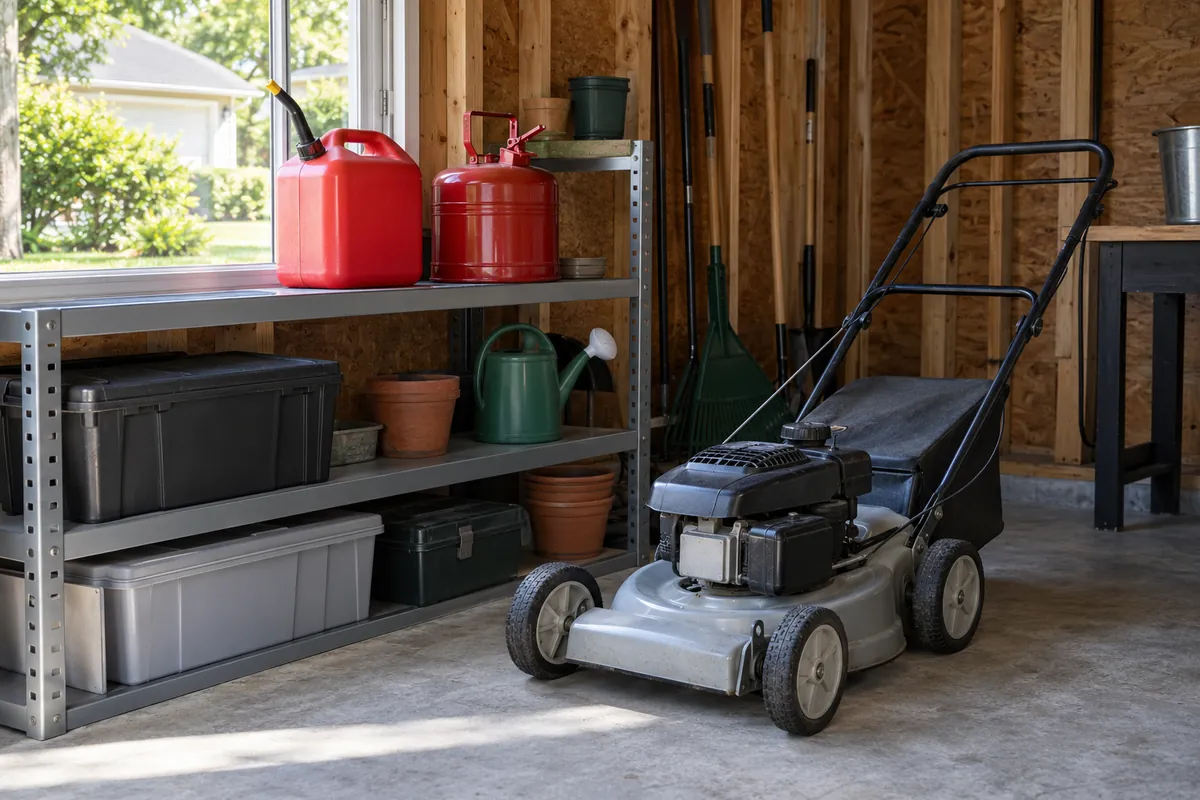
No single US law covers a gas can. EPA (40 CFR 59) and CPSC (16 CFR 1460 and 1461) set how a consumer can is built. OSHA caps a workplace safety can at 5 US gallons, and DOT lets a work vehicle carry gasoline in cans of up to 8 gallons. The state or city fire code sets how much a home may store.
Quick answer: What are the rules for gas cans in the US?
It depends on who you are. A consumer can must meet EPA's rule, with vents that close by themselves, and CPSC's child-resistance and flame-arrester rules. At work, OSHA caps a safety can at 5 US gallons and DOT allows 30 L (8 gallons) per can on a business vehicle. At home, state or city fire codes set the limit.
US gas can rules split by who you are. The maker and the seller answer to EPA, which limits vapour from consumer cans, and to the Consumer Product Safety Commission (CPSC), which requires child-resistant closures and flame arresters. An employer answers to OSHA for cans used at work and to DOT for cans on a work vehicle. A household answers to its state or city fire code.
| Rule | What it covers | What it requires |
|---|---|---|
| EPA, 40 CFR part 59, subpart F | Consumer cans of 0.25 to 10 US gallons made from 1 January 2009 (59.600, 59.605) | 0.3 g of hydrocarbons per gallon per day; any vent closes by itself (59.611) |
| CARB | Cans sold in California | Certification by Executive Order; amended rules in force from 1 April 2017 |
| CPSC, 16 CFR 1460 | Gasoline, kerosene and diesel cans up to 8.45 gallons (32 L) | Child-resistant closure, to ASTM F2517-22e1 for cans made from 22 December 2022 (1460.3) |
| CPSC, 16 CFR 1461 | Consumer fuel cans of 5 gallons or less (1461.2) | Flame mitigation device to ASTM F3326-21, or UL 30:2022 for safety cans (1461.3) |
| OSHA, 29 CFR 1910.106 and 1926.152 | Employers | Safety cans of 5 gallons or less; room and cabinet limits |
| DOT, 49 CFR 173.6 | Business vehicles | Materials of trade: 30 L (8 gallons) per can, 200 kg (440 lb) per vehicle |
| State or city fire code | Homes, shops and sites | Total quantity, location and container type |
EPA excludes approved safety cans from its rule (59.605(a)), so a workplace buys a safety can while a hardware store sells cans built to EPA and CPSC rules. The EPA and CARB compliance guide covers permeation and spout testing, and the jerry can buyer checklist shows how to check a can against them.
OSHA defines a safety can as an approved container of not more than 5 US gallons (18.9 L), with a spring-closing lid and spout cover, designed to relieve internal pressure in a fire (29 CFR 1910.106(a)(29)). The construction definition adds a flash-arresting screen (1926.155(l)). Approved means listed or approved by a nationally recognised testing laboratory, such as UL or FM, or by a federal agency (1926.155(a)). OSHA approves no can itself, so an “OSHA approved” gas can is one listed on those terms.
In general industry the largest container allowed depends on the liquid’s category (1910.106(d)(2)(iii), Table H-12):
| Container | Category 1 | Category 2 | Categories 3 and 4 |
|---|---|---|---|
| Glass or approved plastic | 1 pint | 1 quart | 1 gallon |
| Metal, other than DOT drums | 1 gallon | 5 gallons | 5 gallons |
| Safety can | 2 gallons | 5 gallons | 5 gallons |
Category 1 liquids flash below 23 °C and boil at or below 35 °C; Category 2 liquids boil above 35 °C (1910.106(a)(19)). Gasoline sits on the line: NIOSH gives a boiling point of 102 °F (39 °C), Category 2, and the international chemical safety card a boiling range from 20 °C, Category 1. Section 2 of the fuel’s safety data sheet settles it, and with it a 2 or a 5 gallon safety can.
On construction sites, 1926.152(a)(1) calls for approved safety cans or DOT-approved containers to handle 5 gallons or less. No more than 25 gallons may sit in a room outside an approved cabinet (1926.152(b)(1)), and containers stay closed when not in use. No flame or other ignition source may be within 50 feet (15 m) of the work (1926.152(f)). OSHA does not cite a UL-listed safety can that lacks the screen (interpretation, 29 January 2004), and accepts UL or FM approved plastic containers above a gallon (19 July 1989). Cal/OSHA repeats the container sizes and the 25 gallon room limit in Title 8, sections 1930 and 5532.
The vent cap on the back of a gas can has not been allowed on new consumer cans since 2009. EPA’s rule covers cans made from 1 January 2009 (40 CFR 59.600). Traditional cans, EPA wrote, had vent and spout caps that were lost or left off, causing very high evaporative emissions, so it expected automatic-closing spouts and no other openings (72 FR 8501). The Children’s Gasoline Burn Prevention Act, approved on 17 July 2008, made child-resistant closures to ASTM F2517 mandatory on gasoline cans made from 17 January 2009.
The Portable Fuel Container Safety Act, enacted on 27 December 2020, required a flame mitigation device in consumer fuel cans of 5 gallons or less. CPSC accepted the voluntary standards, which became mandatory on 12 July 2023, and 16 CFR part 1461 codified them from 9 December 2023 (88 FR 74342). CPSC says the devices protect against container rupture and flame jetting, a sudden flash fire that can occur while pouring. Cans made from 22 December 2022 must meet the updated child-resistance standard, ASTM F2517-22e1 (1460.3). Each rule covers cans made on or after its date, and none sets a date by which an older can must leave service.
On a consumer can made since 2009, a vent must close by itself: 40 CFR 59.611(c)(1)(ii) allows a vent the user opens to bypass the emission controls only if it closes automatically, without operator involvement. The spouts, caps and gaskets supplied with the can count as part of the container (59.611(b)). Nobody may sell, import or install a replacement part that disables or bypasses a can’s emission controls (59.602(f)). A vent kit or vent plug that leaves an opening the user must remember to close is that kind of part.
No US rule gives a vent hole or drill size, because a new consumer can may not have an open vent at all. A drilled hole is an opening the flame mitigation device in the neck does not cover, and drilling a used can puts a tool into vapour that can sit inside gasoline’s flammable range of 1.4 to 7.6% in air (NIOSH). To relieve pressure, ease the closure as the maker describes: fuel can venting and pressure explains why a can builds pressure, and how to use a jerry can gives the steps. For an older can with a screw-on vent cap, fit a cap made for that neck thread.
Plastic gas cans are high-density polyethylene (HDPE) with a barrier against fuel vapour. Plain HDPE absorbs gasoline and lets it out through the wall. CARB’s 1999 rulemaking notice says the wall of an HDPE can may saturate with fuel in as little as 25 days, after which hydrocarbons pass through to the outside air. EPA based its 2009 limit of 0.3 g per gallon per day on cans whose permeation barriers cut that loss by over 90% (72 FR 8500). The barrier is a treated inner surface, such as fluorination, or a multilayer wall, and EPA tells a maker of multilayer cans to test the can with the thinnest barrier layer (40 CFR 59.626(b)). Fluorinated vs plain HDPE compares the two.
A plastic gas can swells and collapses because it stays sealed between pours. In plain terms, that is the 2009 gas can law change. A can made since 1 January 2009 must have a spout that closes by itself (40 CFR 59.653(a)(4)) and must not leak upright or upside down (59.611(c)(2)). It may have a vent only if it closes without the user (59.611(c)(1)(ii)). The pressure inside then follows the temperature. Warm fuel gives off vapour and the walls bulge; as the can cools, the pressure inside drops below the air outside and the sides pull in. EPA expects it: to certify a plastic can, the maker seals it and cycles it 10,000 times between +2.0 and −0.5 psi (+13.8 and −3.4 kPa). The test is meant to represent wall stress from pressure changes, vibration and thermal expansion (59.653(a)(1)). Fuel can venting and pressure explains the physics and how to ease a swollen can.
Plastic gas cans do deteriorate, which is why EPA ages one before it measures it. The same certification puts a plastic can under ultraviolet light for at least 450 hours, rocks it one million times at 40% full of E10 fuel and soaks it sealed and full for 20 weeks at 28 °C (59.653). EPA chose those cycles because sunlight, slosh and pressure each wear some permeation barriers, and it said those conditions apply most to cans used for work and carried on truck beds or trailers (72 FR 8502). The can must then hold the limit for a useful life of five years from sale (59.611(d)). A maker may certify a metal can without the pressure, UV and slosh steps (59.653(e)). Store a plastic can out of the sun between uses; HDPE properties covers UV ageing.
Plastic gas cans are allowed on US construction sites when they are approved. For 5 gallons or less, 29 CFR 1926.152(a)(1) calls for an approved safety can or a DOT container, and UL 30:2022, the safety can standard CPSC cites, covers metallic and nonmetallic cans (16 CFR 1461.4). A plastic jerrican whose UN mark, such as 3H1, covers the fuel is a DOT container. An ordinary consumer can carries EPA and CPSC certification, which is neither a safety can listing nor a UN mark, so look for a UL or FM listing or a UN mark before it goes on site. Diesel counts too: the construction rules treat any liquid flashing at or below 93 °C as flammable (1926.155(h)), and diesel flashes at about 52 °C (ICSC 1561).
DOT’s hazardous materials rules do not apply to an individual carrying gasoline for non-commercial purposes in a private vehicle, including a leased or rented one (49 CFR 171.1(d)(6)). A business is covered. Gasoline carried to run the vehicle or its equipment, to protect the crew, or in direct support of a business other than transport is a material of trade (171.8), on the terms in 173.6:
| Requirement | Limit or rule | 49 CFR |
|---|---|---|
| Each can of a Packing Group II liquid, such as gasoline | 30 L (8 gallons) | 173.6(a)(1)(ii) |
| All materials of trade on one vehicle | 200 kg (440 lb) gross | 173.6(d) |
| The can | Metal or plastic, meeting the HMR or OSHA 1910.106(d)(2) or 1926.152(a)(1) | 173.6(b)(4) |
| Closing and stowing | Leak tight, securely closed, secured against shifting | 173.6(b)(1) |
| Marking | A common name or proper shipping name, such as Gasoline | 173.6(c)(1) |
| Driver | Told the material is on board | 173.6(c)(5) |
Above those limits the load is fully regulated hazmat (US hazmat shipping), and UN 1203 lists the packagings gasoline may use. A DOT container is one built to the HMR packaging standards; its UN mark, such as 3A1 for a steel jerrican, is the maker’s certification (178.2, 178.503).
For the drive itself, state agencies agree on the core: keep the can upright, secured and closed. Massachusetts’ Department of Fire Services says to carry it away from passenger areas, in a trunk or pickup bed. Maryland’s Department of the Environment says never to leave it in direct sun or in the trunk of a car, and never to fill a can in or on a vehicle, trunks and truck beds included. Fill a can on the ground (CPSC) with the nozzle touching it (Massachusetts); how to use a jerry can explains the static risk.
Heat alone does not light gasoline in a can. Gasoline self-ignites at about 250 °C (ICSC 1400), far above what a car reaches. On sunny days of 22 to 36 °C (72 to 96 °F), a closed car warmed by about 22 °C (40 °F) within an hour, reaching 47 °C (117 °F) on the coolest day. Earlier studies the authors cite recorded 57 to 68 °C (134 to 154 °F) on days above 30 °C (McLaren, Null and Quinn, Pediatrics, 2005).
Heat does raise the pressure and the vapour. Gasoline flashes at −45 °F (−43 °C, NIOSH), so the space above it holds flammable vapour at any temperature a can will meet, and a sealed can left in sun swells, weeps at the closure and sprays when opened. The vapour is three to four times heavier than air and can travel along the ground to a distant ignition source (ICSC 1400). The fires and explosions come when that vapour meets a flame or spark, and the CPSC flame rule exists to stop a flame outside the can travelling back into it. Plastic and metal cans share the risk, and a plastic can will not melt at car temperatures (HDPE properties).
Keep cans out of parked cars, fill to the can’s marked capacity rather than the neck, and open a warm can slowly, in shade, pointed away from you. Steel vs HDPE fuel cans compares the two materials on permeation, static and age.
Yes in a detached garage, a shed or outdoors in shade; not in the house. CPSC says never to store gas cans inside a house or basement or near sources of ignition such as pilot lights, stoves and heaters, and to keep them in well-ventilated, cool areas. Its Publication 5140 extends that to a utility room or garage where vapour could meet a spark or flame, naming gas-fired clothes dryers, furnaces and older water heaters. Massachusetts’ Department of Fire Services recommends a locked shed or detached garage, away from living areas.
Outdoors, keep cans out of the sun, which Maryland’s Department of the Environment lists with water heaters and furnaces as heat sources. Stand cans upright on a drip tray, in a space with nothing that sparks. On US construction sites, OSHA limits outdoor storage to 1,100 gallons of containers per pile, with 5 feet between piles and 20 feet (6 m) to any building (1926.152(c)(1)). How long the fuel itself keeps is covered in storing fuel safely.
No federal rule sets a limit for a home. OSHA binds employers, and the home limit comes from the fire code your state or city adopts, such as an edition of the International Fire Code with local amendments. Lehi, Utah, working from the 2012 International Fire Code, sets 25 gallons of gasoline in total, no more than 10 of them in an attached garage and none in a basement. Syracuse, Utah, citing the 2015 edition, allows 30 gallons with the same attached-garage and basement limits, and counts empty containers as full.
A 25 gallon figure also appears in OSHA, where it is a workplace limit. A construction site may keep 25 gallons of flammable liquid in a room outside an approved cabinet (1926.152(b)(1)). An industrial plant may keep 25 gallons of Category 1 liquid in containers outside a storage room or cabinet in one fire area, against 120 gallons of Categories 2 to 4 (1910.106(e)(2)(ii)(b)). Ask the local fire marshal for the figure at your address before you stock up; the jerry can sizing calculator turns a generator’s needs into a can count.
No federal rule sets the colour of a consumer gas can. The convention is red for gasoline, yellow for diesel and blue for kerosene. California makes it a condition for every can it certifies, with GASOLINE, DIESEL or KEROSENE embossed or on a permanent label in letters of at least 34 point (CARB CP-501, section 2.2). Illinois requires red for gasoline and blue for kerosene, and bans any other liquid from a red gasoline can (41 Ill. Adm. Code 174.410). Wisconsin requires bright red for gasoline and bars kerosene and diesel from any container coloured red (Wis. Stat. 168.11). At work, OSHA requires a portable container of a liquid flashing at or below 80 °F (27 °C) painted red, with a yellow band or the contents named in yellow (29 CFR 1910.144(a)(1)(ii)).
ASTM F852, the US specification for consumer gasoline, kerosene and diesel cans, lists colour among its requirements without naming the colours in its published summary, and it also covers reusable cans for two-stroke gas and oil mix. ASTM F976-08, withdrawn in 2017, set one design standard for kerosene and diesel cans and told them apart only by colour and marking. Green for oil or two-stroke mix is a trade habit; we found no US rule that sets it. Keep diesel out of red cans and mark every can with its fuel. To check certification, read the label headed EMISSION CONTROL INFORMATION that every certified can carries (40 CFR 59.615); the EPA and CARB compliance guide explains the certification behind it, and jerry can colours sets out the codes in other countries.
Pick the can by fuel first, then by where it will live. Every consumer can of 0.25 to 10 gallons made since 2009 meets the same EPA vapour limit, and those of 5 gallons or less made since July 2023 carry a flame arrester. The choice comes down to material, size, closure and mounting.
| Job | Choose | Why |
|---|---|---|
| Long-term storage at home | Steel, or plastic with a permeation barrier, filled to its marked capacity and kept in shade | EPA certifies a can for five years of use (40 CFR 59.611(d)); plastic must survive UV and slosh ageing first, and a metal can may skip it (59.653(e)) |
| Diesel | A yellow can marked DIESEL, in steel or plastic | Diesel flashes at about 52 °C (ICSC 1561), yet a consumer diesel can still falls under EPA (59.680) and both CPSC rules (16 CFR 1460.2 and 1461.2) |
| ATV or UTV | A can sized to one or two tank fills, in a holder rated for the full can | Upright, closed and strapped; on a work vehicle the rule is leak tight and secured against shifting (49 CFR 173.6(b)(1)) |
| Boat | A gas can to carry fuel aboard; a portable marine tank to feed the outboard | A tank with a fuel line is a nonroad fuel tank under 40 CFR part 1060, outside the gas can rule (59.605(c)) |
| Two-stroke mix | A small can for each ratio, marked with the ratio and the date mixed | ASTM F852 covers reusable gas and oil mix cans; no US rule sets a colour for them |
For long-term storage the fuel sets the limit before a sound can does: storing fuel safely gives shelf lives for gasoline and diesel, and steel vs HDPE fuel cans compares the two walls over years of use. For a quad, side-by-side or 4x4, jerry can mounts by vehicle covers racks and holders, fuel cans by job sizes a can for a generator, mower or outboard, and marine fuel containers covers salt air, grades and stowage on board.
We make steel and plastic jerrycans, closures and spill containment in Vietnam and China. On a US consumer can, the closure, spout and flame arrester carry the compliance. We supply flame mitigation devices specified against 16 CFR 1461 and child-resistant closures specified against 16 CFR 1460, each matched to the neck of the can it ships with. Compliance is certified per device and per container design, so confirm what covers your combination before you commit.
Our 20 L NATO-pattern steel fuel can carries UN certification for its design type and is made under quality assurance the competent authority accepts, in factories certified to ISO 9001, 14001 and 45001. At 5.28 US gallons it sits above OSHA’s 5 gallon safety can, and its vented screw cap does not close by itself. It suits fleet, farm and site fuel carried as a material of trade, where its UN mark covers gasoline. A can for retail sale needs an EPA-certified closure and spout set and a child-resistant closure. We hold no EPA, CARB, UL 30 or FM approval. Tell us the channel, the fuel and the state, and we confirm which rules apply and what we would need to obtain.
| Your use case | Recommended can | Why this one |
|---|---|---|
| US consumer cans of 5 gallons or less | 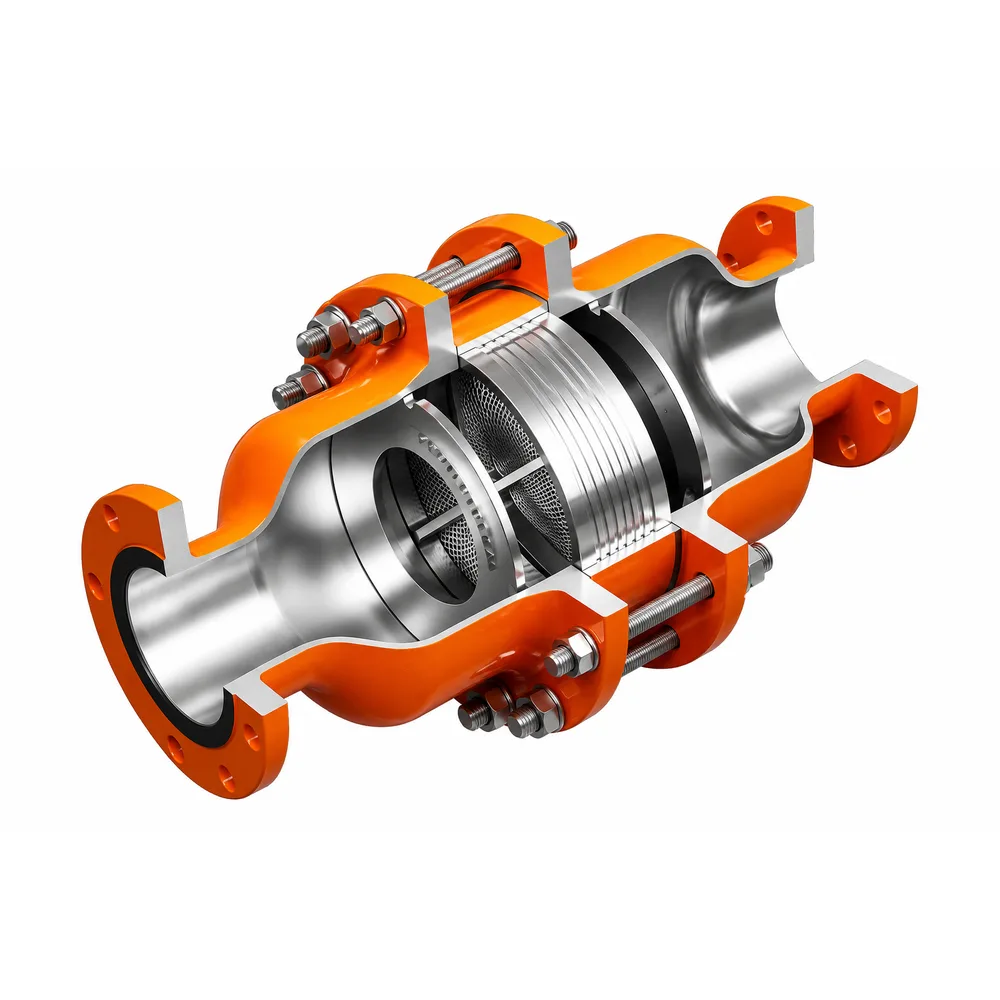 Flame Mitigation Devices |
A neck-mounted metal mesh arrester specified against 16 CFR 1461; certification is per device and container design. |
| Gasoline, kerosene and diesel cans up to 8.45 gallons |  Child-Resistant Closures |
A closure specified against 16 CFR 1460, matched to the neck of the can it ships with. |
| Fleet, farm and site fuel carried as a material of trade | 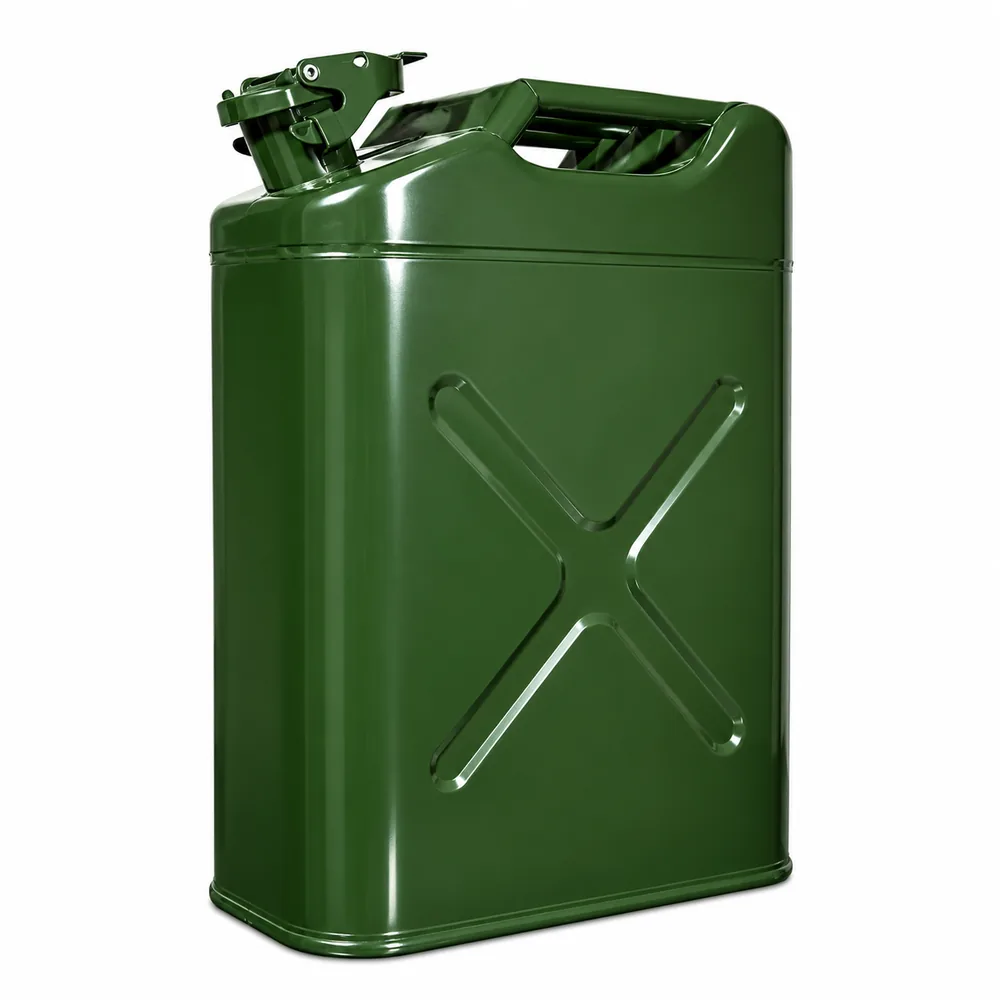 20L NATO Steel Fuel Can |
UN-marked pressed steel with a vented screw cap; confirm its mark covers gasoline before it rides under 49 CFR 173.6. |
| A small reserve can of 0.79 US gallons | 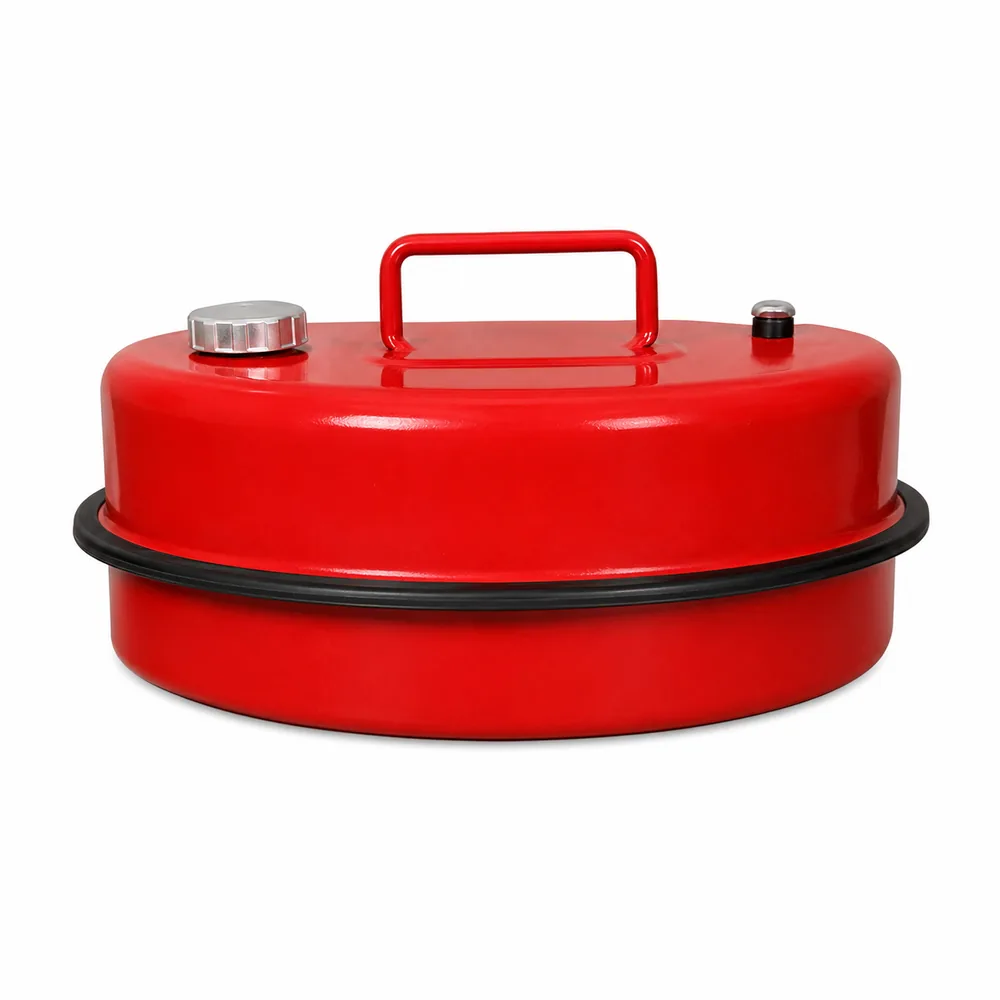 3L Compact Fuel Can |
A 0.7 mm galvanised steel can; a US retail version needs the closure, spout and arrester set the consumer rules ask for. |
| Replacement caps and gaskets for older cans | 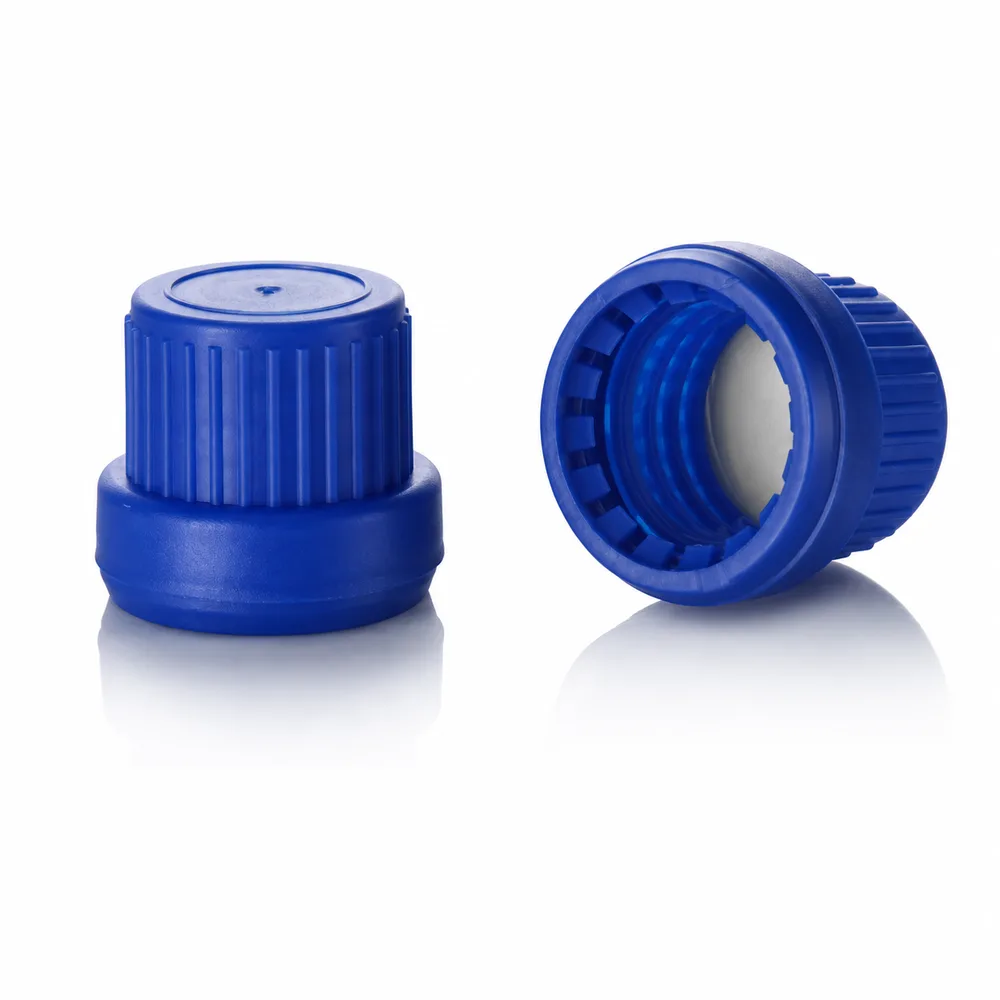 Caps, Closures & Gaskets |
Vented and non-vented caps in DIN 45, 51 and 61, matched to the neck thread. |
No. OSHA’s rules bind employers, so a household needs no safety can. OSHA approves no product itself: under 29 CFR 1926.155(a) an approved container is one listed or approved by a nationally recognised testing laboratory, such as UL or FM, or by a federal agency. A new consumer gas can for home use meets the EPA emission rule and the CPSC child-resistance and flame-arrester rules, and the local fire code sets how much you may keep.
Three layers. A can sold in California needs CARB certification, listed by Executive Order, under rules amended from 1 April 2017. At work, Cal/OSHA repeats the federal container rules: safety cans or DOT containers for 5 gallons or less on construction sites, and no more than 25 gallons in a room outside a cabinet (8 CCR 1930). General industry uses the same container sizes (8 CCR 5532). The local fire code sets the home limit.
It depends on how the can reaches the engine. A can used to carry fuel to the boat is a portable fuel container under 40 CFR 59, with the same EPA and CPSC rules as any gas can. A portable tank that feeds an outboard through a fuel line counts as a nonroad fuel tank, excluded from that rule (59.605(c)). It falls under 40 CFR part 1060, with diurnal limits from 1 January 2010 and tank permeation limits from 1 January 2011.
Yes. US federal law defines one portable fuel container for gasoline, diesel fuel and kerosene (40 CFR 59.680), and the CPSC child-resistance rule covers all three. EPA treats any red, yellow or blue utility jug as a fuel container whatever its label says. Keep one can for one fuel and label it, so nobody pours gasoline into a diesel engine or diesel into a petrol one.
High-density polyethylene (HDPE). EPA’s 2007 industry profile found 98% of US portable fuel containers were plastic and 2% metal (72 FR 8527), and CARB’s 1999 rulemaking put about 75% of California’s household cans in HDPE. Plain HDPE lets gasoline through the wall, so a can built to EPA’s limit of 0.3 g per gallon per day needs a durable permeation barrier, one of the controls EPA based the standard on.
No US rule puts a use-by date on a gas can. EPA sets a useful life of five years from sale, the period a can’s emission controls must keep working (40 CFR 59.611(d)), and the maker marks the month and year of manufacture on the can (59.615(a)). Retire a can at any age once it is cracked, swollen or brittle, or once its closure no longer seals.
Often, once emptied, but ask your local programme first. Federal hazardous waste rules exclude household hazardous waste, which states and local authorities regulate instead. EPA tells households to check with the local environmental, health or solid waste agency, and never to pour such products down a drain or on the ground. Take old fuel to a household hazardous waste collection, then ask whether your recycler takes the drained can, since an empty container can still be hazardous.
Strictly, a jerry can is one shape: the flat-sided can of rectangular cross-section, most often 20 litres. British troops named it after Jerry, their slang for a German, because it copies a German army fuel can of the late 1930s. In the US any portable fuel container is a gas can, and a 20 litre jerry can holds 5.28 US gallons.
The US rules bracket the answer. The EPA emission rule covers consumer cans from 0.25 to 10 US gallons (40 CFR 59.605(b)). An OSHA safety can holds 5 gallons or less (29 CFR 1910.106(a)(29)), the CPSC flame rule covers cans of 5 gallons or less, and child resistance applies up to 8.45 gallons (32 litres). A 20 litre jerry can holds 5.28 US gallons, and a 3 litre can 0.79.
A metal can can burst if a fire heats it, because the gasoline inside boils and the pressure has nowhere to go. That is why an OSHA safety can must be designed to relieve internal pressure when exposed to fire (29 CFR 1910.106(a)(29)). CPSC says flame mitigation devices protect against flame jetting and container rupture, and consumer cans of 5 gallons or less made after 12 July 2023 carry one. In summer heat a metal can swells; it does not ignite.
Yes. Gasoline vapour burns between 1.4 and 7.6% in air (NIOSH), and the vapour left in a drained can can sit inside that range. Treat an empty can as a full one: keep it closed, store it the same way, and keep heat, flames, grinders and drills away from it.
In a private vehicle for your own use, no federal limit applies, because the US hazmat rules exclude that trip (49 CFR 171.1(d)(6)); your state or city fire code sets how much you may store. A business may reclass diesel, which flashes at about 52 °C, as a combustible liquid for road transport (49 CFR 173.150(f)(1)). In a non-bulk container of 119 gallons (450 L) or less it then falls outside the hazmat rules, unless it is a hazardous substance, a hazardous waste or a marine pollutant (173.150(f)(2)).
About 30 to 32 lb (13.6 to 14.4 kg) of gasoline, plus the empty can. Five US gallons is 18.9 litres, and NIOSH gives gasoline a specific gravity of 0.72 to 0.76. A 20 litre jerry can holds 5.28 gallons, or 31.7 to 33.5 lb (14.4 to 15.2 kg) of gasoline. The empty weight depends on the material and design, so take the maker’s figure before you rate a rack, bracket or holder for a full can.
One outside EPA’s gas can rule, 40 CFR 59 subpart F. The rule excludes approved safety cans, containers under 0.25 or over 10 gallons, and tanks that feed an engine through a fuel line (59.605). It exempts cans built for export only (59.660), and does not reach cans made before 1 January 2009. Makers and importers had to stop selling old-design new cans after 30 June 2009 and wholesalers after 31 December 2009 (59.602), while shops could clear their stock. No federal rule stops you using an older can.
Most have no separate vent, so air has to enter through the spout as fuel leaves. EPA said in July 2025 that this may explain the common complaint of slow flow. It said that its rules allow a vent that closes by itself, such as a push-button vent with a spring closure (letter IACD-2025-06; 40 CFR 59.611(c)(1)(ii)). Such a vent speeds the pour and can still meet the limit. A drilled hole, or a vent plug the user must close, bypasses the controls (59.602(f)).
Yes, with a spout made for that can. EPA counts the spout, cap and gaskets supplied with a can as part of the certified container (40 CFR 59.611(b)), and nobody may sell or fit a replacement that disables or bypasses its emission controls (59.602(f)). CPSC’s child-resistance and flame rules name retrofit and aftermarket spouts too (16 CFR 1460.2 and 1461.2), so a replacement sold to consumers has to meet them. Order the maker’s own replacement for that model where one exists.
Slowly. Diesel flashes at about 52 °C against −43 °C for gasoline, and the international chemical safety card for diesel fuel No. 2 says evaporation at 20 °C brings a harmful concentration in air slowly, if at all (ICSC 1561). A diesel can builds far less pressure in the sun than a gasoline can. EPA’s limit of 0.3 g per gallon per day still applies to a consumer diesel can (40 CFR 59.680), so it carries the same self-closing spout.
Yes. US rules set how a gas can performs and apply to plastic and metal alike. A new consumer can must meet EPA's emission limit, with any vent closing by itself, and CPSC's child-resistant closure rule. A can of 5 gallons or less made from 12 July 2023 needs a flame mitigation device, and California adds CARB certification. At work, OSHA accepts UL or FM approved plastic containers above a gallon, and DOT lets a business vehicle carry gasoline in metal or plastic cans of up to 8 gallons.
Only another container made for fuel. That means an approved safety can, listed by a testing laboratory such as UL or FM, or a metal or plastic container built to the DOT hazmat packaging rules, such as a UN-marked steel jerrican. CPSC tells consumers not to use plastic bags or other inappropriate containers for gasoline. Its release 73-041 says never to store gasoline in glass or plastic bottles, least of all empty soft drink bottles that could attract a young child.
The standards and regulations this page relies on, at their issuing body. Where a market rule is named here, check the current revision before you specify against it.
Last reviewed by Clarence Cheang, Co-Founder.
Tell us your market, your fuel and your volumes. We come back with a specification sheet and a quotation.